

Product Overuse Hair Flexibility: Restore Softness
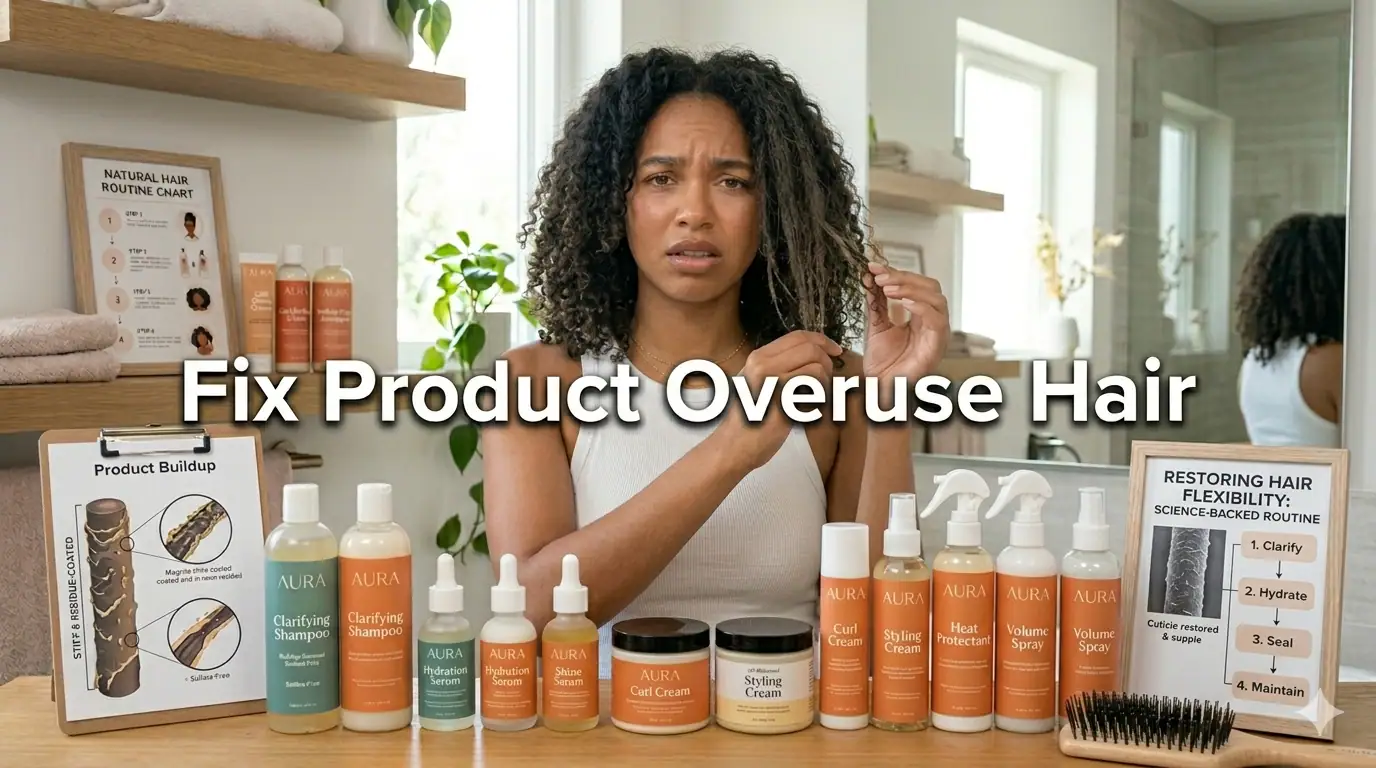
That stiff, straw-like feeling in your hair isn't always about damage from heat or color—sometimes, it's simply too much of a good thing. Product overuse is a silent killer of hair flexibility, affecting countless individuals who believe that layering more serums, creams, and oils will enhance their hair's health. The truth is, hair has a finite capacity to absorb and benefit from products, and exceeding this limit leads to buildup, blocked moisture, and a significant loss of natural movement and elasticity.
Hair flexibility relies on a delicate balance of moisture, protein, and an unobstructed cuticle layer. When too many products accumulate on the hair shaft, they create a barrier that prevents hydration from entering and locks natural oils out. This results in hair that feels coated, stiff, and brittle, lacking the bounce and swing that characterize healthy hair. Understanding how product overuse impacts hair structure is the first step toward restoring its natural flexibility and vitality.
In this comprehensive, expert-informed guide, we'll decode the science behind product buildup and hair stiffness, reveal the hidden mechanisms by which excessive product application reduces flexibility, share the exact routine dermatologists and trichologists recommend for resetting overloaded hair, and provide practical strategies for maintaining a simplified, effective hair care regimen. Whether you're a product enthusiast struggling with stiffness or someone looking to optimize their routine, you'll learn how to strike the perfect balance for healthy, flexible hair.
The Science of Hair Flexibility: What Makes Hair Move
Short answer: Hair flexibility depends on the integrity of the cuticle layer, the moisture-protein balance within the cortex, and the presence of natural lipids (18-MEA) that allow strands to slide smoothly without friction or breakage.
Before understanding how overuse damages flexibility, it's essential to know what creates it:
The Role of the Cuticle Layer
Healthy Cuticles:
- Overlap like shingles on a roof, protecting the inner cortex
- Lie flat when healthy, reducing friction between strands
- Allow hair to stretch and return to shape without snapping
- Reflect light evenly, creating shine and the appearance of health
Impact of Product Buildup:
- Excess product lifts and roughens cuticle scales
- Creates friction between strands, reducing movement
- Blocks moisture from entering the cortex, leading to dryness
- Results in a dull, coated appearance instead of natural shine
Moisture-Protein Balance
The Equilibrium:
- Protein (keratin): Provides structure and strength
- Moisture (water, humectants): Provides flexibility and softness
- Ideal state: Hair stretches 20-30% and returns to original shape
- Disruption: Too much protein = brittle; too much moisture = mushy
How Overuse Disrupts Balance:
- Layering multiple protein treatments causes overload and stiffness
- Heavy oils and butters block moisture absorption, causing dryness
- Incompatible ingredients (e.g., certain polymers + oils) create residue
- Result: Hair loses elasticity and becomes prone to breakage
Natural Lipids (18-MEA)
What They Do:
- A thin layer of fatty acids coats the hair cuticle
- Provide hydrophobic protection, repelling excess water
- Allow strands to slide past each other smoothly
- Are not replenished by the body—once removed, they're gone
Impact of Product Overload:
- Heavy products can dissolve or mask natural lipids
- Frequent washing to remove buildup strips remaining lipids
- Loss of lipids increases friction and reduces flexibility
- Hair feels rough, tangled, and resistant to styling
How Product Overuse Happens: Common Scenarios
Short answer: Product overuse typically occurs through excessive layering, using incompatible ingredients, washing too frequently to remove buildup, or applying products designed for different hair types without adjustment.
Identifying how you might be overusing products is key to fixing the issue:
Excessive Layering
The "More Is Better" Myth:
- Applying leave-in conditioner, serum, oil, cream, and gel simultaneously
- Each layer adds weight and potential for incompatibility
- Hair becomes saturated, unable to absorb additional benefits
- Excess product sits on the surface, causing stiffness and dullness
Signs of Over-Layering:
- Hair feels coated or greasy shortly after styling
- Products pill or flake when applied together
- Hair lacks movement and feels heavy at the roots
- Increased shedding due to weight and friction
Incompatible Ingredient Combinations
Chemical Conflicts:
- Cationic polymers + Anionic surfactants: Can create sticky residue
- Certain silicones + Natural oils: May not mix well, causing separation
- Protein treatments + Moisture masks: Using both too frequently causes imbalance
- Alcohol-based stylers + Oil serums: Can create a stiff, crunchy film
Resulting Texture Issues:
- Hair feels sticky or tacky instead of soft
- Visible flakes or white residue on dark hair
- Reduced curl definition or limp straight hair
- Difficulty rinsing products out completely
Over-Washing to Remove Buildup
The Vicious Cycle:
- Product buildup makes hair feel dirty or stiff
- Individual washes hair more frequently to remove it
- Frequent washing strips natural oils and lipids
- Hair becomes dry, leading to more product application to compensate
- Cycle repeats, worsening flexibility and health
Signs of Over-Washing:
- Scalp feels tight or itchy after washing
- Hair feels straw-like despite conditioning
- Increased frizz and flyaways
- Color fades faster due to frequent cleansing
Using Products Mismatched to Hair Type
Wrong Formulation:
- Fine hair using heavy butters designed for thick, coily hair
- Dry hair using volumizing products that strip moisture
- Low-porosity hair using heavy proteins that can't penetrate
- High-porosity hair using lightweight products that don't seal
Consequences:
- Products sit on hair without providing benefits
- Hair feels weighed down or insufficiently moisturized
- Increased temptation to add more products to fix the issue
- Ultimate result: buildup, stiffness, and loss of flexibility
Signs Your Hair Is Suffering from Product Overuse
Short answer: Key signs include stiffness, dullness, increased shedding, lack of curl definition, difficulty rinsing products, scalp irritation, and hair that feels coated or greasy shortly after washing.
Recognizing these symptoms early can prevent long-term damage:
Texture Changes
Stiffness and Brittleness:
- Hair feels hard or straw-like instead of soft and pliable
- Strands snap easily when stretched or brushed
- Lack of natural movement or swing when walking
- Difficulty styling due to resistance and friction
Dullness and Lack of Shine:
- Hair looks matte or cloudy instead of reflective
- Buildup scatters light instead of allowing it to reflect evenly
- Color appears faded or murky, even on freshly dyed hair
- No amount of shine serum seems to improve the appearance
Performance Issues
Poor Product Absorption:
- New products sit on top of hair without absorbing
- Hair feels greasy immediately after application
- Styling products don't hold or perform as expected
- Increased product usage to achieve desired effect
Difficulty Rinsing:
- Shampoo doesn't lather well due to existing buildup
- Conditioner feels like it never fully rinses out
- Hair feels slick or slimy even after thorough rinsing
- Water beads on hair instead of saturating it
Scalp and Shedding Symptoms
Scalp Irritation:
- Itching, flaking, or redness due to product accumulation
- Clogged follicles from heavy oils and butters
- Reduced hair growth due to follicle obstruction
- Increased sensitivity to new products
Increased Shedding:
- More hair than usual in brush or shower drain
- Breakage due to stiffness and reduced elasticity
- Short, broken strands mixed with full-length shed hairs
- Thinning appearance despite no change in health
The Buildup Cycle: How It Accumulates and Blocks Flexibility
Short answer: Buildup accumulates when products aren't fully removed, creating a layer that blocks moisture, weighs hair down, and alters pH, leading to a cycle of stiffness and compensatory product use.
Understanding the accumulation process helps in breaking the cycle:
Types of Buildup
Silicone Buildup:
- Non-water-soluble silicones (dimethicone) accumulate over time
- Create a waterproof barrier that blocks moisture entry
- Require sulfates or clarifying agents to remove
- Cause hair to feel coated and eventually stiff
Protein Buildup:
- Excess hydrolyzed proteins bind to hair shaft
- Make hair feel hard, brittle, and less elastic
- Common in reconstructive treatments used too frequently
- Requires moisture treatments to rebalance
Hard Water Mineral Buildup:
- Calcium and magnesium ions bind to hair proteins
- Create a gritty, stiff film that's difficult to remove
- Interfere with product performance and lathering
- Require chelating agents (EDTA, citric acid) to remove
Styling Product Buildup:
- Gels, mousses, and sprays leave polymer residues
- Accumulate quickly with daily use
- Cause flaking, stiffness, and reduced movement
- Require regular clarifying to prevent accumulation
The Blocking Mechanism
Moisture Blockade:
- Buildup layer prevents water from penetrating the cortex
- Hair becomes dry and brittle despite external hydration
- Humectants in products pull moisture from hair instead of air
- Result: Increased dryness and reduced flexibility
pH Alteration:
- Buildup can alter hair's natural pH (4.5-5.5)
- Alkaline residue causes cuticles to lift and roughen
- Lifted cuticles increase friction and reduce shine
- Acidic rinses needed to restore balance
Weight and Gravity:
- Accumulated product adds physical weight to strands
- Gravity pulls hair down, reducing volume and lift
- Roots become flat, lengths feel heavy and stiff
- Loss of natural bounce and movement
Restoring Hair Flexibility: The Reset Protocol
Short answer: Restore flexibility by clarifying to remove buildup, rebalancing protein and moisture, simplifying your product routine, and adopting gentle washing techniques that preserve natural lipids.
This evidence-based protocol resets overloaded hair:
Step 1: Clarify and Remove Buildup
Clarifying Shampoo:
- Use a sulfate-based or chelating shampoo once to start
- Focus on scalp and lengths, massaging gently
- Rinse thoroughly with lukewarm water
- Recommended: Malibu C Hard Water Wellness, Neutrogena Anti-Residue
Apple Cider Vinegar Rinse:
- Mix 1 part ACV with 4 parts water
- Pour through hair after shampooing
- Leave for 2-3 minutes to dissolve residue and restore pH
- Rinse with cool water to seal cuticles
Chelating Treatment (For Hard Water):
- Use a product with EDTA or phytic acid
- Bind and remove mineral deposits from hair
- Follow with a deep conditioner to restore moisture
- Recommended: Ion Hard Water Treatment, Malibu C Crystal Gel
Step 2: Rebalance Protein and Moisture
Assess Your Hair's Needs:
- If hair feels mushy: Add a light protein treatment
- If hair feels stiff: Add a moisture-intensive mask
- If unsure: Use a balanced reconstructing mask
Moisture Mask:
- Look for glycerin, panthenol, hyaluronic acid, aloe vera
- Apply to damp hair, cover with shower cap
- Leave for 15-20 minutes, then rinse thoroughly
- Recommended: Briogeo Don't Despair Repair, Olaplex No.8
Protein Treatment (If Needed):
- Look for hydrolyzed keratin, wheat protein, silk amino acids
- Use only if hair feels weak or overly stretchy
- Follow with a moisture mask to prevent stiffness
- Recommended: ApHogee Two-Step (strong), K18 (bond repair)
Step 3: Simplify Your Routine
Reduce Product Count:
- Limit to shampoo, conditioner, one styler, one treatment
- Avoid layering multiple serums, oils, and creams
- Choose multi-tasking products (e.g., leave-in with heat protectant)
- Give hair a break from styling products 1-2 days per week
Choose Lightweight Formulas:
- Opt for water-based products over oil-heavy ones
- Use volatile silicones (cyclomethicone) that evaporate
- Avoid heavy butters (shea, cocoa) on fine or low-porosity hair
- Focus application on ends, not roots or mid-lengths
Establish a Washing Schedule:
- Wash only when hair feels dirty or buildup is noticeable
- Typical frequency: 2-3x/week for most hair types
- Use dry shampoo sparingly between washes
- Clarify once monthly to prevent future buildup
Step 4: Protect and Maintain
Heat Protection:
- Always use a heat protectant before styling
- Choose lightweight sprays over heavy creams
- Keep heat tools below 350°F to prevent damage
- Limit heat styling to 2-3x/week maximum
Nighttime Care:
- Sleep on a silk or satin pillowcase to reduce friction
- Loosely braid or pineapple hair to prevent tangling
- Avoid heavy oils on scalp overnight
- Refresh with a light mist instead of re-applying products
Regular Trims:
- Remove stiff, damaged ends every 8-12 weeks
- Prevents split ends from traveling up the shaft
- Improves overall movement and appearance
- Even small "dusting" trims make a difference
Best Products for Restoring Hair Flexibility
Short answer: Top products include clarifying shampoos, balanced deep conditioners, lightweight leave-ins, chelating treatments, and acidic rinses—each targeting specific aspects of product overload and stiffness.
Clarifying and Chelating Shampoos
- Malibu C Hard Water Wellness Shampoo: Chelating formula removes minerals; $18
- Neutrogena Anti-Residue Shampoo: Strong clarifier for heavy buildup; use monthly; $10
- Ion Hard Water Shampoo: Removes calcium and magnesium; $15
- Ouai Detox Shampoo: Gentle clarifier with apple cider vinegar; $28
Deep Conditioners and Masks
- Briogeo Don't Despair Repair Mask: Balanced protein and moisture; $36
- Olaplex No.8 Bond Intense Moisture Mask: Repairs bonds and adds hydration; $30
- K18 Leave-In Molecular Repair Mask: Bond repair without heavy buildup; $75
- Shea Moisture Manuka Honey Mask: Intensive moisture for dry, stiff hair; $15
Lightweight Leave-Ins and Serums
- Living Proof Restore Serum: Lightweight silicone serum; adds shine without weight; $29
- The Ordinary 100% Plant-Derived Squalane: Mimics natural sebum; non-greasy; $9
- Kérastase Resistance Extentioniste: Strengthens without stiffness; $35
- Mizani 25 Miracle Milk: Lightweight leave-in spray; $28
Acidic Rinses and Treatments
- Apple Cider Vinegar (raw, unfiltered): DIY pH balancing rinse; $5-10
- Malibu C Crystal Gel Treatment: Professional chelating treatment; $12
- Jafra Royal Jelly Acidifying Rinse: Professional acidic rinse; $25
- Kenra Platinum Clarifying Shampoo: Removes buildup and restores pH; $22
What to Avoid During Reset
- Heavy oils and butters: Coconut oil, castor oil, shea butter (can add to buildup)
- Multiple stylers: Gels, mousses, sprays simultaneously (overload)
- Protein-heavy products: If hair already feels stiff (worsens brittleness)
- Hot water: Strips lipids and swells cuticles (increases friction)
- Daily washing: Prevents natural oil recovery (leads to dryness)
Preventing Future Product Overuse
Short answer: Prevent overuse by adopting a minimalist routine, reading ingredient labels, patch testing new products, clarifying regularly, and listening to your hair's feedback instead of following trends.
Adopt a Minimalist Mindset
Quality Over Quantity:
- Invest in fewer, higher-quality products that perform well
- Avoid buying products just because they're trending
- Finish existing products before purchasing new ones
- Ask: "Do I really need this, or is it redundant?"
Multi-Tasking Products:
- Choose leave-ins with heat protectant properties
- Use shampoos with built-in conditioning agents
- Select serums that offer shine and frizz control in one
- Reduce total product count without sacrificing benefits
Read Ingredient Labels
Identify Potential Buildup Culprits:
- Non-soluble silicones: Dimethicone, amodimethicone (use sparingly)
- Heavy waxes: Beeswax, carnauba wax (can accumulate quickly)
- Cationic polymers: Polyquaternium (can build up on low-porosity hair)
- Mineral oil/petrolatum: Can block moisture if overused
Look for Water-Soluble Alternatives:
- Water-soluble silicones: PEG-modified dimethicone
- Lightweight oils: Argan, jojoba, squalane
- Humectants: Glycerin, panthenol, hyaluronic acid
- Proteins: Hydrolyzed forms (penetrate better)
Establish a Maintenance Schedule
Regular Clarifying:
- Use a clarifying shampoo once every 4-6 weeks
- Adjust frequency based on product usage and water quality
- Always follow with a deep conditioner
- Prevents buildup from reaching critical levels
Product Rotation:
- Rotate between moisturizing and clarifying shampoos
- Alternate protein and moisture treatments
- Prevents hair from becoming accustomed to one formula
- Ensures balanced care over time
Listen to Your Hair:
- If hair feels stiff, reduce protein and heavy products
- If hair feels limp, reduce moisture and oils
- If hair feels coated, clarify immediately
- Adjust routine based on texture feedback, not calendar
Common Mistakes That Worsen Product Overload
Avoid these errors that can sabotage your reset efforts:
Mistake #1: Clarifying Too Frequently
Why it hurts: Clarifying shampoos are strong and stripping. Using them more than once monthly can remove natural lipids and moisture, leading to dryness and increased product use to compensate.
Fix: Reserve clarifying for once every 4-6 weeks. Use a gentle, sulfate-free shampoo for regular washing. Follow clarifying with an intensive mask.
Mistake #2: Skipping Conditioner After Clarifying
Why it hurts: Clarifying leaves hair porous and vulnerable. Skipping conditioner allows moisture to escape, leading to stiffness and tangling.
Fix: Always follow clarifying with a deep conditioner or mask. Leave on for 10-20 minutes to restore moisture and smooth cuticles.
Mistake #3: Returning to Old Habits Immediately
Why it hurts: Resetting hair only to immediately layer multiple products again will recreate buildup within days. The cycle continues.
Fix: Adopt a simplified routine post-reset. Introduce products one at a time. Monitor how hair feels before adding more.
Mistake #4: Ignoring Water Quality
Why it hurts: Hard water minerals contribute to buildup and stiffness. No amount of product adjustment will fully fix hair if water quality is the root cause.
Fix: Test your water. Install a shower filter if hard. Use chelating treatments monthly. Rinse with filtered water if possible.
Mistake #5: Using Heavy Products on Fine Hair
Why it hurts: Fine hair has less capacity to hold product. Heavy butters and oils weigh it down quickly, causing stiffness and loss of volume.
Fix: Choose lightweight, water-based formulas. Apply only to ends. Avoid roots and mid-lengths. Use sprays instead of creams.
Expert Tips for Long-Term Hair Flexibility
Tip #1: The Less Is More Rule
Start with the minimum number of products needed. Add only if necessary. Most hair thrives on shampoo, conditioner, and one styler. Simplicity prevents overload.
Tip #2: Patch Test New Products
Before applying a new product to your entire head, test on a small section. Check for buildup, stiffness, or incompatibility with existing products.
Tip #3: Use Warm Water, Rinse Cool
Warm water opens cuticles for cleansing; cool water seals them for shine and flexibility. This simple temperature switch improves texture instantly.
Tip #4: Detangle Gently
Use a wide-tooth comb on damp hair with slip (conditioner or detangler). Never brush dry, stiff hair—this causes breakage and reduces flexibility.
Tip #5: Track Your Routine
Keep a hair journal noting products used and how hair feels. Identify patterns (e.g., stiffness after protein masks) and adjust accordingly.
Tip #6: Give Hair Rest Days
Go product-free 1-2 days per week. Let hair breathe and recover. This prevents accumulation and allows natural oils to distribute.
Frequently Asked Questions About Product Overuse
How long does it take to restore hair flexibility after overuse?
Short answer: With consistent care, you may notice improved movement in 1-2 weeks. Significant restoration takes 4-8 weeks as buildup is removed and hair health is rebalanced.
Timeline depends on:
- Severity of buildup and stiffness
- Consistency of clarifying and simplifying routine
- Underlying hair health (damage, porosity)
- Water quality and environmental factors
Can I use oil treatments if my hair is overloaded?
Short answer: Avoid heavy oil treatments until buildup is cleared. Oils can seal in residue, worsening stiffness. Once clarified, use lightweight oils (argan, squalane) sparingly on ends only.
Best approach:
- Clarify first to remove existing buildup
- Use a moisture mask to restore flexibility
- Introduce oils gradually, monitoring hair's response
- Focus on ends, avoid roots and mid-lengths
Does dry shampoo contribute to product overload?
Short answer: Yes. Dry shampoo contains starches and polymers that accumulate on the scalp and hair. Overuse can lead to buildup, itching, and stiffness. Use sparingly and clarify regularly.
Usage guidelines:
- Limit to 1-2x/week maximum
- Brush through thoroughly to distribute and remove excess
- Clarify monthly to remove dry shampoo residue
- Consider washing hair instead of relying on dry shampoo
Will cutting my hair fix product overload?
Short answer: Trimming removes damaged, buildup-heavy ends, which can improve overall texture. However, if the root cause (product routine) isn't addressed, new growth will also become overloaded.
Best approach:
- Trim ends to remove worst buildup
- Reset routine to prevent future overload
- Clarify regularly to maintain clean hair
- Combine trimming with simplifying products
Can protein treatments make hair stiffer?
Short answer: Yes. Overusing protein treatments causes protein overload, making hair brittle and stiff. If hair feels hard after protein, switch to moisture treatments and clarify to remove excess protein.
Signs of protein overload:
- Hair feels straw-like or brittle
- Increased breakage and shedding
- Lack of elasticity (doesn't stretch)
- Solution: Moisture masks, clarify, avoid protein for 4-6 weeks
When should I see a trichologist for stiff hair?
Short answer: Consult a specialist if: stiffness persists after 6-8 weeks of consistent reset care, hair is breaking excessively, scalp is painful or inflamed, or you suspect an underlying medical condition.
A specialist can:
- Diagnose underlying scalp or hair disorders
- Recommend medical treatments if needed
- Provide personalized product recommendations
- Rule out conditions like seborrheic dermatitis or alopecia
The Bottom Line: Flexibility Comes from Balance
Hair flexibility isn't about using more products—it's about using the right products in the right amounts. Product overuse is a common pitfall that leads to stiffness, dullness, and breakage, but it's entirely reversible with the right approach. By clarifying buildup, rebalancing moisture and protein, and adopting a simplified routine, you can restore your hair's natural movement and vitality.
Remember:
- Less is more: Fewer products mean less buildup and better absorption
- Clarify regularly: Remove accumulation before it impacts flexibility
- Listen to your hair: Texture changes are feedback—adjust accordingly
- Balance is key: Protein and moisture must work together for optimal health
- Prevention matters: Maintain a simple routine to avoid future overload
- Patience pays off: Restoration takes time; consistent care yields results
Your hair has an incredible capacity to recover when given the right support. Start today: assess your current routine, identify one change to make, and commit to a balanced, flexibility-preserving approach. With knowledge, patience, and the right strategy, healthy, flexible hair is absolutely within reach.
You deserve hair that moves with confidence and vitality. With science-backed care and mindful product use, you can restore your hair's natural flexibility—one intentional step at a time.


0 Comments