Introduction: Why Stretching Is Your Secret Weapon for Better Posture
Featured Snippet Answer: Daily stretching improves body posture and shape by lengthening tight muscles, strengthening postural support, and enhancing spinal alignment. Consistent 10-15 minute sessions can produce visible postural improvements within 4-8 weeks, while also reducing pain and boosting confidence.
In a world dominated by desk work, device use, and sedentary habits, poor posture has become nearly universal. Slouched shoulders, forward head position, and lower back discomfort aren't just aesthetic concerns—they affect breathing, energy levels, and long-term musculoskeletal health. The good news? You don't need expensive equipment, a gym membership, or hours of free time to make meaningful changes.
Daily stretching offers a simple, accessible, and scientifically supported path to better posture and a more aligned body shape. By targeting the muscles most affected by modern lifestyles, even brief stretching routines can restore balance, improve movement efficiency, and help you stand taller with less effort.
This comprehensive guide explores the biomechanics of posture, identifies the most impactful stretches for common postural issues, and provides a practical, progressive routine you can start today. Whether you're a desk worker, a parent juggling responsibilities, or simply someone seeking to feel more confident in your body, you'll find evidence-based strategies to integrate stretching into your life sustainably. For readers managing multiple wellness goals, pairing posture work with lifestyle stability practices creates compounding benefits for both alignment and overall resilience.
The Science of Stretching and Postural Alignment
Understanding how stretching influences posture requires examining the relationship between muscle length, joint mobility, and neuromuscular control. When muscles become chronically shortened from prolonged sitting or repetitive movements, they pull joints out of optimal alignment. Stretching counteracts this by restoring muscle elasticity and improving the body's ability to maintain neutral positioning.
Key Mechanisms:
- Muscle Length Restoration: Tight hip flexors, chest muscles, and hamstrings commonly contribute to forward head posture, rounded shoulders, and anterior pelvic tilt; stretching these areas allows the skeleton to return to its natural alignment
- Proprioceptive Enhancement: Regular stretching improves your body's awareness of its position in space, making it easier to recognize and correct poor posture throughout the day
- Fascial Release: Stretching affects the connective tissue surrounding muscles, reducing restrictions that can pull the body into compensatory patterns
- Neuromuscular Re-education: Consistent stretching trains the nervous system to favor lengthened, balanced muscle states over shortened, imbalanced ones
Research indicates that even brief daily stretching sessions can produce measurable improvements in postural alignment within weeks. For those managing multiple wellness priorities, integrating stretching with daily movement principles creates compounding benefits for both posture and overall physical resilience.
Which Muscles Most Impact Posture
Not all muscles contribute equally to postural problems. Targeting the right areas maximizes your stretching efficiency.
High-Impact Muscle Groups:
- Hip Flexors: Tightness pulls the pelvis into anterior tilt, increasing lower back arch and contributing to lower back discomfort
- Chest and Anterior Shoulders: Shortened pectorals pull shoulders forward, creating the rounded "desk posture" many recognize
- Upper Trapezius and Levator Scapulae: Tension here elevates shoulders and contributes to neck strain and headaches
- Hamstrings: Tight hamstrings can limit pelvic mobility and contribute to lower back compensation patterns
- Calves: Restricted ankle mobility affects the entire kinetic chain, influencing knee, hip, and spinal alignment
For readers addressing posture alongside other body composition goals, understanding how muscle tone affects body shape provides valuable context for why stretching matters beyond just flexibility.
Building Your Daily Stretching Routine
Consistency matters more than duration. A well-structured 10-15 minute daily routine produces better results than occasional longer sessions.
The 10-Minute Posture-Focused Stretching Sequence
Featured Snippet Answer: A daily posture-improving stretching routine should include hip flexor stretches, chest openers, thoracic spine mobility work, hamstring stretches, and neck releases. Hold each stretch for 30-45 seconds, perform 1-2 rounds, and practice consistently for 4-8 weeks to see measurable postural improvements.
- Standing Chest Opener (30-45 seconds): Clasp hands behind your back, gently straighten arms, and lift chest toward ceiling. Keep shoulders down away from ears. This counteracts forward shoulder posture from desk work.
- Kneeling Hip Flexor Stretch (30-45 seconds per side): From a lunge position with back knee down, tuck pelvis slightly and shift weight forward until you feel a stretch in the front of the hip. Avoid arching the lower back.
- Thoracic Extension Over Foam Roller or Towel (30-45 seconds): Place a rolled towel horizontally across your upper back. Support your head with hands and gently arch backward over the roll. This mobilizes the often-stiff mid-back region.
- Seated Hamstring Stretch (30-45 seconds per side): Sit with one leg extended, hinge forward from hips (not waist) keeping spine long. Feel the stretch along the back of the thigh, not in the lower back.
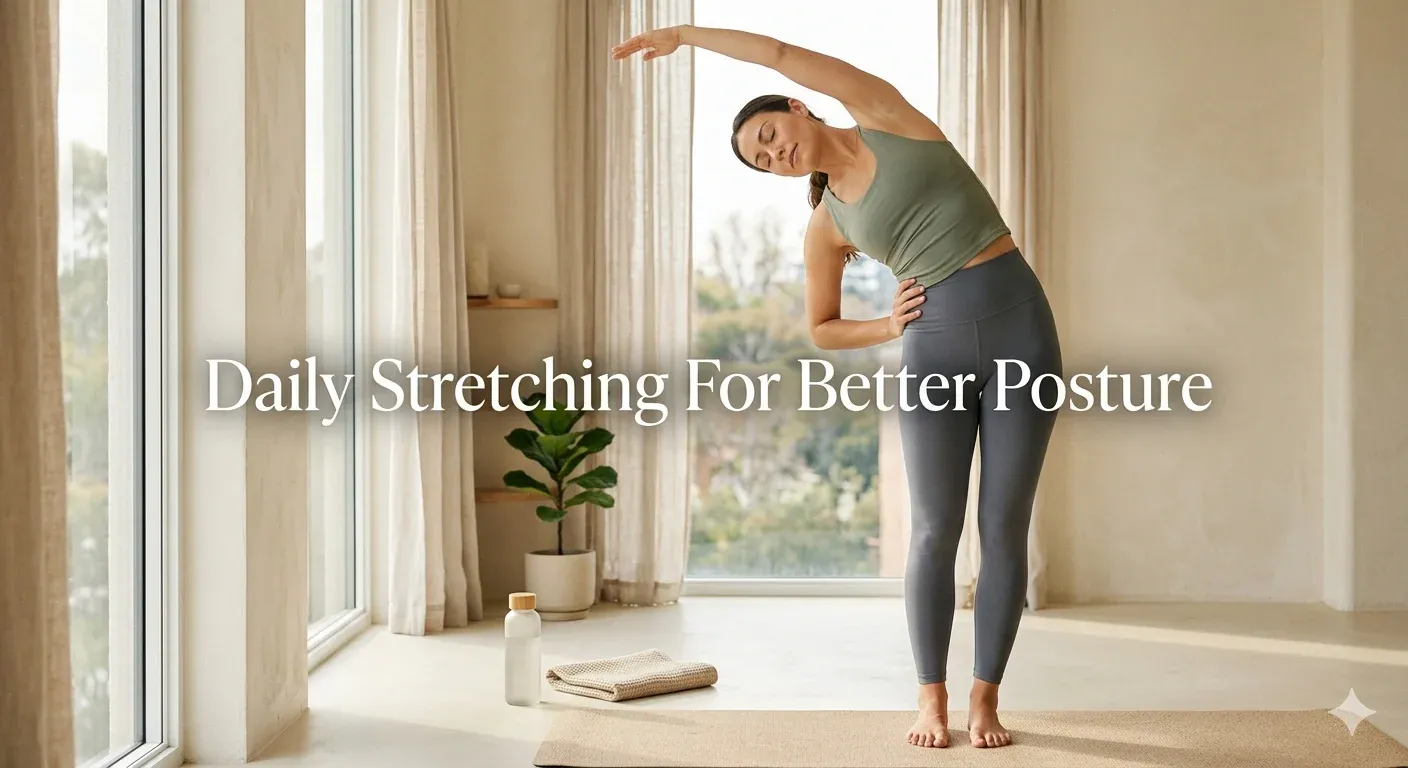
- Neck Side Stretch (20-30 seconds per side): Gently tilt ear toward shoulder, using hand for light assistance if needed. Keep opposite shoulder relaxed and down. This releases tension contributing to forward head posture.
- Child's Pose with Side Reach (30 seconds per side): From kneeling, sit back on heels and extend arms forward. Walk hands to one side to stretch the lateral torso and release spinal compression.
This sequence addresses the most common postural deviations while remaining accessible for beginners. For those building comprehensive wellness practices, pairing stretching with stress management techniques enhances both physical and mental recovery.
Progression Guidelines
As your flexibility improves, adjust your routine to continue challenging your body:
- Weeks 1-2: Focus on form and breathing; hold stretches for 20-30 seconds; prioritize consistency over intensity
- Weeks 3-4: Increase hold times to 30-45 seconds; add a second round of the sequence if time allows
- Weeks 5-8: Introduce dynamic variations (gentle movement within the stretch); explore deeper ranges only if comfortable
- Week 9+: Maintain the routine as a daily habit; consider adding targeted stretches for specific areas of tension
Remember that progress isn't linear. Some days you'll feel more flexible than others—this is normal. What matters is showing up consistently. For readers tracking broader wellness metrics, understanding how recovery influences physical changes helps set realistic expectations for posture improvement timelines.
Common Stretching Mistakes That Hinder Progress
Even well-intentioned stretching can backfire if done incorrectly. Avoiding these pitfalls ensures your efforts support rather than undermine your postural goals.
Mistake 1: Bouncing or Ballistic Stretching
Why it's problematic: Bouncing triggers the stretch reflex, causing muscles to contract rather than lengthen. This can lead to micro-tears and increased tension over time.
Solution: Use static stretching—hold positions gently without movement. If you prefer dynamic stretching, perform controlled movements through a comfortable range of motion, not to the point of strain.
Mistake 2: Stretching Through Pain
Why it's problematic: Pain signals tissue stress. Pushing through discomfort can cause injury and actually increase muscle guarding, making tightness worse.
Solution: Aim for a gentle pull or mild tension, never sharp pain. If a stretch hurts, reduce the intensity or try a modified variation. For those managing chronic discomfort, consulting resources on gentle care principles reinforces the value of working with your body, not against it.
Mistake 3: Neglecting Breathing
Why it's problematic: Holding your breath increases muscle tension and reduces the nervous system's ability to relax into the stretch.
Solution: Practice diaphragmatic breathing throughout each stretch. Inhale deeply through your nose, exhale slowly through your mouth. Let each exhale help you release a bit deeper into the position.
Mistake 4: Stretching Cold Muscles Aggressively
Why it's problematic: Cold muscles are less pliable and more prone to strain. Aggressive stretching without preparation can cause injury.
Solution: Perform 2-3 minutes of light movement (marching in place, arm circles, gentle torso twists) before stretching. This increases blood flow and prepares tissues for lengthening.
Integrating Stretching Into Your Daily Life
The biggest barrier to consistent stretching isn't time—it's remembering to do it. These strategies help embed stretching into your existing routines.
Habit Stacking for Stretching Consistency
Attach your stretching practice to an existing habit you already perform reliably:
- After morning coffee: While your coffee brews or as you finish your first cup, complete your 10-minute sequence
- Before evening screen time: Stretch before turning on the TV or opening your laptop for leisure
- Post-workout cooldown: If you exercise, make stretching the final 10 minutes of your session
- Before bed: Gentle stretching can support relaxation and improve sleep quality
For readers interested in behavioral design, habit stacking frameworks provide additional strategies for building sustainable routines.
Micro-Stretching Throughout the Day
Beyond your dedicated routine, brief "movement snacks" can reinforce postural improvements:
- Desk chest opener: Every hour, clasp hands behind your back and lift chest for 15 seconds
- Seated spinal twist: While sitting, gently rotate torso to one side, hold 10 seconds, repeat other side
- Standing hip flexor reset: After prolonged sitting, stand and gently shift weight to stretch front of hip for 15 seconds per side
- Neck release: Gently tilt ear to shoulder for 10 seconds per side when you notice shoulder tension
These micro-movements take less than a minute each but accumulate significant postural benefits over time. For those managing busy schedules, integrating these with time-efficient fitness approaches maximizes impact without adding time burden.
Measuring Progress and Setting Realistic Expectations
Understanding what changes to expect—and when—helps maintain motivation and adjust your approach as needed.
Timeline for Postural Improvements
Weeks 1-2: You may notice increased body awareness and reduced muscle tension after stretching sessions. Posture changes may not yet be visible but internal shifts are occurring.
Weeks 3-4: Others may comment that you "stand taller." You might notice reduced end-of-day fatigue and less frequent tension headaches.
Weeks 5-8: Photographic comparisons may show visible postural improvements: shoulders appear more level, head positioning more neutral, spinal curves more balanced.
Week 9+: New postural patterns become more automatic. You may find yourself naturally correcting your posture throughout the day without conscious effort.
Individual timelines vary based on starting posture, consistency, and other lifestyle factors. For readers tracking multiple wellness goals, understanding how consistency compounds results across different health domains reinforces the value of patience.
Simple Self-Assessment Methods
Track your progress without special equipment:
- Wall test: Stand with heels, buttocks, shoulders, and head against a wall. Note how many fingers fit between your lower back and the wall (normal: 1-2 fingers)
- Photographic comparison: Take side-profile photos monthly in consistent lighting and clothing to observe postural changes
- Comfort metrics: Note frequency of neck pain, shoulder tension, or lower back discomfort; improvements often precede visible changes
- Functional checks: Can you look over your shoulder while driving with less strain? Does reaching overhead feel easier?
These assessments provide objective feedback while keeping focus on how you feel, not just how you look. For those interested in holistic wellness tracking, exploring mind-body connections highlights how posture improvements often correlate with enhanced confidence and mood.
Supporting Stretching With Complementary Practices
Stretching works best as part of a comprehensive approach to postural health. These practices amplify your results.
Strengthening Postural Muscles
While stretching lengthens tight muscles, strengthening weak ones creates balance. Focus on:
- Mid-back and rear shoulders: Rows, face pulls, or band pull-aparts counteract forward shoulder posture
- Deep core: Dead bugs, bird-dogs, or planks support spinal alignment without straining the lower back
- Glutes: Bridges or clamshells help stabilize the pelvis and reduce lower back compensation
For readers seeking accessible strength work, home-based fitness approaches offer effective exercises requiring minimal equipment.
Ergonomic Environment Adjustments
Your surroundings influence posture as much as your stretching routine:
- Workstation setup: Position monitors at eye level, keep elbows at 90 degrees, and ensure feet rest flat on the floor
- Sleep positioning: Use a pillow that keeps your neck aligned with your spine; side sleepers may benefit from a pillow between knees
- Phone use: Hold devices at eye level rather than looking down to reduce "text neck" strain
These adjustments reduce the postural stress your stretching routine must counteract. For those creating wellness-focused spaces, intentional environment design supports both physical and mental well-being.
Mindful Movement Integration
Practices like yoga, tai chi, or Pilates combine stretching, strengthening, and body awareness—creating synergistic benefits for posture.
Even 10-15 minutes of mindful movement 2-3 times weekly can accelerate postural improvements. For readers exploring gentle movement modalities, principles of gentle consistency apply equally to movement practices.
When to Seek Professional Guidance
While daily stretching benefits most people, certain situations warrant professional evaluation.
Red Flags Requiring Assessment
- Persistent pain: If stretching increases rather than decreases discomfort, consult a physical therapist or healthcare provider
- Numbness or tingling: These symptoms may indicate nerve involvement requiring specialized care
- Limited progress after 8-12 weeks: If consistent stretching yields no improvement, a professional can identify underlying factors
- History of injury: Previous musculoskeletal injuries may require modified stretching approaches
For readers navigating healthcare decisions, specialist selection frameworks offer transferable principles for finding qualified movement professionals.
Conclusion: Posture as a Practice, Not a Destination
Improving posture through daily stretching isn't about achieving a perfect position—it's about cultivating awareness, flexibility, and resilience that support your body through daily life. The benefits extend beyond appearance: better posture can reduce pain, improve breathing, enhance movement efficiency, and even boost confidence.
Start small: commit to just 5 minutes of stretching today. Notice how your body feels during and after. Let that experience guide your next session. Over weeks and months, these small moments accumulate into meaningful change.
Remember that your posture reflects your life—your work, your stress, your movement patterns, your rest. Stretching is one powerful tool for supporting your body, but it works best alongside adequate sleep, stress management, and mindful movement throughout your day. For those building holistic wellness practices, integrating posture care with intentional living principles creates sustainable foundations for long-term health.
Your body is designed to move, to adapt, to heal. With consistent, gentle stretching, you're not fixing something broken—you're honoring your body's innate capacity for balance and strength. That's a practice worth showing up for, one stretch at a time.