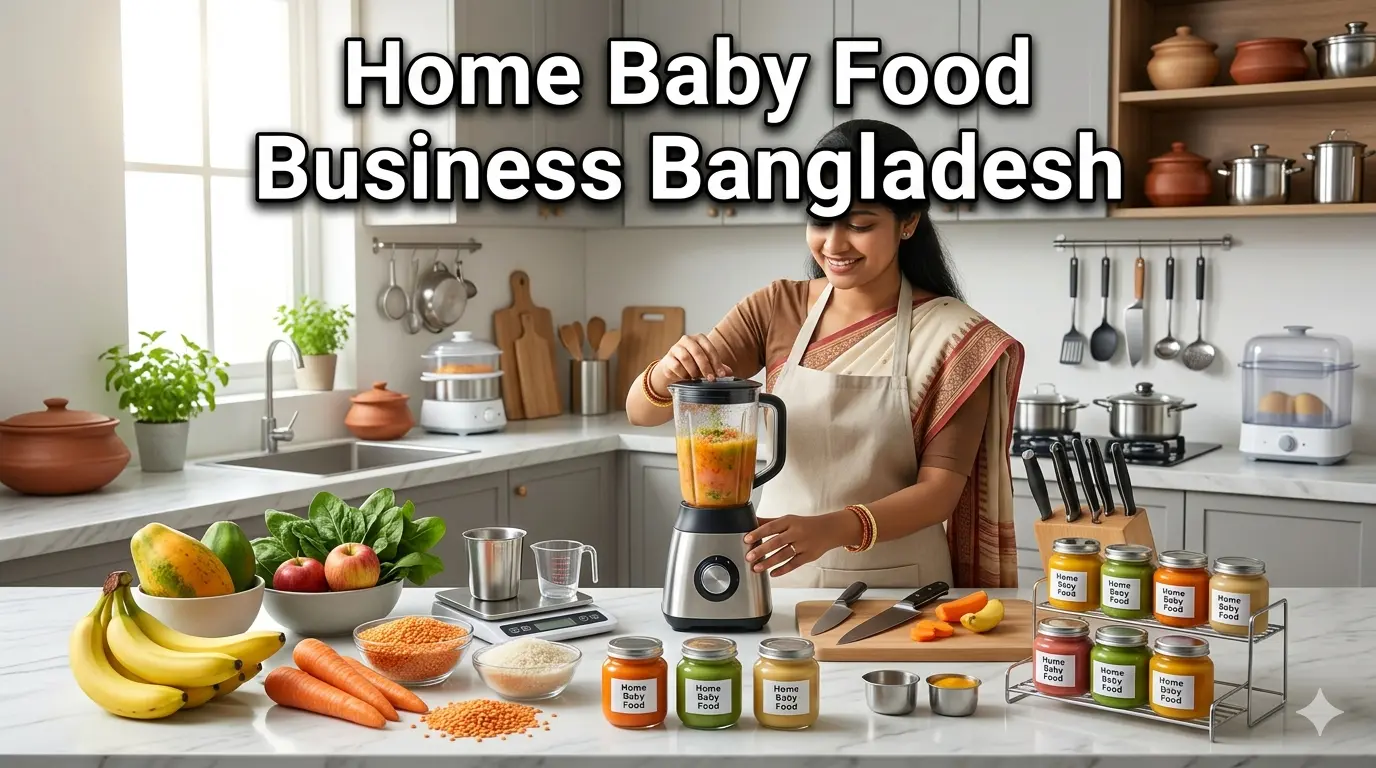
The growing awareness about infant nutrition and the increasing number of working parents in Bangladesh have created a booming demand for healthy, convenient baby food options. While international brands dominate supermarket shelves, there's a significant market gap for affordable, culturally appropriate, and fresh homemade baby food. This presents an excellent opportunity for aspiring entrepreneurs—especially mothers and caregivers—to transform their home kitchens into profitable baby food businesses.
Starting a baby food business from your home kitchen in Bangladesh offers numerous advantages: low startup costs, flexible working hours, the ability to use locally available ingredients, and the satisfaction of providing nutritious meals to infants and toddlers. With proper planning, adherence to food safety standards, and strategic marketing, you can build a sustainable business that generates good income while making a positive impact on children's health.
This comprehensive guide walks you through every aspect of launching and running a successful baby food business from your home in Bangladesh. From understanding legal requirements and obtaining necessary licenses to recipe development, packaging, pricing, and marketing strategies, you'll find practical, actionable information tailored specifically for the Bangladeshi market. Whether you're a stay-at-home mom looking to earn extra income or an entrepreneur seeking to enter the food industry, this guide provides the roadmap to turn your culinary skills and passion for child nutrition into a thriving business venture.
Why Baby Food Business Is Profitable in Bangladesh
Understanding the market dynamics helps you assess the potential of this business opportunity:
Growing Market Demand: Bangladesh has approximately 30 million children under the age of 5, creating a massive potential customer base. With increasing urbanization, more dual-income families, and rising awareness about proper infant nutrition, the demand for convenient, healthy baby food continues to grow exponentially.
Limited Local Competition: While international brands like Cerelac, Heinz, and Gerber are available, they're often expensive for average Bangladeshi families and may not align with local taste preferences. There's a significant gap in the market for affordable, locally-made baby food that uses familiar ingredients like rice, lentils, local fruits, and vegetables.
Health Consciousness: Modern Bangladeshi parents are increasingly concerned about preservatives, additives, and artificial ingredients in commercial baby food. They're actively seeking natural, organic, and homemade alternatives, creating perfect conditions for home-based baby food businesses.
Cultural Relevance: Bangladeshi babies need nutrition that aligns with local dietary patterns and cultural preferences. Homemade baby food can incorporate traditional ingredients like khichuri, dal, local fish, and seasonal fruits—options that imported brands don't offer.
Low Entry Barriers: Compared to other food businesses, baby food production requires relatively modest initial investment. You can start small from your existing kitchen, gradually expanding as your customer base grows.
Legal Requirements and Licensing
Before you start producing and selling baby food, you must comply with Bangladesh's food safety regulations. This is especially critical for baby food, as it's considered a sensitive product category.
Essential Licenses and Registrations
1. Trade License:
Obtain a trade license from your local city corporation or municipality. This is the basic business registration required for any commercial activity in Bangladesh.
- Required documents: National ID, TIN certificate, rental agreement or property ownership papers, passport-size photographs
- Cost: BDT 2,000-5,000 depending on business size
- Processing time: 7-15 days
2. BSTI License (Bangladesh Standards and Testing Institution):
For baby food production, BSTI certification is mandatory. This ensures your products meet national quality and safety standards.
- You'll need to comply with BDS (Bangladesh Standard) specifications for baby food
- Requires inspection of your production facility (home kitchen)
- Product testing in BSTI laboratory
- Cost: BDT 10,000-25,000 depending on product range
- Validity: 2 years, renewable
3. Food Safety License:
Under the Food Safety Act 2013, all food businesses must obtain a food safety license from the Bangladesh Food Safety Authority (BFSA).
- Requires food handler training and certification
- Kitchen inspection for hygiene compliance
- Cost: BDT 5,000-15,000
4. TIN and VAT Registration:
Register for Tax Identification Number (TIN) and VAT if your annual turnover exceeds the threshold limit (currently BDT 30 lakh for most businesses).
5. Fire Safety Certificate:
Depending on your production scale, you may need a fire safety certificate from the local fire service.
Important Note:
While these requirements may seem daunting, start by consulting with a business consultant or lawyer who specializes in food business licensing. They can guide you through the process efficiently. Some entrepreneurs start with small-scale, direct-to-consumer sales while they complete the licensing process, but ensure you're operating within legal boundaries.
Setting Up Your Home Kitchen for Commercial Production
Your home kitchen needs modifications to meet commercial food production standards and ensure food safety.
Essential Equipment
1. Food Preparation Equipment:
- Commercial-grade blender/food processor: BDT 8,000-20,000. Essential for making smooth purees. Brands like Philips, Walton, or local commercial brands work well.
- Steamer: BDT 3,000-8,000. Steaming preserves nutrients better than boiling.
- Large cooking pots and pans: Stainless steel, BDT 5,000-10,000
- Kitchen scale: Digital, accurate to 1 gram, BDT 1,000-2,000
- Measuring cups and spoons: BDT 500-1,000
2. Storage and Preservation:
- Refrigerator: If you don't have one, invest in a good quality fridge (BDT 25,000-40,000). Essential for storing fresh ingredients and finished products.
- Freezer: For batch production and extending shelf life, BDT 20,000-35,000
- Airtight containers: For ingredient storage, BDT 2,000-5,000
3. Packaging Equipment:
- Sealing machine: For jar/bottle sealing, BDT 3,000-8,000
- Label printer: For professional labels, BDT 5,000-15,000 (optional initially)
- Filling funnel: For hygienic filling, BDT 300-800
4. Safety and Hygiene:
- Food-grade gloves: Disposable, BDT 500-1,000 per box
- Face masks and hairnets: BDT 500-1,000
- Sanitizers and cleaning supplies: BDT 2,000-3,000 monthly
- Separate cutting boards: Color-coded for different food types, BDT 1,000-2,000
Kitchen Modifications
1. Dedicated Production Area:
Designate a specific area of your kitchen exclusively for baby food production. This area should be:
- Separate from regular family cooking areas when possible
- Well-ventilated with proper exhaust
- Easy to clean and sanitize
- Free from pests and contaminants
2. Flooring and Walls:
- Smooth, non-porous, easy-to-clean surfaces
- Light-colored tiles preferred
- No cracks or crevices where bacteria can hide
3. Water Supply:
- Ensure access to clean, potable water
- Install water purifier if needed (BDT 8,000-20,000)
- Separate sink for handwashing (mandatory for BSTI compliance)
4. Waste Management:
- Proper waste disposal system with covered bins
- Separate bins for organic and non-organic waste
- Regular waste removal schedule
Recipe Development and Nutritional Standards
Creating nutritious, age-appropriate baby food recipes is the heart of your business. Your recipes must meet infants' nutritional needs while being appealing and safe.
Understanding Age-Appropriate Nutrition
Stage 1 (6-8 months):
- Single-ingredient purees
- Very smooth consistency
- Easy to digest foods
- Examples: Rice cereal, mashed banana, steamed apple puree, carrot puree, sweet potato puree, dal water
Stage 2 (8-10 months):
- Combination foods
- Slightly thicker consistency
- Introduction of proteins
- Examples: Rice and lentil khichuri, vegetable and chicken puree, fish and potato mash, fruit combinations
Stage 3 (10-12 months):
- More complex flavors
- Soft, small pieces (not just purees)
- Varied textures
- Examples: Soft vegetable rice, minced meat with vegetables, soft fish curry (mild), yogurt with fruit
Popular Bangladeshi Baby Food Recipes
1. Traditional Khichuri Puree:
- Ingredients: Rice, moong dal, vegetables (carrot, pumpkin, potato)
- Steam or pressure cook until very soft
- Blend to appropriate consistency
- No salt or spices for under-1-year babies
- Shelf life: 3 days refrigerated, 1 month frozen
2. Local Fruit Purees:
- Papaya: Rich in vitamins, easy to digest
- Mango (seasonal): Popular taste, high vitamin A
- Guava: High vitamin C, fiber
- Jackfruit: Iron-rich, unique to Bangladesh
3. Vegetable Combinations:
- Pumpkin and carrot: Beta-carotene rich
- Spinach and potato: Iron and carbohydrates
- Bottle gourd (lau) and rice: Light, easy to digest
- Mixed vegetable puree: Variety of nutrients
4. Protein-Rich Options:
- Lentil (dal) puree: Affordable protein source
- Fish puree (ruhi, katla): Omega-3, calcium
- Chicken and vegetable blend: Complete protein
- Egg yolk puree (after 8 months): Iron, choline
Important Recipe Guidelines
Avoid for Babies Under 1 Year:
- Salt: Babies' kidneys can't process it
- Sugar: Risk of tooth decay, preference for sweet
- Honey: Risk of botulism
- Cow's milk as main drink: Hard to digest
- Strong spices: Can upset delicate digestion
Preservation Methods:
- Refrigeration: 2-3 days maximum
- Freezing: Up to 1 month in ice cube trays, then transfer to freezer bags
- Pressure canning: For shelf-stable products (requires BSTI approval)
Packaging and Labeling Requirements
Professional packaging and proper labeling are crucial for baby food business success and legal compliance.
Packaging Options
1. Glass Jars:
- Pros: Premium look, reusable, doesn't leach chemicals, maintains food quality
- Cons: Heavier, fragile, higher shipping cost
- Cost: BDT 15-30 per jar (100-150ml)
- Best for: Fresh/refrigerated products, premium positioning
2. BPA-Free Plastic Containers:
- Pros: Lightweight, unbreakable, lower cost
- Cons: Less premium perception, environmental concerns
- Cost: BDT 8-15 per container
- Best for: Frozen products, budget-friendly options
3. Vacuum-Sealed Pouches:
- Pros: Convenient, portable, longer shelf life
- Cons: Requires sealing machine, higher initial investment
- Cost: BDT 5-10 per pouch
- Best for: Ready-to-eat products, on-the-go parents
Labeling Requirements (BSTI/BFSA Compliance)
Your labels must include:
- Product name: Clear, not misleading
- Ingredients list: In descending order by weight
- Nutritional information: Per 100g serving (calories, protein, fat, carbohydrates, vitamins)
- Age recommendation: "Suitable for 6+ months" etc.
- Net weight: In grams or milliliters
- Manufacturing date: DD/MM/YYYY format
- Best before/Expiry date: Clear and prominent
- Storage instructions: "Keep refrigerated," "Consume within 3 days of opening," etc.
- Manufacturer details: Your business name, address, contact number
- License numbers: BSTI license number, BFSA registration
- Allergen information: "Contains: Fish" or "May contain traces of nuts"
- Preparation instructions: If heating is required
Label Design Tips
- Use clear, easy-to-read fonts
- Include appealing images of ingredients (not the actual baby)
- Use soft, baby-friendly colors (pastels work well)
- Highlight key benefits: "No Preservatives," "100% Natural," "Organic"
- Make it professional—consider hiring a graphic designer (BDT 2,000-5,000)
Pricing Strategy and Cost Calculation
Setting the right price is crucial for profitability while remaining competitive in the Bangladeshi market.
Cost Components
Calculate your cost per unit by including:
1. Direct Costs:
- Raw ingredients: Calculate exact cost per batch
- Packaging materials: Jar/container, lid, label
- Utilities: Gas, electricity, water (allocate per unit)
- Labor: Your time or hired help (if applicable)
2. Indirect Costs:
- Equipment depreciation
- License and certification fees (amortized)
- Marketing and advertising
- Transportation/delivery
- Miscellaneous expenses
Pricing Formula
Basic Formula:
Selling Price = Total Cost × (1 + Profit Margin)
Example Calculation:
For 100g jar of vegetable puree:
- Ingredients (rice, vegetables, lentils): BDT 8
- Jar and lid: BDT 20
- Label: BDT 3
- Utilities: BDT 2
- Labor: BDT 5
- Total Cost: BDT 38
With 40% profit margin:
Selling Price = 38 × 1.40 = BDT 53 (round to BDT 55)
Market-Based Pricing
Research competitor prices in Bangladesh:
- International brands: Cerelac (100g): BDT 120-150
- Local commercial brands: BDT 80-120 per 100g
- Homemade/fresh baby food: BDT 50-100 per 100g
Positioning Strategy:
- Budget: BDT 40-60 per 100g (high volume, lower margin)
- Mid-range: BDT 60-90 per 100g (balanced approach)
- Premium: BDT 90-150 per 100g (organic, specialized, artisanal)
Bundle Pricing
Offer discounts for bulk purchases:
- Single jar: BDT 55
- Pack of 5: BDT 250 (BDT 50 each)
- Pack of 10: BDT 450 (BDT 45 each)
- Monthly subscription: BDT 1,500 for 40 jars (BDT 37.50 each)
Marketing and Sales Strategies
Effective marketing is essential to build your customer base and grow your baby food business in Bangladesh.
Digital Marketing
1. Facebook Page and Groups:
- Create a professional business page
- Post regularly: product photos, nutritional tips, customer testimonials
- Join parenting groups (Dhaka Moms, Bangladesh Parents, etc.)
- Run targeted Facebook ads (BDT 500-2,000 per campaign)
- Use Facebook Marketplace for local sales
2. Instagram:
- Visual platform perfect for food products
- Post high-quality photos of your products
- Share behind-the-scenes content (kitchen setup, ingredient sourcing)
- Use relevant hashtags: #BabyFoodBD #HomemadeBabyFood #DhakaMoms
- Instagram Stories for daily updates and promotions
3. WhatsApp Business:
- Create a business profile
- Use catalog feature to showcase products
- Send regular updates to customer list
- Quick response to inquiries
- Take orders directly through WhatsApp
4. Website/E-commerce:
- Simple website with product listings (BDT 5,000-15,000)
- Online ordering system
- Blog with parenting and nutrition content (SEO benefit)
- Customer reviews and testimonials
Offline Marketing
1. Pediatrician Partnerships:
- Visit local pediatricians and child specialists
- Provide free samples for their recommendation
- Leave product brochures in waiting rooms
- Offer referral commissions (ethical and legal)
2. Mom Groups and Community Events:
- Attend parenting workshops and baby fairs
- Set up stalls at community events
- Offer free tasting samples
- Distribute business cards and flyers
3. Local Shops and Pharmacies:
- Partner with local grocery stores
- Place products in pharmacies with baby sections
- Consignment basis initially (pay after sale)
- Provide attractive display materials
Content Marketing
1. Educational Content:
- Write blog posts about baby nutrition
- Create videos showing recipe preparation
- Share weaning guides and feeding tips
- Address common parental concerns
2. Customer Engagement:
- Respond promptly to inquiries
- Encourage customer reviews and testimonials
- Share customer success stories
- Run contests and giveaways
Delivery and Distribution
Efficient delivery is crucial, especially for fresh baby food with limited shelf life.
Delivery Options
1. Self-Delivery:
- Best for local customers (within 5-10 km)
- Use your own vehicle or bicycle
- Control over delivery quality
- Build personal relationships with customers
- Cost: Fuel and time
2. Courier Services:
- Pathao: Same-day delivery, BDT 60-120 per delivery
- RedX: Reliable, BDT 80-150 per delivery
- Steadfast: Good for scheduled deliveries
- Frozen products: Use insulated bags with ice packs
3. Subscription Model:
- Weekly or monthly delivery schedules
- Pre-packed meal plans
- Discounts for subscribers
- Better inventory planning
Packaging for Delivery
- Use insulated bags for temperature-sensitive products
- Include ice packs for refrigerated items
- Secure packaging to prevent breakage
- Clear labeling: "Perishable," "Keep Refrigerated"
- Include handling instructions
Quality Control and Food Safety
Maintaining consistent quality and safety is non-negotiable in the baby food business.
Daily Quality Checks
- Ingredient inspection: Check freshness, quality, expiry dates
- Temperature control: Monitor refrigerator/freezer temperatures daily
- Hygiene practices: Handwashing, clean uniforms, sanitized equipment
- Batch testing: Taste and texture checks for every batch
- pH testing: For shelf-stable products (if applicable)
Record Keeping
Maintain detailed records for traceability:
- Ingredient purchase records (supplier, date, batch number)
- Production logs (date, batch number, quantity, staff)
- Quality control checks
- Customer complaints and resolutions
- Sales records
Handling Complaints
Have a clear complaint resolution process:
- Respond within 24 hours
- Investigate thoroughly
- Offer replacement or refund if justified
- Document and learn from complaints
- Never argue with customers
Scaling Your Business
Once you've established a steady customer base, consider these growth strategies:
Product Line Expansion
- Age-specific products: Expand to toddler meals (1-3 years)
- Specialized diets: Organic, gluten-free, allergen-free options
- Snacks: Baby cookies, teething biscuits, fruit bars
- Beverages: Fresh fruit juices, smoothies (pasteurized)
Production Scaling
- Hire staff: Part-time helpers for production and delivery
- Upgrade equipment: Commercial-grade machines for efficiency
- Rent commercial kitchen: When home kitchen becomes insufficient
- Invest in preservation: Retort pouches, freeze-drying for longer shelf life
Market Expansion
- Geographic expansion: Serve more areas of Dhaka, then other cities
- Retail partnerships: Supply to supermarkets, baby stores
- Online marketplaces: List on Daraz, Pickaboo, Chaldal
- Export potential: Bangladeshi diaspora market (long-term goal)
Common Challenges and Solutions
Challenge 1: Short Shelf Life
Solution: Focus on fresh, refrigerated products with weekly delivery subscriptions. Consider freezing options or invest in proper preservation technology.
Challenge 2: Price Competition
Solution: Emphasize quality, freshness, and local ingredients. Offer subscription discounts. Target health-conscious parents willing to pay premium for quality.
Challenge 3: Regulatory Compliance
Solution: Work with a food safety consultant. Stay updated on BFSA regulations. Maintain meticulous records. Never compromise on safety standards.
Challenge 4: Customer Acquisition
Solution: Offer free samples to new customers. Leverage word-of-mouth through excellent service. Build relationships with pediatricians and parenting communities.
Challenge 5: Seasonal Demand
Solution: Diversify product range. Offer seasonal specials. Build subscription base for steady income. Create gift packs for special occasions.
Success Tips from Industry Experts
- Start small, think big: Begin with 3-5 products, master them, then expand
- Quality over quantity: Never compromise on ingredient quality or hygiene
- Build trust: Be transparent about ingredients, processes, and pricing
- Listen to customers: Adapt recipes based on feedback
- Network actively: Join entrepreneur groups, attend food business workshops
- Stay updated: Keep learning about infant nutrition, food safety, business management
- Be patient: Building a food business takes time; don't expect overnight success
- Document everything: Recipes, processes, costs, customer preferences
Conclusion: Your Journey to Success
Turning your home kitchen into a profitable baby food business in Bangladesh is an achievable and rewarding venture. The growing demand for healthy, convenient, and culturally appropriate baby food creates excellent opportunities for dedicated entrepreneurs.
Success in this business requires more than just good recipes—it demands commitment to food safety, understanding of infant nutrition, effective marketing, and excellent customer service. While the initial setup involves navigating licensing requirements and making necessary kitchen modifications, these investments lay the foundation for a sustainable, legally compliant business.
Start by mastering a few simple, nutritious recipes using locally available ingredients. Build your customer base through digital marketing and personal networks. Deliver consistent quality, and your reputation will grow through word-of-mouth—the most powerful marketing tool in Bangladesh.
Remember, you're not just selling baby food; you're providing parents with peace of mind, knowing their children are receiving nutritious, safe, and delicious meals. This sense of purpose, combined with solid business practices, can transform your home kitchen into a thriving enterprise that nourishes Bangladesh's next generation while securing your family's financial future.
Take the first step today. Research your local market, consult with food safety authorities, and start planning your baby food business. With dedication, quality, and customer focus, your home kitchen can become the foundation of a successful, impactful business venture.
Best wishes for your entrepreneurial journey!