

Why Hair Feels Dry Without Being Damaged: The Hidden Causes and Fixes
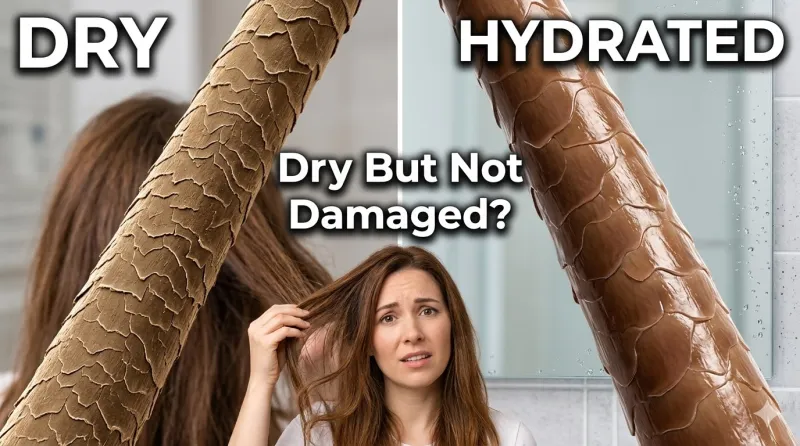
There is a specific kind of frustration that comes with running your fingers through your hair and feeling nothing but roughness, straw-like texture, and unmanageable frizz. You inspect the ends: no split ends. You pull a strand: it doesn't snap. You look in the mirror: there is plenty of length and density. Logically, your hair should feel soft. Yet, it feels like dry hay.
This paradox confuses countless people because the conventional wisdom dictates that "dry" equals "damaged." We assume that if our hair feels rough, we must have fried it with heat tools, bleached it too many times, or over-processed it. Consequently, we reach for heavy reconstructive masks, protein treatments, and bond-building serums designed to repair broken bonds. But if your hair isn't actually damaged, these products can make the problem worse, leaving your hair feeling even stiffer and more brittle.
The truth is that "dryness" and "damage" are two distinct biological states. Damage refers to the structural integrity of the hair shaft—broken bonds, lifted cuticles, and missing proteins. Dryness, on the other hand, often refers to a lack of water content or an inability to retain moisture, even when the structure is perfectly intact. Your hair can be structurally sound (undamaged) yet functionally dehydrated or blocked from absorbing hydration.
Understanding this distinction is the key to unlocking soft, supple hair. This comprehensive guide explores the hidden reasons why healthy hair can feel dry, ranging from porosity mismatches and mineral buildup to hormonal shifts and environmental factors. We will provide a diagnostic framework to identify your specific issue and offer targeted, science-backed solutions to restore that elusive softness without weighing your hair down or causing further imbalance.
The Core Distinction: Dehydration vs. Structural Damage
To solve the problem, we must first define the terms clearly.
Structural Damage
Damage occurs when the physical structure of the hair is compromised. This includes:
- Cuticle Erosion: The outer protective scales are stripped away or permanently lifted, leaving the inner cortex exposed.
- Bond Breakage: The disulfide bonds (which give hair strength) or hydrogen bonds (which give hair shape) are broken due to chemical processing or extreme heat.
- Protein Loss: Keratin is leached out of the hair shaft, leaving it porous, weak, and gummy when wet.
Signs of Damage: Split ends, excessive breakage, elasticity loss (hair snaps immediately when stretched), and a gummy texture when wet.
Dehydration (Functional Dryness)
Dehydration occurs when the hair shaft lacks water content, even if the cuticle is intact and the bonds are strong. Hair is hygroscopic, meaning it absorbs and releases water from the environment. When the internal water content drops below a certain threshold (typically around 10%), the hair feels rough, stiff, and static-prone.
Signs of Dehydration: Rough texture, lack of shine, frizz, difficulty detangling, but *no* excessive breakage or split ends. The hair feels "thirsty" rather than "broken."
If your hair falls into the second category, throwing protein at it is like trying to quench your thirst by eating a steak. You need water, not building blocks. But why is healthy hair unable to hold onto water? The answers lie in several often-overlooked factors.
Cause 1: The Porosity Mismatch (Low Porosity Hair)
One of the most common reasons for undamaged hair feeling dry is low porosity. Porosity refers to the hair's ability to absorb and retain moisture, determined by how tightly the cuticle scales lie against the shaft.
In low porosity hair, the cuticles are tightly bound and lay very flat. This is actually a sign of healthy, undamaged hair! However, this tight seal acts as a fortress, preventing water and moisturizing products from penetrating the shaft.
- The Symptom: Water beads up on the hair during washing instead of soaking in. Products sit on top of the hair, feeling greasy or waxy, while the inside remains dry and straw-like.
- The Mistake: People with low porosity hair often think they need more moisture, so they apply heavier creams and butters. These heavy ingredients just sit on the already sealed cuticle, creating buildup that blocks moisture even further, exacerbating the dry feeling.
The Fix: Heat and Humectants
To hydrate low porosity hair, you must temporarily lift the cuticles to allow water in.
- Apply Heat: Use a warm towel, a steamer, or a heated cap while deep conditioning. The heat physically lifts the tight cuticles, allowing moisture to penetrate.
- Use Liquid-Based Products: Avoid heavy butters (shea, cocoa) as the first ingredient. Look for water-based leave-ins with lightweight humectants like glycerin, aloe vera, or honey.
- Clarify Regularly: Buildup is the enemy of low porosity hair. Use a clarifying shampoo every 2-3 weeks to strip away the layer of product that is blocking hydration.
Cause 2: Hard Water and Mineral Buildup
If you live in an area with hard water, your "dry" hair might actually be coated in minerals. Hard water contains high levels of calcium, magnesium, and sometimes iron.
When you wash your hair with hard water, these minerals deposit onto the hair shaft. They create a microscopic, crystalline coating that roughens the surface of the hair. This coating prevents moisture from entering and makes the hair feel coarse, tangled, and dry, even though the hair underneath is perfectly healthy.
- The Symptom: Hair feels rough immediately after washing, even after conditioning. It may have a slight metallic smell or look dull. Blonde hair might turn brassy; dark hair might look dusty.
- The Mistake: Treating this with more conditioner. Conditioner cannot dissolve minerals; it just adds another layer on top of the mineral crust.
The Fix: Chelating and Acidic Rinses
You need to chemically remove the mineral deposits.
- Chelating Shampoos: Unlike regular clarifying shampoos, chelating shampoos contain ingredients like EDTA or citric acid that specifically bind to metal ions and wash them away. Use this once a month.
- Apple Cider Vinegar (ACV) Rinse: The acidity helps dissolve mineral buildup and smooths the cuticle. Mix 1 part ACV with 4 parts water and rinse after shampooing.
- Shower Filters: Install a filter on your showerhead to reduce the mineral content of the water at the source.
Cause 3: Product Buildup and Silicone Overload
In the quest for smoothness, many people use products rich in silicones (ingredients ending in -cone, -conol, -xane). Silicones are excellent at coating the hair to create slip and shine. However, non-water-soluble silicones accumulate over time.
This accumulation creates a plastic-like barrier around the hair. While it feels smooth initially, eventually, the buildup becomes thick and stiff, blocking moisture from entering the hair shaft. The hair feels dry and brittle because it is essentially encased in plastic, suffocating the strand.
- The Symptom: Hair loses its bounce, feels heavy yet dry, and products stop working effectively.
- The Mistake: Adding more serum or oil to combat the dryness, which only adds to the buildup.
The Fix: The Reset Wash
- Sulfate-Free Clarifiers: If you use water-soluble silicones, a gentle clarifier works. If you use heavy silicones, you may need a shampoo with mild sulfates occasionally to fully strip the buildup.
- Ingredient Audit: Check your products. If you see Dimethicone high on the list, ensure you are washing it out regularly. Consider switching to silicone-free alternatives if buildup is a chronic issue.
Cause 4: Hygral Fatigue (Over-Moisturizing)
Paradoxically, you can make your hair feel dry by moisturizing it *too much*. This condition is known as hygral fatigue.
Hair swells when it absorbs water and shrinks when it dries. If hair is constantly subjected to cycles of extreme swelling and shrinking (e.g., daily washing, leaving wet masks on for hours, sleeping with wet hair), the cell membrane complex becomes stressed. The hair shaft becomes overly porous and weak, losing its ability to regulate moisture. Ironically, this often manifests as a dry, mushy, or limp texture that feels rough once dried.
- The Symptom: Hair feels gummy when wet and frizzy/dry when dry. It lacks elasticity.
- The Mistake: Applying even more deep conditioners and moisture masks, which worsens the swelling cycle.
The Fix: Protein Balance
- Introduce Protein: You need to strengthen the hair structure to help it hold its shape. Use a light protein treatment (hydrolyzed wheat protein, keratin, or silk amino acids) to fill in the gaps and reduce excessive swelling.
- Reduce Washing Frequency: Give your hair a break from the wet-dry cycle. Try co-washing or refreshing styles instead of full wet-outs every day.
- Balance: Aim for a balance where hair feels elastic (stretches and returns) rather than mushy or brittle.
Cause 5: Environmental Factors and Humectants
The climate you live in plays a massive role in how your hair feels. Humectants are ingredients that draw moisture from the air into the hair (e.g., glycerin, sorbitol, propylene glycol).
- In High Humidity: Humectants draw too much moisture from the air, causing the hair to swell and frizz.
- In Low Humidity (Dry Climates/Winter): If the air is drier than your hair, humectants draw moisture *out* of your hair and into the air. This leaves your hair dehydrated and feeling like straw, even if you just applied a leave-in conditioner full of glycerin.
- The Mistake: Using the same products year-round regardless of the weather.
The Fix: Climate-Adaptive Products
- Dry Climate: Avoid high concentrations of humectants in winter. Look for "anti-humectant" products or those rich in emollients (oils, butters) and occlusives that seal moisture *in* rather than pulling it from the air.
- Humid Climate: Use balanced humectants paired with sealing oils to prevent excessive swelling.
Cause 6: Sebum Production and Scalp Health
Your scalp produces sebum, a natural oil that travels down the hair shaft to lubricate and protect it. As women enter their 30s and beyond, or due to hormonal fluctuations (thyroid issues, menopause, birth control changes), sebum production can decrease.
Without this natural lubricant, the hair cuticle creates more friction, feeling rough and dry. This is particularly common in long hair, where the natural oils simply cannot travel the full length of the strand before being washed away.
- The Symptom: Dry ends despite a healthy scalp, or overall dryness accompanied by a dry, itchy scalp.
- The Mistake: Over-washing with harsh shampoos that strip the little oil you do produce.
The Fix: Mimic Sebum
- Pre-Poo Oiling: Apply lightweight oils (argan, jojoba, sweet almond) to the mid-lengths and ends *before* shampooing. This protects the hair from stripping during the wash.
- Sealants: After washing, seal in water with a few drops of oil. Jojoba oil is chemically closest to human sebum and is excellent for mimicking natural lubrication.
- Scalp Massage: Stimulate blood flow to the scalp to encourage natural oil production.
Cause 7: Mechanical Friction and Heat (Without Breaking)
You can have hair that isn't chemically damaged but is mechanically stressed. Rough towel drying, brushing wet hair aggressively, sleeping on cotton pillowcases, and frequent blow-drying (even on low heat) can roughen the cuticle surface without causing immediate breakage.
This micro-abrasion lifts the cuticle scales slightly, increasing friction and making the hair feel rough and dry. It's like sandpapering a piece of wood; the wood isn't broken, but the surface is no longer smooth.
- The Symptom: Tangles easily, feels rough to the touch, lacks shine.
- The Mistake: Brushing harder to get the tangles out, which worsens the cuticle lifting.
The Fix: Gentle Handling
- Microfiber Towels: Swap terrycloth towels for microfiber or an old cotton t-shirt to reduce friction while drying.
- Silk/Satin Pillowcases: These allow hair to glide while you sleep, preventing friction-induced dryness.
- Detangle with Care: Only detangle when hair is saturated with conditioner, using a wide-tooth comb starting from the ends.
Diagnostic Checklist: Is It Damage or Dryness?
Still unsure? Perform these simple tests at home:
1. The Stretch Test
Take a wet strand of hair and gently stretch it.
- If it stretches slightly and returns: Healthy elasticity. Likely dehydration or buildup.
- If it stretches endlessly and doesn't return (or feels mushy): Hygral fatigue (over-moisturized). Needs protein.
- If it snaps immediately with little stretch: Structural damage or severe protein deficiency.
2. The Float Test (Porosity)
Drop a clean strand of hair into a glass of water.
- Sinks immediately: High porosity (likely damaged).
- Floats in the middle: Medium porosity (balanced).
- Floats at the top: Low porosity (healthy but resistant to moisture). If your hair feels dry and floats, you have a penetration issue, not a damage issue.
3. The Slide Test (Buildup)
Pinch a strand of dry hair near the root and slide your fingers down to the end.
- If you feel bumps or resistance: Product or mineral buildup.
- If it feels smooth but still looks dull: Likely low porosity or environmental dryness.
Action Plan: Restoring Softness to Undamaged Hair
Once you've identified the culprit, follow this targeted roadmap:
Scenario A: Low Porosity / Penetration Issue
- Step 1: Clarify with a sulfate-free clarifier to remove old buildup.
- Step 2: Deep condition with heat (use a steamer or hot towel) for 20 minutes.
- Step 3: Use lightweight, water-based leave-ins. Avoid heavy butters.
- Step 4: Seal with a light oil like argan or grapeseed.
Scenario B: Hard Water / Mineral Buildup
- Step 1: Use a chelating shampoo (look for EDTA or Phytic Acid).
- Step 2: Follow with an Apple Cider Vinegar rinse (1:4 ratio).
- Step 3: Deep condition to replenish moisture lost during clarification.
- Step 4: Install a shower filter.
Scenario C: Hygral Fatigue / Over-Moisturized
- Step 1: Stop all deep conditioning masks for 2 weeks.
- Step 2: Use a light protein reconstructor treatment.
- Step 3: Reduce washing frequency to minimize swelling cycles.
- Step 4: Ensure your leave-in has some protein content.
Scenario D: Environmental Dryness / Humectant Issues
- Step 1: Check your local dew point. If it's low (dry air), switch to products low in glycerin.
- Step 2: Focus on occlusives (oils, silicones, butters) to seal moisture in.
- Step 3: Use a humidifier in your bedroom while sleeping.
Scenario E: Lack of Natural Oils
- Step 1: Incorporate a pre-shampoo oil treatment.
- Step 2: Switch to a hydrating, sulfate-free shampoo.
- Step 3: Massage scalp regularly to stimulate sebum.
- Step 4: Trim ends occasionally to prevent mechanical wear from traveling up.
Common Myths About Dry Hair
Myth: "If my hair feels dry, I need a protein mask."
Fact: Protein strengthens, it doesn't hydrate. If your hair is dry due to lack of water (dehydration) or low porosity, protein will make it feel harder and straw-like. Only use protein if your hair is mushy or overly elastic.
Myth: "Natural oils moisturize hair."
Fact: Oils are sealants, not moisturizers. They repel water. You must apply water or a water-based leave-in *first*, then seal with oil. Putting oil on dry hair just coats dry hair in grease.
Myth: "Cold water rinses seal in moisture."
Fact: Cold water helps flatten the cuticle for shine, but it doesn't "seal" moisture inside if the hair wasn't hydrated to begin with. It's a finishing step, not a cure for dryness.
Myth: "Trimming makes hair less dry."
Fact: Trimming removes split ends (damage), but it doesn't change the moisture content of the remaining hair. If your healthy hair feels dry, cutting it won't fix the hydration issue.
Conclusion: Listening to Your Hair's True Needs
Feeling dry without being damaged is a confusing state, but it is also a solvable one. It signals that your hair's basic needs—water, balance, and protection—are being blocked or ignored, not that the hair itself is broken. By shifting your focus from "repairing damage" to "optimizing function," you can unlock the softness that is already waiting beneath the surface.
Whether it requires lifting tight cuticles with heat, dissolving mineral crusts with chelating agents, balancing protein and moisture, or simply adapting your routine to the changing seasons, the solution lies in specificity. Stop guessing and start observing. Perform the tests, identify your barrier, and apply the targeted fix. Your hair doesn't need to be rebuilt; it just needs to be understood. With the right approach, that straw-like texture can transform into the soft, resilient mane you thought was lost forever.
April 3, 2026 7:52 PM