Spoonie Body Care: Hygiene Hacks for Low Energy Days
Living with chronic illness, disability, or persistent fatigue means navigating a world designed for people with abundant energy. On low-energy days—when even brushing your teeth feels monumental—maintaining basic hygiene can become a source of stress, shame, or guilt. But here's the truth: taking care of your body doesn't require perfection, and "good enough" hygiene is still good hygiene. This guide offers practical, compassionate hygiene hacks specifically designed for spoonies—people who manage limited energy reserves using spoon theory—to help you feel clean, comfortable, and cared for, even on your hardest days.
Spoon theory, coined by Christine Miserandino, describes how people with chronic illness must budget their limited energy (represented as spoons) for daily tasks. A shower might cost three spoons; brushing teeth, one spoon; getting dressed, two spoons. When you're running low, every decision matters. Traditional self-care advice often ignores this reality, assuming unlimited energy and ability. Spoonie body care flips that script: it prioritizes energy conservation, adaptive tools, and self-compassion over rigid routines.
This comprehensive guide provides evidence-informed, community-tested strategies for maintaining hygiene when energy is scarce. We cover adaptive products, time-saving techniques, mental health support, and realistic routines that honor your limits while supporting your wellbeing. Whether you live with fibromyalgia, ME/CFS, lupus, depression, chronic pain, or any condition that limits your energy, these hacks are designed to reduce burden, not add to it.
Understanding Spoon Theory and Hygiene Challenges
Spoon theory isn't just a metaphor—it's a practical framework for managing chronic illness. Each day begins with a finite number of spoons (energy units). Every activity costs spoons: getting out of bed, preparing food, attending appointments, and yes, personal hygiene. When spoons run low, choices become critical. Do you shower or rest? Brush your hair or conserve energy for a medical appointment?
For spoonies, hygiene isn't just about cleanliness—it's about dignity, comfort, infection prevention, and mental wellbeing. However, traditional hygiene routines often demand more spoons than many people with chronic illness can spare. Standing for a full shower, washing long hair, applying lotions, or managing complex skincare routines can be physically painful or energetically impossible on bad days.
Common hygiene challenges for spoonies include:
- Physical limitations: Pain, weakness, or mobility issues make standing, reaching, or gripping difficult.
- Cognitive fatigue: Brain fog makes multi-step routines overwhelming or hard to remember.
- Sensory sensitivities: Water temperature, product scents, or textures may trigger discomfort or flare symptoms.
- Time constraints: Limited energy means prioritizing essential tasks; hygiene may feel like a luxury.
- Emotional burden: Shame or guilt about not meeting societal hygiene standards adds mental strain.
Recognizing these challenges is the first step toward developing sustainable solutions. Spoonie body care isn't about doing less—it's about doing what matters most, in ways that work for your body and energy levels.
Essential Hygiene Hacks for Low Energy Days
What are the best no-rinse hygiene options for low energy?
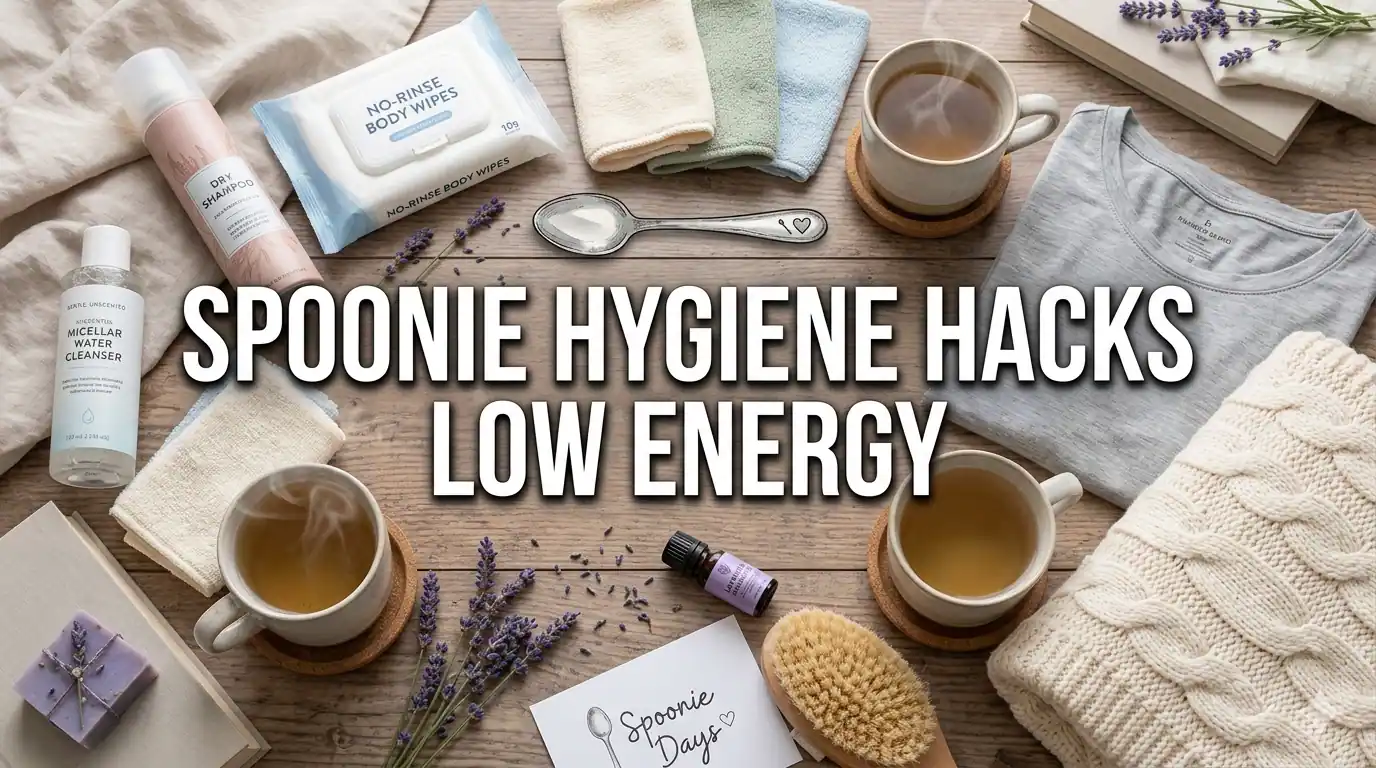
No-rinse products eliminate the need for standing in a shower or sink, saving significant energy. No-rinse body washes, cleansing wipes, dry shampoo, and waterless hand sanitizers allow you to freshen up with minimal effort. Look for fragrance-free, hypoallergenic options to reduce sensory triggers. Keep supplies within easy reach—bedside, bathroom counter, or mobility aid pocket—for maximum accessibility.
Top no-rinse solutions:
- No-rinse body wash: Foaming cleansers that wipe away dirt and odor without water. Apply with a washcloth, wipe clean, no rinsing needed.
- Bathing wipes: Pre-moistened cloths designed for full-body cleansing. Choose alcohol-free, pH-balanced formulas for sensitive skin.
- Dry shampoo: Absorbs oil at roots, refreshing hair between washes. Spray or powder formats work; apply at night for morning convenience.
- Waterless hand cleaner: Foam or gel sanitizers with moisturizers prevent dryness. Keep by bed, desk, or bag for quick use.
- Oral care wipes: Pre-pasted wipes or foam swabs clean teeth and gums when brushing feels impossible.
These products aren't "cheating"—they're adaptive tools that honor your energy limits while maintaining hygiene. Many are covered by insurance or available through medical supply companies if you have a prescription.
How can I shower with minimal energy expenditure?
Full showers don't have to be all-or-nothing. Adaptive strategies make bathing accessible even on low-spoon days:
Seated showering: Use a shower chair or bench to sit while washing. This conserves energy, reduces fall risk, and allows you to focus on cleaning rather than balancing. Install grab bars for added safety.
Targeted washing: Focus on high-impact areas: underarms, groin, feet, and face. These areas produce the most odor and benefit most from cleaning. Skip full-body washing when energy is limited.
Prep everything beforehand: Lay out towels, clothes, and products within arm's reach before starting. Use a shower caddy or over-the-door organizer to minimize reaching and bending.
Use handheld showerheads: Adjustable handheld sprayers let you direct water precisely, reducing the need to move or stand. Many install easily on existing fixtures.
Shorten duration: Set a timer for 5-10 minutes. Focus on efficiency, not perfection. A quick, targeted wash is better than skipping hygiene entirely.
Warm, not hot water: Hot water can worsen fatigue and dizziness. Lukewarm water is gentler on the body and helps conserve energy.
What adaptive tools make hygiene easier for spoonies?
The right tools can dramatically reduce the energy cost of hygiene tasks. Invest in adaptive equipment designed for accessibility:
- Long-handled sponges or brushes: Reach your back, feet, or hard-to-access areas without straining or twisting.
- Pump dispensers: Replace squeeze bottles with pump tops for soap, shampoo, and lotion. Easier to operate with limited hand strength or dexterity.
- Electric toothbrushes: Do the brushing motion for you, reducing hand fatigue. Many have timers to ensure thorough cleaning with minimal effort.
- Adaptive clothing: Magnetic closures, elastic waists, and front-opening designs simplify dressing after bathing.
- Non-slip mats and grab bars: Enhance safety in the bathroom, reducing anxiety and energy spent on balance.
- Reachers/grabbers: Retrieve items from shelves or floors without bending or stretching.
Many adaptive tools qualify for insurance coverage or tax deductions as medical equipment. Consult an occupational therapist for personalized recommendations—they're experts in matching tools to specific limitations.
Step-by-Step Low-Energy Body Care Routine
Having a flexible, modular routine reduces decision fatigue and ensures essential hygiene gets addressed even on tough days. This framework adapts to your available spoons:
Minimum viable routine (1-2 spoons):
- Use no-rinse body wipes for underarms, groin, and feet
- Apply dry shampoo to roots
- Clean teeth with oral care wipes or a quick brush
- Apply deodorant and lip balm
- Change into clean underwear and comfortable clothes
Moderate routine (3-4 spoons):
- Seated shower focusing on high-impact areas
- Wash face with gentle cleanser
- Brush teeth with electric toothbrush
- Apply moisturizer to dry areas only
- Style hair minimally or use protective style
Full routine (5+ spoons, good days):
- Complete shower with preferred products
- Full skincare routine if tolerated
- Hair wash and styling as desired
- Body lotion application
- Nail care and grooming
Key principles:
- Prioritize: Focus on hygiene tasks that impact comfort, health, or social confidence most.
- Batch tasks: Combine activities when possible (e.g., wash face while brushing teeth).
- Prep ahead: Keep supplies organized and accessible to reduce decision-making.
- Listen to your body: Stop if pain or fatigue increases; partial completion is still success.
- Celebrate effort: Acknowledge what you accomplished, not what you didn't.
Common Mistakes to Avoid in Spoonie Hygiene
Even well-intentioned hygiene efforts can backfire if they ignore energy limitations. Avoid these common pitfalls:
Mistake 1: All-or-nothing thinking
Believing that if you can't do a full shower, you shouldn't bother with any hygiene. This leads to skipping care entirely, which can worsen discomfort, skin issues, or self-esteem. Instead, embrace "good enough" hygiene—targeted cleaning, no-rinse products, or partial routines still provide benefits.
Mistake 2: Using products that trigger symptoms
Strong fragrances, harsh chemicals, or complex routines may worsen sensory sensitivities, skin reactions, or fatigue. Choose gentle, fragrance-free, hypoallergenic products. Patch test new items before full use.
Mistake 3: Ignoring mental health impact
Shame or guilt about hygiene struggles adds emotional burden that drains spoons further. Practice self-compassion: your worth isn't tied to meeting societal hygiene standards. Focus on comfort and health, not perfection.
Mistake 4: Over-investing in "solutions"
Buying numerous adaptive products without assessing actual needs wastes money and creates clutter. Start with one or two high-impact tools, test them, then expand if helpful. Consult occupational therapists or chronic illness communities for evidence-based recommendations.
Mistake 5: Skipping preventive care
On low-energy days, it's tempting to skip oral care, foot care, or skin checks. However, neglecting these can lead to infections, dental issues, or pressure sores that cost far more spoons to treat later. Build minimal preventive steps into your routine.
Expert Tips from the Chronic Illness Community
People living with chronic illness have developed ingenious, practical strategies through lived experience. Here are community-tested tips:
"The two-minute rule": If a hygiene task takes less than two minutes, do it immediately rather than postponing. Brushing teeth, applying deodorant, or washing your face can often be done quickly, preventing buildup that requires more effort later.
"Bedside hygiene station": Keep a small bin by your bed with essentials: wipes, dry shampoo, lip balm, deodorant, oral care wipes, and a change of clothes. On days when getting to the bathroom feels impossible, you can maintain basic hygiene from bed.
"Hygiene pairing": Link hygiene tasks to activities you already do. Wash your face while waiting for coffee to brew. Apply lotion while watching TV. Brush teeth during a podcast. This reduces the mental load of "starting" a new task.
"Spoon banking": On higher-energy days, do extra hygiene tasks to "bank" cleanliness for low-energy days. Wash hair thoroughly, trim nails, or do a full skincare routine when you have spoons, so you can skip or simplify later.
"Comfort-first products": Choose products that feel good to use, not just what's "recommended." If a certain scent soothes you or a texture feels comforting, that emotional benefit is valid and valuable. Hygiene should support wellbeing, not add stress.
"Ask for help without shame": If a caregiver, partner, or family member can assist with hygiene tasks, accept support graciously. Frame requests clearly: "Could you help me wash my hair today?" or "Would you mind setting up my shower chair?" Clear communication preserves dignity and conserves your energy.
Mental Health and Self-Compassion in Spoonie Care
Hygiene struggles aren't just physical—they're emotional. Chronic illness often brings grief over lost abilities, frustration with bodily limitations, and shame about not meeting societal expectations. Addressing the mental health aspect is essential for sustainable self-care.
Practice body neutrality: Instead of striving for body positivity (which can feel impossible on hard days), aim for body neutrality: acknowledging your body's needs without judgment. "My body needs cleaning today" is a neutral, actionable statement that avoids emotional weight.
Reframe "failure": Skipping a shower isn't failure—it's energy management. Every choice to conserve spoons for essential tasks is valid. Remind yourself: "I'm doing my best with the resources I have today."
Separate hygiene from worth: Your value as a person isn't determined by how clean you are. Societal pressure to maintain certain hygiene standards often ignores disability realities. Challenge internalized ableism by affirming: "My worth is inherent, not earned through productivity or appearance."
Seek community support: Connect with other spoonies through online forums, social media groups, or local organizations. Sharing struggles and solutions reduces isolation and provides practical advice from people who truly understand.
Consider therapy: A therapist specializing in chronic illness can help process grief, develop coping strategies, and address shame or anxiety around self-care. Many offer telehealth options for accessibility.
Frequently Asked Questions
How do I maintain hygiene during flare-ups?
During flare-ups, prioritize minimal, high-impact hygiene: no-rinse wipes for key areas, dry shampoo, oral care wipes, and clean clothes. Keep supplies accessible and simplify routines. Focus on comfort and infection prevention rather than aesthetics. Rest is also self-care—sometimes the most hygienic choice is conserving energy for healing.
What if I can't afford adaptive hygiene products?
Many adaptive solutions are low-cost or DIY: use a regular chair in the shower instead of a specialized bench, repurpose long-handled kitchen tools for bathing, or make your own dry shampoo with cornstarch and cocoa powder. Check with local disability organizations for equipment loans or grants. Prioritize one high-impact item at a time.
How do I handle hygiene when living with caregivers?
Communicate clearly about your needs and preferences. Create a written list of tasks you can do independently versus those requiring assistance. Establish routines that respect your autonomy while accepting necessary support. If possible, involve caregivers in planning adaptive strategies so everyone understands the goals and methods.
Is it okay to skip hygiene on very low-spoon days?
Yes. On extremely low-energy days, rest takes priority. Skipping hygiene occasionally won't harm your health. Focus on the bare minimum: changing underwear, using wipes for critical areas, or just rinsing your mouth. Self-compassion matters more than perfection. Tomorrow is another day to try again.
How can I reduce sensory overwhelm during hygiene?
Choose fragrance-free, dye-free products to minimize sensory triggers. Use lukewarm water instead of hot. Try soft washcloths instead of rough loofahs. Dim lights or use a shower cap to reduce visual stimulation. Play calming music or use noise-canceling headphones if sound is triggering. Create a predictable routine to reduce decision fatigue.
Conclusion: Honoring Your Limits While Caring for Yourself
Spoonie body care isn't about lowering standards—it's about redefining success. On low-energy days, success might mean wiping your face with a damp cloth instead of a full skincare routine. It might mean dry shampoo instead of washing hair. It might mean resting instead of showering. These choices aren't failures; they're intelligent energy management.
The hygiene hacks in this guide prioritize accessibility, adaptability, and self-compassion. They acknowledge that chronic illness changes the rules, and that's okay. By using adaptive tools, simplifying routines, and practicing mental flexibility, you can maintain hygiene in ways that honor your body's limits while supporting your wellbeing.
Remember: your worth isn't tied to productivity, appearance, or meeting arbitrary hygiene standards. You deserve care and comfort exactly as you are, on high-energy days and low-energy days alike. The goal isn't perfection—it's sustainable self-care that fits your reality.
Be gentle with yourself. Celebrate small victories. Ask for help when needed. And know that every effort you make to care for your body, however modest, is an act of resilience. You're not just managing hygiene—you're practicing radical self-compassion in a world that rarely accommodates chronic illness. That matters. You matter.