
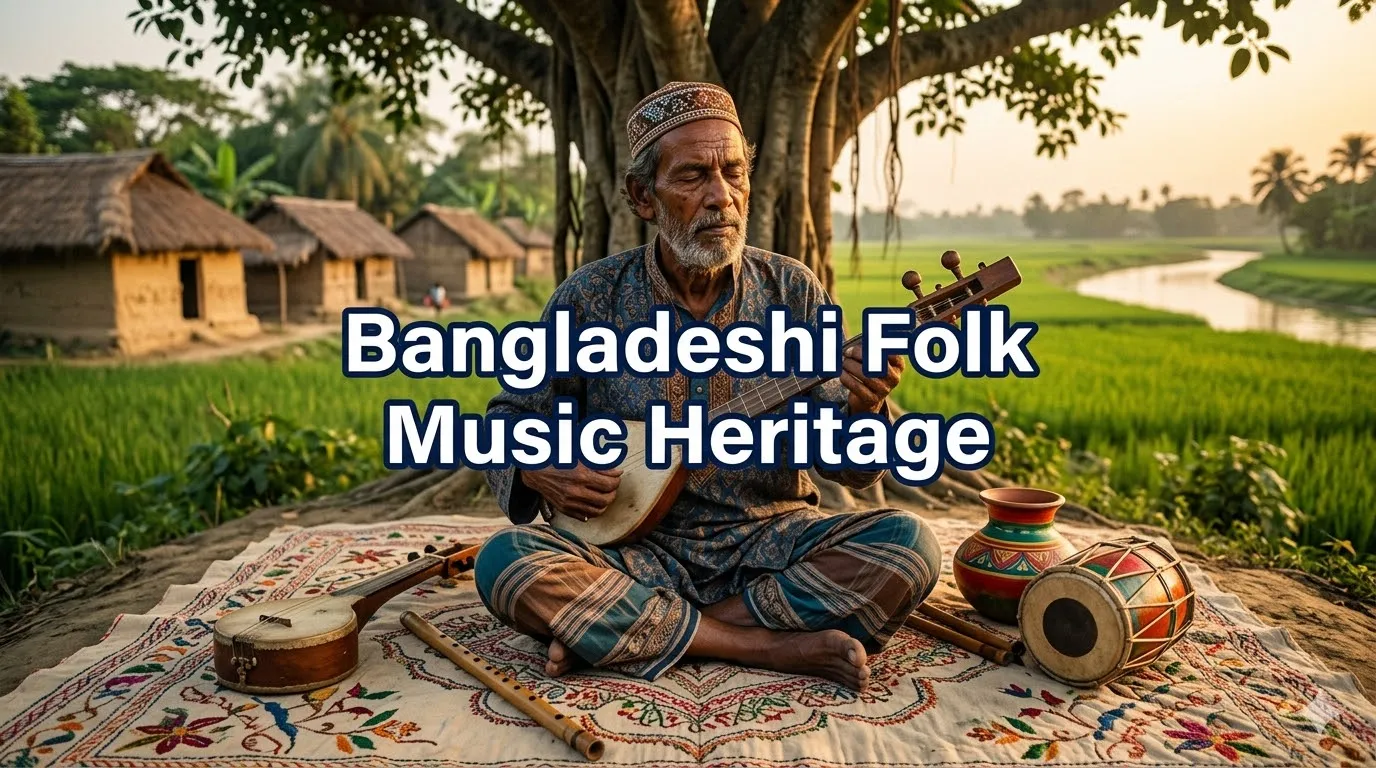
Understanding the Soul of Bangladeshi Folk Music
Bangladeshi folk music represents more than just melodies and rhythmsandmdash;it embodies the collective consciousness, struggles, spirituality, and daily life of the Bengali people. For centuries, this musical tradition has served as the voice of the common people, expressing their joys, sorrows, love, devotion, and resistance against oppression. From the riverine villages to the tea gardens, from the coastal areas to the northern plains, folk music permeates every aspect of Bangladeshi cultural life.
Unlike classical music, which follows strict rules and is often associated with elite culture, folk music emerges organically from the soil itself. It is passed down orally from generation to generation, evolving with each singer while maintaining its essential character. This living tradition reflects the agrarian lifestyle, the monsoon rhythms, the spiritual quest, and the social realities of rural Bangladesh.
The significance of Bangladeshi folk music extends far beyond entertainment. It serves as a historical record, preserving stories of resistance, migration, love, and social change. It functions as a spiritual practice, particularly in the Baul and Sufi traditions. It provides social commentary, addressing issues of inequality, injustice, and human rights. And perhaps most importantly, it creates community, bringing people together in shared cultural experiences that transcend class, religion, and ethnicity.
The Historical Roots and Evolution of Bengali Folk Traditions
To truly understand Bangladeshi folk music, we must trace its historical journey through centuries of cultural synthesis, religious movements, and social transformations. The folk music tradition of Bengal has deep roots stretching back over a millennium, shaped by indigenous practices, Buddhist and Hindu influences, Islamic Sufism, and colonial encounters.
Ancient Origins and Early Development:
The earliest forms of Bengali folk music emerged from the indigenous communities inhabiting the Bengal delta. These communities developed musical traditions closely tied to agricultural cycles, seasonal changes, and nature worship. Songs accompanied planting and harvesting, celebrated the arrival of monsoon rains, and honored local deities and spirits. This animistic foundation remains visible in many folk traditions today, particularly in rituals and festival music.
Between the 8th and 12th centuries, Buddhist and Hindu traditions significantly influenced Bengali music. The Charyapada, composed between the 8th and 12th centuries, represent some of the earliest written examples of Bengali literature and contain musical notations suggesting they were meant to be sung. These Buddhist mystic songs explored themes of spiritual liberation and inner experience, establishing patterns that would continue in later folk traditions.
The Bhakti Movement and devotional Music:
The medieval Bhakti movement (14th-17th centuries) profoundly shaped Bengali folk music. This devotional movement emphasized personal connection with the divine over ritual and caste hierarchy, making spiritual practice accessible to ordinary people. Vaishnava padavali kirtan, which narrates the love story of Radha and Krishna through song, became immensely popular and remains an important folk tradition today.
The kirtan tradition introduced call-and-response singing, rhythmic drumming, and ecstatic performance styles that influenced many other folk genres. It also established the practice of using music as a vehicle for spiritual transformation and community buildingandmdash;principles that would become central to the Baul tradition.
Sufi Influence and Syncretic Traditions:
With the arrival of Islam in Bengal, particularly from the 13th century onward, Sufi mystics brought their own musical traditions that blended with existing practices. Sufismand#39;s emphasis on divine love, spiritual ecstasy, and rejection of rigid orthodoxy resonated with Bengali sensibilities and existing Bhakti traditions. This convergence gave rise to uniquely syncretic forms of folk music that drew from both Hindu and Islamic traditions.
The Baul tradition, which emerged around the 16th-17th centuries, represents the pinnacle of this syncretic development. Bauls rejected religious labels, caste distinctions, and institutional authority, seeking instead the andquot;moner manushandquot; (the person of the heart)andmdash;the divine within. Their songs, performed with simple instruments like the ektara, express spiritual longing, humanist philosophy, and social critique.
Colonial Period and Folk Music Documentation:
The British colonial period (1757-1947) brought both challenges and opportunities for Bengali folk music. While colonial modernization disrupted traditional social structures and rural economies, it also sparked interest in documenting and preserving folk traditions. Scholars like Dinesh Chandra Sen began collecting folk songs and stories in the late 19th and early 20th centuries, recognizing their cultural value.
Rabindranath Tagore, though primarily known for his own compositions (Rabindra Sangeet), deeply appreciated folk music and incorporated folk elements into his work. He recognized folk music as an authentic expression of Bengali identity and worked to preserve and elevate these traditions. His engagement with Baul philosophy and music particularly influenced his spiritual and artistic development.
Post-Partition Evolution:
The 1947 partition of Bengal and the 1971 Bangladesh Liberation War profoundly impacted folk music. In East Pakistan (later Bangladesh), folk music became a vehicle for expressing Bengali cultural identity and resistance against West Pakistani domination. During the Language Movement of 1952 and the Liberation War, folk melodies and instruments were adapted for protest songs and patriotic anthems.
After independence, Bangladesh made efforts to preserve and promote folk music as part of national cultural heritage. Government institutions, cultural organizations, and individual artists worked to document traditions, train new generations of performers, and adapt folk music for contemporary audiences while maintaining authenticity.
Major Folk Music Genres of Bangladesh
Bangladeshi folk music encompasses diverse genres, each with distinct characteristics, themes, and performance contexts. Understanding these genres reveals the richness and complexity of this musical tradition.
Baul Music: The Mystical Minstrels
Baul music represents perhaps the most internationally recognized form of Bangladeshi folk music. The Bauls are mystic minstrels who wander from village to village, singing songs of spiritual seeking, human love, and social equality. Their philosophy rejects religious orthodoxy, caste hierarchy, and material attachment, emphasizing instead the pursuit of the divine within the human heart.
Key characteristics of Baul music:
- Spiritual themes: Baul songs explore the search for the andquot;moner manushandquot; (person of the heart), the eternal beloved who resides within. They use the language of human love to express divine longing.
- Simple instrumentation: Typically performed with ektara (one-stringed instrument), dotara (two or four-stringed instrument), and sometimes flute or khamak (drum).
- Distinctive vocal style: High-pitched, nasal singing with elaborate ornamentation and emotional intensity.
- Philosophical depth: Lyrics contain complex metaphysical concepts expressed in accessible, poetic language.
Lalon Fakir (c. 1774-1890) remains the most celebrated Baul composer, having written thousands of songs that continue to be performed today. His compositions address themes of religious harmony, social justice, spiritual liberation, and human dignity. Other notable Baul composers include Pagla Kanai, Radharaman Dutta, and Kangal Harinath.
Bhatiali: Songs of the River
Bhatiali songs emerge from the boatmen and fishermen who navigate Bangladeshand#39;s extensive river systems. These songs reflect the rhythms of river life, the dangers of water travel, and the longing for home and loved ones.
Characteristics of Bhatiali:
- Flowing melodies: The musical phrases mimic the movement of water, with long, flowing lines and gentle undulations.
- Themes of separation: Many Bhatiali songs express the pain of separation from family and home, the uncertainty of river travel, and the power of nature.
- Call-and-response patterns: Often sung by groups of boatmen working together, with a lead singer and chorus.
- Instrumentation: Traditionally performed a cappella or with minimal accompaniment like flute or drum.
Bhatiali songs vary by region, with distinct styles emerging from the Padma, Jamuna, Meghna, and other major rivers. The genre captures the intimate relationship between Bengalis and their riverine environment.
Bhawaiya: Music of the Northern Plains
Bhawaiya originates from the northern regions of Bangladesh, particularly Rangpur, Kurigram, and Lalmonirhat districts. This genre reflects the agricultural lifestyle, seasonal changes, and social realities of the region.
Features of Bhawaiya music:
- Distinctive vocal technique: Characterized by a unique oscillating vocal style and high-pitched delivery.
- Agricultural themes: Songs celebrate planting and harvest, describe rural life, and express the joys and sorrows of farmers.
- Love and longing: Many Bhawaiya songs explore romantic love, separation, and yearning.
- Traditional instruments: Typically accompanied by dotara, dhol, flute, and sometimes sarinda.
Bhawaiya has produced legendary singers like Abbas Uddin Ahmed and Feroza Begum, who brought the genre to national prominence in the mid-20th century.
Jari Gan and Sari Gan: Epic Narrative Songs
Jari Gan and Sari Gan are dramatic narrative songs that recount the martyrdom of Imam Hussein and his family at the Battle of Karbala. These performance traditions emerged among Bengali Muslims and represent a unique synthesis of Islamic history and Bengali folk aesthetics.
Jari Gan characteristics:
- Epic storytelling: Elaborate narratives describing the events of Karbala, the suffering of the martyrs, and themes of sacrifice and justice.
- Theatrical performance: Performed by groups with multiple singers taking different roles, often with dramatic gestures and emotional intensity.
- Seasonal timing: Traditionally performed during Muharram, the Islamic month commemorating Husseinand#39;s martyrdom.
- Musical elements: Accompanied by dhol, kansi (metal plates), and other percussion instruments.
Sari Gan: Similar to Jari but typically performed by groups competing against each other in musical contests, with each group trying to outdo the other in emotional impact and musical skill.
Gambhira: Social Commentary Through Music
Gambhira originates from the Rajshahi and Chapainawabganj regions and serves as a vehicle for social commentary and critique. Traditionally performed during the Chaitra festival, Gambhira addresses contemporary social issues, political corruption, and community concerns.
Key features:
- Social critique: Songs satirize social evils, political corruption, and injustice, giving voice to common peopleand#39;s grievances.
- Call-and-response format: Typically performed by two singersandmdash;a grandfather (nana) and grandson (nati)andmdash;engaging in dialogue.
- Rhythmic drumming: Accompanied by dhol and other percussion creating energetic, driving rhythms.
- Community participation: Often performed in public spaces with audience interaction and participation.
Pala Gan: Mythological Storytelling
Pala Gan is a narrative performance tradition that recounts stories from Hindu epics like the Ramayana and Mahabharata, as well as Puranic literature. These performances can last several hours or even days, with singers elaborating mythological stories through song, dialogue, and dramatic enactment.
Characteristics:
- Epic narratives: Detailed retellings of mythological stories with moral and spiritual lessons.
- Multiple performers: A lead singer (gayen) supported by chorus singers (dohar) and instrumentalists.
- Dramatic presentation: Combines singing, acting, and sometimes dance to bring stories to life.
- Religious significance: Often performed during religious festivals and rituals.
Other Regional Folk Genres:
- Alkap: Semi-dramatic folk performance from western Bangladesh featuring songs, dance, and social commentary.
- Kavigan: Poetic duels where two groups of singers compete through improvised verse on various themes.
- Jatra songs: Music accompanying folk theater performances that blend mythology, history, and social drama.
- Marfati: Mystical songs similar to Baul but with stronger Sufi Islamic influences.
- Dehatattwa: Spiritual songs exploring the relationship between the body and the divine.
Traditional Musical Instruments of Bangladesh
The rich tapestry of Bangladeshi folk music is woven with distinctive traditional instruments, each with its own character, history, and cultural significance. These instruments, many crafted from locally available materials, produce sounds that evoke the landscapes, emotions, and spiritual aspirations of Bengal.
String Instruments
Ektara (One-Stringed Instrument)
The ektara is perhaps the most iconic instrument of Bangladeshi folk music, particularly associated with Baul mystics. Despite its apparent simplicityandmdash;a single string stretched between a resonating gourd and a bamboo neckandmdash;the ektara produces haunting, meditative tones perfect for spiritual songs.
Construction and playing technique: The ektara consists of a dried gourd covered with goat skin, a bamboo neck, and a single metal string. The player plucks the string with one finger while varying tension by squeezing the neck with the other hand, creating different pitches. This technique allows for subtle melodic variations despite the single string.
Cultural significance: For Bauls, the ektara symbolizes detachment from worldly possessionsandmdash;owning just one string represents minimalism and focus on spiritual pursuit. The instrumentand#39;s drone-like sound creates a hypnotic backdrop for mystical songs.
Dotara (Two or Four-Stringed Instrument)
The dotara is one of the most versatile and widely used instruments in Bangladeshi folk music. Despite its name meaning andquot;two strings,andquot; modern dotaras typically have four strings (two main playing strings and two sympathetic strings).
Features:
- Rich, resonant sound: The dotara produces a deep, mellifluous tone suitable for accompanying various vocal styles.
- Versatility: Used across multiple genres including Baul, Bhatiali, Bhawaiya, and narrative songs.
- Construction: Made from a single piece of wood (often jackfruit or tun wood) with a skin-covered resonator and metal strings.
- Playing style: Played with fingers, producing both melodic lines and rhythmic accompaniment.
Master dotara players are highly respected in folk music circles, and the instrument requires years of practice to master.
Sarinda
The sarinda is a short-necked, bowed string instrument with a distinctive carved body. It features three or four main strings and numerous sympathetic strings that create a rich, resonant sound.
Characteristics:
- Ornate design: The body is often beautifully carved with geometric and floral patterns.
- Bowed technique: Played with a bow like a violin, allowing for sustained notes and expressive phrasing.
- Regional variations: Different regions have developed distinct sarinda styles and playing techniques.
Banshi (Bamboo Flute)
The banshi, or bamboo flute, is one of the oldest and most universal instruments in Bangladeshi folk music. Its sweet, melancholic tones evoke the rural landscape and are particularly associated with love songs and Bhatiali music.
Types and construction:
- Banshi: Side-blown flute with six or seven finger holes, typically made from bamboo.
- Murli: A smaller, higher-pitched flute variant.
- Playing technique: Requires precise breath control and finger placement to produce the characteristic bending notes and ornamentation of Bengali folk music.
The fluteand#39;s association with Krishna in Hindu mythology adds spiritual and romantic dimensions to its sound in Bengali culture.
Percussion Instruments
Dhol (Double-Headed Drum)
The dhol is a barrel-shaped, double-headed drum played with sticks and hands. It provides the rhythmic foundation for many folk music genres and festival performances.
Usage:
- Festivals and celebrations: Essential for Pohela Boishakh (Bengali New Year), weddings, and religious festivals.
- Narrative performances: Provides dramatic emphasis in Jari Gan, Sari Gan, and Pala Gan.
- Dance accompaniment: Drives the rhythm for folk dances like Jari, Sari, and Gambhira.
Khol or Mridanga
The khol is a terracotta two-headed drum used primarily in devotional music, particularly kirtan. It produces both bass and treble tones, allowing for complex rhythmic patterns.
Features:
- Sacred instrument: Associated with Vaishnava devotional traditions.
- Technical complexity: Requires sophisticated playing technique to produce the full range of tones.
- Spiritual significance: Believed to have been played by Lord Krishna himself.
Duggi
The duggi is a small, high-pitched drum used in Baul music and other folk genres. It provides rhythmic accompaniment and accentuation.
Kansi (Metal Plates)
Kansi are small metal cymbals or plates struck together to keep rhythm, particularly in Jari Gan and devotional music. Their bright, piercing sound cuts through vocal and instrumental textures.
Other Traditional Instruments
Khamak
The khamak is a unique percussion instrument consisting of a drum with a string running through it. By squeezing and releasing the string while striking the drum, players produce distinctive bending tones that mimic vocal inflections.
Cultural role: Particularly important in Baul music, the khamakand#39;s vocal-like quality complements the mystical songs and adds rhythmic variety.
Dotara (Percussion Variant)
Some folk traditions use a percussion version of the dotara, struck rather than plucked, creating different tonal possibilities.
Harmonium
Though not indigenous to Bangladesh (introduced during the colonial period), the harmonium has become integral to many folk music genres. This portable keyboard instrument provides harmonic support and sustained tones for vocal accompaniment.
The Masters and Legends of Bangladeshi Folk Music
Bangladeshi folk music has been shaped by extraordinary artists who dedicated their lives to preserving and evolving these traditions. Their contributions extend beyond musical excellence to encompass spiritual leadership, social reform, and cultural preservation.
Lalon Fakir (c. 1774-1890)
Lalon Fakir, also known as Lalon Shah, stands as the most influential figure in Bangladeshi folk music. A Baul mystic, philosopher, and composer, Lalon wrote over 3,000 songs that continue to inspire millions. His teachings emphasized religious harmony, rejection of caste and creed, and the pursuit of the divine within.
Lalonand#39;s legacy:
- Philosophical depth: His songs explore complex spiritual concepts accessible to ordinary people.
- Social reform: Challenged religious orthodoxy, caste discrimination, and social inequality.
- Musical innovation: Created distinctive melodic structures and lyrical styles that define Baul music.
- Cultural impact: Influenced Rabindranath Tagore, Allen Ginsberg, and countless other artists and thinkers.
Lalon established a ashram in Kushtia (now in Bangladesh) that remains a pilgrimage site for Bauls and music lovers. His songs address themes of humanism, spiritual seeking, and social justice that remain remarkably relevant today.
Abbas Uddin Ahmed (1912-1959)
Known as the andquot;Nightingale of Bengal,andquot; Abbas Uddin Ahmed brought Bhawaiya and other folk genres to national prominence. His powerful, emotive voice and masterful interpretation of folk songs made him one of the most beloved singers of the 20th century.
Contributions:
- Popularization of folk music: Performed on radio and at public concerts, bringing rural folk traditions to urban audiences.
- Vocal excellence: His distinctive voice and emotional delivery set standards for folk singing.
- Repertoire: Mastered multiple genres including Bhawaiya, Bhatiali, and Baul songs.
Feroza Begum (1932-2014)
Feroza Begum, known as the andquot;Queen of Folk Music,andquot; was one of the first women to achieve widespread recognition in Bangladeshi folk music. She specialized in Bhawaiya and other northern regional styles.
Achievements:
- Breaking barriers: Paved the way for women in folk music performance.
- Technical mastery: Renowned for her vocal range, control, and emotional expression.
- Cultural ambassador: Represented Bangladeshi folk music internationally.
Shah Abdul Karim (1916-2009)
Shah Abdul Karim, known as the andquot;Baul Samratandquot; (Emperor of Baul), was a prolific composer and performer who brought Baul music to contemporary audiences. He composed over 1,500 songs and received numerous national awards.
Impact:
- Modern relevance: Adapted Baul music for contemporary contexts while maintaining authenticity.
- Prolific output: His extensive song repertoire addresses spirituality, love, and social issues.
- Mentorship: Trained younger generations of Baul singers.
Contemporary Folk Artists
Todayand#39;s folk musicians continue to preserve and innovate within these traditions:
- Kangalini Sufia: Known for powerful Baul performances and social activism.
- Parvathy Baul: Though based in India, she has significantly influenced Bangladeshi Baul music through collaborations and performances.
- Fakir Alamgir: Blends folk traditions with contemporary music.
- Young Baul practitioners: Emerging artists working to keep traditions alive among younger generations.
Preservation Challenges and the Future of Folk Music
Despite its rich heritage, Bangladeshi folk music faces significant challenges in the 21st century. Globalization, urbanization, changing media landscapes, and shifting cultural values threaten the survival of these traditions. However, dedicated efforts by artists, scholars, and cultural organizations offer hope for preservation and renewal.
Contemporary Challenges
1. Oral Transmission Disruption: Folk music traditionally passes from master to disciple through oral transmission and immersive learning. Modern education systems, urbanization, and changing career aspirations have disrupted this guru-shishya (teacher-student) relationship, making it difficult to maintain authentic transmission.
2. Economic Pressures: Folk musicians, particularly traditional practitioners in rural areas, struggle to earn sustainable livelihoods. Young people increasingly pursue other careers, leading to a shortage of new practitioners.
3. Media and Technology Impact: While recording technology and digital platforms offer new opportunities for dissemination, they also favor commercially viable, standardized music over diverse local traditions. The intimate, context-specific nature of live folk performance is difficult to capture in recorded formats.
4. Cultural Homogenization: Global popular culture and mainstream media exert pressure on local traditions, leading to dilution and loss of distinctive regional characteristics.
5. Loss of Performance Contexts: Many folk music genres are tied to specific rituals, festivals, and social practices that are themselves disappearing or transforming.
Preservation and Revitalization Efforts
Despite these challenges, numerous initiatives work to preserve and revitalize Bangladeshi folk music:
Government Initiatives:
- Bangla Academy: Documents and publishes folk songs and research.
- National Museum and Cultural Centers: Preserve instruments, recordings, and artifacts.
- Ministry of Cultural Affairs: Provides support for folk artists and cultural programs.
- Nazrul Institute and Lalon Academy: Specialized institutions dedicated to specific traditions.
Educational Programs:
- University departments: Universities like Dhaka University and Chittagong University offer courses in folk music and ethnomusicology.
- Traditional music schools: Institutions teaching folk instruments and vocal techniques.
- Workshop and training programs: Short-term intensive training for interested learners.
Documentation and Archiving:
- Recording projects: Organizations working to record aging masters and preserve their repertoire.
- Digital archives: Creating accessible digital collections of folk music recordings and相关资料.
- Research and publication: Scholars documenting traditions, analyzing musical structures, and publishing findings.
Festivals and Performance Platforms:
- Baul festivals: Regular gatherings celebrating Baul music and philosophy.
- Cultural festivals: Events like Pohela Boishakh, Ekushey Book Fair, and other celebrations featuring folk music.
- International platforms: Showcasing Bangladeshi folk music at world music festivals and cultural exchanges.
The Role of Technology
While technology poses challenges, it also offers powerful tools for preservation and dissemination:
- Digital recording: High-quality audio and video documentation of performances and teaching.
- Online platforms: YouTube, streaming services, and social media allowing folk music to reach global audiences.
- Educational apps: Mobile applications teaching folk instruments and songs.
- Digital archives: Searchable databases of recordings, transcriptions, and research materials.
Innovation and Adaptation
Some artists are experimenting with blending folk traditions with contemporary genres, creating fusion music that appeals to younger audiences while maintaining core elements of traditional forms. While purists sometimes criticize such innovations, they can serve as gateways for new listeners to discover authentic folk traditions.
Successful adaptation requires balancing respect for tradition with creative innovation, ensuring that essential characteristics are preserved while allowing organic evolution.
Folk Music in Contemporary Bangladeshi Society
Despite modernization and globalization, folk music remains vibrant in Bangladeshi society, adapting to new contexts while maintaining its essential character. Understanding its contemporary role reveals both challenges and opportunities.
Folk Music in Popular Culture
Elements of folk music permeate contemporary Bangladeshi popular culture:
- Film music: Bangladeshi cinema frequently incorporates folk melodies, instruments, and vocal styles.
- Advertising: Folk music elements used in commercials to evoke nostalgia and cultural authenticity.
- Television and radio: Dedicated programs featuring folk music and discussions of traditions.
- Fusion music: Contemporary artists blending folk with rock, pop, and electronic music.
Folk Music and National Identity
Folk music plays a crucial role in constructing and expressing Bangladeshi national identity. In a nation that fought for independence based on linguistic and cultural rights, folk traditions represent authentic Bengali heritage distinct from both colonial and Pakistani influences.
Major national celebrations feature folk music prominently, and the government recognizes folk artists with national awards, acknowledging their contribution to cultural heritage.
Community and Social Functions
In rural areas, folk music continues to serve important social functions:
- Life cycle rituals: Songs accompany weddings, births, and other life events.
- Agricultural cycles: Music marks planting and harvest seasons.
- Religious festivals: Folk performances integral to both Hindu and Muslim celebrations.
- Community gathering: Music brings people together, strengthening social bonds.
Folk Music and Social Commentary
Contemporary folk artists continue the tradition of using music for social critique, addressing issues like:
- Political corruption and governance
- Environmental degradation and climate change
- Gender inequality and womenand#39;s rights
- Religious extremism and communalism
- Economic inequality and social justice
This tradition of socially engaged folk music ensures its continued relevance in addressing contemporary concerns.
FAQs About Bangladeshi Folk Music
What makes Baul music unique compared to other folk traditions?
Baul music distinguishes itself through its mystical philosophy that rejects religious orthodoxy and caste hierarchy, seeking the divine within the human heart. Musically, it features the distinctive ektara accompaniment, high-pitched nasal vocal style, and lyrics rich in spiritual metaphors. Unlike many folk genres tied to specific rituals or occasions, Baul music serves as a spiritual practice and way of life.
How can someone learn traditional Bangladeshi folk instruments?
The traditional path involves finding a guru (teacher) and learning through oral transmission and immersive practice. Today, options include: enrolling in music departments at universities like Dhaka University or Chittagong University; attending workshops offered by cultural organizations; studying with individual masters who accept students; and using online tutorials and resources as supplementary materials. However, direct transmission from an experienced teacher remains essential for authentic learning.
Are women actively participating in Bangladeshi folk music today?
Yes, though historically male-dominated, womenand#39;s participation in folk music has grown significantly. Pioneers like Feroza Begum broke barriers in the mid-20th century, and today many women perform Baul, Bhawaiya, and other folk genres. However, challenges remain, particularly for women from conservative backgrounds and in certain performance contexts. Organizations and festivals increasingly encourage and platform women folk artists.
What is the best way for foreigners to experience authentic Bangladeshi folk music?
For authentic experiences: attend Baul festivals, particularly the annual gathering at Lalonand#39;s shrine in Kushtia; visit cultural centers in Dhaka like Bangladesh Shilpakala Academy which regularly hosts folk performances; travel to rural areas during festivals like Pohela Boishakh or religious celebrations; connect with cultural tourism organizations offering folk music experiences; and approach the music with respect and genuine interest in understanding its cultural context.
How has modernization affected the transmission of folk music traditions?
Modernization has disrupted traditional transmission in several ways: the guru-shishya system has declined as young people pursue formal education and urban careers; performance contexts have changed with urbanization; recording technology has altered learning from immersive oral transmission to studying recordings; and economic pressures make it difficult for traditional musicians to sustain livelihoods. However, technology also offers new preservation and dissemination opportunities, and some artists successfully adapt traditions for contemporary contexts.
What role did folk music play in Bangladeshand#39;s Liberation War?
Folk music played a crucial role in the 1971 Liberation War by expressing Bengali cultural identity and resistance against Pakistani oppression. Folk melodies and instruments were adapted for patriotic songs and protest music. Artists used familiar folk forms to communicate messages of freedom, sacrifice, and national pride, making resistance accessible to ordinary people. Many folk singers actively participated in the movement, and folk music became a symbol of Bengali nationalism.
Conclusion: The Enduring Soul of Bengali Culture
Bangladeshi folk music represents far more than entertainmentandmdash;it embodies the spiritual aspirations, social struggles, cultural values, and collective memory of the Bengali people. From the mystical songs of Lalon Fakir to the river melodies of boatmen, from the social commentary of Gambhira to the devotional fervor of kirtan, these musical traditions offer profound insights into the Bangladeshi soul.
The instrumentsandmdash;the ektaraand#39;s meditative drone, the dotaraand#39;s rich resonance, the fluteand#39;s melancholic cry, the dholand#39;s driving rhythmandmdash;create sonic landscapes that evoke the deltaand#39;s rivers, fields, and villages. They carry voices across generations, connecting contemporary Bangladeshis with their ancestorsand#39; wisdom, joys, and sorrows.
Yet this heritage faces uncertain times. Globalization, urbanization, and changing cultural values threaten traditions maintained for centuries through oral transmission. The challenge for contemporary Bangladesh is to preserve these invaluable cultural treasures while allowing them to evolve organically, maintaining authenticity while remaining relevant to new generations.
Preservation requires concerted effort: documenting aging mastersand#39; knowledge, supporting traditional musicians economically, integrating folk music into education, creating performance platforms, and fostering appreciation among young people. It demands respect for tradition alongside openness to innovation, recognition of folk musicand#39;s value beyond commercial metrics, and commitment to cultural diversity in an increasingly homogenized world.
For those willing to listen deeply, Bangladeshi folk music offers timeless wisdom about love, spirituality, social justice, and what it means to be human. In the words of Lalon and countless unnamed folk poets, these songs remind us that beneath surface differences of religion, caste, and creed lies a shared humanity seeking connection, meaning, and transcendence.
The soul of the soil continues to sing. The question is whether we will listen, learn, and carry these melodies forward to future generations. In preserving Bangladeshi folk music, we preserve not just cultural heritage but essential human knowledge about living with wisdom, compassion, and authenticity in an ever-changing world.