
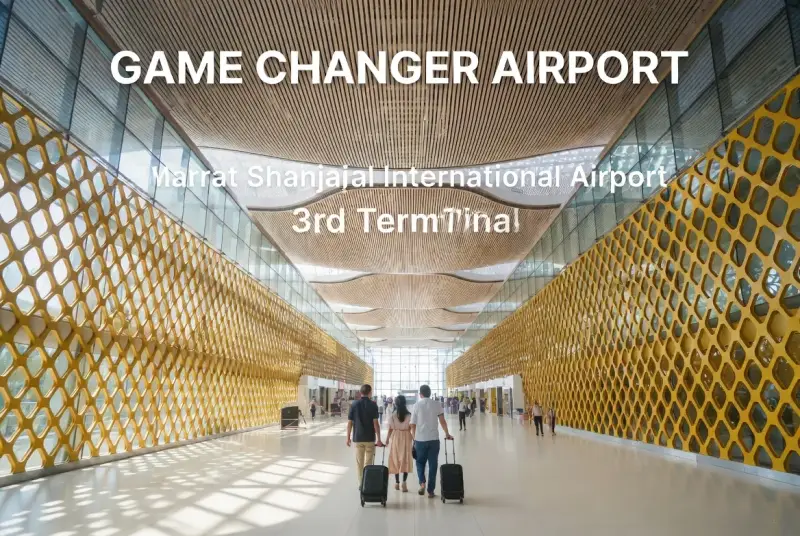
For decades, travelers passing through Dhaka's Hazrat Shahjalal International Airport (HSIA) have experienced the challenges of outdated infrastructure, overcrowded terminals, and facilities that fell short of international standards. But a transformative change has arrived with the construction of Terminal 3, a state-of-the-art facility that promises to revolutionize the travel experience for millions of passengers and position Bangladesh as a serious player in regional aviation.
The third terminal at Hazrat Shahjalal International Airport represents more than just a new building—it's a bold statement about Bangladesh's aspirations on the global stage. With a floor area of approximately 230,000 square meters, this three-storied terminal is designed to handle an additional 12 million passengers annually, more than doubling the airport's total capacity from 8 million to around 20 million passengers per year . This massive expansion addresses a critical need that has plagued the airport for years: severe capacity constraints that led to overcrowding, long waits, and frustrated travelers.
Designed by renowned architect Rohani Baharin, who played a leading role in developing Singapore Changi Airport Terminal 3, and constructed by a consortium of Mitsubishi, Fujita, and Samsung C&T, Terminal 3 brings world-class design, cutting-edge technology, and modern amenities to Dhaka's aviation landscape . From automated immigration systems and advanced baggage handling to spacious lounges, extensive duty-free shopping, and seamless connectivity with the city via the elevated expressway and MRT, this terminal addresses virtually every pain point that travelers have endured at the old terminals.
This comprehensive guide explores why Terminal 3 is a genuine game-changer for global travelers, examining its revolutionary features, technological advancements, capacity improvements, and the broader implications for Bangladesh's position in international aviation. Whether you're a frequent flyer, a business traveler, or a tourist visiting Bangladesh, understanding what Terminal 3 offers will transform how you experience air travel in Dhaka.
Addressing the Capacity Crisis: A Terminal Built for the Future
Before Terminal 3, Hazrat Shahjalal International Airport was operating far beyond its intended capacity. The existing two international terminals were designed to handle 8 million passengers annually, but with Bangladesh's growing economy, expanding middle class, and increasing international connectivity, passenger numbers were surging toward this limit at an alarming rate . The result was chronic overcrowding, endless queues, insufficient seating, packed waiting areas, and an overall travel experience that fell embarrassingly short of international standards.
Terminal 3 changes this equation dramatically. With the ability to handle an additional 12 million passengers per year, the terminal doesn't just solve the immediate capacity problem—it future-proofs the airport for decades to come . Projections suggest that HSIA will see passenger traffic of up to 22 million by 2035, and Terminal 3 positions the airport to accommodate this growth comfortably .
Physical Scale and Design
The sheer physical scale of Terminal 3 is impressive. Covering a floor area of approximately 230,000 square meters (roughly 2.47 million square feet), the terminal building stretches over 750 meters in length . This expansive space allows for generous circulation areas, reducing the cramped, claustrophobic feeling that characterized the old terminals.
The architecture focuses on volume and minimal ornamentation, embracing contemporary design principles that prioritize functionality, natural light, and passenger flow . The three-storied structure efficiently separates arriving and departing passengers, streamlines security and immigration processes, and creates distinct zones for different functions—from check-in and security screening to duty-free shopping and dining.
Operational Capacity
Beyond passenger numbers, Terminal 3 dramatically expands operational capacity across multiple dimensions:
Check-in Facilities: The terminal features 115 check-in counters, including 15 self-service kiosks, enabling faster processing and reducing queue times . This represents a massive increase from the limited counters available in the old terminals.
Immigration Processing: With 64 departure and 64 arrival immigration desks, including 10 automatic passport clearance systems, the terminal can process passengers much more efficiently . The automated systems significantly reduce waiting times for eligible travelers.
Security Screening: The terminal is equipped with 27 hold baggage X-ray screener machines, 11 body scanners, and 25 central departure security screening points, ensuring thorough yet efficient security checks .
Baggage Handling: Sixteen conveyor luggage belts for arrivals and 8 departure carousel belts mean passengers spend far less time waiting for their bags—a notorious pain point at the old terminals .
Boarding Bridges: Sixteen boarding bridges (some sources cite 12, with plans for 26 total) allow passengers to board and disembark directly from the terminal, eliminating the need for bus transfers and exposure to weather .
Revolutionary Technology: Smart Systems for Seamless Travel
What truly sets Terminal 3 apart is its integration of cutting-edge technology designed to make every aspect of the travel journey smoother, faster, and more convenient. This isn't just about adding digital screens or WiFi—it's about fundamentally reimagining how passengers interact with airport systems.
Automated Check-in and Self-Service Options
Terminal 3 embraces the global trend toward self-service and automation. The 15 self-service check-in kiosks allow passengers to check in, select seats, and print boarding passes without waiting in line . For tech-savvy travelers and those traveling with just carry-on luggage, this can dramatically reduce pre-flight stress and time spent in the terminal.
These kiosks are part of a broader digital ecosystem that includes mobile check-in, electronic boarding passes, and real-time flight information displays throughout the terminal. The goal is to give passengers control over their journey and minimize dependence on manual processes.
Automated Immigration and E-Gates
One of the most significant technological upgrades is the introduction of automated passport clearance systems. The 10 automatic immigration desks use biometric verification, optical character recognition, and automated border control technology to process eligible passengers in minutes rather than the often-lengthy manual immigration checks .
For frequent travelers, business passengers, and citizens of countries with e-passport capabilities, this means breezing through immigration while others wait in traditional queues. It's a feature that brings Dhaka in line with major international hubs like Singapore, Dubai, and London.
Advanced Baggage Handling Systems
Terminal 3 features a state-of-the-art automated baggage handling system that represents a quantum leap from the manual, error-prone systems of the past . This sophisticated network of conveyor belts, scanners, and sorting mechanisms ensures that luggage moves efficiently from check-in to aircraft and from aircraft to baggage claim.
The system includes:
- Automated tagging and tracking of every bag
- Real-time monitoring to prevent misrouting
- Integrated security screening with 27 hold baggage X-ray machines
- Efficient sorting to 16 arrival conveyor belts
For passengers, this translates to faster baggage delivery, fewer lost or mishandled bags, and greater peace of mind.
Enhanced Security Technology
Security is paramount, and Terminal 3 doesn't compromise. The 11 body scanners use advanced imaging technology to detect threats while respecting passenger privacy . These scanners are faster and more accurate than traditional metal detectors, reducing bottlenecks at security checkpoints.
The 25 central departure security screening points are strategically positioned and equipped with modern X-ray machines for cabin baggage, ensuring thorough yet efficient screening . The design separates security lanes clearly, provides adequate queuing space, and uses digital signage to direct passengers, creating a more organized and less stressful security experience.
Digital Information Systems
Throughout Terminal 3, digital information displays provide real-time updates on flight status, gate assignments, boarding times, baggage claim information, and terminal navigation. These dynamic displays replace static signage, allowing instant updates when flights are delayed, gates change, or other disruptions occur.
For international travelers unfamiliar with the airport, these systems—combined with clear wayfinding signage in both Bengali and English—make navigation intuitive and reduce anxiety about missing flights or getting lost.
World-Class Passenger Amenities: Comfort Meets Convenience
Beyond operational efficiency, Terminal 3 prioritizes passenger comfort and convenience with amenities that rival the world's best airports. This focus on the passenger experience represents a fundamental shift from the utilitarian approach of the old terminals.
Expanded Duty-Free Shopping
One of the most anticipated features is the extensive duty-free shopping area . Unlike Terminal 2, which had limited retail space, Terminal 3 offers a comprehensive shopping experience featuring international brands, local products, luxury goods, electronics, cosmetics, and souvenirs.
For travelers, this transforms the pre-flight waiting period from tedious downtime into an enjoyable shopping experience. Whether you're looking for last-minute gifts, duty-free alcohol and tobacco, high-end fashion, or Bangladeshi handicrafts, the terminal's retail offerings cater to diverse tastes and budgets.
Diverse Dining Options
Terminal 3 addresses another major shortcoming of the old terminals: limited and uninspiring food options. The new terminal features multiple food courts, restaurants, and cafes offering everything from quick bites to full-service dining .
Travelers can choose from:
- International fast-food chains
- Local Bangladeshi cuisine
- Coffee shops and bakeries
- Fine dining restaurants
- Grab-and-go options for busy travelers
This variety ensures that passengers can enjoy quality meals and refreshments regardless of their dietary preferences, time constraints, or budget.
Premium Lounges
Terminal 3 includes multiple lounges catering to business class passengers, frequent flyers, and those seeking a quieter, more comfortable pre-flight environment . These lounges typically offer:
- Comfortable seating and work areas
- Complimentary food and beverages
- WiFi and charging stations
- Shower facilities
- Business services
- Peaceful atmosphere away from the main terminal bustle
For business travelers and those on long layovers, lounge access can transform the airport experience from stressful to relaxing.
Family-Friendly Facilities
Recognizing that many travelers fly with children, Terminal 3 incorporates family-friendly amenities including:
- Dedicated play areas for children
- Family restrooms and baby changing facilities
- Priority boarding for families
- Stroller-friendly pathways
- Family seating areas
These features make traveling with children less stressful for parents and more enjoyable for young passengers.
Accessibility Features
Terminal 3 is designed to be fully accessible to passengers with disabilities or reduced mobility. Features include:
- Wheelchair-accessible pathways throughout
- Elevators and ramps connecting all levels
- Accessible restrooms
- Dedicated assistance services
- Priority lanes at check-in, security, and immigration
- Visual and auditory aids for those with sensory impairments
This commitment to accessibility ensures that all passengers, regardless of physical ability, can navigate the terminal with dignity and ease.
Seamless Connectivity: Integrating with Dhaka's Transportation Network
One of Terminal 3's most transformative features is its integration with Dhaka's broader transportation infrastructure. The terminal doesn't exist in isolation—it's designed as a multimodal hub that connects seamlessly with various forms of transportation, addressing one of the most frustrating aspects of air travel in Dhaka: getting to and from the airport.
Elevated Expressway Connection
Terminal 3 is directly connected to the First Dhaka Elevated Expressway, a game-changing infrastructure project that allows travelers to bypass Dhaka's notorious traffic congestion . For passengers traveling from areas like Farmgate, Mohakhali, or even further south, the expressway can reduce travel time to the airport from 2-3 hours to just 20-30 minutes.
This connection is particularly valuable for:
- Business travelers on tight schedules
- Passengers with early morning or late-night flights
- Those traveling during peak traffic hours
- Cargo and logistics operations requiring time-sensitive deliveries
Mass Rapid Transit (MRT) Integration
Perhaps even more significant is Terminal 3's connection to Dhaka's Mass Rapid Transit system, specifically MRT Line 5 (Kamalapur to Airport portion) . This metro rail connection represents a paradigm shift in airport accessibility, offering:
- Affordability: Metro fares are significantly cheaper than taxis or ride-sharing services
- Reliability: Trains run on fixed schedules, unaffected by road traffic
- Speed: Direct rail connection avoids road congestion entirely
- Sustainability: Public transit reduces carbon emissions and environmental impact
For budget travelers, students, airport workers, and anyone seeking a predictable journey time, the MRT connection is transformative. It brings air travel within reach of a broader segment of the population and reduces dependence on private vehicles.
Expanded Parking Facilities
Recognizing that many passengers still prefer to drive or be dropped off, Terminal 3 features a multi-storied car parking building with capacity for 1,230 vehicles . This is a massive improvement over the inadequate and chaotic parking situation at Terminal 2.
The parking facility includes:
- Short-term parking for pick-ups and drop-offs
- Long-term parking for travelers leaving their vehicles
- VIP and premium parking zones
- Clear signage and organized layout
- Security surveillance and safety measures
- Direct covered access to the terminal
An access tunnel connects the parking structure to the terminal, protecting passengers from weather and providing a smooth transition from vehicle to check-in.
Road Network Improvements
Beyond the expressway and MRT, Terminal 3 is connected to the adjacent Dhaka-Mymensingh Highway through a network of newly constructed roads . These improvements ease congestion on approach roads, provide multiple access routes, and facilitate smoother traffic flow around the terminal.
For ride-sharing services, taxis, and private vehicles, this means less time stuck in traffic and more predictable journey times—critical factors for ensuring passengers arrive at the airport with adequate time before their flights.
Cargo and Logistics: Boosting Bangladesh's Trade Capacity
While passenger experience gets much of the attention, Terminal 3's impact on cargo operations is equally significant for Bangladesh's economy and global trade connectivity.
Expanded Cargo Facilities
The terminal complex includes a 41,200 square meter cargo building designed to handle modern air freight requirements . This facility dramatically increases the airport's cargo handling capacity from 200,000 tons to 500,000 tons annually , addressing a critical bottleneck for Bangladesh's export-oriented economy.
Key features include:
- Temperature-controlled storage for perishables
- Secure facilities for high-value goods
- Automated sorting and handling systems
- Efficient customs clearance processes
- Dedicated areas for different cargo types
Economic Impact
For Bangladesh's garment industry, pharmaceutical sector, agricultural exporters, and other export-driven businesses, enhanced cargo capacity means:
- Faster shipment times to international markets
- Ability to handle larger volumes
- Improved competitiveness in global markets
- Better preservation of time-sensitive goods
- Attraction of foreign investment and logistics companies
This cargo infrastructure positions Dhaka as a potential regional logistics hub, facilitating trade not just for Bangladesh but for neighboring regions as well.
Sustainability and Environmental Responsibility
Terminal 3 isn't just about capacity and convenience—it's also designed with environmental sustainability in mind, reflecting global aviation industry trends toward greener infrastructure.
Eco-Friendly Design Features
The terminal incorporates numerous sustainable design elements :
Energy Efficiency: LED lighting throughout, energy-efficient HVAC systems, and smart building management systems reduce electricity consumption. Natural lighting is maximized through strategic window placement and skylights, reducing dependence on artificial lighting during daytime.
Water Conservation: Water-saving fixtures, rainwater harvesting systems, and wastewater treatment facilities minimize water consumption and environmental impact.
Sustainable Materials: Where possible, construction used environmentally friendly, locally sourced, and recyclable materials, reducing the carbon footprint of construction.
Green Spaces: Landscaping and green areas around the terminal help reduce heat island effects, improve air quality, and create a more pleasant environment.
LEED Certification Aspirations
The terminal is designed with consideration for LEED (Leadership in Energy and Environmental Design) certification, an internationally recognized green building standard . While final certification status may vary, the design principles demonstrate Bangladesh's commitment to sustainable development.
Long-Term Environmental Benefits
By creating a more efficient airport with better traffic flow, reduced idling times, and integrated public transit access, Terminal 3 indirectly reduces carbon emissions from:
- Vehicles spending less time in traffic
- Aircraft taxiing for shorter periods
- More efficient baggage and cargo handling
- Increased use of public transportation (MRT)
Regional and Global Implications: Positioning Bangladesh as an Aviation Hub
Terminal 3's significance extends far beyond improving the experience for Bangladeshi travelers. It represents a strategic investment in positioning Dhaka as a key player in regional and global aviation.
Strategic Geographic Location
Dhaka occupies a strategically valuable position between Southeast Asia, South Asia, the Middle East, and East Asia. With Terminal 3's enhanced capacity and facilities, Hazrat Shahjalal International Airport can capitalize on this location to become a transit hub for:
- Connecting flights between South Asia and Southeast Asia
- Routes between the Middle East and East/Southeast Asia
- Regional connectivity within South Asia
- Long-haul services to Europe, North America, and beyond
Attracting International Airlines
World-class infrastructure is essential for attracting international carriers. With Terminal 3, HSIA can now offer:
- Adequate gate capacity for wide-body aircraft
- Modern passenger facilities that meet international standards
- Efficient turnaround times
- Quality lounges and services for premium passengers
- Reliable cargo handling for freight operations
This makes Dhaka more attractive to international airlines considering new routes or increased frequencies, which in turn improves connectivity for Bangladeshi travelers and businesses.
Boosting Tourism and Business Travel
The upgraded airport significantly enhances Bangladesh's appeal as a destination for:
Tourism: First impressions matter, and a modern, efficient airport sets a positive tone for visitors. Combined with Bangladesh's rich cultural heritage, natural beauty, and historical sites, Terminal 3 makes the country more competitive in the regional tourism market .
Business Travel: For international business travelers, time is money. Terminal 3's efficiency, connectivity, and business-friendly facilities make Dhaka a more viable destination for conferences, meetings, and investment exploration.
Diaspora and VFR Travel: With millions of Bangladeshis living abroad, the improved airport experience makes visiting home more pleasant for the diaspora community, strengthening cultural and economic ties.
Economic Multiplier Effects
The terminal's impact ripples through the economy:
- Job Creation: Thousands of direct and indirect jobs in airport operations, retail, hospitality, transportation, and logistics
- Business Opportunities: New opportunities for retailers, restaurants, service providers, and logistics companies
- Infrastructure Development: Catalyst for further infrastructure improvements in surrounding areas
- Foreign Exchange: Increased tourism and business travel generate foreign exchange earnings
- Investment Attraction: Modern infrastructure signals Bangladesh's commitment to development, attracting foreign direct investment
Comparing Before and After: The Transformation in Passenger Experience
To truly appreciate Terminal 3's impact, it's helpful to contrast the passenger experience before and after its opening.
The Old Terminal 2 Experience
Travelers through Terminal 2 frequently encountered:
- Severe overcrowding with insufficient space for passenger volumes
- Long queues at check-in, immigration, and security
- Limited seating in departure areas
- Inadequate baggage handling leading to long waits
- Minimal duty-free shopping and dining options
- Poor parking facilities with chaotic traffic flow
- Limited boarding bridges requiring bus transfers
- Outdated facilities lacking modern amenities
- Stressful, time-consuming journeys to/from the airport through traffic
The Terminal 3 Experience
Now, passengers enjoy:
- Spacious, well-designed terminal with room to move comfortably
- Multiple check-in options including self-service kiosks
- Automated immigration for faster processing
- Efficient security screening with modern equipment
- Abundant seating and comfortable waiting areas
- Fast, reliable baggage delivery with 16 conveyor belts
- Extensive duty-free shopping and diverse dining options
- Premium lounges for business and frequent flyers
- 16 boarding bridges for direct aircraft access
- Multi-storied parking with 1,230 vehicle capacity
- Direct connections to elevated expressway and MRT
- Family-friendly facilities and accessibility features
- Digital information systems for real-time updates
The difference is transformative—moving from an airport experience characterized by stress and frustration to one defined by efficiency, comfort, and modern convenience.
Challenges and Future Outlook
While Terminal 3 represents a massive leap forward, successful implementation requires addressing certain challenges.
Integration with Existing Operations
Seamlessly integrating Terminal 3 with the existing Terminal 1 (domestic) and Terminal 2 (international) requires careful coordination . Passengers transferring between terminals, airlines operating from multiple terminals, and ground transportation managing traffic across all terminals need clear signage, efficient shuttle services, and coordinated operations.
Staff Training and Adaptation
The sophisticated technology and systems in Terminal 3 require comprehensive staff training. From check-in agents and security personnel to baggage handlers and customer service representatives, thousands of workers need to master new systems and procedures to deliver the promised level of service.
Maintaining Standards
Building world-class facilities is one thing; maintaining them is another. Ensuring that Terminal 3 continues to operate at international standards requires:
- Ongoing investment in maintenance and upgrades
- Rigorous quality control and performance monitoring
- Continuous staff training and development
- Responsive customer service and feedback mechanisms
- Adaptation to evolving passenger needs and technologies
Future Expansion Possibilities
While Terminal 3 significantly expands capacity, Bangladesh's long-term aviation ambitions may require further development:
- A second runway to increase flight handling capacity
- Additional terminals if passenger growth exceeds projections
- Enhanced cargo facilities to support trade growth
- Further integration with regional transportation networks
- Potential for dedicated low-cost carrier terminals
Frequently Asked Questions
When did Terminal 3 become operational?
Terminal 3 was soft-launched in October 2023 for testing and fine-tuning . Full commercial operations were expected to commence by late 2024 or early 2025, though exact dates have varied due to final system integration and staff training requirements . As of early 2026, the terminal is operational with ongoing optimization of services.
Which airlines operate from Terminal 3?
Most international carriers have gradually shifted operations to Terminal 3 as it became operational. The terminal is designed to handle all international flights, though specific airline assignments may vary. Passengers should check with their airlines for the most current terminal information before travel.
How do I get to Terminal 3 from Dhaka city?
You have several options:
- Elevated Expressway: Fastest option, taking 20-30 minutes from areas like Farmgate during normal traffic
- MRT Line 5: Most affordable and reliable option, with travel time varying by starting point but unaffected by road traffic
- Taxi/Ride-sharing: Conventional road routes, though subject to traffic congestion
- Private vehicle: Using the multi-storied parking facility (1,230 vehicle capacity)
What's the cost of parking at Terminal 3?
Parking fees vary based on duration and parking zone (short-term vs. long-term, regular vs. premium). While exact rates should be confirmed with airport authorities, the facility offers competitive pricing with secure, covered parking and direct terminal access.
Does Terminal 3 have facilities for passengers with disabilities?
Yes, Terminal 3 is fully accessible with wheelchair-accessible pathways, elevators, ramps, accessible restrooms, dedicated assistance services, priority lanes, and visual/auditory aids for those with sensory impairments. Passengers requiring special assistance should notify their airlines in advance.
Are there hotels near Terminal 3?
Several hotels are located near Hazrat Shahjalal International Airport, ranging from budget to luxury options. Some offer airport shuttle services. The improved accessibility via expressway and MRT makes staying in various parts of Dhaka more feasible for early morning or late-night flights.
How much did Terminal 3 cost to build?
The overall HSIA expansion project, including Terminal 3 and associated infrastructure, has an estimated cost of approximately $1.76-2.5 billion, funded through a combination of Official Development Assistance (ODA) loans from the Japan International Cooperation Agency (JICA) and contributions from the Government of Bangladesh .
Conclusion
The Hazrat Shahjalal International Airport Terminal 3 is far more than just a new building—it's a transformative infrastructure project that fundamentally changes the air travel experience for millions of passengers and positions Bangladesh as a serious player in regional aviation.
For global travelers, Terminal 3 delivers on multiple fronts: it solves the chronic capacity crisis that plagued the old terminals, introduces world-class technology that streamlines every aspect of the journey, provides amenities that rival major international hubs, integrates seamlessly with Dhaka's transportation network, and creates a pleasant, efficient, and modern travel environment.
The terminal's impact extends beyond passenger convenience. It enhances Bangladesh's economic competitiveness by improving cargo capacity, attracting international airlines, boosting tourism, facilitating business travel, and signaling the country's commitment to modernization and development. The $1.76-2.5 billion investment represents not just infrastructure spending, but a strategic bet on Bangladesh's future as a middle-income country with global aspirations.
Designed by the architect behind Singapore Changi's Terminal 3 and built by a consortium of Japanese and Korean construction giants, Terminal 3 brings international expertise and standards to Dhaka. From the 115 check-in counters and automated immigration systems to the extensive duty-free shopping, diverse dining options, and direct connections to the elevated expressway and MRT, every element has been designed with the passenger experience in mind.
For Bangladeshis, Terminal 3 is a source of national pride—a visible symbol of the country's progress and potential. For international visitors, it's a welcoming introduction that sets a positive tone for their experience in Bangladesh. For airlines and logistics companies, it's an invitation to expand operations and explore new opportunities.
As Terminal 3 moves from construction to full operation, the focus must shift to maintaining high standards, continuously improving services, and ensuring that the promise of this world-class facility translates into consistently excellent passenger experiences. If successful, Terminal 3 will serve not just today's travelers, but generations to come, facilitating connections, enabling commerce, and putting Bangladesh firmly on the global aviation map.
The era of frustrating, outdated airport facilities in Dhaka is over. Terminal 3 has arrived, and with it, a new chapter in Bangladesh's aviation history—one defined by efficiency, comfort, modernity, and ambition. For global travelers, this is indeed a game-changer.
📖 আরও পড়ুন: Bangladesh
- 🔗 Affordable Jhilmil Apartments for Expats: Top 10 Picks 2026
- 🔗 ঢাকা এলিভেটেড এক্সপ্রেসওয়ে: এয়ারপোর্ট ট্রান্সফারে ৩ ঘণ্টা বাঁচান
- 🔗 ট্রাভেল ফটোগ্রাফি: পারফেক্ট আউটফিট ও কালার গাইড - ভ্রমণের ছবিতে স্টাইলিশ ও আকর্ষণীয় দেখার সম্পূর্ণ গাইড
- 🔗 The Village Woman Who Taught 100 Children to Read — Without Being a Teacher (Sylhet)
- 🔗 গ্রামের মেয়েদের কোডিং বিপ্লব: স্মার্টফোনে শেখা