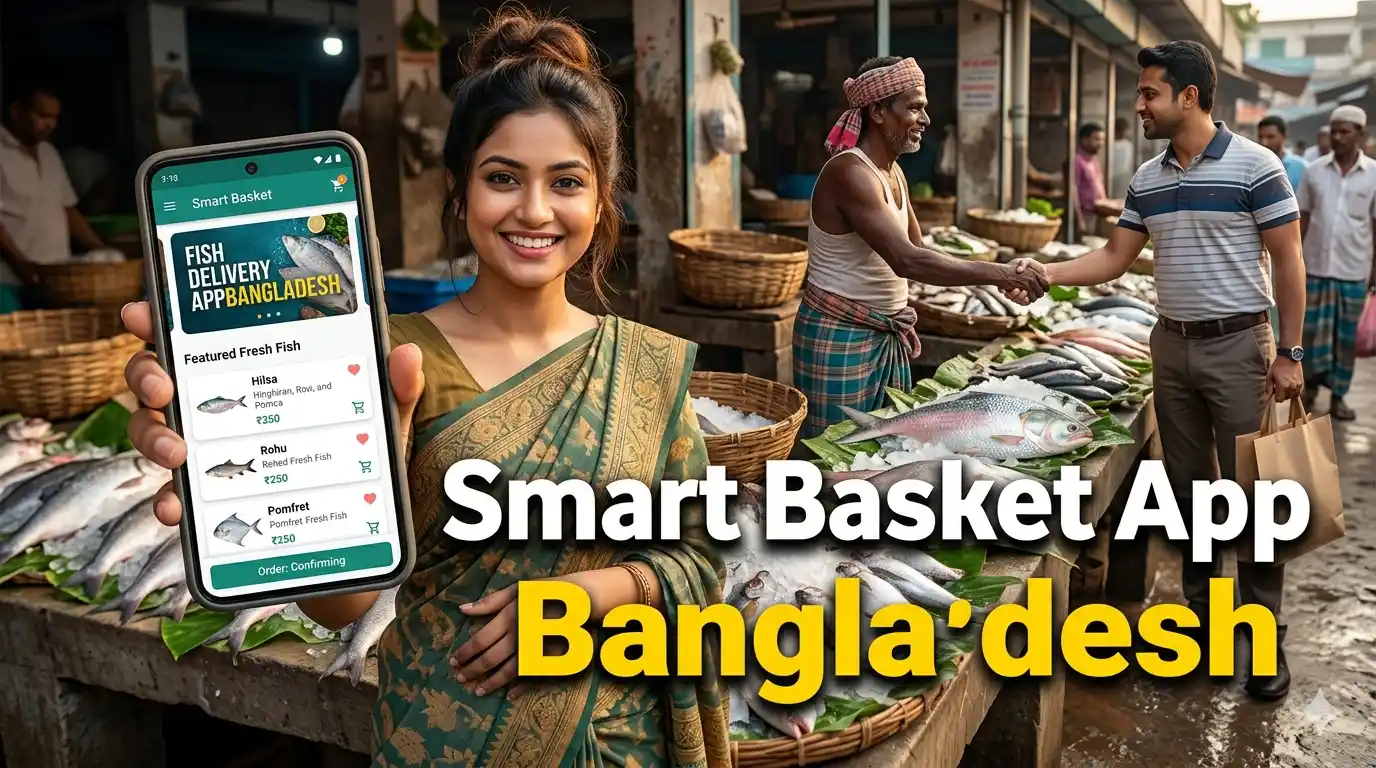
In the bustling fish markets of Bangladesh, a quiet revolution is taking place—one that promises to transform how fresh fish reaches your dinner table while empowering both fishermen and women entrepreneurs. Imagine a platform where fishermen can sell their catch directly to households, eliminating the long chain of middlemen who traditionally take the lion's share of profits. Now imagine this groundbreaking initiative is led by a visionary Bangladeshi woman leveraging technology to solve age-old problems. This is the promise of Bangladesh's first "Smart Basket" app—a digital innovation that's reshaping the country's fish marketing landscape.
Bangladesh, with its extensive river networks and rich aquatic resources, has over 1.7 million fishermen across 64 districts, yet these hardworking individuals remain among the most economically vulnerable populations . The traditional fish supply chain involves up to six intermediaries—from local traders (aratdar) to wholesalers (bepari) to retailers—each taking a cut while fishermen receive only a fraction of the final selling price . Meanwhile, consumers pay premium prices for fish that may have lost freshness during its lengthy journey through multiple hands.
Enter the Smart Basket concept: a technology-driven solution that connects fishermen directly with households, ensuring fair prices for producers and fresh, affordable fish for consumers. While specific details about a woman-founded Smart Basket app remain emerging, this comprehensive guide explores the transformative potential of such platforms, the challenges they address, the women entrepreneurs leading digital innovation in Bangladesh's fisheries sector, and how technology is creating new opportunities for direct fish marketing. Whether you're a consumer seeking fresher fish, a fisherman looking for better prices, or an aspiring entrepreneur inspired by women-led tech solutions, this article reveals how digital platforms are revolutionizing Bangladesh's fish supply chain.
The Problem: Why Bangladesh's Fish Supply Chain Needs Disruption
Understanding the urgent need for platforms like Smart Basket requires examining the deep-rooted challenges plaguing Bangladesh's fish marketing system.
The Middlemen Maze
The traditional fish supply chain in Bangladesh is notoriously complex and inefficient:
Typical journey of fish from water to plate:
- Fisherman: Catches fish, often under financial pressure from advance loans (dadon system)
- Faria/Paider: Local collector who buys from multiple fishermen at low prices
- Aratdar (Commission Agent): Controls market access, takes 5-10% commission
- Bepari (Wholesaler): Buys in bulk, transports to urban markets
- Retailer: Sells to consumers at 2-3x the price fishermen received
- Consumer: Pays premium prices for potentially less-fresh fish
Research shows that large quantities of fish are now moving from southern Bangladesh to other parts of the country with fewer intermediaries, as farmers increasingly sell directly, but this trend remains limited . The majority of fishermen remain trapped in this exploitative system.
Economic Impact on Fishermen
The human cost of this system is staggering:
- Low income: Fishermen receive only 30-40% of the final retail price
- Debt trap: Many rely on advance loans from intermediaries at high interest rates
- Lack of market information: Unable to negotiate fair prices without knowledge of market rates
- Poor livelihood: 62% of fishing households depend on village doctors for healthcare, indicating poverty levels
- Limited bargaining power: 97% of fishermen are male, with women comprising only 3% of the workforce, yet entire families depend on this income
Consumer Challenges
End buyers face their own set of problems:
- High prices: Multiple intermediaries inflate costs significantly
- Quality concerns: Fish loses freshness during prolonged transport and storage
- Lack of transparency: No way to verify origin, catch date, or handling practices
- Limited access: Rural consumers have fewer options; urban consumers pay premium prices
Infrastructure Gaps
Bangladesh's fish marketing suffers from critical infrastructure deficits:
- No refrigerated transport: Surprisingly, no refrigerated vans are used; intermediaries rely only on ice
- Poor storage facilities: Limited cold chain infrastructure leads to spoilage
- Inadequate market access: Remote fishing communities lack direct connection to consumers
- Digital divide: While mobile phone access is widespread, digital literacy and smartphone penetration remain barriers
The Smart Basket Solution: How Direct Connection Transforms the Industry
A Smart Basket app for fish delivery represents more than just another e-commerce platform—it's a comprehensive ecosystem designed to address systemic inefficiencies while empowering all stakeholders.
Core Features of a Fish-Focused Smart Basket Platform
For Fishermen:
- Direct marketplace: List catch in real-time with photos, weight, and pricing
- Fair pricing tools: Access to current market rates and price trends
- Digital payments: Receive payments directly to mobile banking accounts (bKash, Nagad)
- Order management: View and manage customer orders through simple interface
- Logistics support: Platform-coordinated pickup and delivery services
- Financial inclusion: Build credit history through transaction records
For Households/Consumers:
- Fresh fish guarantee: Direct from boat to doorstep, often within 24 hours
- Transparent pricing: See exactly what fishermen receive vs. platform fee
- Quality assurance: Verified sellers, hygiene standards, customer reviews
- Convenient ordering: Browse available catch, schedule deliveries, track orders
- Subscription options: Weekly or monthly fish baskets for regular customers
- Educational content: Cooking tips, nutritional information, fish varieties
For the Platform:
- Quality control: Verification systems for sellers and product standards
- Logistics coordination: Efficient routing, cold chain management, delivery tracking
- Payment processing: Secure transactions, escrow services, dispute resolution
- Data analytics: Demand forecasting, inventory management, market insights
- Community building: Ratings, reviews, seller-consumer communication
Technology Stack for Success
Building a robust Smart Basket platform requires:
- Mobile-first design: Android and iOS apps optimized for low-bandwidth areas
- SMS/USSD integration: Alternative access for fishermen with basic phones
- GPS tracking: Real-time location for delivery optimization
- Digital payment integration: bKash, Nagad, Rocket, bank transfers
- Cloud infrastructure: Scalable backend to handle peak demand
- AI/ML capabilities: Demand prediction, dynamic pricing, route optimization
The Women Entrepreneur Advantage
When a woman leads this innovation in Bangladesh, unique advantages emerge:
Understanding household needs: Women entrepreneurs often have deeper insights into family nutrition, food safety concerns, and purchasing decisions—critical for consumer-focused design.
Trust and credibility: In Bangladesh's conservative society, women-led initiatives in food safety and family nutrition often gain quicker community acceptance.
Social impact focus: Research shows women entrepreneurs in Bangladesh prioritize social impact alongside profit, making them ideal for platforms serving vulnerable fishing communities .
Role model effect: A successful woman founder inspires other women in tech, creating a ripple effect of innovation .
Women Entrepreneurs Leading Digital Innovation in Bangladesh
Bangladesh is witnessing a surge in women-led technology ventures, creating an ecosystem where a Smart Basket app could thrive.
The Landscape of Women's Digital Entrepreneurship
While women account for only 4.3% of business ownership in Bangladesh, those who do lead are making significant strides in digital innovation . The country has seen inspiring success stories:
Notable women tech entrepreneurs:
- Kaniz Fatema and Akhi Akhter Milli: Successfully navigated digital entrepreneurship despite gender barriers
- Parveen Akhter (Glamour Boutique): Demonstrated women's capacity to scale businesses
- Social media entrepreneurs: Growing numbers of women leveraging digital platforms for business
Support Systems for Women Entrepreneurs
Bangladesh has developed robust support mechanisms:
Government initiatives:
- Smart Bangladesh vision: 41 women entrepreneurs received 'Smart' grants, with 5,000 more to benefit
- Digital Bangladesh program: Infrastructure and policy support for tech startups
- Women entrepreneur funds: Dedicated financing for women-led ventures
Private sector and NGO support:
- Women-In-Digital network: Platforms connecting and supporting women tech entrepreneurs
- Red Cross programs: Helped over 800 women in rural communities develop sustainable livelihoods
- Training and mentorship: Organizations providing business skills and networking opportunities
Challenges Women Entrepreneurs Face
Despite progress, significant barriers remain:
- Access to capital: Women struggle to secure investment and loans
- Social constraints: Cultural expectations limit mobility and networking
- Digital literacy gaps: Need for technical skills training
- Market access: Difficulty reaching customers and scaling operations
- Work-life balance: Managing business alongside family responsibilities
Why a Woman-Led Smart Basket App Makes Sense
A woman entrepreneur leading a fish delivery platform brings unique strengths:
- Food safety expertise: Women typically manage household food procurement and preparation
- Community trust: Easier access to both fishing communities (often through male family members) and household consumers
- Nutritional focus: Understanding of family dietary needs and fish's role in nutrition
- Social mission: Commitment to improving livelihoods of fishermen's families
- Innovation mindset: Willingness to challenge traditional male-dominated fish trade
Existing Digital Solutions in Bangladesh's Fisheries Sector
While a dedicated Smart Basket app led by a woman entrepreneur may be emerging, several digital initiatives are already transforming fish marketing in Bangladesh.
Machhgari: Mobile App for Fish Transport
The 'Machhgari' mobile app was introduced to help farmers transport fish at low cost . This platform:
- Connects fish farmers with transport services
- Reduces transportation costs
- Benefits farmers and other fisheries stakeholders
- Addresses the critical logistics gap in fish marketing
Online Fish Delivery Platforms
Several e-commerce platforms now offer fish delivery in Bangladesh:
Mach Mangsho BD: An online fish and fresh meat delivery service connecting local suppliers directly with customers .
Machbazar.com: Positioned as a trusted online fish shop offering delivery across Bangladesh, particularly in Dhaka .
Othoba.com: Provides fresh fish with updated prices, hygienic handling, and reliable home delivery .
GoFish: Emphasizes no middlemen, no storage delay, 100% hygienic cleaning and packing, and strict hygiene in the delivery process .
Lessons from Existing Platforms
These initiatives provide valuable insights:
What's working:
- Direct-to-consumer model reduces intermediaries
- Hygiene and quality assurance build customer trust
- Home delivery meets urban demand for convenience
- Digital payments enable cashless transactions
Gaps remaining:
- Limited focus on empowering fishermen directly
- Most platforms operate as retailers rather than marketplaces
- Few are women-led or explicitly focused on social impact
- Geographic coverage remains limited to major cities
- Cold chain infrastructure still inadequate
Smart Basket's Unique Value Proposition
A woman-led Smart Basket app could differentiate itself by:
- True fisherman empowerment: Not just another retailer, but a platform giving fishermen direct market access and control
- Women-centric design: Features addressing household needs, food safety, and family nutrition
- Social mission: Explicit commitment to improving fishermen's livelihoods and women's economic participation
- Community building: Creating connections between fishing communities and consumers
- Education and transparency: Teaching consumers about fish varieties, sustainability, and fair trade
Implementation Roadmap: Building a Successful Smart Basket Platform
Launching a Smart Basket app requires careful planning, stakeholder engagement, and phased execution.
Phase 1: Foundation (Months 1-6)
Market Research and Validation:
- Conduct surveys with fishermen in key fishing areas (Cox's Bazar, Sundarbans, inland rivers)
- Interview potential customers about purchasing habits and pain points
- Analyze competitors and identify unique value propositions
- Study successful models from other countries (India's FreshToHome, etc.)
Technology Development:
- Build MVP (Minimum Viable Product) with core features
- Develop Android app (primary platform given Bangladesh's market)
- Create simple web interface for desktop users
- Integrate mobile banking (bKash, Nagad, Rocket)
- Implement SMS/USSD for fishermen with basic phones
Partnership Building:
- Connect with fishermen cooperatives and associations
- Partner with logistics providers for cold chain delivery
- Engage local government and fisheries departments
- Secure support from women entrepreneur networks
Phase 2: Pilot Launch (Months 7-12)
Limited Geographic Rollout:
- Start with one fishing area (e.g., Cox's Bazar or Dhaka's surrounding rivers)
- Onboard 50-100 fishermen
- Target 500-1000 households in specific neighborhoods
- Test logistics, payment systems, and customer service
Training and Capacity Building:
- Train fishermen on app usage, quality standards, and order fulfillment
- Educate consumers on platform benefits and ordering process
- Build delivery team with cold chain handling expertise
- Establish quality control protocols
Feedback and Iteration:
- Collect user feedback from both fishermen and customers
- Refine app features based on real-world usage
- Adjust pricing, logistics, and operations
- Document lessons learned for scaling
Phase 3: Scaling (Year 2-3)
Geographic Expansion:
- Expand to major cities: Dhaka, Chittagong, Sylhet, Khulna
- Onboard fishermen from multiple regions
- Build regional distribution centers with cold storage
- Scale delivery fleet and logistics infrastructure
Feature Enhancement:
- Add AI-powered demand forecasting
- Implement subscription models for regular customers
- Introduce loyalty programs and rewards
- Develop B2B features for restaurants and retailers
Impact Measurement:
- Track fishermen income increases
- Measure customer satisfaction and retention
- Monitor reduction in food waste
- Document women's participation and leadership
Phase 4: Sustainability and Growth (Year 4+)
Revenue Diversification:
- Transaction fees (5-10% per sale)
- Premium subscriptions for consumers
- Logistics services for third parties
- Data analytics services for fisheries sector
- Advertising from related businesses
Social Impact Scaling:
- Expand to other perishable goods (vegetables, fruits)
- Create women's entrepreneur network within platform
- Establish microfinance programs for fishermen
- Advocate for policy changes supporting digital fisheries
Overcoming Challenges: Practical Solutions for Success
Building a Smart Basket platform in Bangladesh faces unique challenges. Here's how to address them:
Challenge 1: Digital Literacy Among Fishermen
Problem: Many fishermen have basic mobile phones but limited smartphone experience .
Solutions:
- Develop ultra-simple interface with icons and voice commands
- Provide SMS/USSD alternatives for basic phones
- Conduct in-person training sessions in fishing communities
- Create video tutorials in Bangla
- Assign local "digital champions" to provide ongoing support
- Offer incentives for platform adoption and usage
Challenge 2: Cold Chain Infrastructure
Problem: Bangladesh lacks refrigerated transport; intermediaries use only ice .
Solutions:
- Invest in insulated delivery boxes with ice packs for last-mile delivery
- Partner with existing cold storage facilities in urban areas
- Implement rapid delivery model (catch to customer within 24 hours)
- Use temperature monitoring sensors in delivery vehicles
- Gradually build owned cold chain infrastructure as scale increases
- Explore solar-powered cold storage for rural areas
Challenge 3: Trust and Quality Assurance
Problem: Consumers accustomed to inspecting fish physically before purchase.
Solutions:
- Implement strict quality control standards and verification
- Provide detailed product information (catch date, location, species)
- Offer money-back guarantee for quality issues
- Build rating and review system for transparency
- Use high-quality photos and videos of actual products
- Start with trusted community members as early adopters
Challenge 4: Payment Security and Trust
Problem: Fishermen and consumers wary of digital payments.
Solutions:
- Integrate trusted mobile banking platforms (bKash, Nagad)
- Implement escrow system: payment held until delivery confirmed
- Offer cash-on-delivery option during transition period
- Provide transaction receipts and records
- Educate users on digital payment safety
- Build dispute resolution mechanism
Challenge 5: Competition from Traditional Markets
Problem: Established intermediaries may resist or undermine platform.
Solutions:
- Focus on value proposition: better prices for fishermen, fresher fish for consumers
- Build strong community relationships and trust
- Demonstrate economic benefits through transparent data
- Engage local leaders and government support
- Start in areas with less entrenched intermediary control
- Offer transition support for intermediaries willing to adapt
Challenge 6: Funding and Sustainability
Problem: High initial investment required for technology, logistics, and operations.
Solutions:
- Seek grants from women entrepreneur funds
- Apply for social impact investment
- Partner with development organizations (FAO, WorldFish)
- Explore government digital Bangladesh initiatives
- Start lean with MVP and prove concept before scaling
- Build revenue from day one through transaction fees
Impact Potential: Transforming Lives Through Technology
A successful Smart Basket platform led by a woman entrepreneur could create profound social and economic impact.
Economic Impact on Fishermen
Income increase:
- Eliminating 3-4 intermediaries could increase fishermen's income by 40-60%
- Direct market access enables better price negotiation
- Reduced dependency on exploitative dadon (advance loan) system
- Regular income through platform's consistent demand
Financial inclusion:
- Digital payment records build credit history
- Access to formal banking services
- Ability to save and invest in better equipment
- Improved livelihood for 1.7 million fishermen and their families
Benefits for Consumers
Health and nutrition:
- Fresher fish with higher nutritional value
- Transparent sourcing and handling practices
- Access to diverse fish varieties
- Reduced food safety risks
Economic savings:
- Lower prices compared to traditional retail (20-30% savings)
- Convenience of home delivery
- Time savings from avoiding market trips
- Better value through subscription models
Women's Empowerment
Leadership and role modeling:
- Woman founder inspires other women in tech and entrepreneurship
- Challenges gender norms in male-dominated fisheries sector
- Demonstrates women's capacity to lead technology innovation
Economic opportunities:
- Create jobs for women in logistics, customer service, quality control
- Enable women in fishing communities to participate in platform
- Support women-led households dependent on fishing income
Environmental Sustainability
Reduced food waste:
- Direct connection reduces time from catch to consumer
- Better demand forecasting minimizes overfishing
- Efficient logistics reduce spoilage
Sustainable fishing:
- Platform can promote sustainable fishing practices
- Educate consumers about endangered species
- Incentivize eco-friendly fishing methods
- Support marine conservation efforts
Social Cohesion
Community building:
- Connect urban consumers with rural fishing communities
- Create transparency and trust in food systems
- Foster appreciation for fishermen's work and challenges
- Build solidarity between producers and consumers
Technology and Innovation: Building for Bangladesh's Context
Success requires technology solutions tailored to Bangladesh's unique context and constraints.
Mobile-First, Multi-Platform Approach
Android app (primary): Given Android's dominance in Bangladesh's mobile market , the platform should prioritize Android development with:
- Lightweight app (under 10MB) for low-end devices
- Offline functionality for areas with poor connectivity
- Bangla language interface
- Voice input options for low-literacy users
- Simple, intuitive design with minimal text
iOS app (secondary): For urban, affluent consumers
Web platform: For desktop users and administrative functions
SMS/USSD interface: For fishermen with basic phones
Key Technology Features
For fishermen:
- Catch listing: Simple form to input fish type, weight, price, location
- Photo upload: Capture fish quality with smartphone camera
- Order notifications: SMS and app alerts for new orders
- Digital wallet: Track earnings, withdrawals, transaction history
- Market prices: Real-time information on prevailing rates
For consumers:
- Product browsing: Search by fish type, price, location, freshness
- Shopping cart: Add multiple items, schedule delivery
- Order tracking: Real-time updates from catch to delivery
- Payment options: bKash, Nagad, credit/debit cards, COD
- Reviews and ratings: Rate fishermen and product quality
For platform management:
- Admin dashboard: Monitor transactions, users, logistics
- Quality control: Verify listings, handle disputes
- Analytics: Track demand patterns, popular items, peak times
- Logistics optimization: Route planning, delivery assignments
Advanced Features (Phase 2+)
AI and Machine Learning:
- Demand forecasting based on historical data, weather, seasons
- Dynamic pricing recommendations for fishermen
- Route optimization for delivery efficiency
- Fraud detection and quality assurance
IoT Integration:
- Temperature sensors in delivery vehicles
- GPS tracking for real-time location updates
- Smart scales for accurate weight measurement
Blockchain (optional):
- Transparent supply chain tracking
- Immutable transaction records
- Verification of sustainable fishing practices
Infrastructure Requirements
Cloud hosting: Scalable cloud infrastructure (AWS, Google Cloud, or local providers)
CDN: Content delivery network for fast loading across Bangladesh
Database: Robust database to handle thousands of transactions daily
APIs: Integration with mobile banking, SMS gateways, mapping services
Security: SSL encryption, secure payment processing, data protection
Marketing and User Acquisition Strategy
Building a successful platform requires effective strategies to attract both fishermen and consumers.
Acquiring Fishermen (Supply Side)
Community-based approach:
- Partner with local fishing cooperatives and associations
- Conduct community meetings in fishing villages
- Engage respected community leaders as advocates
- Demonstrate economic benefits through pilot success stories
Incentives for early adopters:
- Zero commission for first 3 months
- Bonus payments for consistent quality and service
- Free training and digital literacy programs
- Recognition programs (top seller badges, features)
On-ground support:
- Local representatives in fishing areas
- 24/7 helpline for technical and operational support
- Regular training sessions on app usage and quality standards
- Peer learning groups among fishermen users
Acquiring Consumers (Demand Side)
Digital marketing:
- Social media campaigns (Facebook, Instagram—widely used in Bangladesh)
- Targeted ads in urban areas
- Influencer partnerships with food bloggers and chefs
- Content marketing: recipes, nutrition tips, fisherman stories
Referral programs:
- "Refer a friend" discounts for both referrer and referee
- Family and community group discounts
- Loyalty points for repeat purchases
Offline marketing:
- Community events and food festivals
- Partnerships with residential associations
- Local newspaper and radio advertisements
- Demo booths in supermarkets and markets
Trust-building strategies:
- Free trial offers or first-order discounts
- Money-back guarantee for quality issues
- Transparent pricing showing fisherman's share
- Customer testimonials and success stories
- Certifications and quality badges
Retention Strategies
For fishermen:
- Consistent order flow and fair pricing
- Timely payments and transparent transactions
- Ongoing training and support
- Community building among platform users
- Recognition and rewards for quality and reliability
For consumers:
- Consistent quality and freshness
- Reliable delivery and customer service
- Personalized recommendations based on preferences
- Subscription options for regular customers
- Educational content about fish varieties and cooking
- Responsive complaint resolution
Funding and Investment Opportunities
Building a Smart Basket platform requires significant investment. Here are potential funding sources:
Early-Stage Funding
Grants for women entrepreneurs:
- Bangladesh government's Smart Bangladesh grants for women
- International development funds (UN Women, UNDP)
- Women-In-Digital network support
- NGO programs supporting women's economic empowerment
Angel investors:
- Bangladeshi angel investor networks
- Diaspora investors interested in social impact
- Women-focused angel groups
Incubators and accelerators:
- Grameenphone Accelerator
- Startup Bangladesh Limited
- International accelerators focused on food tech or social impact
Growth-Stage Funding
Venture capital:
- Local VC firms interested in tech startups
- Regional funds focused on South Asia
- Impact investors prioritizing social and environmental returns
Development finance:
- World Bank's International Finance Corporation (IFC)
- Asian Development Bank (ADB)
- FAO (Food and Agriculture Organization) programs
- WorldFish Center initiatives
Strategic partnerships:
- Mobile banking companies (bKash, Nagad) for payment integration
- Telecom companies for USSD/SMS services
- Logistics companies for delivery infrastructure
- Retail chains for B2B opportunities
Revenue Model
Primary revenue streams:
- Transaction fees: 5-10% commission on each sale (split between fisherman and consumer)
- Delivery fees: Charged to consumers based on distance and order size
- Subscription fees: Monthly/annual plans for premium features
Secondary revenue streams:
- Logistics services: Offer delivery infrastructure to third parties
- Data analytics: Sell market insights to fisheries sector stakeholders
- Advertising: Promote related products (cooking oil, spices, kitchen equipment)
- B2B services: Supply to restaurants, hotels, retailers at wholesale rates
- Financial services: Microloans to fishermen based on transaction history
Measuring Success: Key Performance Indicators
Tracking the right metrics ensures the platform stays on course and demonstrates impact to stakeholders.
Business Metrics
Growth indicators:
- Number of registered fishermen (target: 1000+ in Year 1)
- Number of active consumers (target: 10,000+ in Year 1)
- Monthly transaction volume (GMV - Gross Merchandise Value)
- Monthly recurring revenue (MRR)
- Geographic coverage (cities, fishing areas served)
Operational efficiency:
- Average time from catch to delivery (target: 95%)
- Delivery success rate (target: >98%)
- Customer acquisition cost (CAC)
- Lifetime value (LTV) of customers
Impact Metrics
Fishermen welfare:
- Average income increase (target: 40-60% vs. traditional markets)
- Reduction in dependency on dadon system
- Percentage receiving digital payments
- Job satisfaction and quality of life improvements
- Number of women in fishing communities benefiting
Consumer benefits:
- Price savings compared to traditional retail (target: 20-30%)
- Customer satisfaction scores (target: >4.5/5)
- Repeat purchase rate (target: >60%)
- Reduction in food waste at household level
- Improved nutrition outcomes
Environmental impact:
- Reduction in food waste across supply chain
- Carbon footprint per delivery
- Percentage of sustainably-sourced fish
- Support for endangered species protection
Women's empowerment:
- Number of women employed by platform
- Women in leadership positions
- Women fishermen/fish traders on platform
- Impact on women in fishing households
Scaling Beyond Fish: The Future Vision
While fish is the starting point, a successful Smart Basket platform can expand to transform Bangladesh's entire fresh food ecosystem.
Product Expansion
Phase 1 (Years 1-2): Focus on fish and seafood
Phase 2 (Years 3-4): Add complementary categories:
- Fresh vegetables from farmers
- Fruits from orchards
- Meat and poultry
- Eggs and dairy products
Phase 3 (Years 5+): Full fresh food marketplace:
- Organic and specialty products
- Prepared foods and ready-to-cook meals
- Kitchen essentials and groceries
- Artisanal and local specialties
Geographic Expansion
National coverage: Expand from initial pilot areas to all major cities and fishing regions across Bangladesh
Regional expansion: Replicate model in neighboring countries (India, Myanmar) with similar fisheries challenges
Global South: Adapt platform for other developing countries with fragmented fresh food supply chains
Technology Evolution
AI and automation:
- Predictive analytics for demand forecasting
- Automated quality control using computer vision
- Chatbots for customer service in Bangla
- Smart pricing algorithms
Blockchain integration:
- Complete supply chain transparency
- Verification of sustainable and ethical practices
- Smart contracts for automatic payments
IoT expansion:
- Smart cold chain monitoring
- Automated inventory management
- Real-time quality sensors
Social Impact Scaling
Financial inclusion:
- Microfinance programs for fishermen and farmers
- Insurance products for weather and market risks
- Savings and investment tools
Education and training:
- Digital literacy programs for rural communities
- Sustainable fishing and farming practices training
- Entrepreneurship support for platform users
Policy advocacy:
- Work with government on digital agriculture policies
- Advocate for fair trade practices
- Promote women's participation in tech and entrepreneurship
Frequently Asked Questions
What exactly is the Smart Basket app?
Smart Basket is a conceptual digital platform designed to connect fishermen directly with households in Bangladesh, eliminating middlemen in the fish supply chain. While specific implementations may vary, the core idea involves a mobile app where fishermen can list their fresh catch, and consumers can order directly for home delivery. The platform aims to increase fishermen's income by 40-60% while providing consumers with fresher fish at lower prices.
Is there actually a woman-founded Smart Basket app in Bangladesh?
As of my research, while there are several fish delivery platforms operating in Bangladesh (Mach Mangsho BD, Machbazar.com, GoFish, etc.), I couldn't find specific information about a platform called "Smart Basket" explicitly founded by a woman. However, Bangladesh has a growing ecosystem of women entrepreneurs in tech , , and the concept represents an important opportunity for women-led innovation in the fisheries sector. This article explores the potential and framework for such an initiative.
How would fishermen with basic phones use the platform?
The platform would offer multiple access methods: smartphone apps for those with Android devices (the dominant platform in Bangladesh) , SMS-based interfaces for basic feature phones , and USSD codes for menu-based navigation. Additionally, the platform would provide on-ground support through local representatives who can help fishermen list their catch and manage orders. Training programs would build digital literacy over time.
How does the platform ensure fish quality and freshness?
Quality assurance involves multiple layers: (1) Verification of fishermen and their practices, (2) Strict guidelines for handling and storage, (3) Temperature-controlled logistics with insulated boxes and ice packs, (4) Rapid delivery model aiming for catch-to-customer within 24 hours, (5) Customer rating and review system, and (6) Money-back guarantee for quality issues. The platform would also invest in cold chain infrastructure as it scales.
What commission does the platform charge?
Typical marketplace models charge 5-10% commission per transaction, significantly less than the cumulative margins taken by multiple intermediaries in the traditional system (which can total 60-70%). The platform might offer zero commission for early adopters during the pilot phase to encourage adoption. Additional revenue comes from delivery fees and optional premium services.
How can I support or invest in such an initiative?
If you're interested in supporting women-led tech initiatives in Bangladesh's fisheries sector, you could: (1) Connect with women entrepreneur networks like Women-In-Digital , (2) Explore investment opportunities through Startup Bangladesh Limited or Grameenphone Accelerator, (3) Partner with development organizations working on fisheries and women's empowerment, or (4) If you're a potential user, support existing fish delivery platforms that prioritize fair trade and direct farmer/fisherman connections.
What makes this different from existing fish delivery apps?
While platforms like Mach Mangsho BD and Machbazar.com exist, a woman-led Smart Basket app with a social mission would differentiate itself through: (1) Explicit focus on fishermen empowerment rather than just retail, (2) Women-centric design addressing household needs, (3) Stronger social impact metrics and transparency, (4) Community building between producers and consumers, and (5) Commitment to women's economic participation throughout the value chain.
Conclusion: A Vision for Equitable, Sustainable Food Systems
Bangladesh stands at a crossroads. The country's fisheries sector, employing over 1.7 million people , remains trapped in an inefficient, exploitative system where those who do the hard work of catching fish receive the smallest share of value, while consumers pay premium prices for products that have lost freshness along the way.
The Smart Basket concept—whether realized through a specific woman-founded startup or as a broader movement toward direct fish marketing—represents more than just a business opportunity. It embodies a vision for a more equitable, sustainable, and efficient food system where:
- Fishermen thrive: Earning fair prices, accessing markets directly, and building sustainable livelihoods for their families
- Consumers benefit: Receiving fresh, high-quality fish at affordable prices with full transparency
- Women lead: Demonstrating that women entrepreneurs can drive technological innovation and social impact in Bangladesh ,
- Communities connect: Bridging the gap between rural producers and urban consumers, fostering understanding and solidarity
- Environment prospers: Reducing food waste, promoting sustainable fishing, and building climate-resilient supply chains
The challenges are real—digital literacy gaps, cold chain infrastructure deficits, trust barriers, and funding constraints. But Bangladesh has proven its capacity for digital innovation, from the success of mobile banking (bKash) to the growing ecosystem of tech startups and women entrepreneurs .
The question isn't whether such transformation is possible—it's who will lead it.
To the aspiring woman entrepreneur reading this: The opportunity is yours. The technology exists. The market need is clear. The support systems are growing. What's needed is vision, determination, and the courage to challenge entrenched systems.
To consumers: Your purchasing power can drive change. Support platforms that prioritize fair trade and direct connections.
To fishermen: Your voice matters. Demand better prices, better market access, and respect for your essential work.
To investors and supporters: The returns—financial, social, and environmental—are compelling. Back women-led initiatives that are building a better future.
Bangladesh's first Smart Basket app for fish may not exist yet in the exact form described here. But the seeds are planted. The need is urgent. The potential is enormous.
The revolution won't be middlemanned—it will be digitized, democratized, and led by those who dare to reimagine what's possible.
Are you ready to be part of it?