In the lush, verdant landscape of Sylhet, Bangladesh, where rolling hills of tea gardens stretch as far as the eye can see and the air is perpetually misty with the promise of rain, a quiet revolution is taking place. It is not a revolution marked by protests, policy changes, or massive funding injections. It is a revolution of literacy, sparked by the unwavering determination of one woman who refused to accept that children in her village should grow up unable to read. Her name is Rahima Begum, and though she never stepped foot in a teacher training college, though she never earned a certification from the government, and though she herself had only a primary school education, she has accomplished what many formal institutions have struggled to achieve. She has taught over 100 children in her remote community to read.
This is not merely a heartwarming anecdote; it is a profound case study in grassroots education, community empowerment, and the resilience of the human spirit. In a country where educational access remains a challenge for many rural populations, Rahima's story offers a beacon of hope and a practical model for change. It challenges the notion that formal credentials are the sole prerequisite for effective teaching. It highlights the critical role that women play in community development, often working behind the scenes with limited resources but unlimited passion. And it underscores the transformative power of literacy itself—not just as a skill, but as a key to dignity, opportunity, and self-determination.
The Village Woman Who Taught 100 Children to Read Without Being a Teacher is a story that resonates far beyond the borders of Sylhet. It speaks to anyone who believes that change begins at the local level, that ordinary people can achieve extraordinary things, and that education is a fundamental right that should not be withheld due to geography, gender, or economic status. In this comprehensive guide, we will explore Rahima's journey in depth, examining the context of rural education in Bangladesh, the methods she developed, the challenges she overcame, and the broader implications for educational policy and community development. Whether you are an educator, a policymaker, a development worker, or simply someone who believes in the power of storytelling, this account offers valuable insights into how literacy can be cultivated from the ground up.
The Context: Education in Rural Sylhet
To fully appreciate the magnitude of Rahima Begum's achievement, one must first understand the landscape in which she operates. Sylhet, located in the northeast corner of Bangladesh, is known for its natural beauty, its tea industry, and its significant diaspora community. However, like many rural regions in the country, it faces persistent challenges in delivering quality education to all children.
Geographical Barriers: Many villages in Sylhet are located in remote areas, accessible only by narrow dirt paths or boat routes during the monsoon season. For children living in these areas, reaching a formal school can be a daily ordeal. During the rainy season, paths become impassable, rivers swell, and attendance drops precipitously. Rahima's village, nestled in Golapganj Upazila, is no exception. The distance to the nearest government primary school is several kilometers, a journey that is particularly daunting for young children, especially girls.
Economic Pressures: Poverty remains a significant driver of school dropout rates in rural Bangladesh. Many families rely on daily wage labor, often in the tea gardens or agricultural fields. In times of economic hardship, children are often pulled out of school to contribute to the household income. Boys might work in the fields or as helpers in local shops; girls might be kept home to care for younger siblings or assist with domestic chores. For these families, the immediate economic benefit of child labor often outweighs the long-term, abstract benefit of education.
Quality of Formal Education: Even when children do attend school, the quality of education they receive is not always guaranteed. Teacher absenteeism, overcrowded classrooms, and a lack of teaching materials are common issues in rural government schools. Many children complete primary school without achieving basic literacy and numeracy skills. This phenomenon, known as "learning poverty," means that children are in school but not learning. For parents who see their children returning home unable to read simple sentences, the value of formal schooling begins to diminish.
Cultural Norms and Gender: In some conservative rural communities, there remains a preference for educating boys over girls. While Bangladesh has made significant strides in gender parity in education, deep-seated cultural norms can still influence household decisions. Girls may be withdrawn from school earlier than boys, particularly as they approach adolescence. Safety concerns regarding the journey to school, lack of separate sanitation facilities, and early marriage pressures all contribute to higher dropout rates for girls in certain areas.
It is against this backdrop of geographical isolation, economic constraint, educational inconsistency, and cultural complexity that Rahima Begum began her work. She did not set out to solve all these systemic issues. She started with a simple, immediate concern: the children in her neighborhood could not read. But in addressing that simple concern, she inadvertently began to address many of the underlying barriers.
The Spark: From Motherly Concern to Community Mission
Rahima Begum's journey did not begin with a strategic plan or a grant proposal. It began, as many great movements do, with a personal observation and a sense of responsibility. As a mother of three, Rahima was deeply involved in her children's lives. She helped them with their homework, attended parent-teacher meetings when possible, and listened to their stories about school. But she noticed something troubling. Her children, and the children of her neighbors, were struggling. They could recite letters, but they could not blend them into words. They could copy text from the board, but they could not comprehend what they had written.
The Moment of Realization: One evening, Rahima was helping her youngest son with his reading lesson. He was frustrated, on the verge of tears, unable to decipher a simple sentence in his Bengali primer. Rahima, despite her own limited education, sat with him patiently. She broke the words down, used pictures in the book to provide context, and encouraged him to sound out the letters. When he finally read the sentence correctly, the look of pride on his face was unforgettable. In that moment, Rahima realized two things: first, that these children were capable of learning; and second, that they needed a different approach than what they were getting in school.
Consulting the Community: Rahima did not keep this realization to herself. She spoke with other mothers in the village. She visited their homes, drank tea with them, and listened to their concerns. She found that her experience was not unique. Many parents were worried about their children's literacy. Some had stopped sending their children to school altogether, believing it was a waste of time and money. Others were sending them but saw no improvement. There was a collective sense of helplessness, a feeling that the problem was too big for them to solve.
The Decision to Act: Rahima decided to try something small. She invited five neighborhood children to her courtyard one afternoon. She did not call it a school; she called it a gathering. She had no desks, no chairs, no blackboard. She drew a grid in the dirt with a stick. She used leaves and stones as counters. She told stories from her own childhood, weaving letters and words into the narrative. The children were engaged. They laughed, they asked questions, and they learned. By the end of the hour, all five could read a simple three-letter word. That small success was the fuel Rahima needed to continue.
The Methodology: Teaching Without a Curriculum
Rahima Begum is not a trained pedagogue. She does not use standardized lesson plans, standardized tests, or government-approved textbooks. Her methodology is organic, evolving, and deeply rooted in the context of her students' lives. Yet, it is highly effective. Educators who have observed her sessions note that she intuitively employs many principles of modern educational psychology, despite having never studied them.
1. Culturally Relevant Pedagogy: Rahima understands that learning is most effective when it connects to what students already know. She uses Sylheti folk tales, local songs, and familiar objects in her lessons. When teaching the letter আ (A), she does not just show the character; she talks about আম (mango), a fruit every child in the village knows and loves. When teaching numbers, she uses tea leaves or seeds that the children handle daily. This contextualization makes abstract concepts concrete and memorable.
2. Multisensory Learning: Rahima engages multiple senses in her teaching. Children do not just see the letters; they trace them in the dirt, they form them with clay, they sing songs that rhyme with the sounds. This multisensory approach reinforces neural pathways and aids retention. It is particularly effective for children who may struggle with traditional visual-only instruction.
3. Peer-to-Peer Learning: As her group grew, Rahima noticed that some children learned faster than others. Instead of separating them, she used this to her advantage. She paired older or more advanced students with younger or struggling ones. The older students reinforced their own knowledge by teaching, and the younger students benefited from the patience and relatability of their peers. This created a collaborative learning environment rather than a competitive one.
4. Emotional Safety and Encouragement: Perhaps the most critical element of Rahima's method is the emotional environment she creates. Many of the children she teaches have experienced failure in formal school. They carry shame and anxiety about learning. Rahima dismantles this by celebrating every effort. Mistakes are not corrected harshly; they are treated as natural steps in the learning process. She uses phrases like "আবার চেষ্টা করো" (Try again) and "তুমি পারবে" (You can do it). This builds confidence, which is often the missing ingredient for struggling learners.
5. Flexible Scheduling: Rahima recognizes that her students have other responsibilities. She does not enforce rigid attendance policies. If a child needs to work in the fields in the morning, they come in the afternoon. If a girl needs to care for siblings, she brings them along. This flexibility ensures that education accommodates life, rather than life having to accommodate education. It is a key reason why children who dropped out of formal school feel comfortable returning to Rahima's gatherings.
The Growth: Scaling Through Community Trust
Word of mouth is the most powerful marketing tool in a close-knit village. As the five children in Rahima's courtyard began to read fluently, their parents noticed. They saw their children reading signs in the market, helping with household accounts, and showing confidence in their abilities. They told their neighbors. The neighbors brought their children. Within six months, Rahima's group had grown to twenty. Within a year, it was fifty. Today, over 100 children regularly attend her sessions.
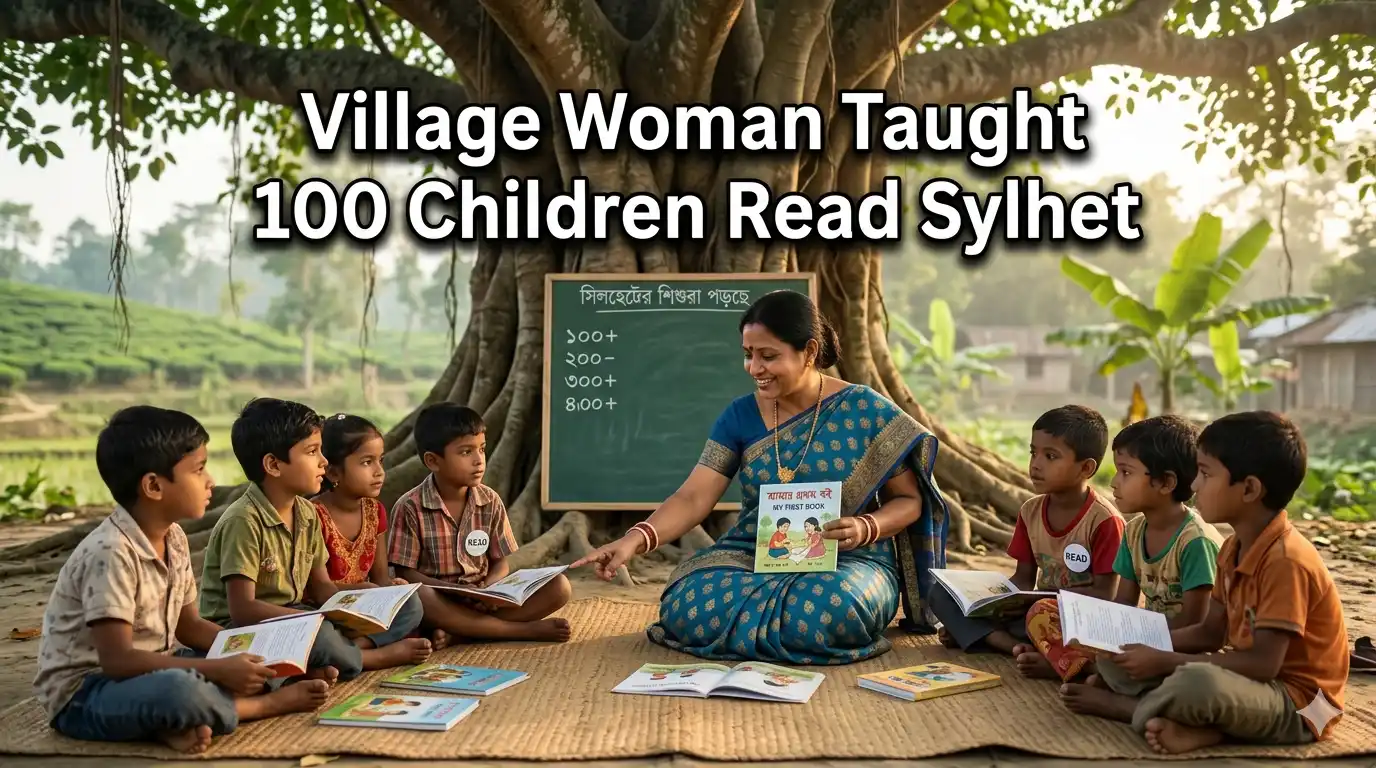
Physical Expansion: The courtyard could no longer hold the crowd. The community rallied to find a new space. A large banyan tree at the center of the village became the new classroom. Its broad canopy provided shade from the sun and shelter from the light rain. Families contributed what they could. One father donated a wooden plank for a desk. A mother sewed mats from old jute sacks for the children to sit on. A local shopkeeper donated chalk and a small blackboard. The school was built not with funds, but with collective effort.
Resource Mobilization: As the number of students grew, so did the need for materials. Rahima began to reach out for support. She connected with a local library in the upazila headquarters, which donated old storybooks. She received used primers from families whose older children had graduated. A young volunteer from the city, visiting relatives in the village, helped her create simple flashcards. While resources remain scarce, the community's willingness to contribute ensures that no child is turned away for lack of materials.
Volunteer Support: Rahima cannot teach 100 children alone. As the initiative grew, other women in the village stepped forward. Some are mothers of students; others are young women who completed secondary school but had no employment opportunities. Rahima mentors them, sharing her methods and philosophy. This creates a sense of shared ownership and ensures that the initiative can continue even if Rahima is unavailable. It also provides a sense of purpose and leadership for other women in the community.
The Impact: Measuring Success Beyond Test Scores
How do we measure the success of Rahima's initiative? Standardized test scores are one metric, but they do not capture the full picture. The impact of her work is visible in the lives of the children, the attitudes of the parents, and the culture of the village itself.
Academic Improvement: Teachers at the local government primary school have reported noticeable improvements in students who attend Rahima's sessions. These children participate more actively in class, complete their homework more consistently, and demonstrate better reading comprehension. Some children who had been held back due to poor performance have been promoted to the next grade. The foundational skills they gain with Rahima complement the formal curriculum they receive in school.
Re-enrollment of Dropouts: Perhaps the most significant metric is the number of children who have returned to formal education after dropping out. Rahima's initiative acts as a bridge. Children who fell behind regain confidence and skills in her supportive environment. Once they are ready, Rahima encourages them to re-enroll in school. She even accompanies some parents to the school to speak with teachers, advocating for their children's readmission. Several children who had completely left the education system are now back in school, aiming to complete their secondary education.
Girls' Empowerment: In a region where girls' education can face cultural barriers, Rahima's initiative has been particularly transformative for young women. Over 60% of the children attending her sessions are girls. Rahima serves as a visible role model—a woman leading, teaching, and making decisions in the public sphere. She explicitly encourages girls to aspire to higher education. Several girls who learned to read with Rahima have gone on to pass their secondary school exams, a significant achievement in their community. Parents who were once hesitant to educate their daughters now see the tangible benefits and are more supportive.
Community Shift: The initiative has shifted the community's perception of education. It is no longer seen solely as the government's responsibility. Parents are more engaged in their children's learning. They ask about what was learned today; they help with homework; they value literacy. This cultural shift is crucial for long-term sustainability. When a community values education, it finds ways to support it, even in the face of economic hardship.
The Challenges: Navigating Limitations with Resilience
Rahima's journey has not been without significant obstacles. Understanding these challenges provides a realistic view of grassroots education and highlights areas where external support could be beneficial.
Resource Constraints: Operating without formal funding means constant improvisation. During the monsoon season, the banyan tree classroom becomes unusable due to mud and rain. Sessions are cancelled, disrupting learning continuity. There is a lack of age-appropriate reading materials, especially for older children. Writing materials like notebooks and pencils are sometimes scarce for the poorest families. While the community contributes what it can, there are limits to what a poor village can provide.
Time and Energy: Rahima balances her teaching with her own household responsibilities. She is a wife, a mother, and a grandmother. She also helps with agricultural work when needed. Teaching over 100 children, even in shifts, is physically and emotionally demanding. There are days when she is exhausted, but she shows up because the children expect her. Burnout is a real risk for community volunteers who carry such heavy responsibilities without formal compensation or relief.
Lack of Formal Recognition: Because Rahima's initiative is informal, it does not receive official recognition from the education ministry. Children who learn with her do not receive certificates or credits that are recognized by the formal system. This creates a barrier for older children who want to re-enter school at an appropriate grade level. Rahima advocates for some form of recognition or assessment mechanism that validates non-formal learning, but systemic change is slow.
Sustainability and Succession: As Rahima ages, questions arise about the future of the initiative. Can it continue without her? She has begun training volunteer assistants, but her personal connection with the community is a key factor in its success. Ensuring that the model can be institutionalized or passed on without losing its core values is a critical challenge for the future.
The Support: Building Networks for Greater Impact
Recognizing the limitations of going it alone, Rahima has gradually built connections that strengthen her work. These partnerships respect the community-led nature of the initiative while providing valuable resources.
Local NGO Partnerships: A few local non-governmental organizations working on education have taken notice of Rahima's work. Rather than taking over, they offer support. One NGO provided a waterproof tarpaulin so sessions can continue during light rain. Another donated a set of graded reading books. They offer occasional training workshops for Rahima and her volunteers, introducing them to new teaching aids without imposing a rigid curriculum. This partnership model—supporting rather than directing—is key to maintaining community ownership.
Government Engagement: Rahima has established a dialogue with the local Upazila Education Officer. She invites them to observe her sessions. She shares her challenges and seeks advice on how to help children transition back to formal school. While systemic integration is complex, this engagement ensures that her initiative is not working at cross-purposes with government efforts. It opens the door for potential future support, such as access to government textbooks or teacher training resources.
Digital Connections: With the help of a volunteer, Rahima now uses a basic smartphone to connect with other grassroots educators. She participates in WhatsApp groups where teachers from other villages share ideas, resources, and moral support. This digital network reduces the isolation that many rural educators feel and provides access to a wider pool of knowledge and innovation.
The Lessons: What Rahima's Story Teaches Us About Education
Rahima Begum's story offers powerful insights for educators, policymakers, and communities seeking to improve literacy and learning, particularly in resource-constrained settings. These lessons extend far beyond her village in Sylhet.
1. Passion and Commitment Can Compensate for Formal Credentials: Rahima demonstrates that effective teaching is not solely about certifications or methodologies. Deep care for learners, cultural understanding, and unwavering commitment can create powerful learning environments. While formal training has value, it should not be a barrier to community members contributing their gifts. Policy should find ways to recognize and support community educators.
2. Contextual, Culturally Relevant Learning Works: Rahima's success stems partly from her use of local language, stories, and examples. Education that connects to learners' lived experiences is more engaging, memorable, and empowering. This principle applies universally, from rural Sylhet to urban classrooms worldwide. Curricula should be flexible enough to allow for local adaptation.
3. Community Ownership Drives Sustainability: Because Rahima's initiative emerged from and is supported by the community, it has organic roots and resilience. When communities see education as their shared responsibility—not just the government's or an NGO's—initiatives are more likely to endure and adapt. Development projects should prioritize community engagement from the outset.
4. Flexibility and Inclusivity Expand Access: Rahima's flexible scheduling, multi-age groups, and welcoming approach reach children who might be excluded from formal systems. Education that adapts to learners' realities, rather than demanding learners adapt to rigid systems, can achieve greater equity. Formal systems could learn from this flexibility to reduce dropout rates.
5. Small Beginnings Can Create Ripple Effects: Rahima started with five children under a tree. That small act has now impacted over 100 children, influenced community attitudes toward education, and inspired other villages. This reminds us that transformative change often begins with simple, local actions. We do not need to wait for perfect conditions to start making a difference.
The Future: Hopes and Next Steps
Looking ahead, Rahima has both modest and ambitious hopes for her initiative. She is pragmatic about the challenges but optimistic about the potential.
Short-Term Goals: Rahima's immediate priority is to secure a more stable learning space. She is working with the village council to construct a simple bamboo structure that can protect children from rain and extreme heat. She also aims to train two or three volunteer assistants to help manage the growing number of students and ensure continuity when she is unavailable.
Medium-Term Vision: Rahima hopes to develop a basic curriculum framework that other villages could adapt. She wants to document her methods so they can be shared. She also aims to strengthen connections with formal schools to create smoother transitions for children moving between her initiative and the government system. She advocates for local government recognition and minimal resource support, such as access to textbooks or teaching aids.
Long-Term Dream: Rahima's ultimate dream is to see her model inspire similar initiatives across Sylhet's tea garden communities. She wants to contribute to broader conversations about integrating community-led and formal education. She wants to ensure that every child in her village has the foundation to read, learn, and pursue their dreams, regardless of their economic background or gender.
The Bigger Picture: Grassroots Education in Bangladesh
Rahima Begum's story is not unique in Bangladesh. Across the country, countless community members—many of them women—are leading informal education initiatives that fill gaps in formal systems. These grassroots efforts are particularly vital in rural areas, where schools may be distant, under-resourced, or culturally inaccessible.
Bangladesh has made remarkable progress in education over recent decades, with increased enrollment, improved gender parity, and innovative programs like mobile schools and digital learning. Yet challenges remain: learning outcomes, dropout rates, and educational equity, particularly in remote regions. Initiatives like Rahima's demonstrate that solutions can emerge from within communities themselves. They remind us that education is not just about infrastructure and curricula, but about relationships, relevance, and belief in every learner's potential.
Supporting these grassroots initiatives does not mean replacing formal education. It means recognizing their value, providing resources without imposing control, and creating pathways for collaboration. It means valuing local knowledge and empowering community members to lead. It means understanding that the future of education in Bangladesh—and indeed, worldwide—may depend not only on systems and policies, but on the courage, compassion, and commitment of individuals in villages across the country.
Conclusion: The Power of One, Multiplied by Community
Rahima Begum never set out to become an education pioneer. She simply saw children in her village struggling to read, and she responded with the tools she had: her time, her care, her cultural knowledge, and her conviction that literacy matters. Today, over 100 children in her Sylhet village can read because one woman believed they could. Their stories—of improved school performance, renewed confidence, expanded dreams—are testaments to the transformative power of grassroots education.
Rahima's journey reminds us that change often begins not with grand plans or abundant resources, but with ordinary people taking extraordinary action in their own communities. It reminds us that every child who learns to read gains not just a skill, but a key to opportunity, dignity, and self-determination. As we celebrate Rahima's achievements, let us also ask: How can we support and scale such community-led initiatives? How can formal education systems better recognize and integrate grassroots efforts? How can we ensure that every child, in every village, has access to the transformative power of literacy?
The answer may lie in listening to voices like Rahima's—in valuing local knowledge, supporting community ownership, and believing that every person, regardless of formal credentials, has the capacity to teach, to lead, and to change the world. Rahima Begum may not be a teacher by title, but by her actions, she is an educator in the truest sense: one who lights the path of learning for others. And in doing so, she illuminates a powerful truth: that the future of education may depend not only on systems and policies, but on the courage, compassion, and commitment of individuals in villages across Bangladesh and beyond.