
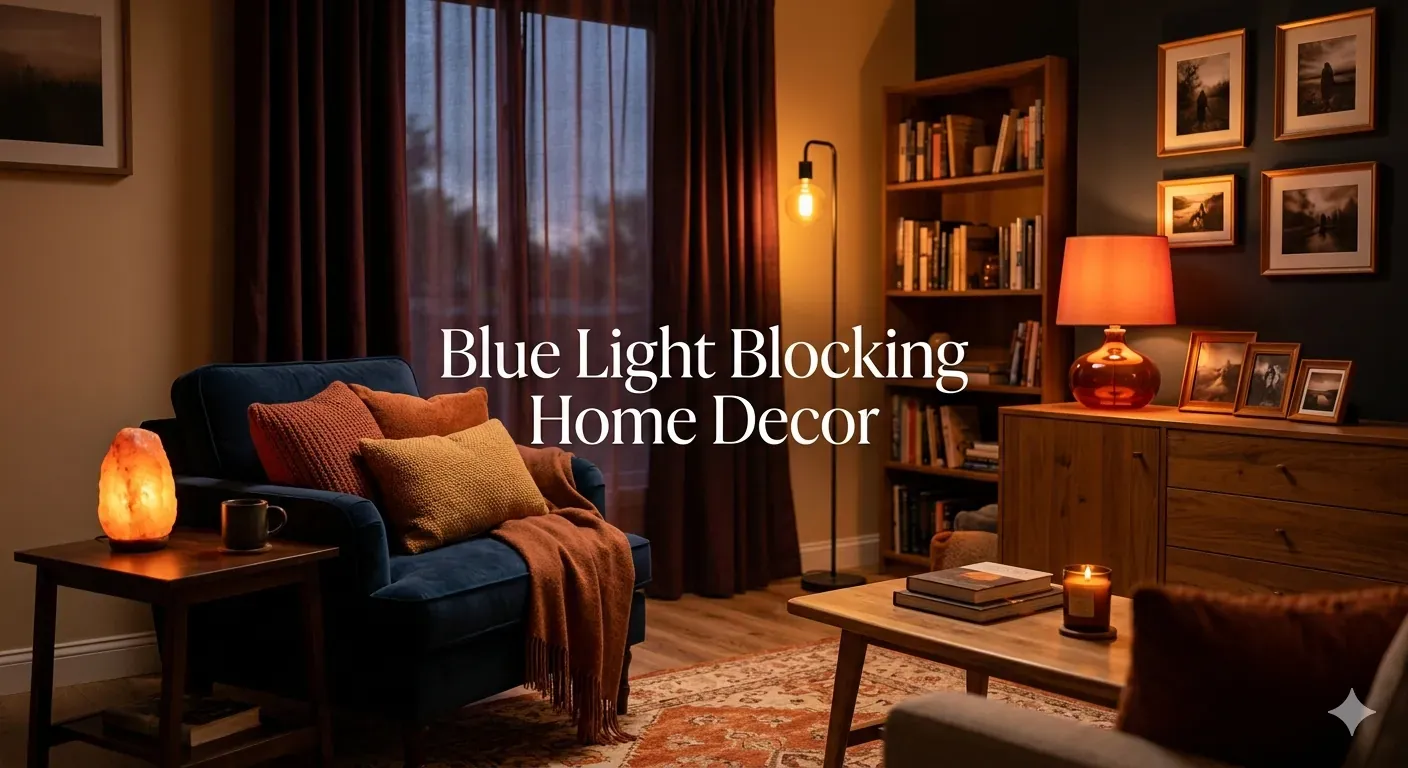
Introduction: Why Your Home Lighting Affects Your Hormones
Every evening, as the sun sets, your body begins preparing for rest. This natural process depends heavily on one crucial environmental factor: light exposure. Modern homes filled with LED screens, cool-white bulbs, and blue-rich lighting are disrupting this ancient biological rhythm, leading to hormonal imbalances, poor sleep quality, and decreased overall health.
Blue light blocking home decor isn't just a trend—it's a science-backed approach to creating living spaces that support your body's natural circadian rhythm. By strategically choosing warm-toned lighting, amber accessories, and red-spectrum decor elements, you can transform your home into a hormone-supporting sanctuary that promotes better sleep, balanced cortisol levels, and optimal melatonin production.
This comprehensive guide will walk you through everything you need to know about creating a blue-light-minimized home environment. From selecting the right bulbs to choosing sleep-friendly furniture and accessories, you'll discover practical, actionable steps to protect your hormonal health starting tonight.
Understanding Blue Light and Hormonal Health
Blue light, particularly in the 460-480 nanometer range, plays a crucial role in regulating your circadian rhythm—the internal 24-hour clock that governs sleep-wake cycles, hormone release, and numerous bodily functions. During daylight hours, blue light exposure is beneficial, promoting alertness and cognitive performance. However, evening exposure tells your brain it's still daytime, suppressing melatonin production and disrupting sleep quality.
How Blue Light Disrupts Hormones:
- Melatonin Suppression: Evening blue light exposure can reduce melatonin production by up to 50%, making it harder to fall asleep and reducing sleep quality
- Cortisol Dysregulation: Disrupted sleep patterns lead to elevated evening cortisol levels, creating a stress response when your body should be relaxing
- Insulin Sensitivity: Poor sleep from blue light exposure can decrease insulin sensitivity, affecting metabolic health and weight management
- Reproductive Hormones: Chronic circadian disruption affects estrogen, progesterone, and testosterone balance
The solution isn't to eliminate all light after sunset—that would be impractical and isolating. Instead, the key is replacing blue-rich lighting with warm, amber, and red-spectrum alternatives that support your body's natural evening wind-down process. This is where circadian-syncing lighting design becomes essential for modern homes.
Essential Blue Light Blocking Lighting Solutions
Lighting is the foundation of blue-light-blocking decor. By choosing the right bulbs and fixtures, you can dramatically reduce evening blue light exposure while maintaining adequate illumination for daily activities.
Amber and Red LED Bulbs
The most effective blue light blocking strategy starts with replacing standard LED bulbs with amber or red alternatives. These bulbs emit light in the 590-700 nanometer range, which doesn't suppress melatonin production.
Best Applications:
- Bedroom: Use 2200K-2700K amber bulbs in bedside lamps and overhead fixtures
- Living Room: Install dimmable amber bulbs in main lighting for evening hours
- Bathroom: Replace vanity bulbs with warm 2200K options for nighttime routines
- Hallways: Use motion-sensor amber nightlights for safe navigation
Look for bulbs specifically labeled as "blue light free," "sleep-friendly," or "circadian-friendly." Brands like Lighting Science, ClearLight, and TrueDark offer bulbs with verified spectral output that minimizes blue wavelengths.
Smart Bulbs with Circadian Programming
Smart bulbs offer the convenience of automatic color temperature adjustment throughout the day. Program them to emit bright, blue-rich light during morning and afternoon hours, then automatically shift to warm amber tones after sunset.
Popular options include Philips Hue, LIFX, and Wyze bulbs, which allow you to:
- Schedule automatic color temperature changes
- Create "sunset" routines that gradually dim and warm lights
- Control lighting via smartphone or voice commands
- Set different scenes for various activities
For those interested in creating a comprehensive evening routine, integrating smart lighting with habit-stacking strategies can automate your entire wind-down process, making it easier to maintain consistent sleep schedules.
Salt Lamps and Himalayan Pink Salt Fixtures
Himalayan salt lamps naturally emit a warm, orange-pink glow that's inherently low in blue light. Beyond their aesthetic appeal, these lamps provide gentle ambient lighting perfect for evening hours.
Benefits:
- Natural warm spectrum (approximately 2000K color temperature)
- Creates calming, cozy atmosphere
- May help reduce stress and promote relaxation
- Decorative element that serves functional purpose
Place salt lamps in bedrooms, living rooms, and meditation spaces. For optimal effect, use them as your primary light source 2-3 hours before bedtime.
Window Treatments and Light Filtering Solutions
Controlling natural and artificial light entering your home is just as important as choosing the right bulbs. Strategic window treatments can block external blue light from street lamps, neighbor's lights, and early morning sun.
Blackout Curtains with Thermal Insulation
High-quality blackout curtains serve multiple purposes: they block external light, provide thermal insulation, and create a cave-like environment optimal for sleep. Choose curtains in deep, warm colors like burgundy, chocolate brown, or navy blue.
Installation Tips:
- Install curtain rods 6-12 inches above window frame
- Extend rods 4-6 inches beyond window on each side
- Choose curtains that touch the floor or pool slightly
- Layer with sheer curtains for daytime flexibility
For those creating calm, clutter-free spaces, blackout curtains are essential for maintaining consistent sleep environments, especially in urban areas with significant light pollution.
Amber-Tinted Window Films
Window films offer a permanent solution for reducing blue light transmission through glass. Amber or red-tinted films can be applied to bedroom windows, creating a warm-filtered environment even during daylight hours.
These films are particularly useful for:
- Shift workers who sleep during daylight hours
- Bedrooms with east-facing windows and early sunrise
- Home offices where evening screen time is unavoidable
- Nurseries requiring consistent darkness for infant sleep
Cellular Shades with Light-Blocking Technology
Cellular (honeycomb) shades provide excellent light control and insulation. Choose dual-layer options with blackout backing for maximum light blocking capability. The cellular structure traps air, providing additional thermal benefits that support comfortable sleep temperatures.
Sleep-Friendly Bedroom Furniture and Accessories
Your bedroom should be a sanctuary designed specifically for rest and hormonal recovery. Every element—from your bed to your wall color—can either support or hinder your body's natural sleep processes.
Warm-Toned Wood Furniture
Choose bedroom furniture in warm wood tones like cherry, mahogany, walnut, or teak. These rich, reddish-brown hues naturally reflect warm light while absorbing blue wavelengths, creating a softer visual environment.
Avoid:
- White or cool gray furniture that reflects blue light
- Glossy finishes that create harsh reflections
- Metallic chrome or silver accents
- High-contrast black and white combinations
Instead, opt for matte or satin finishes in warm tones that create a cozy, grounding atmosphere conducive to relaxation.
Red and Amber Bedding
Your bedding choices significantly impact your sleep environment. Deep red, burgundy, terracotta, or warm orange bedding creates a visually warm space that supports evening wind-down.
Recommended Bedding Colors:
- Deep Red/Burgundy: Promotes feelings of warmth and comfort
- Terracotta/Burnt Orange: Creates earthy, grounding atmosphere
- Warm Chocolate Brown: Provides neutral, calming backdrop
- Golden Yellow (muted): Offers subtle warmth without overstimulation
Choose natural, breathable fabrics like organic cotton, linen, or bamboo to support comfortable body temperature regulation throughout the night. For those interested in creating comprehensive wellness spaces, bio-harmonizing bedroom setups incorporate these principles alongside other sleep-supporting elements.
Blue Light Blocking Alarm Clocks
Traditional digital alarm clocks emit constant blue LED light throughout the night, disrupting melatonin production even while you sleep. Replace these with red LED alarm clocks or sunrise simulation alarms that use warm light.
Best Options:
- Red LED digital displays (invisible in dark rooms)
- Sunrise alarm clocks with warm amber dawn simulation
- Analog clocks with glow-in-the-dark hands
- Smart alarms that can be dimmed or turned off
Living Room and Common Area Modifications
Evening hours spent in living rooms and common areas can significantly impact sleep quality. Creating blue-light-minimized spaces where you relax, read, or spend time with family supports natural circadian rhythms.
Warm Ambient Lighting Layers
Layer your lighting with multiple warm sources rather than relying on single overhead fixtures. This creates depth, reduces eye strain, and allows for flexible lighting levels throughout the evening.
Lighting Layers to Include:
- Ambient: Dimmable ceiling fixtures with 2700K bulbs
- Task: Floor lamps with amber bulbs for reading
- Accent: Table lamps with fabric shades in warm colors
- Decorative: Salt lamps, candle-style LEDs, or fairy lights in warm white
Install dimmer switches on all main light sources to gradually reduce light intensity as bedtime approaches. This mimics natural sunset and signals to your body that it's time to prepare for sleep.
TV and Screen Management
While eliminating screens entirely isn't realistic for most households, strategic modifications can minimize their hormonal impact:
Screen Solutions:
- Install blue light filtering screen protectors on TVs
- Enable "night mode" or "warm display" settings on all devices
- Position screens away from direct line of sight when not in use
- Create a dedicated media area with controlled lighting
- Establish a screen curfew 2-3 hours before bed
For those working toward comprehensive digital detox strategies, creating physical barriers to evening screen use—like storing devices in a different room—can support healthier boundaries.
Warm-Colored Wall Paint and Decor
Wall color significantly impacts how light reflects throughout your space. Choose warm, earthy tones that naturally absorb blue wavelengths:
Recommended Paint Colors:
- Warm beige with yellow undertones
- Terracotta and burnt sienna
- Deep olive green
- Muted coral or peach
- Rich chocolate brown
Avoid cool grays, stark whites, and blue-based colors in evening-use spaces. These reflect blue light and can make warm lighting appear less effective.
Technology Integration and Smart Home Solutions
Modern technology, when used strategically, can actually support your blue-light-blocking goals rather than hinder them. Smart home devices can automate the transition to evening lighting and create seamless circadian-friendly environments.
Automated Lighting Systems
Smart lighting platforms like Philips Hue, Lutron Caseta, or LIFX allow you to create automated "scenes" that adjust throughout the day:
Recommended Automation Schedule:
- 6 AM - 12 PM: Bright, cool white (5000K-6500K) for alertness
- 12 PM - 5 PM: Neutral white (3500K-4000K) for sustained energy
- 5 PM - 8 PM: Warm white (2700K-3000K) for wind-down
- 8 PM - Bedtime: Amber/red (2200K or lower) for melatonin support
Set up geofencing so lights automatically adjust when you arrive home in the evening, or use voice commands to instantly shift to "sleep mode" lighting.
Circadian Rhythm Apps and Devices
Several apps and devices can help you optimize your home's lighting for circadian health:
- f.lux: Adjusts computer screen color temperature automatically
- Twilight: Android app that filters blue light from devices
- Circadian Lighting: Home Assistant integration for whole-home control
- Philips Hue Sync: Syncs entertainment lighting with circadian goals
For those interested in intermittent tech fasting, these tools can help create clear boundaries between productive tech use and restful, low-tech evenings.
Creating Evening Routines with Blue Light Blocking Decor
Your physical environment sets the stage for healthy evening routines, but intentional habits maximize the benefits. Combine your blue-light-blocking decor with consistent nightly practices for optimal hormonal health.
The 3-Hour Wind-Down Protocol
Begin your evening wind-down 3 hours before your target bedtime:
Hours 3-2 Before Bed:
- Switch all overhead lights to amber bulbs
- Dim lights to 50% brightness
- Enable blue light filters on all devices
- Begin gentle activities like reading or light stretching
Hours 2-1 Before Bed:
- Turn off overhead lights completely
- Use only table lamps and floor lamps with warm bulbs
- Reduce screen time or switch to e-ink readers
- Practice relaxation techniques in your prepared space
Final Hour Before Bed:
- Eliminate all screens
- Use only salt lamps or candlelight
- Engage in calming activities like journaling or meditation
- Keep lighting at minimum necessary level
For those developing comprehensive evening routines, 5-minute nighttime rituals can be integrated into this framework for busy schedules.
Weekend Digital Detox Spaces
Designate specific areas of your home as "blue-light-free zones" where screens are never allowed. This could be a reading nook, meditation corner, or bedroom. Stock these spaces with:
- Physical books and magazines
- Journals and writing materials
- Board games or puzzles
- Comfortable seating with warm lighting
- Plants and natural elements
Creating these spaces supports broader analog Sunday or digital detox practices that can reset your circadian rhythm weekly.
Measuring Results and Optimizing Your Space
Once you've implemented blue-light-blocking decor, track your progress and make adjustments based on your body's responses. Hormonal health improvements take time, but you should notice changes within 2-4 weeks.
Key Metrics to Track
Sleep Quality Indicators:
- Time to fall asleep (sleep latency)
- Number of nighttime awakenings
- Morning alertness and energy levels
- Dream recall and sleep depth
- Overall sleep satisfaction (1-10 scale)
Hormonal Health Markers:
- Evening stress levels and ability to relax
- Morning cortisol response (natural wakefulness)
- Appetite regulation and cravings
- Mood stability throughout the day
- Menstrual cycle regularity (for women)
Tools for Monitoring Progress
Use these tools to objectively measure improvements:
- Sleep trackers: Oura Ring, Whoop, or Fitbit for sleep quality data
- Light meters: Apps like Light Meter to measure blue light levels in your space
- Mood journals: Track daily energy, stress, and sleep quality
- Body temperature: Morning basal temperature can indicate circadian alignment
For those interested in comprehensive wellness tracking, understanding how sleep quality affects body composition can provide additional motivation for maintaining your blue-light-blocking environment.
Common Mistakes to Avoid
Even with the best intentions, certain mistakes can undermine your blue-light-blocking efforts. Avoid these common pitfalls:
Mistake 1: Inconsistent Implementation
Using blue-light-blocking decor only some evenings confuses your circadian rhythm. Consistency is crucial—your body needs predictable light-dark cycles to optimize hormone production.
Solution: Commit to your new lighting setup 7 nights per week, even on weekends. Your circadian rhythm doesn't take days off.
Mistake 2: Ignoring Small Light Sources
Those tiny LED indicators on chargers, smoke detectors, and electronics emit enough blue light to disrupt sleep when you're in a dark room.
Solution: Cover small LEDs with black electrical tape or amber-colored tape. Remove or relocate charging devices from the bedroom entirely.
Mistake 3: Overlooking External Light Pollution
Street lights, neighbor's security lights, and early morning sun can penetrate your carefully designed sleep sanctuary.
Solution: Invest in quality blackout curtains, install weather stripping around windows, and use eye masks as backup protection.
Mistake 4: Too Much Light Too Late
Even warm, amber light can disrupt sleep if it's too bright or used too close to bedtime.
Solution: Dim lights progressively throughout the evening. In the final hour before bed, use only minimal lighting—just enough to navigate safely.
Mistake 5: Neglecting Morning Light
Blue-light-blocking is only half the equation. Without bright morning light exposure, your circadian rhythm can't properly anchor.
Solution: Within 30 minutes of waking, expose yourself to bright natural light or use a 10,000 lux light therapy lamp for 20-30 minutes.
Budget-Friendly Blue Light Blocking Solutions
Transforming your home doesn't require a complete renovation. Start with these affordable modifications:
Under $50
- Amber LED bulbs for bedside lamps ($15-25)
- Black electrical tape for covering device LEDs ($5)
- Red cellophane over existing bulbs (temporary solution, $8)
- Blue light blocking glasses for evening use ($20-30)
- Dimmer switch installation ($25-40)
$50-$150
- Himalayan salt lamp ($30-60)
- Blackout curtain panels ($40-80)
- Smart bulb starter kit ($50-100)
- Red LED alarm clock ($25-40)
- Window film for one room ($30-50)
$150-$500
- Complete smart lighting system for main living areas ($200-400)
- Professional blackout shade installation ($300-500)
- Circadian lighting consultation ($150-300)
- High-quality amber bulbs for entire home ($200-300)
Remember, you don't need to do everything at once. Start with your bedroom, then gradually expand to other evening-use spaces as budget allows.
Conclusion: Your Path to Hormonal Health Through Better Lighting
Creating a blue-light-blocking home environment is one of the most impactful changes you can make for your hormonal health, sleep quality, and overall well-being. By strategically choosing warm-toned lighting, implementing blackout solutions, and designing spaces that support your body's natural circadian rhythm, you're investing in long-term health benefits that extend far beyond better sleep.
Start small—replace one bulb tonight, install blackout curtains this weekend, or create a dedicated reading nook with warm lighting. Each modification compounds, creating a home environment that actively supports your hormonal balance rather than working against it.
Remember, your body has evolved over thousands of years to respond to natural light-dark cycles. By aligning your modern home with these ancient rhythms, you're not just decorating—you're creating a foundation for optimal health, energy, and vitality. Your hormones will thank you, starting with better sleep tonight.
For those ready to take comprehensive action on their wellness journey, consider exploring wellness nook designs that integrate blue-light-blocking principles with other holistic health practices, creating truly transformative living spaces.