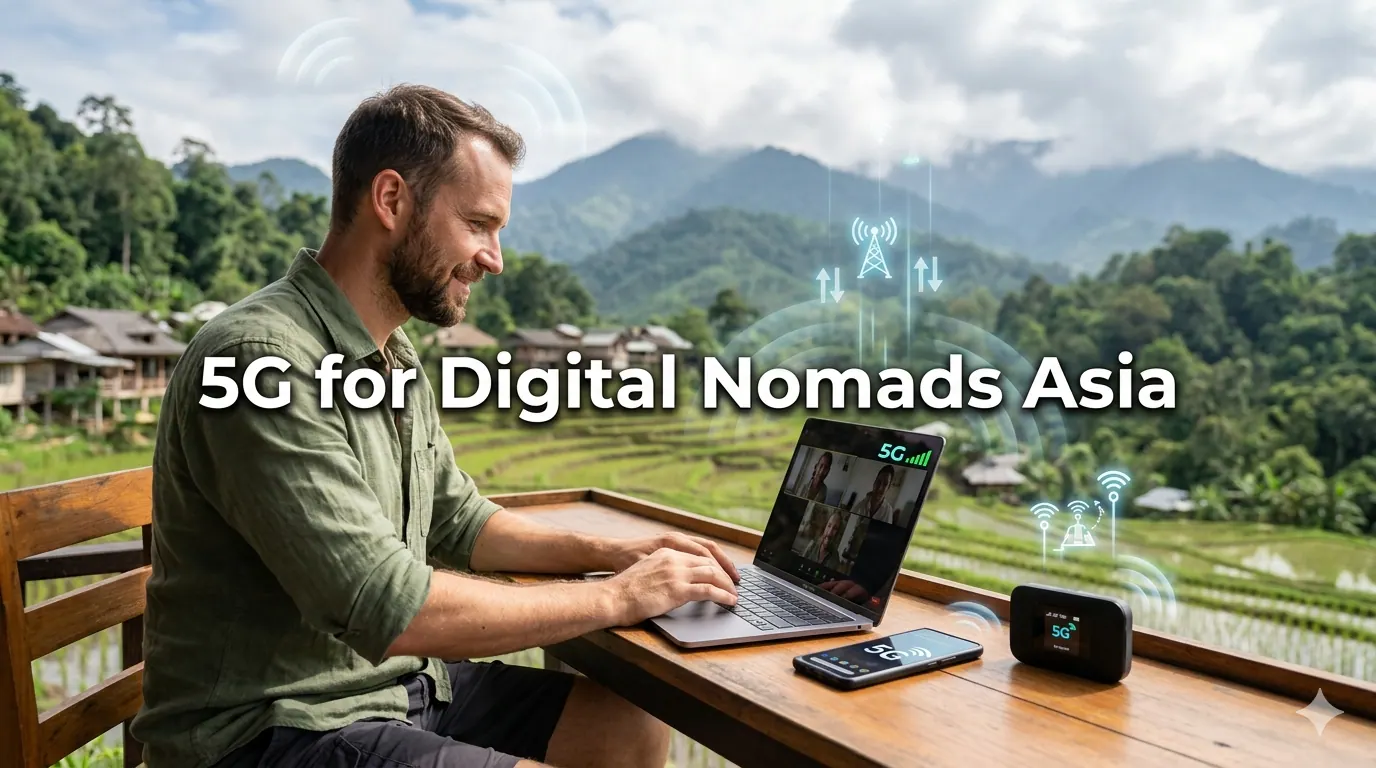
As a digital nomad exploring the breathtaking landscapes and vibrant cultures of remote Asia, staying connected isn't just a convenience—it's a necessity. Whether you're working from a beachside bungalow in Bali, a mountain village in Nepal, or a rural rice terrace in Vietnam, reliable internet access is essential for video calls, file uploads, client communication, and maintaining your livelihood. While traditional connectivity options like hotel WiFi and café hotspots have served nomads for years, the rapid expansion of 5G technology across Asia is revolutionizing how remote workers stay online in even the most isolated locations.
5G technology offers unprecedented speed, lower latency, and greater capacity than previous mobile networks, making it an ideal solution for digital nomads who need reliable, high-speed internet without being tethered to fixed infrastructure. From Thailand's islands to India's Himalayan foothills, 5G coverage is expanding rapidly, bringing fiber-like speeds to areas that previously struggled with basic connectivity. For the savvy digital nomad, understanding how to leverage 5G technology can mean the difference between seamless productivity and frustrating connectivity gaps.
This comprehensive guide shows digital nomads how to use 5G technology to stay connected while exploring remote Asia. You'll learn which Asian countries offer the best 5G coverage, how to choose the right SIM cards and eSIMs, what devices and equipment maximize your connectivity, practical strategies for maintaining connections in challenging environments, and backup solutions for when 5G isn't available. Whether you're planning your first Asia nomad adventure or optimizing your existing remote work setup, this guide provides actionable strategies to harness 5G technology for reliable, high-speed connectivity anywhere in Asia.
Understanding 5G Technology for Digital Nomads
Before diving into practical strategies, it's essential to understand what 5G offers and why it matters for digital nomads working in remote Asia.
What Makes 5G Different
5G, the fifth generation of mobile network technology, delivers significant improvements over 4G/LTE in three key areas that matter most to remote workers:
Speed: 5G can deliver download speeds of 100 Mbps to over 1 Gbps in ideal conditions, compared to 4G's typical 10-50 Mbps. This means faster file uploads, smoother video calls, and quicker access to cloud-based tools.
Latency: 5G reduces latency (the delay between sending and receiving data) to as low as 1-10 milliseconds, compared to 4G's 30-50 milliseconds. Lower latency means more responsive video conferencing, real-time collaboration, and smoother remote desktop experiences.
Capacity: 5G networks can handle more connected devices simultaneously without congestion. This is crucial in popular nomad destinations where many remote workers compete for bandwidth.
5G Coverage Realities in Asia
While 5G promises transformative connectivity, coverage in Asia varies dramatically by country, region, and even within cities. Understanding these realities helps set realistic expectations:
Urban vs. Remote: Major cities like Singapore, Seoul, Tokyo, and Bangkok have extensive 5G coverage. Remote areas may have spotty or no 5G, though coverage is expanding rapidly.
Frequency Bands: 5G operates on different frequency bands. Lower bands (sub-1 GHz) travel farther and penetrate buildings better but offer slower speeds. Higher bands (mmWave) offer blazing speeds but have limited range and poor building penetration. Most Asian carriers use mid-band spectrum (2-6 GHz) for the best balance of speed and coverage.
Network Types: Some carriers offer "5G" that's actually enhanced 4G (5G E or 5G+). True standalone 5G networks offer the full benefits but are still rolling out. Check carrier specifications when choosing plans.
Top Asian Countries for 5G Digital Nomad Connectivity
Not all Asian destinations offer equal 5G opportunities. These countries lead in coverage, speed, and nomad-friendly infrastructure.
Singapore: The Gold Standard
Singapore offers near-universal 5G coverage with some of the world's fastest mobile speeds. Three major carriers (Singtel, StarHub, M1) provide robust networks with excellent rural coverage.
Best for: Nomads using Singapore as a regional hub or base.
Practical tips: Tourist SIMs offer generous data; eSIM support is widespread. Consider a prepaid plan with 100GB+ monthly data for heavy usage.
South Korea: Speed and Reliability
South Korea pioneered 5G deployment and maintains exceptional coverage even in rural areas. SK Telecom, KT, and LG U+ offer competitive plans with excellent international roaming options.
Best for: Nomads prioritizing speed and reliability for video work, streaming, or large file transfers.
Practical tips: Tourist packages available at airports; eSIM options growing. Consider monthly plans if staying longer than 30 days.
Japan: Expanding Coverage
Japan's 5G network covers major cities and is rapidly expanding to rural areas. NTT Docomo, SoftBank, and KDDI offer reliable service with good English support.
Best for: Nomads exploring Japan's countryside while maintaining connectivity.
Practical tips: Pocket WiFi rentals remain popular; eSIM options available. Check coverage maps for specific rural destinations.
Thailand: Affordable and Expanding
Thailand offers excellent value with rapidly expanding 5G coverage. AIS, TrueMove, and DTAC provide competitive plans with good coverage in tourist areas and expanding rural reach.
Best for: Budget-conscious nomads seeking good connectivity at low cost.
Practical tips: Tourist SIMs widely available; eSIM support growing. Consider AIS for best rural coverage.
Malaysia: Balanced Coverage and Cost
Malaysia offers solid 5G coverage in urban areas with expanding rural reach. Celcom, Maxis, and Digi provide competitive plans with good value.
Best for: Nomads balancing cost and coverage across Southeast Asia.
Practical tips: Prepaid tourist plans widely available; eSIM options increasing. Check coverage for East Malaysia (Borneo) if traveling there.
Vietnam: Rapidly Improving
Vietnam's 5G rollout is accelerating, with good coverage in major cities and tourist areas. Viettel, Vinaphone, and Mobifone offer affordable plans with expanding coverage.
Best for: Nomads exploring Vietnam's diverse landscapes on a budget.
Practical tips: Viettel generally offers best rural coverage; tourist SIMs available at airports; eSIM support limited but growing.
India: Massive Scale, Variable Coverage
India's 5G rollout is massive in scale but uneven in coverage. Jio and Airtel lead deployment with strong urban coverage and expanding rural reach.
Best for: Nomads comfortable with variable connectivity in exchange for low costs and rich experiences.
Practical tips: Jio generally offers best coverage; tourist eSIMs available; always have backup connectivity options in remote areas.
Choosing the Right Connectivity Solution
Selecting the right 5G connectivity solution depends on your travel style, device compatibility, and connectivity needs.
SIM Cards vs. eSIMs: Pros and Cons
Physical SIM Cards:
- Pros: Widely available, easy to swap between devices, no device compatibility concerns
- Cons: Requires physical handling, risk of loss, may require phone restart to activate
- Best for: Travelers with older devices, those who frequently switch phones, or destinations with limited eSIM support
eSIMs (Embedded SIMs):
- Pros: No physical card needed, can store multiple profiles, easy to switch plans remotely, environmentally friendly
- Cons: Requires eSIM-compatible device, setup can be technical, not all carriers support eSIM
- Best for: Tech-savvy nomads with modern devices, those who travel frequently between countries, travelers who value convenience
Local SIMs vs. Regional eSIM Providers
Local Carrier SIMs:
- Typically offer best speeds and coverage within their country
- Often most cost-effective for extended stays in one country
- May require registration with passport (common in Asia)
- Customer support may be language-limited
Regional eSIM Providers (Airalo, Nomad, Holafly):
- Convenient multi-country coverage with single purchase
- Easy online setup before arrival
- Often more expensive per GB than local carriers
- May use partner networks with variable performance
Portable 5G Hotspots: When to Consider
Dedicated 5G mobile hotspots offer advantages for certain nomad setups:
- Multiple device connectivity: Share one connection across laptop, phone, tablet
- Better battery life: Dedicated hotspots often last longer than phone tethering
- Stronger signal: External antennas can improve reception in weak signal areas
- Separate work/personal: Keep work connectivity separate from personal phone
Consider a portable hotspot if you regularly work with multiple devices, need extended battery life, or work in areas with marginal signal where external antennas help.
Essential Devices and Equipment for 5G Connectivity
Maximizing 5G connectivity in remote Asia requires the right hardware. These devices and accessories enhance your connectivity experience.
5G-Compatible Devices
Ensure your primary devices support 5G bands used in Asia:
- Smartphones: Most flagship phones from 2021 onward support global 5G bands. Check specifications for bands n1, n3, n7, n28, n41, n77, n78 which are common in Asia.
- Laptops: Some laptops have built-in 5G; others require USB 5G dongles or tethering to your phone.
- Tablets: Cellular models with 5G support enable connectivity without phone tethering.
Before traveling, verify your device's 5G band compatibility with your destination countries using resources like Kimovil or FrequencyCheck.
Signal Boosters and External Antennas
In remote areas with marginal signal, these accessories can make the difference between usable and unusable connectivity:
- Portable signal boosters: Devices like weBoost or SureCall amplify weak signals for better performance.
- External antennas: Magnetic-mount or directional antennas can significantly improve reception in challenging locations.
- Window-mounted solutions: Temporary antenna mounts for hotel windows or vehicle roofs.
These accessories add bulk and cost but can be invaluable for nomads working from truly remote locations.
Power Solutions for Remote Work
5G connectivity drains battery faster than 4G. Ensure you have reliable power:
- High-capacity power banks: 20,000mAh+ power banks can recharge phones multiple times.
- Solar chargers: Portable solar panels provide off-grid power for extended remote stays.
- Universal adapters: Ensure you can charge devices in all Asian countries you visit.
- Car chargers: Essential if traveling by vehicle between remote locations.
Backup Connectivity Options
Even with 5G, have backup plans for critical work:
- Dual-SIM phones: Keep a secondary local SIM as backup if primary network fails.
- Satellite messengers: Devices like Garmin inReach provide emergency communication where cellular fails.
- Offline capabilities: Ensure critical apps work offline; sync files when connected.
- Local café research: Identify backup WiFi locations in each destination.
Practical Strategies for 5G Connectivity in Remote Asia
Maximizing 5G performance in challenging environments requires practical strategies beyond just having the right equipment.
Finding the Best Signal
Signal strength varies dramatically even within small areas. These techniques help find the best connection:
- Elevation helps: Higher locations often have better line-of-sight to cell towers. Work from balconies, rooftops, or hills when possible.
- Window positioning: Building materials block signals. Work near windows, preferably facing the nearest town or cell tower direction.
- Network selection: Manually select networks in your phone settings to test which carrier performs best in your location.
- Time of day: Networks are often less congested early morning or late evening, improving speeds.
Optimizing Device Settings
Small settings adjustments can significantly improve 5G performance:
- Preferred network type: Set to "5G/4G/3G (auto)" to allow fallback when 5G is weak.
- Data saver modes: Enable to reduce background data usage and prioritize work applications.
- App data restrictions: Limit non-essential apps from using mobile data to preserve bandwidth for work.
- Cloud sync scheduling: Schedule large syncs for times when you have strong signal or WiFi.
Managing Data Usage
Even with generous 5G plans, managing data ensures you don't run out mid-trip:
- Monitor usage: Use carrier apps or phone settings to track data consumption in real-time.
- Compress files: Use tools like TinyPNG for images or ZIP for documents before uploading.
- Offline first: Download maps, documents, and media when on WiFi for offline use.
- Video quality: Reduce video call quality or use audio-only when signal is marginal.
Working with Variable Connectivity
Remote Asia often means variable connectivity. Adapt your workflow accordingly:
- Asynchronous communication: Use email, project management tools, and recorded videos instead of real-time calls when connectivity is uncertain.
- Batch processing: Upload large files or sync cloud services during strong signal periods rather than continuously.
- Local caching: Use apps that cache content locally to reduce dependency on constant connectivity.
- Flexible scheduling: Schedule critical calls or uploads during times when you typically have strong signal.
Cost Management and Budgeting for 5G Connectivity
Staying connected in remote Asia doesn't have to break the bank. These strategies help manage costs while maintaining reliable connectivity.
Understanding Pricing Models
Asian carriers use various pricing structures:
- Prepaid data packages: Most common for travelers; buy fixed data amounts valid for set periods (7-30 days).
- Unlimited plans with throttling: Some carriers offer "unlimited" data that slows after a threshold; understand throttling speeds before purchasing.
- Pay-as-you-go: Rare for 5G but available in some markets; useful for very light usage.
- Regional bundles: Some eSIM providers offer multi-country packages at premium prices.
Cost-Saving Strategies
Maximize value from your connectivity budget:
- Buy local: Local carrier SIMs typically offer better value than international eSIM providers for extended stays in one country.
- Share connections: Use phone tethering or portable hotspots to connect multiple devices to one data plan.
- Off-peak usage: Some carriers offer cheaper data during off-peak hours; schedule large downloads accordingly.
- Loyalty programs: If returning to the same country, carrier loyalty programs may offer better rates on subsequent visits.
Budget Planning Examples
Sample monthly connectivity budgets for different nomad styles:
- Budget nomad ($15-30/month): Local prepaid SIM with 50-100GB data; primarily phone tethering; minimal video calls.
- Standard nomad ($30-60/month): Local or regional eSIM with 100-200GB data; portable hotspot for multiple devices; regular video calls.
- Power user ($60-120/month): Premium local plan or multi-country eSIM with 300GB+ data; dedicated 5G hotspot; frequent large file transfers and HD video calls.
Security and Privacy Considerations
Using mobile networks in foreign countries introduces security considerations. Protect your data and privacy with these practices.
Mobile Network Security
- Use VPNs: Always use a reputable VPN when using public or foreign mobile networks to encrypt your traffic.
- Avoid sensitive transactions: Avoid banking or sensitive logins on mobile networks when possible; wait for trusted WiFi.
- Keep software updated: Ensure devices have latest security patches to protect against network-based exploits.
- Disable auto-connect: Prevent devices from automatically connecting to unknown networks.
Privacy and Data Regulations
Asian countries have varying data privacy regulations:
- Registration requirements: Many Asian countries require SIM registration with passport; this is normal and legal.
- Data retention: Some countries require carriers to retain user data; understand local laws if privacy is a concern.
- Encryption standards: 5G networks generally offer better encryption than 4G; prefer 5G when available for sensitive communications.
Physical Security
- Device security: Use strong passwords, biometric locks, and remote wipe capabilities on all devices.
- Backup important data: Regularly backup critical work to cloud storage accessible from any device.
- Travel insurance: Consider insurance that covers device loss or theft, especially when carrying valuable connectivity equipment.
Troubleshooting Common 5G Connectivity Issues
Even with preparation, connectivity issues arise. These troubleshooting steps resolve common problems.
No 5G Signal or Slow Speeds
- Check coverage maps: Verify your location has 5G coverage using carrier maps or apps like OpenSignal.
- Restart device: Simple restarts often resolve network registration issues.
- Toggle airplane mode: Forces device to re-register with nearest tower.
- Manual network selection: Try manually selecting different available networks to find best performer.
- Check APN settings: Incorrect APN settings can prevent data; verify with carrier if issues persist.
Data Not Working Despite Signal
- Verify data allowance: Check if you've exceeded plan limits or if plan has expired.
- Check roaming settings: Ensure data roaming is enabled if using a foreign SIM.
- Test with different apps: Issue may be app-specific rather than network-wide.
- Try different location: Move to different location to rule out localized network issues.
Device Compatibility Issues
- Verify band support: Confirm your device supports 5G bands used in your destination country.
- Update carrier settings: Ensure device has latest carrier configuration updates.
- Check for carrier locks: Ensure device isn't locked to a carrier that doesn't partner with local networks.
Future-Proofing Your Nomad Connectivity
5G technology and Asian infrastructure continue evolving. These strategies help you stay ahead of the curve.
Staying Informed
- Follow carrier announcements: Major Asian carriers announce network expansions; follow their social media or websites.
- Join nomad communities: Online communities like Nomad List share real-time connectivity reports and tips.
- Monitor technology news: Stay informed about new devices, eSIM providers, and connectivity solutions.
Flexible Equipment Strategy
- Modular setup: Choose equipment that can adapt to changing technology (e.g., hotspots with firmware updates).
- Multi-band devices: Prioritize devices supporting wide range of 5G bands for maximum compatibility.
- Regular upgrades: Plan to update key connectivity equipment every 2-3 years to benefit from technology improvements.
Building Redundancy
- Multiple connectivity options: Maintain at least two independent connectivity methods (e.g., phone + hotspot).
- Geographic flexibility: When possible, choose accommodations with multiple carrier coverage options.
- Offline capabilities: Ensure critical work can continue during connectivity outages with offline tools and local backups.
Frequently Asked Questions
Is 5G available in remote areas of Asia?
5G coverage in remote Asia varies significantly by country and specific location. Major tourist destinations and provincial capitals typically have 5G, but truly remote villages, mountain areas, or islands may still rely on 4G or have limited coverage. Always check coverage maps for your specific destinations and have backup connectivity plans. Coverage is expanding rapidly, so information from six months ago may already be outdated.
Do I need an unlocked phone to use local 5G SIMs in Asia?
Yes, your phone must be carrier-unlocked to use local SIM cards. Most phones purchased directly from manufacturers are unlocked, but phones purchased through carriers may be locked. Contact your carrier before traveling to confirm unlock status and request unlocking if needed. eSIM-compatible phones also need to be unlocked to use foreign eSIM profiles.
How much data do I need as a digital nomad?
Data needs vary by work style. Light users (email, messaging, light browsing) may need 20-50GB monthly. Moderate users (regular video calls, cloud sync, moderate streaming) typically need 50-150GB. Heavy users (frequent HD video calls, large file transfers, streaming) may need 150-300GB+. Monitor your usage for a month to establish your baseline, then add 20-30% buffer for unexpected needs.
Can I use my home country's 5G plan while traveling in Asia?
Most home country plans offer international roaming, but rates are often prohibitively expensive for nomad-level usage. Some premium plans include generous international data, but verify coverage and speeds in your specific Asian destinations. For most nomads, local SIMs or regional eSIMs offer far better value and performance than international roaming from home carriers.
What if 5G isn't available where I'm staying?
Have a layered connectivity strategy: primary 5G connection, backup 4G connection via different carrier, and offline capabilities for critical work. Research WiFi options at local cafés, co-working spaces, or accommodations as tertiary backup. In truly remote areas with no cellular coverage, consider satellite communication devices for emergency connectivity, though these aren't suitable for regular work.
Conclusion
5G technology is transforming how digital nomads stay connected in remote Asia, bringing fiber-like speeds to locations that previously struggled with basic internet access. By understanding coverage patterns, choosing the right connectivity solutions, equipping yourself with appropriate hardware, and implementing practical strategies for variable conditions, you can maintain reliable, high-speed connectivity almost anywhere in Asia.
The key to success is preparation and flexibility. Research your destinations' connectivity options before arrival, invest in versatile equipment that adapts to different environments, and always have backup plans for critical work. Remember that connectivity is a means to an end—enabling your remote work and travel experiences—not the goal itself.
As 5G coverage continues expanding across Asia and new technologies like satellite internet emerge, the possibilities for remote work in even the most remote locations will only grow. By staying informed, adaptable, and strategic about your connectivity approach, you can unlock the full potential of digital nomad life in Asia while maintaining the reliable connections your work demands.
Embrace the adventure of working from remote Asia, confident that with the right 5G strategy, you can stay connected, productive, and present wherever your journey takes you. The mountains, beaches, and villages of Asia await—and now, so does reliable connectivity.
📖 আরও পড়ুন: Travel
- 🔗 ২০২৬ বাজেট ট্রাভেল: কম খরচে বিদেশ ভ্রমণ গাইড
- 🔗 The Joy of Coming Home: Why Returning After a Trip Feels Like a New Beginning
- 🔗 ২০২৬ গ্রীষ্ম: দেশ-বিদেশের সেরা ৫ সমুদ্র সৈকত ভ্রমণ গাইড - সম্পূর্ণ তথ্য ও টিপস
- 🔗 Top 10 Noctourism Destinations for Stargazing and Night Safaris in Europe
- 🔗 বিশ্বভ্রমণের নতুন দিগন্ত: অনলাইন ট্রাভেল এজেন্সি (OTA) কিভাবে বৈশ্বিক ভ্রমণকে বদলে দিচ্ছে – RapidRoomz.com-এর মতো স্মার্ট প্ল্যাটফর্মের উত্থান