
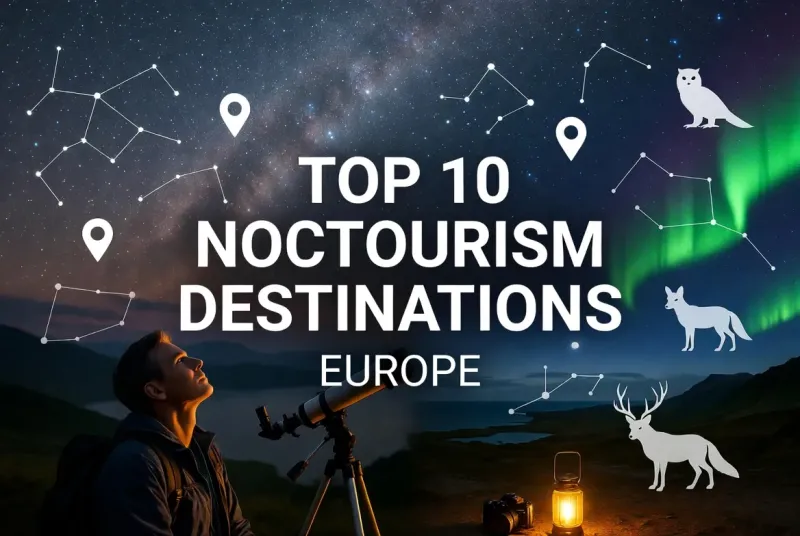
As travelers increasingly seek unique, transformative experiences beyond traditional daytime tourism, a fascinating trend has emerged: noctourism. This growing movement celebrates the magic of nighttime exploration, from witnessing the Milky Way stretch across pristine dark skies to observing nocturnal wildlife in their natural habitats. Europe, with its diverse landscapes, rich biodiversity, and commitment to preserving dark sky areas, offers some of the world's most spectacular noctourism experiences.
Noctourism combines the wonder of astrotourism, the thrill of night safaris, and the tranquility of experiencing nature after dark. Whether you're an amateur astronomer dreaming of capturing the perfect shot of the Northern Lights, a wildlife enthusiast eager to spot elusive nocturnal creatures, or simply someone seeking peace under a blanket of stars, Europe's noctourism destinations deliver unforgettable experiences.
This comprehensive guide explores the top 10 noctourism destinations across Europe, highlighting the best locations for stargazing, night safaris, and other nighttime nature experiences. From the remote highlands of Scotland to the volcanic landscapes of Iceland, from the ancient forests of Romania to the alpine peaks of the Alps, discover where Europe comes alive after sunset. Each destination offers unique opportunities to connect with the cosmos and witness the hidden world of nocturnal wildlife, creating memories that will last a lifetime.
Understanding Noctourism: The Rise of Nighttime Travel
Noctourism represents more than just a trend, it's a response to our increasingly illuminated world and a desire to reconnect with natural darkness. As light pollution affects over 80% of the global population, pristine dark skies have become a precious and increasingly rare resource. Travelers are now seeking out destinations where they can experience the night sky as our ancestors did, filled with countless stars, the glowing band of the Milky Way, and possibly even the ethereal dance of auroras.
Beyond stargazing, noctourism encompasses nighttime wildlife observation, night photography, bioluminescence viewing, and cultural experiences tied to the night. Many destinations now offer guided night safaris, astronomy tours, and accommodations designed for optimal stargazing. The movement also promotes dark sky conservation, encouraging responsible tourism that protects these precious natural resources for future generations.
Europe has emerged as a leader in noctourism, with numerous International Dark Sky Parks and Reserves, well-developed infrastructure for nighttime activities, and diverse ecosystems supporting rich nocturnal wildlife. From dedicated astronomy observatories to wilderness areas where wolves, owls, and other nocturnal species thrive, Europe offers something for every night enthusiast.
1. La Palma, Canary Islands, Spain: The Star Island
La Palma, known as "La Isla Bonita" (The Beautiful Island), stands as one of the world's premier stargazing destinations. This volcanic island in the Canary Islands boasts some of the clearest skies on Earth, protected by strict light pollution laws that have been in place since 1988. The island's high altitude, stable atmospheric conditions, and minimal light pollution create perfect conditions for observing the cosmos.
The Roque de los Muchachos Observatory, perched at 2,400 meters (7,874 feet) above sea level, houses some of the world's most advanced telescopes. While the observatory itself offers limited public access, the surrounding area provides spectacular stargazing opportunities. The entire island is designated as a Starlight Reserve, ensuring optimal viewing conditions year-round.
Best time to visit: Year-round, though winter months (November to February) offer the clearest skies. The Milky Way is most visible from March to October.
What to see: The Milky Way's galactic center, Andromeda Galaxy, numerous star clusters and nebulae, and depending on the season, meteor showers. On exceptionally clear nights, you can see over 8,000 stars with the naked eye.
Night activities: Guided astronomy tours, telescope viewing sessions, astrophotography workshops, and sunset-to-stars experiences. Several companies offer specialized tours that combine dinner with stargazing.
2. Scottish Highlands, United Kingdom: Wilderness Under the Stars
The Scottish Highlands offer a dramatic noctourism experience combining dark skies, rugged landscapes, and the possibility of witnessing the Northern Lights. With six designated Dark Sky Parks, including Galloway Forest Park (Europe's first Dark Sky Park) and the Isle of Coll, Scotland provides exceptional stargazing opportunities.
Beyond astronomy, the Highlands come alive at night with nocturnal wildlife. Red deer, pine martens, badgers, and various owl species emerge after dark. Night safaris and wildlife watching tours offer opportunities to observe these creatures in their natural habitat.
Best time to visit: For stargazing, September to March offers the longest nights. For Northern Lights, visit between September and March during periods of high solar activity. Summer months (June to August) offer white nights and opportunities to observe nocturnal wildlife during extended twilight.
What to see: The Milky Way, Northern Lights (aurora borealis), constellations, and planets. Wildlife enthusiasts might spot red deer, pine martens, badgers, otters, and various owl species including the elusive Scottish wildcat.
Night activities: Guided stargazing tours, Northern Lights hunting expeditions, night wildlife safaris, astrophotography workshops, and dark sky photography tours. Several lodges and campsites cater specifically to astrotourists.
3. Iceland: Land of Fire, Ice, and Auroras
Iceland tops many travelers' noctourism wish lists, offering the spectacular Northern Lights, dramatic landscapes, and unique geological features best experienced after dark. The country's location near the Arctic Circle makes it one of the best places in the world to witness the aurora borealis.
Beyond the Northern Lights, Iceland offers midnight sun experiences in summer, geothermal lagoons under the stars, and opportunities to observe nocturnal wildlife including Arctic foxes and various seabird species. The country's commitment to renewable energy and minimal light pollution in rural areas ensures excellent stargazing conditions.
Best time to visit: For Northern Lights, September to March offers the best chances. For midnight sun and extended twilight, visit June to July. Stargazing is excellent year-round outside the midnight sun period.
What to see: Northern Lights (aurora borealis), Milky Way, constellations, and planets. In summer, experience the midnight sun. Wildlife may include Arctic foxes, seals, and various seabird species.
Night activities: Northern Lights tours (by bus, boat, or super jeep), ice cave exploration, glacier night hikes, stargazing tours, geothermal lagoon visits under the stars, and photography workshops. Several hotels offer Northern Lights wake-up calls.
4. Dolomites, Italy: Alpine Stargazing Excellence
The Dolomites, a UNESCO World Heritage Site in northern Italy, combine breathtaking mountain scenery with exceptional dark sky conditions. Several areas in the Dolomites have received Dark Sky Park designation, including the Tre Cime di Lavaredo area and the Fanes-Sennes-Braies Natural Park.
The high altitude (many peaks exceed 3,000 meters) and clean mountain air create ideal conditions for stargazing. The region also offers opportunities to observe alpine nocturnal wildlife including chamois, marmots, and various bird species.
Best time to visit: June to September offers the most accessible conditions, though stargazing is excellent year-round for those prepared for winter conditions. The Milky Way is particularly spectacular from July to September.
What to see: The Milky Way arching over dramatic mountain peaks, planets, star clusters, and on clear nights, the zodiacal light. Wildlife enthusiasts might spot chamois, marmots, eagles, and various owl species.
Night activities: Guided astronomy tours at high-altitude observatories, night photography workshops, full moon hikes, via ferrata under the stars (for experienced climbers), and mountain hut stays for stargazing. Several refugios offer astronomy-themed packages.
5. Romania: Europe's Wild Heart and Dark Skies
Romania offers a unique noctourism experience combining dark skies with Europe's largest populations of large carnivores. The Carpathian Mountains provide exceptional stargazing conditions while also supporting thriving populations of brown bears, wolves, and lynx.
The country has several Dark Sky Parks, including the Pietrosul Mare Reserve and areas in the Apuseni Mountains. Rural areas throughout Romania maintain traditional low-light environments, creating excellent conditions for both stargazing and wildlife observation.
Best time to visit: For stargazing, year-round with clearest skies in winter. For bear watching, April to November offers the best opportunities. Wolf and lynx observation is possible year-round but requires patience and expert guides.
What to see: The Milky Way, Northern Lights (in northern regions during winter), constellations, and planets. Wildlife includes brown bears, wolves, lynx, chamois, and various bird species including Ural owls and eagle owls.
Night activities: Guided bear watching from hides, wolf tracking expeditions, stargazing tours, night photography workshops, and traditional village stays for dark sky experiences. Several eco-lodges specialize in wildlife and astronomy tourism.
6. Azores, Portugal: Atlantic Stargazing Paradise
The Azores, a Portuguese archipelago in the mid-Atlantic, offer exceptional stargazing conditions thanks to their remote location, minimal light pollution, and stable atmospheric conditions. The islands have invested heavily in astrotourism infrastructure, including the Azores Starlight Destination certification.
Beyond astronomy, the Azores offer opportunities to observe marine life including whales and dolphins, explore volcanic landscapes under the stars, and experience unique island culture. The islands' commitment to sustainability and conservation makes them an ideal noctourism destination.
Best time to visit: Year-round stargazing, with particularly clear skies from April to October. Whale watching season runs from April to October. The Milky Way is best visible from May to September.
What to see: The Milky Way, zodiacal light, planets, star clusters, and on clear nights, the gegenschein. Marine life includes various whale and dolphin species, while land-based wildlife includes Azores bullfinch and various seabirds.
Night activities: Guided stargazing tours at volcanic craters, astronomy workshops, whale watching night tours (for bioluminescence), astrophotography sessions, and visits to the Azores' observatories. Several hotels offer astronomy-themed packages.
7. Bavarian Forest, Germany: Wilderness After Dark
The Bavarian Forest National Park, Germany's first national park, offers excellent noctourism opportunities combining dark skies with pristine wilderness. The park's commitment to minimal artificial lighting and its vast forested areas create ideal conditions for both stargazing and nocturnal wildlife observation.
The region is home to various nocturnal species including lynx, wolves, and various owl species. The park's elevated terrain and clean air ensure excellent visibility for astronomical observations.
Best time to visit: For stargazing, year-round with clearest conditions in winter. For wildlife observation, spring and autumn offer the best opportunities. The Milky Way is most visible from June to September.
What to see: The Milky Way, planets, star clusters, and constellations. Wildlife includes lynx, wolves, red deer, various owl species including the eagle owl, and bats.
Night activities: Guided night hikes, wildlife observation from hides, stargazing tours, astronomy workshops, and night photography sessions. The park offers several ranger-led nocturnal programs throughout the year.
8. Kerry International Dark-Sky Reserve, Ireland
The Kerry International Dark-Sky Reserve in southwestern Ireland was the first Gold Tier Dark-Sky Reserve in the Northern Hemisphere. Covering over 700 square kilometers, the reserve offers exceptional stargazing conditions with minimal light pollution.
The region combines dramatic coastal scenery, ancient heritage sites, and rich biodiversity. Beyond astronomy, visitors can experience traditional Irish culture, explore rugged coastlines, and observe coastal wildlife.
Best time to visit: Year-round stargazing, with particularly clear skies in autumn and winter. The Milky Way is best visible from April to September. Northern Lights are occasionally visible during winter months.
What to see: The Milky Way, Northern Lights (occasionally), planets, star clusters, and on exceptionally clear nights, the zodiacal light. Coastal wildlife includes seals, various seabird species, and occasionally dolphins.
Night activities: Guided stargazing tours, astronomy workshops, dark sky photography sessions, and visits to the reserve's observatories. Several accommodations offer astronomy-themed packages and dark sky viewing areas.
9. Pyrenees, France/Spain: Mountain Astronomy
The Pyrenees mountain range, forming a natural border between France and Spain, offers exceptional noctourism opportunities with high-altitude observatories, dark sky parks, and pristine wilderness areas. The region's elevation and clean mountain air create ideal conditions for astronomical observations.
The Pyrenees support diverse nocturnal wildlife including brown bears (reintroduced), wolves, chamois, and various bird species. The region's commitment to dark sky preservation and sustainable tourism makes it an excellent noctourism destination.
Best time to visit: For stargazing, year-round with best conditions in winter. For wildlife observation, spring and autumn offer the best opportunities. The Milky Way is most visible from June to September.
What to see: The Milky Way over mountain peaks, planets, star clusters, and constellations. Wildlife includes brown bears, wolves, chamois, marmots, and various owl species including the eagle owl.
Night activities: Guided astronomy tours at high-altitude observatories including the Pic du Midi Observatory, night wildlife safaris, stargazing hikes, astrophotography workshops, and mountain hut stays for astronomy enthusiasts.
10. Finnish Lapland: Arctic Nights and Aurora Magic
Finnish Lapland offers a quintessential noctourism experience with reliable Northern Lights displays, pristine wilderness, and unique Arctic experiences. The region's location above the Arctic Circle ensures long winter nights perfect for aurora viewing and stargazing.
Beyond the Northern Lights, Lapland offers opportunities to observe Arctic wildlife, experience reindeer herding culture, and enjoy unique winter activities. The region's commitment to sustainable tourism and dark sky preservation ensures quality noctourism experiences.
Best time to visit: For Northern Lights, September to March offers the best chances. For midnight sun experiences, visit in June and July. Stargazing is excellent during the dark months from September to March.
What to see: Northern Lights (aurora borealis), Milky Way (during dark months), constellations, and planets. In summer, experience the midnight sun. Wildlife includes reindeer, Arctic foxes, various owl species, and occasionally wolves and wolverines.
Night activities: Northern Lights tours (by snowmobile, reindeer sled, or dog sled), ice hotel stays, glass igloo accommodations for aurora viewing, stargazing tours, winter photography workshops, and visits to Arctic observatories.
Planning Your Noctourism Adventure: Essential Tips
Successful noctourism requires careful planning and preparation. Here are essential tips to maximize your nighttime nature experiences:
Timing and Season Considerations
Research the best times to visit your chosen destination for specific experiences. Northern Lights are most visible during equinox periods (September-October and February-March). The Milky Way's galactic center is best visible from April to October in the Northern Hemisphere. Consider moon phases, as new moon periods offer the darkest skies for stargazing.
Equipment and Preparation
For stargazing, bring a red-light flashlight to preserve night vision, warm clothing even in summer (temperatures drop significantly at night), a comfortable chair or blanket, and binoculars or a telescope if you have them. For astrophotography, bring a camera with manual settings, a sturdy tripod, and extra batteries.
For night safaris, bring quiet, dark-colored clothing, binoculars or a spotting scope, and listen carefully to your guide's instructions. Avoid using white lights that can disturb wildlife.
Light Pollution Awareness
Check light pollution maps before planning your trip to ensure you're visiting areas with genuinely dark skies. Websites like Dark Site Finder and Light Pollution Map can help identify the darkest areas. Even within dark sky reserves, seek out locations away from settlements for the best viewing.
Booking and Accommodations
Book guided tours and specialized accommodations in advance, especially during peak seasons. Many destinations now offer astronomy-themed hotels, glass igloos for Northern Lights viewing, and dark sky lodges designed for optimal stargazing. These specialized accommodations often provide equipment and expert guidance.
Responsible Noctourism Practices
Practice responsible noctourism by minimizing light pollution (use red lights, avoid unnecessary lighting), respecting wildlife (maintain safe distances, avoid disturbing nocturnal animals), following local regulations, and supporting conservation efforts. Your actions help preserve these precious dark sky resources for future generations.
The Future of Noctourism in Europe
Europe continues to lead the way in noctourism development, with more destinations seeking Dark Sky Park designation and investing in astronomy tourism infrastructure. The movement aligns with broader sustainability goals, promoting low-impact tourism that celebrates natural darkness and nocturnal ecosystems.
Emerging trends include astro-photography tourism, dark sky festivals, integration of indigenous astronomical knowledge, and technology-enhanced experiences that don't compromise the natural darkness. As awareness grows about light pollution's impacts on wildlife and human health, noctourism offers a compelling reason to preserve dark skies.
For travelers, noctourism offers more than just beautiful views, it provides perspective, wonder, and a reconnection with the natural world. In our increasingly illuminated and busy world, the opportunity to stand under a pristine night sky or witness nocturnal wildlife in their natural habitat offers a rare and precious experience.
Conclusion
Europe's noctourism destinations offer unforgettable experiences that combine the wonder of the cosmos with the magic of nocturnal wildlife. From the volcanic landscapes of La Palma to the Arctic wilderness of Finnish Lapland, from the rugged Scottish Highlands to the ancient forests of Romania, these destinations provide opportunities to experience nature's nighttime spectacle.
Whether you're drawn by the promise of witnessing the Northern Lights dance across the sky, eager to photograph the Milky Way arching over mountain peaks, or excited to observe elusive nocturnal wildlife in their natural habitat, Europe's noctourism destinations deliver experiences that will transform your perspective and create lasting memories.
As you plan your noctourism adventure, remember that these experiences require patience, preparation, and respect for the natural environment. The rewards, however, are immeasurable: the awe of witnessing the cosmos in all its glory, the thrill of observing wildlife in their nocturnal realm, and the profound peace that comes from connecting with nature after dark.
Europe's dark skies and nocturnal wilderness are precious resources worth protecting and experiencing. By choosing responsible noctourism practices and supporting destinations committed to dark sky conservation, you help ensure that future generations can also experience the magic of Europe's nights. So pack your warmest clothes, bring your sense of wonder, and prepare to discover Europe's spectacular nighttime world. The stars, the auroras, and the nocturnal creatures are waiting.
📖 আরও পড়ুন: Travel
- 🔗 Beyond Cox's Bazar: 7 Hidden Beaches and Islands in Bangladesh
- 🔗 7 Hidden Weekend Getaways from Dhaka for Families
- 🔗 বাচ্চাদের নিয়ে সমুদ্র ভ্রমণ: বাংলাদেশের সেরা শিশু-বান্ধব বিচ
- 🔗 Eco-Tourism in Bangladesh 2026: Hidden Green Paradises
- 🔗 Unveiling the Soul of Bengal: A Journey Through Bangladesh's Cultural Heritage and Ancient Ruins