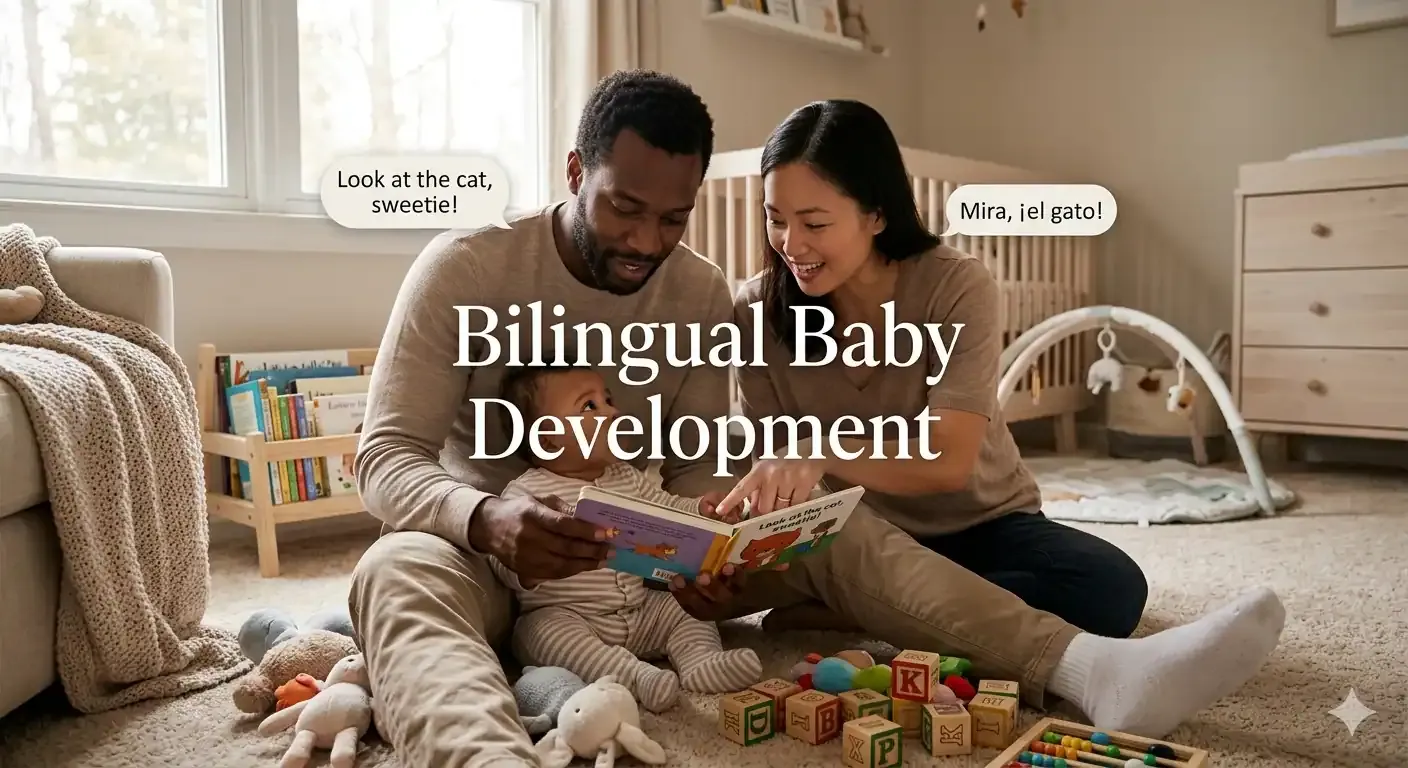
Introduction: Why Early Language Exposure Shapes Your Baby's Future
Featured Snippet Answer: Bilingual exposure for infants can begin from birth, as babies' brains are uniquely equipped to distinguish and absorb multiple language sounds simultaneously. Starting early supports cognitive flexibility, enhanced listening skills, and stronger neural connections, with visible benefits emerging by 12-18 months of consistent exposure.
From the moment your baby opens their eyes to the world, their brain is wiring itself at an extraordinary pace. During the first three years of life, infants form over one million neural connections every second—a biological window of opportunity that makes early language exposure uniquely powerful. When parents introduce two languages during this critical period, they aren't just teaching words; they're shaping the architecture of their child's developing brain.
Bilingual exposure for infants has moved from niche parenting choice to evidence-backed strategy supported by developmental neuroscience, linguistics, and pediatric research. Studies show that babies raised with multiple languages from birth demonstrate advantages in executive function, problem-solving, and social communication that extend well into adulthood. For families in multilingual regions like Bangladesh, where Bengali, English, and regional dialects coexist naturally, this approach aligns seamlessly with cultural reality.
This comprehensive guide explores the science behind infant bilingualism, identifies the optimal window for introducing a second language, and provides practical, age-appropriate strategies for parents. Whether you're planning to raise your child with Bengali and English, or adding a heritage language to your home routine, you'll find actionable, research-supported steps to nurture your baby's linguistic potential. For parents building holistic early development routines, integrating these principles with month-by-month baby care timelines ensures language exposure aligns with other developmental milestones.
The Science of Infant Language Acquisition
Understanding how babies learn language reveals why early bilingual exposure is both natural and advantageous. Unlike adults, who must consciously study grammar and vocabulary, infants absorb language through pattern recognition, social interaction, and auditory processing.
How Baby Brains Process Multiple Languages
Featured Snippet Answer: Infant brains process multiple languages by creating separate but interconnected neural networks for each language. By 6-12 months, babies can distinguish phonetic differences between languages, laying the foundation for fluent bilingual development without confusion.
Research using advanced neuroimaging shows that bilingual infants activate distinct brain regions for each language while maintaining strong connections between them. This dual-network architecture supports cognitive flexibility—the ability to switch between tasks, perspectives, and rules—which becomes a lifelong asset.
Key Developmental Milestones:
- 0-3 months: Babies prefer human speech over other sounds and can distinguish rhythmic patterns of different languages
- 4-6 months: Infants begin babbling with sounds from all languages they hear regularly
- 7-10 months: Babies start narrowing their sound perception to focus on languages they hear most often
- 11-14 months: First words emerge, often mixing sounds from both languages
- 15-24 months: Vocabulary expands rapidly; children may code-switch naturally between languages
These milestones highlight that bilingual development follows a predictable trajectory when exposure is consistent. For parents tracking overall development, reviewing AI-powered baby growth tracking apps can help monitor language milestones alongside physical and cognitive progress.
Debunking Common Myths About Bilingual Babies
Despite robust scientific support, several misconceptions persist about raising bilingual infants. Addressing these concerns helps parents make informed decisions with confidence.
Myth vs. Reality:
| Myth | Scientific Reality |
|---|---|
| Bilingualism causes language delay | Research shows bilingual babies reach language milestones within the normal range; any temporary mixing is a sign of sophisticated processing, not confusion |
| Babies get confused by two languages | Infants as young as 4 months can distinguish between languages based on rhythm and sound patterns; confusion is rare with consistent exposure |
| One parent, one language is the only way | Multiple successful models exist: time-based, context-based, or community-based approaches all work with consistency |
| It's too late to start after age 1 | While earlier exposure offers advantages, the brain remains highly receptive to language learning through age 3 and beyond |
Understanding these facts empowers parents to embrace bilingual exposure without unnecessary worry. For families navigating developmental concerns, consulting resources like slow parenting approaches emphasizes patience and observation over rigid timelines.
When to Start: Optimal Timing for Bilingual Exposure
The question of "when" is among the most common for parents considering bilingual upbringing. While flexibility exists, research points to clear advantages for early initiation.
The Critical Window: Birth to 36 Months
Featured Snippet Answer: The optimal time to start bilingual exposure is from birth through 36 months, when infants' brains show peak neuroplasticity for language acquisition. Starting during this window supports natural sound discrimination, accent development, and intuitive grammar learning.
This period, often called the "sensitive period" for language, reflects heightened brain sensitivity to linguistic input. During these months, babies' auditory systems are fine-tuning to recognize the phonemes (distinct sound units) of their environment. Exposure to multiple languages during this phase allows infants to retain the ability to perceive and produce a wider range of sounds.
Age-Specific Strategies:
- 0-6 months: Focus on rich auditory exposure—sing, talk, and read in both languages; prioritize face-to-face interaction to support visual-auditory bonding
- 6-12 months: Introduce simple, repetitive words and phrases; respond to babbling in both languages to reinforce communication attempts
- 12-24 months: Expand vocabulary through play, routines, and storytelling; label objects and actions in both languages during daily activities
- 24-36 months: Encourage simple conversations; introduce books with parallel text or bilingual content; celebrate code-switching as a sign of linguistic flexibility
These strategies align with broader infant care practices. For instance, incorporating language-rich moments during infant massage routines creates multisensory learning opportunities that strengthen both language and attachment.
Starting Later: Is It Still Beneficial?
While birth offers ideal conditions, introducing a second language after 12 or even 24 months remains highly valuable. The brain retains significant plasticity for language learning throughout early childhood.
Benefits of Later Introduction:
- Children still develop strong bilingual abilities with consistent exposure
- Older infants may show faster vocabulary growth in the new language due to existing communication skills
- Family circumstances (immigration, caregiver changes) often necessitate flexible timing
The key is consistency, not perfection. Even 20-30 minutes of dedicated exposure daily can yield meaningful results over time. For parents managing complex schedules, digital organization tools can help track language exposure time alongside other caregiving tasks.
Practical Methods for Introducing Two Languages
Successful bilingual exposure relies less on rigid rules and more on consistent, meaningful interaction. These evidence-based approaches help parents integrate multiple languages naturally into daily life.
The One-Person-One-Language Approach
In this widely used method, each caregiver consistently speaks one language to the child. For example, one parent speaks Bengali while the other speaks English.
Implementation Tips:
- Stay consistent with your assigned language, even when the child responds in the other
- Use expressive tone, gestures, and facial expressions to support comprehension
- Don't correct mixing; instead, model the target language naturally in your response
This approach provides clear language boundaries while leveraging the emotional connection between child and caregiver. It works especially well in households where both languages are valued equally.
The Time-and-Place Method
Instead of assigning languages to people, this method links languages to specific times, activities, or locations.
Examples:
- Bengali during morning routines, English during evening playtime
- Heritage language at home, community language outside the home
- One language for meals, another for bedtime stories
This strategy offers flexibility for families where both parents speak the same languages. It also mirrors natural code-switching patterns common in multilingual communities. For parents creating structured daily routines, evening ritual frameworks can incorporate language-specific moments seamlessly.
The Minority Language at Home Strategy
When one language dominates the broader community (e.g., Bengali in Bangladesh), families may choose to speak the minority language (e.g., English or a regional dialect) exclusively at home.
Best For:
- Families wanting to preserve a heritage language
- Expatriate families maintaining connection to home culture
- Parents preparing children for future educational or professional opportunities
This approach requires commitment, as children receive most community exposure in the majority language. Supplementing with books, media, and playgroups in the minority language strengthens retention. For families curating educational resources, screen-free activity ideas can include bilingual songs, games, and storytelling.
Creating a Language-Rich Environment at Home
Beyond speaking strategies, the physical and social environment significantly influences bilingual development. These practical adjustments maximize exposure without overwhelming your family.
Auditory Enrichment Through Daily Routines
Language learning thrives on repetition and context. Embedding both languages into predictable routines creates natural learning opportunities.
Routine Integration Ideas:
- Feeding time: Name foods, describe textures, and sing simple songs in both languages
- Bath time: Label body parts, play with water-related vocabulary, and use rhythmic chants
- Diaper changes: Narrate actions, count toes, and engage in back-and-forth vocal play
- Bedtime: Read bilingual books, sing lullabies in both languages, and review the day's events
These moments require no special materials—just mindful attention to language use. For parents seeking to enhance bonding during care routines, skin-to-skin contact practices can be paired with gentle bilingual narration to support both attachment and language development.
Curating Bilingual Resources for Infants
While human interaction remains the gold standard for language learning, thoughtfully selected materials can supplement exposure.
Recommended Resource Types:
- Board books: Choose titles with simple text, high-contrast images, and parallel translations
- Music and songs: Nursery rhymes in both languages support phonological awareness and memory
- Soft toys with cultural relevance: Dolls or animals representing both language communities foster positive associations
- Video content (limited): High-quality, slow-paced programs with clear speech may supplement—but not replace—live interaction
When selecting materials, prioritize authenticity and cultural relevance. For families embracing sustainable parenting values, eco-friendly baby product guides often include recommendations for ethically produced educational toys and books.
Monitoring Progress and Supporting Development
Parents naturally wonder whether their bilingual approach is "working." Understanding typical patterns helps set realistic expectations and identify when additional support may be helpful.
What Normal Bilingual Development Looks Like
Featured Snippet Answer: Normal bilingual development includes mixing languages (code-switching), uneven vocabulary across languages, and occasional pauses while selecting words. These patterns reflect sophisticated language processing, not confusion or delay.
Research shows that bilingual infants may have slightly smaller vocabularies in each individual language compared to monolingual peers, but their total vocabulary across both languages is typically equivalent or larger. This distribution is entirely normal and resolves as language skills mature.
Typical Patterns by Age:
| Age Range | Common Bilingual Behaviors | When to Consult a Professional |
|---|---|---|
| 6-12 months | Babbling with sounds from both languages; responding to names in either language | No response to sounds or voices in either language by 9 months |
| 12-18 months | First words may mix languages; understands more than they can express | No words in either language by 16 months; loss of previously acquired words |
| 18-24 months | Code-switching within sentences; vocabulary spurt in one or both languages | No two-word combinations by 24 months; significant frustration communicating |
| 24-36 months | Increasing sentence complexity; beginning to separate languages by context | Difficulty being understood by familiar adults; persistent echolalia without functional use |
When concerns arise, early intervention yields the best outcomes. For parents navigating developmental questions, feeding and development guides often include red-flag checklists applicable across domains.
Supporting Balanced Language Growth
It's common for bilingual children to show preference for one language, especially if it dominates their community or peer interactions. Strategic support can help maintain balance.
Strategies for Encouraging the Minority Language:
- Create "need" opportunities: Arrange playdates or activities where the minority language is essential for communication
- Connect with community: Join cultural groups, language playgroups, or online communities using the target language
- Make it fun: Use games, songs, and stories that celebrate the language's cultural context
- Model enthusiasm: Children mirror parental attitudes; show genuine joy in using both languages
These approaches foster positive associations rather than pressure. For families building supportive home environments, calm nursery design principles can incorporate bilingual elements like labeled objects or dual-language wall art.
Addressing Challenges and Common Concerns
Even with the best intentions, bilingual parenting presents real challenges. Acknowledging these hurdles and preparing practical responses increases long-term success.
Managing Language Mixing and Code-Switching
Children naturally blend languages, especially in early stages. This behavior, called code-switching, reflects linguistic creativity—not confusion.
How to Respond Supportively:
- Avoid correcting or criticizing mixed speech; instead, model the target language naturally in your reply
- Recognize that mixing often serves communicative purposes (e.g., filling vocabulary gaps)
- Celebrate successful communication in any language combination
Over time, most children develop the ability to separate languages by context without explicit instruction. Patience and positive reinforcement support this natural progression.
Balancing Two Languages Without Overwhelm
Parents may worry about "doing enough" in both languages. Remember that quality matters more than quantity.
Sustainable Exposure Guidelines:
- Aim for at least 20-30% of waking hours in the minority language for active acquisition
- Focus on interactive, responsive communication rather than passive media exposure
- Integrate languages into existing routines rather than adding separate "language lessons"
This approach prevents burnout while maintaining meaningful exposure. For parents managing busy schedules, habit-stacking strategies can help embed language moments into established daily patterns.
Supporting Emotional Connection Across Languages
Language carries emotional weight. Children may associate one language with comfort, discipline, or play based on family dynamics.
Building Positive Associations:
- Use both languages for affectionate interactions, not just instruction or correction
- Share stories, songs, and cultural traditions that celebrate each language's heritage
- Allow children to express emotions in whichever language feels most natural in the moment
Emotional safety supports language risk-taking. When children feel secure, they're more willing to experiment with new words and structures. For families prioritizing emotional wellness, holistic wellness approaches remind us that cognitive and emotional development are deeply interconnected.
Long-Term Benefits of Early Bilingual Exposure
The advantages of infant bilingualism extend far beyond language ability, influencing cognitive, social, and academic outcomes throughout life.
Cognitive and Academic Advantages
Research consistently links early bilingual exposure to enhanced executive function—the mental skills that enable planning, focus, and flexible thinking.
Documented Benefits:
- Improved attention control: Bilingual children often show stronger ability to filter distractions and switch between tasks
- Enhanced problem-solving: Managing two language systems builds mental flexibility applicable to non-linguistic challenges
- Stronger metalinguistic awareness: Bilingual individuals tend to understand language structure more deeply, supporting literacy development
- Academic resilience: These cognitive advantages often translate to stronger performance in reading, math, and complex reasoning tasks
These benefits emerge gradually and compound over time. Consistent early exposure lays the neural groundwork for lifelong learning capacity.
Social and Cultural Enrichment
Beyond cognitive gains, bilingualism fosters empathy, cultural competence, and broader social connection.
Social-Emotional Outcomes:
- Greater perspective-taking ability from navigating multiple linguistic worldviews
- Stronger family bonds through shared heritage language and cultural traditions
- Expanded social networks across linguistic and cultural communities
- Enhanced adaptability in diverse educational and professional settings
For families in multicultural societies like Bangladesh, these skills align naturally with daily life while preparing children for global citizenship. Integrating language exposure with practical caregiving tools creates opportunities for rich, multisensory learning during everyday interactions.
Conclusion: Embracing Your Baby's Linguistic Potential
Bilingual exposure for infants is not about creating perfect polyglots—it's about nurturing your child's innate capacity to connect, learn, and thrive in a multilingual world. By starting early, staying consistent, and prioritizing joyful interaction over rigid rules, you provide a foundation that supports cognitive growth, cultural identity, and lifelong communication skills.
Begin where you are: speak, sing, and read in the languages that matter to your family. Celebrate small milestones, embrace the messiness of language mixing, and trust in your baby's remarkable ability to learn. Every word you share, every song you sing, and every story you read in two languages strengthens the neural pathways that will serve your child for a lifetime.
Remember, you don't need to be a linguist or have flawless pronunciation to make a difference. Your love, attention, and consistent exposure are the most powerful tools you possess. As you embark on this journey, know that you're not just teaching languages—you're opening doors to understanding, connection, and possibility for your child's future.
For parents building comprehensive early development routines, exploring how sleep and developmental health intersect with cognitive growth provides additional insights into supporting your baby's holistic well-being alongside language development.