
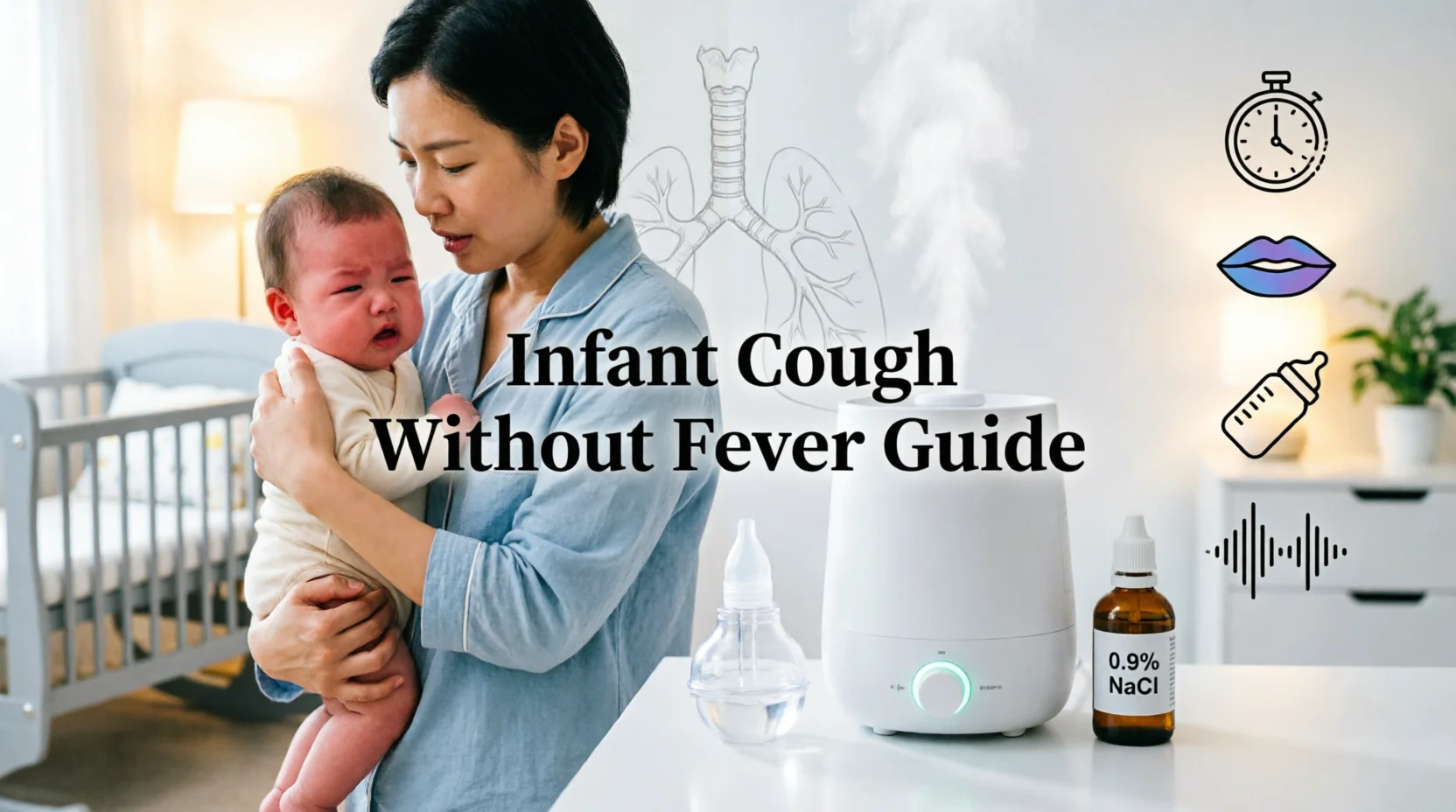
Hearing your infant cough can trigger immediate concern—even when there's no fever. That dry, hacking sound or wet, rattling cough feels alarming, especially when you can't pinpoint the cause. The good news? Coughing without fever is extremely common in infants and often signals a mild, self-limiting issue. However, because infants have developing immune systems and narrow airways, understanding why your baby is coughing—and knowing which signs warrant medical attention—is essential for safe, confident parenting.
Infant coughing without fever isn't a diagnosis—it's a symptom with multiple potential causes, ranging from harmless post-nasal drip to conditions requiring prompt evaluation. Unlike older children or adults, infants can't verbalize discomfort, clear their throats intentionally, or effectively expel mucus. This makes careful observation and informed decision-making critical.
This comprehensive guide delivers an evidence-based framework for understanding and managing infant coughing without fever. You'll learn the most common causes of afebrile coughing in infants, discover which symptoms require immediate medical attention, implement safe, pediatrician-approved home management strategies, and understand when to call your pediatrician versus heading to the ER. Whether your baby is a newborn or approaching their first birthday, you'll find practical, medically grounded guidance to navigate coughing episodes with clarity and calm.
Understanding Infant Coughing: Why Fever Isn't Always Present
Before exploring causes, it's essential to understand why infants cough—and why fever isn't always part of the picture.
The Purpose of Coughing in Infants
Coughing Is Protective:
- Clears airways of mucus, irritants, or small particles
- Prevents aspiration of saliva, milk, or secretions
- Signals irritation or inflammation in the respiratory tract
- Helps expel viruses or bacteria before they cause systemic illness
Why Fever May Be Absent:
- Early infection stage: Viral illnesses often start with cough before fever develops (or fever never appears)
- Mild viral load: Some viruses cause localized irritation without triggering systemic immune response
- Non-infectious causes: Reflux, allergies, or irritants don't typically cause fever
- Immature immune response: Young infants may not mount a robust fever response even with infection
Key Insight: The absence of fever doesn't mean the cough is "not serious." Conversely, fever isn't required for a cough to need attention. Focus on the character of the cough, associated symptoms, and your baby's overall behavior—not just temperature.
Infant Respiratory Anatomy: Why Coughs Sound Different
| Anatomical Feature | Impact on Cough | Parent Observation Tip |
|---|---|---|
| Narrow airways | Small amounts of mucus cause significant obstruction; cough sounds wet or rattly | Listen for "rattling" vs. dry/hacking; note if cough worsens when lying down |
| Underdeveloped cough reflex | Less effective at clearing secretions; cough may sound weak or effortful | Watch for signs of respiratory effort: flaring nostrils, chest retractions |
| Horizontal Eustachian tubes | Post-nasal drip easily triggers cough; ear infections may present with cough alone | Note if cough accompanies ear-tugging or fussiness during feeding |
| Small lung capacity | Less reserve for respiratory distress; fatigue sets in quickly | Monitor feeding patterns: refusing feeds may signal respiratory fatigue |
Common Causes of Infant Cough Without Fever
Most infant coughs without fever stem from benign, self-limiting causes. Understanding these helps reduce anxiety and guide appropriate care.
Viral Upper Respiratory Infections (The "Common Cold")
Why It Happens:
- Rhinovirus, RSV, or other viruses cause nasal congestion and post-nasal drip
- Mucus drips down throat, triggering cough reflex—especially when lying down
- Fever may be absent, low-grade, or appear 1-2 days after cough starts
Typical Pattern:
- Cough worsens at night or upon waking (post-nasal drip accumulation)
- Nasal congestion, runny nose, or sneezing often accompany cough
- Baby remains generally happy, feeding well, with normal activity between coughing fits
- Duration: 7-14 days; cough may linger 2-3 weeks after other symptoms resolve
When It's Likely Viral:
- Exposure to sick contacts (siblings, daycare)
- Seasonal pattern (fall/winter peak for cold viruses)
- Gradual onset over 1-2 days rather than sudden severe cough
Gastroesophageal Reflux (GER) or Silent Reflux
Why It Happens:
- Immature lower esophageal sphincter allows stomach contents to flow back into esophagus
- Stomach acid or milk irritates throat, triggering cough—often without visible spitting up ("silent reflux")
- Cough typically occurs during or shortly after feeding, or when lying flat
Typical Pattern:
- Cough during/after feeds; may arch back, fuss, or pull away during feeding
- Frequent spitting up (though not always present in "silent" reflux)
- Improves when held upright; worsens when lying flat
- Baby otherwise well: gaining weight, meeting milestones, no fever
Distinguishing from Infection:
- No nasal congestion, runny nose, or sick contacts
- Cough pattern correlates with feeding position/timing
- May have chronic, low-grade cough rather than acute onset
Environmental Irritants and Allergies
Common Triggers:
- Dry air: Low humidity dries airways, triggering irritation cough
- Irritants: Smoke (including thirdhand), strong fragrances, cleaning products, dust
- Allergens: Pet dander, dust mites, mold (less common under 1 year but possible)
Typical Pattern:
- Cough improves when baby is removed from triggering environment
- May be worse in specific rooms (e.g., nursery with new furniture, carpet)
- No other illness symptoms: normal feeding, activity, no congestion
- Often dry, tickly cough rather than wet/rattly
Clues It's Environmental:
- Cough started after home changes (new pet, cleaning products, renovation)
- Improves with humidifier use or air purification
- Family history of allergies or asthma increases likelihood
Teething-Related Cough
Why It Happens:
- Excess drooling during teething can drip down throat, triggering cough
- Mild gum inflammation may cause low-grade throat irritation
- Not a direct cause of respiratory illness, but can mimic mild cough
Typical Pattern:
- Cough coincides with visible teething signs: drooling, chewing, gum swelling
- Mild, intermittent cough; not persistent or severe
- Baby otherwise well: feeding normally, no fever, meeting milestones
- Often accompanied by mild fussiness or sleep disruption from teething discomfort
Important Note: Teething does not cause high fever, significant cough, or respiratory distress. If these are present, look for other causes.
Early Bronchiolitis or Asthma-Like Symptoms
Why It Happens:
- Viral infections (especially RSV) can cause airway inflammation before fever develops
- Infants with family history of asthma/allergies may have reactive airways
- Cough may be the first sign before wheezing or respiratory distress appears
Typical Pattern:
- Cough may start dry, become wet/rattly as mucus develops
- May hear subtle wheezing or "tight" breathing on exhale
- Baby may feed less efficiently due to breathing effort
- Can progress rapidly in young infants—close monitoring essential
When to Suspect This:
- Cough worsening over 24-48 hours rather than improving
- Any signs of increased work of breathing (see red flags below)
- History of prematurity, heart/lung conditions, or family asthma history
Red Flags: When Infant Cough Requires Immediate Medical Attention
While most infant coughs are benign, certain signs indicate the need for prompt evaluation. Trust your instincts—if something feels wrong, seek care.
Emergency Warning Signs (Go to ER or Call 911)
- Respiratory distress:
- Flaring nostrils with each breath
- Chest retractions: skin pulling in between ribs or at base of neck
- Grunting sounds with exhale
- Head bobbing with each breath (infants use neck muscles to breathe)
- Cyanosis: Lips, face, or fingertips turning blue or gray
- Apnea: Pauses in breathing >10-15 seconds, especially with color change
- Stridor: High-pitched sound when inhaling (suggests upper airway obstruction)
- Severe dehydration: No wet diaper >8 hours, dry mouth, no tears when crying
- Lethargy: Difficult to wake, limp, or unresponsive
Urgent Warning Signs (Call Pediatrician Immediately or Seek Same-Day Care)
- Cough characteristics:
- "Whooping" sound after coughing fits (pertussis concern)
- Barking, seal-like cough (croup—may need steroids)
- Sudden onset after possible choking incident
- Feeding changes:
- Refusing >50% of feeds for two consecutive feedings
- Choking or coughing during feeds (aspiration concern)
- Significantly fewer wet diapers (100.4°F/38°C in infants 2 weeks without improvement
- Cough worsening after initial improvement
Age-Specific Considerations
Newborns (0-2 months):
- Any cough warrants pediatrician notification—immune systems are immature
- Fever >100.4°F (38°C) is a medical emergency in this age group
- Even mild cough with feeding difficulties needs evaluation
Infants 3-6 months:
- Monitor closely for respiratory effort changes
- Cough with any fever requires prompt evaluation
- RSV season (fall-winter) increases risk of rapid progression
Infants 6-12 months:
- More resilient but still vulnerable to respiratory complications
- Cough with wheezing or breathing changes needs same-day evaluation
- Consider teething vs. illness carefully—don't assume cough is "just teething"
Safe, Evidence-Based Home Management Strategies
For mild coughs without red flags, these pediatrician-approved strategies can provide comfort and support recovery.
Humidity and Air Quality Management
Cool-Mist Humidifier:
- Why it helps: Adds moisture to dry airways, loosens mucus, reduces irritation
- How to use:
- Place 3-6 feet from crib; never where baby can reach
- Use distilled or demineralized water to prevent mineral dust
- Clean daily with vinegar or manufacturer-recommended solution to prevent mold
- Run during sleep and naps; aim for 40-60% humidity
- Avoid: Warm-mist humidifiers (burn risk); essential oils (can irritate infant airways)
Air Quality Optimization:
- Eliminate irritants: No smoking/vaping indoors; avoid strong fragrances, aerosols, or harsh cleaners near baby
- Ventilation: Open windows briefly when outdoor air quality is good; use exhaust fans when cooking
- Air purification: HEPA filter in nursery can reduce allergens/particulates (optional but helpful)
- Dust control: Damp-dust surfaces; wash bedding weekly in hot water to reduce dust mites
Nasal Care: Addressing Post-Nasal Drip
Saline Drops + Bulb Syringe:
- Why it helps: Thins and removes nasal mucus that triggers cough via post-nasal drip
- Protocol:
- Lay baby on back with head slightly elevated
- Place 1-2 drops saline in each nostril
- Wait 30-60 seconds for mucus to loosen
- Gently insert bulb syringe tip ¼-½ inch into nostril; release bulb to suction
- Clear syringe into tissue; repeat other nostril
- Use before feeds and sleep; limit to 3-4x daily to avoid irritation
- Tip: Squeeze bulb before inserting to control suction strength
Nasal Aspirator Alternatives:
- Electric aspirators: NoseFrida or similar; effective but clean thoroughly after each use
- Manual suction: Parent mouth suction devices (with filter); effective but requires technique
- When to skip: If baby is very fussy or coughing worsens with suction—try saline alone first
Positioning Strategies for Cough Relief
During Sleep:
- Always place baby on back: Safe sleep guidelines never change, even with cough
- Elevate head of crib slightly:
- Place firm pillow or towel under mattress at head end (never in crib with baby)
- Elevation should be gentle: 10-15 degrees maximum
- Helps reduce post-nasal drip and reflux-related cough
- Avoid: Sleep positioners, wedges, or pillows in crib (SIDS risk)
During Wakefulness:
- Upright holding: Hold baby upright against chest for 20-30 minutes after feeds to reduce reflux cough
- Tummy time: Supervised tummy time while awake helps drain secretions and strengthen respiratory muscles
- Carrier use: Upright baby carrier can provide comfort and positioning for coughing infants
Hydration and Feeding Support
For Breastfed Babies:
- Offer feeds more frequently in smaller amounts if coughing during feeds
- Ensure good latch to minimize air swallowing (which can worsen reflux cough)
- Stay hydrated yourself to maintain milk supply
For Formula-Fed Babies:
- Consider smaller, more frequent feeds if coughing interrupts feeding
- Ensure proper bottle angle to reduce air intake
- Discuss with pediatrician before changing formula types
For Babies 6+ Months:
- Offer small sips of water between feeds if approved by pediatrician
- Hydrating foods: pureed pears, applesauce, or broth-based soups (if eating solids)
- Avoid honey entirely under 12 months (botulism risk)
Comfort Measures That Actually Help
Gentle Chest Percussion (If Recommended by Provider):
- Only if taught by healthcare provider: Cupped-hand technique to loosen mucus
- Never use on: Bare skin, over spine, or if baby has bleeding disorders
- Stop immediately if: Baby becomes distressed or cough worsens
Warm Bath:
- Steam from warm (not hot) bath can loosen secretions
- Keep bath brief (5-10 minutes) to avoid chilling
- Follow with gentle drying and comfortable clothing
Comfort Holding:
- Upright holding provides comfort and may ease coughing fits
- Rocking or gentle motion can soothe baby during coughing episodes
- Your calm presence helps regulate baby's stress response
What NOT to Do: Common Mistakes in Infant Cough Management
Well-intentioned remedies can sometimes cause harm. Avoid these common pitfalls.
Medications to Avoid in Infants
Over-the-Counter Cough/Cold Medicines:
- Why avoid: FDA advises against OTC cough/cold meds for children 12 months, ½-1 tsp honey before bed may soothe cough (per AAP)
Essential Oils:
- Why avoid: Can irritate infant airways; some oils are toxic if ingested or absorbed through skin
- Specifically avoid: Eucalyptus, peppermint, camphor near infants (can cause respiratory distress)
- Safer alternative: Use humidifier with plain water; avoid adding oils
Positioning and Care Mistakes
Unsafe Sleep Positioning:
- Never place baby on stomach or side to sleep: Increases SIDS risk, even with cough
- Never use pillows, blankets, or positioners in crib: Suffocation hazard
- Safe alternative: Elevate mattress slightly at head end; keep sleep surface bare
Over-Suctioning Nasal Passages:
- Why it backfires: Can irritate nasal lining, increase swelling, worsen congestion
- Guideline: Limit saline + suction to 3-4x daily; focus on before feeds/sleep
- Sign you're overdoing it: Nasal bleeding, increased fussiness, or worsening congestion
Ignoring Feeding Changes:
- Why it matters: Coughing during feeds can lead to inadequate intake or aspiration
- Warning signs: Choking, coughing with every feed, refusing feeds, fewer wet diapers
- Action: Contact pediatrician if feeding is significantly disrupted
When and How to Contact Your Pediatrician
Knowing when to seek professional guidance reduces anxiety and ensures timely care.
Call Pediatrician Within 24 Hours If:
- Cough persists >3-5 days without improvement
- Mild feeding difficulties (taking 25-50% less than usual)
- Cough disrupts sleep significantly (waking >2x nightly)
- You're unsure about cause or management
- Baby has underlying conditions: prematurity, heart/lung issues, immune concerns
Prepare for the Call: Information to Have Ready
Document These Details:
- Cough description: Dry/wet, barking/whooping, frequency, timing (worse at night?)
- Associated symptoms: Congestion, feeding changes, sleep patterns, behavior
- Timeline: When cough started, any changes, exposures to illness
- Interventions tried: Humidifier, saline, positioning—what helped or didn't
- Vital signs if possible: Temperature, respiratory rate (count breaths for 30 seconds x2)
Sample Script for Calling:
"Hi, I'm calling about my [age]-month-old who has had a cough for [X] days without fever.
The cough is [describe: dry/wet, timing].
Baby is [feeding pattern], having [X] wet diapers, and [behavior description].
We've tried [interventions] with [result].
Should we come in, or try [specific advice] at home?"
What to Expect During Evaluation
Pediatrician Assessment May Include:
- Physical exam: Listening to lungs, checking ears/throat, assessing respiratory effort
- Oxygen saturation check: Pulse oximeter on foot/hand to ensure adequate oxygen
- Targeted questions: Feeding patterns, sleep, exposures, family history
- Testing (if indicated): Rapid viral tests, chest X-ray (rarely needed for simple cough)
Common Outcomes:
- Reassurance + home care plan: For mild viral coughs
- Prescription if needed: Antibiotics only for bacterial infections (rare for cough alone); albuterol for wheezing if indicated
- Follow-up plan: Clear guidance on when to recheck or seek urgent care
Prevention Strategies: Reducing Future Cough Episodes
While not all coughs can be prevented, these evidence-based strategies reduce risk and severity.
Hygiene and Exposure Management
Hand Hygiene:
- Wash hands thoroughly before handling baby, especially after being in public
- Ask visitors to wash hands or use sanitizer before holding infant
- Teach older siblings to cough/sneeze into elbow, not hands
Limiting Exposure:
- Avoid crowded indoor spaces during peak respiratory virus season (fall-winter)
- Keep baby away from individuals with active cough/cold symptoms
- Consider timing daycare entry if possible; smaller groups reduce exposure risk
Vaccination:
- Ensure baby receives all recommended vaccines, including flu shot at 6+ months
- Ensure caregivers are up-to-date on Tdap (pertussis) and flu vaccines
- Discuss RSV immunization (nirsevimab) with pediatrician for eligible infants
Home Environment Optimization
Air Quality:
- Maintain indoor humidity 40-60% year-round to support airway health
- Use HEPA air purifier in nursery if allergies or high pollution area
- Test for radon and carbon monoxide; install detectors as needed
Allergen Reduction:
- Wash bedding weekly in hot water to reduce dust mites
- Keep pets out of nursery if allergies suspected
- Choose fragrance-free, dye-free laundry detergents for baby items
Supporting Immune Resilience
Nutrition:
- Breastfeeding provides immune factors that reduce respiratory infection risk
- For formula-fed babies, ensure proper preparation and storage
- When starting solids (6+ months), include vitamin C-rich foods (pureed peppers, berries)
Sleep and Stress:
- Prioritize consistent sleep schedules; adequate sleep supports immune function
- Minimize infant stress: responsive caregiving, calm environment, predictable routines
- Caregiver wellbeing matters: your stress management supports baby's resilience
Frequently Asked Questions
How long is too long for an infant cough without fever?
General guidance: - 0-3 months: Any cough warrants pediatrician notification; don't wait - 3-6 months: Call if cough persists >3-5 days without improvement - 6-12 months: Call if cough lasts >7-10 days or worsens after initial improvement - Any age: Seek immediate care if red flags appear (breathing changes, feeding issues, lethargy) Remember: Duration alone isn't the only factor. A mild cough that's improving is less concerning than a shorter cough with warning signs.
Can I use a humidifier every night for my coughing baby?
Yes—with proper use: - Safety first: Cool-mist only; place out of reach; clean daily to prevent mold - Humidity target: 40-60%; use hygrometer to monitor - Water type: Distilled or demineralized to reduce mineral dust - When to pause: If room feels damp or baby develops congestion that worsens Humidifiers are safe for nightly use when maintained properly and can significantly improve comfort during coughing episodes.
Is it normal for my baby to cough during teething?
Mild, occasional cough can accompany teething due to excess drooling, but: - Teething cough is typically: Mild, intermittent, no other illness symptoms - Not teething if: Cough is persistent, wet/rattly, accompanied by congestion, fever, or feeding changes - When in doubt: Assume cough has another cause; consult pediatrician if unsure Never attribute significant cough solely to teething without ruling out respiratory causes.
When can I give my baby cough medicine?
Short answer: Not without explicit pediatrician direction. - Under 4 years: AAP and FDA advise against OTC cough/cold medicines due to risks - Under 12 months: Absolutely no honey (botulism risk) or OTC meds - Exceptions: Only medications prescribed specifically for your baby by their pediatrician - Safer alternatives: Humidifier, saline drops, upright positioning, hydration Focus on comfort measures and monitoring rather than suppressing the cough reflex, which serves a protective function.
How do I know if my baby's cough is from reflux or a cold?
Key differences: - Reflux cough: During/after feeds; improves upright; may have spitting up; no congestion - Cold cough: With nasal symptoms; worse lying down; may have mild fever; sick contacts - Overlap possible: Reflux can worsen with colds; colds can trigger reflux symptoms Track patterns: Note timing relative to feeds, presence of congestion, and response to positioning. Share observations with your pediatrician for accurate assessment.
Conclusion: Confidence Through Knowledge
Hearing your infant cough without fever can feel unsettling, but armed with knowledge, you can navigate these episodes with confidence. Most infant coughs are mild, self-limiting, and manageable with safe, supportive care at home. By understanding the common causes, recognizing warning signs, and implementing evidence-based strategies, you empower yourself to respond appropriately—neither under-reacting to serious concerns nor over-worrying about normal infant variations.
Remember: You know your baby best. Trust your instincts. If something feels off, seek guidance. Pediatricians expect these calls and prefer cautious parents over delayed evaluations. Your vigilance, paired with informed care, is your baby's greatest protection.
Key takeaways for managing infant cough without fever:
- Assess holistically: Evaluate cough character, associated symptoms, and baby's overall behavior—not just fever
- Know red flags: Respiratory distress, feeding changes, or lethargy require immediate evaluation
- Use safe comfort measures: Humidifier, saline drops, upright positioning, and hydration support recovery
- Avoid harmful remedies: No OTC cough meds, honey under 12 months, or unsafe sleep positioning
- Document and communicate: Track symptoms and share clear details with your pediatrician
- Prevent proactively: Hygiene, air quality, and vaccination reduce future cough episodes
- Trust your instincts: When in doubt, seek professional guidance—your caution is protective
Your infant's cough is a signal, not a crisis. By responding with knowledge, calm, and appropriate action, you provide the safe, nurturing care that helps your baby thrive—through coughs, colds, and all of life's early chapters.
Start today. Choose one action from this guide to implement this week: perhaps setting up a cool-mist humidifier, practicing saline drop technique, or simply documenting your baby's cough pattern to share with your pediatrician. Small, informed steps build the foundation for confident, capable parenting.
Your baby is lucky to have a caregiver who seeks understanding. Trust your love, trust your observation, and trust that with knowledge and care, you can navigate infant coughs with wisdom and grace.
Here's to healthy breaths, peaceful sleep, and confident care—for your baby and for you.