
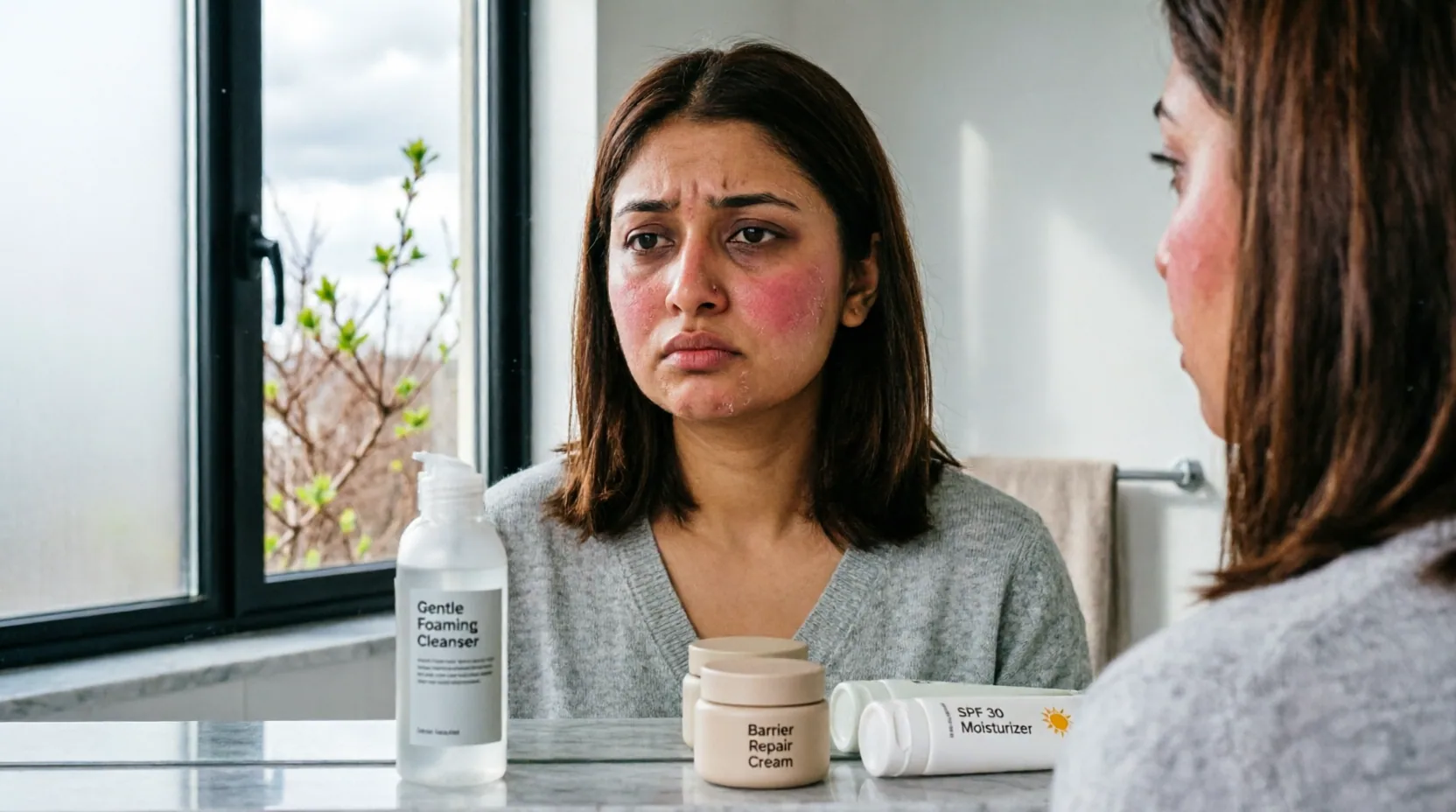
Understanding Weather Whiplash and Your Sensitive Skin
Have you ever woken up to sunshine and warm temperatures, only to wake up the next day to snow flurries or freezing rain? This dramatic swing in weather patterns has a name: weather whiplash. And if you have sensitive skin, you're probably feeling its effects more than most.
Weather whiplash refers to rapid, extreme shifts in temperature, humidity, and atmospheric conditions that can occur within hours or days. During the winter-to-spring transition, these fluctuations are particularly common—and particularly punishing for sensitive skin. One day your skin is battling dry, heated indoor air; the next it's dealing with sudden humidity spikes or unexpected cold snaps.
For those with sensitive, reactive, or compromised skin barriers, these rapid changes can trigger a cascade of problems: redness, flakiness, breakouts, stinging, itching, and general irritation. Your skin struggles to adapt quickly enough, leaving you feeling frustrated and your complexion looking less than its best.
But here's the good news: with the right strategy, you can protect your sensitive skin through even the most dramatic weather swings. This comprehensive guide will walk you through everything you need to know about weather whiplash, why it affects sensitive skin so severely, and exactly what steps to take to keep your skin calm, balanced, and healthy during this challenging transitional period.
What Exactly Is Weather Whiplash?
Weather whiplash isn't just a catchy phrase—it's a real meteorological phenomenon that's becoming increasingly common due to climate change. It describes those jarring shifts where temperatures can swing 30, 40, or even 50 degrees within a 24-48 hour period.
During late winter and early spring, weather whiplash is particularly prevalent because we're in that unstable period where winter's grip is loosening but hasn't fully released. Warm air masses from the south collide with lingering cold air from the north, creating unpredictable conditions.
Common characteristics of weather whiplash include:
- Rapid temperature fluctuations (sometimes 20+ degrees in one day)
- Sudden changes in humidity levels
- Unexpected precipitation (rain, snow, sleet)
- Shifting wind patterns and barometric pressure
- Alternating between dry heated indoor air and damp outdoor conditions
These environmental swings don't just affect what you wear—they significantly impact your skin's health and function.
Why Sensitive Skin Suffers During Weather Transitions
Not everyone experiences skin problems during weather whiplash, but those with sensitive skin are disproportionately affected. Here's why:
Compromised Skin Barrier Function
Your skin barrier (stratum corneum) is your body's first line of defense against environmental stressors. In people with sensitive skin, this barrier is often already compromised or weaker than normal. When weather conditions shift rapidly, the barrier doesn't have time to adapt, leading to increased transepidermal water loss (TEWL) and greater penetration of irritants.
Temperature Sensitivity
Sensitive skin has hyperreactive nerve endings and blood vessels. Sudden temperature changes trigger inflammatory responses, causing redness, flushing, and irritation. Going from a 70°F day to a 40°F evening (or vice versa) forces your blood vessels to rapidly constrict and dilate, which sensitive skin simply can't handle gracefully.
Humidity Imbalance
Your skin maintains optimal health at around 40-60% humidity. Weather whiplash can swing humidity from bone-dry (10-20%) to quite damp (70-80%) within days. Sensitive skin struggles to regulate its moisture levels through these swings, leading to either dehydration or congestion.
Inflammatory Response
People with sensitive skin conditions like rosacea, eczema, or general reactivity have an overactive immune response in their skin. Environmental stressors—whether it's cold wind, sudden heat, or humidity changes—trigger inflammatory cascades that result in redness, swelling, and discomfort.
Common Skin Problems During Winter-to-Spring Weather Whiplash
When weather whiplash hits, sensitive skin can respond in various ways. Here are the most common issues:
Increased Dryness and Flakiness
Even if you've been managing winter dryness well, sudden warm spells followed by cold snaps can strip your skin's moisture. The result? Patchy dryness, flaky texture, and that tight, uncomfortable feeling.
Breakouts and Congestion
Paradoxically, some people experience breakouts during weather transitions. When humidity spikes suddenly, your skin may overproduce oil. Then when it turns cold and dry again, dead skin cells don't shed properly, leading to clogged pores.
Redness and Flushing
Temperature swings are a major trigger for facial redness, especially in those with rosacea or couperose-prone skin. Blood vessels dilate in warmth and constrict in cold, and rapid cycling between the two leaves skin chronically flushed and irritated.
Itching and Stinging
As your skin barrier becomes compromised from environmental stress, you may experience increased sensitivity to products that normally don't bother you. Even your trusted moisturizer might suddenly sting or cause itching.
Dehydration Despite Oiliness
Weather whiplash can create the confusing scenario where your skin feels oily on the surface but is actually dehydrated underneath. This happens when your skin overcompensates for moisture loss by producing more oil.
Exacerbation of Existing Conditions
If you have eczema, psoriasis, rosacea, or seborrheic dermatitis, weather whiplash can trigger flares. The stress of rapid environmental changes activates inflammatory pathways in already-sensitive skin.
Building Your Weather Whiplash Skincare Strategy
Surviving weather whiplash with sensitive skin requires a flexible, adaptive approach. You can't use the exact same routine every day when conditions are this variable. Instead, you need a core routine with adjustable elements.
The Core Principles
1. Barrier Repair Is Priority #1
A strong, healthy skin barrier is your best defense against weather whiplash. Focus on ingredients that repair and strengthen: ceramides, cholesterol, fatty acids, niacinamide, and panthenol.
2. Hydration Over Moisturization
While moisturizers create a protective seal, hydrators actually add water to your skin. You need both, but during weather transitions, layering hydrating ingredients (hyaluronic acid, glycerin, beta-glucan) under your moisturizer is crucial.
3. Gentle Is Always Better
Now is not the time for harsh actives, aggressive exfoliation, or experimental products. Stick to gentle, proven formulations that support your skin rather than challenge it.
4. SPF Is Non-Negotiable
Even on cold, cloudy days during weather whiplash, UV radiation can damage sensitive skin. Plus, sudden sunny days can catch you off guard. Daily broad-spectrum SPF 30+ is essential.
5. Listen to Your Skin Daily
Check in with your skin every morning. Is it tight? Oily? Red? Flaky? Adjust your routine based on what you see and feel, not what the calendar says you should be using.
Your Morning Routine for Weather Whiplash
Your morning routine should protect and prepare your skin for whatever the day throws at it.
Step 1: Gentle Cleansing
Cold/Dry Days: Skip the cleanser and just rinse with lukewarm water, or use a creamy, non-foaming cleanser.
Warm/Humid Days: Use a gentle foaming or gel cleanser to remove overnight oil buildup.
Product Recommendations: Look for pH-balanced, sulfate-free cleansers with soothing ingredients like aloe, oat extract, or allantoin.
Step 2: Hydrating Toner or Essence
This step is crucial during weather transitions. A hydrating toner or essence adds a layer of moisture and helps subsequent products absorb better.
Key Ingredients: Hyaluronic acid, glycerin, rose water, centella asiatica, beta-glucan
Application Tip: Apply to damp skin and pat in gently. Don't rub.
Step 3: Targeted Serum
Choose your serum based on your skin's current needs:
For Redness/Irritation: Niacinamide, centella asiatica, azelaic acid, or licorice root extract
For Dehydration: Hyaluronic acid, polyglutamic acid, or sodium PCA
For Barrier Repair: Ceramides, peptides, or panthenol
Avoid: High-strength vitamin C, retinoids, or acids during severe weather whiplash periods
Step 4: Moisturizer
This is where you adjust for the day's weather:
Cold/Dry Days: Use a richer, cream-based moisturizer with occlusive ingredients like shea butter, squalane, or dimethicone
Warm/Humid Days: Switch to a lighter lotion or gel-cream that won't feel heavy
Pro Tip: Keep two moisturizers on hand—one light, one rich—and choose based on morning conditions.
Step 5: Sunscreen (Always!)
Never skip this step, regardless of weather. Choose a mineral or hybrid sunscreen with zinc oxide or titanium dioxide, as these are less likely to irritate sensitive skin.
SPF 30-50: Adequate for daily use
Reapplication: If you're outside for extended periods, reapply every 2 hours
Sensitive Skin Formulas: Look for "fragrance-free," "for sensitive skin," or mineral-only formulas
Your Evening Routine for Recovery
Evening is when your skin repairs itself, so your nighttime routine should focus on gentle cleansing, barrier support, and recovery.
Step 1: Double Cleanse (If Needed)
On Heavy SPF/Makeup Days: Use an oil-based cleanser or micellar water first, followed by your gentle cleanser
On Light Days: A single cleanse with your gentle cleanser is sufficient
Important: Use lukewarm water, never hot, as hot water strips your barrier
Step 2: Soothing Toner or Essence
Just like morning, apply a hydrating, soothing toner to damp skin. This helps reset your skin's pH and adds moisture after cleansing.
Step 3: Treatment (Use Sparingly)
During severe weather whiplash, you may need to pause active treatments. However, if your skin is stable, you can use:
Gentle Options:
- Low-strength niacinamide (2-5%)
- Peptides
- Bakuchiol (gentle retinol alternative)
- Azelaic acid (10% or less)
Pause These:
- Retinoids/retinol
- AHAs/BHAs
- High-strength vitamin C
- Benzoyl peroxide
Step 4: Night Moisturizer or Face Oil
Your night moisturizer can be slightly richer than your day cream. Look for ingredients that support overnight repair:
Key Ingredients:
- Ceramides
- Peptides
- Squalane
- Jojoba oil
- Shea butter
- Centella asiatica
For Extra Dry Skin: Add 2-3 drops of facial oil (rosehip, marula, or jojoba) over your moisturizer
Step 5: Occasional Overnight Mask
1-2 times per week, use a hydrating overnight mask or sleeping pack for extra barrier support. Look for formulas with ceramides, hyaluronic acid, or centella.
Adjusting Your Routine for Daily Weather Changes
The key to surviving weather whiplash is flexibility. Here's how to adjust based on conditions:
Cold and Dry (Below 40°F, Low Humidity)
Morning:
- Water rinse or cream cleanser only
- Extra layer of hydrating toner
- Rich serum with ceramides or peptides
- Heavy cream moisturizer
- Mineral sunscreen
Evening:
- Gentle cream cleanser
- Soothing toner
- Barrier repair serum
- Rich night cream + facial oil if needed
Avoid: Foaming cleansers, alcohol-based toners, exfoliation
Warm and Humid (Above 65°F, High Humidity)
Morning:
- Gentle foaming cleanser
- Light hydrating toner
- Lightweight serum (niacinamide or hyaluronic acid)
- Light lotion or gel-cream
- Lightweight sunscreen
Evening:
- Gentle foaming cleanser
- Balancing toner
- Light serum
- Light moisturizer or skip if skin feels oily
Avoid: Heavy creams, facial oils, occlusive products
Rapid Temperature Swings (30+ Degree Changes)
On days when the forecast shows dramatic swings, dress in layers and keep your skincare middle-of-the-road:
- Use moderate-weight products (not too light, not too heavy)
- Focus on barrier-supporting ingredients
- Keep a travel-size moisturizer in your bag for midday touch-ups
- Use a facial mist with soothing ingredients for on-the-go hydration
Emergency Care for Weather Whiplash Flare-Ups
Sometimes despite your best efforts, your skin will react badly to weather whiplash. Here's how to handle flare-ups:
For Severe Redness and Flushing
Immediate Actions:
- Apply a cool (not cold) compress for 5-10 minutes
- Use a centella asiatica or aloe-based gel
- Avoid all actives until redness subsides
- Take an anti-inflammatory like ibuprofen if needed
Products to Use:
- Centella asiatica serum or cream
- Aloe vera gel (fragrance-free)
- Oat-based moisturizer
- Thermal spring water spray
For Extreme Dryness and Flaking
Immediate Actions:
- Stop all exfoliation immediately
- Apply a thick layer of barrier repair cream
- Use a humidifier in your bedroom
- Drink extra water
Products to Use:
- Ceramide-rich moisturizer
- Facial oil (squalane or jojoba)
- Overnight hydrating mask
- Panthenol (vitamin B5) serum
For Breakouts and Congestion
Immediate Actions:
- Don't pick or pop!
- Simplify your routine to gentle cleanse, hydrate, protect
- Use a spot treatment with sulfur or tea tree oil
- Avoid heavy, occlusive products
Products to Use:
- Salicylic acid spot treatment (0.5-2%)
- Lightweight, non-comedogenic moisturizer
- Niacinamide serum
- Clay mask (once weekly, if skin isn't irritated)
For Stinging and Burning Sensations
Immediate Actions:
- Rinse face with cool water
- Stop using all products except the most basic
- Apply a bland moisturizer like plain petrolatum or Aquaphor
- Avoid sun exposure
Products to Use:
- Pure petrolatum (Vaseline)
- Aquaphor Healing Ointment
- Plain, fragrance-free moisturizer
- Thermal spring water
Lifestyle Adjustments for Weather Whiplash
Skincare products are crucial, but lifestyle factors also play a major role in how your skin handles weather transitions.
Hydration from Within
Drink plenty of water throughout the day. During weather whiplash, aim for at least 8-10 glasses daily. Herbal teas and water-rich foods (cucumber, watermelon, oranges) also help.
Diet Considerations
Eat More:
- Omega-3 rich foods (salmon, walnuts, flaxseed) for anti-inflammatory benefits
- Antioxidant-rich fruits and vegetables
- Healthy fats (avocado, olive oil, nuts)
- Probiotic foods (yogurt, kefir, sauerkraut) for gut-skin axis support
Limit:
- Sugar and refined carbohydrates (inflammatory)
- Excessive caffeine (dehydrating)
- Alcohol (dehydrating and inflammatory)
- Very spicy foods (can trigger flushing)
Indoor Environment Control
Humidifier: Use a humidifier in your bedroom during dry spells to maintain 40-50% humidity
Air Purifier: Helps remove allergens and pollutants that can irritate sensitive skin
Temperature: Keep indoor temperature moderate (68-72°F) to avoid shocking your skin when you go outside
Stress Management
Stress exacerbates skin sensitivity. Practice:
- Deep breathing exercises
- Meditation or yoga
- Adequate sleep (7-9 hours)
- Gentle exercise
Protective Clothing
Dress for the weather to protect your skin:
- Scarf to protect face from wind
- Hat for sun protection
- Gloves to prevent hand dryness
- Layers so you can adjust to temperature changes
Product Recommendations for Weather Whiplash
Here are some product categories and specific ingredients to look for:
Gentle Cleansers
- CeraVe Hydrating Cleanser
- La Roche-Posay Toleriane Hydrating Gentle Cleanser
- Vanicream Gentle Facial Cleanser
- Cetaphil Gentle Skin Cleanser
Hydrating Toners
- Klairs Supple Preparation Unscented Toner
- CosRX Full Fit Propolis Synergy Toner
- Paula's Choice Enriched Calming Toner
- Thayers Alcohol-Free Rose Petal Witch Hazel
Barrier Repair Serums
- The Ordinary Multi-Peptide + HA Serum
- Paula's Choice CALM Restoring Serum
- iS Clinical Hydra-Cool Serum
- SkinCeuticals Metacell Renewal B3
Moisturizers for Dry Days
- CeraVe Moisturizing Cream
- La Roche-Posay Lipikar AP+M Triple Repair Moisturizer
- First Aid Beauty Ultra Repair Cream
- Aveeno Calm + Restore Oat Gel Moisturizer
Moisturizers for Humid Days
- Neutrogena Hydro Boost Water Gel
- Belif The True Cream Aqua Bomb
- Glow Recipe Plum Plump Hyaluronic Cream
- Tatcha The Water Cream
Sunscreens for Sensitive Skin
- EltaMD UV Clear Broad-Spectrum SPF 46
- La Roche-Posay Anthelios Mineral Ultra-Light Fluid SPF 50
- CeraVe Hydrating Mineral Sunscreen SPF 30
- Colorescience Sunforgettable Total Protection Face Shield SPF 50
Soothing Treatments
- La Roche-Posay Cicaplast Baume B5
- Avene Cicalfate+ Restorative Protective Cream
- CosRX Pure Fit Cica Cream
- Dr. Jart+ Cicapair Tiger Grass Color Correcting Treatment
When to See a Dermatologist
While most weather whiplash skin issues can be managed at home, there are times when professional help is needed:
See a dermatologist if:
- Redness or irritation persists for more than 2 weeks despite gentle care
- You develop painful, oozing, or crusted lesions
- Your skin is so sensitive you can't tolerate any products
- You suspect a skin infection
- Your rosacea or eczema is flaring severely
- You're experiencing significant discomfort or pain
A dermatologist can prescribe stronger treatments like topical steroids, calcineurin inhibitors, or oral medications to get your skin back on track.
Prevention Strategies for Future Weather Whiplash
While you can't control the weather, you can prepare your skin to be more resilient:
Year-Round Barrier Maintenance
Don't wait for weather whiplash to focus on barrier health. Use barrier-supporting ingredients consistently throughout the year.
Gradual Seasonal Transitions
As seasons change, gradually adjust your routine rather than making sudden switches. Start incorporating lighter products in late winter, richer ones in late summer.
Regular Skin Assessments
Check in with your skin weekly. Note any changes in texture, sensitivity, or reactivity. Adjust your routine proactively rather than reactively.
Build a Flexible Product Wardrobe
Keep a range of products on hand—light and rich moisturizers, different cleansers, various serums—so you can mix and match based on conditions.
Stay Informed
Check weather forecasts regularly and plan your skincare accordingly. If a major temperature swing is coming, prep your skin with extra barrier support.
Conclusion: Embracing Flexibility in Your Skincare
Weather whiplash during the winter-to-spring transition is challenging, especially for sensitive skin. But with the right approach, you can navigate these turbulent conditions successfully.
The key is flexibility. Rigid routines don't work when the weather is this unpredictable. Instead, build a core regimen focused on gentle cleansing, barrier repair, hydration, and sun protection, then adjust the weight and texture of your products based on daily conditions.
Remember that weather whiplash is temporary. These dramatic swings typically stabilize as we move fully into spring. In the meantime, be patient with your skin, listen to what it needs, and don't hesitate to simplify your routine when things go sideways.
Most importantly, be kind to yourself. Sensitive skin during weather whiplash is not your fault, and it doesn't mean you're doing anything wrong. It's simply your skin's response to challenging environmental conditions. With gentle care, barrier support, and a flexible approach, you'll get through this transitional period with your skin healthy and comfortable.
Spring is coming. Your skin will adapt. And you'll emerge from weather whiplash season stronger and more knowledgeable about how to care for your unique complexion.