Have you ever applied your makeup in the bathroom, felt confident about your flawless look, only to step outside and discover your foundation doesn't match, your blush is too intense, or your skin texture looks completely different? You're not alone. This common experience reveals a fascinating truth about how lighting dramatically affects our skin's appearance, and understanding this phenomenon can transform how you approach your beauty routine.
The way your skin looks in natural sunlight versus indoor artificial lighting isn't just in your head, it's a real optical and scientific phenomenon influenced by the physics of light, color temperature, and how our eyes perceive different wavelengths. From the harsh truth revealed by morning sunlight to the flattering glow of warm indoor bulbs, lighting plays a crucial role in how we see ourselves and how others see us.
This comprehensive guide explores the science behind why your skin looks different in various lighting conditions, helps you understand what each type of light reveals or conceals, and provides practical strategies for creating a beauty routine that looks great in any environment. Whether you're struggling with foundation matching, concerned about skin texture, or simply curious about the optics behind this everyday mystery, you'll find valuable insights to enhance your understanding and confidence.
The Science of Light and Color Perception
To understand why your skin looks different under various lighting conditions, we must first explore the fundamental science of light itself. Light is not just illumination, it's electromagnetic radiation that travels in waves, and different types of light have different wavelengths, intensities, and color temperatures that interact with your skin in unique ways.
When light hits your skin, several things happen simultaneously. Some wavelengths are absorbed by your skin's pigments, particularly melanin, while others are reflected back to the observer's eye. The specific wavelengths that are reflected determine what color your skin appears to be. This process is influenced by the light source's spectral composition, meaning which wavelengths are present and in what intensity.
Natural sunlight contains a full spectrum of wavelengths, essentially all colors of the rainbow combined. This complete spectrum allows your skin to reflect its true color and reveals details that might be hidden under artificial light. Indoor lighting, however, typically has an incomplete or skewed spectrum, emphasizing certain wavelengths while diminishing others, which alters how your skin appears.
Color Temperature and Its Effects
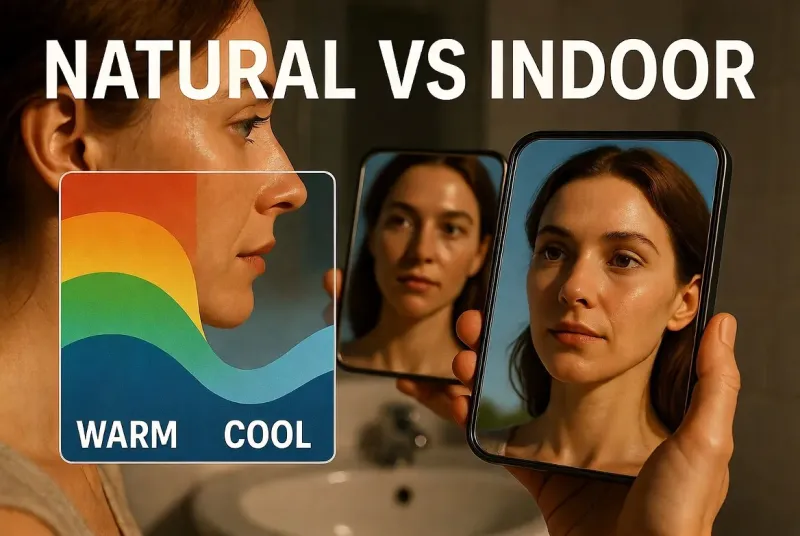
Color temperature, measured in Kelvin (K), describes whether light appears warm (yellow/orange) or cool (blue). Natural daylight typically ranges from 5000K to 6500K, appearing neutral to slightly cool. Indoor lighting varies widely: traditional incandescent bulbs emit warm light around 2700K, while fluorescent and LED lights can range from warm 3000K to cool 5000K or higher.
Warm lighting tends to flatter skin by minimizing the appearance of redness, blemishes, and dark circles. The yellow-orange tones blend with skin tones, creating a softer, more uniform appearance. Cool lighting, conversely, can make skin appear paler, emphasize blue undertones in dark circles, and make redness more visible. This is why you might look great in a warmly lit restaurant but notice imperfections under harsh fluorescent office lights.
Light Intensity and Shadow Formation
The intensity of light, or how bright it is, significantly affects how your skin appears. Bright natural sunlight creates strong contrasts between light and shadow, revealing every contour, texture, and imperfection on your skin's surface. This is why fine lines, pores, and uneven texture become more visible outdoors on a sunny day.
Indoor lighting is typically less intense and more diffused, creating softer shadows that can mask texture and imperfections. This diffused quality is why many people prefer indoor lighting for social situations, it's naturally more flattering. However, this same quality can hide issues that become apparent when you step into brighter light.
Natural Light: The Truth Teller
Natural sunlight is often called the "truth teller" when it comes to skin appearance, and for good reason. Sunlight provides the most complete and balanced spectrum of light, revealing your skin's true color, texture, and condition in ways that artificial light simply cannot replicate.
Full Spectrum Revelation
Sunlight contains all visible wavelengths in relatively balanced proportions, plus ultraviolet and infrared radiation. This full spectrum means your skin reflects its authentic color without the color cast that artificial lights impose. When you see yourself in natural light, you're seeing the most accurate representation of your skin tone, undertones, and any discoloration or pigmentation issues.
This is why makeup artists insist on checking foundation matches in natural light. What looks like a perfect match under store lighting might appear too orange, too pink, or too ashy when viewed in sunlight. Natural light reveals whether your foundation truly blends with your neck and chest or creates an obvious mask-like effect.
Texture and Detail Enhancement
The intensity and directionality of natural sunlight creates shadows that accentuate skin texture. Every pore, fine line, scar, and uneven area casts a tiny shadow, making these features more visible. This is particularly noticeable in direct sunlight, where the strong, directional light creates maximum contrast.
While this can feel harsh and unforgiving, it's actually valuable information. Natural light shows you what others see when you're outdoors, helping you understand which aspects of your skin might benefit from targeted skincare or makeup techniques. It reveals whether your skin is properly hydrated, if your makeup is sitting smoothly, or if certain products are emphasizing texture rather than minimizing it.
UV Radiation and Skin Appearance
Beyond visible light, sunlight contains ultraviolet (UV) radiation that affects how your skin looks in real-time. UV exposure can cause immediate effects like redness or flushing, particularly in sensitive skin or conditions like rosacea. This redness might not be visible under indoor lighting but becomes apparent in natural light.
UV light also reveals sun damage that might be less obvious indoors, including sunspots, uneven pigmentation, and areas of hyperpigmentation. This is why dermatologists often examine patients' skin in good natural light, it reveals the true extent of sun damage and skin conditions that inform treatment decisions.
Indoor Lighting: The Flattering Illusion
Indoor artificial lighting creates a very different visual environment than natural sunlight, often providing a more forgiving view of your skin. Understanding how different types of indoor lighting affect your appearance helps explain why you might look and feel different at home versus outdoors.
Incandescent and Halogen Lighting
Traditional incandescent bulbs and halogen lights emit warm, yellowish light with a color temperature around 2700K to 3000K. This warm glow is universally flattering for several reasons. The yellow-orange tones complement most skin tones, creating a healthy, warm appearance. Redness and inflammation are minimized because the warm light blends with reddish tones rather than contrasting with them.
These light sources also emit light in all directions and are typically used in fixtures that further diffuse the light, creating soft shadows that minimize texture. This is why many people prefer the lighting in restaurants, hotels, and homes, it's designed to be flattering and create a pleasant atmosphere.
Fluorescent Lighting Challenges
Fluorescent lighting, common in offices, schools, and retail stores, presents unique challenges for skin appearance. These lights often have a cool, bluish tone with color temperatures ranging from 3500K to 5000K or higher. The cool temperature can make skin appear pale or washed out, emphasize dark circles under the eyes, and make redness more noticeable.
Additionally, fluorescent lights emit light in spikes at specific wavelengths rather than a smooth spectrum. This uneven spectral distribution can cause colors to appear distorted, a phenomenon called metamerism. Your foundation might look perfect under fluorescent store lighting but completely different in natural light because the light is emphasizing different pigments.
LED Lighting Variations
LED lighting has become ubiquitous in homes and businesses, offering energy efficiency and long life. However, LED lights vary dramatically in color temperature and quality. Some LEDs emit cool, blue-toned light that can be harsh on skin, while others mimic warm incandescent light. The quality of LED lights also varies, with cheaper options having poor color rendering that distorts skin tones.
High-quality LEDs with good Color Rendering Index (CRI) ratings provide more accurate color representation, while low-CRI LEDs can make skin look sallow, gray, or unnatural. Understanding the type of LED lighting in your space helps explain why your skin might look different in various rooms of your home.
The Role of Color Rendering Index
The Color Rendering Index (CRI) is a crucial but often overlooked factor in how lighting affects skin appearance. CRI measures how accurately a light source reveals the true colors of objects compared to natural light, with a scale from 0 to 100. Natural sunlight has a CRI of 100, serving as the gold standard for color accuracy.
Understanding CRI Values
Light sources with CRI values of 90-100 provide excellent color rendering, showing skin tones accurately and naturally. Most incandescent and halogen bulbs fall into this range, which is part of why they're so flattering, they show your true colors while the warm temperature softens imperfections.
Light sources with CRI values of 80-89 provide good color rendering and are acceptable for most residential applications. Many quality LED and fluorescent lights fall in this range. However, lights with CRI below 80 can significantly distort colors, making skin appear unnatural, dull, or discolored.
CRI and Makeup Application
When applying makeup, CRI matters tremendously. Low-CRI lighting can cause you to apply too much or too little product, choose the wrong shades, or miss areas that need coverage. This is why makeup applied in poorly lit bathrooms often looks different in natural light, the lighting didn't show you the true colors or coverage.
Professional makeup artists use lights with CRI of 95 or higher to ensure accurate color matching and application. For home use, aim for bulbs with CRI of 90 or above in your vanity area to see your true colors while still benefiting from flattering light temperature.
How Different Lights Affect Specific Skin Concerns
Various lighting conditions affect different skin concerns in unique ways, either minimizing or emphasizing specific issues. Understanding these effects helps you interpret what you see in different lighting and make informed decisions about skincare and makeup.
Redness and Rosacea
Warm indoor lighting minimizes the appearance of redness and rosacea by blending red tones with the yellow-orange light. This can make skin appear more even-toned and calm. Cool lighting, particularly fluorescent or daylight-balanced LEDs, makes redness more visible by creating contrast between red skin tones and blue-white light.
Natural sunlight reveals the true extent of redness and can even trigger flushing in those with rosacea due to heat and UV exposure. This is why rosacea sufferers often notice their condition looks worse outdoors, both because the light reveals it more clearly and because sunlight can exacerbate the condition.
Dark Circles and Under-Eye Concerns
Dark circles under the eyes appear differently depending on lighting. Cool lighting emphasizes the blue and purple tones in dark circles, making them more prominent. Warm lighting minimizes these cool tones, making dark circles less noticeable.
Natural sunlight reveals the true color and depth of dark circles, showing whether they're caused by pigmentation (brown tones), thin skin revealing blood vessels (blue-purple tones), or shadowing from under-eye hollows. This information is valuable for choosing the correct color corrector and concealer.
Hyperpigmentation and Dark Spots
Hyperpigmentation, including sun spots, melasma, and post-inflammatory hyperpigmentation, becomes more visible in natural light because the full spectrum reveals the true contrast between pigmented areas and surrounding skin. Indoor lighting, especially warm lighting, can mask these concerns by reducing contrast and adding warm tones that blend with brown pigmentation.
This is why you might not notice new sun damage or dark spots until you see yourself in natural light. Regular self-examinations in good natural light help you monitor skin changes and catch potential issues early.
Texture, Pores, and Fine Lines
Directional, intense light like direct sunlight creates shadows that emphasize texture, enlarged pores, and fine lines. Diffused indoor lighting minimizes these shadows, creating a smoother appearance. This is why skin often looks better in photos taken indoors with soft lighting versus outdoor photos in harsh sunlight.
Understanding this effect helps set realistic expectations. Everyone's skin has texture, and it's normal for this to be more visible in certain lighting. The goal isn't perfectly smooth skin in all conditions but healthy skin that looks good in typical lighting situations.
Practical Implications for Makeup Application
The dramatic differences between how skin appears in various lighting conditions have significant implications for makeup application and product selection. Adapting your routine to account for lighting ensures you look your best wherever you go.
Foundation Matching Strategies
Always check foundation matches in natural light before purchasing. Test shades along your jawline, not your hand or wrist, and view them in daylight if possible. If shopping indoors, step outside or near a window to verify the match. The foundation should disappear into your skin, not sit on top or create a visible line.
Consider that your skin tone changes slightly with seasons, often lighter in winter and darker in summer. You may need different shades for different times of year, and natural light helps you identify when it's time to switch.
Application Lighting Best Practices
Apply makeup in lighting that mimics where you'll spend most of your day. If you work in an office with fluorescent lighting, apply makeup in similar conditions. However, always do a final check in natural light before leaving home to catch any issues the indoor lighting masked.
Invest in a good vanity light with adjustable color temperature and high CRI (90+). This allows you to see your true colors while controlling whether the light is warm or cool. Position lights on both sides of your mirror to eliminate shadows and provide even illumination.
Product Selection for Different Lighting
Consider your typical lighting environment when choosing products. If you spend most time in warm indoor lighting, you might need slightly more coverage or color correction than you think, since warm light hides imperfections. Conversely, if you're outdoors frequently, choose products that look natural in sunlight, avoiding heavy foundations or obvious makeup that becomes apparent in bright light.
Finish matters too. Dewy or luminous finishes can look glowing in natural light but greasy under harsh indoor lighting. Matte finishes look smooth indoors but can appear flat or cakey in sunlight. Choose finishes that work for your primary environment.
Creating Optimal Lighting at Home
You don't have to accept poor lighting in your home. Strategic choices about bulbs, fixtures, and placement can create flattering, accurate lighting that helps you look and feel your best while providing true color representation.
Bathroom Vanity Lighting
Your bathroom is where you likely apply makeup and assess your skin, making optimal lighting crucial. Install bulbs with color temperature around 3500K to 4000K, which provides neutral light that's neither too warm nor too cool. This range shows true colors while remaining flattering.
Choose bulbs with CRI of 90 or higher for accurate color rendering. Position lights on both sides of the mirror at eye level to eliminate shadows. Avoid overhead-only lighting, which casts unflattering shadows under eyes, nose, and chin.
Bedroom and Living Space Lighting
For spaces where you relax and socialize, warmer lighting around 2700K to 3000K creates a flattering, cozy atmosphere. This is appropriate for these spaces since accuracy is less critical than ambiance. Use dimmers to adjust intensity based on time of day and activity.
Layer lighting with a mix of ambient, task, and accent lights to create depth and flexibility. This allows you to adjust lighting based on whether you're applying makeup, reading, or entertaining guests.
Portable Solutions
Consider portable LED mirrors with adjustable lighting for travel or spaces where you can't control the lighting. These mirrors often offer multiple color temperature settings, allowing you to simulate different lighting environments and ensure your makeup looks good everywhere.
Frequently Asked Questions
Why does my makeup look good at home but bad outside?
This common issue occurs because indoor lighting, especially warm lighting, is more forgiving and diffused than natural sunlight. Indoor lights mask texture, minimize color mismatches, and create soft shadows that hide imperfections. Natural sunlight reveals the true colors, texture, and coverage of your makeup with full-spectrum, intense light. To prevent this, always check your makeup in natural light before leaving home, apply makeup in lighting similar to your destination, and use products designed for natural-looking coverage rather than heavy, obvious makeup.
What is the best lighting for applying makeup?
The best lighting for applying makeup is natural daylight or artificial light that mimics it. Look for bulbs with color temperature of 3500K to 5000K and CRI of 90 or higher. Position lights on both sides of your mirror at eye level to eliminate shadows. Avoid yellow-toned bulbs that distort colors and overhead-only lighting that creates unflattering shadows. Many professionals recommend applying makeup in the lighting where you'll spend most of your day, then doing a final check in natural light.
Does natural light make skin look worse?
Natural light doesn't make skin look worse, it reveals skin's true appearance more accurately than artificial light. The intense, full-spectrum nature of sunlight shows texture, color variations, and details that softer indoor lighting masks. This can feel harsh or unforgiving, but it's simply showing reality. Everyone's skin has texture and imperfections that are normal and human. Rather than avoiding natural light, focus on maintaining healthy skin through proper skincare, sun protection, and realistic expectations about how skin looks in different conditions.
Why do I look better in some stores than others?
Different stores use different lighting systems with varying color temperatures and CRI values. Stores aiming to flatter customers often use warm lighting (2700K-3000K) with good diffusion that minimizes imperfections. Stores with cool fluorescent lighting (4000K+) can make skin appear pale, emphasize dark circles, and reveal redness. The quality of lighting also varies, with high-CRI bulbs showing true colors and low-CRI bulbs distorting appearance. This is why you might feel confident in one store's mirrors and less so in another's, the lighting is literally changing how you look.
Can lighting affect how I perceive my skin long-term?
Yes, consistently viewing yourself only in flattering indoor lighting can create a distorted self-perception, making natural light appearances feel shocking or unacceptable. This can contribute to body image issues and unrealistic expectations. It's important to regularly see yourself in various lighting conditions, including natural light, to maintain a realistic and healthy self-image. Remember that everyone looks different in various lighting, and the goal is healthy, well-cared-for skin, not perfection in all conditions.
Conclusion
Understanding why your skin looks different in natural versus indoor light empowers you to make informed decisions about your beauty routine, skincare choices, and self-perception. The dramatic differences you notice aren't flaws or failures, they're the result of complex interactions between light physics, color science, and human perception.
Natural sunlight reveals your skin's true colors, texture, and condition with honest, full-spectrum illumination. Indoor lighting, particularly warm, diffused sources, creates a more forgiving environment that minimizes imperfections and flatters your appearance. Both serve important purposes, natural light helps you assess your skin's health and ensure makeup matches accurately, while indoor lighting creates pleasant social environments and can boost confidence.
By optimizing your home lighting, applying makeup strategically, and maintaining realistic expectations about how skin appears in different conditions, you can navigate these lighting differences with confidence. Remember that everyone's skin looks different in various lighting, and the goal isn't perfection but healthy, well-cared-for skin that makes you feel good in any environment.
Embrace the truth that natural light reveals while appreciating the flattering qualities of indoor lighting. With this knowledge, you're equipped to create a beauty routine that works in the real world, wherever the light takes you.
📖 আরও পড়ুন: Skin Care
- 🔗 ত্বকের এলার্জি ও র্যাশ: ধুলোবালি ও ভ্যাপসা গরম থেকে বাঁচার বিজ্ঞানসম্মত গাইড ও ঘরোয়া সমাধান
- 🔗 How Consistency Improves Skin More Than Expensive Products
- 🔗 7 Ancient Pulchritudinous Secrets Taking Over the USA Skincare Scene in 2026
- 🔗 Edible Skincare: Science-Backed DIY Masks from Your Pantry
- 🔗 Why Skin Needs Seasonal Adjustments Even Indoors