
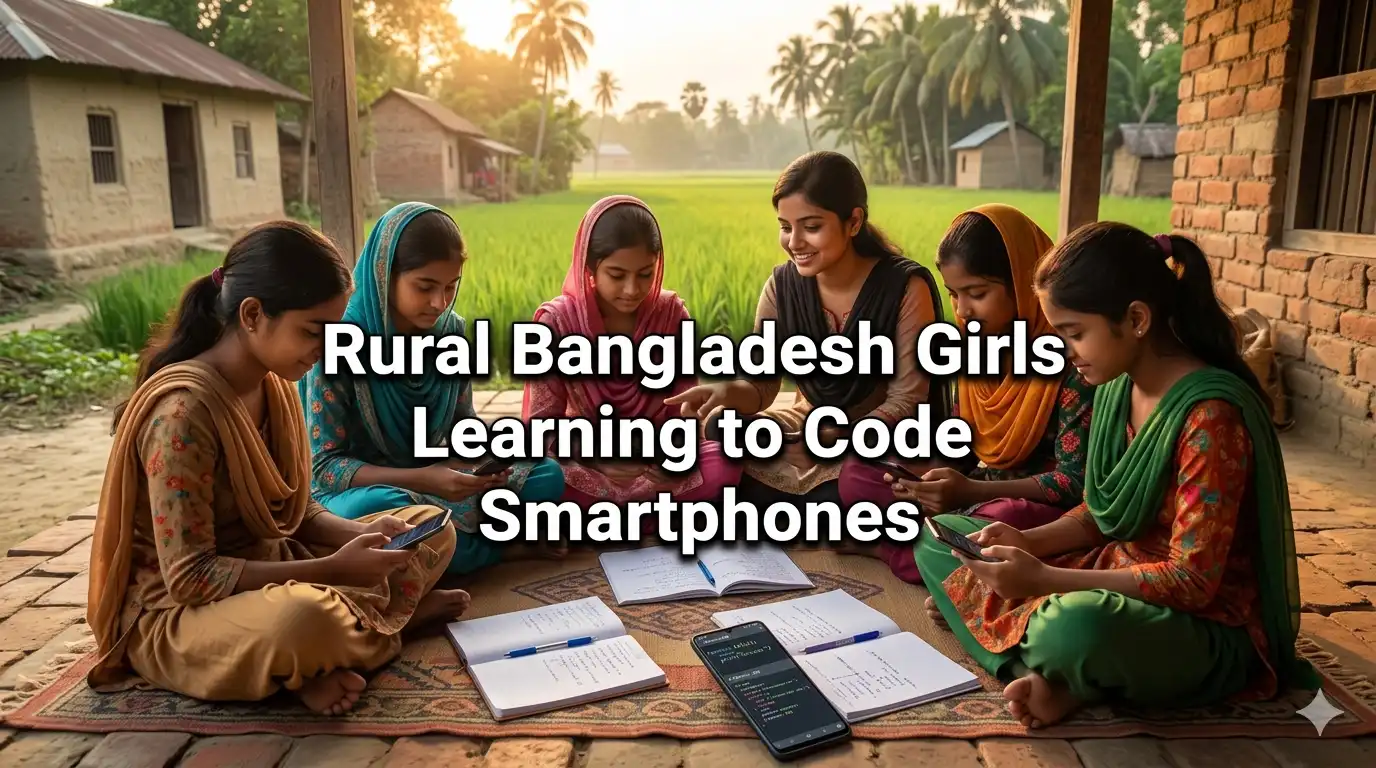
In the remote villages of Bangladesh, where computers are scarce and internet connectivity is limited, an extraordinary digital revolution is taking place. Young girls, many from impoverished families with limited educational opportunities, are learning to write code, build apps, and develop software—using nothing but their smartphones. This remarkable movement is breaking down barriers of gender, geography, and poverty, proving that determination and mobile technology can overcome even the most challenging circumstances.
For decades, rural Bangladesh has faced significant challenges in providing quality education, particularly in science, technology, engineering, and mathematics (STEM) fields. Girls in these areas confront multiple obstacles: cultural expectations that prioritize domestic roles, limited access to educational resources, poverty that makes computers unaffordable, and social norms that discourage women from pursuing technology careers. Yet despite these formidable barriers, a growing number of young women are teaching themselves programming skills using the one piece of technology increasingly available even in the poorest households: a smartphone.
This comprehensive guide explores how girls in rural Bangladesh are pioneering mobile-first coding education, the initiatives supporting their journey, the apps and platforms making it possible, the challenges they face, and the inspiring success stories emerging from villages across the country. Their stories demonstrate that with the right tools, support, and determination, the digital divide can be bridged—even with just a smartphone.
The Context: Technology Access in Rural Bangladesh
To understand this phenomenon, it's essential to grasp the technological landscape of rural Bangladesh:
Mobile Phone Penetration: Bangladesh has experienced explosive growth in mobile phone usage. As of 2024, the country has over 180 million mobile subscribers, with mobile penetration exceeding 100% (many people have multiple SIM cards). Even in remote villages, mobile network coverage has expanded dramatically, with 4G services reaching many rural areas.
Smartphone Affordability: While computers remain expensive and out of reach for many rural families (a basic laptop costs BDT 25,000-40,000, equivalent to several months' income for many families), smartphones have become increasingly affordable. Entry-level smartphones now cost as little as BDT 5,000-8,000, making them accessible even to lower-income households. Many families prioritize buying a smartphone for their children's education, seeing it as an investment in their future.
Computer Scarcity: In contrast, computer access remains extremely limited in rural areas. Many schools lack computer labs entirely, and those that have them often have outdated machines, insufficient numbers, or limited electricity to run them regularly. For most rural families, owning a personal computer is simply not feasible.
Internet Connectivity: Mobile internet has become the primary way most Bangladeshis access the internet. With affordable data packages (as low as BDT 100-200 per month for basic plans), mobile internet has democratized access to information and learning resources, even in remote areas.
Gender Digital Divide: Despite overall mobile penetration, a significant gender gap persists. According to various studies, women in Bangladesh are 28-62% less likely to own a mobile phone than men, with the gap even wider in rural areas. Cultural norms, safety concerns, and financial constraints all contribute to this disparity. However, this is slowly changing as families recognize the educational and economic value of mobile technology for their daughters.
Why Smartphones Became the Gateway to Coding
Several factors converged to make smartphones the primary tool for coding education in rural Bangladesh:
1. Accessibility: Smartphones are the only computing device available to most rural youth. When you don't have access to a computer, a smartphone becomes your computer.
2. Affordability: Compared to laptops or desktop computers, smartphones represent a much lower financial barrier to entry. Families can justify the expense more easily, especially when positioned as an educational tool.
3. Mobile-First Apps: The global rise of mobile learning platforms has created sophisticated coding apps that work entirely on smartphones. Apps like Sololearn, Grasshopper, Mimo, and Enki provide comprehensive programming education optimized for mobile devices.
4. Offline Capabilities: Many coding apps offer offline learning modes, allowing students to download lessons and practice coding without constant internet connectivity—a crucial feature in areas with unreliable internet.
5. Portability: Girls can learn anywhere—while doing household chores, during breaks, or in the evening—without needing a dedicated study space or drawing attention to their learning.
6. Social Acceptability: Using a smartphone for learning is more socially acceptable than, say, visiting an internet café (which many families consider inappropriate for girls). Learning at home on a phone aligns better with cultural expectations.
Initiatives and Organizations Leading the Movement
Several organizations and initiatives have been instrumental in supporting girls' coding education in rural Bangladesh:
1. Girls in Tech Bangladesh
This organization runs workshops, mentorship programs, and coding bootcamps specifically designed for women and girls. They've adapted their programs to be mobile-friendly, recognizing that many participants don't have computer access.
Key Programs:
- Mobile coding bootcamps using smartphone apps
- Mentorship connecting rural girls with tech professionals
- Scholarship programs providing smartphones to talented girls from low-income families
- Community learning groups where girls study together
2. Bangladesh Open Source Network (BdOSN)
BdOSN has been promoting open-source software and digital literacy across Bangladesh, with special focus on reaching underserved communities.
Initiatives:
- Free coding resources optimized for mobile learning
- Local language (Bangla) tutorials and documentation
- Community forums for peer support
- Partnerships with schools to integrate mobile coding education
3. Code for Bangladesh
A volunteer-driven organization working to solve social problems through technology, they've created programs specifically targeting rural youth.
Programs:
- Mobile-first coding challenges and competitions
- Hackathons with categories for smartphone-only participants
- Training programs teaching app development for social good
4. UNICEF's Digital Learning Initiatives
UNICEF Bangladesh has implemented various digital literacy programs targeting adolescent girls in rural areas.
Focus Areas:
- Providing smartphones and data packages to girls from disadvantaged backgrounds
- Creating safe learning spaces in community centers
- Training local teachers to facilitate mobile coding education
- Developing culturally appropriate curriculum
5. Local NGOs and Community Organizations
Numerous local organizations have emerged to support girls' tech education:
- BRAC: Running digital literacy programs in their extensive network of community centers
- JAAGO Foundation: Integrating coding education into their schools, with mobile-friendly approaches
- Local women's organizations: Creating study groups and learning circles
Popular Apps and Platforms Being Used
Girls in rural Bangladesh are leveraging various mobile apps and platforms to learn coding:
1. Sololearn
One of the most popular coding apps in Bangladesh, Sololearn offers courses in multiple programming languages.
Why it's popular:
- Free to use with comprehensive content
- Works offline after downloading lessons
- Community features for peer learning
- Code playground to practice writing code
- Courses in Python, JavaScript, Java, C++, HTML/CSS, and more
Success story: Many girls report starting with Sololearn's Python course and progressing to building simple apps within 3-6 months of consistent study.
2. Grasshopper (by Google)
Though now merged with Google's other learning platforms, Grasshopper was instrumental in teaching JavaScript fundamentals through gamified lessons.
Features:
- Visual, interactive learning
- Short, digestible lessons perfect for mobile
- No prior experience required
- Progress tracking and achievements
3. Mimo
Mimo offers bite-sized coding lessons designed specifically for mobile learning.
Popular courses:
- Web development (HTML, CSS, JavaScript)
- Python programming
- SQL for databases
- App development
4. Enki
Enki provides daily workout-style lessons in various tech skills.
Strengths:
- Daily practice keeps learning consistent
- Covers both coding and related skills (Git, Linux, data science)
- Offline mode available
5. Programming Hub
Offers courses in multiple languages with a focus on visual learning.
6. Khan Academy
While not exclusively for coding, Khan Academy's computer programming section has been valuable for learning fundamentals.
Advantages:
- Completely free
- High-quality video tutorials
- Interactive exercises
- Available in Bangla (some content)
7. YouTube Learning
Many girls supplement app-based learning with YouTube tutorials.
Popular channels:
- Bangla coding tutorials (local content creators)
- International channels with programming courses
- Project-based learning videos
8. Local Platforms
Some Bangladesh-specific platforms have emerged:
- 10 Minute School: Offers coding courses in Bangla
- Shikho: Mobile learning platform with tech courses
- Local Facebook groups: Communities sharing resources and supporting learners
Learning Pathways: What Girls Are Learning
The coding education journey for rural Bangladeshi girls typically follows certain pathways:
Stage 1: Fundamentals (1-3 months)
- HTML/CSS: Often the starting point as it's visual and provides immediate feedback
- Basic programming concepts: Variables, loops, conditionals, functions
- Problem-solving: Logical thinking and algorithm development
Stage 2: Core Programming (3-6 months)
- Python: Popular choice due to readable syntax and versatility
- JavaScript: Essential for web development
- Version control basics: Using Git (through mobile apps)
Stage 3: Specialization (6-12 months)
Girls typically choose one of these paths:
Web Development:
- Advanced HTML/CSS
- JavaScript frameworks (React, Vue)
- Backend development (Node.js, PHP, or Python Django)
- Database management (MySQL, MongoDB)
Mobile App Development:
- React Native or Flutter for cross-platform apps
- Android development (Java/Kotlin)
- iOS development (Swift) - less common due to iPhone scarcity
Data Science/Analytics:
- Python for data analysis
- Pandas, NumPy libraries
- Data visualization
- Basic machine learning concepts
Stage 4: Portfolio Development (Ongoing)
- Building real projects
- Contributing to open source
- Participating in coding challenges
- Creating a GitHub profile (accessible via mobile)
Real Success Stories
Here are inspiring examples of girls who've learned to code using smartphones in rural Bangladesh:
Story 1: Fatema's Journey from Village to Tech Career
Background: Fatema (name changed for privacy) is from a small village in Rangpur division. Her family are farmers with limited income. She had never seen a computer until she got a smartphone at age 16.
Journey:
- Started learning HTML/CSS through Sololearn while helping with household chores
- Studied 2-3 hours daily, often late at night after finishing chores
- Joined a local Facebook coding group for support
- Within 8 months, built her first website for a local shop
- After 1 year, started freelancing on Fiverr using only her phone
- Now earns BDT 15,000-20,000 monthly doing web development
- Recently saved enough to buy a laptop to expand her work
Quote: "My parents initially thought I was wasting time on my phone. But when I showed them I could earn money coding, they became my biggest supporters. Now I'm teaching other girls in my village."
Story 2: The Coding Sisters of Sylhet
Background: Three sisters (ages 15, 17, and 19) from a conservative family in Sylhet started learning together.
Journey:
- Shared one smartphone, taking turns to study
- Formed a study group with 5 other girls from their village
- Met twice weekly at a community center with WiFi
- Learned Python and JavaScript together
- Built a mobile app to help local farmers track crop prices
- Won a national youth innovation competition
- Received scholarships to attend a coding bootcamp in Dhaka
Impact: Their success has inspired over 30 girls in their village to start learning coding.
Story 3: From Dropout to Developer
Background: Ayesha had to drop out of school at 14 due to financial constraints. She worked as a domestic helper.
Transformation:
- Borrowed her employer's smartphone during breaks to learn coding
- Used free WiFi at a local tea stall to download lessons
- Studied before dawn and after work
- After 10 months, landed a remote internship with a Dhaka startup
- Now works full-time as a junior developer
- Supports her family financially
Quote: "Coding gave me a second chance at education and a future I never thought possible."
Challenges Faced by Rural Girls
Despite their determination, these girls face numerous obstacles:
1. Limited Device Access
- Many share one phone among multiple family members
- Limited screen time due to other family needs
- Older, slower phones that struggle with coding apps
- Battery life issues in areas with unreliable electricity
2. Internet Connectivity
- Unreliable network coverage in remote areas
- Slow internet speeds making video tutorials difficult
- Cost of data packages (though improving, still a burden for poor families)
- Frequent network outages
3. Social and Cultural Barriers
- Family resistance to girls spending time on phones
- Cultural expectations prioritizing domestic responsibilities
- Limited mobility to attend in-person training
- Social stigma around girls pursuing tech careers
- Early marriage pressures interrupting education
4. Educational Gaps
- Limited English proficiency (most coding resources are in English)
- Weak mathematics foundation
- Lack of formal computer science education
- No access to teachers or mentors for guidance
5. Learning Limitations
- Small screen size making coding difficult
- Virtual keyboards slower than physical keyboards
- Limited ability to run complex programs on phones
- Difficulty debugging code on mobile
- Lack of access to development tools available on computers
6. Financial Constraints
- Cannot afford premium app features
- Limited budget for data
- Cannot attend paid courses or bootcamps
- No money for certifications
Innovative Solutions and Adaptations
Despite these challenges, girls and supporting organizations have developed creative solutions:
1. Offline Learning Strategies
- Downloading lessons when WiFi is available
- Studying offline during the week, syncing progress on weekends
- Using apps with robust offline modes
- Sharing downloaded resources via Bluetooth
2. Community Learning Groups
- Forming study circles where girls learn together
- Sharing one phone among group members
- Peer teaching and knowledge sharing
- Collective problem-solving
- Emotional support and motivation
3. Time Management
- Studying early morning before household duties
- Using breaks during work or chores
- Late-night study sessions
- Maximizing every available minute
4. Resource Sharing
- Creating WhatsApp groups to share learning materials
- Pooling resources to buy data packages
- Sharing premium account access
- Community WiFi access points
5. Mobile-Optimized Learning
- Using code editors designed for mobile (like Acode, Spck Editor)
- Practicing on platforms with mobile-friendly interfaces
- Voice-to-text for faster coding
- External Bluetooth keyboards (for those who can afford them)
6. Language Support
- Translating resources into Bangla
- Creating local language tutorials
- Using translation apps to understand English content
- Learning technical English alongside coding
Impact and Outcomes
The mobile coding education movement is creating significant impact:
Economic Empowerment
- Freelancing income: Girls earning BDT 5,000-30,000 monthly through freelance work
- Employment: Some securing full-time remote positions
- Entrepreneurship: Starting their own tech ventures
- Financial independence: Contributing to family income and gaining decision-making power
Educational Advancement
- Continuing education: Using coding skills to pursue formal education
- Scholarships: Winning scholarships to tech programs
- Skill certification: Earning recognized certifications
- Higher education: Gaining admission to universities for computer science
Social Impact
- Changing perceptions: Shifting community attitudes about girls in tech
- Role models: Inspiring younger girls to pursue education
- Women's empowerment: Increasing confidence and agency
- Digital literacy: Spreading tech knowledge in rural communities
Personal Development
- Problem-solving skills: Enhanced analytical thinking
- Confidence: Increased self-esteem and belief in capabilities
- Future opportunities: Opening doors previously closed
- Global connectivity: Connecting with international tech communities
Future Prospects and Scaling
The movement shows promising signs of growth and sustainability:
Technological Trends Supporting Growth
- Cheaper smartphones: Prices continuing to fall
- Better connectivity: 5G rollout reaching rural areas
- Improved apps: Coding apps becoming more sophisticated and mobile-optimized
- Cloud computing: Allowing complex development on basic phones
Government Initiatives
- Digital Bangladesh vision: Government commitment to digital literacy
- ICT Division programs: Training and support for rural youth
- Infrastructure development: Expanding internet connectivity
- Policy support: Encouraging women in tech
Private Sector Involvement
- Tech companies: Offering training programs and scholarships
- Telecom companies: Providing affordable data packages for education
- Startups: Creating mobile-first learning platforms
- Corporate CSR: Funding digital literacy initiatives
International Support
- UN and NGOs: Funding and program support
- Global tech companies: Google, Microsoft, Facebook supporting digital literacy
- International organizations: Sharing best practices and resources
Recommendations for Aspiring Learners
For girls in rural Bangladesh (or similar contexts) wanting to learn coding with smartphones:
Getting Started
- Choose the right app: Start with Sololearn or Mimo for structured learning
- Start with basics: HTML/CSS or Python are good starting points
- Be consistent: Even 30 minutes daily is better than irregular long sessions
- Join communities: Find or create study groups for support
- Practice regularly: Coding is a skill that improves with practice
Maximizing Limited Resources
- Download for offline: Use WiFi to download lessons when available
- Use free resources: Many excellent free platforms exist
- Share resources: Collaborate with others to share costs and knowledge
- Focus on fundamentals: Strong basics matter more than advanced topics initially
- Build projects: Apply learning to real problems, even simple ones
Overcoming Challenges
- Family communication: Explain the educational and economic value to family
- Time management: Find creative ways to carve out study time
- Language barriers: Use translation tools and learn technical English gradually
- Stay motivated: Connect with others on similar journeys
- Celebrate small wins: Acknowledge progress to maintain motivation
How to Support This Movement
For those wanting to support girls learning to code in rural Bangladesh:
Individuals
- Mentorship: Offer remote mentoring to learners
- Resource sharing: Create or translate learning materials into Bangla
- Donations: Contribute to organizations providing smartphones or data
- Awareness: Share success stories to inspire others
Organizations
- Develop mobile-first curriculum: Create content optimized for smartphone learning
- Provide devices: Smartphone donation or subsidy programs
- Internet access: Create community WiFi hotspots
- Training programs: Offer scholarships for coding bootcamps
- Job placement: Connect learners with employment opportunities
Policy Makers
- Infrastructure investment: Expand rural internet connectivity
- Educational reform: Integrate coding into school curriculum
- Gender equality: Policies supporting girls' education and tech access
- Public-private partnerships: Collaborate with tech companies for training programs
Conclusion: A Revolution in the Making
The story of girls in rural Bangladesh learning to code using only smartphones is more than just an educational phenomenon—it's a testament to human determination, the democratizing power of technology, and the transformative potential of mobile learning. These young women are not just learning to code; they're rewriting their futures, challenging societal norms, and proving that geographical location, gender, and economic status need not be barriers to participating in the digital economy.
While challenges remain significant—from limited device access to cultural barriers—the progress made is remarkable. Girls who once had no access to computers are now building websites, developing apps, and earning incomes through freelance work. They're becoming role models in their communities, inspiring younger generations of girls to dream bigger and reach higher.
The mobile-first coding education model emerging in rural Bangladesh offers valuable lessons for other developing regions facing similar challenges. It demonstrates that with creativity, determination, and the right support, the digital divide can be bridged even with limited resources.
As smartphone penetration continues to increase, internet connectivity improves, and more organizations join the effort to support digital literacy, the potential for scaling this movement is enormous. What's happening in the villages of Bangladesh today could become a blueprint for empowering millions of young people in developing regions worldwide.
These girls coding on smartphones in rural Bangladesh aren't just learning programming languages—they're coding a new future for themselves, their families, and their communities. And in doing so, they're showing the world that innovation and determination can overcome even the most daunting obstacles.
The revolution is happening—one line of code at a time, on a smartphone screen, in a rural village in Bangladesh.
📖 আরও পড়ুন: Bangladesh
- 🔗 The Village Woman Who Taught 100 Children to Read — Without Being a Teacher (Sylhet)
- 🔗 Roof Garden Revolution: Grow Vegetables at Home
- 🔗 Info-Sarkar Project: Transforming Rural Internet Access in Bangladesh
- 🔗 Jet-Set Aesthetic: Photogenic Travel Capsule Wardrobe
- 🔗 Bangladeshi Traditional Handicrafts: Timeless Cultural Legacy