Your Practical Path to a Greener, More Sustainable Life
Building a sustainable and eco-friendly lifestyle isn't about perfection or drastic overnight changes—it's about making intentional, manageable choices that collectively create meaningful impact. If you're new to sustainability, the sheer volume of information, conflicting advice, and pressure to "do it all" can feel overwhelming. This step-by-step guide is designed specifically for beginners, breaking down the journey into practical, achievable actions that fit your life, budget, and values.
Sustainability is a practice, not a destination. Every small choice matters: the reusable bag you remember to bring, the food waste you compost, the product you choose to repair instead of replace. These actions compound over time, creating a lifestyle that supports both planetary health and your personal well-being.
Whether you're motivated by environmental concern, health benefits, financial savings, or simply wanting to live more intentionally, this guide provides a clear roadmap to get started. No judgment, no guilt—just actionable steps you can implement today to build a more sustainable future, one choice at a time.
Why Start a Sustainable Lifestyle Now?
The Urgency and the Opportunity
Climate change, resource depletion, and biodiversity loss are pressing global challenges. But individual action isn't futile—it's foundational. When millions of people make small sustainable choices, the collective impact drives market shifts, policy changes, and cultural transformation.
Research shows that household-level changes can reduce personal carbon footprints by 20-40% while often saving money and improving quality of life. Sustainable living isn't about sacrifice; it's about smarter, more intentional consumption that benefits you and the planet.
Starting your sustainability journey also offers personal benefits:
- Reduced exposure to harmful chemicals in conventional products
- Lower household expenses through reduced waste and energy use
- Improved physical and mental health from cleaner environments
- Greater sense of purpose and alignment with personal values
- Connection to a growing community of like-minded individuals
Dispelling Common Myths
Before diving in, let's address misconceptions that often hold beginners back:
Myth: Sustainable living is expensive. Truth: Many eco-friendly choices save money long-term—reusable items, energy efficiency, reduced consumption, and buying secondhand all lower costs.
Myth: You have to be perfect. Truth: Progress matters more than perfection. One person doing sustainability imperfectly has more impact than no one doing it perfectly.
Myth: It's too late to make a difference. Truth: Every action counts. Systemic change starts with individual choices that create demand for better products and policies.
Myth: Sustainable living is inconvenient. Truth: Many eco-habits become automatic and actually simplify life—fewer possessions to manage, less waste to handle, more mindful consumption.
Step 1: Assess Your Current Impact
Understand Your Starting Point
Before making changes, it helps to understand where you currently stand. This isn't about judgment—it's about identifying opportunities for improvement.
Conduct a simple home audit:
- Track your trash for one week: What do you throw away most? Food scraps? Packaging? Single-use items?
- Review utility bills: How much energy and water does your household use monthly?
- Assess your shopping habits: How often do you buy new items? What's your ratio of needs vs. wants?
- Evaluate transportation: How do you commute? How often do you drive vs. walk, bike, or use public transit?
- Consider your diet: How much meat, dairy, and processed food do you consume?
Use free tools: Carbon footprint calculators (like WWF's or EPA's) provide baseline estimates. Apps like JouleBug or Oroeco help track sustainable habits.
Key insight: Don't aim for comprehensive data—just enough awareness to identify 2-3 high-impact areas to focus on first.
Set Realistic, Values-Aligned Goals
Sustainability is personal. Your goals should reflect what matters most to you:
Examples of beginner-friendly goals:
- Reduce single-use plastic by 50% in three months
- Compost food scraps starting next week
- Replace conventional cleaning products with eco-friendly alternatives
- Meatless Mondays to reduce carbon footprint
- Buy one secondhand item instead of new each month
SMART goal framework: Make goals Specific, Measurable, Achievable, Relevant, and Time-bound. "Reduce plastic" is vague; "Bring reusable bags and containers on all grocery trips starting this week" is actionable.
Step 2: Start with High-Impact, Low-Effort Changes
The 80/20 Rule of Sustainability
Not all sustainable actions have equal impact. Focus first on changes that deliver significant environmental benefits with minimal effort or cost:
Top beginner wins:
1. Switch to reusable basics:
- Water bottle: Saves hundreds of plastic bottles yearly
- Coffee cup: Many cafes offer discounts for bringing your own
- Shopping bags: Keep a few in your car or bag for spontaneity
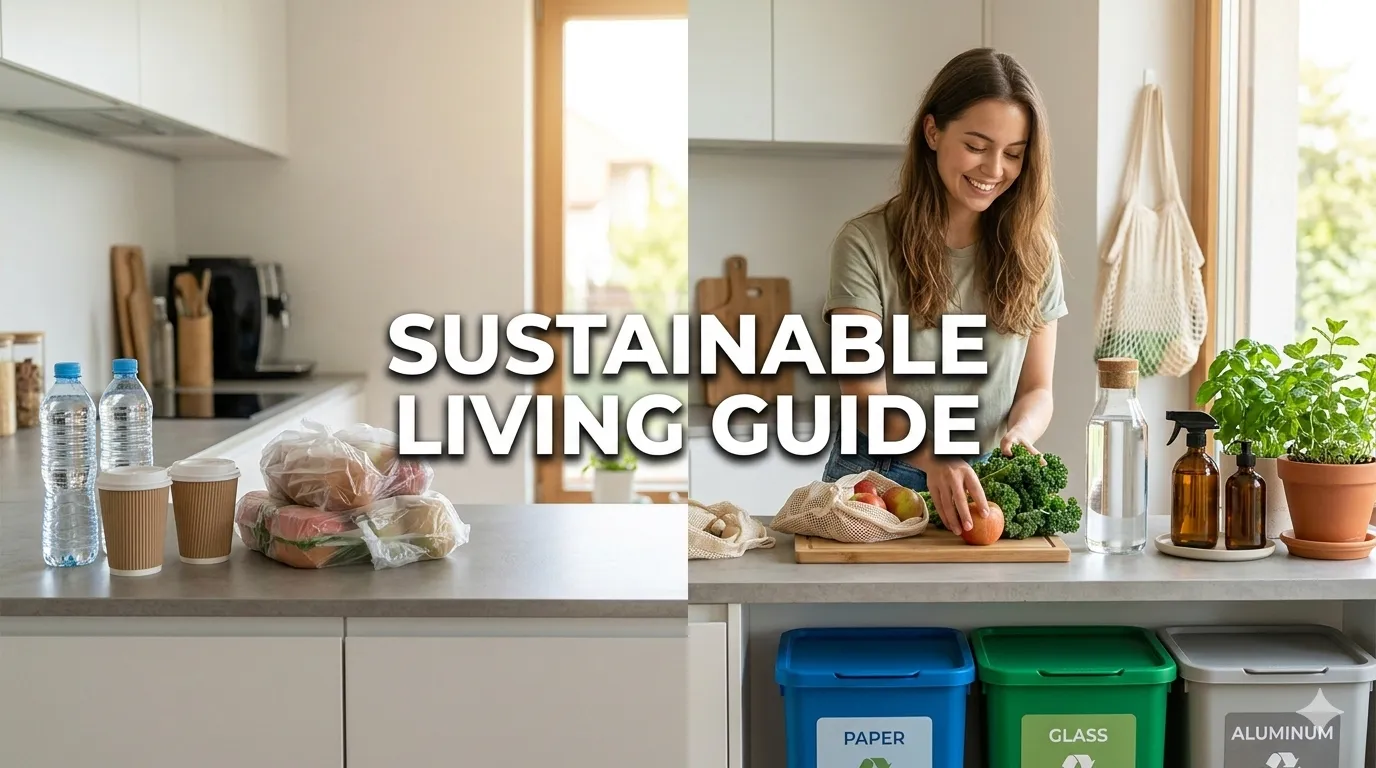
- Produce bags: Lightweight mesh bags replace plastic produce bags
2. Reduce food waste:
- Plan meals weekly to buy only what you'll use
- Store food properly to extend freshness (learn which items belong in fridge vs. pantry)
- Use leftovers creatively: "Use-it-up" meals reduce waste and save money
- Compost scraps: Even apartment dwellers can use small countertop composters or community programs
3. Conserve energy at home:
- Switch to LED bulbs: Use 75% less energy, last 25x longer
- Unplug devices when not in use: "Phantom loads" account for 10% of home energy use
- Adjust thermostat: Lowering heat by 2°F in winter or raising AC by 2°F in summer saves significant energy
- Wash clothes in cold water: 90% of washing machine energy heats water
4. Choose mindful transportation:
- Combine errands to reduce trips
- Walk or bike for short distances
- Use public transit when feasible
- Consider carpooling or ride-sharing for commutes
Pro tip: Pick 2-3 of these to implement this week. Master them before adding more. Small wins build momentum.
Step 3: Transform Your Home into an Eco-Friendly Space
Sustainable Swaps for Everyday Products
Replacing conventional items with eco-friendly alternatives reduces waste, chemical exposure, and environmental impact. Prioritize swaps based on frequency of use and waste generated:
Kitchen essentials:
- Beeswax wraps or silicone lids instead of plastic wrap
- Glass or stainless steel containers instead of plastic storage
- Bamboo or wooden utensils instead of disposable plastic
- Compostable sponges or brushes instead of synthetic scrubbers
- Loose-leaf tea or plastic-free tea bags instead of conventional tea bags (many contain plastic)
Bathroom basics:
- Bar soap and shampoo bars instead of bottled liquids
- Bamboo toothbrushes instead of plastic
- Safety razor with replaceable blades instead of disposable razors
- Reusable cotton rounds or washcloths instead of disposable cotton pads
- Toothpaste tablets or plastic-free tubes instead of conventional toothpaste
Cleaning supplies:
- Concentrated refills or DIY cleaners (vinegar, baking soda, castile soap) instead of single-use bottles
- Microfiber or cotton cloths instead of paper towels
- Refillable spray bottles for homemade solutions
Smart shopping strategy: Don't replace everything at once. Use up existing products first, then choose sustainable alternatives when restocking. This prevents waste and spreads cost over time.
Creating a Zero-Waste Mindset
Zero waste isn't about producing no trash—it's about refusing, reducing, reusing, recycling, and rotting (composting) in that order of priority:
Refuse: Say no to single-use items you don't need: straws, promotional freebies, excessive packaging.
Reduce: Buy less overall. Choose quality over quantity. Ask: "Do I really need this?" before purchasing.
Reuse: Repair items instead of replacing. Buy secondhand. Get creative with repurposing.
Recycle: Properly sort recyclables, but remember: recycling is last resort after refusing, reducing, and reusing.
Rot: Compost organic waste to return nutrients to soil instead of sending to landfills where it produces methane.
Beginner action: Start a "refuse" practice. Politely decline one single-use item this week (straw, plastic bag, promotional pen). Notice how it feels and build from there.
Step 4: Make Sustainable Food Choices
Eating for Planet and Health
Food production accounts for roughly 26% of global greenhouse gas emissions. Your dietary choices significantly impact your environmental footprint—and your health.
High-impact food strategies:
1. Reduce meat and dairy consumption:
- Start with Meatless Mondays or one plant-based meal daily
- Choose poultry or fish over beef/lamb (lower carbon footprint)
- Explore plant-based proteins: beans, lentils, tofu, tempeh, chickpeas
- Remember: Progress over perfection. Every plant-based meal makes a difference.
2. Buy local and seasonal:
- Shop farmers markets or join a CSA (Community Supported Agriculture)
- Choose seasonal produce: it's fresher, often cheaper, and requires less transportation
- Learn what grows in your region and when
3. Minimize food packaging:
- Bring reusable bags and containers to bulk stores
- Choose loose produce over pre-packaged
- Buy in bulk when practical to reduce packaging per unit
4. Reduce food waste:
- Store food properly to extend freshness
- Use leftovers creatively: "kitchen sink" meals, soups, stir-fries
- Freeze extras before they spoil
- Compost unavoidable scraps
Simple starter meal: Try a grain bowl: quinoa or rice + roasted seasonal veggies + beans or lentils + homemade dressing. Delicious, nutritious, low-waste, and budget-friendly.
Navigating Labels and Claims
Food marketing can be confusing. Focus on these trustworthy indicators:
Look for:
- Organic certification: Reduces pesticide use and supports soil health
- Fair Trade: Ensures ethical labor practices and farmer compensation
- Non-GMO Project Verified: For those avoiding genetically modified ingredients
- Regenerative Organic: Goes beyond organic to rebuild soil and ecosystems
Be skeptical of:
- Vague terms like "natural," "eco-friendly," or "green" without certification
- Excessive packaging with sustainability claims
- Products that seem too good to be true (price or claims)
Remember: The most sustainable food is often the simplest: whole, minimally processed, locally sourced when possible.
Step 5: Rethink Your Consumption Habits
The True Cost of "Stuff"
Every product has a hidden environmental cost: resource extraction, manufacturing emissions, transportation, packaging, and eventual disposal. Conscious consumption means considering these impacts before purchasing.
Adopt the 30-Day Rule: For non-essential purchases, wait 30 days before buying. Often, the urge passes, saving money and reducing clutter.
Ask before buying:
- Do I truly need this, or just want it?
- Can I borrow, rent, or buy this secondhand?
- Is this item durable and repairable?
- What happens to this item at the end of its life?
- Does this purchase align with my values?
Embrace Secondhand and Circular Economy
Buying used extends product life, reduces demand for new manufacturing, and often saves money:
Where to find quality secondhand:
- Clothing: Thrift stores, consignment shops, Poshmark, ThredUp, local buy-nothing groups
- Furniture and home goods: Facebook Marketplace, Craigslist, estate sales, Habitat ReStore
- Electronics: Back Market, Gazelle, manufacturer refurbished programs
- Books: Libraries, used bookstores, Little Free Libraries
Sell or donate responsibly: Before discarding items, consider: Can this be sold? Donated? Repaired? Repurposed? Recycling should be last resort.
Repair culture: Learn basic mending (sewing buttons, fixing hems). Use repair cafes or online tutorials for electronics, furniture, or appliances. Supporting repair extends product life and builds valuable skills.
Step 6: Build Sustainable Habits That Stick
The Psychology of Habit Formation
Sustainability isn't about willpower—it's about designing systems that make eco-friendly choices the easy choice.
Habit stacking: Attach new sustainable habits to existing routines. Example: "After I brush my teeth (existing habit), I'll fill my reusable water bottle (new habit)."
Environment design: Make sustainable choices visible and convenient. Keep reusable bags by the door. Place recycling bins next to trash cans. Store healthy snacks at eye level.
Start small: Focus on one habit at a time. Master bringing reusable bags before tackling meal prep. Small wins build confidence and momentum.
Track Progress Without Perfectionism
Measurement motivates, but don't let tracking become stressful:
Simple tracking ideas:
- Mark an X on a calendar for each day you complete your target habit
- Note one sustainable choice you're proud of each evening
- Take monthly photos of your progress (compost bin, reusable collection, etc.)
- Celebrate non-scale victories: less trash, lower utility bills, feeling more aligned
Embrace the "good enough" principle: Forgot your reusable cup? Use a recyclable one this time. Ate meat at a friend's dinner? Focus on your next plant-based meal. Sustainability is a practice, not a performance.
Step 7: Connect and Amplify Your Impact
Find Your Sustainability Community
You don't have to do this alone. Connection fuels motivation and provides practical support:
Ways to connect:
- Join local environmental groups, community gardens, or cleanup events
- Participate in online communities: Reddit's r/ZeroWaste, Facebook sustainability groups, Instagram eco-creators
- Attend workshops or talks on sustainable living topics
- Share your journey with friends and family—inspire without preaching
Benefits of community: Accountability, idea-sharing, emotional support, collective action potential, and the joy of shared purpose.
Advocate Within Your Sphere of Influence
Individual action matters, but systemic change requires collective voice:
Start small:
- Request eco-friendly options at work (recycling bins, reusable dishware)
- Share sustainable product recommendations with friends
- Provide feedback to companies about packaging or practices
- Support businesses with strong environmental commitments
Expand your impact:
- Vote for candidates with strong environmental platforms
- Participate in local sustainability initiatives or policy discussions
- Use your consumer power: support B-Corps, certified sustainable brands
- Donate to or volunteer with environmental organizations aligned with your values
Remember: Advocacy doesn't require expertise. Sharing your authentic journey and values is powerful influence.
Common Beginner Mistakes to Avoid
Pitfalls That Derail Sustainability Journeys
Even with good intentions, certain traps can undermine progress:
Mistake 1: Trying to change everything at once.
The fix: Focus on 1-3 high-impact changes. Master them before adding more. Sustainable living is a marathon, not a sprint.
Mistake 2: Perfectionism paralysis.
The fix: Embrace "better, not perfect." One person doing sustainability imperfectly has more impact than no one doing it perfectly.
Mistake 3: Eco-anxiety and burnout.
The fix: Balance awareness with action. Focus on what you can control. Take breaks from news. Celebrate progress. Connect with hopeful communities.
Mistake 4: Greenwashing susceptibility.
The fix: Research brands and claims. Look for third-party certifications. Prioritize reducing consumption over buying "eco" products.
Mistake 5: Isolating yourself.
The fix: Share your journey. Find community. Remember: collective action creates systemic change.
Measuring Your Progress: Beyond the Carbon Footprint
Holistic Indicators of Success
While carbon calculators provide useful data, sustainability encompasses more than emissions:
Personal well-being indicators:
- Do you feel more aligned with your values?
- Has your stress decreased through mindful consumption?
- Are you saving money through reduced waste?
- Do you feel more connected to your community or environment?
Household impact indicators:
- Reduced trash volume or landfill-bound waste
- Lower utility bills from energy/water conservation
- Increased use of reusable items
- More home-cooked meals with less packaging
Broader impact indicators:
- Conversations sparked with friends or family
- Support for sustainable businesses in your community
- Participation in local environmental initiatives
- Feeling empowered rather than overwhelmed by global challenges
Key insight: Progress isn't always quantifiable. Trust your intuition: if your choices feel more intentional and aligned, you're on the right path.
Frequently Asked Questions
How much does it cost to start living sustainably?
Many sustainable changes save money: reducing consumption, conserving energy, buying secondhand, and minimizing waste lower expenses. Initial investments (like reusable items) pay for themselves over time. Start with free or low-cost changes first.
What if my family or roommates aren't on board?
Lead by example without pressure. Share benefits you experience (savings, health, simplicity). Invite participation without demanding perfection. Small group changes still create impact.
How do I handle social situations that conflict with my values?
Prepare polite, non-judgmental responses: "I'm trying to reduce plastic—mind if I skip the straw?" Focus on your choices, not others'. Most people respect authentic, kind communication.
Is it worth it if my individual impact seems small?
Absolutely. Individual actions create cultural shifts, drive market demand, and inspire others. Systemic change begins with millions of personal choices. Your actions matter.
How do I stay motivated when progress feels slow?
Connect with your deeper "why." Celebrate small wins. Join supportive communities. Remember: sustainability is a lifelong practice. Progress compounds over time.
Conclusion: Your Sustainable Journey Starts Now
Building a sustainable and eco-friendly lifestyle isn't about achieving perfection—it's about making intentional choices that align with your values and create positive ripple effects. Every reusable bag, every composted scrap, every mindful purchase is a vote for the world you want to live in.
Start where you are. You don't need to overhaul your life overnight. Pick one step from this guide to implement this week. Master it. Then add another. Small, consistent actions create transformative change over time.
Be kind to yourself. Sustainability is a practice, not a performance. Some days will be easier than others. Progress, not perfection, is the goal. Every effort counts.
Remember your why. On challenging days, reconnect with what motivates you: protecting nature for future generations, living with intention, improving your health, or simply feeling more aligned. Your purpose fuels your persistence.
The path to sustainability is personal, ongoing, and deeply rewarding. You're not just reducing your footprint—you're cultivating a life of meaning, connection, and resilience.
Your journey matters. The planet needs your voice, your choices, your hope. Start today. One step at a time, you're building a more sustainable future—for yourself, your community, and generations to come.
You've got this. Welcome to the journey.
📖 আরও পড়ুন: Lifestyle
- 🔗 Minimalist Living: How to Declutter Your Home and Mind for Clarity
- 🔗 ছোট ঢাকা অ্যাপার্টমেন্টে শান্ত, গোছালো বেবি রুম তৈরির গাইড
- 🔗 Why Intentional Solitude and Creative Productivity Matter
- 🔗 Capsule Kitchen Essential Tools for Minimalist Cooking
- 🔗 সেলফ-কেয়ার কেন জরুরি: স্বার্থপরতা নয় এটি সম্পর্কে জানুন