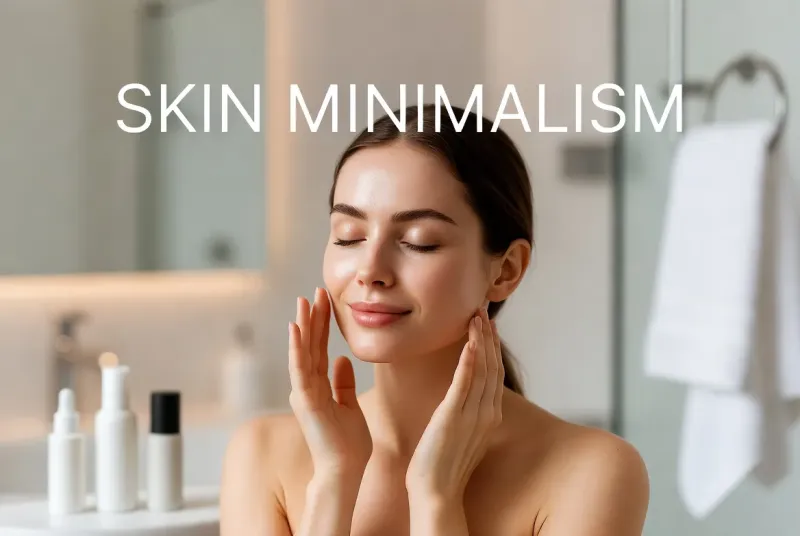
In a world of 10-step Korean routines, viral serums, and endless product recommendations, skincare can feel overwhelming. Many women spend significant time and money building elaborate regimens, only to wonder if all those products are truly necessary. What if you could achieve the same glowing, healthy skin with fewer products, less time, and less stress? The good news is, you absolutely can.
Simplifying your skincare routine doesn't mean sacrificing results. In fact, a streamlined approach often leads to better outcomes: less irritation from product overload, easier consistency, clearer understanding of what actually works for your skin, and more time and money for what matters. The key is focusing on evidence-based essentials rather than trendy extras.
This comprehensive guide shows women how to simplify their skincare routines without losing the results they love. You'll learn which steps are truly non-negotiable, how to identify products that deliver real value, strategies for streamlining your routine based on your skin type and goals, and practical tips for maintaining consistency with a minimal approach. Whether you're tired of cluttered counters, confused by conflicting advice, or simply seeking a more sustainable approach to skincare, you'll find actionable strategies to simplify without compromise.
Why Simplifying Skincare Often Improves Results
Before diving into how to simplify, it's helpful to understand why less can genuinely be more when it comes to skincare. Several evidence-based reasons support a streamlined approach.
Reduced Risk of Irritation and Sensitivity
Every product you apply introduces potential irritants: fragrances, preservatives, active ingredients, and emulsifiers. While individually these may be well-tolerated, layering multiple products increases the cumulative exposure and the likelihood of reactions. Research shows that product overload is a leading cause of adult-onset sensitivity and barrier dysfunction.
By simplifying your routine, you minimize the number of ingredients your skin encounters daily. This reduces the risk of irritation, allows your barrier to function optimally, and makes it easier to identify what truly works for your skin. Many women who simplify report fewer breakouts, less redness, and more consistent results.
Improved Consistency and Adherence
The most effective skincare routine is the one you'll actually do consistently. Complex routines with multiple steps are harder to maintain, especially on busy mornings or tired evenings. When routines feel like chores, people skip steps or abandon them entirely.
A simplified routine with 3-5 essential products takes just minutes to complete. This ease of use dramatically improves adherence, ensuring you get the cumulative benefits of consistent care. Consistency matters far more than complexity when it comes to long-term skin health.
Clearer Understanding of What Works
When you use many products simultaneously, it's difficult to know which ones are delivering results and which are just taking up space. Simplifying creates clarity: you can observe how your skin responds to each essential product and make informed decisions about what to keep or adjust.
This evidence-based approach helps you build a routine tailored to your unique skin, rather than following generic recommendations or marketing claims. Over time, you develop confidence in your choices and reduce the impulse to constantly try new products.
Cost and Time Efficiency
Skincare can be expensive, and elaborate routines multiply costs quickly. Simplifying allows you to invest in high-quality essentials rather than spreading your budget across many mediocre products. You'll also spend less time researching, shopping, and applying products, freeing up mental energy and time for other priorities.
For busy women balancing careers, families, and personal goals, this efficiency is invaluable. A simple routine that works is far more sustainable than a complex one that feels burdensome.
The Non-Negotiable Essentials: What Every Routine Needs
Regardless of skin type, age, or concerns, certain skincare steps are universally beneficial. These form the foundation of any effective simplified routine.
Gentle Cleansing
Cleansing removes dirt, oil, pollutants, and product residue that accumulate throughout the day. However, harsh cleansers can strip natural oils and compromise your barrier. The goal is clean skin without compromise.
What to look for: A pH-balanced, fragrance-free cleanser appropriate for your skin type. Cream or lotion cleansers suit dry or sensitive skin; gel cleansers work well for oily or combination skin.
How to use: Cleanse twice daily with lukewarm water. Massage gently for 30-60 seconds, then rinse thoroughly. Pat dry with a clean towel—never rub.
Simplification tip: If you wear minimal or no makeup, a single gentle cleanse in the evening may suffice, with just water rinsing in the morning.
Targeted Treatment (Optional but Valuable)
While not strictly essential for everyone, a single targeted treatment can address specific concerns without adding complexity. The key is choosing one active ingredient that aligns with your primary goal.
For anti-aging: A retinoid (retinol, adapalene, or prescription tretinoin) supports collagen production and cell turnover.
For hyperpigmentation: Vitamin C, niacinamide, or azelaic acid can brighten and even tone.
For acne or congestion: Salicylic acid or benzoyl peroxide help clear pores and reduce breakouts.
How to use: Apply after cleansing, before moisturizer. Start with low frequency (2-3 times weekly) and increase as tolerated. Always follow with sunscreen during the day.
Simplification tip: Choose one treatment that addresses your top concern. Avoid layering multiple actives, which increases irritation risk without proportional benefits.
Moisturizing for Barrier Support
Moisturizer helps maintain your skin barrier, preventing water loss and protecting against environmental stressors. Even oily skin benefits from lightweight hydration.
What to look for: A formula appropriate for your skin type containing barrier-supporting ingredients like ceramides, hyaluronic acid, glycerin, or niacinamide. Avoid heavy fragrances and unnecessary additives.
How to use: Apply to damp skin after cleansing (and treatment, if using) to lock in moisture. Use morning and evening.
Simplification tip: Many modern moisturizers combine hydration with additional benefits like SPF, antioxidants, or soothing ingredients, allowing you to streamline further.
Daily Sun Protection
Sunscreen is the single most important anti-aging and skin cancer-prevention step. UV exposure causes premature aging, hyperpigmentation, and DNA damage regardless of weather or season.
What to look for: Broad-spectrum SPF 30 or higher. Mineral sunscreens (zinc oxide, titanium dioxide) are often better tolerated by sensitive skin; chemical sunscreens may feel lighter on oily skin.
How to use: Apply generously (about 1/4 teaspoon for face) as the final morning step, 15 minutes before sun exposure. Reapply every 2 hours with direct sun exposure.
Simplification tip: Choose a moisturizer with SPF for daytime to combine two steps. For sensitive skin, mineral sunscreens with tint can double as light coverage.
Streamlining Based on Your Skin Type and Goals
While the four essentials above form a universal foundation, you can further customize your simplified routine based on your specific needs.
For Dry or Mature Skin
Priority: Hydration, barrier support, and gentle anti-aging.
Simplified routine:
- AM: Gentle cleanse (or water rinse), hydrating moisturizer with SPF
- PM: Gentle cleanse, retinoid or peptide serum (2-3x weekly), rich moisturizer
Key ingredients: Ceramides, hyaluronic acid, glycerin, niacinamide, peptides, gentle retinoids.
Avoid: Harsh foaming cleansers, high-percentage acids, alcohol-heavy toners.
For Oily or Acne-Prone Skin
Priority: Oil control, pore clarity, and preventing breakouts without over-drying.
Simplified routine:
- AM: Gel cleanser, lightweight moisturizer with SPF
- PM: Gel cleanser, salicylic acid or benzoyl peroxide treatment (as needed), oil-free moisturizer
Key ingredients: Salicylic acid, niacinamide, zinc, lightweight hyaluronic acid, non-comedogenic moisturizers.
Avoid: Heavy creams, comedogenic oils, over-exfoliating which can trigger more oil production.
For Sensitive or Reactive Skin
Priority: Calming inflammation, supporting barrier function, and minimizing irritation.
Simplified routine:
- AM: Water rinse or ultra-gentle cleanser, soothing moisturizer with SPF
- PM: Ultra-gentle cleanser, barrier-repair moisturizer
Key ingredients: Ceramides, panthenol, centella asiatica, oat extract, mineral sunscreen.
Avoid: Fragrance, essential oils, high-percentage actives, physical scrubs.
Note: Introduce any treatment slowly and one at a time. Consistency with gentle basics often yields better results than aggressive interventions.
For Combination Skin
Priority: Balancing different needs across facial zones without over-complicating.
Simplified routine:
- AM: Gentle cleanser, lightweight moisturizer with SPF (apply richer moisturizer only to dry areas if needed)
- PM: Gentle cleanser, targeted treatment on problem areas only, balanced moisturizer
Key ingredients: Niacinamide (balances oil and hydration), hyaluronic acid, gentle exfoliants used sparingly.
Strategy: Use the same core products but apply different amounts to different zones. This avoids the need for entirely separate routines.
Strategic Product Selection: Quality Over Quantity
Simplifying doesn't mean choosing the cheapest options. It means investing in high-quality essentials that deliver results, allowing you to use fewer products with greater confidence.
What to Look for in Essential Products
Clean, Simple Formulations: Products with shorter ingredient lists often have fewer potential irritants. Look for formulas focused on proven actives rather than marketing-driven "kitchen sink" blends.
Evidence-Backed Ingredients: Prioritize ingredients with robust research supporting their efficacy: retinoids for aging, vitamin C for brightness, niacinamide for multiple concerns, ceramides for barrier health, and zinc oxide for sun protection.
Appropriate for Your Skin Type: A product can be excellent but wrong for your skin. Choose formulations designed for your specific needs to maximize benefits and minimize irritation.
Stable, Well-Packaged Formulas: Some actives (like vitamin C and retinoids) degrade with light or air exposure. Choose products in opaque, air-tight packaging to ensure potency.
Multi-Tasking Products for Maximum Efficiency
One powerful simplification strategy is choosing products that serve multiple purposes:
Moisturizer with SPF: Combines hydration and sun protection for daytime.
Treatment Moisturizers: Formulas containing niacinamide, peptides, or gentle retinoids combine treatment and hydration.
Tinted Sunscreens: Provide sun protection, light coverage, and sometimes hydration in one step.
Cleansing Balms or Oils: Remove makeup and sunscreen while nourishing skin, potentially eliminating the need for a separate makeup remover.
When selecting multi-taskers, ensure they perform each function well. A mediocre SPF in a moisturizer isn't better than a dedicated sunscreen if you won't apply enough.
Eliminating the Non-Essentials: What to Cut
Simplifying requires letting go of products that don't deliver meaningful value. Here's how to identify what to cut.
Steps to Evaluate and Eliminate
Step 1: Audit Your Current Routine
List every product you use, noting: its purpose, how often you use it, whether you notice visible results, and whether you enjoy using it. Be honest—this isn't about judgment, but clarity.
Step 2: Identify Redundancies
Many routines include overlapping products: multiple hydrating serums, several exfoliants, or various treatments for the same concern. Choose the single most effective option in each category and eliminate the rest.
Step 3: Question Each Product
For each item, ask: Does this address a specific, current concern? Do I see measurable results from this product? Could a simpler product achieve the same result? Does this product cause any irritation or inconvenience?
If you answer "no" to the first two questions or "yes" to the last two, consider eliminating it.
Common Non-Essentials to Consider Cutting
Toners (Most Types): Unless you have a specific concern a toner addresses (like exfoliation or extreme dryness), this step is often unnecessary. Modern cleansers and moisturizers provide adequate hydration and pH balance.
Multiple Serums: Layering several serums increases irritation risk without proportional benefits. Choose one targeted treatment that addresses your primary concern.
Physical Scrubs: These can cause micro-tears and barrier damage. Gentle chemical exfoliants (used sparingly) are more effective and less irritating.
Sheet Masks and Occasional Treatments: While enjoyable, these rarely provide lasting results beyond temporary hydration. If you love them, keep them as occasional treats, not routine essentials.
Eye Creams (Often): Many eye creams are simply moisturizers in smaller packaging. If your facial moisturizer is gentle and effective, it likely works well around the eyes too.
Essential Oils and Fragranced Products: These add sensory appeal but increase irritation risk without proven skincare benefits. For simplified, effective routines, fragrance-free is usually better.
Maintaining Results with a Simplified Routine
Simplifying is just the beginning. Maintaining results requires consistency, patience, and strategic adjustments over time.
Consistency Over Perfection
The most powerful driver of skincare results is consistent use over time. A simple routine you do daily will outperform a complex one you do sporadically. Focus on building habits that fit your life, not achieving an idealized routine.
Set reminders if helpful, keep products visible and accessible, and pair your routine with existing habits (like brushing teeth) to build consistency. When you miss a day, simply resume—perfection isn't required for progress.
Patience with Results
Skin cell turnover takes approximately 28 days in younger skin and up to 45 days in mature skin. Meaningful results from simplified routines typically take 6-12 weeks of consistent use.
Track progress with photos rather than daily mirror checks, which can magnify normal fluctuations. Focus on overall trends rather than day-to-day changes. Trust the process and give your simplified routine time to work.
Strategic Adjustments Over Time
Your skin's needs change with seasons, age, hormones, and lifestyle. A simplified routine should be flexible enough to adapt:
Seasonal Adjustments: You might need a richer moisturizer in winter or a lighter formula in summer. Swap products seasonally while keeping the core routine intact.
Life Stage Changes: Pregnancy, menopause, or new medications can alter skin behavior. Be prepared to adjust your simplified routine as needed, adding or removing one product at a time.
Goal Evolution: As concerns shift (e.g., from acne to anti-aging), update your targeted treatment while maintaining the essential foundation.
Troubleshooting Common Simplification Challenges
Even with the best intentions, simplifying skincare can present challenges. Here's how to navigate common obstacles.
"But I Love My 10-Step Routine"
If you genuinely enjoy an elaborate routine and it works for your skin, you don't have to simplify. However, if you're simplifying to reduce stress, cost, or irritation, remember that enjoyment matters too. Consider keeping 1-2 "luxury" steps you love while streamlining the rest. Balance is personal.
"I'm Worried I'll Miss Something Important"
This fear is common but often unfounded. The four essentials (cleanse, treat optionally, moisturize, protect) cover the fundamental needs of skin health. If you have a specific concern, address it with one targeted treatment rather than multiple products. Trust that less can be more.
"My Skin Got Worse When I Simplified"
If simplifying initially causes issues, consider: Did you remove a product your skin actually needed? Did you introduce a new product that doesn't suit your skin? Is your skin adjusting to a new routine?
Give changes 2-4 weeks to assess. If issues persist, reintroduce one eliminated product at a time to identify what your skin truly needs. Simplification is iterative, not all-or-nothing.
"I Feel Like I'm Not Doing Enough"
Skincare marketing often equates complexity with efficacy. Remind yourself that results come from consistent use of proven ingredients, not the number of steps. Track objective measures (photos, texture, breakouts) rather than subjective feelings of "doing enough."
Frequently Asked Questions
Can I really get the same results with fewer products?
Yes, for most people. Skincare results depend primarily on consistent use of proven ingredients (like retinoids, vitamin C, niacinamide, SPF) rather than the number of products. Many elaborate routines include redundant or marginally beneficial steps. By focusing on high-quality essentials and using them consistently, you can achieve equal or better results with less complexity. Individual results vary, so monitor your skin and adjust as needed.
How do I know which products are truly essential for my skin?
Start with the universal essentials: gentle cleanser, moisturizer, and sunscreen. Then add one targeted treatment that addresses your primary concern (aging, hyperpigmentation, acne, etc.). If your skin is healthy and you have no specific concerns, you may not need a treatment at all. Track your skin's response over 6-8 weeks. If you see improvement, you've identified your essentials. If not, consider adding or adjusting one product at a time.
Should I simplify my morning and evening routines the same way?
Not necessarily. Many people benefit from slightly different AM and PM routines. Morning typically focuses on protection (SPF, antioxidants), while evening focuses on repair (cleansing, treatments, hydration). However, you can still simplify both: AM might be cleanse (or water rinse), moisturizer with SPF; PM might be cleanse, treatment, moisturizer. Keep each routine to 3-4 steps maximum for sustainability.
What if I have multiple skin concerns?
Prioritize your top concern and address it with one targeted treatment. Many ingredients offer multiple benefits: niacinamide helps with pores, tone, and barrier health; retinoids address aging, texture, and acne. If you have two equally important concerns, consider alternating treatments (e.g., retinoid at night, vitamin C in morning) rather than layering them. Always introduce one new product at a time to assess tolerance.
How do I simplify without losing the "ritual" aspect of skincare?
The ritual of skincare can be deeply satisfying. To preserve this while simplifying: choose products you enjoy using (pleasant textures, subtle scents if tolerated), create a calming environment (soft lighting, quiet time), practice mindful application (focusing on the sensation, not rushing), and keep 1-2 "luxury" steps you love, like a weekly mask or facial massage. Simplification is about removing what doesn't serve you, not eliminating joy.
Conclusion
Simplifying your skincare routine isn't about deprivation or settling for less. It's about focusing your time, money, and energy on what truly matters for your skin's health and your personal goals. By prioritizing evidence-based essentials, eliminating redundancies, and choosing quality over quantity, you can achieve beautiful, healthy skin with less complexity and stress.
The path to simplified skincare is personal. Your ideal routine depends on your skin type, concerns, lifestyle, and preferences. Start with the universal essentials, customize based on your needs, and adjust over time as your skin evolves. Consistency with a simple routine will always outperform inconsistency with a complex one.
Remember that skincare is just one aspect of overall health. Hydration, nutrition, sleep, stress management, and sun protection all influence your skin's appearance and resilience. A simplified skincare routine frees up mental and physical resources to nurture these foundational pillars of skin health.
Embrace the freedom that comes with simplicity. Fewer products mean less decision fatigue, lower costs, reduced environmental impact, and more time for what truly matters. Your skin doesn't need perfection—it needs consistent, thoughtful care. With a simplified routine built on proven essentials, you can give your skin exactly what it needs to thrive, now and for years to come.
Start today. Audit your current routine, identify your essentials, and take one step toward simplification. Your future self—and your skin—will thank you.
📖 আরও পড়ুন: Skin Care
- 🔗 হোয়াইটহেডস দূর করার সম্পূর্ণ গাইড: ঘরোয়া ও চিকিৎসা
- 🔗 Acne Treatment 2026: Causes, Solutions and Scar Removal Guide
- 🔗 Adult Acne at 30: Real Causes & Proven Treatments
- 🔗 স্ট্রবেরি লেগস সমাধান: ডার্মাটোলজিস্ট অনুমোদিত গ্লাস-লাইক বডি স্কিন গাইড - কারণ থেকে সম্পূর্ণ চিকিৎসা পর্যন্ত
- 🔗 স্ট্রেস ও ত্বক: কর্টিসল কীভাবে ত্বকের সর্বনাশ করে?