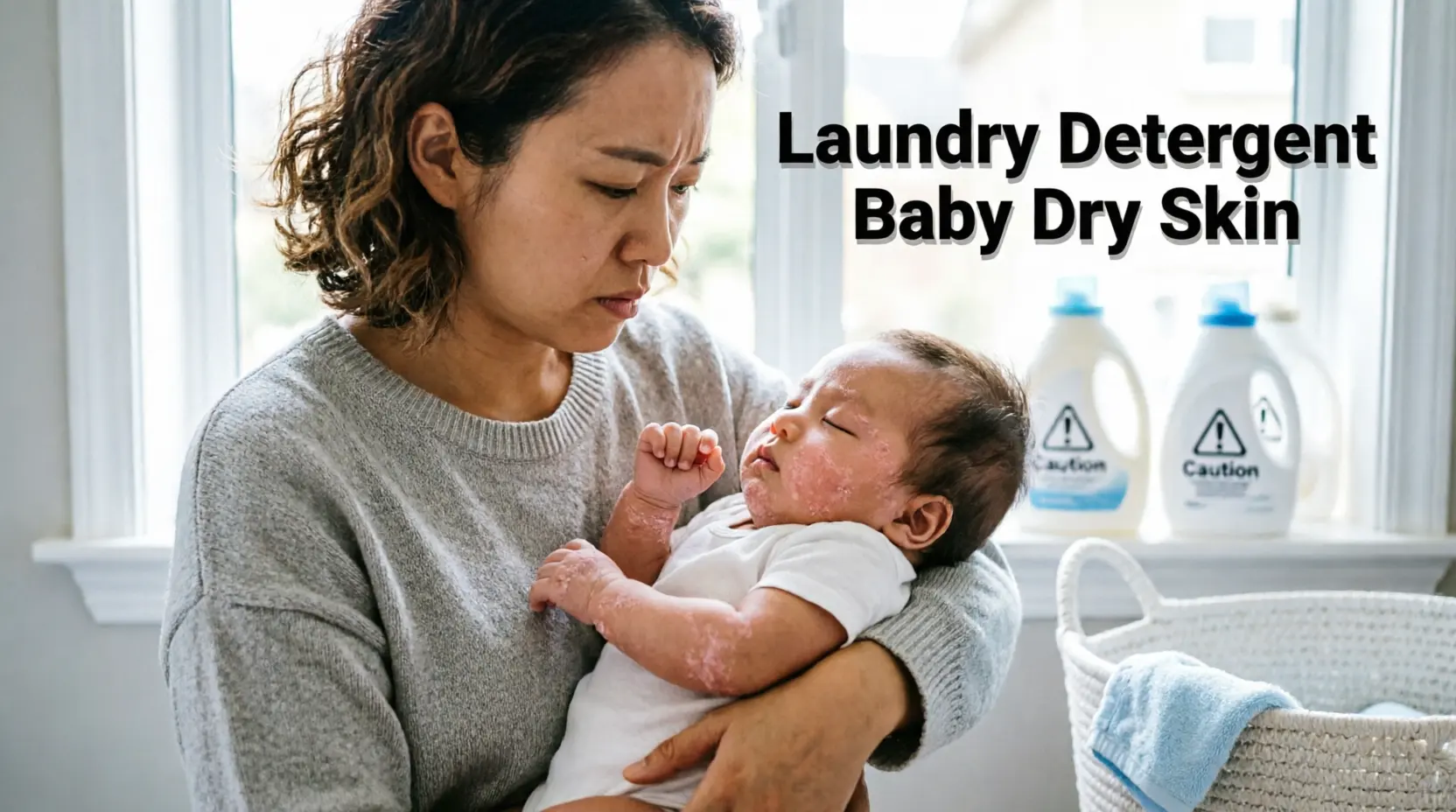
You've tried every moisturizer, adjusted bath time routines, and even changed your baby's diet—but that persistent dry, flaky skin won't go away. As a mom, you're doing everything right, yet your little one's delicate skin remains irritated and uncomfortable. What if the culprit isn't what you're putting on your baby's skin, but what you're using to wash their clothes, blankets, and bedding? The answer might surprise you: your laundry detergent could be the hidden cause of your baby's dry skin.
Most parents never make the connection between laundry products and their baby's skin issues. We focus on lotions, bath products, and diaper creams, but overlook the fact that our babies spend 24 hours a day in contact with fabrics washed in conventional detergents. Those seemingly harmless scents and cleaning agents can wreak havoc on infant skin, which is up to 30% thinner and more permeable than adult skin.
This comprehensive guide reveals the shocking truth about how laundry detergent affects your baby's delicate skin, identifies the problematic ingredients hiding in your laundry room, and provides science-backed solutions for choosing safer alternatives. You'll learn how to recognize the signs of detergent-related skin irritation, discover which ingredients to avoid at all costs, and find practical strategies for protecting your baby's skin while keeping clothes clean. Whether your baby has mild dryness, eczema, or unexplained rashes, understanding the detergent-skin connection could be the key to finally finding relief.
Why Baby Skin Is So Vulnerable to Detergent Ingredients
Understanding your baby's unique skin structure explains why conventional laundry detergents cause such problems. Infant skin isn't just smaller—it's fundamentally different from adult skin in ways that make it exceptionally vulnerable to chemical irritants.
The Science of Infant Skin Barrier
Baby skin has several characteristics that increase susceptibility to irritation:
- Thinner stratum corneum: The outermost protective layer is 20-30% thinner in infants, providing less barrier against irritants
- Higher pH levels: Newborn skin has a pH of 6.5-7.5 (closer to neutral), compared to adult skin's acidic 4.5-5.5 pH, making it less effective at fighting bacteria and irritants
- Underdeveloped acid mantle: The protective film of oils and sweat takes months to fully develop
- Increased absorption rate: Babies absorb substances through skin up to 3 times more efficiently than adults
- Higher surface-area-to-body-weight ratio: More skin exposure relative to body size means greater potential for chemical absorption
Research published in Pediatric Dermatology confirms that infants' skin barrier function doesn't fully mature until around 12-24 months of age, making the first two years a critical period for protecting against irritants .
How Detergent Residue Affects Baby Skin
Even after the rinse cycle, laundry detergent doesn't completely wash away. Microscopic residues remain embedded in fabric fibers, creating constant contact with your baby's skin throughout the day and night.
What happens when detergent touches baby skin:
- Stripping natural oils: Surfactants (cleaning agents) remove not just dirt but also the skin's natural protective oils
- Disrupting pH balance: Alkaline detergent residues alter skin's acid mantle, compromising its protective function
- Causing inflammation: Fragrances and preservatives trigger immune responses, leading to redness and irritation
- Increasing water loss: Damaged skin barrier allows moisture to escape, causing dryness and flakiness
- Creating entry points: Compromised skin allows bacteria and additional irritants to penetrate more easily
This cycle of irritation can persist as long as baby remains in contact with detergent-treated fabrics, explaining why moisturizers alone often fail to resolve the problem.
Problematic Ingredients Hiding in Your Laundry Detergent
Conventional laundry detergents contain a cocktail of chemicals designed to clean clothes effectively—but many of these same ingredients are notorious skin irritants. Understanding what's in your detergent is the first step toward protecting your baby's skin.
Fragrances: The Number One Offender
Why they're problematic: Synthetic fragrances are the leading cause of contact dermatitis from laundry products. The term "fragrance" or "parfum" on a label can represent hundreds of undisclosed chemicals, as manufacturers aren't required to list individual components.
Common fragrance irritants include:
- Limonene and linalool: Common scent compounds that oxidize and become more irritating over time
- Phthalates: Used to make scents last longer; linked to hormonal disruption
- Musks: Synthetic compounds that persist in the environment and accumulate in body tissue
According to the American Academy of Dermatology, fragrance is the most common allergen in skincare and household products, affecting up to 3% of the general population—and infants are even more susceptible .
Surfactants: Cleaning Agents That Strip Skin
What they do: Surfactants (surface-active agents) are the primary cleaning ingredients that lift dirt and oil from fabrics.
Problematic surfactants include:
- Sodium lauryl sulfate (SLS): Highly effective cleaner but extremely irritating to sensitive skin; strips natural oils aggressively
- Sodium laureth sulfate (SLES): Slightly gentler than SLS but can be contaminated with 1,4-dioxane, a potential carcinogen
- Alkylphenol ethoxylates: Effective cleaners that are also endocrine disruptors and environmental toxins
While these ingredients clean clothes effectively, residues left in fabric continue to interact with skin, potentially causing dryness, irritation, and allergic reactions.
Preservatives: Necessary but Potentially Problematic
Why they're used: Preservatives prevent bacterial and fungal growth in liquid detergents.
Common preservatives that irritate baby skin:
- Methylisothiazolinone (MI) and methylchloroisothiazolinone (MCI): Known allergens that have caused epidemic levels of contact dermatitis
- Formaldehyde releasers: Including DMDM hydantoin and quaternium-15; slowly release small amounts of formaldehyde
- Parabens: While generally considered safe, some babies with sensitive skin may react
Optical Brighteners: Making Clothes "Whiter"
What they do: These fluorescent dyes absorb UV light and re-emit it as blue light, making whites appear brighter.
Why they're problematic:
- Don't rinse out completely; remain bound to fabric fibers
- Can cause skin irritation and allergic reactions
- May trigger photosensitivity reactions when skin is exposed to sunlight
- Not biodegradable; persist in the environment
Enzymes: Protein-Based Stain Fighters
Their purpose: Enzymes break down protein-based stains like food, blood, and bodily fluids.
Potential concerns:
- Can trigger allergic reactions in sensitive individuals
- May cause respiratory irritation when inhaled as powder
- While generally safe, some babies with very sensitive skin may react
Dyes and Colorants
Why they're unnecessary: Blue, green, or pink detergents contain dyes that serve no cleaning function—they're purely aesthetic.
Common problematic dyes:
- FD&C and D&C colors: Synthetic dyes that can cause skin irritation
- Disperse dyes: Used in liquid detergents; known contact allergens
Recognizing the Signs: Is Detergent Causing Your Baby's Dry Skin?
Not all baby skin dryness comes from laundry detergent, but certain patterns and symptoms strongly suggest detergent-related irritation. Knowing what to look for helps you identify the culprit and take action.
Classic Symptoms of Detergent-Related Skin Irritation
Physical signs:
- Dry, flaky patches: Especially in areas where clothing fits snugly (waistband, socks, undershirts)
- Redness or rash: Appears in areas covered by clothing rather than exposed skin
- Rough texture: Skin feels sandpapery or unusually dry to the touch
- Cracking or fissures: Severe dryness causing small cracks, particularly on hands, feet, or cheeks
- Itching: Baby seems uncomfortable, scratches frequently, or seems irritable when dressed
Pattern clues:
- Worsens after wearing freshly washed clothes: Symptoms intensify shortly after dressing baby in clean laundry
- Improves when wearing unwashed new clothes: Paradoxically, brand-new clothes (before washing) may cause less irritation
- Affects covered areas more than exposed skin: Torso, arms, and legs show more symptoms than face or hands
- Appears after switching detergents: Symptoms began shortly after changing laundry products
Differentiating Detergent Irritation from Other Conditions
Several skin conditions can mimic detergent-related dryness. Here's how to tell them apart:
Detergent irritation vs. eczema (atopic dermatitis):
- Detergent irritation: Typically improves within days of switching to hypoallergenic detergent; affects areas in contact with clothing
- Eczema: Chronic condition that persists regardless of detergent; often appears in skin folds (elbows, knees); has genetic component
Detergent irritation vs. contact dermatitis:
- Detergent irritation: Widespread dryness and mild redness; develops gradually
- Contact dermatitis: More intense reaction with blistering or oozing; appears quickly after exposure; very itchy
Detergent irritation vs. cradle cap:
- Detergent irritation: Affects body areas covered by clothing
- Cradle cap: Confined to scalp; appears as greasy, yellow scales
The Elimination Test: Confirming Detergent as the Cause
If you suspect detergent is causing your baby's dry skin, try this systematic approach:
- Switch to hypoallergenic detergent: Choose a fragrance-free, dye-free detergent specifically formulated for sensitive skin
- Wash all baby items: Re-wash clothes, blankets, sheets, and stuffed animals in the new detergent
- Run an extra rinse cycle: This helps remove more detergent residue
- Monitor for 5-7 days: Track any changes in your baby's skin condition
- Note improvements: If skin improves significantly, detergent was likely the culprit
Important: Don't test multiple variables at once (like changing detergent AND bath products simultaneously), as this makes it impossible to identify what's helping.
Choosing the Right Detergent for Baby's Sensitive Skin
Not all "baby" or "sensitive skin" detergents are created equal. Learning to read labels and understand certifications helps you choose truly safe products for your little one.
What to Look For: The Green Light Ingredients
Plant-based surfactants:
- Derived from coconut, corn, or palm (sustainably sourced)
- Gentler on skin while still effective at cleaning
- Examples: Decyl glucoside, lauryl glucoside, coco-glucoside
Natural enzymes:
- Break down stains without harsh chemicals
- Generally well-tolerated by sensitive skin
- Biodegradable and environmentally friendly
Essential oil-free formulations:
- Even "natural" fragrances can irritate baby skin
- Truly fragrance-free means no masking scents either
Certifications that matter:
- EPA Safer Choice: Indicates ingredients meet strict safety criteria
- EWG Verified: Environmental Working Group's mark of transparency and safety
- USDA Certified Biobased: Confirms plant-based ingredient content
- Dermatologist-tested: Though not a guarantee, indicates some safety testing
- National Eczema Association Seal: Specifically approved for eczema-prone skin
Red Flag Ingredients to Avoid
Steer clear of detergents containing:
- "Fragrance" or "Parfum": Even if labeled "natural"
- Dyes: Any artificial coloring (FD&C, D&C numbers)
- SLS/SLES: Unless your baby has shown no sensitivity
- Optical brighteners: Often listed as "brightening agents"
- Phthalates: Sometimes hidden in fragrance
- Formaldehyde releasers: DMDM hydantoin, quaternium-15, imidazolidinyl urea
- 1,4-Dioxane: Contaminant in some ethoxylated ingredients
Top Detergent Recommendations for Baby's Sensitive Skin
Budget-friendly options:
- All Free Clear: Widely available, fragrance-free, dye-free; National Eczema Association accepted
- Tide Free & Gentle: Effective cleaning power without fragrances or dyes
- Seventh Generation Free & Clear: Plant-based, transparent ingredient list
Premium/specialty options:
- Dropps Baby Laundry Detergent: Hypoallergenic pods, EWG Verified, plastic-free packaging
- Puracy Natural Baby Laundry Detergent: Plant-based, developed by doctors, sulfate-free
- Molly's Suds Baby Laundry Powder: Minimal ingredients, eco-friendly, effective for eczema
Natural/organic options:
- Attitude Baby Laundry Detergent: EWG Verified, plant-based, hypoallergenic
- Ecover Zero: Fragrance-free, plant-based, biodegradable
- Better Life Baby Laundry Detergent: Plant-derived, free of harsh chemicals
DIY Detergent: Pros and Cons
Some parents consider making their own detergent. Here's what to know:
Potential benefits:
- Complete control over ingredients
- Often less expensive
- Reduced environmental impact
Important considerations:
- May not clean as effectively as commercial detergents
- Can leave more residue if not formulated properly
- Soap-based recipes can build up in HE machines
- Lack preservatives, so shorter shelf life
If making your own: Use gentle, baby-safe ingredients like washing soda, borax (use cautiously), and castile soap. Always test on a small load first and monitor baby's skin carefully.
Proper Washing Techniques to Minimize Detergent Residue
Even the gentlest detergent can cause problems if not used correctly. These washing practices help ensure clothes are clean without leaving irritating residues.
Using the Right Amount of Detergent
The problem with too much detergent:
- Excess soap doesn't rinse out completely
- Builds up in fabric fibers over time
- Creates more residue contact with baby's skin
- Wastes money and harms the environment
How much to use:
- Follow manufacturer's instructions for concentrated formulas
- For HE (high-efficiency) machines, use no more than 1-2 tablespoons per load
- For standard machines, 2-3 tablespoons is usually sufficient
- For baby clothes only, you can often use even less
- When in doubt, use less—you can always add more if clothes aren't clean
The Power of Extra Rinse Cycles
Why extra rinsing matters: An additional rinse cycle can remove up to 30% more detergent residue, significantly reducing skin contact with potential irritants.
When to use extra rinse:
- Always for baby clothes, blankets, and bedding
- When using any detergent (even hypoallergenic)
- If your baby has eczema or very sensitive skin
- When washing heavily soiled items that required more detergent
How to add extra rinse:
- Most modern machines have an "extra rinse" button or setting
- For older machines, manually add a rinse cycle
- The extra 10-15 minutes is worth it for your baby's skin health
Water Temperature Considerations
Hot water (130°F/54°C+):
- Best for: Cloth diapers, bedding, items with bodily fluids
- Pros: Kills bacteria, removes oils more effectively
- Cons: Can set protein stains; uses more energy
Warm water (90-110°F/32-43°C):
- Best for: Most baby clothes, moderately soiled items
- Pros: Good cleaning power, gentler on fabrics
- Cons: May not remove all bacteria
Cold water (60-80°F/15-27°C):
- Best for: Delicate items, dark colors, lightly soiled clothes
- Pros: Prevents shrinking/fading, energy-efficient
- Cons: Less effective at removing oils and killing bacteria
Recommendation for baby clothes: Use warm water for everyday items, hot water for bedding and cloth diapers, and always ensure thorough rinsing regardless of temperature.
Drying Methods That Matter
Line drying benefits:
- Sunlight naturally disinfects and whitens
- No fabric softener residue
- Fresh, natural scent without fragrances
- Energy-efficient and eco-friendly
Machine drying tips:
- Avoid dryer sheets entirely (they coat fabrics with chemicals)
- Use wool dryer balls if you want softer clothes
- Don't overdry, as this can make fabrics rougher
- Remove clothes promptly to prevent wrinkles
Fabric softener warning: Never use fabric softener on baby clothes. These products leave a waxy coating that traps detergent residue against skin and can cause significant irritation.
Natural Alternatives and Additional Skin Protection Strategies
Beyond choosing the right detergent, these complementary strategies provide extra protection for your baby's sensitive skin.
Natural Laundry Boosters
White vinegar:
- Add 1/4 cup to the rinse cycle
- Naturally softens fabrics without chemicals
- Helps remove detergent residue
- Neutralizes odors naturally
- Doesn't leave vinegar smell on clothes
Baking soda:
- Add 1/2 cup with detergent
- Naturally deodorizes
- Softens water, improving cleaning efficiency
- Gentle on sensitive skin
Washing soda:
- Boosts cleaning power naturally
- Softens hard water
- Use sparingly (1/4 cup per load)
- More alkaline, so test baby's tolerance
Pre-Washing New Clothes
Why it's essential: New clothes contain:
- Chemical finishes for wrinkle resistance
- Dyes that may bleed
- Formaldehyde resins
- Dirt and bacteria from stores and shipping
Best practices:
- Always wash new clothes before baby wears them
- Use hypoallergenic detergent for first wash
- Wash separately from other items initially
- Run an extra rinse cycle
Separate Washing for Maximum Protection
When to wash baby clothes separately:
- First 3-6 months of life (most vulnerable period)
- If baby has eczema or severe sensitivity
- When using different detergents for family vs. baby
- For items that directly contact skin (onesies, sleepers, blankets)
What can be washed together:
- After 6 months, if baby shows no sensitivity, you can wash with family laundry using gentle detergent
- Always separate heavily soiled items or adult clothes with strong detergents
Storage and Handling Tips
Proper storage:
- Store clean baby clothes in a clean, dry place
- Avoid plastic bags that can trap moisture and chemicals
- Use breathable cotton storage bins
- Keep away from household cleaners and chemicals
Handling clean laundry:
- Wash hands before folding baby clothes
- Avoid using scented hand lotions when handling clean baby laundry
- Fold and put away promptly to prevent dust accumulation
When to Seek Medical Help for Baby's Skin Issues
While changing detergent often resolves dry skin, certain situations require professional medical evaluation.
Red Flags That Need Immediate Attention
Contact your pediatrician if your baby experiences:
- Severe rash with blisters or oozing: Could indicate serious allergic reaction or infection
- Fever with rash: May signal infection requiring treatment
- Widespread hives: Raised, itchy welts that appear suddenly
- Difficulty breathing or swelling: Signs of severe allergic reaction—seek emergency care immediately
- Signs of infection: Increased redness, warmth, pus, or red streaks
When to Schedule a Regular Appointment
Make an appointment if:
- Dry skin persists 2 weeks after switching to hypoallergenic detergent
- Skin condition worsens despite proper care
- Baby seems uncomfortable, irritable, or has trouble sleeping
- You suspect eczema or another chronic skin condition
- Dry skin is accompanied by other symptoms (digestive issues, poor weight gain)
What to Expect at the Doctor
Your pediatrician may:
- Perform a thorough skin examination
- Ask detailed questions about products, diet, and symptoms
- Recommend patch testing to identify specific allergens
- Prescribe medicated creams or ointments
- Refer you to a pediatric dermatologist for complex cases
- Rule out other conditions like food allergies or metabolic disorders
Frequently Asked Questions
How long does it take for baby's skin to improve after changing detergent?
Most babies show improvement within 3-7 days of switching to a hypoallergenic detergent and washing all items. However, complete resolution may take 2-3 weeks, especially if there was significant buildup of detergent residue. For babies with eczema or severe sensitivity, it may take up to a month to see full improvement. Consistency is key—use the new detergent for all baby items and run extra rinse cycles during this transition period.
Can I use the same detergent for the whole family if my baby has sensitive skin?
Yes, many families choose to use baby-safe, hypoallergenic detergent for all laundry once they have a baby. This simplifies laundry routines and eliminates the risk of cross-contamination. While these detergents may cost slightly more than conventional options, the peace of mind and skin health benefits often justify the expense. Alternatively, you can wash baby items separately with gentle detergent while using regular detergent for adult clothes that don't directly contact baby's skin.
Are "natural" or "organic" detergents always better for baby skin?
Not necessarily. While natural and organic detergents often avoid harsh synthetic chemicals, "natural" doesn't automatically mean hypoallergenic. Some natural ingredients like essential oils, plant extracts, or certain enzymes can still irritate sensitive baby skin. The key is looking for fragrance-free, dye-free formulations with transparent ingredient lists, regardless of whether they're labeled "natural" or "organic." Always check for certifications like EWG Verified or National Eczema Association approval rather than relying solely on marketing claims.
Should I stop breastfeeding if my baby has dry skin?
No, dry skin from detergent irritation has nothing to do with breastfeeding. Breast milk actually provides antibodies and nutrients that support healthy skin development. Continue breastfeeding while addressing external factors like laundry detergent, bath products, and environmental irritants. If you suspect food sensitivities are contributing to skin issues (which is different from detergent irritation), consult your pediatrician before making dietary changes.
Can I use fabric softener if I choose a gentle detergent?
No, avoid fabric softener entirely for baby clothes, even with gentle detergents. Fabric softeners work by coating fabrics with a thin layer of chemicals (often including fragrances and preservatives) that can trap detergent residue and irritate baby's skin. If you want softer clothes, use wool dryer balls or add white vinegar to the rinse cycle as a natural fabric softener alternative.
Is it safe to use bleach on baby clothes?
Chlorine bleach is generally not recommended for baby clothes as it can leave residues that irritate sensitive skin and damage fabric fibers. If you need to disinfect or whiten clothes, consider these safer alternatives: oxygen-based bleach (sodium percarbonate), white vinegar in the rinse cycle, or line drying in sunlight which naturally disinfects. If you must use bleach for heavily soiled items or cloth diapers, use the minimum amount necessary, choose fragrance-free bleach, and run multiple rinse cycles.
Conclusion: Protecting Your Baby's Delicate Skin Starts in the Laundry Room
Your baby's dry, irritated skin might not require expensive creams, dietary changes, or medical interventions—the solution could be as simple as switching your laundry detergent. By understanding how conventional detergents affect your baby's vulnerable skin barrier and making informed choices about laundry products, you can provide immediate relief and long-term protection.
Remember: baby skin is up to 30% thinner than adult skin, absorbs chemicals more readily, and takes up to two years to fully develop its protective barrier. What seems harmless to adult skin can cause significant irritation for your little one. Fragrances, harsh surfactants, optical brighteners, and preservatives in conventional detergents create a perfect storm for dry, sensitive skin.
The good news? You have the power to change this. By choosing fragrance-free, dye-free detergents with plant-based ingredients, using proper washing techniques with extra rinse cycles, and avoiding fabric softeners, you can dramatically improve your baby's skin health. Most parents see noticeable improvement within a week of making these changes.
Take action today: Check your current detergent's ingredient list, invest in a hypoallergenic alternative, and wash all baby items with the new formula. Your baby's comfortable, healthy skin is worth this simple but powerful change. Remember, you're not just cleaning clothes—you're protecting your baby's largest organ and most important barrier against the world.
Every mom misses this hidden culprit at first. Now that you know better, you can do better. Your baby's skin will thank you.