
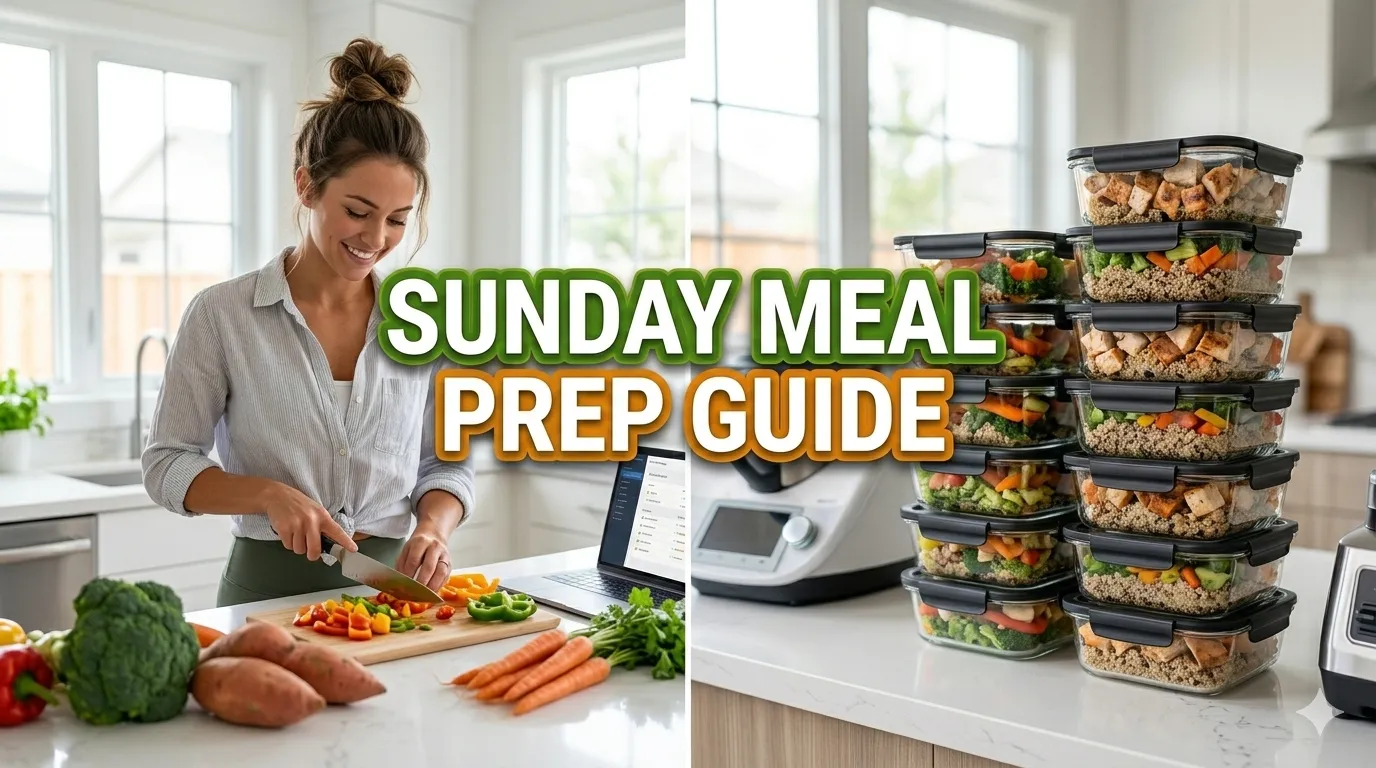
Transform Your Week with One Day of Strategic Preparation
The Sunday meal prep strategy has become a cornerstone of successful health transformations, yet many people approach it incorrectly—spending hours in the kitchen only to end up with repetitive, unappetizing meals that get abandoned by Wednesday. The truth is, effective meal prep isn't about cooking every meal in advance or eating the same thing seven days straight. It's about strategic preparation that saves time, reduces decision fatigue, supports your health goals, and actually tastes good throughout the week.
The Sunday Strategy is a science-backed system; not just a trend. Research in behavioral psychology shows that reducing daily food decisions conserves willpower for other important choices. Studies in nutrition science confirm that people who plan and prepare meals in advance consume more vegetables, fewer ultra-processed foods, and better meet their macronutrient targets. When done correctly, Sunday meal prep becomes a powerful lever for sustainable health improvement.
This comprehensive masterclass provides everything you need to master healthy meal prep for the entire week. You'll learn the psychology of habit formation that makes Sunday prep stick, evidence-based food safety protocols, efficient batch cooking techniques, macro-balanced meal templates, and troubleshooting strategies for common challenges. Whether you're a busy professional, a parent managing a family, or someone simply seeking to eat healthier with less daily effort, this guide will transform your relationship with food preparation.
The Science Behind Sunday Meal Prep Success
Why Sunday Works: Behavioral Psychology Insights
Choosing Sunday for meal prep isn't arbitrary—it leverages several psychological principles that increase adherence:
The Fresh Start Effect: Research from the Wharton School demonstrates that people are more likely to pursue goals after temporal landmarks like weekends, Mondays, or the start of a new week. Sunday prep capitalizes on this motivational boost.
Decision Fatigue Reduction: The average person makes over 200 food-related decisions daily. By preparing meals in advance, you eliminate dozens of daily micro-decisions about what to eat, preserving mental energy for work, relationships, and other priorities.
Implementation Intentions: Psychological research shows that "if-then" planning ("If it's Sunday at 2 PM, then I will prep meals") significantly increases goal achievement. Sunday prep creates a reliable implementation intention.
Environmental Design: Having prepared meals visible in your refrigerator serves as a visual cue that makes healthy choices the default option, leveraging the principle that environment shapes behavior more reliably than willpower.
Scientific insight: Dr. Brian Wansink, food behavior researcher, explains: "People don't fail at healthy eating because they lack willpower—they fail because they haven't designed their environment to make healthy choices easy. Sunday meal prep is environmental design at its most effective."
Physiological Benefits of Consistent Meal Timing
Beyond psychology, meal prep supports biological health:
Circadian Rhythm Alignment: Eating at consistent times supports your body's internal clock, improving sleep quality, hormone regulation, and metabolic function. Prepped meals make consistent timing achievable even on busy days.
Blood Sugar Stability: Having balanced meals ready prevents the blood sugar spikes and crashes that occur when you skip meals or grab convenience foods. Stable blood sugar supports sustained energy, mood stability, and reduced cravings.
Gut Health Support: Preparing fiber-rich, diverse meals in advance ensures consistent intake of prebiotic fibers that feed beneficial gut bacteria—critical for immunity, mood, and metabolic health.
Phase 1: Strategic Planning (Saturday Evening or Sunday Morning)
The 30-Minute Planning Protocol
Effective meal prep begins with intentional planning. Skip this step, and you'll waste time, money, and effort.
Step 1: Review Your Week (5 minutes)
- Check your calendar: Note busy days, social events, and times you'll eat out
- Identify "anchor meals": Which meals absolutely must be prepped vs. flexible options
- Account for leftovers: Plan to cook once, eat twice (e.g., roast chicken for dinner Monday, use leftovers for lunch Tuesday)
Step 2: Select Your Meal Framework (10 minutes)
Use this macro-balanced template for each meal to ensure nutritional completeness:
Breakfast Template:
- Protein: 20-30g (eggs, Greek yogurt, protein powder, cottage cheese)
- Complex Carb: 30-50g (oats, fruit, whole grain toast, sweet potato)
- Healthy Fat: 10-15g (nuts, seeds, avocado, nut butter)
- Fiber: 5-10g (berries, chia seeds, vegetables)
Lunch/Dinner Template:
- Protein: 25-40g (chicken, fish, tofu, beans, lean beef)
- Vegetables: 2+ cups (variety of colors for diverse phytonutrients)
- Complex Carb: 30-60g (quinoa, brown rice, sweet potato, legumes)
- Healthy Fat: 10-20g (olive oil, avocado, nuts, seeds)
Snack Template:
- Protein + Fiber combo: Apple + almond butter, Greek yogurt + berries, veggies + hummus
- Portion control: Pre-portion snacks to avoid overeating
Step 3: Build Your Shopping List (10 minutes)
- Organize by store section: Produce, protein, pantry, frozen
- Note quantities: Calculate based on meal plan to avoid waste
- Include staples: Don't forget oils, spices, condiments
- Check pantry first: Avoid buying duplicates
Step 4: Prep Timeline (5 minutes)
- Estimate total prep time: Be realistic (most efficient preppers spend 2-3 hours)
- Sequence tasks: Start with longest-cooking items first
- Identify parallel tasks: What can cook while you chop?
Menu Planning Strategies That Prevent Burnout
The "Theme Day" Approach:
- Monday: Mediterranean (chicken, quinoa, roasted vegetables)
- Tuesday: Asian-inspired (tofu, brown rice, stir-fry vegetables)
- Wednesday: Mexican (black beans, sweet potato, peppers)
- Thursday: Italian (lean protein, whole wheat pasta, marinara)
- Friday: "Clean out the fridge" bowl (use leftover components)
Benefit: Reduces decision fatigue while ensuring variety
The "Component Prep" Method:
- Prep versatile components, not complete meals
- Examples: Grilled chicken, roasted vegetables, cooked grains, hard-boiled eggs
- Mix and match components throughout the week for variety
Benefit: Maximum flexibility with minimal repetition
The "One New Recipe" Rule:
- Limit new recipes to one per week
- Build the rest of your plan around familiar, reliable meals
Benefit: Prevents overwhelm while allowing culinary exploration
Phase 2: Efficient Execution (Sunday Prep Session)
The 2-3 Hour Power Prep Protocol
Structure your Sunday session for maximum efficiency:
Minutes 0-30: Mise en Place and Oven Tasks
- Preheat oven to 400°F (200°C)
- Wash and chop all vegetables at once
- Season and prepare proteins for roasting
- Start longest-cooking items first (roasted vegetables, baked proteins)
- While oven works, begin stovetop tasks
Minutes 30-90: Stovetop and Assembly
- Cook grains (quinoa, rice, farro) in batch
- Prepare proteins that cook faster (sautéed chicken, fish)
- Make sauces and dressings in bulk
- Assemble grab-and-go breakfasts (overnight oats, egg muffins)
Minutes 90-120: Portioning and Storage
- Portion meals into containers using the macro templates
- Label containers with contents and date
- Store appropriately (see food safety section)
- Clean as you go to minimize post-prep cleanup
Minutes 120-180: Final Touches and Setup
- Prep snacks and portion into small containers
- Prepare any "finish later" components (fresh herbs, avocado)
- Set up your refrigerator for visibility and accessibility
- Review the week ahead and adjust if needed
Batch Cooking Techniques for Maximum Efficiency
Sheet Pan Mastery:
- Arrange protein and vegetables on a single pan for simultaneous roasting
- Use parchment paper for easy cleanup
- Cut vegetables to similar sizes for even cooking
- Don't overcrowd—use multiple pans if needed
One-Pot Wonders:
- Grain bowls: Cook grain, add protein and vegetables at strategic times
- Sheet pan meals: Protein + vegetables roast together
- Slow cooker/Instant Pot: Set and forget for hands-off cooking
Parallel Processing:
- While grains cook, chop vegetables
- While proteins roast, prepare sauces
- While one task finishes, start the next
Strategic Repetition:
- Cook proteins in batches: Grill 4 chicken breasts at once, not one at a time
- Chop all vegetables of the same type together
- Make one large batch of sauce rather than multiple small batches
Time-Saving Tools Worth the Investment
Essential Equipment:
- Quality chef's knife: Sharp knife speeds chopping and improves safety
- Cutting boards: Use separate boards for proteins and produce
- Sheet pans: At least two for parallel roasting
- Food storage containers: Glass containers with tight seals (various sizes)
- Instant-read thermometer: Ensures proteins are safely cooked
- Measuring cups/spoons: For consistent portions and macro tracking
Helpful Upgrades:
- Food processor: Speeds chopping, makes sauces, shreds vegetables
- Slow cooker/Instant Pot: Hands-off cooking for grains and proteins
- Vacuum sealer: Extends freshness of prepped components
- Label maker: Reduces confusion about container contents
Phase 3: Food Safety and Storage Science
Understanding the Danger Zone
Food safety isn't optional—it's essential for health and meal longevity.
The Temperature Danger Zone: 40°F-140°F (4°C-60°C)
- Bacteria multiply rapidly in this range
- Never leave prepped food in the danger zone for more than 2 hours (1 hour if room temperature >90°F/32°C)
- Cool cooked food rapidly before refrigerating
Rapid Cooling Protocol:
- Divide large batches into shallow containers (increases surface area for faster cooling)
- Place containers in ice bath for 10-15 minutes before refrigerating
- Don't stack warm containers—allow air circulation
- Refrigerate within 2 hours of cooking
Storage Guidelines by Food Type
Proteins:
- Cooked chicken/fish: 3-4 days refrigerated; 2-3 months frozen
- Hard-boiled eggs: 1 week refrigerated (peeled or unpeeled)
- Beans/legumes: 3-5 days refrigerated; 6 months frozen
- Storage tip: Store in airtight containers with minimal air space
Vegetables:
- Roasted vegetables: 3-5 days refrigerated
- Raw cut vegetables: 3-7 days in water-filled containers (carrots, celery)
- Leafy greens: 3-5 days with paper towel to absorb moisture
- Storage tip: Store vegetables separately from proteins to prevent cross-contamination
Grains:
- Cooked rice/quinoa: 4-6 days refrigerated; 6 months frozen
- Pasta: 3-5 days refrigerated
- Storage tip: Cool completely before sealing to prevent condensation
Sauces and Dressings:
- Vinaigrettes: 1-2 weeks refrigerated
- Cream-based sauces: 3-4 days refrigerated
- Storage tip: Store dressings separately from salads to prevent sogginess
Container Strategy for Optimal Freshness
Material Matters:
- Glass: Non-porous, doesn't retain odors, microwave-safe, but heavier
- BPA-free plastic: Lightweight, shatter-resistant, but can retain odors over time
- Stainless steel: Durable, non-reactive, but not microwave-safe
Size Strategy:
- 16-24 oz containers: Ideal for complete meals
- 8-12 oz containers: Perfect for snacks or side components
- Small condiment cups: For dressings, sauces, or dips
Organization System:
- Label containers with contents and prep date
- Store meals in order of consumption (Monday's meals most accessible)
- Keep snacks at eye level for easy access
- Use clear containers for visibility
Macro-Balanced Meal Templates for Every Goal
Weight Loss Focus
Principles: High protein for satiety, high fiber for fullness, moderate healthy fats, controlled portions
Sample Day:
- Breakfast: Greek yogurt parfait (1 cup Greek yogurt, 1/2 cup berries, 2 tbsp granola, 1 tbsp chia seeds)
- Lunch: Large salad (4 oz grilled chicken, 3 cups mixed greens, 1 cup roasted vegetables, 2 tbsp vinaigrette)
- Dinner: Sheet pan meal (4 oz salmon, 1.5 cups roasted broccoli/cauliflower, 1/2 cup quinoa)
- Snacks: Apple with 1 tbsp almond butter; carrot sticks with 2 tbsp hummus
- Approximate macros: 1,400-1,600 calories, 100-120g protein, 120-140g carbs, 50-60g fat
Prep Strategy: Focus on volume eating—large portions of low-calorie vegetables to promote fullness
Muscle Building Focus
Principles: Adequate protein for muscle synthesis, sufficient carbohydrates for training fuel, strategic timing around workouts
Sample Day:
- Breakfast: Protein oatmeal (1/2 cup oats, 1 scoop protein powder, 1 tbsp peanut butter, 1/2 banana)
- Lunch: Grain bowl (5 oz lean beef, 1 cup brown rice, 1.5 cups mixed vegetables, 1/4 avocado)
- Dinner: Chicken and sweet potato (6 oz chicken breast, 1 large sweet potato, 2 cups green beans)
- Snacks: Protein shake post-workout; cottage cheese with pineapple
- Approximate macros: 2,200-2,500 calories, 150-180g protein, 200-250g carbs, 70-90g fat
Prep Strategy: Prepare carb sources in larger batches; time carb-heavy meals around training
Balanced Maintenance Focus
Principles: Nutrient density, variety, flexibility, sustainability
Sample Day:
- Breakfast: Veggie egg muffins (3 egg muffins with spinach, peppers, cheese)
- Lunch: Mediterranean bowl (4 oz chickpeas, 1 cup quinoa, cucumber, tomatoes, olives, feta, lemon dressing)
- Dinner: Stir-fry (4 oz shrimp, 2 cups mixed vegetables, 3/4 cup brown rice, ginger-soy sauce)
- Snacks: Greek yogurt with honey; handful of mixed nuts
- Approximate macros: 1,800-2,000 calories, 90-110g protein, 180-200g carbs, 60-75g fat
Prep Strategy: Emphasize variety and flavor to maintain long-term adherence
Recipes and Components for Efficient Prep
Protein Prep: Versatile Foundations
Sheet Pan Lemon Herb Chicken:
- Ingredients: 4 chicken breasts, 2 tbsp olive oil, juice of 1 lemon, 3 cloves garlic minced, 1 tsp dried oregano, salt, pepper
- Method: Toss chicken with marinade; roast at 400°F (200°C) for 20-25 minutes until internal temperature reaches 165°F (74°C)
- Yield: 4 servings; stores 3-4 days
- Versatility: Use in salads, grain bowls, wraps, or with vegetables
One-Pot Lentils:
- Ingredients: 1 cup dried lentils, 3 cups vegetable broth, 1 onion diced, 2 carrots diced, 2 celery stalks diced, 2 cloves garlic, 1 tsp cumin, salt, pepper
- Method: Sauté aromatics; add lentils and broth; simmer 25-30 minutes until tender
- Yield: 6 servings; stores 5 days refrigerated, 3 months frozen
- Versatility: Base for bowls, soups, or side dish
Baked Salmon with Dill:
- Ingredients: 4 salmon fillets, 1 tbsp olive oil, juice of 1/2 lemon, 1 tbsp fresh dill, salt, pepper
- Method: Season salmon; bake at 425°F (220°C) for 12-15 minutes until flaky
- Yield: 4 servings; stores 3 days refrigerated
- Versatility: Serve with grains, vegetables, or in salads
Vegetable Prep: Maximizing Nutrition and Flavor
Sheet Pan Roasted Vegetables:
- Ingredients: Assorted vegetables (broccoli, bell peppers, zucchini, Brussels sprouts), 2 tbsp olive oil, salt, pepper, garlic powder
- Method: Toss vegetables with oil and seasonings; roast at 425°F (220°C) for 20-25 minutes, stirring halfway
- Pro tip: Cut vegetables to similar sizes for even cooking; don't overcrowd pan
- Storage: 4-5 days refrigerated
Massaged Kale Salad Base:
- Ingredients: 1 large bunch kale, 1 tbsp olive oil, 1 tsp lemon juice, pinch of salt
- Method: Remove stems, chop kale, massage with oil, lemon, and salt for 2-3 minutes until softened
- Benefit: Massaging breaks down tough fibers, improving texture and nutrient absorption
- Storage: 3-4 days refrigerated; add toppings fresh when serving
Grain and Carb Prep: Fuel for the Week
Perfect Quinoa Every Time:
- Ratio: 1 part quinoa to 2 parts liquid
- Method: Rinse quinoa; combine with water or broth; bring to boil, reduce heat, cover, simmer 15 minutes; let stand 5 minutes, then fluff
- Yield: 1 cup dry yields 3 cups cooked
- Storage: 5-6 days refrigerated; freezes well
Batch Sweet Potatoes:
- Method 1 (Oven): Pierce potatoes; bake at 400°F (200°C) for 45-60 minutes until tender
- Method 2 (Instant Pot): Add 1 cup water, trivet, potatoes; cook high pressure 15 minutes, natural release
- Storage: 5 days refrigerated; mash or cube for versatile use
Sauce and Flavor Prep: Elevating Simple Meals
Green Goddess Dressing:
- Ingredients: 1/2 cup Greek yogurt, 1/4 cup fresh herbs (basil, parsley, chives), 2 tbsp lemon juice, 1 clove garlic, salt, pepper, water to thin
- Method: Blend all ingredients until smooth; adjust consistency with water
- Storage: 1 week refrigerated
- Uses: Salad dressing, veggie dip, grain bowl sauce
Spicy Peanut Sauce:
- Ingredients: 1/4 cup natural peanut butter, 2 tbsp soy sauce or tamari, 1 tbsp rice vinegar, 1 tbsp maple syrup, 1 tsp sriracha, 1 clove garlic, water to thin
- Method: Whisk all ingredients; add water gradually until desired consistency
- Storage: 1 week refrigerated
- Uses: Noodle sauce, veggie dip, grain bowl topping
Troubleshooting Common Meal Prep Challenges
Challenge: "My Meals Get Boring by Wednesday"
Solutions:
- Component prep over complete meals: Prep versatile components you can mix and match
- Flavor variety: Prepare 2-3 different sauces or seasonings to rotate
- Texture contrast: Include crunchy elements (nuts, seeds, raw vegetables) added fresh
- Mid-week refresh: Plan one "finish fresh" meal where you add fresh ingredients Wednesday night
Challenge: "Food Doesn't Stay Fresh"
Solutions:
- Cool completely before storing: Warm food creates condensation that accelerates spoilage
- Use airtight containers: Minimize air exposure to slow oxidation
- Layer strategically: Place dressings/sauces at bottom, grains in middle, delicate greens on top
- Know your refrigerator: Store meals in the coldest part (usually back, middle shelf)
- Freeze extras: If you won't eat a meal by day 4, freeze it immediately
Challenge: "I Don't Have 3 Hours on Sunday"
Solutions:
- Start small: Prep just 3 days of lunches; build up gradually
- Use convenience items: Pre-cut vegetables, canned beans, pre-cooked grains (check labels for additives)
- Delegate: Involve family members in prep tasks
- Split the work: Prep proteins Sunday, assemble meals Wednesday evening
- Embrace "good enough": A simple prep is better than no prep
Challenge: "My Family Has Different Preferences"
Solutions:
- Prep components, not plates: Let family members assemble their own meals from shared components
- Offer choices: Prep two protein options or two grain options
- Involve everyone: Let family members choose one meal to prep each week
- Keep sauces separate: Accommodates different flavor preferences
Adapting the Sunday Strategy for Different Lifestyles
For Busy Professionals
Focus: Maximum efficiency, minimal cleanup, grab-and-go convenience
Strategy:
- Use one-pan meals to minimize cleanup
- Prep breakfasts and lunches; keep dinners flexible for social/professional events
- Invest in quality containers that stack neatly in office fridge
- Keep emergency snacks at work to prevent vending machine temptations
For Parents and Families
Focus: Kid-friendly options, batch cooking for multiple people, involving children
Strategy:
- Prep "deconstructed" meals kids can customize
- Involve children in age-appropriate prep tasks (washing vegetables, stirring)
- Prep adult and kid versions simultaneously (same components, different seasonings)
- Use divided containers for kid meals to keep foods separated
For Specific Dietary Needs
Vegetarian/Vegan:
- Focus on diverse plant proteins: beans, lentils, tofu, tempeh, seitan
- Prep grains and legumes in large batches
- Make versatile sauces to add flavor to plant-based meals
- Include variety of colors and textures to ensure nutrient diversity
Gluten-Free:
- Focus on naturally gluten-free whole foods: vegetables, fruits, proteins, rice, quinoa
- Prevent cross-contamination: Use separate cutting boards and utensils
- Read labels carefully on sauces and condiments
- Prep gluten-free grains in dedicated pots
Low-Carb/Keto:
- Emphasize non-starchy vegetables, quality proteins, healthy fats
- Prep fat-based sauces and dressings in advance
- Use cauliflower rice, zucchini noodles as carb substitutes
- Keep electrolytes in mind: Prep bone broth or electrolyte drinks
Tracking and Optimizing Your System
Simple Metrics for Success
Track these indicators to refine your meal prep strategy:
Adherence: What percentage of prepped meals did you actually eat? (Target: 80%+)
Waste: How much prepped food was discarded? (Target: