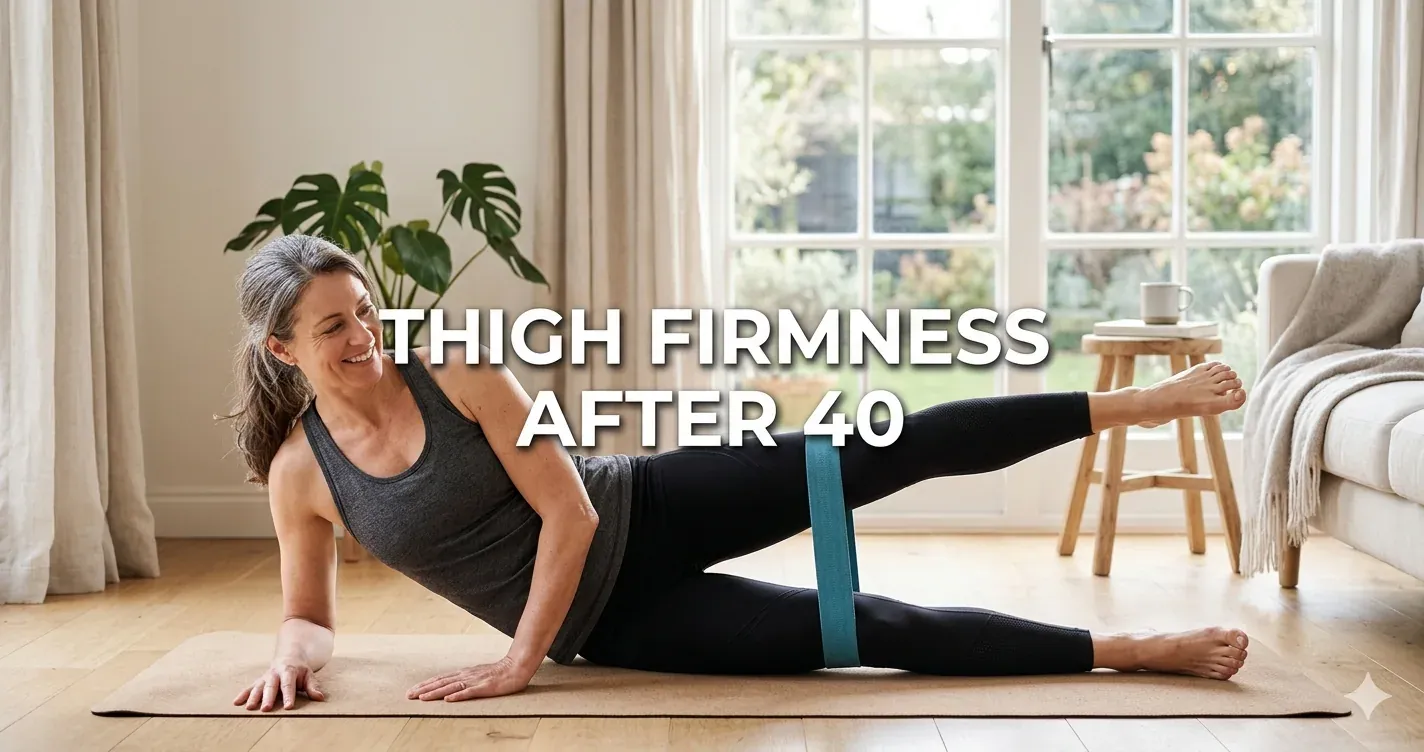

Wanting toned, strong thighs is a common fitness goal—but the idea that you need a gym membership, expensive equipment, or hours of cardio to achieve it is a myth. The truth is, science-backed strategies for building lean, defined thighs can be implemented entirely at home, using just your bodyweight, minimal equipment, and intelligent programming.
Whether you're working with limited space, a tight schedule, or simply prefer the privacy of home workouts, you can absolutely sculpt stronger, more defined thighs. The key isn't working harder—it's working smarter, with exercises and principles grounded in exercise physiology, nutrition science, and recovery research.
This comprehensive guide delivers an evidence-based framework for toning your thighs at home without gym equipment. You'll learn the anatomy of your thigh muscles and how they respond to training, discover which bodyweight exercises actually build strength and definition, implement progressive overload strategies that work without weights, optimize your nutrition to support lean muscle development, and set realistic expectations for your transformation timeline. Whether you're a beginner or returning to fitness after a break, you'll find practical, scientifically grounded strategies to build the strong, confident thighs you deserve.
Understanding Thigh Anatomy: What You're Actually Training
Before implementing exercises, it's essential to understand what muscles make up your thighs—and how each responds to training. This knowledge helps you target your workouts effectively and set realistic expectations.
The Four Major Thigh Muscle Groups
| Muscle Group | Location | Primary Function | Why It Matters for Tone |
|---|---|---|---|
| Quadriceps (Rectus femoris, Vastus lateralis/medialis/intermedius) | Front of thigh | Knee extension, hip flexion | Defines front thigh contour; creates "sweep" when developed |
| Hamstrings (Biceps femoris, Semitendinosus, Semimembranosus) | Back of thigh | Knee flexion, hip extension | Creates definition in back of thigh; balances quad development |
| Adductors (Inner thigh: Adductor longus/brevis/magnus, Gracilis, Pectineus) | Inner thigh | Hip adduction (pulling legs together) | Defines inner thigh line; often undertrained in home workouts |
| Abductors (Outer thigh: Gluteus medius/minimus, TFL) | Outer hip/thigh | Hip abduction (lifting leg out to side) | Shapes outer thigh and hip; stabilizes pelvis during movement |
Key Insight: "Toning" isn't a scientific term—it's a combination of building lean muscle mass and reducing body fat to reveal muscle definition. You can't spot-reduce fat from thighs alone, but you can build muscle in specific areas to create a more defined, sculpted appearance.
The Science of "Toning": Muscle Hypertrophy vs. Fat Loss
What Creates the "Toned" Look:
- Muscle hypertrophy: Increasing muscle fiber size through progressive resistance training
- Body fat reduction: Lowering overall body fat percentage to reveal underlying muscle definition
- Neuromuscular efficiency: Improving mind-muscle connection for better muscle activation during movement
What Doesn't Work (Despite Popular Belief):
- Spot reduction: You cannot target fat loss from thighs specifically through exercise; fat loss occurs systemically
- Endless cardio: Excessive steady-state cardio without strength training can lead to muscle loss, not definition
- Extreme calorie restriction: Severely cutting calories can cause muscle loss alongside fat loss, undermining the "toned" goal
Evidence-Based Approach: Combine progressive resistance training (to build muscle) with moderate calorie deficit or maintenance (to support fat loss while preserving muscle) for optimal thigh definition.
Phase 1: Foundational Bodyweight Exercises for Thigh Development
You don't need weights to build strong, defined thighs. These evidence-backed bodyweight exercises effectively target all major thigh muscle groups when performed with proper form and progression.
Quadriceps-Focused Exercises
Pistol Squat Progressions (Single-Leg Squats)
- Why it works: Unilateral loading increases intensity without external weight; challenges balance and strength
- Progression path:
- Assisted pistol squat: Hold onto doorframe or chair for balance
- Box pistol squat: Lower to seated position on chair, then stand
- Full pistol squat: Controlled descent and ascent on one leg
- Form cues: Keep chest up, knee tracking over toes, lower with control; aim for 3 sets of 5-8 reps per leg
- Science note: Unilateral exercises increase muscle activation by 10-15% compared to bilateral movements
Bulgarian Split Squats
- Why it works: Elevating rear foot increases range of motion and quad/hamstring engagement
- Setup: Place rear foot on chair, couch, or low surface; front foot 2-3 feet forward
- Execution: Lower until front thigh is parallel to floor; drive through front heel to return
- Progression: Add pause at bottom, increase tempo, or hold household items for added resistance
- Target: 3 sets of 8-12 reps per leg
Wall Sits with Variations
- Why it works: Isometric hold builds muscular endurance and time-under-tension for hypertrophy
- Basic form: Back against wall, knees at 90°, hold position
- Progressions:
- Single-leg wall sit: Lift one foot off ground
- Weighted wall sit: Hold household items (water jugs, books)
- Pulse wall sits: Small up/down movements at bottom position
- Target: 3 sets of 30-60 second holds
Hamstring and Glute Integration
Single-Leg Glute Bridges
- Why it works: Isolates hamstrings and glutes; unilateral loading increases intensity
- Setup: Lie on back, knees bent, feet flat; lift one foot off ground
- Execution: Drive through grounded heel to lift hips; squeeze glutes at top
- Progression: Add pause at top, slow tempo (3 seconds up, 3 seconds down), or place foot on elevated surface
- Target: 3 sets of 10-15 reps per leg
Nordic Hamstring Curl Negatives
- Why it works: Eccentric (lengthening) hamstring loading is highly effective for strength and hypertrophy
- Setup: Kneel on soft surface; anchor feet under couch or have partner hold ankles
- Execution: Slowly lower torso toward floor using hamstrings to control descent; use hands to push back up
- Progression: Increase lowering time (aim for 5-8 seconds); reduce hand assistance over time
- Target: 3 sets of 5-8 controlled negatives
- Science note: Eccentric training produces greater hypertrophy than concentric-only training
Reverse Lunges with Knee Drive
- Why it works: Combines hamstring stretch with quad engagement; knee drive adds dynamic stability challenge
- Execution: Step backward into lunge; drive back knee forward as you return to standing
- Progression: Add hop on return, increase tempo, or hold household items for resistance
- Target: 3 sets of 10-12 reps per leg
Inner and Outer Thigh Targeting
Lateral Lunges (Side Lunges)
- Why it works: Targets adductors (inner thigh) through hip adduction under load
- Execution: Step wide to side; sink hips back while keeping other leg straight; push off inner foot to return
- Form cue: Keep toes pointed forward; avoid letting knee cave inward
- Progression: Add pulse at bottom position, increase range of motion, or hold resistance
- Target: 3 sets of 10-12 reps per side
Clamshells with Resistance Band
- Why it works: Isolates gluteus medius and abductors; band adds progressive resistance
- Setup: Lie on side, knees bent 90°, band around thighs above knees
- Execution: Keeping feet together, lift top knee against band resistance; control return
- Progression: Use stronger band, add pause at top, or perform standing version
- Target: 3 sets of 15-20 reps per side
Copenhagen Plank Progressions
- Why it works: Advanced adductor exercise that builds inner thigh strength and stability
- Beginner: Side plank with top foot on floor, bottom knee bent
- Intermediate: Side plank with top foot elevated on chair, bottom leg straight
- Advanced: Full Copenhagen plank: top foot on elevated surface, bottom leg lifted and straight
- Target: 3 sets of 20-30 second holds per side
Phase 2: Progressive Overload Without Weights—The Key to Continued Results
Muscle growth requires progressive overload—gradually increasing demand on muscles over time. Without weights, you'll use alternative progression strategies grounded in exercise science.
The Five Methods of Bodyweight Progressive Overload
| Method | How to Apply | Example for Thigh Exercises | When to Progress |
|---|---|---|---|
| Increase reps | Add repetitions while maintaining form | Bulgarian split squat: 8 → 10 → 12 reps per leg | When you can complete top rep range with perfect form |
| Increase sets | Add additional sets of the same exercise | Glute bridges: 3 → 4 → 5 sets | After mastering rep progression for 2 consecutive weeks |
| Decrease rest time | Shorten rest between sets to increase metabolic demand | Rest: 90s → 60s → 45s between sets | When strength/endurance improves; monitor form closely |
| Improve tempo | Slow down eccentric (lowering) phase to increase time-under-tension | Squat: 2s down → 3s down → 4s down | When movement feels controlled at current tempo |
| Advance variation | Progress to more challenging exercise variation | Assisted pistol squat → Box pistol squat → Full pistol squat | When current variation feels manageable for target reps |
Science Note: Research shows that time-under-tension (slowing movement tempo) can produce similar hypertrophy to heavier loads when taken to muscular fatigue . This is ideal for home training without external resistance.
Sample 4-Week Progressive Thigh Program
Week 1: Foundation
- Bulgarian Split Squats: 3x8 per leg
- Single-Leg Glute Bridges: 3x10 per leg
- Lateral Lunges: 3x10 per side
- Clamshells: 3x15 per side
- Rest: 90 seconds between sets

Week 2: Volume Increase
- Bulgarian Split Squats: 3x10 per leg
- Single-Leg Glute Bridges: 3x12 per leg
- Lateral Lunges: 3x12 per side
- Clamshells: 3x20 per side
- Rest: 75 seconds between sets

Week 3: Tempo Focus
- Bulgarian Split Squats: 3x8 per leg (3s down, 1s up)
- Single-Leg Glute Bridges: 3x10 per leg (2s up, 2s hold, 2s down)
- Lateral Lunges: 3x10 per side (add 2s pause at bottom)
- Clamshells: 3x15 per side (add 1s hold at top)
- Rest: 60 seconds between sets

Week 4: Variation Progression
- Box Pistol Squats: 3x6 per leg (progress from Bulgarian split squats)
- Elevated Single-Leg Glute Bridges: 3x10 per leg (foot on low step)
- Lateral Lunges with Pulse: 3x10 per side (add 2 pulses at bottom)
- Standing Clamshells: 3x15 per side (progress from floor version)
- Rest: 60 seconds between sets
Key Principles:
- Form first: Never sacrifice technique for reps or speed
- Track progress: Log reps, sets, tempo, and perceived difficulty each session
- Listen to your body: Progress when ready, not by calendar alone
- Deload if needed: Every 4-6 weeks, reduce volume by 50% for one week to support recovery
Phase 3: Nutrition for Lean, Defined Thighs
Exercise builds muscle; nutrition reveals it. Your dietary approach significantly impacts your ability to achieve toned thighs.
Nutrition Fundamentals for Thigh Definition
Protein: The Muscle-Preserving Nutrient
- Why it matters: Adequate protein prevents muscle loss during calorie deficits and supports repair/growth after training
- Target intake: 1.6-2.2g protein per kg body weight daily (0.7-1g per lb)
- Timing strategy: Distribute protein evenly across 3-4 meals (20-40g per meal) for optimal muscle protein synthesis
- Food sources: Greek yogurt, eggs, chicken, fish, tofu, lentils, protein powder
Energy Balance: Creating the Right Environment
| Goal | Calorie Approach | Expected Outcome | Best For |
|---|---|---|---|
| Build muscle + lose fat (Body recomposition) | Maintenance calories or slight deficit (100-200 below maintenance) | Slow fat loss while preserving/gaining muscle; gradual definition improvements | Beginners, those with higher body fat, or prioritizing strength |
| Lose fat primarily | Moderate deficit (300-500 below maintenance) | Faster fat loss; may lose some muscle without adequate protein/training | Those with significant fat to lose; prioritize protein and strength training |
| Build muscle primarily | Slight surplus (100-200 above maintenance) | Muscle growth with minimal fat gain; definition improves as muscle grows | Those at lower body fat; prioritizing strength and muscle development |
Calculate Your Needs:
- Estimate maintenance calories: Body weight (lbs) x 14-16 (adjust for activity level)
- Adjust based on goal (see table above)
- Prioritize protein first, then fill remaining calories with whole foods
- Reassess every 4-6 weeks; adjust based on progress and energy levels
Strategic Nutrient Timing for Home Training
Pre-Workout (1-2 hours before):
- Include protein + carbs for energy and muscle protection
- Examples: Greek yogurt + berries, apple + peanut butter, small protein shake
- Hydrate: 16-20oz water in the 2 hours before training
Post-Workout (within 2 hours):
- Protein (20-40g) to stimulate muscle protein synthesis
- Carbs to replenish glycogen and support recovery
- Examples: Protein shake + banana, chicken + rice, cottage cheese + fruit
Daily Hydration:
- Target: 0.5-1oz water per lb body weight daily (e.g., 100-150oz for 150lb person)
- Hydration supports muscle function, recovery, and appetite regulation
- Sign of adequate hydration: Pale yellow urine; consistent energy levels
Foods That Support Lean Thigh Development
| Nutrient | Role in Thigh Tone | Food Sources | Practical Tip |
|---|---|---|---|
| Protein | Preserves/builds muscle; increases satiety | Eggs, Greek yogurt, chicken, fish, tofu, lentils | Include protein at every meal; prep hard-boiled eggs or Greek yogurt for quick snacks |
| Fiber | Supports satiety, gut health, stable energy | Vegetables, fruits, whole grains, legumes | Aim for 25-35g daily; add veggies to every meal |
| Healthy fats | Supports hormone health; aids nutrient absorption | Avocado, nuts, seeds, olive oil, fatty fish | Include small portion at meals; don't fear fats for thigh tone |
| Complex carbs | Fuels workouts; supports recovery | Oats, sweet potatoes, quinoa, brown rice | Time carbs around workouts for optimal energy and recovery |
Phase 4: Recovery and Consistency—The Unsung Heroes of Results
Muscle grows during recovery, not during workouts. Optimizing rest and consistency is as important as your training and nutrition.
Recovery Strategies for Home Training
Sleep: The Ultimate Performance Enhancer
- Why it matters: Growth hormone peaks during deep sleep; muscle repair occurs primarily during rest
- Target: 7-9 hours nightly; consistent sleep/wake times
- Optimization tips:
- Wind-down routine: 30-60 minutes screen-free before bed
- Environment: Cool, dark, quiet bedroom; consider white noise
- Timing: Avoid caffeine after 2 PM; limit alcohol close to bedtime
Active Recovery: Moving to Recover
- Why it works: Light movement increases blood flow to muscles, delivering nutrients and removing waste products
- Options: Walking, gentle yoga, foam rolling, dynamic stretching
- Frequency: 1-2 active recovery days between intense thigh sessions
- Sample active recovery routine:
- 10 minutes walking or cycling at easy pace
- 5 minutes dynamic leg swings (forward/side)
- 5 minutes foam rolling quads, hamstrings, IT band
- 5 minutes static stretching (hold 30 seconds each)
Managing Soreness Without Stopping Progress
- DOMS (Delayed Onset Muscle Soreness): Normal 24-72 hours after new/intense training
- Strategies:
- Light movement: Walking or cycling increases blood flow to sore muscles
- Hydration and electrolytes: Support muscle function and recovery
- Protein intake: Supports repair of micro-tears causing soreness
- Gradual progression: Avoid jumping to advanced exercises too quickly
- When to rest: Sharp pain (not soreness), joint discomfort, or excessive fatigue—take an extra rest day
Building Sustainable Consistency
Habit Stacking for Home Workouts:
- Anchor to existing routines: "After my morning coffee, I'll do my thigh workout"
- Prepare the night before: Lay out workout clothes; set up space to reduce friction
- Start small: 15-20 minute sessions are sustainable; build duration over time
- Track non-scale victories: Note strength gains, improved form, or how clothes fit
Overcoming Common Home Workout Barriers:
| Barrier | Evidence-Based Solution | Practical Application |
|---|---|---|
| "I don't have time" | Short, frequent sessions are effective for hypertrophy | 3x20 minute sessions/week > 1x60 minute session |
| "I lose motivation" | Accountability and tracking boost adherence | Workout with a friend via video; use app to log progress |
| "My space is limited" | Bodyweight exercises require minimal space | Clear 6x6 ft area; use wall for support exercises |
| "I don't see results fast enough" | Realistic expectations prevent burnout | Focus on strength gains first; definition follows fat loss |
Phase 5: Avoiding Common Mistakes That Sabotage Thigh Toning
Even with great exercises and nutrition, certain mistakes can derail your progress. Awareness is the first step to avoidance.
Training Mistakes to Avoid
Mistake #1: Only Doing Cardio
- Why it backfires: Steady-state cardio burns calories but doesn't build muscle; can lead to "skinny fat" appearance
- Solution: Prioritize strength training 3x/week; add cardio as supplemental (not primary) activity
Mistake #2: Skipping Progressive Overload
- Why it backfires: Doing the same workout indefinitely leads to plateaus; muscles adapt and stop growing
- Solution: Track workouts; systematically increase reps, sets, tempo, or difficulty every 1-2 weeks
Mistake #3: Neglecting Full-Range Motion
- Why it backfires: Partial reps limit muscle fiber recruitment and functional strength gains
- Solution: Prioritize controlled, full-range movements; reduce reps if needed to maintain form
Mistake #4: Overtraining One Area
- Why it backfires: Only training thighs neglects overall balance; can lead to muscle imbalances and injury
- Solution: Include upper body and core work 1-2x/week; maintain balanced programming
Nutrition Mistakes That Hinder Definition
Mistake #1: Extreme Calorie Restriction
- Why it backfires: Severe deficits cause muscle loss alongside fat loss; slows metabolism
- Solution: Aim for moderate deficit (300-500 calories) if fat loss is goal; prioritize protein
Mistake #2: Fear of Carbohydrates
- Why it backfires: Carbs fuel workouts and recovery; cutting them can reduce training quality and muscle preservation
- Solution: Time carbs around workouts; choose whole-food sources; don't eliminate entire food groups
Mistake #3: Inconsistent Protein Intake
- Why it backfires: Muscle protein synthesis is maximized with 20-40g protein per meal; sporadic intake limits growth
- Solution: Plan protein sources for each meal; prep protein-rich snacks for convenience
Realistic Expectations: Timeline and Measuring Progress
Setting realistic expectations prevents frustration and supports long-term adherence.
What to Expect: Results Timeline
| Timeframe | Physical Changes | Performance Changes | Notes |
|---|---|---|---|
| Weeks 1-4 | Minimal visible change; possible initial water weight fluctuations | Improved exercise form; increased endurance; better mind-muscle connection | Focus on consistency, not appearance; neural adaptations precede visible changes |
| Weeks 4-8 | Subtle definition improvements; clothes may fit differently | Increased strength (more reps, harder variations); better recovery between sets | Take progress photos monthly; measure strength gains, not just scale weight |
| Weeks 8-12 | Noticeable muscle definition; improved thigh contour | Significant strength gains; ability to perform advanced variations | Adjust program if plateauing; reassess nutrition if fat loss stalls |
| 3-6 months | Clear thigh definition; balanced muscle development | Mastery of foundational movements; readiness for advanced programming | Maintenance phase: reduce frequency to 2x/week while preserving results |
How to Measure Progress Beyond the Scale
Performance Metrics (Most Reliable):
- Strength: Can you do more reps, harder variations, or slower tempo?
- Endurance: Less fatigue between sets; faster recovery
- Form: Improved control, balance, and range of motion
Visual Metrics (Use Consistently):
- Progress photos: Same lighting, angle, clothing monthly
- Measurements: Thigh circumference at consistent points (e.g., 6 inches above knee)
- Clothing fit: Note how jeans, shorts, or leggings fit over time
Wellbeing Metrics (Often Overlooked):
- Energy levels: More sustained energy throughout day
- Confidence: Feeling stronger in daily activities (stairs, carrying groceries)
- Sleep quality: Improved recovery and restfulness
Minimal Equipment Upgrades (Optional but Helpful)
While bodyweight training is highly effective, a few affordable items can expand your options and accelerate progress.
High-Value, Low-Cost Additions
| Item | Approx. Cost | How It Enhances Thigh Training | Best For |
|---|---|---|---|
| Resistance bands (light/medium/heavy) | $15-30 for set | Adds variable resistance to squats, lunges, abductor work; portable and versatile | Adding intensity to bodyweight exercises; targeting abductors/adductors |
| Yoga block or sturdy book | $10-15 (or free) | Elevates foot for Bulgarian split squats, Copenhagen planks; supports form | Progressing unilateral exercises; improving range of motion |
| Jump rope | $10-20 | Adds cardio element; improves coordination and calf/thigh endurance | Adding metabolic conditioning; active recovery days |
| Foam roller | $20-40 | Supports recovery; reduces muscle tightness that can limit range of motion | Active recovery; managing soreness between sessions |
How to Use Resistance Bands for Thigh Training:
- Around thighs: During squats, lunges, or clamshells to activate glutes/adductors
- Under feet: Hold ends for added resistance in squats or lunges
- Anchor to door: For standing leg abductions/adductions with controlled resistance
- Progression: Start with light band; move to medium/heavy as strength improves
Frequently Asked Questions
Can I really tone my thighs without weights?
Yes—absolutely. Research shows that bodyweight training can produce significant hypertrophy when: - Progressive overload is applied: Increasing reps, sets, tempo, or difficulty over time - Exercises are taken close to failure: Last 2-3 reps of each set should feel challenging - Volume is sufficient: 10-20 hard sets per muscle group per week is effective for hypertrophy Bodyweight exercises like pistol squat progressions, Nordic curl negatives, and Copenhagen planks provide intense stimulus for thigh muscles. Add resistance bands for further progression if desired.
How do I target inner thighs specifically?
While you can't spot-reduce fat, you can build inner thigh (adductor) muscle for improved definition: - Best exercises: Lateral lunges, Copenhagen plank progressions, sumo squats, side-lying leg lifts - Form focus: Keep toes forward; avoid letting knees cave inward during squats/lunges - Progression: Add resistance band above knees during lateral movements - Patience: Inner thigh definition often appears later in the journey as overall body fat decreases Combine targeted strengthening with overall fat loss strategies for best results.
Will my thighs get bigger before they get "toned"?
Possible, but manageable: - Initial phase: Muscle growth + water retention may cause slight size increase (normal and temporary) - Long-term: As body fat decreases and muscle becomes more defined, thighs typically appear leaner - Strategy: If concerned about size, focus on moderate calorie deficit + strength training to promote fat loss while preserving muscle - Perspective: Strong, functional thighs are healthier and more sustainable than pursuing a specific size Track progress via photos, measurements, and how you feel—not just the scale.
How many days per week should I train thighs?
Evidence-based recommendation: - Beginners: 2x/week full-body or lower-body focused sessions - Intermediate: 3x/week lower-body focus with at least 48 hours between intense sessions - Advanced: 3-4x/week with varied intensity (e.g., heavy, moderate, light days) Key: Allow 48-72 hours recovery between intense thigh sessions for optimal muscle repair and growth.
Can I do these exercises if I have knee pain?
Modify, don't eliminate: - Consult first: See a physical therapist or sports medicine provider for persistent knee pain - Modify exercises: Reduce range of motion; use chair support for balance; avoid deep knee flexion initially - Strengthen supporting muscles: Focus on glutes and core to reduce knee stress - Low-impact options: Wall sits, glute bridges, and clamshells are knee-friendly starting points Pain during exercise is a signal to adjust—not push through. Work with a professional to build a safe, effective program.
Conclusion: Strong, Confident Thighs Start at Home
Toning your thighs at home isn't about finding a secret exercise or magic supplement. It's about applying evidence-based principles—progressive resistance training, strategic nutrition, and intelligent recovery—consistently over time. The strategies in this guide work because they align with how your body actually builds strength and definition, not because they promise quick fixes.
Your journey to stronger, more defined thighs is uniquely yours. Some days will feel easier than others. Progress may not always be linear. But with patience, consistency, and self-compassion, you can build the strong, confident legs that support you in all of life's adventures—whether that's hiking a trail, playing with kids, or simply feeling powerful in your own skin.
Key takeaways for toning thighs at home:
- Master foundational movements: Squats, lunges, and bridges build the base for thigh development
- Apply progressive overload: Increase reps, sets, tempo, or difficulty to keep challenging muscles
- Prioritize protein and recovery: Nutrition and rest are as important as the workout itself
- Target all muscle groups: Quads, hamstrings, adductors, and abductors for balanced development
- Measure what matters: Track strength gains and how you feel, not just appearance
- Be patient and consistent: Visible definition takes weeks to months; trust the process
- Listen to your body: Adjust intensity, rest, or exercises based on how you feel
You don't need a gym to build strong, defined thighs. You need knowledge, consistency, and belief in your ability to grow stronger—one rep, one meal, one day at a time.
Start today. Choose one action from this guide to implement this week: perhaps mastering the Bulgarian split squat form, adding protein to your post-workout meal, or simply scheduling your first home thigh session. Small, intentional steps compound into transformative results over time.
Your strongest, most confident thighs are within reach. Trust the science, honor your body, and embrace the journey.
Here's to your strongest, most empowered self—starting from the ground up.