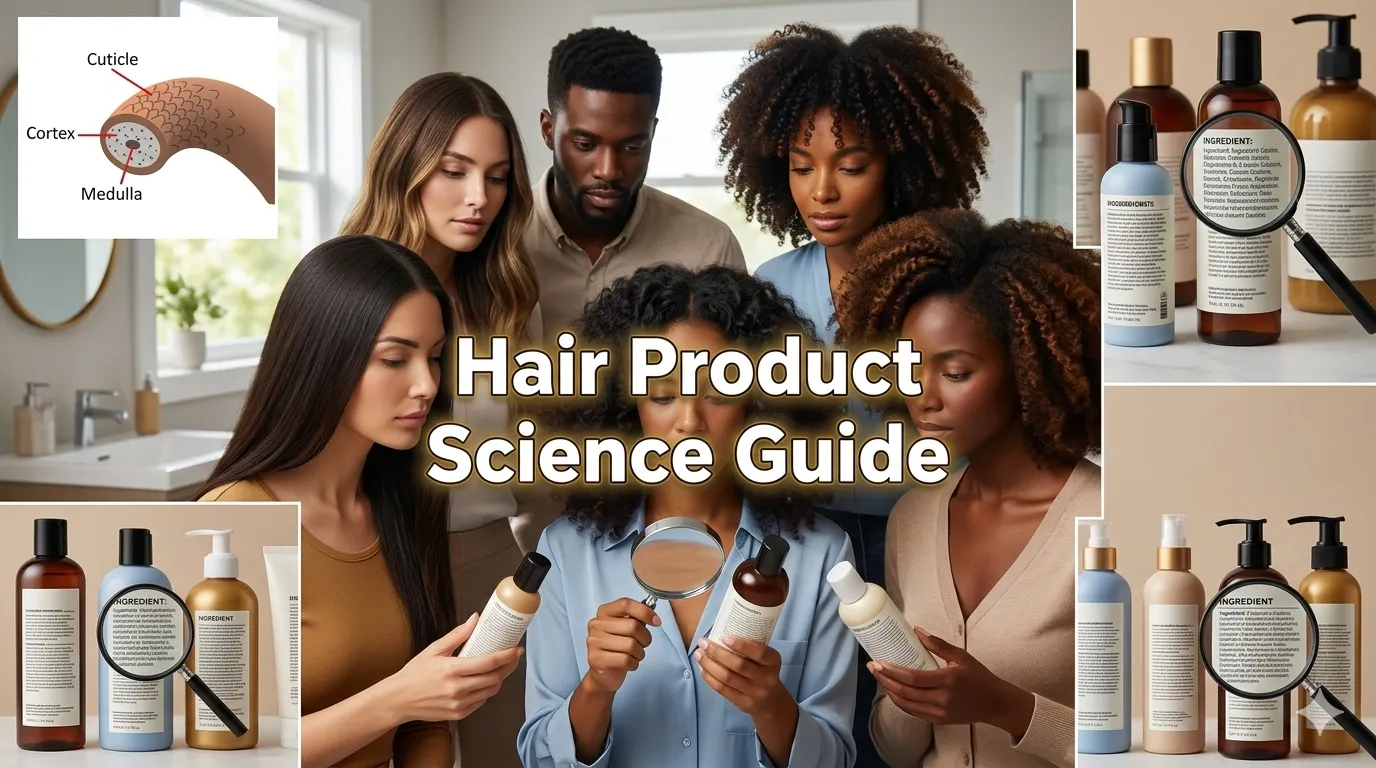
Decoding Your Strands: A Science-Backed Approach to Product Selection
Walking down the hair care aisle can feel overwhelming. Rows upon rows of shampoos, conditioners, serums, and treatments promise transformation, but how do you know which ones are actually right for your hair? The truth is, there is no one-size-fits-all solution in hair care. What works miracles for your friend with bouncy curls might leave your fine, straight hair limp and greasy. The key to unlocking healthy, beautiful hair lies in understanding the science of your unique strands.
Your hair is as individual as your fingerprint. It has specific characteristics—type, texture, porosity, density, and scalp condition—that determine how it responds to different ingredients and formulations. When you choose products aligned with these biological factors, you work with your hair's natural tendencies rather than fighting against them.
This comprehensive guide decodes the science of strands, providing you with the knowledge to become your own hair care expert. We'll explore the hair typing system, explain the often-misunderstood concept of porosity, break down ingredient lists, and provide specific product recommendations for every hair type. Whether you have pin-straight locks, beachy waves, defined curls, or tight coils, you'll discover how to build a routine that honors your hair's unique needs.
Understanding Hair Biology: The Foundation of Product Selection
The Structure of Hair
To choose the right products, you must first understand what you're working with. Each strand of hair consists of three primary layers:
The Cuticle: This is the outermost layer, composed of overlapping scales (like shingles on a roof) that protect the inner layers. The condition of your cuticle determines shine, smoothness, and how well your hair retains moisture. When cuticles lie flat, hair appears shiny and feels smooth. When they're raised or damaged, hair looks dull and feels rough.
The Cortex: The middle and thickest layer, the cortex contains keratin proteins and melanin (which gives hair its color). This layer determines your hair's strength, elasticity, and texture. Chemical treatments and heat styling primarily affect the cortex.
The Medulla: The innermost layer, present primarily in thick or coarse hair. Its function is not fully understood, and it's often absent in fine hair.
Scientific insight: Dr. Yvette Uchenna, trichologist and hair scientist, explains: "The cuticle is your hair's first line of defense. Products that smooth and seal the cuticle—like silicones, oils, and certain polymers—create immediate visual improvement. However, long-term health requires penetrating the cortex with proteins and moisture."
The Hair Growth Cycle
Understanding that hair grows in cycles helps explain why products take time to show results:
- Anagen (Growth Phase): Lasts 2-7 years; hair actively grows from the follicle
- Catagen (Transition Phase): Lasts 2-3 weeks; growth stops, follicle shrinks
- Telogen (Resting Phase): Lasts 3-4 months; hair rests before shedding
At any given time, about 85-90% of your hair is in the anagen phase. This is why you don't see immediate results from hair growth products—they can only affect new growth, not existing strands.
The Hair Typing System: Beyond Straight and Curly
Andre Walker's Classification
The most widely used hair typing system was created by Oprah's stylist, Andre Walker. It categorizes hair into four main types with subcategories:
Type 1: Straight
- 1A: Fine, thin, very soft, shiny, oily, difficult to hold a curl
- 1B: Medium-textured with more body, some volume
- 1C: Coarse, thick, more prone to frizz, can hold some curl
Product needs: Straight hair tends to get oily quickly because sebum travels easily down the straight shaft. These types benefit from clarifying shampoos, lightweight volumizing products, and dry shampoo. Avoid heavy oils and butters that weigh hair down.
Type 2: Wavy
- 2A: Loose, tousled waves, fine texture, easy to straighten or curl
- 2B: More defined waves starting at mid-length, some frizz
- 2C: Defined waves starting at roots, thicker, more frizz-prone
Product needs: Wavy hair needs balance—enough moisture to define waves without weighing them down. Look for lightweight curl-enhancing products, sea salt sprays, and mousses. Avoid heavy creams designed for tighter curls.
Type 3: Curly
- 3A: Loose, large curls with definite S-shape, shiny
- 3B: Springy, bouncy curls about the size of a marker
- 3C: Tight, corkscrew curls with lots of volume, prone to dryness
Product needs: Curly hair requires significant moisture and definition. Use sulfate-free shampoos, rich conditioners, leave-in conditioners, and curl creams. Gel or mousse helps maintain definition and fight frizz.
Type 4: Coily/Kinky
- 4A: Tightly coiled S-pattern, very fragile, high shrinkage
- 4B: Z-pattern coils, less defined, more fragile
- 4C: Tightest coil pattern, maximum shrinkage, very delicate, minimal definition
Product needs: Coily hair is the most fragile and driest type. It needs intense moisture, sealing oils, and protective styling. Use creamy cleansers or co-washes, deep conditioners weekly, leave-ins, butters, and oils. Minimize manipulation and heat.
Limitations of the Typing System
While helpful, the Andre Walker system has limitations:
- It doesn't account for hair density (how many strands per square inch)
- It ignores porosity (how well hair absorbs moisture)
- It doesn't consider scalp condition
- Many people have multiple types on their head
Expert perspective: "Hair typing is a starting point, not the entire story," says celebrity stylist Marcus Johnson. "Two people with 3B curls can have completely different needs based on porosity, density, and scalp health. Use the type system as a general guide, but always consider other factors."
Porosity: The Missing Piece of the Puzzle
What Is Hair Porosity?
Porosity refers to your hair's ability to absorb and retain moisture. It's determined by the condition of your cuticle layer and is arguably more important than curl type when choosing products.
Low Porosity:
- Cuticle condition: Tightly bound, overlapping cuticles that resist moisture entry
- Characteristics: Products sit on hair rather than absorbing; takes forever to get wet and to dry; resistant to coloring and chemical treatments; prone to buildup
- Common in: Often genetic; can result from protein overload
Medium/Normal Porosity:
- Cuticle condition: Loosely bound cuticles that allow moisture in and out at a balanced rate
- Characteristics: Hair holds styles well; takes color predictably; shiny and healthy-looking; requires minimal maintenance
- Common in: Virgin or minimally processed hair
High Porosity:
- Cuticle condition: Gaps and holes in the cuticle from damage or genetics
- Characteristics: Absorbs moisture quickly but loses it just as fast; frizzy and dry; tangles easily; processes quickly with color or chemicals
- Common in: Chemically treated, heat-damaged, or naturally curly/coily hair
How to Test Your Porosity
The Float Test:
- Clean a strand of hair (no product)
- Drop it into a glass of room-temperature water
- Observe for 2-4 minutes
- Floats: Low porosity
- Sinks slowly: Medium porosity
- Sinks immediately: High porosity
The Spray Test:
- Spray water on clean, dry hair
- Observe how water behaves
- Beads up: Low porosity
- Absorbs gradually: Medium porosity
- Absorbs immediately: High porosity
Note: These tests provide general guidance but aren't perfectly scientific. Your hair's behavior with products is the truest indicator.
Product Selection by Porosity
Low Porosity Products:
- Cleansers: Clarifying shampoos to prevent buildup
- Conditioners: Lightweight, liquid-based formulas
- Key ingredients: Humectants (glycerin, honey), hydrolyzed proteins
- Avoid: Heavy butters, oils, silicones that cause buildup
- Application tip: Apply products to damp (not dry) hair; use heat (warm towel or steamer) to open cuticles
Medium Porosity Products:
- Cleansers: Balanced, sulfate-free shampoos
- Conditioners: Moderate-weight formulas
- Key ingredients: Balanced protein-moisture products
- Maintenance: You're lucky—most products work well! Focus on prevention
High Porosity Products:
- Cleansers: Gentle, moisturizing shampoos or co-washes
- Conditioners: Rich, creamy formulas with sealing properties
- Key ingredients: Butters (shea, cocoa), oils (coconut, argan), silicones (for sealing), proteins (keratin, amino acids)
- Avoid: Harsh sulfates, high heat, over-manipulation
- Application tip: Use the L.O.C. method (Liquid, Oil, Cream) to lock in moisture
Density and Texture: The Thickness Factor
Understanding Density
Density refers to how many hair strands you have per square inch on your scalp. This is different from the thickness of individual strands.
Low Density:
- Fewer strands; scalp easily visible
- Product needs: Lightweight products that won't weigh hair down; volumizing shampoos and mousses; avoid heavy oils and butters
Medium Density:
- Moderate number of strands; scalp partially visible
- Product needs: Most products work well; balance is key
High Density:
- Many strands; scalp difficult to see
- Product needs: Heavier products to manage volume; rich conditioners; creams and butters for control; may need more product per application
Strand Texture (Thickness)
This refers to the diameter of individual hair strands:
Fine:
- Thin diameter; fragile; prone to breakage
- Product needs: Lightweight, strengthening products; avoid heavy oils; protein treatments for strength
Medium:
- Average diameter; most common
- Product needs: Balanced products; versatile
Coarse:
- Thick diameter; strong but can be dry
- Product needs: Rich moisturizers; heavy creams and oils; smoothing products
Scalp Type: The Foundation of Hair Health
Identifying Your Scalp Condition
Your scalp is skin, and like facial skin, it has different types that require specific care:
Oily Scalp:
- Signs: Greasy roots within 24 hours of washing; flat hair; possible odor
- Causes: Overactive sebaceous glands; hormonal fluctuations; over-washing (paradoxically)
- Product needs: Clarifying shampoos; tea tree oil; salicylic acid; avoid heavy conditioners on roots; dry shampoo between washes
Dry Scalp:
- Signs: Flaking (small, white flakes); tightness; itching
- Causes: Lack of moisture; cold weather; harsh products; aging
- Product needs: Hydrating shampoos; scalp oils (jojoba, argan); avoid sulfates; humidifier use
Dandruff (Seborrheic Dermatitis):
- Signs: Larger, yellowish flakes; redness; greasy scales
- Causes: Fungal overgrowth (Malassezia); excess oil production
- Product needs: Anti-dandruff shampoos with zinc pyrithione, selenium sulfide, or ketoconazole; rotate with gentle shampoos
Sensitive Scalp:
- Signs: Burning, stinging, redness after product use
- Causes: Allergies; harsh ingredients; eczema or psoriasis
- Product needs: Fragrance-free formulas; hypoallergenic products; patch test everything; avoid sulfates, parabens, and alcohol
Normal Scalp:
- Signs: No flaking, itching, or excessive oil
- Product needs: Maintenance with gentle, balanced products
Decoding Ingredient Lists: What to Look For and Avoid
Beneficial Ingredients by Concern
For Moisture:
- Humectants: Glycerin, honey, aloe vera, propylene glycol (draw moisture from air into hair)
- Emollients: Natural oils (argan, coconut, jojoba), shea butter, silicones (smooth and seal)
- Proteins: Hydrolyzed keratin, wheat protein, silk amino acids (strengthen and repair)
For Strength:
- Proteins: Keratin, collagen, quinoa protein
- Amino acids: Cysteine, methionine
- Vitamins: Biotin, niacinamide
For Scalp Health:
- Antifungals: Tea tree oil, zinc pyrithione, ketoconazole
- Exfoliants: Salicylic acid, glycolic acid
- Soothing agents: Aloe vera, chamomile, panthenol
For Definition (Curly/Coily Hair):
- Hold agents: PVP, acrylates copolymer (in gels)
- Moisturizers: Shea butter, coconut oil, glycerin
- Slip agents: Behentrimonium methosulfate, silicones
Ingredients to Approach with Caution
Sulfates:
- What they are: Harsh detergents (SLS, SLES) that create lather
- Problem: Strip natural oils; cause dryness and frizz; fade color
- Exception: Occasionally necessary for clarifying or low-porosity hair with buildup
Silicones:
- What they are: Synthetic polymers that coat hair
- Problem: Can cause buildup; require sulfates to remove
- Benefit: Provide instant smoothness, shine, and heat protection
- Verdict: Water-soluble silicones (dimethicone copolyol) are fine; avoid heavy silicones if you have low porosity or avoid sulfates
Alcohols:
- Drying alcohols to avoid: SD alcohol, denatured alcohol, isopropyl alcohol (high on ingredient list)
- Fatty alcohols that are beneficial: Cetyl, stearyl, cetearyl alcohol (moisturizing and conditioning)
Parabens:
- What they are: Preservatives
- Concern: Potential endocrine disruptors (though evidence is limited)
- Alternative: Phenoxyethanol, benzyl alcohol
Fragrance:
- Problem: Can cause allergic reactions; often undisclosed chemicals
- Better option: Fragrance-free or naturally scented with essential oils
Understanding Product Formulations
Shampoo: Primarily for cleansing the scalp. Should be chosen based on scalp type, not hair type.
Conditioner: Primarily for moisturizing and detangling hair strands. Should be chosen based on hair type and porosity.
Leave-in Conditioner: Provides ongoing moisture and protection. Essential for curly, coily, and high-porosity hair.
Deep Conditioner/Mask: Intensive treatment for repair and moisture. Use weekly or bi-weekly depending on damage level.
Oil: Seals moisture; adds shine; protects. Choose based on molecular weight (lighter oils for fine hair, heavier for coarse).
Serum: Typically silicone-based for smoothing and shine. Use sparingly on ends.
Building Your Customized Routine
Step-by-Step Product Selection
Step 1: Identify Your Variables
- Hair type (1-4)
- Porosity (low, medium, high)
- Density (low, medium, high)
- Strand texture (fine, medium, coarse)
- Scalp type (oily, dry, dandruff, sensitive, normal)
- Concerns (damage, color-treated, etc.)
Step 2: Choose Your Cleanser
Base this on scalp type:
- Oily: Clarifying or balancing shampoo
- Dry: Hydrating, sulfate-free shampoo
- Dandruff: Medicated shampoo (rotate with gentle)
- Sensitive: Fragrance-free, hypoallergenic
Step 3: Choose Your Conditioner
Base this on hair type and porosity:
- Straight/Fine/Low porosity: Lightweight, volumizing
- Wavy/Medium: Balanced moisture
- Curly/Coily/High porosity: Rich, creamy, sealing
Step 4: Add Treatments
- Leave-in: Essential for types 3-4, high porosity, dry hair
- Deep conditioner: Weekly for damaged, curly, or high-porosity hair
- Protein treatment: Monthly for damaged or high-porosity hair (avoid if low porosity)
- Oils: For sealing moisture (types 3-4, high porosity)
Step 5: Style Appropriately
- Straight: Heat protectant, light serum
- Wavy: Mousse, sea salt spray, light gel
- Curly: Curl cream, gel or mousse
- Coily: Butter, cream, gel, oil
Sample Routines by Hair Type
Type 1B, Fine, Low Porosity, Oily Scalp:
- Shampoo: Clarifying shampoo 2x weekly; gentle sulfate-free other washes
- Conditioner: Lightweight, applied only to ends
- Leave-in: Skip or use very light spray
- Styling: Volumizing mousse; dry shampoo between washes
- Avoid: Heavy oils, butters, silicones
Type 2C, Medium Density, Medium Porosity:
- Shampoo: Sulfate-free, moisturizing
- Conditioner: Moderate moisture
- Leave-in: Light leave-in cream
- Styling: Mousse or light gel for definition
- Treatment: Deep condition bi-weekly
Type 3B, High Density, High Porosity:
- Shampoo: Co-wash or gentle sulfate-free
- Conditioner: Rich, creamy conditioner
- Leave-in: Leave-in conditioner (essential)
- Styling: Curl cream + gel for hold
- Treatment: Deep condition weekly; protein treatment monthly
- Seal: Light oil on ends
Type 4C, Coarse, High Porosity, Dry Scalp:
- Shampoo: Creamy, moisturizing shampoo monthly; co-wash weekly
- Conditioner: Deep, rich conditioner every wash
- Leave-in: Heavy leave-in or butter
- Styling: Cream + butter + oil (L.O.C. method)
- Treatment: Deep condition weekly with heat
- Scalp care: Scalp oil treatment weekly
- Protective styling: Minimize manipulation
Common Mistakes and How to Fix Them
Mistake 1: Choosing Products Based on Hair Type Alone
The problem: Ignoring porosity, density, and scalp type leads to mismatched products.
The fix: Consider all variables. A Type 3 with low porosity needs different products than a Type 3 with high porosity.
Mistake 2: Overloading on Protein
The problem: Too much protein makes hair brittle and causes breakage (protein overload).
Signs: Hair feels stiff, straw-like, snaps easily, lacks elasticity.
The fix: Balance protein with moisture. If you have protein overload, clarify and deep condition with moisture-only treatments.
Mistake 3: Under-Moisturizing Curly/Coily Hair
The problem: Curly and coily hair needs significantly more moisture than straight hair.
Signs: Excessive frizz, breakage, dullness, tangling.
The fix: Increase frequency of deep conditioning; use leave-ins; seal with oils; reduce washing frequency.
Mistake 4: Using Heavy Products on Fine Hair
The problem: Weighs hair down, makes it look greasy and flat.
The fix: Choose lightweight, volumizing formulas; apply conditioner only to ends; avoid oils and butters.
Mistake 5: Ignoring Scalp Health
The problem: Unhealthy scalp leads to poor hair growth and quality.
The fix: Treat scalp as facial skin; use appropriate cleansers; exfoliate occasionally; massage for circulation.
Mistake 6: Product Junkie Syndrome
The problem: Constantly switching products prevents you from knowing what works.
The fix: Give products 4-6 weeks to show results. Stick with a routine before making changes.
Special Considerations
Color-Treated Hair
Needs: Sulfate-free formulas; UV protection; extra moisture; color-depositing products.
Avoid: Clarifying shampoos (unless necessary); high heat; harsh ingredients.
Heat-Damaged Hair
Needs: Protein treatments; deep conditioning; heat protectant (always); trim split ends.
Recovery: Minimize heat; air dry when possible; use lower temperatures.
Chemically Treated Hair (Relaxed, Permed)
Needs: Intense moisture; protein balance; gentle handling; neutralizing shampoos post-treatment.
Caution: Don't overlap chemical treatments; wait 8-12 weeks between services.
Aging Hair
Changes: Becomes drier, thinner, grayer.
Needs: Extra moisture; scalp stimulation; purple shampoo for brassiness; volumizing products.
Conclusion: Your Hair, Your Rules
Understanding the science of your strands empowers you to make informed decisions about your hair care. There is no universal "best" product—only the best product for you. By considering your hair type, porosity, density, texture, and scalp condition, you can build a routine that works in harmony with your hair's natural characteristics.
Remember: Hair care is deeply personal and can be experimental. What works for someone with your exact hair profile might not work for you, and that's okay. Pay attention to how your hair responds, adjust as needed, and be patient. Hair changes with seasons, age, health, and environment, so your routine may need to evolve too.
Trust the process. Read ingredient lists, understand what each component does, and don't fall for marketing hype. Healthy hair is a combination of genetics, proper care, nutrition, and patience. Armed with the knowledge from this guide, you're equipped to decode product labels, avoid costly mistakes, and build a routine that celebrates your unique strands.
Your hair is an expression of you. Whether you wear it straight, wavy, curly, or coily, whether it's natural or chemically altered, the goal is health and confidence. Choose products that make you feel good, honor your hair's needs, and embrace the beautiful complexity of your strands.
Start today. Assess your hair, identify your needs, and make one change to your routine. Whether it's switching to a sulfate-free shampoo, adding a weekly deep conditioner, or learning your porosity, every step toward understanding is a step toward healthier, happier hair.