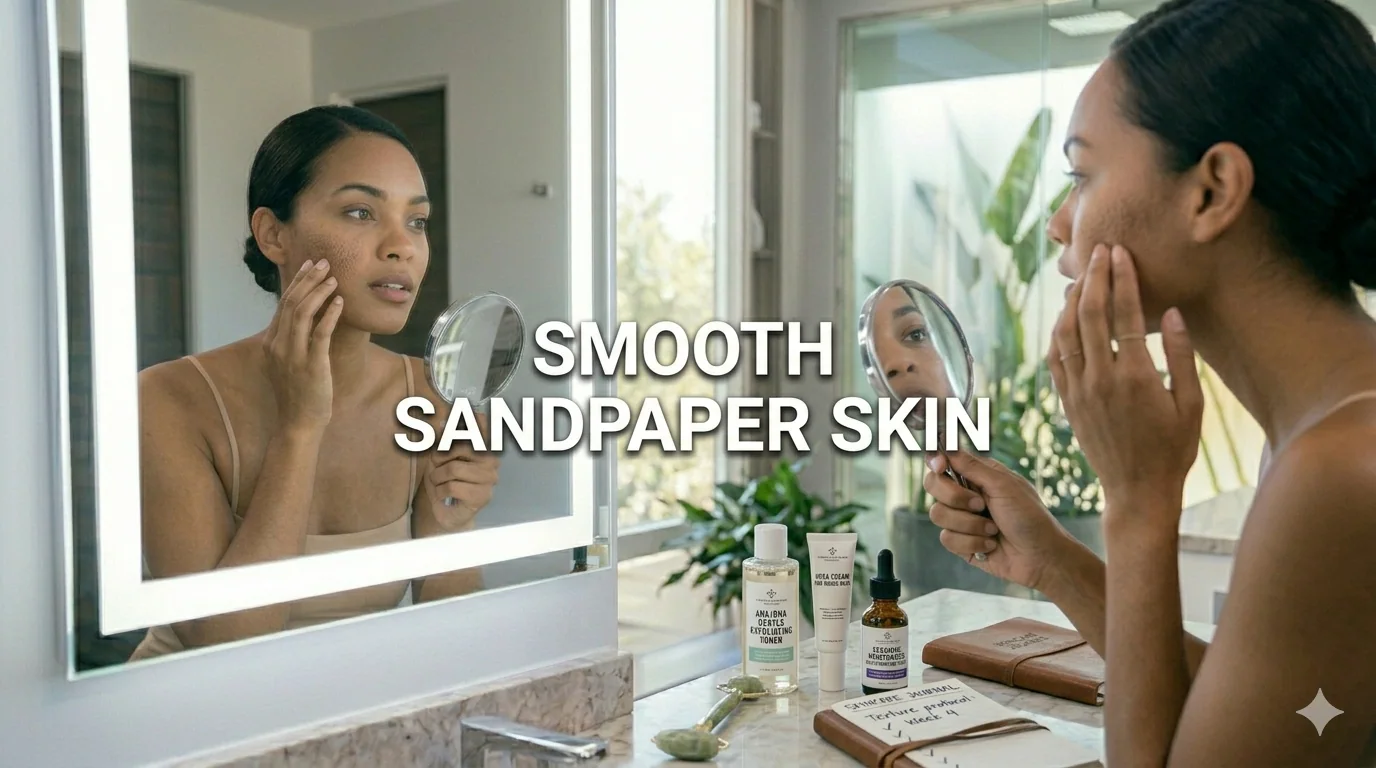
That rough, sandpaper-like texture on your skin isn't just frustrating—it's a sign that something in your skincare routine or skin biology needs attention. Sandpaper skin texture, characterized by bumpy, uneven, or persistently rough skin, affects millions of people and can appear on the face, arms, legs, or body. Whether it's caused by dryness, buildup of dead skin cells, keratosis pilaris, or compromised barrier function, the good news is that rough texture can be smoothed with the right approach.
Unlike occasional dryness that resolves with a good moisturizer, sandpaper skin texture often requires a multi-pronged strategy: gentle exfoliation to remove buildup, intensive hydration to restore suppleness, barrier repair to prevent recurrence, and consistent sun protection to maintain results. The key is understanding what's causing your specific texture issues and addressing them systematically rather than aggressively scrubbing, which can worsen the problem.
In this comprehensive, dermatologist-informed guide, we'll decode the science behind rough skin texture, reveal the most common causes from keratosis pilaris to dehydration, share the exact protocol for smoothing sandpaper skin quickly and safely, and provide expert strategies for maintaining silky-soft results. Whether you're dealing with bumpy arms, rough cheeks, or overall uneven texture, you'll learn how to build a personalized routine that delivers visible smoothness without irritation or damage.
What Causes Sandpaper-Like Skin Texture?
Short answer: Sandpaper skin texture results from buildup of dead skin cells, dehydration, compromised barrier function, keratosis pilaris, sun damage, or underlying conditions like eczema—each requiring targeted treatment for smooth results.
Understanding the root cause of your rough texture is essential for choosing the right treatment. Here are the most common culprits:
1. Buildup of Dead Skin Cells (Hyperkeratosis)
When dead skin cells don't shed properly, they accumulate on the surface, creating a rough, sandpaper-like feel. This can happen due to:
- Slowed cell turnover: Natural aging process where skin renewal slows from 28 days to 40-60 days
- Lack of exfoliation: Not removing dead cells regularly allows buildup
- Dehydration: Dry skin cells stick together instead of shedding naturally
- Harsh products: Stripping cleansers damage barrier, triggering protective thickening
2. Keratosis Pilaris (KP)
Often called "chicken skin," KP causes small, rough bumps from keratin buildup around hair follicles:
- Appearance: Tiny, sandpaper-like bumps on upper arms, thighs, cheeks, or buttocks
- Cause: Excess keratin production blocks hair follicles
- Triggers: Genetics, dry skin, winter weather, hormonal changes
- Prevalence: Affects 40-50% of adults, often improves with age
3. Dehydration and Dry Skin
When skin lacks water (dehydration) or oil (dryness), it becomes rough and flaky:
- Dehydrated skin: Lacks water, feels tight, shows fine lines, can affect any skin type
- Dry skin: Lacks oil, feels rough, may flake or itch, often genetic or age-related
- Causes: Low humidity, harsh weather, hot showers, inadequate moisturizing, diuretics
4. Compromised Skin Barrier
A damaged moisture barrier leads to transepidermal water loss (TEWL), causing roughness:
- Signs: Rough texture, sensitivity, redness, stinging, tightness
- Causes: Over-exfoliation, harsh actives, environmental stress, poor skincare habits
- Result: Skin can't retain moisture, leading to chronic dryness and texture issues
5. Sun Damage and Photoaging
Chronic UV exposure thickens the outer skin layer while breaking down collagen:
- Texture changes: Rough, leathery skin with uneven tone
- Mechanism: UV triggers abnormal keratinocyte production and collagen degradation
- Timeline: Cumulative damage appears gradually over years
6. Underlying Skin Conditions
Certain conditions cause persistent rough texture:
- Eczema (atopic dermatitis): Dry, itchy, rough patches
- Psoriasis: Thick, scaly plaques
- Folliculitis: Inflamed hair follicles creating bumpy texture
- Ichthyosis: Genetic condition causing fish-scale-like dryness
The Science: Why Skin Becomes Rough and How to Smooth It
Short answer: Rough skin results from disrupted desquamation (shedding), impaired barrier function, and reduced natural moisturizing factors; smoothing requires exfoliation, hydration, barrier repair, and protection.
Understanding skin biology helps you choose effective treatments:
Normal Skin Shedding vs. Rough Texture
Healthy skin constantly renews itself through a process called desquamation:
- Normal process: Corneocytes (dead skin cells) naturally detach from the surface every 28-40 days
- Enzymatic breakdown: Proteases break down "glue" (corneodesmosomes) holding cells together
- Water dependency: Adequate hydration enables enzymes to function properly
When this process is disrupted:
- Cells stick together instead of shedding
- Surface becomes thickened and rough
- Light reflects unevenly, creating dull appearance
- Products penetrate poorly
The Role of Natural Moisturizing Factors (NMFs)
NMFs are water-binding compounds in the stratum corneum that keep skin smooth:
- Components: Amino acids, urea, lactate, sugars, and minerals
- Function: Attract and retain water in skin cells
- When depleted: Skin becomes dry, rough, and less flexible
Barrier Lipids and Texture
The skin barrier contains ceramides, cholesterol, and fatty acids that:
- Seal in moisture
- Keep irritants out
- Maintain smooth, supple texture
When lipids are depleted, water escapes and texture becomes rough.
The Fastest Way to Smooth Sandpaper Skin: Evidence-Based Protocol
Short answer: Combine gentle chemical exfoliation (AHAs/BHAs), intensive hydration with humectants, barrier repair with ceramides, and occlusive sealing—applied consistently for visible smoothing in 3-7 days, with continued improvement over 4-6 weeks.
Phase 1: Immediate Smoothing (Days 1-7)
Goal: Remove surface buildup and restore hydration
Morning Routine:
- Gentle Cleanser: Use a hydrating, non-foaming cleanser with ceramides or glycerin. Avoid hot water.
- Chemical Exfoliant (2-3x/week): Apply AHA toner or serum (glycolic or lactic acid 5-10%) to damp skin. Skip on sensitive days.
- Hydrating Serum: Layer hyaluronic acid or glycerin serum on damp skin to attract moisture.
- Rich Moisturizer: Apply cream with ceramides, urea (5-10%), or shea butter to seal hydration.
- SPF 30+: Non-negotiable—exfoliated skin is more sun-sensitive.
Evening Routine:
- Gentle Cleanser: Remove SPF and impurities without stripping.
- Treatment (Alternate Nights):
- Night 1, 3, 5: BHA (salicylic acid 0.5-2%) for deeper exfoliation and smoothing
- Night 2, 4, 6: Urea cream (10-20%) or lactic acid lotion for gentle resurfacing
- Night 7: Rest night—hydration only
- Barrier Repair Cream: Apply thick moisturizer with ceramides, cholesterol, and fatty acids.
- Optional Occlusive: For very rough areas, seal with petrolatum or squalane oil.
Phase 2: Maintenance and Refinement (Weeks 2-6)
Goal: Sustain smoothness and prevent recurrence
- Reduce exfoliation: 1-2x/week once texture improves
- Continue hydration: Daily humectants and emollients
- Add retinoid: 2-3x/week to maintain cell turnover (if tolerated)
- Weekly treatment: Clay mask or enzyme peel for maintenance
Body-Specific Protocol for Rough Arms/Legs
For keratosis pilaris or body roughness:
- In shower: Use salicylic acid or glycolic acid body wash
- Post-shower: While skin is damp, apply urea 20% cream or ammonium lactate lotion
- Daily: Reapply moisturizer morning and night
- Weekly: Gentle physical exfoliation with soft brush or scrub (don't overdo)
Top Ingredients for Smoothing Rough Skin Texture
Short answer: The most effective smoothing ingredients include AHAs (glycolic, lactic acid), BHAs (salicylic acid), urea, retinoids, ceramides, hyaluronic acid, and niacinamide—each targeting exfoliation, hydration, or barrier repair.
Chemical Exfoliants (AHAs and BHAs)
Glycolic Acid (5-10%)
- Mechanism: Smallest AHA molecule penetrates deeply to dissolve dead cell bonds
- Speed: Visible smoothing in 3-7 days
- Best for: Overall texture, dullness, mild roughness
- Caution: Can irritate sensitive skin; start with lower concentrations
Lactic Acid (5-12%)
- Mechanism: Gentle AHA that exfoliates while hydrating (natural NMF component)
- Speed: 1-2 weeks for noticeable improvement
- Best for: Sensitive skin, dry roughness, body texture
- Advantage: Less irritating than glycolic acid
Salicylic Acid (BHA, 0.5-2%)
- Mechanism: Oil-soluble, penetrates pores to clear debris and smooth from within
- Speed: 1-2 weeks for bumpy texture
- Best for: Keratosis pilaris, clogged pores, oily rough skin
- Bonus: Anti-inflammatory properties reduce redness
Urea (5-20%)
- Mechanism: Dual action—exfoliates at higher concentrations (10%+), hydrates at lower levels; breaks down keratin buildup
- Speed: Dramatic improvement in 3-7 days for very rough skin
- Best for: Severe roughness, KP, calloused areas, feet
- Evidence: Gold standard for keratosis pilaris and xerosis
- Protocol: Start with 10%, increase to 20% for stubborn areas
Retinoids (Retinol, Adapalene, Tretinoin)
- Mechanism: Increases cell turnover, prevents keratin buildup, stimulates collagen
- Speed: 4-8 weeks for visible texture improvement
- Best for: Long-term maintenance, photoaging, persistent roughness
- Caution: Can cause initial dryness; use moisturizer and SPF
Ceramides and Barrier Lipids
- Mechanism: Replenish barrier lipids to prevent water loss and maintain smoothness
- Speed: Immediate hydration; barrier repair in 2-4 weeks
- Best for: All rough skin types, especially compromised barriers
- Protocol: Use daily in moisturizer; look for ceramide NP, AP, EOP
Hyaluronic Acid and Glycerin
- Mechanism: Humectants that attract water to skin cells, plumping and smoothing surface
- Speed: Immediate softening; sustained improvement with daily use
- Best for: Dehydrated roughness, all skin types
- Tip: Apply to damp skin and seal with moisturizer
Niacinamide (2-10%)
- Mechanism: Strengthens barrier, reduces inflammation, improves texture
- Speed: 4-8 weeks for visible refinement
- Best for: Rough texture with redness or sensitivity
- Bonus: Minimizes pores and evens tone
Professional Treatments for Stubborn Rough Texture
Short answer: For persistent sandpaper skin, professional options like chemical peels, microdermabrasion, laser resurfacing, and prescription retinoids can accelerate smoothing when combined with consistent at-home care.
Chemical Peels
- How they work: Professional-strength acids (glycolic, salicylic, TCA, or Jessner's) remove multiple layers of dead cells
- Best for: Moderate to severe roughness, sun damage, overall texture
- Frequency: Every 3-4 weeks for 3-6 sessions
- Downtime: 1-7 days depending on peel depth
- Results: Noticeable smoothing after first treatment; cumulative improvement
Microdermabrasion
- How it works: Mechanical exfoliation with crystal or diamond tip to remove surface cells
- Best for: Mild to moderate roughness, dull skin, superficial texture
- Frequency: Every 2-4 weeks for 4-6 sessions
- Downtime: Minimal; slight redness for a few hours
- Caution: Not ideal for sensitive or very dry skin
Laser Resurfacing
- Non-ablative fractional (Fraxel, Clear + Brilliant): Stimulates collagen with minimal downtime; 3-5 sessions
- Ablative (CO2, Erbium): More dramatic results for severe texture; longer recovery
- Best for: Photoaging, deep texture issues, scarring
- Results: Significant smoothing; long-lasting with proper maintenance
Prescription Treatments
- Tretinoin (Retin-A): Stronger than OTC retinoids; 0.025-0.1% for texture
- Tazarotene: Potent retinoid for stubborn roughness and KP
- Prescription urea (40%): For severe hyperkeratosis
- Topical steroids: Short-term for inflammatory roughness (eczema)
Common Mistakes That Worsen Rough Texture
Avoid these errors that can make sandpaper skin worse:
Mistake #1: Over-Exfoliating or Scrubbing Too Hard
Why it hurts: Aggressive physical scrubs or daily chemical exfoliation damage the barrier, causing inflammation, sensitivity, and paradoxical thickening as skin tries to protect itself.
Fix: Limit exfoliation to 2-3x/week maximum. Use gentle chemical exfoliants instead of harsh scrubs. If skin feels tight or stings, take a break and focus on hydration.
Mistake #2: Skipping Moisturizer
Why it hurts: Exfoliating without replenishing moisture leaves skin vulnerable to dehydration, making roughness worse long-term.
Fix: Always follow exfoliation with rich moisturizer containing ceramides, fatty acids, or urea. Seal with occlusive at night if very dry.
Mistake #3: Using Hot Water
Why it hurts: Hot water strips natural oils, disrupts barrier, and increases transepidermal water loss, leading to roughness.
Fix: Wash with lukewarm water only. Limit showers to 10 minutes. Apply moisturizer within 3 minutes of bathing to lock in hydration.
Mistake #4: Ignoring Sun Protection
Why it hurts: UV damage thickens the outer layer while breaking down collagen, creating rough, leathery texture over time.
Fix: Use SPF 30+ daily, even indoors. Reapply every 2 hours if outdoors. Wear hats and protective clothing.
Mistake #5: Using Harsh, Stripping Cleansers
Why it hurts: Sulfates and high-pH cleansers remove protective lipids, triggering barrier damage and compensatory roughness.
Fix: Choose gentle, pH-balanced (5.0-6.0) cleansers with hydrating ingredients. Avoid foaming formulas if skin is dry.
Mistake #6: Picking or Scratching Rough Patches
Why it hurts: Physical trauma causes inflammation, post-inflammatory hyperpigmentation, and can worsen keratosis pilaris.
Fix: Keep hands off. Use chemical exfoliants instead of physical manipulation. If KP is itchy, apply anti-inflammatory ingredients like niacinamide or colloidal oatmeal.
Expert Tips for Accelerating Smoothness
Tip #1: The Soak and Seal Method
After bathing, pat skin until slightly damp (not dry), then immediately apply moisturizer. This traps water in the skin, maximizing hydration and smoothing.
Tip #2: Layer Hydration Strategically
Apply products from thinnest to thickest: hydrating toner → serum → moisturizer → occlusive (if needed). This ensures deep penetration and sealing.
Tip #3: Use a Humidifier
In dry climates or heated/cooled rooms, run a humidifier at night to maintain 40-60% humidity, preventing transepidermal water loss.
Tip #4: Exfoliate Body and Face
Don't neglect body texture. Use glycolic acid body lotion or urea cream on rough arms, legs, and feet 3-4x/week.
Tip #5: Support from Within
Stay hydrated (drink water throughout the day), eat omega-3-rich foods (fatty fish, flaxseed), and consider supplements like collagen peptides or evening primrose oil for barrier support.
Tip #6: Be Patient and Consistent
Texture improvement takes time. Commit to your routine for at least 4-6 weeks before evaluating results. Take weekly photos to track progress.
Frequently Asked Questions About Sandpaper Skin Texture
How long does it take to smooth rough skin texture?
Short answer: With consistent care, you'll notice initial improvement in 3-7 days, significant smoothing in 2-4 weeks, and optimal results at 6-8 weeks. Severe cases or conditions like KP may take 3-6 months.
Timeline depends on:
- Severity of roughness
- Underlying cause (dryness vs. KP vs. sun damage)
- Consistency of routine
- Skin type and age
Can sandpaper skin texture be permanent?
Short answer: Most rough texture is reversible with proper care. However, genetic conditions like severe ichthyosis or advanced photoaging may require ongoing management rather than complete resolution.
Even chronic conditions like keratosis pilaris can be significantly improved (though not cured) with consistent exfoliation and hydration.
Is rough texture a sign of aging?
Short answer: It can be. As we age, cell turnover slows, collagen decreases, and skin becomes drier—all contributing to rougher texture. However, roughness at any age is often due to dehydration, sun damage, or inadequate skincare, not just aging.
Prevention: Daily SPF, retinoids, and consistent hydration can prevent age-related texture changes.
Should I exfoliate rough skin every day?
Short answer: No—daily exfoliation often worsens roughness by damaging the barrier. Limit chemical exfoliation to 2-3x/week for face, 3-4x/week for body. Focus on hydration on non-exfoliation days.
Exception: Very gentle exfoliating toners (2-3% glycolic acid) can be used daily if skin tolerates it, but monitor for irritation.
Can diet affect skin texture?
Short answer: Yes—indirectly. Dehydration, nutrient deficiencies (vitamin A, C, E, omega-3s), and high-sugar diets can worsen texture. However, topical care has more immediate impact than diet alone.
Support skin from within by:
- Drinking adequate water
- Eating antioxidant-rich foods (berries, leafy greens)
- Consuming healthy fats (avocado, nuts, fatty fish)
- Limiting sugar and processed foods
What's the difference between dry skin and rough texture?
Short answer: Dry skin lacks oil and feels tight or flaky. Rough texture feels bumpy or sandpaper-like and can occur in any skin type (even oily). Dryness often causes roughness, but rough texture can also result from buildup, KP, or sun damage.
Treatment differs: Dry skin needs emollients and occlusives; rough texture needs exfoliation plus hydration.
The Bottom Line: Smooth Skin Is Achievable
Sandpaper skin texture doesn't have to be your normal. With the right combination of gentle exfoliation, intensive hydration, barrier repair, and sun protection, you can achieve noticeably smoother, softer skin—often within days.
Remember:
- Identify the cause: Dryness, KP, buildup, or damage—each needs targeted treatment
- Be gentle: Aggressive scrubbing worsens texture; chemical exfoliation is safer and more effective
- Hydrate relentlessly: Exfoliation without moisture creates more roughness
- Protect daily: SPF prevents texture from worsening
- Stay consistent: Results compound over weeks and months
- Be patient: Skin renewal takes time; trust the process
Start tonight: gentle cleanse, apply a chemical exfoliant (if it's exfoliation night), layer hydrating serum, seal with rich moisturizer. Repeat consistently. Your smoothest skin is within reach.
You deserve to feel confident in your skin. With knowledge, consistency, and the right products, sandpaper texture can become a thing of the past.