Making the Smart Choice for Your Next Trip
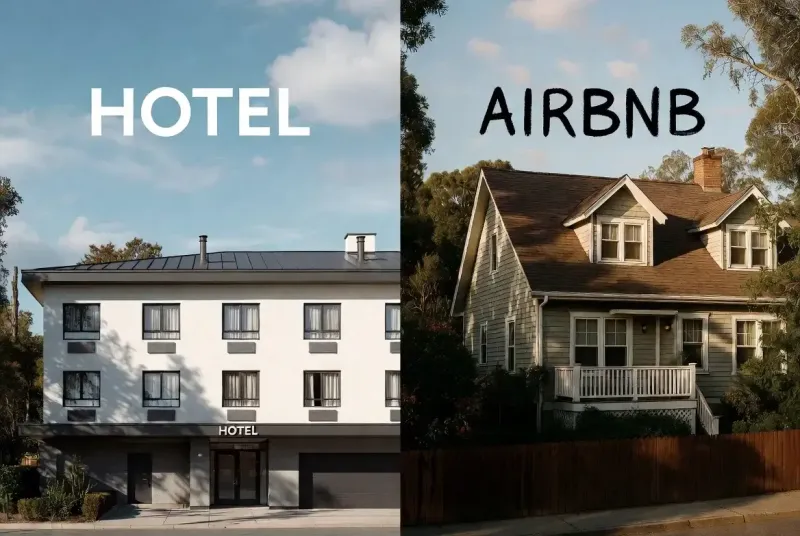
The eternal travel dilemma: Should you book a hotel or an Airbnb? This question has become increasingly complex as both accommodation types have evolved, diversified, and carved out distinct niches in the travel industry. What was once a simple choice between standardized hotel rooms has transformed into a complex decision involving cost, convenience, safety, amenities, experience, and personal travel style.
The truth is, there's no universally "better" option. The best choice depends entirely on your specific trip, travel style, budget, destination, group size, and personal preferences. A business traveler attending a conference has vastly different needs than a family of five on a two-week vacation, which differs again from a solo backpacker exploring a new city.
This comprehensive guide breaks down every aspect of the hotel vs. Airbnb debate with data-driven insights, real-world examples, and practical considerations. You'll discover the hidden costs of each option, understand the safety implications, learn when each option makes financial sense, and gain the knowledge to make confident accommodation decisions for any type of trip.
Understanding the Modern Accommodation Landscape
The Evolution of Hotels
Hotels have come a long way from their standardized, one-size-fits-all origins. Today's hotel industry offers unprecedented diversity:
Budget Hotels: Chains like Motel 6, Ibis, and Premier Inn offer clean, basic rooms at competitive prices, often $50-100 per night.
Mid-Range Hotels: Brands like Holiday Inn, Hilton Garden Inn, and Marriott provide consistent quality, loyalty programs, and business amenities at $100-250 per night.
Boutique Hotels: Independent or small-chain properties offering unique design, local character, and personalized service at $150-400 per night.
Luxury Hotels: Five-star properties with premium amenities, concierge service, spas, and fine dining at $300-1000+ per night.
Extended Stay Hotels: Properties like Residence Inn and Staybridge Suites designed for longer stays with kitchenettes and laundry facilities at $100-300 per night.
The Airbnb Ecosystem
Airbnb has revolutionized travel accommodation, but it's far from monolithic:
Private Rooms: Renting a room in someone's home ($30-100 per night). Best for budget travelers and those seeking local interaction.
Entire Apartments: Full apartments in residential buildings ($80-300 per night). Ideal for families and longer stays.
Unique Stays: Treehouses, yurts, houseboats, castles ($100-500+ per night). For travelers seeking unique experiences.
Luxury Villas: High-end properties with pools, staff, and premium amenities ($300-2000+ per night). Competing directly with luxury hotels.
Airbnb Plus: Verified high-quality homes with consistent standards ($100-400 per night). Attempting to match hotel reliability.
Cost Comparison: The Real Numbers
Base Price Analysis
Short Stays (1-3 nights):
- Hotels typically win: When you factor in cleaning fees and service fees, Airbnb often costs 20-40% more for short stays
- Example: A $100/night hotel = $300 total vs. $80/night Airbnb + $75 cleaning fee + $30 service fee = $385 total
- Exception: Budget private rooms on Airbnb can still be cheaper than hotels
Medium Stays (4-7 nights):
- More competitive: Cleaning fees become less significant as a percentage of total cost
- Airbnb advantage: Kitchen access can save $30-50/day on meals, potentially saving $210-350 on a week-long trip
- Hotel advantage: Loyalty points, free breakfast (at some properties), and no cleaning surprises
Long Stays (1 week+):
- Airbnb usually wins: Weekly/monthly discounts (10-50% off) make Airbnb significantly cheaper
- Kitchen savings: Cooking even half your meals can save hundreds of dollars
- Laundry access: In-unit laundry saves $20-40 per week vs. hotel laundry service
- Example: 2-week stay: Hotel at $150/night = $2,100 vs. Airbnb at $100/night (with weekly discount) + $150 fees = $1,550 + $400 food savings = $1,150 total savings
Hidden Costs Breakdown
Airbnb Hidden Costs:
- Cleaning fees: $50-200+ (not always proportional to stay length)
- Service fees: 14-16% of subtotal
- Occupancy taxes: Varies by location (6-15%)
- Security deposits: $100-500+ (refundable but ties up funds)
- Extra guest fees: $10-50 per person per night
- Parking fees: $10-40/day if not included
- Utility surcharges: Some hosts charge for excessive AC/heating use
Hotel Hidden Costs:
- Resort fees: $20-50/night (often mandatory, even if you don't use amenities)
- Parking: $20-60/night in urban areas
- WiFi: $10-30/day at some properties (though increasingly free)
- Mini-bar: Extremely expensive ($5-20 per item)
- Room service: 20-40% markup plus delivery fees
- Early check-in/late checkout: $20-100+ fees
- Incidentals hold: $50-200 hold on credit card
The Kitchen Factor
One of Airbnb's biggest advantages is kitchen access, but the savings depend on your cooking habits:
Maximum savings scenario:
- Breakfast: $15/day saved (vs. hotel breakfast or café)
- Lunch: $20/day saved (vs. restaurant)
- Dinner: $25/day saved (cooking vs. dining out 4 nights/week)
- Total weekly savings: $350-420
Minimal savings scenario:
- You eat out for most meals anyway
- You only use the kitchen for coffee and snacks
- Total weekly savings: $50-100
Reality check: Most travelers save $150-250/week with a kitchen, assuming moderate cooking.
Space and Privacy Comparison
Typical Space Allocations
Hotel Room:
- Budget/Mid-range: 250-350 sq ft for 2 people
- Upscale: 350-500 sq ft for 2 people
- Suite: 500-1000+ sq ft for 2-4 people
- Layout: Typically one room with attached bathroom
Airbnb:
- Studio: 300-500 sq ft for 2 people
- 1-bedroom apartment: 500-800 sq ft for 2-3 people
- 2-bedroom apartment: 800-1200 sq ft for 4-5 people
- House: 1200-3000+ sq ft for 6+ people
- Layout: Separate living, sleeping, and kitchen areas
Privacy Considerations
Hotels:
- Pros: Complete privacy within your room, no interaction required with staff or other guests, soundproofing (usually), professional housekeeping
- Cons: Thin walls in budget properties, hallway noise, shared amenities mean sharing space with other guests
Airbnb:
- Entire place: Maximum privacy, no shared spaces, but you may share building amenities
- Private room: Limited privacy, shared common areas, potential interaction with host/other guests
- Considerations: Host may live on-site or nearby, house rules may restrict guests or activities, less soundproofing than hotels
Amenities and Services Showdown
Standard Hotel Amenities
Always included:
- Daily housekeeping
- Fresh towels and linens
- Toiletries (shampoo, soap, etc.)
- 24-hour front desk
- Luggage storage
- Concierge service (mid-range and up)
Common amenities:
- Fitness center
- Business center
- Parking (often extra fee)
- Restaurant/bar on-site
- Room service
- Pool (varies by property)
- Spa (upscale properties)
Premium amenities:
- Airport shuttle
- Valet parking
- Butler service
- Executive lounge access
- Complimentary breakfast
- Evening receptions
Typical Airbnb Amenities
Usually included:
- Full kitchen with cookware and dishes
- Washer and dryer (in-unit or building)
- WiFi
- TV with streaming services (varies)
- Parking (often free)
- Living space
- Dining area
Sometimes included:
- Gym access (in building)
- Pool (in complex)
- Workspace/desk
- Patio/balcony
- BBQ grill
- Beach/pool equipment
Rarely included:
- Daily housekeeping (sometimes available for extra fee)
- Concierge service
- 24-hour support
- Toiletries beyond basics
The Service Gap
Hotels excel at:
- Convenience: Someone makes your bed, cleans your bathroom, provides fresh towels daily
- Problem resolution: Front desk can address issues immediately (AC not working, noisy neighbors, etc.)
- Services: Room service, turndown service, luggage assistance, wake-up calls
- Consistency: You know what you're getting based on brand standards
Airbnb excels at:
- Space: More room to spread out, separate living areas
- Home-like features: Full kitchen, laundry, multiple bedrooms
- Local experience: Living in residential neighborhoods, host recommendations
- Flexibility: Come and go as you please, cook on your schedule
Safety and Security Analysis
Hotel Safety Features
Physical security:
- 24-hour front desk and security staff
- Key card access to rooms and floors
- In-room safes
- Peepholes and deadbolts
- Security cameras in public areas
- Well-lit parking and entrances
Operational safety:
- Regular safety inspections and fire drills
- Smoke detectors and sprinkler systems (legally required)
- Staff trained in emergency procedures
- Background-checked employees
- Established protocols for medical emergencies
Accountability:
- Corporate liability and insurance
- Clear chain of command for complaints
- Brand reputation at stake
- Regulatory oversight
Airbnb Safety Considerations
Variable security:
- Quality varies dramatically by property
- Some have security systems, many don't
- Lock types vary (smart locks, keypads, traditional keys)
- Safety features depend on individual host
Airbnb's safety measures:
- Host and guest verification
- Review system (though can be manipulated)
- $1 million host protection insurance
- $1 million property damage protection
- 24/7 safety hotline
- Enhanced cleaning protocol (post-COVID)
Risks to consider:
- Hidden cameras: Illegal but occasionally discovered (Airbnb bans them in private spaces)
- Inaccurate listings: Photos may not match reality
- Last-minute cancellations: Host can cancel, leaving you scrambling
- Neighborhood safety: Residential areas vary widely in safety
- No on-site staff: Issues must be resolved remotely
- Unregulated properties: Some operate illegally or without proper insurance
Safety Best Practices
For Hotels:
- Use the room safe for valuables
- Lock deadbolt and use door wedge for extra security
- Don't advertise your room number publicly
- Verify staff identity before allowing entry
- Know emergency exits
For Airbnb:
- Read reviews carefully, especially recent ones
- Look for "Superhost" status
- Verify the listing has smoke detectors and carbon monoxide detectors
- Check for security cameras (should be disclosed, never in private spaces)
- Communicate through Airbnb platform only
- Take photos upon arrival to document condition
- Know how to contact Airbnb support
- Research the neighborhood safety
Flexibility and Convenience
Check-in/Check-out Flexibility
Hotels:
- Standard: Check-in 3-4 PM, check-out 11 AM-12 PM
- Flexibility: Often can store luggage before/after, may offer early check-in/late checkout for fee or free based on availability
- 24-hour access: Front desk always available
- Consistency: Same process at every property
Airbnb:
- Variable: Set by individual host (could be 2 PM-10 AM, or 4 PM-11 AM, etc.)
- Self check-in: Many offer keypad/smart lock for flexible arrival
- Limited flexibility: Harder to arrange early/late times, depends on host schedule and cleaning turnaround
- Luggage: Usually no place to store bags before/after
Cancellation Policies
Hotels:
- Flexible rates: Free cancellation 24-48 hours before arrival (costs 10-20% more)
- Non-refundable: Cheaper but no cancellation allowed
- Loyalty members: Often get better cancellation terms
- Consistency: Clear, standardized policies
Airbnb:
- Flexible: Full refund up to 24 hours before check-in
- Moderate: Full refund up to 5 days before
- Strict: 50% refund up to 7 days before, no refund after
- Super strict: 50% refund up to 30-60 days before
- Host cancellations: Rare but devastating—Airbnb helps find alternative but may not be equivalent
The Experience Factor
Authenticity and Local Experience
Airbnb advantages:
- Live like a local: Stay in residential neighborhoods, shop at local markets, use public transit like residents
- Host knowledge: Local hosts provide insider tips, restaurant recommendations, hidden gems
- Cultural immersion: Experience daily life in the destination
- Unique properties: Stay in architecturally interesting or historically significant buildings
Hotel advantages:
- Service culture: Professional staff trained in hospitality
- Consistency: Reliable experience regardless of location
- Networking: Meet other travelers in common areas
- Convenience: Everything you need in one place
Social Aspects
Hotels:
- Social opportunities: Hotel bars, pools, breakfast areas facilitate meeting other travelers
- Business networking: Common in business hotels
- Privacy option: Easy to be alone in your room
Airbnb:
- Isolation: Entire places offer complete privacy
- Host interaction: Can range from hands-off to very social
- Less spontaneous socializing: Fewer opportunities to meet other travelers
- Group travel: Better for maintaining group cohesion
When to Choose a Hotel
Business Travel
Hotels win for:
- Reliable WiFi and business centers
- Meeting rooms and conference facilities
- Proximity to business districts
- Professional environment
- Loyalty program benefits
- Expense report simplicity
- 24-hour services for odd schedules
Short Stays (1-3 nights)
Hotels are better when:
- You won't use kitchen facilities
- Cleaning fees make Airbnb expensive
- You need flexibility
- You value daily housekeeping
- You want consistent quality
Solo Travelers
Hotels offer:
- Better safety with 24-hour staff
- More social opportunities
- Single occupancy pricing
- Easier to meet other travelers
Luxury Seekers
Hotels excel at:
- Spa services
- Fine dining
- Concierge services
- Premium amenities
- Consistent luxury standards
- Butler service
First-Time Visitors
Hotels provide:
- Central locations
- Tourist information
- Tour booking services
- Transportation assistance
- English-speaking staff
- Safety net if things go wrong
When to Choose Airbnb
Family Travel
Airbnb wins for:
- Multiple bedrooms at lower cost than multiple hotel rooms
- Kitchen for preparing kids' meals
- Living space for family time
- Laundry facilities for long trips
- More space for kids to play
- Quieter environment for bedtimes
Long-Term Stays (1 week+)
Airbnb advantages:
- Weekly/monthly discounts
- Kitchen saves money on meals
- Laundry access
- More comfortable living space
- Better work-from-travel setup
- Feels more like home
Group Travel
Airbnb is ideal for:
- Keeping the group together in one space
- Lower per-person costs
- Common areas for socializing
- Group meal preparation
- Privacy from other travelers
Budget Travelers
Airbnb can save money through:
- Lower nightly rates (especially with discounts)
- Cooking meals instead of dining out
- No resort fees or parking fees
- Private rooms as budget option
Digital Nomads/Remote Workers
Airbnb offers:
- Dedicated workspace
- Better WiFi (often)
- Kitchen for healthy eating
- More comfortable long-term living
- Residential neighborhoods
- Laundry facilities
Special Occasions
Airbnb for:
- Unique properties (castles, treehouses, villas)
- Privacy for romantic getaways
- Space for celebrations
- Pools, hot tubs, special amenities
- Memorable experiences
Hybrid Strategies: Best of Both Worlds
Split Your Stay
Strategy: Book a hotel for the first few nights, then Airbnb for the remainder
Benefits:
- Hotel provides easy arrival, luggage storage, and orientation
- Airbnb provides space and savings for longer portion
- Best for trips 1 week or longer
Location-Based Choice
Strategy: Hotel in city centers, Airbnb in suburban/residential areas
Benefits:
- Hotel convenience where you'll be out exploring
- Airbnb space and savings where you'll spend more time at "home"
Hotel Alternatives
Consider:
- Serviced apartments: Hotel services with apartment living
- Extended stay hotels: Kitchenettes with hotel amenities
- Boutique BandBs: Personal service with local character
- Hostels with private rooms: Budget option with social atmosphere
Booking Tips and Best Practices
Hotel Booking Strategies
Get the best deal:
- Book directly with hotel for best rates and flexibility
- Join loyalty programs (free to join)
- Use price comparison sites but verify on hotel site
- Book refundable rates when possible
- Consider package deals (flight + hotel)
- Last-minute deals can save 20-40%
- Mid-week stays often cheaper than weekends
Avoid surprises:
- Check for resort fees before booking
- Verify parking costs
- Confirm WiFi is free
- Read recent reviews about cleanliness
Airbnb Booking Strategies
Find the best properties:
- Filter for "Superhost" status
- Read ALL reviews, especially recent ones
- Look for properties with 4.8+ rating
- Verify amenities you need are listed
- Check cancellation policy carefully
- Message host with questions before booking
Avoid problems:
- Never communicate or pay outside Airbnb platform
- Verify the location on a map
- Check cleaning fees before booking
- Look for instant booking (faster confirmation)
- Take photos upon arrival
- Report issues immediately through Airbnb
The Verdict: Making Your Decision
Decision Framework
Ask yourself these questions:
1. How long is your stay?
- 1-3 nights: Hotel (usually)
- 4-7 nights: Depends on other factors
- 1+ weeks: Airbnb (usually)
2. What's your group size?
- Solo: Hotel (safety, social)
- Couple: Either (depends on preferences)
- Family: Airbnb (space, kitchen)
- Group: Airbnb (cost, togetherness)
3. What's your budget?
- Tight budget: Airbnb private room or budget hotel
- Moderate: Compare total costs including fees and food
- Flexible: Choose based on experience desired
4. What's the trip purpose?
- Business: Hotel
- Leisure exploration: Either
- Relaxation/vacation: Airbnb
- Special event: Hotel (convenience)
5. How important are amenities?
- Need daily housekeeping, room service, gym: Hotel
- Need kitchen, laundry, space: Airbnb
6. What's your travel style?
- Like consistency and service: Hotel
- Prefer authenticity and space: Airbnb
- Want to meet people: Hotel
- Want privacy: Airbnb entire place
Conclusion: There's No Wrong Choice
The hotel vs. Airbnb debate isn't about finding a universal winner—it's about matching your accommodation to your specific needs, preferences, and trip characteristics. Both options have evolved to serve different markets, and both continue to improve based on traveler feedback.
The smart traveler doesn't pledge allegiance to one option but instead develops the wisdom to choose the right accommodation for each trip. Sometimes that's a sleek business hotel with a perfect location. Sometimes it's a cozy Airbnb apartment in a local neighborhood. Sometimes it's a luxury resort, and sometimes it's a budget hostel.
Key takeaways:
- Calculate total costs including all fees and estimated food expenses
- Consider the entire experience, not just the price
- Match your accommodation to your trip purpose and travel style
- Don't be afraid to mix and match on longer trips
- Read reviews carefully regardless of platform
- Prioritize safety and location over minor cost savings
- Be flexible—sometimes the best choice is obvious, sometimes it requires trade-offs
The future of travel accommodation is increasingly diverse, with hotels adopting home-like amenities and Airbnbs professionalizing their operations. The lines are blurring, giving travelers more options than ever. Embrace this diversity, make informed decisions, and focus on what matters most: creating memorable travel experiences.
Whether you choose the reliable comfort of a hotel or the authentic space of an Airbnb, the best accommodation is the one that enhances your journey and allows you to focus on what really matters—exploring, experiencing, and enjoying your destination.
Happy travels!
📖 আরও পড়ুন: Travel
- 🔗 2-Day Srimangal Trip with Kids: Family Travel Guide
- 🔗 Solo Travel Tips for a Safe and Enjoyable Trip: The Ultimate Guide to Exploring the World on Your Own
- 🔗 Beyond Cox's Bazar: 7 Hidden Beaches and Islands in Bangladesh
- 🔗 গ্রাম বাংলার গেস্টহাউস: নিরাপদ ও পরিচ্ছন্ন থাকার গাইড
- 🔗 শেকড়ের সন্ধানে: বাংলাদেশের সাংস্কৃতিক ঐতিহ্য ভ্রমণ