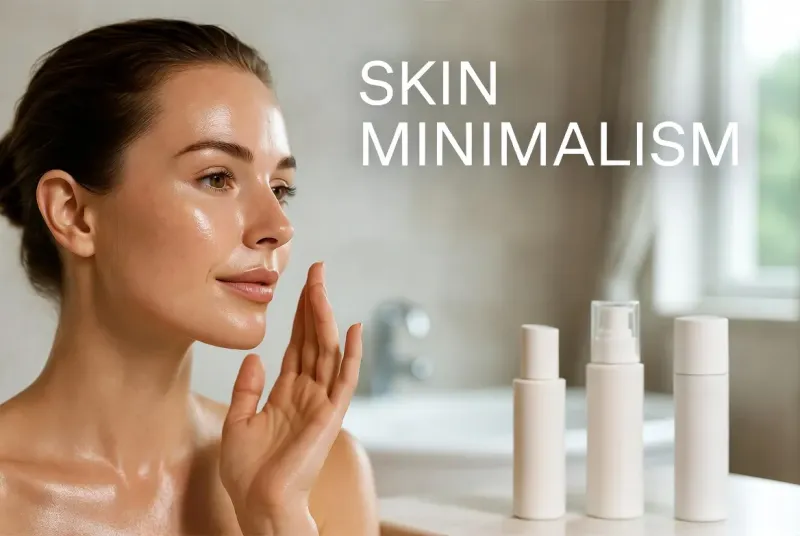
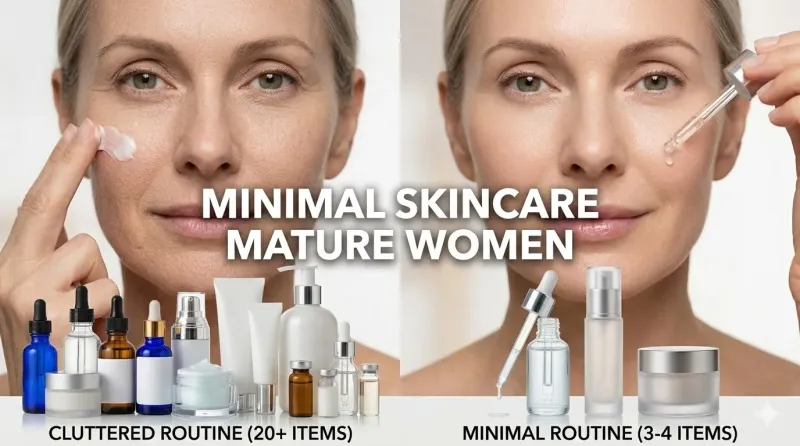
As women enter their 50s, 60s, and beyond, the skincare industry often pushes increasingly complex routines: serums upon serums, multi-step regimens, and an ever-growing arsenal of anti-aging products. But what if the secret to radiant, healthy mature skin isn't adding more—but strategically using less? For many mature women, minimal skincare isn't just a trend; it's a revelation that delivers better results with less effort, expense, and irritation.
The truth is, mature skin has unique needs that often respond better to simplicity than complexity. After decades of environmental exposure, hormonal shifts, and natural aging processes, skin becomes more sensitive, slower to heal, and more reactive to harsh ingredients or overwhelming routines. A minimal approach—focusing on a few high-quality, targeted products—can actually deliver superior results compared to elaborate multi-step regimens.
This comprehensive guide explores why minimal skincare works exceptionally well for mature women, identifies the essential products that truly matter, and provides practical strategies for building a simplified routine that delivers real anti-aging benefits. Whether you're feeling overwhelmed by complicated routines, experiencing sensitivity from product overload, or simply seeking a more sustainable approach to aging gracefully, you'll discover how less can truly be more when it comes to caring for mature skin.
Why Mature Skin Benefits from Minimal Skincare
Understanding the biological changes that occur in mature skin helps explain why simplicity often outperforms complexity.
The Changing Needs of Mature Skin
As skin ages, several key changes affect how it responds to skincare:
Thinner, More Fragile Barrier:
- The stratum corneum (outer skin layer) becomes thinner with age
- Reduced lipid production compromises barrier function
- More susceptible to irritation from multiple products or harsh ingredients
- Heals more slowly when compromised
Slower Cell Turnover:
- Cell renewal slows from ~28 days in youth to 45-60+ days in maturity
- Dead cells accumulate more easily, creating dullness
- Products penetrate differently; some may not absorb as effectively
- Over-exfoliation or aggressive treatments can cause more harm than good
Reduced Natural Oil Production:
- Sebum production declines significantly after menopause
- Skin becomes drier and more prone to dehydration
- Heavy occlusives may feel uncomfortable; lightweight hydration often works better
- Balance is key—too little moisture causes dryness; too much causes congestion
Increased Sensitivity and Reactivity:
- Nerve endings become more exposed as skin thins
- Immune response changes, increasing reactivity to ingredients
- Fragrances, preservatives, and active ingredients may trigger irritation
- Less product exposure means less potential for adverse reactions
The Problem with Complex Routines for Mature Skin
While multi-step routines may work for younger, more resilient skin, they often create problems for mature skin:
Product Overload and Irritation:
- Each product introduces potential irritants: fragrances, preservatives, emulsifiers
- Layering 5-10 products increases cumulative exposure to potential triggers
- Mature skin's compromised barrier is less able to tolerate this assault
- Result: redness, sensitivity, inflammation that accelerates aging
Ingredient Conflicts and Reduced Efficacy:
- Some active ingredients don't work well together (e.g., vitamin C and retinoids)
- pH requirements vary; layering can neutralize effectiveness
- Too many actives can overwhelm skin's ability to respond beneficially
- Result: wasted money on products that don't deliver promised benefits
Barrier Disruption from Over-Cleansing:
- Complex routines often involve double cleansing, exfoliating cleansers, etc.
- Each cleansing event removes some barrier lipids
- Mature skin replenishes lipids more slowly
- Result: chronically compromised barrier, increased dryness and sensitivity
Time and Financial Burden:
- Elaborate routines require significant time investment
- Multiple products create ongoing financial commitment
- For busy mature women, sustainability matters
- Result: routines that are abandoned, leading to inconsistent care
The Science: How Minimalism Supports Mature Skin Health
Research supports the benefits of simplified skincare for aging skin.
Barrier Preservation and Repair
The Mechanism: A minimal routine reduces the frequency and intensity of barrier disruption. Fewer products mean fewer cleansing events, less exposure to potential irritants, and more opportunity for the skin to maintain and repair its natural barrier.
The Benefit for Mature Skin:
- Intact barrier retains moisture more effectively, reducing dryness and fine lines
- Protected barrier prevents penetration of irritants that trigger inflammation
- Healthy barrier supports better absorption of beneficial ingredients
- Reduced inflammation slows collagen breakdown and premature aging
Research Support: Dermatological studies show that reducing product load and focusing on barrier-supportive ingredients improves hydration, reduces sensitivity, and enhances overall skin appearance in mature individuals.
Reduced Inflammation and Oxidative Stress
The Mechanism: Every skincare product introduces some level of potential stress: preservatives, fragrances, emulsifiers, and even active ingredients can trigger low-grade inflammation or oxidative stress in sensitive mature skin.
The Benefit for Mature Skin:
- Less inflammation means less activation of matrix metalloproteinases (enzymes that break down collagen)
- Reduced oxidative stress protects cellular components from damage
- Calmer skin appears more even-toned, less red, and more radiant
- Lower inflammatory burden supports better overall skin aging trajectory
Research Support: The concept of "inflammaging"—chronic low-grade inflammation that accelerates aging—is well-established. Minimizing external inflammatory triggers, including excessive skincare products, is a recognized strategy for healthy aging.
Enhanced Product Efficacy Through Focus
The Mechanism: When you use fewer products, each one can be chosen more strategically and applied more consistently. This focused approach allows key ingredients to work more effectively without competition or interference.
The Benefit for Mature Skin:
- Retinoids work better when not competing with multiple other actives
- Antioxidants like vitamin C penetrate more effectively without barrier disruption
- Hydrating ingredients aren't blocked by heavy layers of other products
- Consistent use of a few key products yields better long-term results than sporadic use of many
Research Support: Studies on topical retinoids, antioxidants, and hydrating ingredients show that consistent, targeted application yields superior results compared to complex, inconsistent routines.
The Essential Minimal Routine for Mature Skin
A truly effective minimal routine for mature skin focuses on four core functions: gentle cleansing, targeted treatment, hydration, and sun protection. Everything else is optional.
The Four Non-Negotiables
1. Gentle Cleanser
Why it's essential: Removes impurities without compromising the already-fragile barrier.
What to look for:
- Cream, milk, or lotion texture (avoid foaming formulas)
- pH 4.5-5.5 to support skin's natural acid mantle
- Ingredients: glycerin, ceramides, niacinamide, panthenol
- Fragrance-free and sulfate-free
How to use: Once daily in the evening; morning rinse with water only if skin isn't oily.
Why minimalism works here: One gentle cleanser does the job; no need for double cleansing, exfoliating cleansers, or multiple morning/evening formulas.
2. Targeted Treatment Serum
Why it's essential: Delivers concentrated actives to address specific aging concerns.
What to look for (choose ONE primary focus):
- For fine lines/wrinkles: Retinol (0.25-0.5%), bakuchiol, or peptides
- For dullness/discoloration: Vitamin C (10-15%), niacinamide (4-5%), or azelaic acid
- For dehydration: Hyaluronic acid (multi-molecular), glycerin, or beta-glucan
- For barrier support: Ceramides, cholesterol, fatty acids, or centella asiatica
How to use: Apply to damp skin after cleansing; wait 1-2 minutes before next step.
Why minimalism works here: Choosing one primary treatment allows that ingredient to work effectively without competition or irritation from layering multiple actives.
3. Lightweight Moisturizer
Why it's essential: Seals in hydration and supports barrier function without heaviness.
What to look for:
- Gel-cream or light lotion texture (avoid heavy occlusives unless skin is very dry)
- Ingredients: ceramides, squalane, niacinamide, hyaluronic acid
- Non-comedogenic and fragrance-free
- SPF 30+ for daytime use (or use separate sunscreen)
How to use: Apply to face and neck after serum; press gently into skin.
Why minimalism works here: One well-formulated moisturizer provides hydration, barrier support, and often additional benefits—no need for separate day/night creams, eye creams, or neck creams.
4. Daily Sunscreen
Why it's essential: UV protection is the single most important anti-aging step.
What to look for:
- Broad-spectrum SPF 30-50
- Mineral (zinc oxide/titanium dioxide) for sensitive skin; chemical for lighter feel
- Lightweight, non-greasy formula that doesn't pill under makeup
- Additional antioxidants for enhanced protection
How to use: Apply generously as final morning step; reapply every 2 hours with sun exposure.
Why minimalism works here: One high-quality sunscreen does the job; no need for separate face/body formulas or multiple SPF products.
Optional Additions (Only If Needed)
Weekly Gentle Exfoliation:
- Why: Removes accumulated dead cells that contribute to dullness
- Choose: PHA (polyhydroxy acid) or low-concentration lactic acid (5% or less)
- Frequency: Once weekly maximum; skip if skin is sensitive or irritated
- Minimalist approach: One gentle exfoliant, used sparingly
Targeted Eye Care (If Needed):
- Why: Eye area is thinner and may need extra attention
- Choose: Lightweight eye serum or gel with caffeine, peptides, or hyaluronic acid
- Minimalist approach: Use your facial serum around eyes if tolerated; add eye-specific product only if needed
Occasional Hydrating Mask:
- Why: Extra hydration boost for special occasions or dry periods
- Choose: Sheet mask or wash-off mask with hyaluronic acid, glycerin, or ceramides
- Frequency: Once every 2-4 weeks; not a daily necessity
- Minimalist approach: One versatile mask used occasionally, not a routine staple
Product Recommendations: Quality Over Quantity
When adopting a minimal routine, each product must pull its weight. These recommendations focus on high-quality, multi-benefit formulations ideal for mature skin.
Gentle Cleansers for Mature Skin
- CeraVe Hydrating Facial Cleanser: Ceramides, hyaluronic acid, non-foaming, pH-balanced
- La Roche-Posay Toleriane Hydrating Gentle Cleanser: Niacinamide, ceramides, soothing thermal water
- Vanicream Gentle Facial Cleanser: Minimalist formula, fragrance-free, ideal for sensitive skin
- Krave Beauty Matcha Hemp Hydrating Cleanser: Antioxidants, gentle surfactants, calming
- Avène Extremely Gentle Cleanser Lotion: Thermal spring water, minimal ingredients, soothing
Targeted Treatment Serums
For Fine Lines/Wrinkles:
- Paula's Choice Clinical 0.3% Retinol + 2% Bakuchiol: Gentle retinoid alternative with antioxidant support
- The Ordinary Granactive Retinoid 2% Emulsion: Gentle retinoid ester, affordable, effective
- Biossance Squalane + Phyto-Retinol Serum: Plant-based retinol alternative with squalane
For Dullness/Discoloration:
- SkinCeuticals C E Ferulic: Gold-standard vitamin C with vitamin E and ferulic acid
- Paula's Choice 10% Niacinamide Booster: Brightening, barrier-supporting, versatile
- The Ordinary Azelaic Acid Suspension 10%: Gentle brightening, anti-inflammatory, affordable
For Hydration/Barrier Support:
- The Ordinary Hyaluronic Acid 2% + B5: Multi-weight HA with panthenol, affordable
- Stratia Liquid Gold: Ceramides, cholesterol, fatty acids in ideal ratio
- Beauty of Joseon Glow Serum: Propolis, niacinamide, hydrating and soothing
Lightweight Moisturizers
- CeraVe PM Facial Moisturizing Lotion: Ceramides, niacinamide, lightweight, affordable
- Illiyoon Ceramide Ato Soothing Gel: Ceramides, panthenol, soothing, gel-cream texture
- Paula's Choice Omega+ Complex Moisturizer: Ceramides, fatty acids, cholesterol, barrier-focused
- First Aid Beauty Ultra Repair Cream: Colloidal oatmeal, ceramides, soothing for sensitive skin
- Glow Recipe Plum Plump Hyaluronic Cream: Multiple HA types, plum extract, bouncy gel-cream
Sunscreen for Mature Skin
- EltaMD UV Clear Broad-Spectrum SPF 46: Mineral-chemical hybrid, niacinamide, ideal for sensitive skin
- La Roche-Posay Anthelios Melt-in Milk Sunscreen SPF 60: Lightweight chemical, high protection, non-greasy
- Supergoop! Unseen Sunscreen SPF 40: Invisible chemical formula, primer-like finish, lightweight
- Paula's Choice RESIST Super-Light Wrinkle Defense SPF 30: Mineral sunscreen with antioxidants, anti-aging focused
- Black Girl Sunscreen Make It Hybrid SPF 50: Lightweight chemical, inclusive formulation, non-white-cast
Building Your Minimal Routine: Step-by-Step
Transitioning to a minimal routine doesn't have to be overwhelming. Follow this phased approach.
Phase 1: Assessment and Simplification (Week 1)
Step 1: Audit Your Current Routine
- List every product you currently use
- Note which products you actually enjoy using and see results from
- Identify products that cause irritation, feel heavy, or seem ineffective
Step 2: Identify Your Primary Concern
- What's your #1 skin concern? (fine lines, dullness, dryness, sensitivity, etc.)
- This will guide your choice of treatment serum
- Accept that you can't address everything at once—focus on what matters most
Step 3: Select Your Four Essentials
- Choose one gentle cleanser
- Choose one treatment serum targeting your primary concern
- Choose one lightweight moisturizer
- Choose one daily sunscreen
- Put everything else aside (you can reintroduce later if truly needed)
Phase 2: Implementation and Adjustment (Weeks 2-4)
Step 4: Establish Your AM Routine
- Water rinse or gentle cleanser (if skin feels oily)
- Treatment serum (if using in AM; otherwise skip)
- Lightweight moisturizer
- Sunscreen (non-negotiable)
Step 5: Establish Your PM Routine
- Gentle cleanser
- Treatment serum
- Lightweight moisturizer
Step 6: Monitor and Adjust
- Pay attention to how your skin feels: comfortable, hydrated, not tight or irritated
- Notice visible changes: improved texture, reduced redness, more even tone
- If skin feels dry, add one drop of squalane to your moisturizer
- If skin feels irritated, simplify further (skip serum for a few days)
Phase 3: Optimization and Maintenance (Week 5+)
Step 7: Evaluate Results
- After 4 weeks, assess: Is your skin healthier, more comfortable, more radiant?
- If yes, maintain the routine
- If not, consider: Was the product choice wrong? Is your primary concern different than assumed?
Step 8: Add Optional Elements Only If Needed
- If dullness persists, add gentle weekly exfoliation
- If eye area needs extra care, add a lightweight eye product
- If skin feels extra dry in winter, add a hydrating mask occasionally
- Always add one element at a time; wait 2 weeks before adding another
Step 9: Maintain Consistency
- The power of minimal skincare lies in consistency
- Stick with your four essentials daily
- Resist the urge to add new products frequently
- Reassess your routine seasonally or if skin needs change
Common Concerns and Solutions
Adopting minimal skincare raises valid questions. Here's how to address them.
"Won't I miss out on anti-aging benefits with fewer products?"
The Reality: Anti-aging benefits come from consistent use of proven ingredients, not from the number of products. A minimal routine that includes a retinoid or vitamin C, used consistently, will deliver better results than a complex routine where actives are used sporadically or in conflicting combinations.
The Solution: Focus on one high-quality treatment serum with a proven anti-aging ingredient. Use it consistently. That's more powerful than layering multiple actives inconsistently.
"What about my eye cream/neck cream/hand cream?"
The Reality: Many "eye creams" and "neck creams" are simply moisturizers in smaller packaging with higher price tags. Your facial moisturizer, if well-formulated, likely works perfectly well for eyes and neck.
The Solution: Use your facial moisturizer around eyes and on neck. If the eye area has specific concerns (severe dryness, pronounced wrinkles), add a lightweight eye product—but only if truly needed.
"I've always used a 10-step routine. How do I know what to cut?"
The Reality: Most multi-step routines include redundant or marginally beneficial products. The core four (cleanser, treatment, moisturizer, sunscreen) deliver 80-90% of benefits.
The Solution: Start by keeping your current cleanser, moisturizer, and sunscreen if they work well. Add one treatment serum targeting your primary concern. Put everything else aside for 4 weeks. If your skin looks and feels better, you've identified what truly matters.
"Won't my skin get bored or stop responding to the same products?"
The Reality: Skin doesn't "get bored." Consistent use of effective ingredients yields cumulative benefits. What changes is your skin's needs, not its response to proven ingredients.
The Solution: Stick with your core routine. If your skin's needs change (e.g., increased dryness in winter), adjust one product at a time—don't overhaul the entire routine.
"What if I want to try a new product?"
The Reality: Curiosity is natural, but constant product-hopping undermines the consistency that delivers results.
The Solution: If you want to try something new, replace one existing product—not add to your routine. Wait 4-6 weeks to evaluate results before making another change.
Lifestyle Factors That Amplify Minimal Skincare
Minimal skincare works best when supported by holistic habits that support skin health.
Nutrition for Mature Skin
Hydration:
- Drink adequate water (2-3 liters daily) to support skin hydration from within
- Include water-rich foods: cucumber, watermelon, citrus, leafy greens
Essential Fatty Acids:
- Omega-3s support skin barrier function and reduce inflammation
- Sources: fatty fish, flaxseeds, chia seeds, walnuts
- Consider fish oil or algae-based supplements if dietary intake is low
Antioxidants:
- Protect skin from oxidative stress that accelerates aging
- Sources: berries, colorful vegetables, green tea, dark chocolate
Protein:
- Essential for collagen production and skin repair
- Sources: lean meats, fish, eggs, legumes, Greek yogurt
- Aim for 0.8-1.2g protein per kg body weight daily
Sleep and Stress Management
Quality Sleep:
- Skin repairs and regenerates during sleep
- Aim for 7-9 hours nightly
- Use a silk or satin pillowcase to reduce friction and moisture loss
Stress Reduction:
- Chronic stress increases cortisol, which can break down collagen and impair barrier function
- Practice stress-reduction techniques: meditation, gentle exercise, deep breathing
- Prioritize activities that bring joy and relaxation
Sun Protection Beyond Sunscreen
- Wear wide-brimmed hats and UV-protective clothing
- Seek shade during peak sun hours (10 AM - 4 PM)
- Use sunglasses to protect delicate eye area
- Remember: UV damage is cumulative; protection matters at every age
Special Considerations by Skin Concern
Tailor your minimal routine to address your specific mature skin concerns.
For Dry or Dehydrated Mature Skin
Focus: Hydration and barrier support
Minimal Routine Adjustments:
- Cleanser: Ultra-gentle, cream-based formula
- Treatment: Hyaluronic acid serum or beta-glucan serum
- Moisturizer: Slightly richer gel-cream with ceramides
- Optional: Add 1-2 drops of squalane to moisturizer if needed
Avoid: Foaming cleansers, alcohol-based toners, heavy occlusives that feel suffocating
For Sensitive or Reactive Mature Skin
Focus: Soothing and barrier repair
Minimal Routine Adjustments:
- Cleanser: Fragrance-free, minimal-ingredient formula
- Treatment: Centella asiatica, panthenol, or niacinamide serum
- Moisturizer: Soothing gel-cream with colloidal oatmeal or allantoin
- Sunscreen: Mineral formula (zinc oxide) for least irritation
Avoid: Fragrances, essential oils, high concentrations of actives, physical exfoliants
For Dull or Uneven-Toned Mature Skin
Focus: Brightening and gentle renewal
Minimal Routine Adjustments:
- Cleanser: Gentle formula with mild brightening ingredients (niacinamide)
- Treatment: Vitamin C (10-15%) or azelaic acid serum
- Moisturizer: Lightweight formula with niacinamide for added brightening
- Optional: Weekly gentle exfoliation with PHA or low-concentration lactic acid
Avoid: Harsh physical scrubs, high-concentration acids, products that cause irritation
For Fine Lines and Wrinkles
Focus: Collagen support and gentle renewal
Minimal Routine Adjustments:
- Cleanser: Gentle, non-stripping formula
- Treatment: Retinol (0.25-0.5%) or bakuchiol serum
- Moisturizer: Formula with peptides or ceramides for barrier support
- Sunscreen: Non-negotiable—prevents further photoaging
Avoid: Over-exfoliation, skipping sunscreen, expecting overnight results from retinoids
Frequently Asked Questions
How long does it take to see results from a minimal routine?
With consistent use:
- Immediate (1-7 days): Improved comfort, reduced tightness or irritation
- Short-term (2-4 weeks): Improved hydration, smoother texture, more even tone
- Medium-term (6-8 weeks): Visible improvement in fine lines, radiance, overall appearance
- Long-term (3-6 months): Cumulative anti-aging benefits from consistent use of actives
Patience and consistency are essential—skin cell turnover takes 28-45+ days in mature skin.
Can I use the same products morning and night?
Yes, for most products. The main differences:
- Sunscreen: AM only
- Retinoids: PM only (can increase sun sensitivity)
- Vitamin C: AM preferred (antioxidant protection during day)
- Most other products: Can be used AM and PM if well-tolerated
Keeping your routine consistent simplifies application and ensures consistent delivery of benefits.
What if my skin feels dry with a minimal routine?
First, ensure you're:
- Applying products to damp skin
- Using a moisturizer with barrier-supporting ingredients
- Not over-cleansing (once daily PM is often sufficient)
If still dry:
- Add one drop of squalane to your moisturizer
- Consider a slightly richer moisturizer formulation
- Use a humidifier in dry indoor environments
- Ensure adequate water intake and essential fatty acids in diet
Is minimal skincare appropriate for all mature skin types?
Yes, with customization. Minimal skincare is about focusing on what truly matters, not about deprivation. The specific products you choose should be tailored to your skin type (dry, oily, combination, sensitive) and concerns. The principle of simplicity—fewer, better-chosen products—benefits all mature skin types.
Can I wear makeup with a minimal skincare routine?
Absolutely. A minimal skincare routine creates an excellent base for makeup:
- Well-hydrated skin helps makeup apply smoothly and last longer
- Fewer products mean less pilling or separation under makeup
- Lightweight moisturizers absorb quickly, creating a non-greasy canvas
Apply your minimal routine, wait 2-3 minutes for absorption, then apply makeup as usual.
Conclusion: Embrace the Power of Less
For mature women, minimal skincare isn't about doing less for your skin—it's about doing what matters most, with intention and consistency. By focusing on four essential steps—gentle cleansing, targeted treatment, lightweight hydration, and daily sun protection—you can deliver superior anti-aging benefits without the overwhelm, expense, or irritation of complex routines.
The science is clear: mature skin, with its thinner barrier, slower turnover, and increased sensitivity, often thrives with simplicity. Fewer products mean less potential for irritation, better absorption of key ingredients, and greater consistency in application—all of which translate to healthier, more radiant skin over time.
Key Takeaways:
- Mature skin has unique needs: Thinner barrier, slower turnover, increased sensitivity favor simplicity over complexity.
- Four essentials are enough: Gentle cleanser, targeted serum, lightweight moisturizer, and sunscreen deliver 80-90% of anti-aging benefits.
- Consistency beats complexity: Using a few effective products consistently yields better results than sporadic use of many products.
- Quality over quantity: Invest in well-formulated products with proven ingredients rather than accumulating numerous marginally beneficial items.
- Listen to your skin: If your skin feels comfortable, looks healthy, and shows improvement, your minimal routine is working.
- Support from within: Nutrition, hydration, sleep, and stress management amplify the benefits of your topical routine.
Transitioning to minimal skincare is a journey, not an overnight switch. Start by identifying your four essentials. Give your skin time to adjust and respond. Resist the urge to add products frequently. Trust that simplicity, when done thoughtfully, can deliver the radiant, healthy skin you deserve at every age.
Your skin has carried you through decades of life. Honor it with care that is as wise and intentional as you are. Sometimes, the most powerful approach is the simplest one. Less isn't just more—it's transformative.