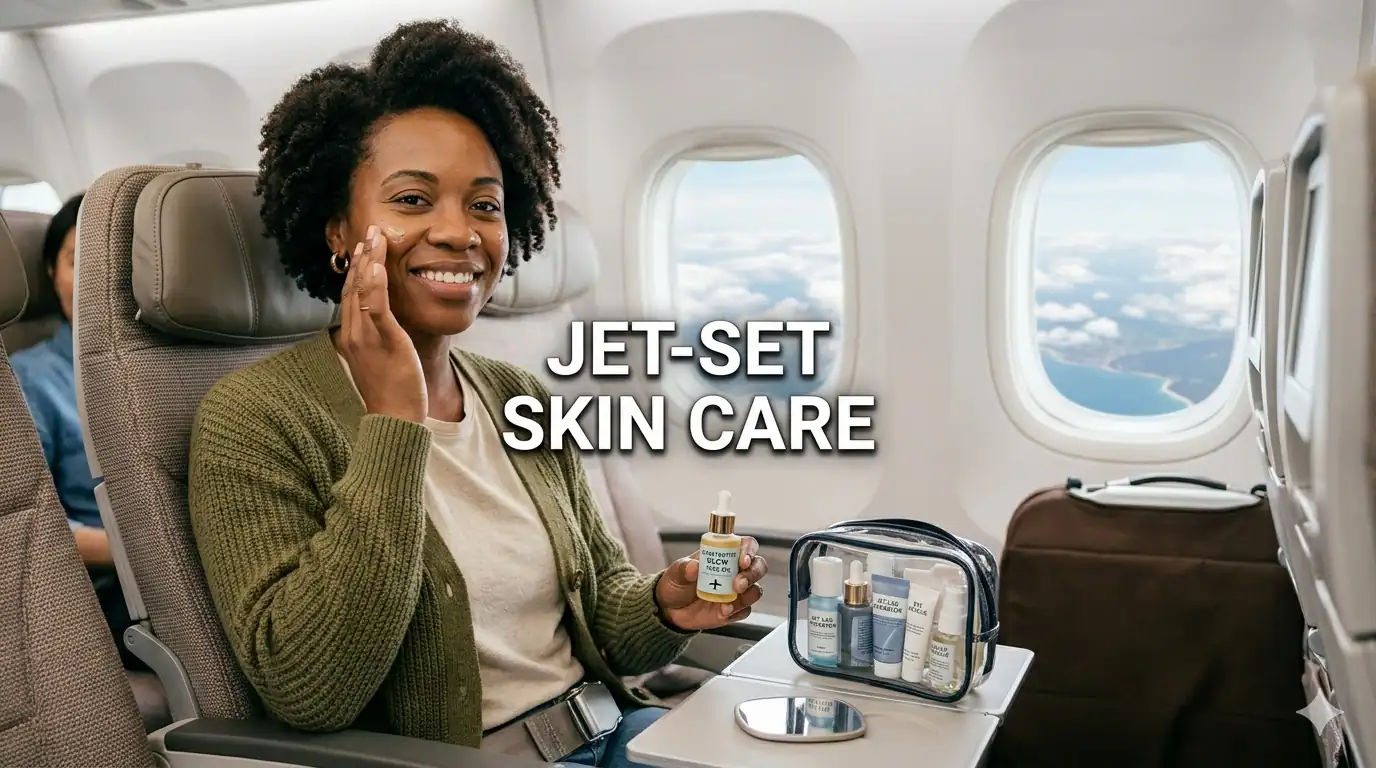
Traveling should be exciting, not exhausting for your skin. Yet frequent flyers and vacationers alike know the all-too-familiar post-flight complexion: dull, dehydrated, broken out, or irritated. Jet-set skin care isn't a luxury—it's a necessity for maintaining healthy, glowing skin while navigating airports, airplanes, and unfamiliar climates.
The combination of recirculated cabin air, pressure changes, disrupted sleep schedules, and environmental shifts creates a perfect storm for skin distress. Airplane cabins have humidity levels around 10-20% (compared to 30-60% on the ground), causing rapid moisture loss. Circadian rhythm disruption from crossing time zones affects skin's repair cycles. New climates, water quality, and pollution levels challenge your skin's barrier function.
In this comprehensive dermatologist-approved guide, we'll walk you through evidence-based strategies for protecting your skin before, during, and after travel. You'll learn how to build a streamlined travel skincare routine, prevent common issues like breakouts and dehydration, adapt to different climates, and arrive at your destination looking refreshed rather than ravaged. Whether you're a frequent business traveler or planning your dream vacation, these expert tips will keep your skin healthy at 30,000 feet and beyond.
How Travel Affects Your Skin: The Science
Short answer: Travel stresses skin through low cabin humidity causing transepidermal water loss, circadian rhythm disruption impairing skin repair, UV exposure at altitude, pressure changes affecting circulation, and environmental shifts challenging skin barrier function.
Understanding the mechanisms behind travel-related skin issues helps you target prevention effectively:
Cabin Pressure and Humidity
Commercial aircraft cabins are pressurized to 6,000-8,000 feet altitude, reducing oxygen saturation and creating extremely dry conditions. This combination causes:
- Transepidermal water loss (TEWL): Skin loses moisture 3x faster in low-humidity environments, compromising the barrier function that keeps skin plump and protected.
- Increased sebum production: Dehydrated skin overcompensates by producing more oil, leading to breakouts despite dryness.
- Reduced skin oxygenation: Lower oxygen levels impair cellular function and collagen production, contributing to dullness.
- Compromised barrier function: The stratum corneum (outer skin layer) becomes less effective at protecting against irritants and pathogens.
Circadian Rhythm Disruption
Your skin follows a 24-hour cycle regulated by your body's internal clock. Jet lag and irregular sleep patterns disrupt this rhythm, affecting:
- Cell regeneration: Skin cell turnover peaks at night; disrupted sleep reduces this repair process by up to 30%.
- Barrier recovery: Skin barrier repair is most active during sleep; insufficient rest slows healing and increases sensitivity.
- Collagen production: Growth hormone release during deep sleep stimulates collagen synthesis; poor sleep reduces this anti-aging benefit.
- Inflammation regulation: Circadian disruption increases inflammatory markers, worsening conditions like acne, eczema, and rosacea.
UV Exposure at Altitude
UV radiation increases 10-12% per 1,000 meters of altitude. At cruising altitude (35,000 feet), UV exposure is significantly higher even through airplane windows:
- UVA rays penetrate airplane windows, contributing to photoaging and DNA damage
- Extended flights mean prolonged UV exposure without adequate protection
- Reflective surfaces (clouds, snow at destination) amplify exposure
Environmental Stressors
Travel exposes skin to new challenges:
- Climate shifts: Moving from humid to dry (or vice versa) requires barrier adaptation
- Water quality: Hard water, chlorine, or different mineral content can irritate skin
- Pollution: Urban destinations expose skin to particulate matter and free radicals
- Dietary changes: Different foods, increased salt, alcohol, and sugar affect skin inflammation and hydration
Pre-Flight Skin Preparation: 48 Hours Before
Short answer: Prepare skin for travel by avoiding new products, gentle exfoliation 2-3 days before flying, intensive hydration, getting adequate sleep, and packing a strategic skincare kit with travel-sized essentials.
Smart preparation prevents problems rather than treating them mid-flight:
Days 3-2 Before Travel
Gentle Exfoliation: Remove dead skin cells to maximize product absorption and prevent clogged pores during travel:
- Use a mild chemical exfoliant (AHA/BHA) rather than harsh physical scrubs
- Limit to 1-2 times this week to avoid barrier compromise
- Follow with intensive moisturizing to support barrier recovery
Skin Barrier Support: Strengthen your skin's defense system:
- Apply ceramide-rich moisturizers to reinforce lipid barrier
- Use hydrating serums with hyaluronic acid or glycerin
- Consider a hydrating sheet mask the night before travel
Day Before Travel
Avoid New Products: Never introduce new skincare within 48 hours of travel. Potential reactions are harder to manage away from home.
Minimize Active Ingredients: Skip retinoids, strong acids, or benzoyl peroxide the night before flying to reduce irritation risk in dry cabin air.
Hydrate Intensively:
- Drink 2-3 liters of water throughout the day
- Apply a thicker moisturizer than usual before bed
- Use an occlusive (like petroleum jelly) on extra-dry areas
Prioritize Sleep: Aim for 7-9 hours to maximize skin repair before the stress of travel.
Morning of Travel
Simplify Your Routine:
- Gentle cleanser or just water rinse
- Vitamin C serum for antioxidant protection
- Hyaluronic acid serum on damp skin
- Rich moisturizer with barrier-supporting ingredients
- Broad-spectrum SPF 30+ (even if flying)
- Minimal makeup (or none) to allow skin to breathe
Avoid:
- Heavy foundation that can clog pores in dry air
- New products or treatments
- Excessive caffeine (dehydrating)
- Salty foods (causes water retention and dehydration)
Building Your Travel Skincare Kit
Short answer: Pack TSA-compliant travel sizes of gentle cleanser, hydrating serum, rich moisturizer, facial mist, lip balm, SPF, and targeted treatments, prioritizing multi-use products and barrier-supporting ingredients.
A strategic travel skincare kit balances effectiveness with portability:
Essential Products (Carry-On)
1. Gentle Cleanser (100ml/3.4oz)
- Cream or milk formula (avoid foaming cleansers that strip skin)
- pH-balanced to maintain barrier
- Can double as makeup remover
- Recommendations: CeraVe Hydrating Cleanser, La Roche-Posay Toleriane
2. Hydrating Serum (30-50ml)
- Hyaluronic acid or glycerin-based
- Lightweight, layers well under moisturizer
- Apply to damp skin for maximum absorption
- Recommendations: The Ordinary Hyaluronic Acid, Vichy Mineral 89
3. Rich Moisturizer (50ml)
- Ceramide-containing formula
- Non-comedogenic (won't clog pores)
- Can be used on face and body dry spots
- Recommendations: CeraVe Moisturizing Cream, First Aid Beauty Ultra Repair
4. Facial Mist (100ml)
- Thermal water or hydrating formula
- Use every 2-3 hours in-flight
- Seal with moisturizer to prevent evaporation
- Recommendations: Avène Thermal Spring Water, Mario Badescu Facial Spray
5. Lip Balm with SPF
- Prevents chapping in dry cabin air
- SPF protects from UV exposure
- Reapply every 2 hours
- Recommendations: Aquaphor, Sun Bum SPF 30 Lip Balm
6. Broad-Spectrum Sunscreen (SPF 30+)
- Non-greasy, travel-friendly formula
- Apply before flight and reapply at destination
- Stick formulas are TSA-friendly and mess-free
- Recommendations: Supergoop Unseen Sunscreen, EltaMD UV Clear
Targeted Treatments (Optional)
- Hydrocortisone cream (1%): For unexpected irritation or allergic reactions
- Spot treatment: Salicylic acid or benzoyl peroxide for breakouts
- Eye cream: Caffeine-based to reduce puffiness from travel
- Sheet masks: Hydrating masks for post-flight recovery
- Facial oil: Rosehip or squalane for extra barrier support
Packing Tips
- Use TSA-compliant 3-1-1 liquids bag (3.4oz/100ml per container, 1 quart-sized bag)
- Decant products into travel-sized containers to save space
- Wrap bottles in plastic wrap before capping to prevent leakage
- Keep skincare in carry-on, not checked luggage (temperature fluctuations damage products)
- Bring cotton pads, reusable rounds, or clean hands for application
In-Flight Skincare Routine: Hour-by-Hour
Short answer: Implement a strategic in-flight routine: cleanse and apply hydrating layers before takeoff, mist and reapply moisturizer every 2-3 hours, drink water consistently, avoid alcohol and caffeine, and protect skin with SPF on window-side seats.
Long flights require active skin maintenance, not passive suffering:
Pre-Boarding (30 Minutes Before)
- Apply a thin layer of moisturizer to clean skin
- Use lip balm generously
- Apply SPF if you'll be in a window seat
- Avoid makeup or remove it before boarding
After Takeoff (First 30 Minutes)
Step 1: Cleanse
- Use micellar water or gentle cleanser to remove any makeup or impurities
- Pat dry gently (don't rub)
Step 2: Hydrate
- Apply hydrating serum to damp skin
- Follow with rich moisturizer
- Don't forget neck and hands
Step 3: Seal
- Apply facial oil or extra-thick moisturizer to lock in hydration
- Use lip balm
During Flight (Every 2-3 Hours)
Hydration Refresh:
- Mist face with thermal water or hydrating spray
- Wait 15 seconds
- Apply moisturizer to seal in hydration
- Reapply lip balm
Important: Never mist without sealing—evaporation in dry cabin air pulls more moisture from skin, worsening dehydration.
Internal Hydration
- Drink 8oz water every hour (bring an empty bottle through security and fill at gate)
- Avoid alcohol (dehydrating and inflammatory)
- Limit caffeine (diuretic effect worsens dehydration)
- Skip salty snacks (causes water retention and puffiness)
- Choose hydrating foods: cucumber, watermelon, celery if available
Movement and Circulation
- Stand and walk every 2 hours to improve circulation
- Do seated ankle circles and leg lifts
- Good circulation supports skin oxygenation and nutrient delivery
Window Seat Protection
If seated by a window:
- Apply SPF 30+ before boarding
- Reapply every 2 hours for flights over 4 hours
- UVA rays penetrate airplane windows
- Consider UV-protective window film for frequent flyers
Pre-Landing (1 Hour Before)
- Cleanse face to remove accumulated product and impurities
- Apply fresh moisturizer
- Use eye cream or cold compress to reduce puffiness
- Apply minimal makeup if desired (tinted moisturizer, concealer, mascara)
- Reapply lip balm with SPF if arriving during daytime
Post-Flight Skin Recovery Protocol
Short answer: Immediately after landing, cleanse thoroughly, apply intensive hydration with barrier-repair ingredients, use anti-inflammatory treatments if needed, prioritize sleep, and gradually reintroduce active ingredients over 2-3 days.
The first 24 hours post-flight are critical for skin recovery:
Immediate Post-Flight (First Hour)
Step 1: Double Cleanse
- Oil-based cleanser to remove SPF, makeup, and pollution
- Water-based gentle cleanser to remove residue
- Use lukewarm water (not hot, which further dehydrates)
Step 2: Intensive Hydration
- Apply hydrating toner or essence to damp skin
- Layer hyaluronic acid serum
- Use rich moisturizer with ceramides
- Apply facial oil to seal (rosehip, squalane, or jojoba)
Step 3: Targeted Treatment
- Hydrating sheet mask for 15-20 minutes
- Eye mask or cold compress for puffiness
- Spot treat any breakouts
First 24 Hours
Skin-Friendly Habits:
- Sleep: Prioritize 8-9 hours for barrier repair
- Hydration: Drink 3+ liters of water
- Humidifier: Run in bedroom to combat dry air
- Diet: Anti-inflammatory foods (omega-3s, antioxidants, leafy greens)
- Avoid: Alcohol, excessive caffeine, salty foods, sugar
Gentle Skincare:
- Skip active ingredients (retinoids, acids, vitamin C) for 24-48 hours
- Focus on barrier repair: ceramides, niacinamide, panthenol
- Use gentle, fragrance-free products
- Avoid hot water and harsh cleansing
Days 2-3 Post-Flight
Gradual Reintroduction:
- Day 2: Add gentle vitamin C serum in morning
- Day 3: Resume retinoids or acids if skin feels balanced
- Monitor for breakouts or irritation
- Continue intensive hydration
Address Specific Concerns:
- Breakouts: Use salicylic acid spot treatment, avoid picking, keep hands off face
- Dullness: Gentle exfoliation on day 3, vitamin C serum, hydrating masks
- Puffiness: Cold compresses, caffeine eye cream, lymphatic drainage massage
- Dryness: Continue occlusive moisturizers, facial oil, humidifier use
Destination-Specific Skincare Strategies
Short answer: Adapt your routine to destination climate: add humidity and oil control for tropical locations, intensive barrier protection for cold/dry climates, lightweight hydration for humid areas, and enhanced sun protection for high-altitude or beach destinations.
Different destinations require different approaches:
Tropical/Humid Climates
Challenges: Excess humidity, sweat, increased oil production, fungal acne risk, sun intensity
Adaptations:
- Cleanser: Gel or foaming formula to remove excess oil and sweat
- Moisturizer: Lightweight, oil-free, non-comedogenic gel formula
- SPF: Water-resistant, matte finish, SPF 50+ (reapply every 2 hours)
- Treatments: Salicylic acid to prevent clogged pores, antifungal if prone to fungal acne
- Avoid: Heavy oils, thick creams, occlusive products
Additional Tips:
- Blotting papers for midday oil control
- Shower immediately after sweating
- Wear breathable, moisture-wicking fabrics
- Stay hydrated despite humidity (air conditioning is dehydrating)
Cold/Dry Climates
Challenges: Low humidity, windburn, barrier damage, increased sensitivity, indoor heating
Adaptations:
- Cleanser: Cream or oil-based, non-foaming formula
- Serum: Hyaluronic acid applied to damp skin, followed by moisturizer
- Moisturizer: Rich, ceramide-containing cream with occlusive ingredients
- Facial oil: Apply as last step to seal moisture
- SPF: Still essential—snow reflects 80% of UV rays
- Lip care: Thick balm with SPF, reapply frequently
Additional Tips:
- Use humidifier in hotel room
- Protect face with scarf in wind
- Avoid long hot showers (strips natural oils)
- Apply moisturizer immediately after cleansing
High-Altitude Destinations
Challenges: Increased UV exposure, extreme dryness, temperature fluctuations, altitude sickness affecting skin
Adaptations:
- SPF: SPF 50+, broad-spectrum, reapply every 2 hours
- Physical barriers: Wide-brimmed hat, UV-blocking sunglasses
- Hydration: Double your usual water intake
- Moisturizer: Extra-rich formula with barrier support
- Antioxidants: Vitamin C serum to combat UV-induced free radicals
Urban/Polluted Cities
Challenges: Air pollution, particulate matter, free radical damage, congestion
Adaptations:
- AM routine: Antioxidant serum (vitamin C, E, ferulic acid)
- Cleansing: Double cleanse every night to remove pollution
- Moisturizer: Formula with niacinamide to strengthen barrier
- SPF: Essential—pollution + UV = accelerated aging
- Weekly: Clay mask to draw out impurities
Beach/Coastal Destinations
Challenges: Sun exposure, salt water, sand irritation, chlorine from pools
Adaptations:
- SPF: Water-resistant SPF 50+, apply 15 minutes before sun exposure
- Reapplication: Every 2 hours and after swimming
- Post-swim: Rinse immediately with fresh water
- Moisturizer: Aloe-based or soothing formula after sun exposure
- Avoid: Active ingredients (retinoids, acids) during beach days
Common Travel Skin Problems and Solutions
Short answer: Address travel skin issues with targeted treatments: dehydration requires intensive hydration and barrier repair, breakouts need gentle salicylic acid and hands-off approach, irritation responds to soothing ingredients and simplified routine, and puffiness improves with cold therapy and lymphatic drainage.
Problem #1: Severe Dehydration
Signs: Tight feeling, flakiness, dullness, increased fine lines, rough texture
Solution:
- Immediate: Hydrating sheet mask, hyaluronic acid on damp skin, rich moisturizer
- Ongoing: Drink 3+ liters water daily, use humidifier, avoid hot water
- Ingredients: Hyaluronic acid, glycerin, ceramides, squalane, panthenol
- Avoid: Actives (retinoids, acids) until barrier recovers
Problem #2: Breakouts
Signs: New pimples, clogged pores, congestion, especially in T-zone
Solution:
- Cleanse: Gentle foaming cleanser twice daily, don't over-wash
- Treat: Salicylic acid spot treatment, benzoyl peroxide for inflamed acne
- Hydrate: Oil-free, non-comedogenic moisturizer (don't skip—dehydrated skin produces more oil)
- Hands off: Don't pick or touch face
- Change pillowcase: Use clean pillowcase every night
Problem #3: Irritation and Sensitivity
Signs: Redness, stinging, burning, itching, rash
Solution:
- Simplify: Strip routine to gentle cleanser, basic moisturizer, SPF only
- Soothe: Centella asiatica, aloe vera, oat extract, allantoin
- Avoid: Fragrance, essential oils, actives, hot water
- Protect: Mineral SPF (zinc oxide, titanium dioxide) less irritating than chemical
- Severe cases: Hydrocortisone 1% cream for 2-3 days max, see dermatologist if persistent
Problem #4: Puffiness and Dark Circles
Signs: Swollen eyes, under-eye bags, dark circles, tired appearance
Solution:
- Cold therapy: Cold compress, chilled spoons, refrigerated eye masks
- Caffeine: Eye cream with caffeine constricts blood vessels
- Sleep: Elevate head with extra pillow, prioritize 8+ hours
- Hydration: Drink water, reduce salt intake
- Massage: Gentle lymphatic drainage from inner to outer eye
Problem #5: Dullness and Uneven Tone
Signs: Lack of radiance, sallow complexion, hyperpigmentation
Solution:
- Exfoliate: Gentle AHA (lactic or glycolic acid) 2-3 days post-travel
- Vitamin C: Brightening serum in morning
- Hydration: Plump skin with hyaluronic acid
- SPF: Prevent further pigmentation
- Sheet masks: Brightening formulas with niacinamide or licorice root
Expert Dermatologist Tips for Frequent Travelers
Short answer: Dermatologists recommend maintaining routine consistency, prioritizing barrier health, never skipping SPF, staying hydrated internally and externally, adapting to destination climate, and keeping a simplified but effective travel skincare kit.
Board-certified dermatologists share their top strategies:
Dr. Sarah Chen, Board-Certified Dermatologist
"The biggest mistake I see travelers make is overcomplicating their routine. Stick to the basics: gentle cleanser, hydrating serum, rich moisturizer, and SPF. Your skin barrier is stressed enough from travel—don't add actives unless absolutely necessary."
Dr. Michael Rodriguez, Dermatology Specialist
"Hydration is non-negotiable. I tell patients to drink one glass of water for every hour of flight time, plus bring a hydrating mist and moisturizer to reapply every 2-3 hours. Internal and external hydration work synergistically."
Dr. Priya Patel, Cosmetic Dermatologist
"Never skip SPF, even on planes or in winter destinations. UVA rays penetrate windows and clouds. I recommend mineral SPF for travel—it's less likely to cause irritation when skin is already stressed from environmental changes."
Dr. James Thompson, Academic Dermatologist
"Prevention is easier than treatment. Start barrier-supporting products 3-5 days before travel: ceramides, niacinamide, and hyaluronic acid. A strong barrier before you fly means less damage during travel."
Dr. Lisa Wong, Holistic Dermatologist
"Don't underestimate sleep and diet. No skincare product can compensate for chronic sleep deprivation and poor nutrition while traveling. Prioritize rest, eat anti-inflammatory foods, and limit alcohol."
Travel Skincare Mistakes to Avoid
Even well-intentioned travelers make these common errors:
Mistake #1: Skipping Skincare Because "It's Just a Few Days"
Why it hurts: Even short trips disrupt skin. Skipping routine compounds stress and leads to breakouts or dryness.
Fix: Pack mini versions of essentials. A 3-day trip still needs cleansing, moisturizing, and SPF.
Mistake #2: Using Hotel Soap on Face
Why it hurts: Hotel soaps are alkaline and stripping, destroying skin barrier and causing dryness or rebound oil production.
Fix: Always bring gentle, pH-balanced facial cleanser.
Mistake #3: Over-Exfoliating to "Fix" Travel Skin
Why it hurts: Compromised skin barrier from travel needs repair, not more exfoliation. Harsh scrubs or acids worsen irritation.
Fix: Focus on hydration and barrier repair first. Exfoliate gently only after skin stabilizes (3-5 days post-travel).
Mistake #4: Ignoring Neck, Hands, and Lips
Why it hurts: These areas show aging first and are equally affected by travel stress.
Fix: Extend facial skincare to neck and décolletage. Use lip balm with SPF. Apply hand cream after washing.
Mistake #5: Trying New Products While Traveling
Why it hurts: Allergic reactions or breakouts are harder to manage away from home and dermatologist access.
Fix: Only pack tried-and-true products. Test new products 2-3 weeks before travel.
Mistake #6: Not Adjusting for Destination
Why it hurts: Using the same routine in tropical humidity and arctic cold guarantees problems.
Fix: Research destination climate and pack accordingly. When in doubt, bring versatile products.
Frequently Asked Questions About Travel Skincare
How do I prevent breakouts while traveling?
Short answer: Maintain consistent cleansing, avoid touching your face, use non-comedogenic products, stay hydrated, change pillowcases frequently, and don't over-exfoliate. Bring salicylic acid spot treatment for emergencies.
Breakouts during travel are usually caused by:
- Dehydration triggering excess oil production
- Stress increasing cortisol and inflammation
- Dietary changes (more sugar, salt, alcohol)
- Sleep disruption affecting skin repair
- New bacteria from hotel rooms, airplanes
Prevention is more effective than treatment. Stick to your routine, keep skin clean but not over-stripped, and resist the urge to pick or over-treat blemishes.
Can I skip sunscreen on cloudy days or indoors?
Short answer: No. UVA rays penetrate clouds and windows, causing photoaging and DNA damage. Apply SPF 30+ daily regardless of weather or indoor/outdoor plans.
Up to 80% of UV rays penetrate cloud cover. Airplane windows don't block UVA. Hotel rooms near windows expose skin to UV. Daily SPF is non-negotiable for preventing premature aging and skin cancer.
What's the best way to deal with time zone changes affecting my skin?
Short answer: Gradually adjust sleep schedule 2-3 days before travel, stay hydrated, use retinoids at night according to destination time zone, prioritize sleep upon arrival, and give skin 3-5 days to reset circadian rhythm.
Your skin's circadian clock controls:
- Cell regeneration (peaks 11 PM - 1 AM)
- Barrier repair (most active during sleep)
- Sebum production (varies throughout day)
- Temperature regulation
To minimize jet lag's skin impact:
- Shift bedtime 30 minutes earlier/later each day before travel
- Stay awake until local bedtime upon arrival
- Get morning sunlight to reset circadian rhythm
- Use melatonin supplements if needed (consult doctor)
- Be patient—skin needs 3-7 days to fully adjust
Should I get a facial before or after travel?
Short answer: Get gentle facials 1-2 weeks BEFORE travel, never within 48 hours of flying. Avoid facials during travel. Wait 3-5 days after returning before scheduling treatments.
Pre-travel (1-2 weeks before):
- Hydrating facials boost moisture levels
- Gentle extractions clear pores before flight
- Skin has time to recover and stabilize
Avoid within 48 hours of travel:
- Chemical peels (increased sensitivity)
- Microdermabrasion (compromised barrier)
- Extractions (risk of infection, inflammation)
- Laser treatments (photosensitivity)
Post-travel: Wait until skin recovers from travel stress (3-5 days minimum) before any facial treatments.
How do I protect skin on long-haul flights (12+ hours)?
Short answer: Implement intensive hydration protocol: cleanse, apply hydrating serum and rich moisturizer before takeoff, mist and reapply moisturizer every 2 hours, drink 8oz water hourly, avoid alcohol/caffeine, use SPF on window side, and do hydrating sheet mask mid-flight.
Long-haul flight protocol:
- Pre-board: Cleanse, hydrating serum, rich moisturizer, lip balm, SPF
- Hours 0-3: Sleep if possible, otherwise maintain hydration
- Hours 3-6: Mist + moisturizer, drink water, walk aisle
- Hours 6-9: Hydrating sheet mask (15-20 min), moisturizer, water
- Hours 9-12: Mist + moisturizer, gentle cleanse if needed, fresh moisturizer
- Pre-landing: Cleanse, moisturize, minimal makeup if desired
Your Complete Travel Skincare Checklist
Use this checklist to ensure you're prepared:
Pre-Travel (1 Week Before)
- ☐ Schedule any facials or treatments (not within 48 hours of travel)
- ☐ Test all travel products (no new products within 48 hours)
- ☐ Research destination climate
- ☐ Purchase travel-sized containers
- ☐ Decant products into TSA-compliant sizes
- ☐ Pack skincare in carry-on (not checked luggage)
- ☐ Start intensive hydration (drink more water, use barrier-supporting products)
Packing List
- ☐ Gentle cleanser (100ml)
- ☐ Hydrating serum (30-50ml)
- ☐ Rich moisturizer (50ml)
- ☐ Facial mist (100ml)
- ☐ Broad-spectrum SPF 30+ (50ml)
- ☐ Lip balm with SPF
- ☐ Eye cream (optional)
- ☐ Spot treatment (optional)
- ☐ Sheet masks (2-3)
- ☐ Makeup remover/micellar water (100ml)
- ☐ Cotton pads/reusable rounds
- ☐ Hydrocortisone cream (for emergencies)
- ☐ TSA-compliant liquids bag
In-Flight Routine
- ☐ Cleanse after takeoff
- ☐ Apply hydrating serum and moisturizer
- ☐ Mist + moisturize every 2-3 hours
- ☐ Drink 8oz water hourly
- ☐ Reapply lip balm every 2 hours
- ☐ Walk/stretch every 2 hours
- ☐ Apply SPF if window seat
- ☐ Avoid alcohol and caffeine
Post-Flight Recovery
- ☐ Double cleanse immediately
- ☐ Apply intensive hydration (serum, moisturizer, oil)
- ☐ Use hydrating sheet mask
- ☐ Prioritize 8-9 hours sleep
- ☐ Drink 3+ liters water
- ☐ Use humidifier
- ☐ Skip actives for 24-48 hours
- ☐ Eat anti-inflammatory foods
- ☐ Monitor for breakouts or irritation
The Bottom Line: Healthy Skin Wherever You Go
Travel doesn't have to wreck your skin. With preparation, the right products, and consistent care, you can maintain a healthy, glowing complexion no matter where your journey takes you.
Remember the fundamentals:
- Hydrate internally and externally—water is your best friend
- Protect your barrier—ceramides, gentle products, avoid over-exfoliation
- Never skip SPF—UV damage is cumulative and irreversible
- Prioritize sleep—no product replaces rest
- Keep it simple—basics work better than complicated routines when traveling
- Adapt to your destination—one size doesn't fit all climates
Your skin is resilient. Give it the support it needs, and it will reward you with radiance whether you're at 30,000 feet or exploring new horizons.
Safe travels and healthy skin!
📖 আরও পড়ুন: Skin Care
- 🔗 কপালে বা গালে গুটি দানা: আসল কারণ ও কার্যকরী সমাধান
- 🔗 Persistent Redness Without Acne: Women's Causes & Solutions
- 🔗 Skincare Tools 2026: Jade Rollers, Gua Sha and LED Devices Guide
- 🔗 Weather Whiplash: Save Sensitive Skin This Spring Transition
- 🔗 Why Your Skin Looks Different in Natural vs Indoor Light