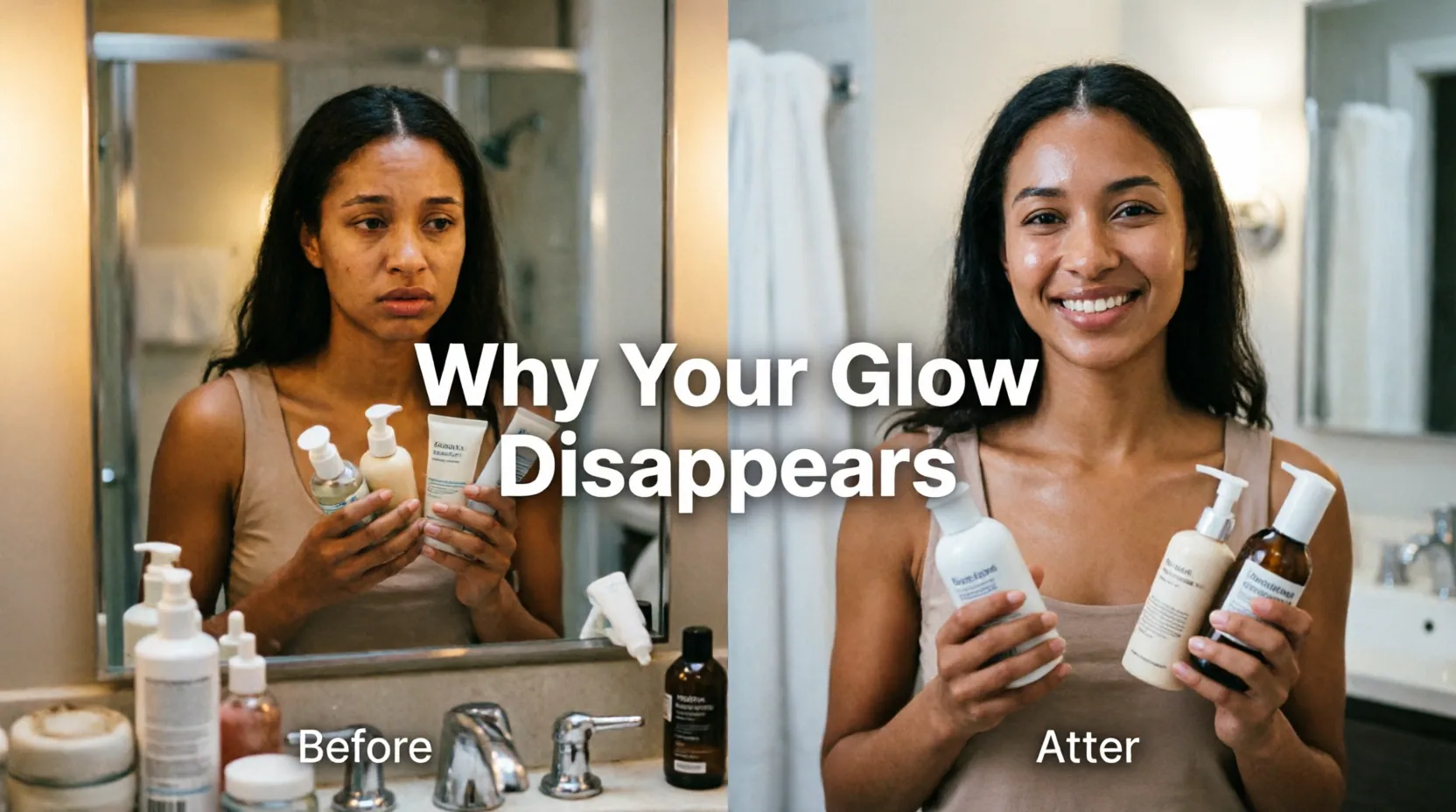
Introduction: When More Products Mean Less Radiance
You cleanse, tone, serum, moisturize, and protect. You follow every step recommended by influencers, dermatologists, and beauty editors. Your bathroom counter resembles a skincare laboratory. Yet, when you look in the mirror, your complexion appears dull, tired, or lackluster. The glow you expected from your diligent routine remains elusive—or worse, seems to have faded since you started trying harder.
This frustrating phenomenon has a name: the skincare paradox. It describes the counterintuitive reality where adding more products, steps, or "active" ingredients to your routine doesn't enhance your skin's radiance—it diminishes it. For many women, the pursuit of glowing skin through increasingly complex routines inadvertently triggers the very concerns they hope to resolve: dullness, sensitivity, uneven texture, and a loss of that healthy, lit-from-within luminosity.
Understanding why this happens requires looking beyond product labels and marketing claims. The loss of glow despite a full routine is rarely about using the "wrong" products. More often, it stems from biological interactions, lifestyle factors, and routine design choices that work against your skin's natural rhythms. This comprehensive guide explores the science behind the skincare paradox, identifies the most common culprits, and provides evidence-based strategies to restore your radiance—often by doing less, not more.
What Is "Glow" and Why Does It Disappear?
Before addressing why glow fades, it's essential to define what creates it in the first place. Skin radiance isn't a single factor—it's the visible result of multiple physiological processes working in harmony.
The Biological Foundations of Glow
- Smooth surface texture: Light reflects evenly off a uniform surface; rough or uneven texture scatters light, creating dullness
- Optimal hydration: Well-hydrated skin cells appear plump and translucent, allowing light to penetrate and reflect with a healthy sheen
- Intact barrier function: A strong skin barrier retains moisture, blocks irritants, and maintains the lipid layer that contributes to natural luminosity
- Efficient cell turnover: Regular shedding of dead cells reveals fresh, radiant skin beneath
- Healthy microcirculation: Good blood flow delivers oxygen and nutrients, creating a subtle rosy undertone
- Balanced melanin distribution: Even pigment prevents shadowing or patchiness that disrupts light reflection
When any of these elements are compromised, glow diminishes—even if you're using dozens of products.
Why Glow Can Fade Despite "Doing Everything Right"
The skincare paradox emerges when routine choices unintentionally disrupt the biological foundations of radiance. Common mechanisms include:
- Over-exfoliation damaging the barrier and increasing transepidermal water loss
- Product incompatibility causing irritation or neutralizing active ingredients
- Internal factors (stress, sleep, nutrition) overriding topical efforts
- Using too many actives simultaneously, overwhelming skin's repair capacity
- Neglecting the difference between temporary "dew" and lasting radiance
Recognizing these patterns is the first step toward restoring your skin's natural luminosity.
Featured Snippet: Skin glow results from smooth texture, optimal hydration, intact barrier, efficient cell turnover, healthy circulation, and even pigment. The skincare paradox occurs when routine choices—over-exfoliation, product incompatibility, too many actives, or neglecting internal factors—disrupt these foundations, causing dullness despite using many products.
Culprit 1: Over-Exfoliation and Barrier Compromise
One of the most common reasons women lose glow despite a full routine is unintentional barrier damage from excessive exfoliation.
How Over-Exfoliation Destroys Radiance
Exfoliation removes dead skin cells to reveal fresher, brighter skin underneath. However, when performed too frequently or with overly aggressive products, it backfires:
- Strips protective lipids: The skin barrier relies on ceramides, cholesterol, and fatty acids; over-exfoliation depletes these, increasing water loss and dullness
- Triggers inflammation: Micro-tears and irritation activate immune responses that cause redness and uneven texture
- Disrupts cell turnover: Paradoxically, excessive exfoliation can slow natural renewal as the skin enters protective mode
- Increases sensitivity: Compromised barrier allows irritants to penetrate more easily, causing reactive dullness
Signs You're Over-Exfoliating
- Skin feels tight, raw, or stings with products that never caused issues
- Increased redness, especially after cleansing or applying actives
- Makeup applies patchily or emphasizes texture instead of smoothing it
- Breakouts or small bumps appear despite "perfect" routine
- Skin looks dull or ashy shortly after exfoliating
The Exfoliation Sweet Spot
Chemical exfoliants (AHAs/BHAs): 1-3 times weekly maximum, depending on concentration and skin tolerance
Physical exfoliants: Avoid harsh scrubs; if used, limit to once weekly with gentle, rounded particles
Enzyme exfoliants: Gentler option; can be used 2-3 times weekly for sensitive skin
Key principle: Exfoliate to support, not replace, your skin's natural renewal process. If skin feels worse after exfoliating, you've gone too far.
Featured Snippet: Over-exfoliation compromises the skin barrier by stripping lipids, triggering inflammation, disrupting cell turnover, and increasing sensitivity. Signs include tightness, stinging, patchy makeup, breakouts, and post-exfoliation dullness. Limit chemical exfoliants to 1-3x weekly; avoid harsh scrubs. Exfoliate to support natural renewal, not override it.
Culprit 2: Product Incompatibility and Layering Errors
Using many products doesn't guarantee better results. In fact, certain combinations can neutralize actives, cause irritation, or create a film that blocks light reflection.
Common Incompatible Combinations
- Vitamin C + Niacinamide (at high concentrations/pH mismatch): Can cause flushing or reduce efficacy if formulations aren't pH-compatible
- Retinoids + AHAs/BHAs (same night): Increases irritation risk and barrier damage without added benefit
- Multiple strong actives simultaneously: Overwhelms skin's repair capacity, leading to reactive dullness
- Heavy occlusives over water-based serums: Can trap products unevenly, creating a hazy film that scatters light
- Conflicting pH levels: Using low-pH actives followed by high-pH products can neutralize benefits
Layering Mistakes That Diminish Glow
- Applying products to dry skin: Humectants like hyaluronic acid need damp skin to draw in moisture; applying to dry skin can pull water from deeper layers
- Not allowing absorption time: Layering too quickly can cause pilling or uneven distribution, disrupting light reflection
- Using too many silicone-based products: Can create a temporary smoothness that masks underlying dullness and blocks beneficial ingredients
- Skipping moisturizer after actives: Leaves barrier vulnerable to transepidermal water loss, causing dehydration-related dullness
Smart Layering Principles for Radiance
- Thinnest to thickest: Apply water-based serums before oils or creams to ensure penetration
- Wait between actives: Allow 1-2 minutes for absorption before applying the next product
- Alternate potent actives: Use retinoids and exfoliants on separate nights to avoid irritation
- Seal hydration: Always follow humectants with an emollient or occlusive to lock in moisture
- Less is more: If glow is fading, simplify to 3-5 essential products before adding complexity
Featured Snippet: Product incompatibility and layering errors can neutralize actives, cause irritation, or create light-scattering films. Avoid combining retinoids with AHAs same night, applying humectants to dry skin, or using too many silicones. Layer thinnest to thickest, allow absorption time, alternate potent actives, and seal hydration. When glow fades, simplify before adding more.
Culprit 3: Internal Factors That Override Topical Efforts
Skincare products work on the skin's surface, but radiance is fundamentally influenced by internal physiology. No amount of serums can fully compensate for systemic imbalances.
Sleep Deprivation and Circadian Disruption
Impact on glow: During deep sleep, skin increases cell turnover, repairs UV damage, and boosts collagen production. Poor sleep disrupts these processes, leading to:
- Dull, sallow complexion from accumulated dead cells
- Dark circles and puffiness from poor circulation
- Increased inflammation that disrupts light reflection
- Dehydration from impaired barrier repair overnight
Solution: Prioritize 7-9 hours of quality sleep; maintain consistent sleep/wake times; create a wind-down routine to support circadian rhythm.
Chronic Stress and Cortisol Elevation
Impact on glow: Elevated cortisol from chronic stress:
- Breaks down collagen, reducing skin firmness and light-reflecting smoothness
- Increases inflammation, causing redness and uneven texture
- Disrupts barrier function, leading to dehydration-related dullness
- Triggers oil overproduction that can create a greasy-yet-dull appearance
Solution: Incorporate daily stress-reduction practices (meditation, breathwork, nature exposure); protect boundaries to prevent burnout; consider adaptogenic support if appropriate.
Nutritional Deficiencies and Hydration
Key nutrients for radiance:
- Vitamin C: Essential for collagen synthesis and antioxidant protection
- Vitamin E: Protects skin lipids from oxidative damage
- Omega-3 fatty acids: Support barrier integrity and reduce inflammation
- Zinc: Regulates oil production and supports wound healing
- Antioxidants: Combat free radicals that cause dullness and premature aging
Hydration: Dehydrated skin appears flat and lackluster regardless of topical moisturizers. Aim for adequate water intake and limit dehydrating beverages.
Hormonal Fluctuations
Impact on glow: Hormonal shifts (menstrual cycle, perimenopause, thyroid changes) can:
- Alter oil production, creating uneven texture
- Affect hydration levels, causing temporary dullness
- Influence melanin distribution, leading to patchy radiance
Solution: Track patterns to anticipate changes; adjust routine seasonally or cyclically; consult a healthcare provider if hormonal symptoms are significant.
Featured Snippet: Internal factors override topical skincare: sleep deprivation disrupts overnight repair; chronic stress elevates cortisol that breaks down collagen; nutritional deficiencies limit radiance-building nutrients; hormonal fluctuations alter oil and hydration. Support glow from within with quality sleep, stress management, balanced nutrition, and hormonal awareness.
Culprit 4: Misunderstanding "Active" Ingredients and Overuse
The marketing of "active" ingredients has created a misconception that more actives equal better results. In reality, overuse can trigger the skincare paradox.
What "Active" Really Means
An active ingredient is any component that causes a biological change in the skin. This includes:
- Retinoids (cell turnover, collagen stimulation)
- Vitamin C (antioxidant, brightening)
- AHAs/BHAs (exfoliation)
- Niacinamide (barrier support, oil regulation)
- Peptides (collagen signaling)
While powerful, these ingredients require strategic use. Using multiple actives simultaneously doesn't multiply benefits—it multiplies irritation risk.
The Irritation-Dullness Cycle
- Multiple actives cause subclinical irritation
- Inflammation disrupts barrier function and cell turnover
- Compromised barrier increases water loss and sensitivity
- Skin appears dull, reactive, or uneven
- User adds more products to "fix" dullness, worsening the cycle
Smart Active Ingredient Strategy
- One new active at a time: Introduce one, wait 2-4 weeks, assess tolerance before adding another
- Alternate potent actives: Use retinoids and exfoliants on separate nights
- Buffer strong actives: Apply moisturizer before or after retinoids to reduce irritation
- Listen to your skin: If glow fades after adding an active, pause and reassess
- Focus on consistency: Regular use of one well-tolerated active beats sporadic use of many
Featured Snippet: "Active" ingredients cause biological changes but require strategic use. Overusing actives triggers irritation that disrupts barrier function and cell turnover, causing dullness. Introduce one active at a time, alternate potent actives, buffer strong ingredients, and prioritize consistency over complexity. If glow fades after adding an active, pause and reassess.
Culprit 5: Neglecting Sun Protection and Environmental Defense
Even the most elaborate routine fails if it doesn't include consistent sun protection. UV exposure is the primary external cause of dullness and lost radiance.
How UV Damage Diminishes Glow
- Oxidative stress: UV rays generate free radicals that damage skin cells and disrupt light reflection
- Collagen degradation: UV exposure activates enzymes that break down collagen, reducing firmness and smoothness
- Uneven pigmentation: Sun exposure triggers melanin production, creating shadowing that scatters light
- Barrier impairment: UV damage compromises the lipid barrier, increasing dehydration-related dullness
Common Sunscreen Mistakes That Undermine Radiance
- Insufficient amount: Using less than 1/4 teaspoon for face/neck provides inadequate protection
- Inconsistent reapplication: Sunscreen degrades with time, sweat, and rubbing; reapply every 2 hours with exposure
- Choosing wrong formula: Heavy, white-cast sunscreens can create a dull film; lightweight, tinted formulas often enhance radiance
- Skipping on cloudy days: Up to 80% of UV rays penetrate clouds; daily protection is non-negotiable
Beyond UV: Pollution and Blue Light
Modern environmental stressors also impact glow:
- Air pollution: Particulate matter generates oxidative stress and inflammation
- Blue light (HEV): From screens and sunlight, may contribute to pigmentation and oxidative damage
- Hard water: Mineral deposits can leave a film that scatters light and blocks product absorption
Defense strategies: Use antioxidant serums (vitamin C, ferulic acid, green tea) to neutralize free radicals; consider tinted sunscreen with iron oxides for visible light protection; rinse with filtered water if hard water is an issue.
Featured Snippet: UV exposure is the #1 external cause of dullness: it generates oxidative stress, degrades collagen, triggers uneven pigmentation, and impairs barrier function. Use 1/4 tsp SPF 30+ daily, reapply every 2 hours with exposure, and choose lightweight formulas. Add antioxidant serums for pollution/blue light defense. Consistent sun protection is foundational to radiance.
The Simplification Protocol: Restoring Glow by Doing Less
When glow fades despite a full routine, the solution is often strategic simplification. This evidence-based protocol helps you reset and rebuild radiance.
Phase 1: The Reset (2-4 Weeks)
Goal: Eliminate potential irritants and allow barrier recovery.
- Pause all actives: Stop retinoids, AHAs, BHAs, vitamin C, and strong antioxidants temporarily
- Simplify to essentials: Gentle cleanser, hydrating serum, barrier-supportive moisturizer, mineral sunscreen
- Focus on hydration: Apply hyaluronic acid or glycerin to damp skin, seal with moisturizer
- Avoid new products: No experimenting during this phase
Expected outcome: Reduced redness, improved comfort, and gradual return of baseline radiance as barrier repairs.
Phase 2: Strategic Reintroduction (Weeks 5-8)
Goal: Reintroduce one active at a time to identify what supports glow without causing irritation.
- Week 5: Reintroduce one gentle active (e.g., 4-5% niacinamide for barrier support)
- Week 6: Assess tolerance; if no irritation, continue; if irritation occurs, pause and extend Phase 1
- Week 7: If tolerated, add a second active (e.g., low-concentration vitamin C in AM)
- Week 8: Evaluate overall glow; adjust frequency or products based on response
Key principle: Add slowly, observe carefully, and prioritize what your skin tolerates over what marketing promises.
Phase 3: Maintenance and Optimization (Ongoing)
Goal: Maintain radiance with a sustainable, personalized routine.
- Keep what works: Retain products that consistently support glow without irritation
- Rotate seasonally: Adjust texture and hydration based on climate (lighter in summer, richer in winter)
- Monitor internal factors: Continue supporting sleep, stress management, and nutrition
- Reassess quarterly: Skin changes over time; be willing to adapt your routine
The Minimal Radiance Routine Template
Morning:
- Gentle cleanser or water rinse
- Antioxidant serum (vitamin C or niacinamide)
- Lightweight moisturizer with barrier-supportive ingredients
- Broad-spectrum SPF 30+ (tinted if desired for visible light protection)
Evening:
- Gentle cleanser (double cleanse if wearing sunscreen/makeup)
- Hydrating serum (hyaluronic acid or glycerin on damp skin)
- One targeted active (retinoid 2-3x weekly OR gentle exfoliant 1-2x weekly)
- Barrier-repair moisturizer with ceramides or squalane
Weekly: One hydrating mask or gentle enzyme exfoliation if tolerated
Featured Snippet: Restore glow with a simplification protocol: Phase 1 (2-4 weeks) pause actives, use gentle cleanser + hydrating serum + barrier moisturizer + SPF. Phase 2 (weeks 5-8) reintroduce one active at a time, assess tolerance. Phase 3 maintain with minimal routine: AM—cleanser, antioxidant, moisturizer, SPF; PM—cleanse, hydrate, one active, barrier moisturizer. Consistency over complexity.
When to Seek Professional Guidance
While simplification helps many women, professional evaluation is warranted if:
- Dullness persists after 8-12 weeks of consistent, simplified care
- Skin shows signs of significant barrier damage (persistent redness, stinging, flaking)
- You suspect underlying conditions (rosacea, eczema, hormonal imbalances)
- Glow loss is accompanied by other symptoms (fatigue, hair changes, menstrual irregularities)
- You want personalized guidance on ingredient compatibility or professional treatments
Who to Consult
- Dermatologist: For medical evaluation, prescription treatments, or procedures like chemical peels or lasers that can enhance radiance
- Esthetician: For personalized product recommendations and professional facials that support barrier health
- Functional medicine provider: If internal factors (hormones, gut health, nutrient status) may be contributing
- Registered dietitian: For nutrition strategies that support skin radiance from within
Frequently Asked Questions (FAQs)
Can using too many products really make skin duller?
Yes. Overloading skin with multiple actives, incompatible formulations, or heavy textures can cause irritation, barrier compromise, or light-scattering films. This triggers inflammation and dehydration that manifest as dullness. Simplifying often restores radiance faster than adding more products.
How long does it take to regain glow after simplifying my routine?
Initial improvements in comfort and reduced redness may appear in 1-2 weeks. Visible radiance typically returns in 4-6 weeks as the barrier repairs and cell turnover normalizes. Full restoration may take 8-12 weeks of consistent, simplified care.
Should I stop using vitamin C if my skin looks dull?
Not necessarily. Vitamin C supports radiance through antioxidant protection and collagen synthesis. However, if your formulation is unstable, pH-incompatible with other products, or too concentrated for your skin, it can cause irritation. Try a lower concentration (10-15%), apply to damp skin, or use it on alternate days. If dullness persists, pause temporarily during the reset phase.
Can dehydration cause dullness even with moisturizer?
Absolutely. Topical moisturizers seal in hydration but can't create water. If your skin is dehydrated internally (from inadequate water intake, high sodium, caffeine, or alcohol), it will appear dull regardless of moisturizer. Support hydration from within by drinking adequate water and limiting dehydrating beverages.
Is it normal for skin to look worse before better when simplifying?
Some adjustment is normal. When you pause actives, your skin may initially feel "boring" or less "active." However, significant worsening (increased redness, breakouts, or discomfort) suggests you may need to extend the reset phase or consult a professional. Mild temporary changes are typical; severe reactions are not.
Can professional treatments help restore glow faster?
Yes, when used strategically. Gentle chemical peels, hydrating facials, or LED therapy can enhance radiance by supporting cell turnover and reducing inflammation. However, these work best when your routine is already simplified and your barrier is healthy. Aggressive treatments on compromised skin can worsen dullness.
Conclusion: Radiance Is a Reflection of Balance, Not Complexity
The skincare paradox teaches a profound lesson: glow isn't achieved by accumulating products, but by cultivating balance. Your skin's radiance reflects the harmony between your routine, your biology, and your lifestyle. When that harmony is disrupted—by over-exfoliation, product incompatibility, internal stress, or environmental neglect—dullness follows, no matter how many serums you apply.
Restoring glow rarely requires more steps. It requires listening to your skin, simplifying strategically, and supporting your body from within. It means choosing consistency over novelty, quality over quantity, and self-compassion over perfectionism.
Remember: your skin is not a project to be perfected. It is a living, responsive organ that thrives when respected. When you align your routine with your skin's natural rhythms and needs, radiance returns—not as a temporary effect, but as a sustainable expression of health.
Start where you are. Simplify with intention. Observe with curiosity. Adjust with kindness. Your glow is not lost; it is waiting for the conditions that allow it to shine.
📖 আরও পড়ুন: Skin Care
- 🔗 কপালে বা গালে গুটি দানা: আসল কারণ ও কার্যকরী সমাধান
- 🔗 ঘামাচি ও ঘামের দানা: ঘরোয়া প্রতিকার ও ডাক্তারি পরামর্শ
- 🔗 How Indoor Pollution Impacts Female Skin and Protection Tips
- 🔗 সোরিয়াসিস প্যাচ ও স্কিন ব্যারিয়ার: বিজ্ঞানসম্মত পুনরুদ্ধার গাইড
- 🔗 Say Goodbye to Whiteheads: Treating Clogged Pores in Humid Climates