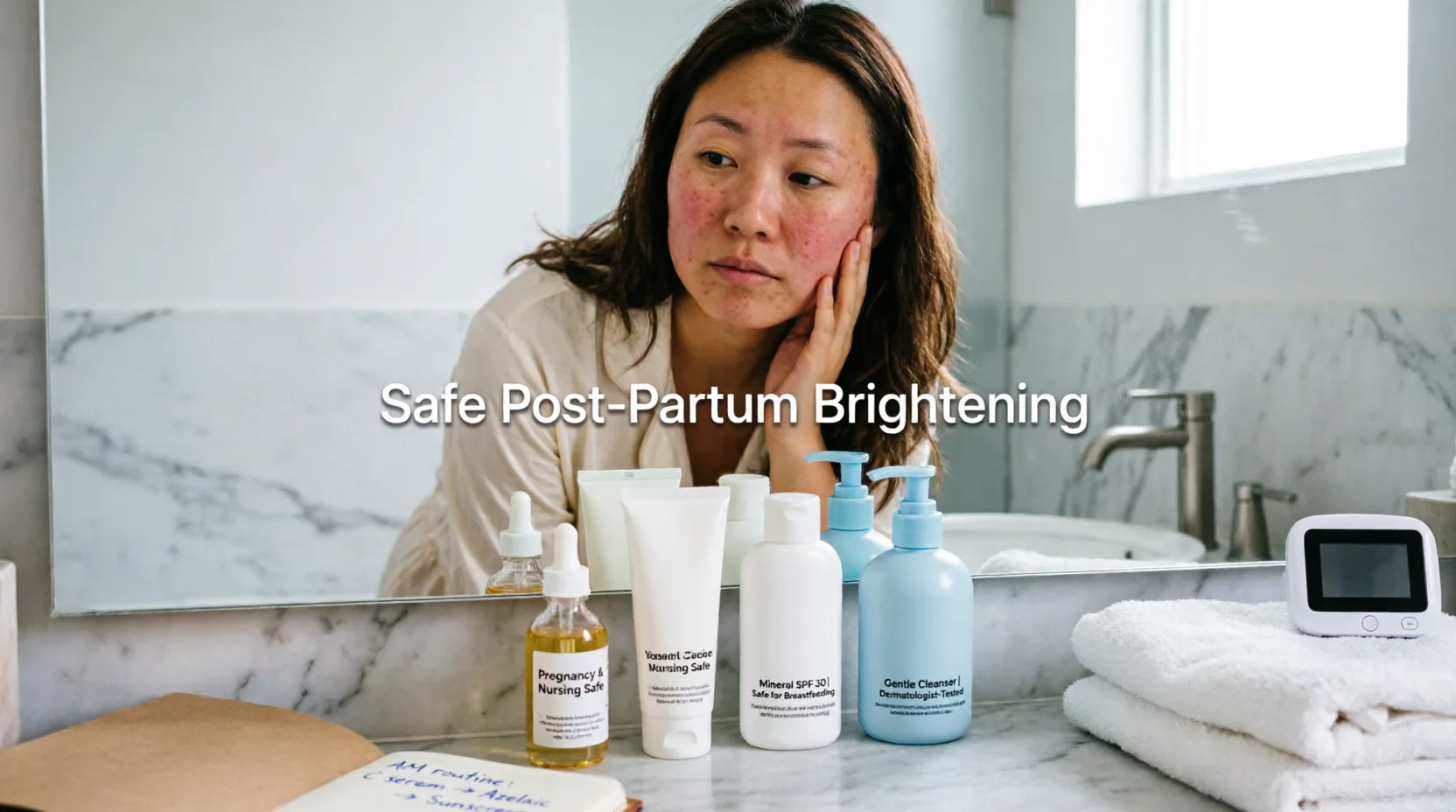
The "mask of pregnancy" doesn't always fade after delivery. Post-partum melasma and skin discoloration affect up to 70% of pregnant women, and for many new mothers, these dark patches persist long after childbirth—creating frustration during an already challenging time. The good news? You don't have to wait until you stop breastfeeding to address these changes, but you do need a specialized approach that prioritizes safety for both you and your baby.
Post-partum melasma is driven by the dramatic hormonal shifts of pregnancy and childbirth, combined with sleep deprivation, stress, and the unique challenges of new motherhood. While many powerful brightening ingredients are off-limits during breastfeeding, there are still effective, evidence-based options that can help fade dark spots and restore your skin's even tone—without compromising your milk supply or your baby's health.
In this comprehensive, dermatologist-informed guide designed specifically for nursing mothers, we'll decode the science behind post-partum melasma, reveal the hidden triggers that worsen discoloration after pregnancy, share the exact safe brightening protocol for breastfeeding moms, and provide expert strategies for preventing recurrence. Whether you're dealing with melasma on your cheeks, forehead, or upper lip, you'll learn how to build a personalized routine that delivers visible results while keeping you and your baby safe.
Understanding Post-Partum Melasma: Why It Happens
Short answer: Post-partum melasma is caused by hormonal fluctuations during pregnancy and after delivery, combined with UV exposure, genetic predisposition, and the stress of new motherhood—creating persistent dark patches that require specialized treatment.
Melasma during and after pregnancy isn't just a cosmetic concern—it's a physiological response to the dramatic changes your body undergoes:
Hormonal Drivers
Estrogen and Progesterone Surge:
- Pregnancy causes massive increases in estrogen and progesterone
- These hormones stimulate melanocytes to produce excess melanin
- Hormonal levels remain elevated during breastfeeding
- Gradual decline post-partum can take 6-12 months or longer
MSH (Melanocyte-Stimulating Hormone):
- Increases significantly during pregnancy
- Directly stimulates melanin production
- Remains elevated in some women post-partum
Why Melasma Persists After Delivery:
- Hormones don't return to pre-pregnancy levels immediately
- Breastfeeding maintains elevated prolactin and other hormones
- Established melanin deposits take time to fade
- Ongoing UV exposure maintains pigmentation
Contributing Factors
UV Exposure:
- Pregnancy makes skin more sensitive to UV radiation
- Even minimal sun exposure can trigger or worsen melasma
- Visible light (from screens and indoor lighting) also contributes
- Many new mothers forget sunscreen during busy days
Sleep Deprivation and Stress:
- New motherhood brings chronic sleep disruption
- Elevated cortisol from stress can worsen pigmentation
- Poor sleep impairs skin barrier function and healing
- Stress hormones can trigger inflammation that worsens melasma
Genetic Predisposition:
- Family history increases risk significantly
- Fitzpatrick skin types III-VI are more susceptible
- Some women's melanocytes are more hormonally sensitive
Safe vs. Unsafe Ingredients for Breastfeeding Moms
Short answer: Safe brightening ingredients for nursing mothers include vitamin C, azelaic acid, niacinamide, licorice root, and mineral sunscreens; avoid hydroquinone, retinoids, high-dose salicylic acid, and chemical sunscreens that may transfer to baby.
Navigating skincare while breastfeeding requires understanding which ingredients are safe for both you and your baby:
Safe Ingredients for Nursing Mothers
Vitamin C (L-Ascorbic Acid, Sodium Ascorbyl Phosphate):
- Safety: Topical use is safe; minimal systemic absorption
- Mechanism: Inhibits tyrosinase, antioxidant protection, brightens
- Concentration: 10-20% is effective and well-tolerated
- Best for: Overall brightening, preventing new pigmentation
Azelaic Acid (10-20%):
- Safety: Category B in pregnancy; safe for breastfeeding
- Mechanism: Inhibits tyrosinase, anti-inflammatory, normalizes keratinization
- Concentration: 10% OTC; 15-20% prescription
- Best for: Melasma, post-inflammatory hyperpigmentation, sensitive skin
Niacinamide (4-5%):
- Safety: Very safe; minimal absorption
- Mechanism: Blocks melanosome transfer, strengthens barrier, reduces inflammation
- Concentration: 4-5% is optimal for brightening
- Best for: All skin types, especially sensitive or reactive skin
Licorice Root Extract (Glabridin):
- Safety: Safe for topical use during breastfeeding
- Mechanism: Natural tyrosinase inhibitor, anti-inflammatory
- Best for: Gentle brightening, sensitive skin
Mineral Sunscreens (Zinc Oxide, Titanium Dioxide):
- Safety: Safest option for nursing mothers; sits on skin surface
- Mechanism: Physical UV blockers; iron oxides block visible light
- Best for: Daily protection; preventing melasma worsening
- Important: Choose tinted formulas with iron oxides for visible light protection
Alpha Arbutin (2%):
- Safety: Generally considered safe; limited systemic absorption
- Mechanism: Natural hydroquinone derivative; inhibits tyrosinase
- Best for: Gentle brightening alternative to hydroquinone
Ingredients to Avoid While Breastfeeding
Hydroquinone:
- Why avoid: High systemic absorption (35-45%); unknown transfer to breast milk
- Risk: Potential toxicity to infant; lack of safety data
- Alternative: Azelaic acid, alpha arbutin, or kojic acid
Retinoids (Retinol, Tretinoin, Retinal):
- Why avoid: Systemic absorption; potential transfer to breast milk
- Risk: Theoretical risk to infant; limited safety data
- Alternative: Bakuchiol (plant-based retinol alternative) or azelaic acid
High-Dose Salicylic Acid (Oral or High-Concentration Topical):
- Why avoid: Systemic absorption at high doses; salicylate transfer to milk
- Safe limit: Low-dose topical (under 2%) in limited areas is generally acceptable
- Alternative: Glycolic acid or lactic acid for exfoliation
Chemical Sunscreens (Oxybenzone, Octinoxate):
- Why avoid: Systemic absorption; potential endocrine disruption
- Risk: May transfer to breast milk; unknown infant effects
- Alternative: Mineral sunscreens with zinc oxide and titanium dioxide
High-Concentration Essential Oils:
- Why avoid: Some can transfer to breast milk; potential infant sensitivity
- Risk: Limited safety data for nursing infants
- Alternative: Fragrance-free, hypoallergenic formulations
The Safe Brightening Protocol for Nursing Moms
Short answer: Follow a 3-phase protocol: gentle cleansing and barrier support (weeks 1-2), targeted brightening with safe actives (weeks 3-12), and maintenance with strict sun protection—using only nursing-safe ingredients consistently.
This evidence-based protocol prioritizes safety while delivering visible results:
Phase 1: Foundation and Barrier Support (Weeks 1-2)
Goal: Establish gentle routine, repair barrier, and begin sun protection
Daily Routine
Morning:
- Gentle Cleanser:
- Use fragrance-free, non-foaming cleanser
- Avoid hot water; use lukewarm only
- Pat dry gently—never rub
- Recommended: CeraVe Hydrating Cleanser, Vanicream Gentle Facial Cleanser
- Vitamin C Serum (Optional):
- Apply 10% L-ascorbic acid or sodium ascorbyl phosphate
- Apply to damp skin for better absorption
- Wait 2-3 minutes before next step
- Recommended: SkinCeuticals C E Ferulic (if budget allows), Mad Hippie Vitamin C Serum
- Niacinamide Serum:
- Apply 4-5% niacinamide serum
- Strengthens barrier and begins brightening
- Well-tolerated by sensitive post-partum skin
- Recommended: The Ordinary Niacinamide 10% + Zinc 1% (dilute if sensitive), Paula's Choice 10% Niacinamide Booster
- Moisturizer:
- Use ceramide-rich, fragrance-free moisturizer
- Supports barrier repair during hormonal changes
- Recommended: CeraVe Moisturizing Cream, Vanicream Moisturizing Cream
- Mineral Sunscreen SPF 50+ (Non-Negotiable):
- Apply tinted mineral sunscreen with zinc oxide and iron oxides
- Reapply every 2 hours if outdoors
- Even indoors near windows—visible light worsens melasma
- Recommended: EltaMD UV Clear Tinted SPF 46, La Roche-Posay Anthelios Mineral Tinted SPF 50, Colorescience Sunforgettable Total Protection Face Shield SPF 50
Evening:
- Gentle Cleanser:
- Double cleanse if wearing sunscreen or makeup
- First: Oil-based cleanser or micellar water
- Second: Gentle water-based cleanser
- Azelaic Acid (Start Slowly):
- Apply 10% azelaic acid 2-3x/week initially
- Apply to dry skin; wait 20 minutes before moisturizer
- Gradually increase to nightly as tolerated
- Recommended: The Ordinary Azelaic Acid Suspension 10%, Paula's Choice 10% Azelaic Acid Booster
- Moisturizer:
- Apply ceramide-rich moisturizer
- Slightly richer formula than morning if skin is dry
- Look for ingredients like squalane, ceramides, or panthenol
Phase 2: Active Brightening (Weeks 3-12)
Goal: Intensify safe brightening while maintaining barrier health
Enhanced Routine
Morning:
- Gentle cleanse
- Vitamin C serum (10-15%)
- Niacinamide (4-5%)
- Alpha arbutin 2% (optional addition)
- Moisturizer
- Tinted mineral SPF 50+
Evening:
- Double cleanse
- Azelaic acid 10-15% (nightly)
- Wait 20 minutes
- Licorice root extract or alpha arbutin serum (alternate nights)
- Moisturizer with ceramides
Weekly Treatments
Gentle Exfoliation (1x/week):
- Use lactic acid 5-10% or glycolic acid 5-7%
- Avoid salicylic acid or high-percentage acids
- Apply for 5-10 minutes, then rinse
- Follow with extra moisturizer
- Recommended: The Ordinary Lactic Acid 5% + HA, Pixi Glow Tonic (5% glycolic)
Hydrating Mask (1-2x/week):
- Use hyaluronic acid or ceramide-based mask
- Supports barrier during active treatment
- Recommended: Laneige Water Sleeping Mask, CeraVe Hydrating Hyaluronic Acid Serum (as mask)
Phase 3: Maintenance (Week 13+)
Goal: Sustain results with simplified routine
- Continue daily SPF: Non-negotiable for preventing recurrence
- Maintenance actives: Azelaic acid 3-4x/week, vitamin C daily
- Seasonal adjustments: Richer moisturizer in winter; lighter in summer
- Monitor triggers: Track sun exposure, stress, and hormonal changes
Lifestyle Modifications to Support Brightening
Short answer: Enhance results by prioritizing sleep when possible, managing stress, wearing protective clothing, avoiding peak sun hours, staying hydrated, and eating an antioxidant-rich diet.
Skincare alone isn't enough. These lifestyle habits create the optimal environment for fading melasma:
Sun Protection Beyond Sunscreen
- Wide-brimmed hat: Wear 3+ inch brim when outdoors with baby
- UV-protective clothing: Choose UPF-rated fabrics for outdoor activities
- Seek shade: Avoid direct sun between 10 AM - 4 PM
- Window film: Apply UV-blocking film to car and home windows
- Reapply sunscreen: Every 2 hours, especially after wiping face or sweating
Sleep and Stress Management
Maximize Sleep Quality:
- Sleep when baby sleeps (even short naps help)
- Create a dark, cool sleep environment
- Limit screen time before bed
- Ask for help with nighttime feedings if possible
Stress Reduction:
- Practice deep breathing during stressful moments
- Take short walks with baby for fresh air and movement
- Connect with other new mothers for support
- Accept help from family and friends
Nutrition for Skin Health
Foods That Support Brightening:
- Vitamin C-rich foods: Citrus, berries, bell peppers, broccoli
- Antioxidants: Leafy greens, colorful vegetables, green tea
- Omega-3 fatty acids: Fatty fish, flaxseed, walnuts (anti-inflammatory)
- Vitamin E: Almonds, sunflower seeds, avocado
- Zinc: Lean meats, pumpkin seeds, chickpeas (supports healing)
Hydration:
- Drink 8-10 glasses of water daily (more if breastfeeding)
- Herbal teas (caffeine-free) count toward hydration
- Limit caffeine, which can dehydrate and worsen pigmentation
Product Recommendations for Nursing Mothers
Short answer: Choose fragrance-free, mineral-based products with proven safe ingredients: CeraVe, Vanicream, La Roche-Posay, SkinCeuticals, and The Ordinary offer nursing-safe options for brightening and protection.
Safe Cleansers
- CeraVe Hydrating Cleanser: Ceramides and hyaluronic acid; fragrance-free
- Vanicream Gentle Facial Cleanser: Free of dyes, fragrance, parabens; ideal for sensitive skin
- La Roche-Posay Toleriane Hydrating Gentle Cleanser: Prebiotic thermal water and ceramides
Safe Brightening Serums
- SkinCeuticals C E Ferulic: 15% vitamin C, vitamin E, ferulic acid; gold standard (premium price)
- Mad Hippie Vitamin C Serum: Sodium ascorbyl phosphate (stable vitamin C); affordable
- The Ordinary Niacinamide 10% + Zinc 1%: Budget-friendly; dilute if sensitive
- Paula's Choice 10% Azelaic Acid Booster: Multi-tasking brightener and anti-inflammatory
- The Ordinary Alpha Arbutin 2% + HA: Gentle brightening alternative
Safe Moisturizers
- CeraVe Moisturizing Cream: Ceramides and hyaluronic acid; excellent barrier support
- Vanicream Moisturizing Cream: Simple formula; no common irritants
- La Roche-Posay Toleriane Double Repair Face Moisturizer: Ceramides and niacinamide
- Aveeno Calm + Restore Oat Gel Moisturizer: Oat extract for sensitive post-partum skin
Safe Sunscreens (Critical)
- EltaMD UV Clear Tinted SPF 46: Zinc oxide, niacinamide; tinted with iron oxides
- La Roche-Posay Anthelios Mineral Tinted SPF 50: Iron oxides block visible light
- Colorescience Sunforgettable Total Protection Face Shield SPF 50: Mineral formula with tint options
- Thinkbaby Safe Sunscreen SPF 50: Mineral-only; safe for baby and mom
Products to Avoid
- Hydroquinone products: Including prescription Tri-Luma, over-the-counter dark spot correctors
- Retinol/retinoid products: Including Differin, Retin-A, retinol serums
- High-dose salicylic acid: Including oral aspirin, high-concentration peels
- Chemical sunscreens: Oxybenzone, octinoxate, avobenzone-based formulas
- Fragranced products: Essential oils, synthetic fragrance in skincare
Common Mistakes Nursing Moms Make
Avoid these errors that can worsen melasma or compromise safety:
Mistake #1: Skipping Sunscreen Because You're "Just Running Errands"
Why it hurts: Even 10-15 minutes of sun exposure can trigger melasma. UV exposure through car windows and visible light from indoor lighting also worsen pigmentation.
Fix: Apply tinted mineral SPF every morning without exception. Keep a travel-size sunscreen in your diaper bag for reapplication.
Mistake #2: Using Pre-Pregnancy Products Without Checking Safety
Why it hurts: Many effective brightening ingredients (hydroquinone, retinoids) aren't safe during breastfeeding and can transfer to baby through milk.
Fix: Review all products with your dermatologist or pediatrician. When in doubt, choose mineral-based, fragrance-free alternatives.
Mistake #3: Expecting Quick Results While Sleep-Deprived
Why it hurts: Sleep deprivation and stress slow skin healing and can worsen pigmentation. Impatience leads to over-treating or using unsafe products.
Fix: Set realistic expectations: 8-12 weeks for visible improvement. Focus on consistency over speed. Accept help to maximize rest when possible.
Mistake #4: Neglecting Sun Protection Indoors
Why it hurts: Visible light from screens and indoor lighting can worsen melasma, especially in deeper skin tones. Many new mothers spend hours indoors with baby but skip sunscreen.
Fix: Apply tinted mineral SPF every morning, even if staying home. Iron oxides in tinted sunscreens block visible light.
Mistake #5: Over-Exfoliating in an Attempt to Speed Results
Why it hurts: Post-partum skin is more sensitive due to hormonal changes. Over-exfoliation damages the barrier, causing inflammation that worsens pigmentation.
Fix: Limit exfoliation to 1x/week with gentle acids (lactic or glycolic). Prioritize barrier repair with ceramides and niacinamide.
When to See a Dermatologist
Short answer: Consult a dermatologist if melasma persists beyond 6-12 months post-partum, worsens despite consistent care, is asymmetrical or unusual, or if you want prescription-strength safe treatments.
Professional guidance is helpful when:
Red Flags Requiring Medical Attention
- No improvement: After 3-4 months of consistent safe treatment
- Worsening pigmentation: Despite strict sun protection
- Asymmetrical or unusual patterns: Could indicate other conditions
- Rapid changes: Sudden darkening or texture changes
- Emotional impact: Affecting self-esteem or mental health
What a Dermatologist Can Offer
Prescription Safe Options:
- Azelaic acid 15-20%: Stronger than OTC versions
- Topical tranexamic acid: Emerging treatment for melasma; generally considered safe
- Custom compounded formulas: Tailored to nursing safety requirements
Professional Treatments (Post-Breastfeeding):
- Chemical peels: Can be considered after weaning
- Laser therapy: Generally deferred until after breastfeeding
- Microneedling: May be an option with certain precautions
Personalized Guidance:
- Skin type assessment and melasma classification
- Product recommendations specific to your needs
- Timeline expectations based on severity
- Safety monitoring for you and baby
Expert Tips for Faster, Safer Results
Tip #1: Apply Products While Baby Naps
Use baby's nap time for your skincare routine. This ensures consistency even with a busy schedule. Keep products organized and accessible.
Tip #2: Layer Sunscreen Strategically
Apply sunscreen after moisturizer but before makeup. Wait 2-3 minutes between layers for proper absorption. Reapply with a mineral powder SPF over makeup if needed.
Tip #3: Keep a "Nursing-Safe" Product List
Create a list of approved products on your phone. Share it with partners or family who might purchase skincare for you. This prevents accidental purchases of unsafe products.
Tip #4: Track Progress with Photos
Take weekly photos in consistent lighting. Melasma improvement is gradual; photos help you see progress you might miss day-to-day. Celebrate small improvements.
Tip #5: Be Patient with Hormonal Changes
Remember that melasma may not fully fade until hormones stabilize, which can take 6-12 months post-partum or longer if breastfeeding. Consistency now prevents worsening and sets the foundation for faster fading later.
Frequently Asked Questions About Post-Partum Melasma
How long does post-partum melasma last?
Short answer: Post-partum melasma typically begins fading 3-6 months after delivery as hormones stabilize, but can persist 12-18 months or longer, especially while breastfeeding. With consistent treatment and sun protection, significant improvement is achievable.
Timeline depends on:
- Breastfeeding duration (hormones remain elevated)
- Consistency of sun protection
- Genetic predisposition
- Skin type (darker skin tones may take longer)
- Treatment adherence
Will melasma fade on its own after I stop breastfeeding?
Short answer: Often yes, but not always completely. Many women see significant fading 3-6 months after weaning as hormones normalize. However, some pigmentation may persist without active treatment and strict sun protection.
Factors affecting natural fading:
- Severity of melasma during pregnancy
- Sun exposure history
- Genetic factors
- Skin type
Can I use hydroquinone while breastfeeding?
Short answer: No—hydroquinone is not recommended while breastfeeding. It has high systemic absorption (35-45%) and unknown transfer to breast milk. Wait until after weaning to use hydroquinone under dermatologist supervision.
Safe alternatives while nursing:
- Azelaic acid 10-20%
- Alpha arbutin 2%
- Vitamin C 10-20%
- Niacinamide 4-5%
- Licorice root extract
Is it safe to get facial treatments while breastfeeding?
Short answer: Some treatments are safe, others should wait. Safe options include gentle facials, hydrating masks, and superficial enzyme peels. Avoid chemical peels with high-concentration acids, laser treatments, and microneedling until after breastfeeding.
Generally safe:
- Gentle cleansing facials
- Hydrating masks
- Superficial enzyme peels (papain, bromelain)
- Lymphatic drainage massage
Wait until after weaning:
- Chemical peels (glycolic, salicylic, TCA)
- Laser treatments
- Microneedling
- Strong exfoliating treatments
Can I prevent melasma in future pregnancies?
Short answer: You can reduce risk but not completely prevent it. Strict sun protection before and during pregnancy, using safe brightening ingredients, and managing hormonal triggers can minimize severity. However, genetic predisposition means some risk remains.
Prevention strategies:
- Start strict sun protection before conception
- Use pregnancy-safe brightening ingredients (vitamin C, azelaic acid)
- Wear hats and protective clothing
- Avoid peak sun hours
- Continue safe skincare throughout pregnancy
When should I start treating melasma post-partum?
Short answer: You can start safe treatments immediately after delivery. Begin with gentle cleansing, moisturizing, and mineral sunscreen. Add brightening actives (vitamin C, azelaic acid, niacinamide) once your skin has adjusted post-partum, typically 2-4 weeks after delivery.
Timeline:
- Weeks 1-2: Gentle cleansing, moisturizing, strict SPF
- Weeks 3-4: Add niacinamide and vitamin C
- Week 5+: Add azelaic acid if tolerated
- Ongoing: Consistent routine with sun protection
The Bottom Line: Patience and Consistency Pay Off
Post-partum melasma is a common, frustrating consequence of pregnancy hormones—but it's not permanent, and you don't have to wait until you stop breastfeeding to start seeing improvement. With the right safe ingredients, consistent sun protection, and realistic expectations, you can fade dark spots and restore your skin's even tone while nursing your baby.
Remember:
- Safety first: Stick to nursing-safe ingredients like vitamin C, azelaic acid, and niacinamide
- Sun protection is non-negotiable: Tinted mineral SPF 50+ every single day
- Be patient: Hormonal melasma takes 3-12 months to fade significantly
- Consistency matters: Daily routine is more important than perfect products
- Seek help when needed: Dermatologists can provide safe prescription options
- Be kind to yourself: You're growing a human and caring for a baby—your skin can wait
Your post-partum skin deserves gentle, informed care. Start tonight: gentle cleanse, apply vitamin C serum, moisturize, and commit to daily SPF tomorrow morning. Take progress photos. Celebrate small improvements. And trust that with knowledge, patience, and the right safe protocol, brighter, more even skin is within reach—even while breastfeeding.
You are more than your melasma. With science-backed care, self-compassion, and realistic expectations, you can nurture both your baby and your skin—one gentle, safe step at a time.
📖 আরও পড়ুন: Skin Care
- 🔗 ঘামের দুর্গন্ধ ও অতিরিক্ত ঘাম দূর করার উপায়
- 🔗 How Indoor Pollution Impacts Female Skin and Protection Tips
- 🔗 কেন প্রাকৃতিক আলো এবং ঘরের আলোতে আপনার ত্বক আলাদা দেখায়
- 🔗 Why Some Women Experience Cyclical Dullness and How to Fix It
- 🔗 ঋতুভেদে ত্বকের যত্ন: বাংলাদেশে শীত, গ্রীষ্ম ও বর্ষার সম্পূর্ণ স্কিনকেয়ার গাইড