
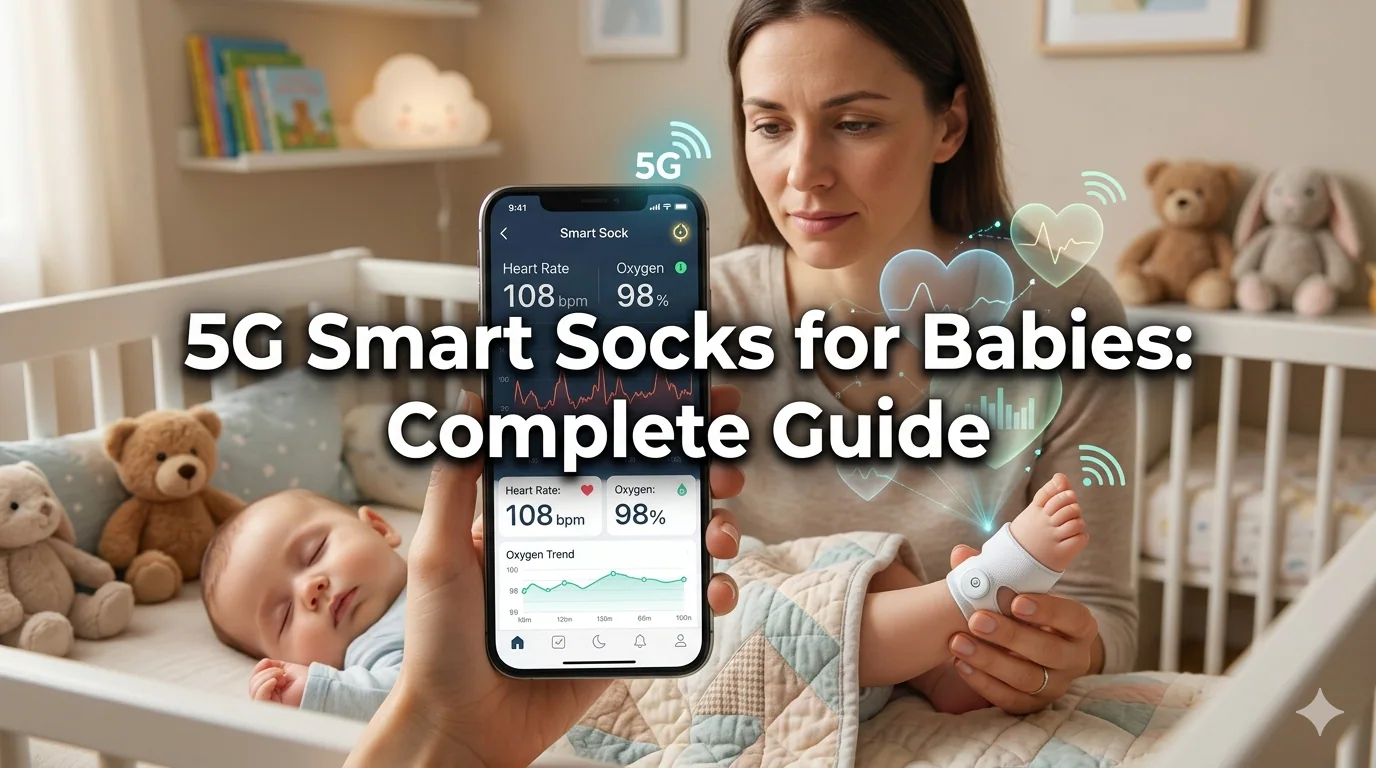
As a parent, ensuring your baby's safety and health is your top priority. The anxiety of wondering if your infant is breathing normally, especially during sleep, is a universal experience for new parents. Thanks to advances in wearable technology and 5G connectivity, smart socks designed to monitor infant oxygen levels and heart rate have emerged as valuable tools for providing peace of mind. These innovative devices offer continuous, non-invasive monitoring that can alert parents to potential concerns before they become serious.
5G smart socks represent a significant evolution in infant monitoring technology. Unlike traditional baby monitors that only detect sound or movement, these sophisticated wearables use medical-grade sensors to track vital signs in real-time, transmitting data instantly via 5G networks to your smartphone. This means you can monitor your baby's oxygen saturation levels, heart rate, and sleep patterns from anywhere with 5G coverage, receiving instant alerts if readings fall outside normal ranges.
This comprehensive guide will walk you through everything you need to know about using 5G smart socks to monitor your infant's oxygen and heart rate. You'll learn how the technology works, how to properly fit and use these devices, what features to look for, how to interpret the data, important safety considerations, and how to integrate smart socks into your overall infant care routine. Whether you're a new parent seeking peace of mind or looking to upgrade your baby monitoring setup, this guide provides the knowledge you need to make informed decisions about your infant's health monitoring.
Understanding 5G Smart Sock Technology
Before diving into usage, it's essential to understand what 5G smart socks are and how they work. These devices combine medical sensor technology with advanced wireless connectivity to provide continuous, real-time health monitoring for infants.
How Smart Socks Monitor Vital Signs
Smart socks use pulse oximetry technology, the same non-invasive method used in hospitals to measure oxygen saturation and heart rate. The sock contains tiny sensors that emit light through your baby's foot and measure how much light is absorbed by oxygenated versus deoxygenated blood. This data allows the device to calculate:
Oxygen Saturation (SpO2): The percentage of hemoglobin carrying oxygen, typically 95-100% in healthy infants.
Heart Rate: Beats per minute, normally 100-160 bpm for infants during sleep.
Sleep Patterns: Movement detection helps track sleep cycles and detect unusual stillness or restlessness.
The Role of 5G Connectivity
5G technology transforms smart socks from simple data loggers into powerful, real-time monitoring systems. Here's how 5G enhances infant monitoring:
Ultra-Low Latency: 5G's latency of 1-10 milliseconds means alerts reach your phone almost instantly, critical for time-sensitive health concerns.
Reliable Connectivity: 5G networks offer more stable connections than 4G, reducing the risk of missed alerts due to connectivity issues.
Continuous Data Streaming: Unlike devices that store data for later syncing, 5G enables continuous real-time streaming of vital signs to your smartphone.
Remote Monitoring: With 5G coverage, you can monitor your baby from anywhere, whether you're in another room, at work, or traveling.
Cloud Integration: Data can be automatically uploaded to secure cloud storage, creating comprehensive health records you can share with pediatricians.
Components of a 5G Smart Sock System
A typical 5G smart sock system includes:
- The Sock: Soft, breathable fabric with embedded sensors and a small transmitter module
- Base Station (optional): Some systems include a base station that receives data from the sock and transmits it via 5G
- Smartphone App: Displays real-time data, sends alerts, and stores historical data
- Charging Dock: For recharging the sock's battery
- Cloud Platform: Secure storage for health data and trend analysis
Benefits of 5G Smart Socks for Infant Monitoring
Understanding the benefits helps parents appreciate the value these devices can provide.
Peace of Mind for Parents
The primary benefit is peace of mind. Knowing you'll receive an instant alert if your baby's oxygen levels drop or heart rate becomes abnormal allows you to rest more easily. This is particularly valuable for:
- Parents of premature infants who may have higher risk of breathing issues
- First-time parents learning to recognize normal infant patterns
- Parents of infants with known health conditions
- Caregivers during nap time or overnight sleep
Early Detection of Potential Issues
Smart socks can detect subtle changes that might not be noticeable through observation alone:
- Apnea Detection: Alerts when breathing stops for extended periods
- Bradycardia/Tachycardia: Detects abnormally slow or fast heart rates
- Desaturation Events: Identifies drops in oxygen levels before they become critical
- Sleep Pattern Analysis: Tracks sleep quality and identifies irregularities
Objective Data for Healthcare Providers
Smart socks generate detailed health records that can be invaluable during pediatric visits:
- Trend data showing oxygen and heart rate patterns over days or weeks
- Documentation of specific events with timestamps
- Sleep pattern analysis for discussing sleep concerns
- Objective data to supplement parental observations
Convenience and Flexibility
5G connectivity offers practical advantages:
- Monitor from anywhere with 5G coverage
- Share access with partners, family members, or caregivers
- Receive alerts on multiple devices simultaneously
- Access historical data anytime through the app
Choosing the Right 5G Smart Sock
Not all smart socks are created equal. Here are key factors to consider when selecting a device for your infant.
Medical Certification and Accuracy
FDA Clearance: Look for devices that have received FDA clearance or equivalent regulatory approval in your country. This indicates the device has been tested for safety and accuracy.
Clinical Validation: Check if the device has been clinically validated against hospital-grade monitors. Independent studies provide confidence in accuracy.
Accuracy Specifications: Look for devices that specify accuracy rates. Medical-grade pulse oximeters typically have accuracy of ±2-3% for oxygen saturation.
5G Compatibility and Connectivity
Network Compatibility: Ensure the device is compatible with 5G networks in your area. Check which frequency bands are supported.
Backup Connectivity: Some devices offer 4G/LTE backup if 5G is unavailable, ensuring continuous monitoring.
WiFi Option: WiFi connectivity as a backup provides additional reliability, especially indoors where cellular signals may be weak.
Battery Life and Charging
Battery Duration: Look for devices offering at least 12-16 hours of battery life to last through the night.
Charging Time: Quick charging (2 hours or less) is convenient for daytime naps.
Battery Indicators: The app should provide clear battery level warnings well before depletion.
Comfort and Fit
Size Range: Ensure the sock fits your infant's foot size. Most devices offer multiple sizes or adjustable fits.
Material: Soft, breathable, hypoallergenic materials prevent skin irritation.
Secure Fit: The sock should stay on securely without being too tight or restricting circulation.
App Features and Usability
Real-Time Display: Clear, easy-to-read display of current vital signs
Alert Customization: Ability to set custom thresholds for oxygen and heart rate alerts
Historical Data: Access to trends and patterns over time
Multi-User Access: Share monitoring with partners or caregivers
Data Export: Ability to export data for sharing with healthcare providers
Proper Fitting and Setup
Correct fitting and setup are crucial for accurate monitoring and your baby's comfort.
Choosing the Right Size
Measure Your Baby's Foot: Most manufacturers provide sizing charts based on foot length or age. Measure your baby's foot from heel to toe and compare to the manufacturer's sizing guide.
Check Weight Limits: Some devices have weight recommendations in addition to size guidelines.
Growth Considerations: Babies grow quickly. Plan to reassess fit every 2-3 months and upgrade sizes as needed.
Proper Sock Placement
Follow these steps for optimal sensor placement:
- Position the Sensor: The sensor module should be positioned on the top or side of the foot, typically over the instep area where blood flow is optimal for readings.
- Ensure Good Contact: The sensors must maintain good contact with the skin. The sock should fit snugly but not tightly.
- Check Circulation: After putting on the sock, check your baby's toes. They should be warm and pink, not cold or bluish. You should be able to slip a finger between the sock and your baby's ankle.
- Secure the Fit: Ensure the sock stays in place but doesn't constrict. Some socks have Velcro or snap closures to prevent slipping.
Initial Setup and Pairing
Download the App: Download the manufacturer's app from the official app store (iOS App Store or Google Play Store).
Create an Account: Set up your account with secure credentials. Enable two-factor authentication if available.
Pair the Device: Follow the app's instructions to pair the sock with your smartphone via Bluetooth. This typically involves:
- Turning on the sock (usually by pressing a button or inserting the battery)
- Opening the app and selecting "Add Device"
- Following on-screen pairing instructions
- Connecting to 5G network if required
Configure Settings: Set up alert thresholds, notification preferences, and user profiles.
Test the System: Before relying on the device, test it to ensure proper functionality:
- Verify the sock is transmitting data
- Check that alerts are working (some devices have test modes)
- Confirm notifications are reaching your phone
- Test 5G connectivity in different areas of your home
Using 5G Smart Socks Effectively
Maximizing the benefits of smart socks requires understanding how to use them properly and interpret the data.
Daily Usage Routine
Before Each Use:
- Check battery level in the app
- Inspect the sock for wear, damage, or loose sensors
- Ensure the sock is clean and dry
- Verify your phone has adequate battery and 5G connectivity
Putting on the Sock:
- Place the sock on your baby's foot when they're calm or sleeping
- Position sensors according to manufacturer instructions
- Ensure proper fit without constriction
- Confirm the device is powered on and connected
- Verify the app shows active monitoring
During Monitoring:
- Periodically check the app to ensure continuous data transmission
- Monitor battery levels throughout the day
- Check that 5G signal strength remains adequate
- Respond promptly to any alerts
Removing the Sock:
- Remove gently to avoid startling your baby
- Check your baby's foot for any redness or irritation
- Clean the sock according to manufacturer instructions
- Charge the device if needed
Understanding Normal Readings
Knowing what's normal helps you avoid unnecessary alarm:
Oxygen Saturation (SpO2):
- Normal range: 95-100%
- Acceptable variation: Brief dips to 90-94% during sleep can be normal
- Concerning: Sustained readings below 90% or frequent drops below 90%
Heart Rate:
- Normal sleeping range: 100-160 bpm for infants 0-12 months
- Newborns (0-3 months): May range 100-180 bpm when awake, 90-160 bpm when sleeping
- Concerning: Sustained rates below 90 bpm or above 180 bpm
Important Note: Normal ranges can vary slightly by age, activity level, and individual factors. Always discuss your baby's specific normal ranges with your pediatrician.
Responding to Alerts
Smart socks typically offer different alert levels:
Low Priority Alerts:
- Low battery warnings
- Weak signal notifications
- Sock displacement alerts
- Response: Address when convenient, but don't ignore
Medium Priority Alerts:
- Brief oxygen desaturation (90-94%)
- Heart rate slightly outside normal range
- Response: Check on your baby within a few minutes, observe breathing and color
High Priority Alerts:
- Oxygen saturation below 90%
- Heart rate significantly abnormal
- No movement detected for extended period
- Response: Check on your baby immediately. If your baby appears distressed, has blue lips or face, or is unresponsive, call emergency services immediately.
Interpreting Trends and Patterns
The app's historical data can reveal important patterns:
Sleep Quality: Frequent awakenings or restless sleep patterns may indicate discomfort or health issues worth discussing with your pediatrician.
Recurring Desaturations: If you notice repeated oxygen drops at similar times or positions, discuss this with your healthcare provider.
Heart Rate Variability: Some variation is normal and healthy. However, consistently abnormal patterns should be evaluated by a doctor.
Growth Trends: As babies grow, normal heart rates gradually decrease. The app can help track these developmental changes.
Safety Considerations and Limitations
While 5G smart socks are valuable monitoring tools, understanding their limitations and safety considerations is essential.
Important Safety Guidelines
Not a Medical Device: Most consumer smart socks are wellness devices, not medical devices. They should not replace professional medical care or diagnosis.
Not a SIDS Prevention Device: No monitor can prevent Sudden Infant Death Syndrome (SIDS). Always follow safe sleep practices:
- Place baby on their back to sleep
- Use a firm sleep surface
- Keep the sleep area free of soft objects and loose bedding
- Share your room but not your bed
- Avoid overheating
Regular Inspection: Check the sock regularly for:
- Wear and tear that could expose sensors or wiring
- Loose parts that could become choking hazards
- Signs of overheating in the device
- Damage to the fabric that could cause discomfort
Skin Monitoring: Check your baby's foot regularly for:
- Redness or irritation from the sock
- Signs of restricted circulation (cold toes, bluish color)
- Pressure marks or swelling
- Allergic reactions to materials
Technical Limitations
False Alarms: Smart socks can generate false alerts due to:
- Poor sensor contact or sock displacement
- Baby movement affecting readings
- Low battery affecting accuracy
- Network connectivity issues
- Response: Don't ignore alerts, but understand that occasional false alarms are normal. If false alarms are frequent, check fit and contact customer support.
Signal Interference: 5G signals can be affected by:
- Building materials (concrete, metal)
- Distance from cell towers
- Network congestion
- Weather conditions
- Mitigation: Ensure good 5G coverage in your home. Consider a signal booster if needed. Have WiFi backup if available.
Battery Dependency: The device requires regular charging:
- Set reminders to charge daily
- Keep a backup battery or second sock if possible
- Don't rely solely on the device; continue regular baby checks
Data Privacy and Security
Protect Your Data:
- Use strong, unique passwords for the app
- Enable two-factor authentication if available
- Review the manufacturer's privacy policy
- Understand how your baby's health data is stored and shared
- Regularly update the app to receive security patches
When to Contact Your Pediatrician
Contact your healthcare provider if:
- Your baby has sustained oxygen saturation below 90%
- You notice frequent or prolonged desaturation events
- Heart rate is consistently outside normal ranges
- Your baby shows signs of respiratory distress (rapid breathing, grunting, flaring nostrils, chest retractions)
- Your baby appears blue or pale
- You have concerns about the device's readings
Integrating Smart Socks into Overall Infant Care
Smart socks are most effective when integrated into a comprehensive infant care approach.
Complementary Monitoring Practices
Regular Physical Checks: Don't rely solely on technology. Continue to:
- Check on your baby regularly throughout the night
- Observe breathing patterns visually
- Feel for normal body temperature
- Monitor feeding patterns and diaper output
Traditional Baby Monitors: Audio/video monitors complement smart socks by:
- Allowing you to see and hear your baby
- Providing visual confirmation when alerts occur
- Monitoring for other concerns (spitting up, position changes)
Regular Pediatric Visits: Share smart sock data with your pediatrician:
- Bring trend reports to well-baby visits
- Discuss any concerning patterns
- Get professional interpretation of data
- Ensure the device is appropriate for your baby's specific needs
Creating a Monitoring Routine
Morning:
- Check overnight data and alerts
- Inspect sock for wear
- Charge device if needed
- Clean sock according to instructions
Daytime Naps:
- Put sock on baby before nap
- Verify connection and battery
- Keep phone nearby for alerts
Nighttime:
- Ensure sock is fully charged
- Put on baby at bedtime
- Confirm app is active and alerts enabled
- Keep phone charged and volume up
- Consider using Do Not Disturb mode with exceptions for the monitoring app
Weekly:
- Review weekly trends in the app
- Note any recurring patterns or concerns
- Clean sock thoroughly
- Check for app updates
Balancing Technology and Parental Instinct
While smart socks provide valuable data, trust your parental instincts:
- If something feels wrong, check on your baby even without an alert
- Don't become overly anxious about normal variations in readings
- Use the device as a tool, not a replacement for your judgment
- Avoid "alert fatigue" by setting appropriate thresholds
- Remember that technology can malfunction; always verify concerning alerts
Troubleshooting Common Issues
Even the best devices can encounter issues. Here's how to address common problems.
Connectivity Problems
Issue: Device won't connect to 5G network
Solutions:
- Verify 5G coverage in your area
- Check that your phone has 5G enabled
- Restart the sock and your phone
- Move to an area with better signal
- Check if the device needs a firmware update
- Contact customer support if problems persist
Inaccurate Readings
Issue: Readings seem inconsistent or unrealistic
Solutions:
- Check sock fit and sensor placement
- Ensure sensors are clean and dry
- Verify adequate battery level
- Check for sock displacement
- Try repositioning the sock
- If problems continue, contact manufacturer
Frequent False Alarms
Issue: Receiving alerts when baby appears fine
Solutions:
- Adjust alert thresholds in the app (consult pediatrician first)
- Ensure proper sock fit
- Check for loose sensors
- Update the app to latest version
- Review if baby's movement is causing sensor disruption
- Consider if thresholds are set too sensitively
Battery Issues
Issue: Battery drains quickly or won't charge
Solutions:
- Ensure charging contacts are clean
- Use the manufacturer's charging cable
- Check that the charging dock is properly connected
- Try a different power outlet
- If battery life has significantly decreased, contact manufacturer about replacement
Frequently Asked Questions
At what age can babies use smart socks?
Most smart socks are designed for infants from birth to 12-18 months, depending on the brand and size. Always check the manufacturer's age and size recommendations. Some devices offer multiple sizes to accommodate growing babies. Discontinue use when your baby can remove the sock independently or outgrows the largest size.
Can smart socks replace regular pediatric checkups?
No, smart socks should never replace regular pediatric care. They are monitoring tools that complement, not substitute for, professional medical care. Continue all scheduled well-baby visits and consult your pediatrician about any concerns, even if the smart sock shows normal readings.
How do I know if the readings are accurate?
Consumer smart socks are generally accurate within ±2-3% for oxygen saturation when used correctly. To verify accuracy:
- Ensure proper fit and sensor placement
- Compare readings when your baby appears healthy and active
- Discuss readings with your pediatrician during visits
- If you have serious concerns about accuracy, your doctor can compare readings with medical-grade equipment
Can I use the sock if my baby has sensitive skin?
Most smart socks use hypoallergenic, breathable materials suitable for sensitive skin. However, if your baby has known skin sensitivities:
- Check the materials list before purchasing
- Do a patch test by putting the sock on for short periods initially
- Monitor for any redness or irritation
- Consult your pediatrician if you have concerns
- Consider socks with organic or specially designed sensitive-skin materials
What happens if I lose 5G coverage?
Most smart socks have backup connectivity options:
- Many devices automatically switch to 4G/LTE if 5G is unavailable
- Some offer WiFi connectivity as backup
- The sock typically stores data locally and syncs when connection is restored
- You'll usually receive a notification if connectivity is lost
- Continue regular baby checks if you lose connectivity
Are smart socks covered by insurance?
Most consumer smart socks are not covered by insurance as they're considered wellness devices rather than medical devices. However:
- Some health savings accounts (HSAs) or flexible spending accounts (FSAs) may allow purchases
- Medically prescribed monitors may have different coverage
- Check with your insurance provider about specific coverage
- Some manufacturers offer payment plans or discounts
How long do smart socks last?
With proper care, most smart socks last 6-12 months of regular use. Factors affecting lifespan include:
- Frequency of washing
- Battery charge cycles
- General wear and tear
- Your baby's growth (may outgrow before device fails)
- Manufacturer's recommended replacement schedule
Replace the sock if you notice damaged sensors, fraying fabric, or declining battery performance.
Conclusion
5G smart socks represent a significant advancement in infant health monitoring, offering parents unprecedented peace of mind through continuous, real-time tracking of oxygen levels and heart rate. When used properly, these devices can provide early warnings of potential concerns, valuable data for pediatric visits, and reassurance during those anxious early months of parenthood.
However, it's crucial to remember that smart socks are tools to support, not replace, attentive parenting and professional medical care. They work best when integrated into a comprehensive approach to infant care that includes safe sleep practices, regular pediatric checkups, and trusting your parental instincts.
By understanding how these devices work, choosing the right product for your needs, using them correctly, and recognizing their limitations, you can harness the power of 5G technology to enhance your infant care routine. The combination of advanced monitoring technology and informed, attentive parenting creates the best environment for your baby's health and development.
As 5G networks continue to expand and smart sock technology evolves, these devices will likely become even more accurate, reliable, and accessible. For now, they offer a valuable option for parents seeking additional peace of mind during their baby's most vulnerable months. Use them wisely, stay informed, and always prioritize the fundamentals of good infant care alongside technological monitoring.
Your baby's health and safety are paramount. Smart socks can be a valuable part of your parenting toolkit, but they're most effective when combined with love, attention, and the irreplaceable intuition that comes with being a parent.
📖 আরও পড়ুন: Baby Care
- 🔗 How to Introduce Allergen-Safe Solid Foods: Latest Medical Guidelines for Infant Feeding
- 🔗 5 Baby Bathing Mistakes That Cause Skin Infections
- 🔗 শিশুর ত্বকের রুক্ষতা: ডিটারজেন্টের গোপন প্রভাব ও মায়ের করণীয়
- 🔗 Baby Led Weaning Preferred Starting Point for 2026 Toddlers
- 🔗 নন-টক্সিক বাঁশের ডায়াপার: পরিবেশবান্ধব শিশু যত্বের সেরা পছন্দ