Why 10 Minutes Is All You Need to Burn Fat
If you've ever told yourself, "I don't have time to work out," this guide is for you. The truth is, you don't need hours at the gym, fancy equipment, or a perfectly scheduled day to make meaningful progress toward your fitness goals. Science confirms that short, intense workouts can be just as effective—if not more so—than longer, moderate sessions for burning fat, boosting metabolism, and improving overall health.
The science of short workouts: High-intensity interval training (HIIT) has revolutionized fitness by proving that brief bursts of intense effort followed by short recovery periods can trigger significant metabolic adaptations. Research published in the Journal of Obesity found that just 10 minutes of HIIT, including warm-up and cool-down, produced comparable improvements in cardiovascular health and fat oxidation to 45 minutes of steady-state cardio.
What makes 10-minute workouts so powerful? They leverage the afterburn effect—scientifically known as excess post-exercise oxygen consumption (EPOC). After intense exercise, your body continues burning calories at an elevated rate as it works to restore oxygen levels, repair muscles, and return to baseline. This means you're burning fat long after your workout ends.
Why this workout works for busy people:
- Time-efficient: Fits into any schedule—even between meetings or during a lunch break
- No equipment needed: Uses only your bodyweight, so you can do it anywhere
- Metabolism-boosting: HIIT triggers EPOC for continued calorie burn post-workout
- Adaptable: Modify intensity to match your fitness level
- Consistency-friendly: Short duration makes it easier to stick with long-term
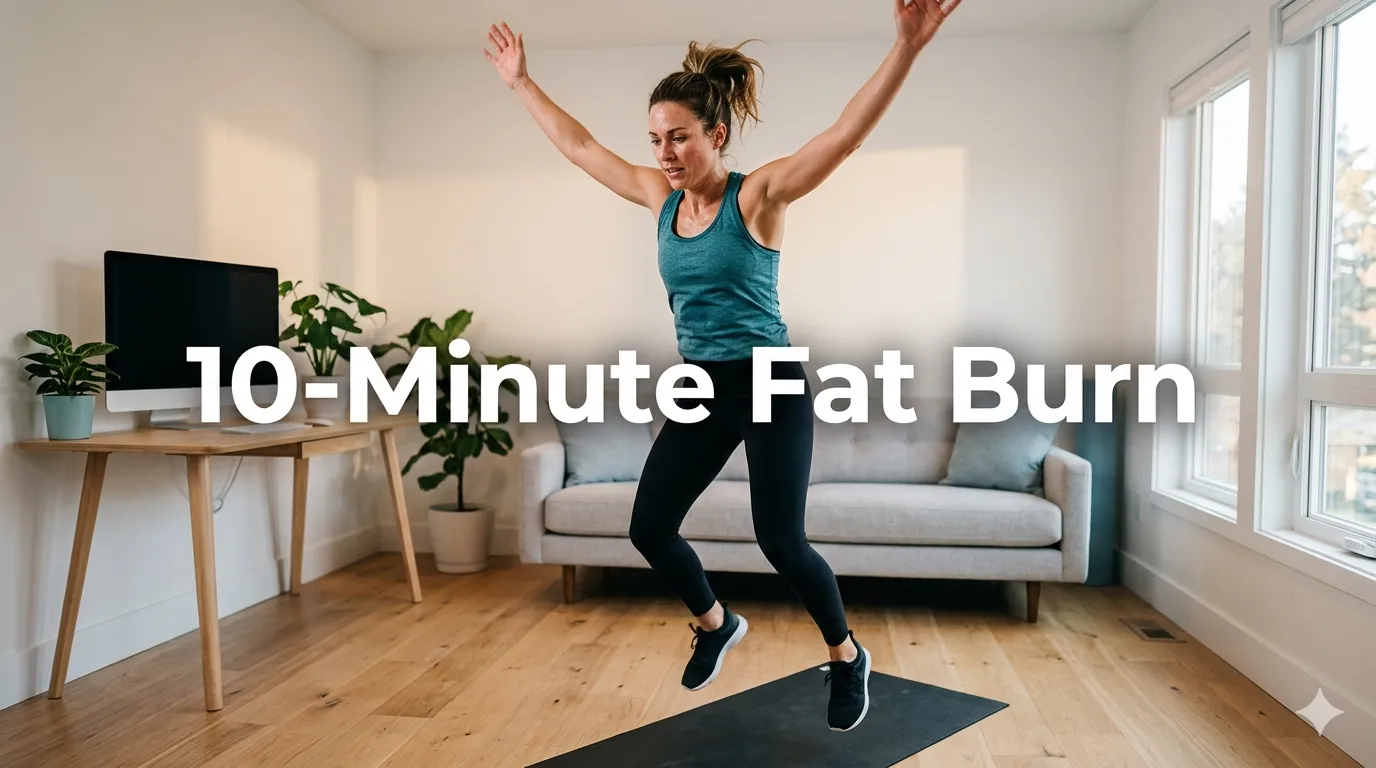
This ultimate 10-minute fat-burning workout combines proven HIIT principles with bodyweight exercises that target multiple muscle groups, maximize calorie burn, and require zero equipment. Whether you're a beginner or experienced, this routine delivers results without demanding hours of your day.
How This 10-Minute Workout Burns Fat
Understanding the mechanics behind this workout helps you appreciate why it's so effective—and motivates you to give it your all during those 10 minutes.
The HIIT formula: This workout follows a proven HIIT structure: short bursts of maximum effort followed by brief recovery. This pattern keeps your heart rate elevated, challenges multiple energy systems, and triggers powerful metabolic responses.
Why bodyweight exercises work: Compound movements like squats, push-ups, and burpees engage multiple muscle groups simultaneously. This requires more energy than isolation exercises, leading to higher calorie burn during and after your workout.
The fat-burning cascade:
- During the workout: Intense effort depletes glycogen stores and elevates heart rate, burning calories directly
- Immediately after: EPOC kicks in—your body works harder to restore balance, burning additional calories
- Hours later: Elevated metabolism continues, with studies showing increased fat oxidation for up to 24 hours
- Long-term: Consistent HIIT improves insulin sensitivity, making your body more efficient at using fat for fuel
Research highlights:
- A study in the American Journal of Physiology found that 10 minutes of HIIT produced similar mitochondrial adaptations to 45 minutes of moderate cycling
- Research in Obesity Reviews concluded that HIIT reduces abdominal and visceral fat more effectively than steady-state cardio
- Journal of Strength and Conditioning Research showed that brief HIIT sessions improve cardiovascular fitness as effectively as longer traditional workouts
The takeaway: You don't need duration to drive results. Intensity, consistency, and smart exercise selection matter far more.
The Ultimate 10-Minute Fat-Burning Workout
This workout is designed for maximum efficiency: every second counts, every movement serves a purpose, and the structure ensures you work hard without burning out. No equipment. No excuses. Just results.
Workout structure:
- Warm-up: 1 minute
- Work intervals: 8 minutes (40 seconds work, 20 seconds rest)
- Cool-down: 1 minute
- Total time: 10 minutes
Equipment needed: None. Just your body, a timer, and a small space (about 6x6 feet).
Minute 1: Dynamic Warm-Up
Why it matters: Warming up prepares your muscles, joints, and cardiovascular system for intense work, reducing injury risk and improving performance.
Do this: Perform each movement for 20 seconds, flowing smoothly from one to the next:
- Arm circles: Forward and backward to mobilize shoulders
- Leg swings: Forward/side to loosen hips and hamstrings
- Torso twists: Gentle rotation to warm up the core and spine
- High knees: Light jogging in place to elevate heart rate gradually
Pro tip: Focus on movement quality, not speed. The goal is preparation, not exhaustion.
Minutes 2-9: The Fat-Burning Circuit
The format: 8 exercises, 40 seconds of work, 20 seconds of rest. Perform each exercise with maximum effort during work intervals, then recover actively (march in place, shake out limbs) during rest.
Exercise 1: Jump Squats
Targets: Quads, glutes, hamstrings, calves, core
How to: Stand with feet shoulder-width apart. Lower into a squat, then explode upward, jumping as high as possible. Land softly and immediately descend into the next squat.
Modification: Perform regular squats without the jump if needed.
Why it burns fat: Plyometric movements recruit fast-twitch muscle fibers, which burn more calories and trigger greater EPOC.
Exercise 2: Push-Ups
Targets: Chest, shoulders, triceps, core
How to: Start in a plank position with hands slightly wider than shoulders. Lower your chest toward the floor, keeping elbows at a 45-degree angle, then press back up.
Modification: Perform on knees or against a wall.
Why it burns fat: Upper body compound movements engage large muscle groups, increasing metabolic demand.
Exercise 3: Mountain Climbers
Targets: Core, shoulders, hip flexors, cardiovascular system
How to: Start in a plank position. Alternate driving knees toward your chest in a running motion, keeping hips stable and core engaged.
Modification: Slow the pace or step feet forward instead of running.
Why it burns fat: Combines core stability with cardiovascular intensity for maximum calorie burn.
Exercise 4: Reverse Lunges
Targets: Quads, glutes, hamstrings, balance
How to: Stand tall. Step one foot backward, lowering both knees to 90 degrees. Push through the front heel to return to start. Alternate legs.
Modification: Hold onto a wall for balance or reduce depth.
Why it burns fat: Unilateral movements challenge stability and engage muscles differently than bilateral exercises, increasing energy expenditure.
Exercise 5: Plank Jacks
Targets: Core, shoulders, hip abductors, cardiovascular system
How to: Start in a forearm plank. Jump feet wide apart, then back together, maintaining a stable core and flat back.
Modification: Step feet out and in instead of jumping.
Why it burns fat: Combines core engagement with cardio intensity for a dual-effect fat burner.
Exercise 6: Burpees
Targets: Full body—chest, arms, core, legs, cardiovascular system
How to: From standing, drop into a squat, kick feet back to plank, perform a push-up (optional), jump feet forward, then explode upward with arms overhead.
Modification: Skip the push-up or step feet back/forward instead of jumping.
Why it burns fat: Burpees are one of the most metabolically demanding exercises, engaging nearly every muscle while spiking heart rate.
Exercise 7: Bicycle Crunches
Targets: Obliques, rectus abdominis, hip flexors
How to: Lie on your back, hands behind head. Bring opposite elbow to opposite knee while extending the other leg. Alternate sides in a pedaling motion.
Modification: Slow the pace or reduce range of motion.
Why it burns fat: Core work stabilizes the body during other exercises and increases overall metabolic demand.
Exercise 8: High Knees
Targets: Cardiovascular system, hip flexors, core
How to: Run in place, driving knees as high as possible toward your chest. Pump arms for momentum.
Modification: March in place or reduce knee height.
Why it burns fat: Pure cardio finisher that maximizes heart rate and calorie burn in the final interval.
Rest intervals: Use the 20 seconds between exercises to recover actively—march in place, shake out limbs, or take deep breaths. Don't sit down; keep your body moving lightly to maintain elevated metabolism.
Minute 10: Cool-Down and Stretch
Why it matters: Cooling down helps your heart rate return to baseline gradually, reduces muscle soreness, and improves flexibility.
Do this: Hold each stretch for 20-30 seconds:
- Quad stretch: Stand on one leg, pull opposite heel toward glutes
- Hamstring stretch: Hinge at hips, reach toward toes with soft knees
- Chest opener: Clasp hands behind back, gently lift arms
- Child's pose: Kneel, sit back on heels, fold forward with arms extended
- Deep breathing: Finish with 3-5 slow, deep breaths to activate recovery
Pro tip: Use this time to mentally acknowledge your effort. Consistency starts with celebrating small wins.
How to Modify This Workout for Any Fitness Level
This workout is designed to scale with your abilities. Whether you're just starting your fitness journey or you're experienced, these modifications ensure you get an effective, safe workout.
Beginner modifications:
- Reduce intensity: Perform movements at 50-70% effort instead of maximum
- Extend rest: Use 30 seconds rest instead of 20 if needed
- Simplify exercises: Use the modifications listed for each exercise (e.g., step-back burpees, knee push-ups)
- Shorten work intervals: Start with 30 seconds work, 30 seconds rest, then build up
- Focus on form: Prioritize proper technique over speed or reps
Intermediate progression:
- Increase intensity: Push closer to 80-90% effort during work intervals
- Add complexity: Incorporate push-ups into burpees, add a hop to reverse lunges
- Reduce rest: Shorten rest to 15 seconds as fitness improves
- Track reps: Aim to increase reps each week while maintaining form
Advanced challenges:
- Max effort: Go all-out during work intervals
- Add resistance: Wear a weighted vest or hold light dumbbells
- Decrease rest: Try 45 seconds work, 15 seconds rest
- Repeat the circuit: Complete the 8-minute circuit twice for a 20-minute session
- Superset exercises: Pair two exercises back-to-back with no rest between
Listen to your body: Progress should feel challenging but sustainable. If you're gasping for air or form breaks down, scale back. Consistency over intensity wins long-term.
Making This Workout a Sustainable Habit
The best workout is the one you'll actually do. These strategies help you turn this 10-minute routine into a lasting habit.
Anchor it to an existing habit: Pair your workout with something you already do daily. Examples:
- "After I pour my morning coffee, I'll do my 10-minute workout"
- "Before I shower after work, I'll complete the circuit"
- "During my lunch break, I'll move for 10 minutes"
Prepare your space: Keep a small area clear for workouts. Roll out your mat the night before. Remove friction to make starting easier.
Track your consistency: Use a calendar, app, or journal to mark completed workouts. Visual progress builds momentum.
Focus on the process, not perfection: Some days you'll crush it; other days you'll just show up. Both count. The goal is consistency, not perfection.
Recruit accountability: Tell a friend about your goal, join an online community, or hire a virtual coach. Social support significantly improves adherence.
Celebrate small wins: Finished your first week? Did an extra rep? Acknowledge progress. Positive reinforcement builds lasting habits.
Nutrition Tips to Maximize Fat-Burning Results
Exercise creates the stimulus; nutrition fuels the results. Support your 10-minute workouts with these evidence-based nutrition strategies.
Pre-workout fuel (optional):
- If working out fasted, water is sufficient
- If you need energy, have a small snack 30-60 minutes prior: banana, handful of almonds, or Greek yogurt
- Avoid heavy meals right before exercise
Post-workout recovery:
- Protein: 20-30g within 2 hours supports muscle repair (eggs, protein shake, cottage cheese)
- Carbs: Replenish glycogen with whole food carbs (fruit, oats, sweet potato)
- Hydration: Drink water to replace fluids lost through sweat
Daily nutrition for fat loss:
- Protein priority: Include protein at every meal to support satiety and muscle preservation
- Fiber focus: Vegetables, fruits, and whole grains keep you full and support metabolism
- Healthy fats: Avocado, nuts, olive oil support hormone balance and nutrient absorption
- Hydration: Aim for 2-3 liters of water daily; thirst is often mistaken for hunger
- Mindful eating: Eat slowly, without distractions, to improve satiety signals
What to limit:
- Added sugars and refined carbs that spike insulin and promote fat storage
- Highly processed foods low in nutrients and high in calories
- Excessive alcohol, which can interfere with fat metabolism and recovery
Remember: You don't need a perfect diet. Small, consistent improvements compound over time. Focus on adding nutrient-dense foods rather than restrictive elimination.
Common Mistakes to Avoid
Even with a great workout plan, certain errors can undermine your results. Steer clear of these pitfalls.
Mistake #1: Sacrificing Form for Speed
Rushing through reps with poor technique increases injury risk and reduces effectiveness. Focus on quality movement; speed will follow as you build strength and coordination.
Mistake #2: Skipping the Warm-Up or Cool-Down
These 2 minutes aren't optional. Warm-ups prepare your body for intensity; cool-downs aid recovery. Skipping them increases injury risk and soreness.
Mistake #3: Doing the Same Workout Every Day
Your body adapts to repetitive stress. Vary your routine every 4-6 weeks by changing exercises, order, or intensity to continue progressing.
Mistake #4: Ignoring Recovery
Muscles grow and metabolism adapts during rest. Aim for at least one rest day between intense sessions, and prioritize sleep for optimal recovery.
Mistake #5: Expecting Overnight Results
Fat loss is a gradual process. Trust the science: consistent effort over weeks and months yields sustainable results. Track non-scale victories like energy, strength, and how clothes fit.
Mistake #6: Neglecting Nutrition
You can't out-exercise a poor diet. Pair your workouts with balanced nutrition for synergistic results.
FAQs About 10-Minute Fat-Burning Workouts
Can I really lose weight with just 10 minutes of exercise?
Yes, when combined with consistent effort and supportive nutrition. While 10 minutes alone won't create massive deficits, it contributes to overall energy expenditure, boosts metabolism via EPOC, and builds habits that support long-term weight management. Research shows that short, intense workouts can be as effective as longer sessions for fat loss when performed consistently.
How often should I do this workout?
For fat loss, aim for 3-5 sessions weekly, with at least one rest day between intense sessions. You can also pair this workout with other activities like walking, yoga, or strength training for a well-rounded fitness routine.
Will I build muscle with this workout?
This workout primarily targets fat loss and cardiovascular fitness, but it does engage multiple muscle groups. You'll likely see improved muscle tone and endurance, especially as a beginner. For significant muscle growth, add dedicated strength training 2-3 times weekly.
What if I can't complete all 8 minutes?
Start where you are. Even 5 minutes of effort is better than zero. Gradually build duration and intensity as your fitness improves. The key is consistency, not perfection.
Can I do this workout every day?
While possible, it's generally better to include rest or active recovery days. High-intensity work stresses the body; recovery is when adaptation occurs. Listen to your body—if you feel overly fatigued or sore, take an extra rest day.
Do I need to do cardio separately?
This workout includes cardiovascular elements, so additional cardio isn't required for fat loss. However, if you enjoy activities like walking, cycling, or swimming, they can complement this routine and support overall health.
How soon will I see results?
With consistent effort and supportive nutrition, many people notice improved energy and endurance within 2-4 weeks. Visible changes in body composition typically appear after 8-12 weeks. Remember: progress isn't linear; trust the process.
Creating Your Personalized 10-Minute Plan
Turn this guide into action with a simple framework.
Week 1: Foundation
- Complete the workout 3 times this week
- Focus on learning proper form for each exercise
- Prepare your workout space and set a consistent time
Week 2: Build Consistency
- Aim for 4 sessions this week
- Track your reps or perceived effort to monitor progress
- Review nutrition: add one protein-rich meal or snack daily
Week 3: Progress
- Try one advanced modification (e.g., reduce rest, add a rep)
- Notice non-scale victories: better sleep, more energy, improved mood
- Adjust as needed—this is your plan, customize it
Week 4 and Beyond: Sustain
- Maintain 3-5 sessions weekly
- Vary the routine every 4-6 weeks to prevent plateaus
- Celebrate consistency—you're building a lifelong habit
Sample weekly schedule:
- Monday: 10-minute HIIT workout
- Tuesday: Walk or active recovery
- Wednesday: 10-minute HIIT workout
- Thursday: Rest or gentle stretching
- Friday: 10-minute HIIT workout
- Saturday: Fun activity (hike, dance, sport)
- Sunday: Rest
Adapt this template to your life. The best plan is the one you'll actually follow.
Conclusion: Your 10 Minutes to a Healthier You
You don't need more time. You don't need a gym membership. You don't need perfect conditions. You just need 10 minutes—and the willingness to show up for yourself.
This ultimate fat-burning workout proves that intensity, not duration, drives results. By leveraging HIIT principles, compound bodyweight movements, and smart programming, you can burn fat, boost metabolism, and build fitness in less time than it takes to scroll through social media.
The real magic isn't in the workout itself—it's in what 10 minutes of consistent effort can create over weeks, months, and years. Small actions compound. One workout becomes a habit. A habit becomes a lifestyle. A lifestyle transforms your health.
Start today. Clear a small space. Set a timer. Move with intention. Your future self will thank you for the 10 minutes you invest today.
Remember: fitness isn't about perfection. It's about progress. It's not about punishing your body. It's about empowering it. And it's not about finding time. It's about making time—for your health, your energy, your life.
Your 10 minutes start now. Go burn that fat.
📖 আরও পড়ুন: Body & Health Care
- 🔗 মানসিক চাপ ও অনিদ্রায় ওজন বৃদ্ধি: প্রতিকারের সম্পূর্ণ গাইড
- 🔗 Body Fat Mastery: Lean Down Without Strict Dieting
- 🔗 কঠোর পরিশ্রম ছাড়াই কীভাবে নারীরা ফিট ও আকর্ষণীয় দেহ বজায় রাখতে পারেন
- 🔗 Tone Your Thighs at Home: Science-Backed Strategies Without a Gym
- 🔗 Body Shape Changes After Pregnancy Years Later Health Guide