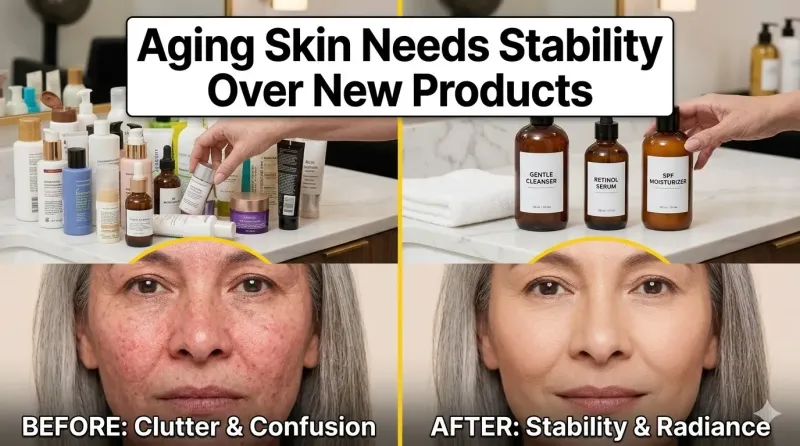
As we navigate the journey of aging, the skincare industry bombards us with promises: the next serum will erase wrinkles, the new cream will restore firmness, the latest ingredient will turn back time. For women with mature skin, the temptation to try every new anti-aging product is powerful—after all, who wouldn't want to recapture youth? Yet many women find themselves in a frustrating cycle: buying the trending product, using it for a few weeks, seeing minimal results, and moving on to the next "miracle" solution. Meanwhile, their skin remains unchanged—or worse, becomes more sensitive, irritated, or reactive.
The truth that few brands want to admit? Aging skin doesn't need more products—it needs stability with the right ones. Mature skin is fundamentally different from younger skin: thinner, more sensitive, slower to heal, and less resilient to change. Constantly switching products doesn't just waste money; it can actively undermine skin health, trigger inflammation, and prevent any product from having the time it needs to work effectively.
This comprehensive, science-backed guide explores why consistency matters far more than novelty when caring for aging skin. You'll discover the biological reasons mature skin needs stability, understand realistic timelines for seeing anti-aging results, learn to identify when a product truly isn't working versus when you're just being impatient, and find practical strategies to build a stable routine that actually delivers the radiant, healthy skin you're seeking at any age. Whether you're navigating fine lines, loss of firmness, dryness, or sensitivity, you'll find evidence-based insights to help you break the product-hopping cycle and achieve lasting results.
The Biology of Aging Skin: Why Stability Matters More Than Ever
To understand why consistency is crucial for mature skin, we must first examine how skin changes with age and why these changes demand a different approach to skincare.
Key Structural Changes in Aging Skin
Thinner Epidermis and Dermis:
- Skin becomes 20-30% thinner by age 60 compared to young adulthood
- Reduced cell turnover means slower healing and adaptation to new products
- Thinner barrier is more permeable to irritants and more vulnerable to moisture loss
- Result: Mature skin reacts more strongly to product changes and takes longer to recover
Declining Barrier Function:
- Ceramide production decreases by up to 40% with age
- Natural moisturizing factor (NMF) levels decline
- Lipid matrix becomes less organized, increasing transepidermal water loss (TEWL)
- Result: Mature skin is more prone to dehydration and irritation from product changes
Reduced Collagen and Elastin:
- Collagen production declines ~1% per year after age 30
- Elastin fibers fragment and lose resilience
- Result: Skin is less able to "bounce back" from irritation or inflammation
Slower Cell Turnover:
- Cell renewal slows from ~28 days in youth to 45-60+ days in maturity
- Dead cells accumulate more easily, creating dullness and texture issues
- Result: Products take longer to show visible effects; adaptation periods are extended
Hormonal Influences on Mature Skin
Estrogen Decline:
- Estrogen supports collagen production, barrier function, and hydration
- Perimenopause and menopause cause dramatic estrogen drops
- Result: Skin becomes drier, thinner, and more sensitive to product changes
Impact on Product Response:
- Hormonally-compromised skin may react differently to ingredients over time
- What worked in your 40s may need adjustment in your 50s or 60s
- Result: Consistency with adaptable formulations is more effective than constant switching
Why These Changes Demand Stability
Reduced Resilience:
- Younger skin can tolerate frequent product changes because it heals quickly
- Mature skin has less capacity to recover from irritation or barrier disruption
- Each product change represents a potential stressor that aging skin may struggle to absorb
Slower Adaptation:
- Mature skin takes longer to adjust to new formulations
- What feels like "not working" at week 2 might resolve by week 6-8
- Switching during the adaptation phase prevents products from reaching their potential
Cumulative Damage Risk:
- Repeated irritation from product-hopping can accelerate aging through chronic inflammation
- Inflammation triggers matrix metalloproteinases (MMPs) that break down collagen
- Result: Constantly switching products may actually accelerate the aging you're trying to reverse
How Anti-Aging Products Actually Work: Timelines and Expectations
Understanding how anti-aging ingredients function—and how long they take to work—is essential for building a consistent routine.
By Ingredient Category: Realistic Timelines
Retinoids (Retinol, Retinal, Prescription Retinoids):
- Mechanism: Increase cell turnover, stimulate collagen, normalize keratinization
- Adaptation period: 4-8 weeks for skin to adjust; initial dryness or flaking is common
- Visible results: 8-12 weeks for texture improvement; 3-6 months for fine line reduction
- Long-term benefits: 6-12+ months for significant collagen stimulation and wrinkle reduction
- When to reassess: If no improvement in texture after 12 weeks, or no wrinkle improvement after 6 months of consistent use
Peptides:
- Mechanism: Signal skin to produce more collagen; support barrier function
- Adaptation period: Minimal; generally well-tolerated by mature skin
- Visible results: 4-8 weeks for improved firmness and elasticity
- Long-term benefits: 3-6 months for cumulative collagen support
- When to reassess: If no improvement in firmness after 8-12 weeks of consistent use
Vitamin C (L-Ascorbic Acid and Derivatives):
- Mechanism: Antioxidant protection, collagen synthesis support, brightening
- Adaptation period: 1-2 weeks; sensitive skin may need gradual introduction
- Visible results: 2-4 weeks for brightening; 8-12 weeks for antioxidant benefits
- Long-term benefits: 3-6 months for cumulative collagen support and photoaging protection
- When to reassess: If no brightening after 4 weeks, or if irritation persists beyond adaptation period
Niacinamide (Vitamin B3):
- Mechanism: Strengthens barrier, reduces inflammation, improves texture and tone
- Adaptation period: Minimal; generally well-tolerated
- Visible results: 2-4 weeks for improved texture and reduced redness
- Long-term benefits: 8-12 weeks for barrier strengthening and tone evening
- When to reassess: If no improvement in texture or sensitivity after 8 weeks
Ceramides and Barrier-Supporting Ingredients:
- Mechanism: Replenish barrier lipids, reduce water loss, support skin resilience
- Adaptation period: Immediate comfort; barrier repair takes time
- Visible results: 1-2 weeks for improved hydration and comfort
- Long-term benefits: 4-8 weeks for measurable barrier improvement and reduced sensitivity
- When to reassess: If dryness or sensitivity persists after 4-6 weeks of consistent use
Growth Factors and Exosomes:
- Mechanism: Signal cellular repair, support collagen production, promote healing
- Adaptation period: Minimal; generally well-tolerated
- Visible results: 4-8 weeks for improved texture and radiance
- Long-term benefits: 3-6 months for cumulative cellular support
- When to reassess: If no improvement in texture or radiance after 8-12 weeks
Why Patience Is Non-Negotiable for Aging Skin
Slower Biological Processes:
- Cell turnover, collagen synthesis, and barrier repair all slow with age
- Products that work on biological processes need more time to show results in mature skin
- Switching before the full timeline closes means you'll never know if a product would have worked
Cumulative vs. Immediate Effects:
- Many anti-aging ingredients work cumulatively, not immediately
- Example: Retinoids stimulate collagen over months, not days
- Consistent use allows these cumulative benefits to build; switching interrupts the process
The Adaptation Advantage:
- Mature skin may initially react to new products as it adjusts
- What feels like irritation at week 2 might resolve as skin adapts by week 6
- Consistency allows skin to adapt and products to work; switching prevents this process
Why Product-Hopping Undermines Aging Skin
Constantly switching anti-aging products doesn't just waste money—it can actively harm mature skin and prevent progress.
1. Preventing Products from Working
The Timeline Mismatch:
- Most anti-aging ingredients need 8-12 weeks to show measurable results in mature skin
- Switching before this window closes means you never know if a product would have worked
- Example: A peptide serum may need 3 months to show improved firmness; switching at 6 weeks means you'll never see results
The Adaptation Challenge:
- Mature skin may initially react to new formulations as it adjusts
- Mild dryness, tingling, or sensitivity in the first 2-4 weeks may resolve as skin adapts
- Switching during the adaptation phase prevents products from reaching their potential
2. Triggering Inflammation and Accelerating Aging
The Inflammaging Connection:
- Chronic low-grade inflammation ("inflammaging") is a key driver of skin aging
- Each product change introduces potential irritants that can trigger inflammatory responses
- Repeated inflammation activates MMPs that break down collagen and elastin
- Result: Constantly switching products may accelerate the very aging you're trying to reverse
Barrier Compromise:
- Frequent changes in cleansers or active products can disrupt the already-compromised mature skin barrier
- A compromised barrier increases TEWL, sensitivity, and reactivity
- Result: A vicious cycle where product-hopping creates the problems you're trying to solve
3. Creating Confusion About What Works
The Attribution Problem:
- When you use multiple new anti-aging products simultaneously, you can't identify which one is helping or harming
- Good results might be attributed to the wrong product; bad results might cause you to abandon something that was actually working
- Example: If you start a new retinol, peptide serum, and vitamin C all at once and see improvement, which one deserves credit?
The Baseline Problem:
- Without a consistent routine, you lose your baseline for comparison
- You can't tell if skin is improving, staying the same, or getting worse
- Consistency creates a stable foundation for measuring progress in mature skin
4. Financial and Emotional Costs
The "Anti-Aging Arms Race":
- Premium anti-aging products often cost $50-200+ each
- Trying 2-3 new products monthly: $1,200-7,200/year
- Most partially-used products end up discarded: significant waste
- Money spent on experimentation could be invested in quality, proven staples
Emotional Impact:
- Constantly seeking the "perfect" product creates dissatisfaction and anxiety
- Disappointment when products don't deliver immediate results erodes confidence
- Consistency with a stable routine builds confidence and reduces decision fatigue
Signs You're Product-Hopping vs. Being Consistent with Aging Skin
Use this self-assessment to identify whether your approach supports or undermines mature skin health.
Red Flags of Product-Hopping with Aging Skin
Behavioral Signs:
- You have 15+ partially-used anti-aging products in your bathroom
- You buy a new product every time you see an anti-aging claim or celebrity endorsement
- You switch products after 1-2 weeks if you don't see immediate wrinkle reduction
- You're constantly researching "the next breakthrough ingredient" instead of optimizing your current routine
- You feel anxious or dissatisfied with your current products, even when they're providing subtle benefits
Results-Based Signs:
- Your skin feels different every week but never consistently better
- You experience frequent sensitivity, redness, or irritation from new products
- You can't identify which products actually help your mature skin because you change them too frequently
- You spend more on anti-aging products than on other wellness priorities
- You feel overwhelmed by choices rather than confident in your routine
Green Flags of Consistent Care for Aging Skin
Behavioral Signs:
- You have a core routine of 4-6 products you use consistently for mature skin concerns
- You give new anti-aging products at least 8-12 weeks before evaluating efficacy
- You introduce one new product at a time to isolate effects on mature skin
- You track your skin's progress with photos or notes over months, not days
- You feel confident and satisfied with your routine most of the time
Results-Based Signs:
- You can identify which products specifically help your mature skin and why
- Your skin shows gradual, cumulative improvement over months (better texture, reduced sensitivity, subtle firming)
- You experience fewer unexpected reactions or negative surprises
- You spend money strategically on replenishing staples rather than experimenting
- You feel empowered and knowledgeable about caring for your aging skin
How to Build a Stable, Effective Routine for Aging Skin
Creating consistency for mature skin doesn't mean never trying new products—it means being strategic, patient, and intentional.
Step 1: Audit and Simplify for Mature Skin
Take Inventory with Aging Skin in Mind:
- Gather all your current skincare products
- Note which ones you actually use regularly vs. those collecting dust
- Identify which products have genuinely helped your mature skin vs. those that haven't
- Be honest: Are you keeping products because they work, or because they were expensive?
Define Your Core Aging Skin Needs:
- What are your top 2-3 mature skin concerns? (e.g., dryness, fine lines, loss of firmness, sensitivity)
- What does your aging skin actually need, not just what sounds appealing in marketing?
- Focus on addressing primary concerns before adding extras
- Remember: Less is often more for mature, sensitive skin
Build Your Core Mature Skin Routine:
- Gentle Cleanser: One low-pH, non-stripping cleanser suited to mature skin
- Hydrating Toner/Essence: One formula with humectants and barrier support
- Targeted Treatment: One serum for your primary concern (retinoid, peptide, vitamin C)
- Barrier Moisturizer: One formula with ceramides, niacinamide, or other barrier-supporting ingredients
- Sunscreen: One broad-spectrum SPF 30+ that you'll actually use daily
- Total: Start with 5-6 core products maximum for mature skin
Step 2: Commit to the Mature Skin Trial Period
Set Realistic Timelines for Aging Skin:
- Commit to using your core routine consistently for 12 weeks (longer than for younger skin)
- Mark your calendar for a reassessment date
- Resist the urge to switch products before this date, even if results aren't dramatic
- Remember: Mature skin takes longer to show change; patience is part of the process
Track Your Progress Objectively:
- Take weekly photos in consistent lighting, angle, and expression
- Note changes in texture, hydration, sensitivity, or firmness
- Record how your skin feels: comfortable, tight, reactive?
- Use a simple journal or app to stay accountable over months, not days
Use Products Correctly for Mature Skin:
- Follow application instructions precisely; mature skin may need gentler application
- Use recommended amounts; more isn't always better for sensitive, aging skin
- Apply to appropriate areas (e.g., retinoids to face, not delicate eye area unless formulated for it)
- Allow adequate contact time for treatments; mature skin may absorb more slowly
Step 3: Evaluate and Adjust Strategically for Aging Skin
At the 12-Week Mark:
- Review your photos and notes objectively
- Ask: Has my primary aging concern improved? Is my skin healthier overall?
- Identify which products are contributing to positive changes in your mature skin
- Note any products that haven't helped or caused sensitivity
Making Adjustments for Mature Skin:
- If a product is working: Keep using it; don't fix what isn't broken
- If a product isn't helping: Replace only that one product, not your entire mature skin routine
- If you want to add something: Introduce one new product at a time; wait 8-12 weeks before adding another
- If you're seeing good results: Consider this your new baseline; maintain consistency
Step 4: Maintain and Optimize for Long-Term Aging Skin Health
Seasonal Adjustments for Mature Skin:
- Mature skin needs may change with seasons (more moisture in winter, lighter textures in summer)
- Make small, targeted adjustments rather than overhauling your routine
- Keep your core products; swap in seasonal additions as needed for mature skin
Hormonal and Life Stage Considerations:
- Perimenopause, menopause, or health changes can affect mature skin
- Adjust your routine thoughtfully rather than reactively
- Consult a dermatologist if changes are significant or concerning
Long-Term Mindset for Aging Skin:
- Skin health in maturity is a marathon, not a sprint
- Consistency over years yields better results than perfection over weeks
- Celebrate small improvements; they compound over time in mature skin
When It IS Appropriate to Change Products for Aging Skin
Consistency doesn't mean stubbornly sticking with products that aren't working for your mature skin. Know when to make a change.
Valid Reasons to Switch Products for Aging Skin
1. Adverse Reactions or Increased Sensitivity
- Scalp irritation, itching, redness, burning, or stinging that persists beyond adaptation period
- Allergic reactions (rash, swelling, hives)
- Increased dryness, flaking, or sensitivity that correlates with product use
- Action: Discontinue immediately; switch to gentle, fragrance-free, barrier-supporting alternatives
2. No Improvement After Full Trial Period for Mature Skin
- You've used a product consistently for its full recommended timeline (12 weeks for most anti-aging treatments in mature skin)
- You've used it correctly and haven't seen measurable improvement in your target aging concern
- Action: Replace only that one product with a different formulation targeting the same concern
3. Changed Aging Skin Needs
- Your skin has changed due to menopause, health changes, or new medications
- Your current routine no longer addresses your primary mature skin concerns
- Action: Adjust one product at a time to match your new aging skin needs
4. Product Discontinuation or Reformulation
- Your staple anti-aging product is discontinued or significantly reformulated
- The new version doesn't work the same way for your mature skin
- Action: Research alternatives with similar ingredients; test one at a time with patience
Invalid Reasons to Switch (Avoid These with Aging Skin)
1. Impatience with Aging Skin Timelines
- Switching after 2-4 weeks because you don't see dramatic wrinkle reduction
- Expecting overnight transformation from any anti-aging product
- Better approach: Set realistic expectations for mature skin; commit to the full 12-week trial period
2. Marketing Hype and "Breakthrough" Claims
- Buying a product because it's trending or heavily advertised as "anti-aging"
- Switching because an influencer says it's "life-changing for mature skin"
- Better approach: Research ingredients and reviews from people with similar aging skin; stick with what works for you
3. Boredom or Novelty-Seeking with Aging Skin
- Switching because you're bored with your routine, not because it's not working for your mature skin
- Wanting to try something new for the excitement of it
- Better approach: Add one new product occasionally while maintaining your core mature skin routine
4. Perfectionism About Aging
- Abandoning a product that's working "well enough" because you want "perfect" anti-aging results
- Constantly seeking the mythical "best" anti-aging product
- Better approach: Embrace "good enough" that delivers consistent, subtle improvements for mature skin
Common Mistakes That Undermine Consistency for Aging Skin
Even with good intentions, certain habits can sabotage your efforts to build a stable routine for mature skin.
Mistake 1: Changing Too Many Variables at Once for Aging Skin
The Problem: Starting a new retinol, peptide serum, vitamin C, and moisturizer all in the same week.
Why It Fails for Mature Skin: You can't identify which product is helping or harming your sensitive, aging skin; progress becomes impossible to measure.
The Fix: Introduce one new anti-aging product at a time; wait 8-12 weeks before adding another to your mature skin routine.
Mistake 2: Not Using Products as Directed for Mature Skin
The Problem: Using a retinol serum once a week instead of as directed, or rinsing out a leave-in treatment meant for aging skin.
Why It Fails: Anti-aging products are formulated with specific usage instructions; deviating reduces efficacy, especially for mature skin that needs consistent support.
The Fix: Read and follow instructions precisely; set reminders if needed to build the habit for your aging skin routine.
Mistake 3: Ignoring Application Technique for Aging Skin
The Problem: Applying retinoids to the delicate eye area without proper formulation, or not allowing adequate absorption time for mature skin.
Why It Fails: Incorrect application prevents products from reaching their target area or causes irritation in sensitive, aging skin.
The Fix: Learn proper application techniques for each product type with mature skin in mind; watch tutorials if unsure.
Mistake 4: Expecting Linear Progress with Aging Skin
The Problem: Getting discouraged when mature skin has a "bad skin day" or progress seems to plateau.
Why It Fails: Aging skin health isn't linear; good and bad days are normal even with effective anti-aging products.
The Fix: Look at trends over months, not day-to-day fluctuations; take progress photos monthly to see cumulative changes in mature skin.
Mistake 5: Neglecting Internal Factors for Aging Skin
The Problem: Expecting topical anti-aging products to overcome poor nutrition, chronic stress, hormonal changes, or untreated health issues.
Why It Fails: Aging skin health is systemic; topical products work best when internal health supports mature skin needs.
The Fix: Address nutrition, hydration, sleep, stress, and hormonal health alongside your topical anti-aging routine for mature skin.
Building Patience: Mindset Shifts for Aging Skin Success
Consistency with aging skin requires more than just behavior change—it requires a mindset shift that honors the unique needs of mature skin.
Reframe Your Expectations for Aging Skin
From: "This anti-aging product should erase my wrinkles in a week."
To: "This product supports my aging skin's health; I'll give it time to work."
From: "If it's not perfect, it's not working for my mature skin."
To: "Small, cumulative improvements add up to significant change over time in aging skin."
From: "The next anti-aging product will be the one that finally works."
To: "Consistency with the right products is more powerful than constantly searching for perfection in aging skin care."
Practice Mindful Product Use for Mature Skin
- Before applying products, take a moment to appreciate the care you're giving your aging skin
- Focus on the ritual of self-care, not just the outcome for mature skin
- Notice subtle changes over time rather than fixating on immediate transformation in aging skin
Celebrate Small Wins with Aging Skin
- Did your mature skin feel more comfortable this week? That's progress.
- Did you notice less dryness or sensitivity? That's progress for aging skin.
- Did your skin look slightly more radiant? That's progress in mature skin care.
- Acknowledge these moments; they're the building blocks of long-term change for aging skin
Embrace the Aging Skin Journey
- Skin health in maturity is a lifelong practice, not a destination
- Your routine will evolve as your aging skin and life change—and that's okay
- Consistency doesn't mean rigidity; it means intentional, patient care for aging skin
Product Recommendations: Building a Stable Core Routine for Aging Skin
These products are formulated for consistent, long-term use and address common aging skin concerns with ingredients backed by science.
For Fine Lines and Wrinkles in Aging Skin
- Paula's Choice Clinical 1% Retinol: Encapsulated retinol for mature skin; start 2x weekly, build to nightly; commit to 3-6 months for visible results
- Medik8 Crystal Retinal 3: Retinaldehyde for sensitive mature skin; gentler than retinol with faster results; use consistently for 12+ weeks
- StriVectin TL Advanced Tightening Neck Cream PLUS: Peptide-focused for neck and décolletage; use daily for 8-12 weeks to see firming
- SkinCeuticals A.G.E. Interrupter: Targets glycation-related aging; use consistently for 3+ months for cumulative benefits
For Loss of Firmness and Elasticity in Mature Skin
- The Ordinary "Buffet" + Copper Peptides 1%: Multi-peptide formula; use consistently for 8-12 weeks for improved firmness
- NIOD CAIS 3: Copper Amino Isolate Serum: Advanced peptide complex; commit to 3+ months for mature skin benefits
- Dr. Barbara Sturm The Good C Serum: Vitamin C derivative with anti-inflammatory support; use daily for brightening and collagen support
- Augustinus Bader The Rich Cream: Patented TFC8 technology; use consistently for 8-12 weeks for cumulative renewal in mature skin
For Dryness and Barrier Support in Aging Skin
- CeraVe Skin Renewing Night Cream: Ceramides, peptides, and niacinamide; affordable barrier support for mature skin
- Stratia Liquid Gold: Ceramides, cholesterol, and fatty acids in ideal ratio for aging skin barrier repair
- Kiehl's Ultra Facial Cream: Squalane and glacial glycoprotein for intense hydration in mature skin
- Tatcha The Dewy Skin Cream: Japanese botanicals in rich, hydrating formula for aging skin
For Sensitivity and Redness in Mature Skin
- La Roche-Posay Toleriane Double Repair Face Moisturizer: Ceramides, niacinamide, prebiotic thermal water; ideal for sensitive aging skin
- Aveeno Calm + Restore Oat Gel Moisturizer: Oat extract and feverfew for soothing hydration in reactive mature skin
- Paula's Choice CALM Restoring Moisturizer: Fragrance-free, antioxidant-rich formula for sensitive aging skin
- Dr. Jart+ Cicapair Tiger Grass Cream: Centella asiatica for calming irritated mature skin
Frequently Asked Questions About Aging Skin and Product Consistency
How do I know if an anti-aging product is actually working for my mature skin or if I'm just imagining results?
Objective tracking helps with aging skin:
- Take consistent photos: Same lighting, angle, and expression weekly or monthly to track aging skin changes
- Measure specific concerns: Note changes in fine lines, firmness, hydration, or sensitivity in mature skin
- Track comfort levels: Is your aging skin more comfortable, less reactive, better hydrated?
- Get external feedback: Ask a trusted friend, partner, or dermatologist for their observations on your mature skin
If you see measurable, consistent improvement over 8-12 weeks, the anti-aging product is likely working for your aging skin.
What if my aging skin gets "used to" a product and stops working?
This is a common concern, but largely a myth for mature skin:
- For surface-level products: Aging skin doesn't "get used to" moisturizers or serums; if results seem to diminish, it may be due to buildup (solve with occasional gentle exfoliation) or changing mature skin needs
- For anti-aging actives: Aging processes continue naturally; this isn't product "tolerance" but normal biology in mature skin
- Solution: If an anti-aging product seems less effective for aging skin, first rule out buildup, lifestyle changes, or seasonal factors before switching
Can I ever try new anti-aging products if I want consistency with aging skin?
Absolutely—just be strategic with mature skin:
- Keep your core anti-aging routine consistent (80% of your products for aging skin)
- Allow 20% for experimentation (one new anti-aging product at a time for mature skin)
- Give new products a full 12-week trial period before deciding for aging skin
- If a new anti-aging product works for mature skin, consider making it part of your core; if not, discontinue without guilt
What if I've been product-hopping with aging skin for years? Is it too late to start being consistent?
It's never too late for aging skin. Mature skin is resilient:
- Start fresh: Pick 4-6 anti-aging products that address your primary mature skin concerns
- Commit to 12 weeks of consistent use for aging skin
- Track your progress objectively with photos and notes for mature skin
- Be patient—your aging skin may need time to recover from previous inconsistency
Many women see significant improvement in mature skin within 3 months of adopting a consistent anti-aging routine, even after years of product-hopping.
How do I handle social pressure to try trending anti-aging products with aging skin?
Strategies for staying consistent with aging skin despite external noise:
- Remember your aging skin goals: What works for someone else may not work for your mature skin
- Research before buying anti-aging products: Look for ingredient lists and reviews from people with similar aging skin
- Set boundaries: It's okay to say "I'm happy with my mature skin routine right now"
- Allow controlled experimentation: Try one trending anti-aging product every few months without overhauling your aging skin routine
Conclusion: The Power of Stability for Aging Skin
In a world that celebrates novelty and instant anti-aging results, choosing consistency with your mature skin care routine is a radical act of self-trust and wisdom. It requires patience in an impatient world, faith in a process that doesn't promise overnight transformation for aging skin, and the understanding that healthy, radiant mature skin is built over months and years, not days and weeks.
The science is clear: aging skin needs time to respond to anti-aging products, to adapt to new formulations, and to show cumulative improvement. Constantly switching products interrupts this process for mature skin, prevents you from knowing what truly works for aging skin, and can even harm mature skin through ingredient overload and barrier disruption.
But consistency with aging skin isn't about rigidity or settling. It's about intentionality—choosing anti-aging products that address your specific mature skin needs, giving them the time they need to work for aging skin, and building a routine that supports your skin's health long-term. It's about shifting from a mindset of "What's the next anti-aging breakthrough?" to "How can I optimize what's already working for my mature skin?"
Key Takeaways for Aging Skin:
- Aging skin needs time: Most anti-aging products require 8-12 weeks to show measurable results in mature skin; switching before this window closes prevents you from seeing true efficacy for aging skin.
- Consistency enables cumulative benefits: The real magic happens when anti-aging products work synergistically over time in mature skin, not in isolated applications.
- Product-hopping creates confusion for aging skin: Changing too many variables at once makes it impossible to identify what's helping or harming your mature skin.
- Realistic expectations matter for aging skin: Understanding timelines and normal aging skin biology prevents disappointment and supports patience with mature skin care.
- Small, consistent actions compound in aging skin: Daily care with the right anti-aging products yields better long-term results for mature skin than occasional intensive treatments.
- Consistency doesn't mean stagnation for aging skin: You can still experiment and evolve your mature skin routine—just do so strategically and patiently.
Start today with your aging skin. Choose one anti-aging product you believe in for mature skin, commit to using it consistently for the next 12 weeks, and track your progress. Resist the urge to switch when results aren't immediate with aging skin. Trust the process, trust your mature skin's ability to respond to consistent care, and trust that stability—more than any single anti-aging product—is the true secret to radiant, healthy aging skin.
Your aging skin doesn't need the next new anti-aging product. It needs you to show up, consistently, with patience and care. That's the real secret to beautiful, healthy skin at any age.
📖 আরও পড়ুন: Skin Care
- 🔗 Stress Skin Changes: How Pressure Affects Appearance Over Time
- 🔗 শুষ্ক ত্বক থেকে মুক্তি: সারা বছর উজ্জ্বল ও হাইড্রেটেড ত্বকের পূর্ণাঙ্গ গাইড
- 🔗 Cryotherapy Skincare: Cold Therapy for Skin Barrier
- 🔗 Hyperpigmentation: Causes, Prevention, and Fast Treatment
- 🔗 Large Pores: Why You Can't Close Them But Can Minimize