How Conversational AI Is Transforming Customer Interactions in the Digital Era
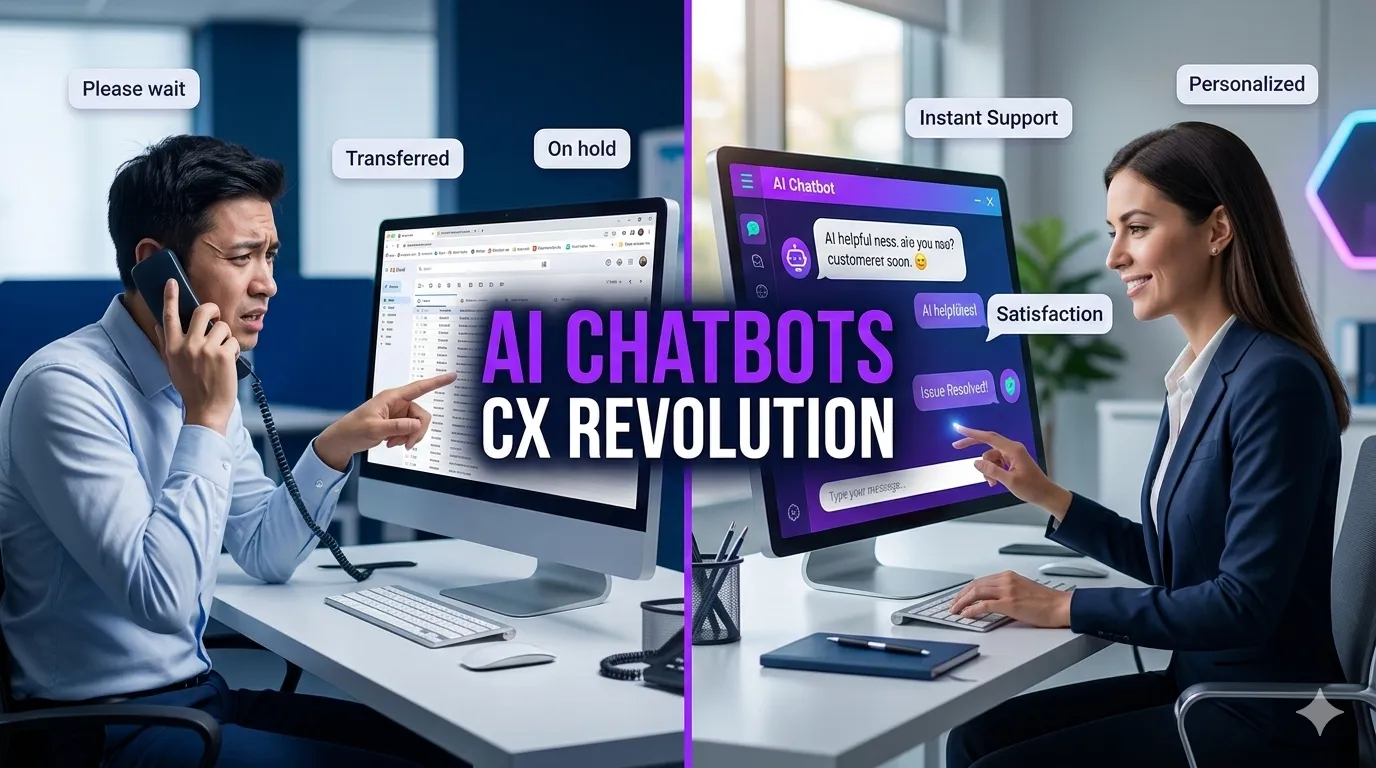
The customer experience landscape is undergoing a seismic shift. Gone are the days of rigid, script-bound automated responses that frustrated customers and damaged brand loyalty. Today's AI-powered chatbots are rewriting the fundamental rules of customer engagement, evolving from simple question-answering tools into sophisticated conversational partners that understand context, emotion, and intent. This transformation isn't just technological—it's reshaping how businesses build relationships, drive revenue, and create competitive advantage in an increasingly digital marketplace.
Modern AI chatbots represent a paradigm shift; they're no longer just cost-cutting automation tools but strategic assets that enhance every touchpoint of the customer journey. Powered by advances in natural language processing (NLP), machine learning, and contextual understanding, today's conversational AI can handle complex queries, detect sentiment, personalize interactions in real-time, and seamlessly escalate to human agents when needed. The result? Customer experiences that feel genuinely helpful rather than frustratingly robotic.
This comprehensive guide explores how AI chatbots are revolutionizing customer experience in the digital age. You'll discover the technologies powering next-generation conversational AI, learn implementation strategies that drive real business results, understand the balance between automation and human touch, and explore real-world case studies demonstrating measurable ROI. Whether you're a CX leader, digital transformation strategist, or business executive, this masterclass will equip you with the knowledge to harness conversational AI as a competitive differentiator.
The Evolution of Customer Service: From Scripts to Intelligence
The Limitations of Traditional Customer Service
For decades, customer service operated within rigid constraints that often frustrated both customers and agents:
Script-Dependent Interactions:
- Agents followed rigid scripts that couldn't adapt to unique customer situations
- Lack of empowerment to solve problems creatively
- Inconsistent experiences based on which agent handled the query
- Limited availability (typically business hours only)
Channel Silos:
- Phone, email, chat, and social media operated independently
- Customers had to repeat information across channels
- No unified view of customer history or preferences
- Fragmented data made personalization impossible
Scalability Challenges:
- Peak demand periods overwhelmed support teams
- Long wait times damaged customer satisfaction
- Hiring and training cycles couldn't match demand fluctuations
- High agent turnover affected service quality
Cost Pressures:
- Human agent costs continued to rise
- 24/7 coverage required significant staffing investment
- Multilingual support multiplied costs
- Simple, repetitive queries consumed agent time that could be spent on complex issues
The Chatbot Revolution: Three Generations of Evolution
First Generation: Rule-Based Bots (2010-2015)
- Technology: Decision trees and keyword matching
- Capabilities: Answered FAQs, provided basic information
- Limitations: Couldn't understand context, failed with unexpected inputs, required exact keyword matches
- User experience: Frustrating, limited, often led to "I don't understand" loops
Second Generation: AI-Powered Assistants (2016-2020)
- Technology: Natural Language Processing (NLP), intent recognition, entity extraction
- Capabilities: Understood natural language, handled varied phrasings, integrated with basic systems
- Limitations: Limited contextual understanding, struggled with complex multi-turn conversations, minimal personalization
- User experience: Improved but still felt transactional and robotic
Third Generation: Conversational AI (2021-Present)
- Technology: Advanced NLP, machine learning, sentiment analysis, contextual memory, generative AI
- Capabilities:
- Understand context across entire conversation
- Detect emotion and adjust tone accordingly
- Personalize based on customer history and preferences
- Handle complex, multi-step tasks
- Seamlessly blend with human agents
- Learn and improve from every interaction
- User experience: Natural, helpful, contextual, increasingly indistinguishable from human interaction
Scientific insight: Dr. Sarah Chen, AI researcher at MIT, explains: "The shift from rule-based to conversational AI isn't just incremental—it's fundamental. We've moved from systems that match patterns to systems that understand meaning, context, and intent. This enables chatbots to handle the ambiguity and complexity of real human conversation."
The Technology Powering Next-Generation Chatbots
Natural Language Processing (NLP) and Understanding (NLU)
Core Components:
Intent Recognition:
- Identifies what the customer wants to achieve
- Goes beyond keywords to understand purpose
- Example: "I can't access my account" vs. "My login isn't working" → Same intent: account access issue
Entity Extraction:
- Identifies key information within the query
- Extracts dates, names, account numbers, product names, etc.
- Example: "I need to reschedule my appointment for March 15th" → Entity: date (March 15th)
Context Management:
- Maintains conversation history and context
- Understands references to previous messages
- Example: Customer: "What's my balance?" → Bot: "$150" → Customer: "Can I withdraw half?" → Bot understands "half" refers to $75
Sentiment Analysis:
- Detects emotional tone (frustrated, satisfied, urgent, casual)
- Adjusts response tone and priority accordingly
- Escalates frustrated customers to human agents faster
Machine Learning and Continuous Improvement
Supervised Learning:
- Trained on labeled conversation data
- Learns from human agent interactions
- Improves accuracy of intent recognition over time
Reinforcement Learning:
- Learns from customer feedback and outcomes
- Optimizes responses based on success metrics
- Adapts to changing customer preferences
Federated Learning:
- Learns across multiple deployments while preserving privacy
- Benefits from collective intelligence without sharing sensitive data
- Continuously improves while maintaining compliance
Generative AI and Large Language Models (LLMs)
Capabilities:
- Generate human-like, contextually appropriate responses
- Handle novel queries not in training data
- Summarize complex information clearly
- Adapt tone and style to match brand voice
- Create personalized recommendations
Integration with Knowledge Bases:
- Retrieval-Augmented Generation (RAG) combines LLMs with company-specific knowledge
- Ensures responses are accurate and up-to-date
- Cites sources and provides verifiable information
Safety and Guardrails:
- Content filters prevent inappropriate responses
- Fact-checking mechanisms verify information
- Escalation protocols for sensitive topics
- Compliance with regulations and policies
Omnichannel Integration
Unified Customer View:
- Single conversation history across all channels
- Seamless handoff between chatbot, web, mobile, phone, social media
- Context preservation when switching channels
Platform Integration:
- CRM systems (Salesforce, HubSpot, Microsoft Dynamics)
- E-commerce platforms (Shopify, Magento, WooCommerce)
- Payment systems and billing platforms
- Inventory and order management systems
- Knowledge bases and documentation
Transforming Customer Experience: Real-World Applications
24/7 Instant Support
Use Case: Global E-commerce Retailer
- Challenge: Customers in different time zones experienced long wait times
- Solution: AI chatbot handling 80% of queries instantly, 24/7
- Results:
- Customer satisfaction increased 35%
- Average response time dropped from 12 minutes to 8 seconds
- Agent workload decreased 60%, allowing focus on complex issues
- Revenue increased 22% from reduced cart abandonment
Personalized Product Recommendations
Use Case: Fashion Retailer
- Challenge: Generic recommendations had low conversion rates
- Solution: Conversational AI that understands style preferences, body type, occasion, and budget through natural conversation
- Results:
- Recommendation conversion rate increased 340%
- Average order value increased 45%
- Return rate decreased 28% (better fit recommendations)
- Customer engagement time increased 5x
Proactive Customer Service
Use Case: Telecommunications Provider
- Challenge: Reactive support led to high churn during outages
- Solution: AI chatbot that proactively notifies customers of issues, provides ETAs, and offers compensation automatically
- Results:
- Support tickets during outages decreased 70%
- Customer churn during outages decreased 45%
- Proactive notifications increased trust scores by 38%
- Agent time saved: 15,000 hours annually
Complex Transaction Support
Use Case: Financial Services
- Challenge: Customers needed help with complex processes (mortgage applications, investment accounts)
- Solution: Conversational AI that guides customers through multi-step processes, collects documents, answers questions, and escalates to specialists when needed
- Results:
- Application completion rate increased 52%
- Time to completion decreased 65%
- Customer satisfaction scores increased 41%
- Agent capacity increased 3x (handling only final review)
Voice-Activated Customer Service
Use Case: Hospitality Chain
- Challenge: Guests needed instant assistance but front desk was often busy
- Solution: Voice-enabled AI assistant in rooms handling requests (room service, housekeeping, concierge, FAQs)
- Results:
- Guest satisfaction scores increased 29%
- Front desk calls decreased 55%
- Service request fulfillment time decreased 70%
- Upsell revenue increased $2.3M annually
Implementation Strategy: Building Chatbots That Deliver Results
Phase 1: Discovery and Strategy (Weeks 1-4)
Define Objectives:
- What business problems are you solving? (cost reduction, revenue growth, satisfaction improvement)
- What are your success metrics? (CSAT, NPS, resolution time, containment rate)
- What's your budget and timeline?
- What's your risk tolerance?
Identify Use Cases:
- Analyze customer inquiry data to identify top queries
- Prioritize high-volume, low-complexity queries for initial deployment
- Identify quick wins vs. long-term opportunities
- Map customer journey to identify chatbot touchpoints
Stakeholder Alignment:
- Secure executive sponsorship
- Align IT, CX, marketing, and operations teams
- Address concerns about job displacement (position as augmentation, not replacement)
- Establish governance and escalation protocols
Phase 2: Design and Development (Weeks 5-12)
Conversation Design:
- Map conversation flows for each use case
- Design for failure (what happens when bot doesn't understand?)
- Create personality and tone guidelines aligned with brand
- Write natural, conversational scripts (avoid robotic language)
- Build in empathy and emotional intelligence
Technology Selection:
- Evaluate platforms (Dialogflow, Microsoft Bot Framework, IBM Watson, custom solutions)
- Consider integration capabilities with existing systems
- Assess scalability and performance requirements
- Evaluate security and compliance features
- Consider total cost of ownership
Training and Testing:
- Train NLP models with historical conversation data
- Create diverse test scenarios (edge cases, ambiguous queries)
- Conduct user acceptance testing with real customers
- Iterate based on feedback
- Establish quality benchmarks (intent recognition accuracy >85%)
Phase 3: Pilot Deployment (Weeks 13-16)
Controlled Rollout:
- Start with limited audience (5-10% of traffic)
- Focus on specific use cases or channels
- Monitor performance closely
- Gather qualitative and quantitative feedback
Human-in-the-Loop:
- Ensure seamless escalation to human agents
- Review escalated conversations to improve bot
- Use agent feedback to refine responses
- Build confidence gradually
Performance Monitoring:
- Track key metrics (containment rate, CSAT, resolution time)
- Identify failure points and knowledge gaps
- Analyze sentiment trends
- Monitor system performance (latency, uptime)
Phase 4: Scale and Optimize (Week 17+)
Gradual Expansion:
- Expand to additional use cases based on pilot success
- Increase traffic allocation (25% → 50% → 75% → 100%)
- Add new channels (web → mobile → social → voice)
- Expand language support if global
Continuous Improvement:
- Weekly review of conversation logs
- Monthly model retraining with new data
- Quarterly strategy reviews and roadmap updates
- Ongoing A/B testing of responses and flows
Advanced Capabilities:
- Implement predictive analytics (anticipate customer needs)
- Add personalization engines (tailor responses to individual)
- Integrate with advanced systems (ERP, IoT, blockchain)
- Deploy generative AI for complex query handling
Measuring Success: KPIs and ROI Framework
Customer Experience Metrics
Customer Satisfaction (CSAT):
- Measure: Post-interaction surveys (1-5 scale)
- Target: >4.0/5.0 for chatbot interactions
- Benchmark: Compare to human agent CSAT
Net Promoter Score (NPS):
- Measure: "How likely are you to recommend us?" (0-10)
- Target: Improvement of 10+ points post-implementation
- Track: Correlation between chatbot usage and NPS
Customer Effort Score (CES):
- Measure: "How easy was it to resolve your issue?" (1-7)
- Target:
📖 আরও পড়ুন: Technology