Introduction: The Great Skin Confusion
If you've ever slathered on rich moisturizer only to find your skin still feels tight and uncomfortable, or if you've battled persistent flakiness despite drinking gallons of water, you're not alone. The confusion between dry skin and dehydrated skin is one of the most common misconceptions in skincare—and treating the wrong condition can leave you frustrated, broke, and still struggling with problematic skin.
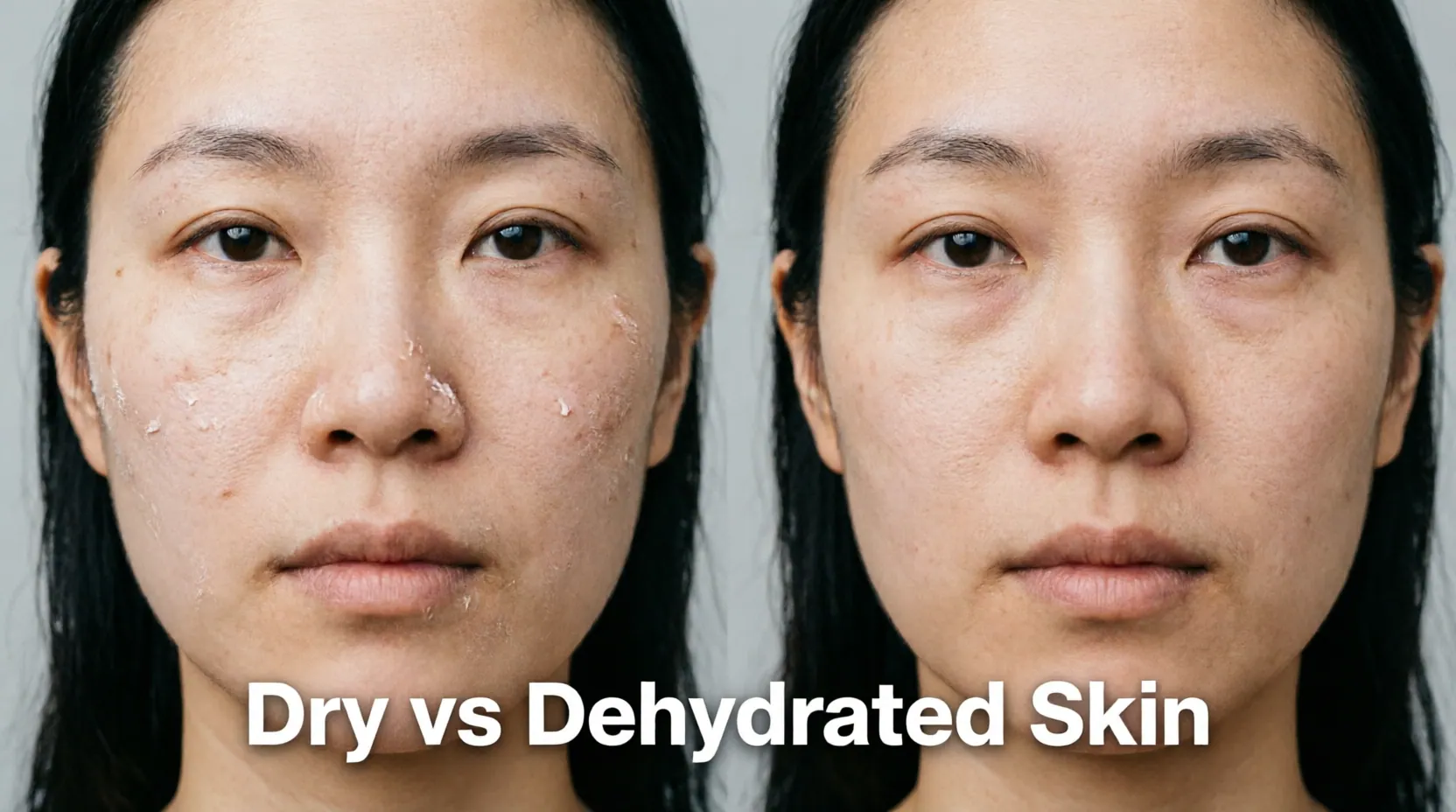
Here's the critical distinction: dry skin is a skin type—an inherent characteristic determined by genetics, much like having oily or combination skin. Dehydrated skin, on the other hand, is a skin condition—a temporary state that can affect any skin type, including oily skin. Yes, you read that correctly: you can have oily, acne-prone skin and still be dehydrated.
Understanding this difference isn't just semantics—it's the key to choosing the right products, implementing effective treatments, and finally achieving the healthy, comfortable complexion you deserve. This comprehensive guide will help you identify whether your skin is dry, dehydrated, or both, and provide science-backed solutions tailored to your skin's actual needs.
Dry Skin vs. Dehydrated Skin: The Fundamental Difference
Before diving into identification and treatment, let's clarify the core distinction between these two commonly confused conditions.
Dry Skin: A Skin Type
Definition: Dry skin is characterized by a lack of oil (sebum) production. It's a genetic skin type where your sebaceous glands don't produce enough lipids to maintain a healthy protective barrier.
Key characteristics:
- Permanent: It's your baseline skin type (though severity can fluctuate)
- Oil deficiency: Lacks natural oils and lipids
- Genetic: Often runs in families
- Year-round: Present in all seasons, though may worsen in winter
Dehydrated Skin: A Skin Condition
Definition: Dehydrated skin lacks water, not oil. It's a temporary condition that occurs when skin doesn't retain enough moisture, regardless of how much oil it produces.
Key characteristics:
- Temporary: Can be resolved with proper hydration
- Water deficiency: Lacks water content in the skin
- Environmental/lifestyle-related: Caused by external factors
- Can affect any skin type: Even oily skin can be dehydrated
The Oil vs. Water Distinction
Think of it this way:
- Dry skin = lacks oil (lipids)
- Dehydrated skin = lacks water (hydration)
This is why someone with oily skin can still experience dehydration—their skin produces plenty of oil but isn't retaining enough water.
Featured Snippet: Dry skin is a skin type lacking oil production (genetic, permanent). Dehydrated skin is a condition lacking water content (temporary, affects any skin type). Dry skin needs oil-replenishing products; dehydrated skin needs water-binding hydration. You can have oily skin and still be dehydrated.
Signs and Symptoms: How to Identify Your Skin
Recognizing the specific signs of each condition is crucial for proper treatment. Here's how to tell them apart:
Signs of Dry Skin (Oil Deficiency)
Visual Indicators
- Flakiness and scaling: Visible white flakes, especially around nose, eyebrows, and cheeks
- Rough texture: Skin feels sandpaper-like to the touch
- Dull appearance: Lack of natural radiance or glow
- More visible fine lines: Due to lack of plumping oils
- Red or irritated patches: Especially in harsh weather
Sensory Symptoms
- Persistent tightness: Even immediately after washing
- Itching: Particularly in dry climates or winter
- Rough, uneven texture: Never feels smooth
- Stinging with products: Even gentle formulations may cause discomfort
Behavioral Clues
- Rich, creamy moisturizers feel comfortable and necessary
- Lightweight, gel-based products don't provide enough nourishment
- Skin feels worse in winter or dry climates
- Makeup appears patchy or cakey, settling into dry patches
Signs of Dehydrated Skin (Water Deficiency)
Visual Indicators
- Dull, lackluster complexion: Skin looks tired despite adequate sleep
- More pronounced fine lines: Especially under eyes and on forehead (these lines plump up when hydrated)
- Dark under-eye circles: Dehydration makes them more prominent
- Shadowing or sunken appearance: Skin looks less plump
- Congestion and breakouts: Paradoxically, dehydrated skin can produce more oil to compensate
Sensory Symptoms
- Tightness after cleansing: But may feel oily an hour later
- Oily yet thirsty: Skin feels greasy but also tight and uncomfortable
- Increased sensitivity: Products sting or burn more easily
- Temporary relief: Moisturizer helps briefly, but skin feels dry again quickly
Behavioral Clues
- Skin produces excess oil but still feels uncomfortable
- Drinking more water doesn't fully resolve the issue
- Humid environments improve your skin
- Skin looks worse after air travel, in air-conditioned spaces, or during winter
The Pinch Test: A Simple At-Home Assessment
This quick test can help determine if your skin is dehydrated:
- Gently pinch a small area of skin on your cheek
- Hold for a few seconds, then release
- Observe:
- Hydrated skin: Bounces back immediately
- Dehydrated skin: Takes a moment to return to normal, may show fine lines
Note: This test isn't foolproof but can provide additional insight when combined with other symptoms.
Can You Have Both?
Yes! It's entirely possible to have dry and dehydrated skin. This means your skin lacks both oil and water, requiring a comprehensive approach that addresses both deficiencies.
Featured Snippet: Dry skin signs: flakiness, rough texture, persistent tightness, itching, dullness. Dehydrated skin signs: dull complexion, pronounced fine lines, oily yet tight feeling, temporary relief from moisturizer, worse in dry environments. Take the pinch test: dehydrated skin returns slowly. You can have both conditions simultaneously.
What Causes Dry Skin?
Understanding the root causes helps you manage dry skin effectively and set realistic expectations.
Genetic Factors
- Inherited skin type: If your parents have dry skin, you're more likely to have it
- Reduced sebaceous gland activity: Your body naturally produces less oil
- Weaker skin barrier: Genetic predisposition to compromised barrier function
Age-Related Changes
- Hormonal shifts: Menopause significantly reduces oil production
- Natural aging: Sebaceous glands become less active over time
- Thinner skin: Reduced ability to retain moisture and oils
Environmental Factors
- Cold weather: Low humidity and harsh winds strip natural oils
- Low humidity climates: Desert or high-altitude locations
- Indoor heating: Central heating dries out air and skin
Lifestyle and Skincare Habits
- Harsh cleansers: Sulfates and high-pH soaps strip natural oils
- Over-exfoliation: Damages skin barrier and depletes lipids
- Hot water: Long, hot showers remove protective oils
- Certain medications: Retinoids, diuretics, and some acne treatments
Medical Conditions
- Eczema (atopic dermatitis): Chronic condition causing dry, itchy skin
- Psoriasis: Autoimmune condition with dry, scaly patches
- Hypothyroidism: Underactive thyroid reduces oil production
- Diabetes: Can cause dry, itchy skin
What Causes Dehydrated Skin?
Unlike dry skin, dehydrated skin is primarily caused by external and lifestyle factors—many of which you can control.
Environmental Factors
- Low humidity: Dry air pulls moisture from skin
- Extreme temperatures: Both hot and cold weather increase water loss
- Wind exposure: Accelerates transepidermal water loss (TEWL)
- Air conditioning and heating: Creates artificially dry indoor environments
- Air travel: Cabin air has extremely low humidity (10-20%)
Lifestyle Factors
- Inadequate water intake: Not drinking enough fluids
- Excessive caffeine or alcohol: Both are diuretics that increase fluid loss
- High-sodium diet: Salt draws water out of cells
- Lack of sleep: Impairs skin's overnight repair and hydration
- Smoking: Damages skin barrier and reduces hydration
Skincare Mistakes
- Over-cleansing: Washing face too frequently strips natural moisture
- Using harsh products: Alcohol-based toners, astringents
- Skipping moisturizer: Not sealing in hydration
- Wrong products for skin type: Using drying products on already compromised skin
- Over-exfoliation: Damages barrier, increases water loss
Internal Health Factors
- Illness: Fever, vomiting, or diarrhea cause fluid loss
- Intense exercise: Sweating without adequate rehydration
- Stress: Elevates cortisol, which can impair barrier function
- Certain medications: Diuretics, antihistamines, some acne medications
Featured Snippet: Dry skin causes: genetics, aging, hormonal changes, cold weather, harsh skincare, medical conditions like eczema. Dehydrated skin causes: low humidity, inadequate water intake, excessive caffeine/alcohol, over-cleansing, skipping moisturizer, air travel, stress, certain medications. Many dehydration causes are preventable with lifestyle changes.
Treating Dry Skin: Replenishing Oil and Lipids
If you have dry skin, your goal is to replenish lost oils, strengthen your skin barrier, and prevent further moisture loss. Here's your comprehensive treatment protocol:
Key Ingredients for Dry Skin
1. Ceramides
What they do: Ceramides are lipids that make up 50% of your skin's composition. They're the "mortar" holding skin cells together.
Benefits:
- Restore and strengthen skin barrier
- Prevent transepidermal water loss
- Improve skin's ability to retain moisture
- Reduce sensitivity and irritation
How to use: Look for moisturizers with ceramides NP, AP, or EOP. Apply morning and night.
2. Fatty Acids
What they do: Essential lipids that nourish and repair the skin barrier.
Best sources:
- Linoleic acid: Found in plant oils like sunflower, safflower
- Oleic acid: Found in olive oil, avocado oil
- Omega-3 fatty acids: Found in fish oil, flaxseed oil
How to use: Incorporate facial oils or rich creams containing these acids.
3. Cholesterol
What it does: Works synergistically with ceramides and fatty acids to repair barrier.
Optimal ratio: Look for products with ceramides, cholesterol, and fatty acids in a 3:1:1 ratio for maximum efficacy.
4. Natural Oils
Best oils for dry skin:
- Jojoba oil: Mimics skin's natural sebum
- Argan oil: Rich in vitamin E and fatty acids
- Marula oil: Lightweight but deeply nourishing
- Rosehip oil: Contains vitamins A and C
- Squalane: Biocompatible, non-comedogenic
How to use: Apply 2-3 drops after serum, before or mixed with moisturizer.
5. Humectants
What they do: Draw water into the skin.
Best options:
- Glycerin: Classic, reliable humectant
- Hyaluronic acid: Holds 1000x its weight in water
- Honey: Natural humectant with antibacterial properties
Important: Always seal humectants with an occlusive moisturizer to prevent water loss.
6. Occlusives
What they do: Create a protective barrier to prevent water loss.
Best options:
- Petrolatum: Most effective occlusive (Vaseline)
- Dimethicone: Silicone-based, less greasy
- Shea butter: Natural, nourishing
- Lanolin: Excellent but can cause allergies in some
Dry Skin Routine: Step-by-Step
Morning Routine
- Gentle, creamy cleanser: No foaming or sulfates
- Hydrating toner (optional): Alcohol-free, with glycerin or hyaluronic acid
- Serum: Hyaluronic acid or niacinamide on damp skin
- Facial oil (optional): 2-3 drops of jojoba or argan oil
- Rich moisturizer: With ceramides, cholesterol, fatty acids
- Sunscreen: SPF 30+, moisturizing formula (mineral or hybrid)
Evening Routine
- Oil-based cleanser or balm: To remove sunscreen/makeup
- Creamy second cleanser: Gentle, non-stripping
- Hydrating serum: Hyaluronic acid or glycerin-based
- Treatment (2-3x weekly): Gentle retinol or lactic acid (start slowly)
- Facial oil: Apply to damp skin
- Night cream: Richer than morning moisturizer
- Occasional: Slugging with petrolatum 1-2x weekly for extra barrier repair
Lifestyle Adjustments for Dry Skin
- Use a humidifier: Especially in winter or dry climates
- Limit shower time: 5-10 minutes max, lukewarm water
- Avoid harsh soaps: Use syndet (synthetic detergent) bars or creamy cleansers
- Pat dry, don't rub: Leave skin slightly damp before moisturizing
- Wear gloves: In cold weather to protect hands
- Stay hydrated: Drink adequate water (though this won't cure dry skin alone)
- Eat omega-3 rich foods: Fatty fish, walnuts, flaxseeds
Featured Snippet: Treat dry skin with ceramides, fatty acids, cholesterol, natural oils (jojoba, argan, squalane), humectants (hyaluronic acid, glycerin), and occlusives (shea butter, petrolatum). Use creamy cleansers, rich moisturizers, facial oils. Add humidifier, limit hot showers, wear gloves in winter. Routine: gentle cleanse → hydrating serum → oil → rich moisturizer → SPF.
Treating Dehydrated Skin: Restoring Water Content
Dehydrated skin needs water-binding ingredients and barrier support to retain that hydration. Here's your targeted treatment protocol:
Key Ingredients for Dehydrated Skin
1. Hyaluronic Acid (HA)
What it does: A powerful humectant that can hold up to 1000 times its weight in water.
Best approach:
- Multi-molecular weight HA: Different sizes penetrate different skin depths
- Sodium hyaluronate: More stable, smaller molecule
- Hydrolyzed HA: Penetrates deepest
How to use: Apply to damp skin immediately after cleansing, then seal with moisturizer. Using HA on dry skin can actually pull moisture from your skin.
2. Glycerin
What it does: A time-tested humectant that draws water into the skin.
Benefits:
- Reliable hydration
- Strengthens skin barrier
- Compatible with all skin types
- Works well in various humidity levels
How to use: Look for it high on ingredient lists in serums and moisturizers.
3. Panthenol (Pro-Vitamin B5)
What it does: Attracts and retains moisture while supporting barrier repair.
Benefits:
- Deep hydration
- Soothes irritation
- Promotes healing
- Anti-inflammatory
4. Aloe Vera
What it does: Natural humectant with soothing properties.
Benefits:
- Lightweight hydration
- Calms inflammation
- Non-comedogenic
- Good for sensitive skin
5. Beta-Glucan
What it does: Derived from oats or mushrooms, provides intense hydration.
Benefits:
- Superior hydration to hyaluronic acid in some studies
- Soothes and calms
- Supports barrier function
- Antioxidant properties
6. Niacinamide (Vitamin B3)
What it does: Strengthens barrier function, improving skin's ability to retain water.
Benefits:
- Reduces transepidermal water loss
- Improves barrier function
- Regulates oil production (helpful if oily + dehydrated)
- Reduces inflammation
Concentration: 2-5% is effective; higher isn't necessarily better.
7. Snail Mucin
What it does: Contains glycoproteins, hyaluronic acid, and glycolic acid for hydration and repair.
Benefits:
- Intense hydration
- Promotes healing
- Lightweight texture
- Suitable for sensitive skin
Dehydrated Skin Routine: Step-by-Step
Morning Routine
- Gentle cleanser: Hydrating, non-foaming formula
- Essence or hydrating toner: With HA, glycerin, or beta-glucan (apply to damp skin)
- Hyaluronic acid serum: On damp skin, wait 1-2 minutes
- Niacinamide serum (optional): For barrier support
- Lightweight moisturizer: Gel-cream with ceramides
- Sunscreen: SPF 30+, hydrating formula
Evening Routine
- Gentle cleanser: Remove makeup/sunscreen
- Hydrating toner/essence: Layer 2-3 times for "skin flooding"
- Hydrating serum: HA, panthenol, or snail mucin
- Treatment (2-3x weekly): Gentle AHA (lactic acid) or low-strength retinol
- Moisturizer: Slightly richer than morning, with ceramides
- Facial oil (optional): If very dehydrated, seal with squalane
The "Skin Flooding" Technique
This Korean skincare method maximizes hydration:
- Cleanse skin
- While skin is still damp, apply hydrating toner/essence
- Immediately layer hydrating serum (HA, glycerin)
- Before it dries, apply moisturizer to seal everything in
- Optional: Add facial oil as final layer
Key: Each layer traps the previous one, maximizing water content.
Lifestyle Adjustments for Dehydrated Skin
- Increase water intake: Aim for 8-10 glasses daily (this actually helps with dehydration!)
- Reduce caffeine and alcohol: Both are diuretics that dehydrate skin
- Use a humidifier: Especially in dry climates or heated/cooled spaces
- Avoid long, hot showers: They strip water from skin
- Eat water-rich foods: Cucumber, watermelon, oranges, celery
- Limit sodium intake: Salt draws water out of cells
- Prioritize sleep: 7-9 hours for overnight repair
- Manage stress: Cortisol impairs barrier function
- Avoid over-exercising without rehydration: Replace fluids lost through sweat
Environmental Protection
- Carry a hydrating mist: Spray throughout the day in dry environments
- Apply moisturizer immediately after washing: Within 3 minutes to lock in water
- Protect from wind and extreme temperatures: Scarf in winter, shade in summer
- Use hydrating sheet masks: 1-2x weekly for intensive hydration boost
Featured Snippet: Treat dehydrated skin with hyaluronic acid (on damp skin), glycerin, panthenol, aloe vera, beta-glucan, niacinamide, and snail mucin. Use "skin flooding" technique: layer hydrating products on damp skin, seal with moisturizer. Drink more water, reduce caffeine/alcohol, use humidifier, eat water-rich foods. Routine: gentle cleanse → essence → HA serum → moisturizer → SPF.
Common Mistakes That Worsen Both Conditions
Avoid these pitfalls that can make dry or dehydrated skin worse:
Mistake 1: Over-Cleansing
The problem: Washing face more than twice daily or using harsh cleansers strips natural oils and compromises barrier.
The fix: Cleanse only morning and night with gentle, pH-balanced (5.5) cleanser. Use lukewarm water, not hot.
Mistake 2: Skipping Moisturizer (Even if Oily)
The problem: Thinking oily or dehydrated skin doesn't need moisture leads to more oil production and worse dehydration.
The fix: Always moisturize. Choose lightweight, non-comedogenic formulas if oily.
Mistake 3: Using Alcohol-Based Products
The problem: Denatured alcohol (alcohol denat, SD alcohol) strips skin and increases water loss.
The fix: Avoid toners, astringents, or products with high alcohol content. Look for "alcohol-free" labels.
Mistake 4: Over-Exfoliating
The problem: Exfoliating daily or using multiple exfoliants damages barrier, worsening both dryness and dehydration.
The fix: Limit exfoliation to 1-2x weekly with gentle AHAs (lactic acid) or PHAs. Never exfoliate compromised skin.
Mistake 5: Not Sealing in Hydration
The problem: Using humectants (HA, glycerin) without occlusive moisturizer causes water to evaporate, worsening dehydration.
The fix: Always follow humectants with moisturizer within 1-2 minutes.
Mistake 6: Using Wrong Products for Your Condition
The problem: Treating dry skin with only hydrating products (needs oils) or dehydrated skin with only oils (needs water).
The fix: Identify your condition correctly and choose targeted ingredients.
Mistake 7: Ignoring Internal Factors
The problem: Focusing only on topical products while neglecting water intake, diet, sleep, and stress.
The fix: Adopt holistic approach: skincare + lifestyle + nutrition.
Mistake 8: Expecting Overnight Results
The problem: Impatience leads to product-hopping and inconsistency.
The fix: Commit to routine for 4-6 weeks minimum. Skin barrier takes time to repair.
When to See a Dermatologist
While most cases of dry or dehydrated skin improve with proper care, professional help is warranted if:
- Symptoms persist after 6-8 weeks of consistent, appropriate care
- Severe flaking, cracking, or bleeding occurs
- Intense itching interferes with daily life or sleep
- Signs of infection (oozing, crusting, warmth, redness)
- You suspect underlying conditions (eczema, psoriasis, thyroid issues)
- Sudden onset of severe dryness without obvious cause
A dermatologist can prescribe barrier-repair medications, rule out medical conditions, and create a personalized treatment plan.
Frequently Asked Questions (FAQs)
Can drinking more water fix dehydrated skin?
It helps, but it's not the complete solution. While adequate water intake supports overall hydration, topical skincare is essential for dehydrated skin. Think of it as internal + external hydration. Drinking water alone won't resolve dehydration if you're using harsh products or living in a dry environment.
Can oily skin be dehydrated?
Absolutely! This is very common. Oily skin can lack water while producing excess oil. The skin overcompensates for dehydration by producing more oil, creating a cycle of oiliness and dehydration. Look for lightweight, oil-free hydrating products with hyaluronic acid and niacinamide.
How long does it take to fix dehydrated skin?
With consistent care, you should see improvement in 2-4 weeks. Full barrier repair typically takes 4-6 weeks. However, if lifestyle factors (low water intake, high caffeine, poor sleep) aren't addressed, dehydration will recur.
Is dry skin permanent?
Dry skin as a skin type is generally permanent, but it can be effectively managed with the right products and routine. Severity can fluctuate based on season, age, and skincare habits. With consistent care, dry skin can feel comfortable and healthy.
Can I use hyaluronic acid if I have dry skin?
Yes, but you must seal it in with a rich moisturizer or oil. HA draws water into skin, but dry skin lacks oils to retain that water. Without an occlusive layer, HA can actually make dry skin feel drier as water evaporates.
Should I use different products in winter vs. summer?
Yes! Adjust your routine seasonally:
- Winter: Richer moisturizers, more facial oils, humidifier, gentler cleansers
- Summer: Lighter textures, still hydrate but focus on non-greasy formulas
Can I have both dry and dehydrated skin?
Yes! This means your skin lacks both oil and water. You'll need a comprehensive approach: humectants (HA, glycerin) for hydration + emollients (oils, ceramides) for oil replenishment + occlusives (shea butter, petrolatum) to seal everything in.
Conclusion: Listen to Your Skin
Understanding the difference between dry and dehydrated skin is transformative. It's the difference between randomly trying products and strategically addressing your skin's actual needs. Remember:
Dry skin needs oil-replenishing ingredients like ceramides, fatty acids, and natural oils. It's a skin type that requires ongoing nourishment and protection.
Dehydrated skin needs water-binding ingredients like hyaluronic acid, glycerin, and panthenol. It's a temporary condition that can be resolved with proper hydration and lifestyle changes.
Both require gentle care, barrier support, and protection from environmental stressors.
The key to healthy skin isn't about expensive products or complicated routines—it's about understanding what your skin needs and giving it consistently. Be patient, be observant, and be kind to your skin. With the right approach, you can achieve a comfortable, resilient, radiant complexion regardless of your skin type or condition.
Your skin is unique. Listen to it, learn from it, and nurture it with knowledge and care.