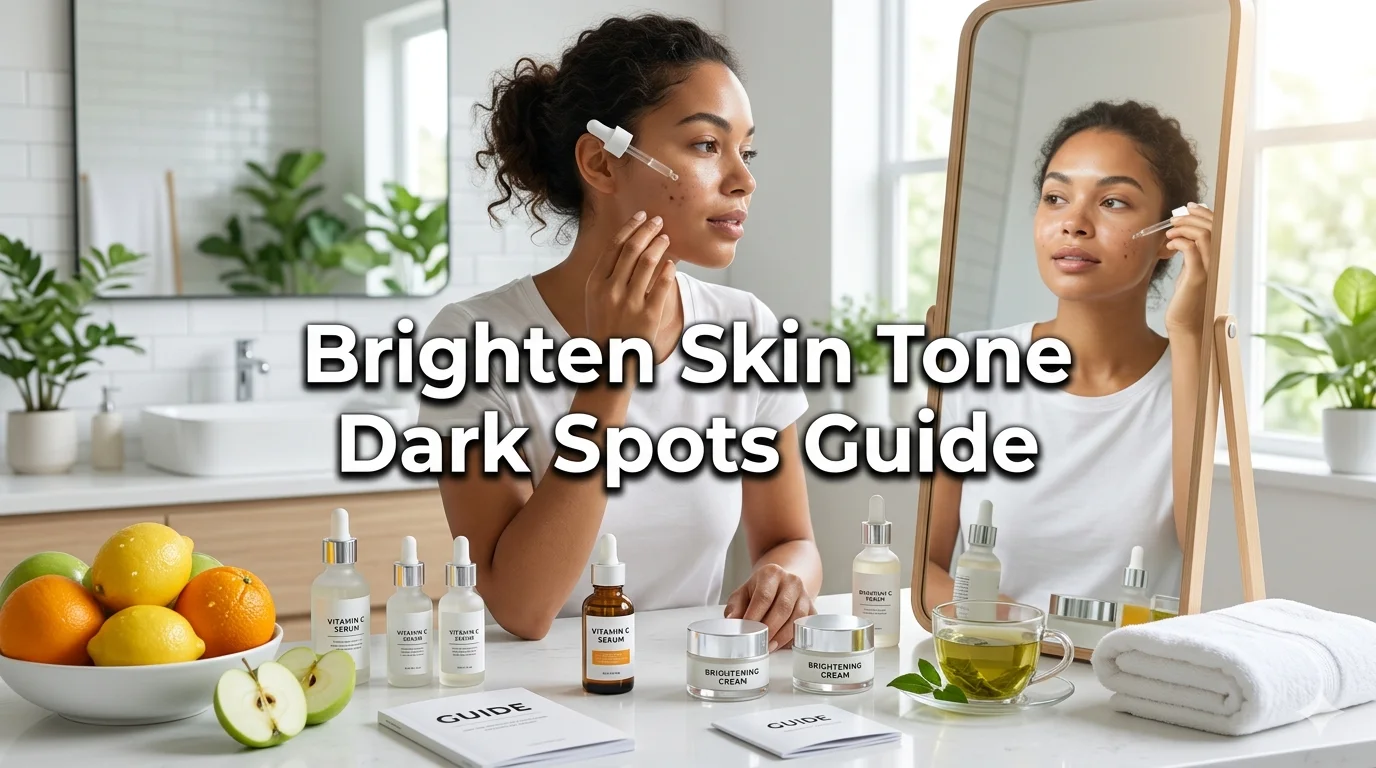
Dark spots, hyperpigmentation, and uneven skin tone are among the most common skin concerns affecting people of all ages and skin types. Whether caused by sun damage, acne scars, hormonal changes, or aging, these stubborn discolorations can impact your confidence and make your skin appear dull and tired. The good news? With the right approach, consistent care, and proven ingredients, you can significantly fade dark spots and achieve a brighter, more even complexion.
Brightening your skin tone and eliminating dark spots requires a multi-faceted approach that combines targeted skincare ingredients, sun protection, healthy lifestyle habits, and sometimes professional treatments. While results take time and consistency, understanding what causes hyperpigmentation and how to address it effectively is the first step toward achieving the radiant, even-toned skin you desire.
This comprehensive guide will walk you through everything you need to know about treating dark spots and brightening your complexion—from understanding the different types of hyperpigmentation and the most effective ingredients to use, to creating a daily skincare routine and knowing when to seek professional help. Whether you're dealing with post-acne marks, sun spots, melasma, or general dullness, you'll find practical, science-backed strategies to help you achieve clearer, brighter skin.
Understanding Dark Spots and Hyperpigmentation
Before diving into treatments, it's essential to understand what causes dark spots and the different types of hyperpigmentation:
What Causes Dark Spots?
Dark spots occur when your skin produces excess melanin—the pigment that gives your skin its color. This overproduction can be triggered by various factors:
1. Sun Exposure (Solar Lentigines/Age Spots)
UV radiation stimulates melanin production as a protective mechanism. Over time, this can lead to concentrated areas of pigmentation, commonly called age spots or sun spots, even though they can appear in younger people.
2. Post-Inflammatory Hyperpigmentation (PIH)
This occurs after skin inflammation or injury, such as acne, eczema, cuts, or burns. As the skin heals, it may produce excess melanin, leaving behind dark marks that can persist for months.
3. Melasma
Hormonal changes—particularly during pregnancy, while taking birth control pills, or during menopause—can trigger melasma, which appears as larger patches of discoloration, typically on the face.
4. Medications
Certain medications, including some antibiotics, chemotherapy drugs, and antimalarial medications, can cause hyperpigmentation as a side effect.
5. Medical Conditions
Conditions like Addison's disease, hemochromatosis, and certain vitamin deficiencies can cause skin darkening.
Types of Hyperpigmentation
Epidermal Hyperpigmentation: Affects the top layer of skin and is typically easier to treat. Appears brown and becomes more visible under UV light.
Dermal Hyperpigmentation: Affects deeper skin layers and is more challenging to treat. Appears blue-gray and doesn't change much under UV light.
Mixed Hyperpigmentation: A combination of both epidermal and dermal, requiring comprehensive treatment approaches.
Most Effective Ingredients for Brightening Skin
Certain ingredients have proven track records for fading dark spots and brightening skin tone. Here are the most effective options:
1. Vitamin C (L-Ascorbic Acid)
How it works: Vitamin C is a powerful antioxidant that inhibits tyrosinase, the enzyme responsible for melanin production. It also protects against free radical damage and boosts collagen production.
Benefits:
- Brightens overall complexion
- Fades dark spots and hyperpigmentation
- Protects against environmental damage
- Boosts collagen production
- Enhances skin radiance
How to use: Apply in the morning after cleansing, before moisturizer and sunscreen. Start with 10-15% concentration and gradually increase.
Best for: All skin types, especially dull skin and those with sun damage
2. Niacinamide (Vitamin B3)
How it works: Niacinamide prevents the transfer of melanin to skin cells and reduces inflammation, making it effective for treating post-acne marks.
Benefits:
- Reduces appearance of dark spots
- Minimizes pore appearance
- Strengthens skin barrier
- Reduces inflammation
- Regulates oil production
How to use: Can be used morning and/or evening. Works well at 5-10% concentration. Gentle enough for sensitive skin.
Best for: All skin types, especially acne-prone and sensitive skin
3. Alpha Arbutin
How it works: A natural skin lightener derived from bearberry plants that inhibits tyrosinase activity, reducing melanin production.
Benefits:
- Effectively fades dark spots
- Gentler than hydroquinone
- Suitable for long-term use
- Doesn't cause irritation
- Works on various types of hyperpigmentation
How to use: Apply twice daily after cleansing. Can be combined with other brightening ingredients.
Best for: All skin types, especially those seeking natural alternatives
4. Retinoids (Retinol, Tretinoin)
How it works: Retinoids increase cell turnover, helping to shed pigmented skin cells faster and revealing brighter skin underneath.
Benefits:
- Accelerates cell turnover
- Fades dark spots over time
- Improves skin texture
- Reduces fine lines and wrinkles
- Prevents new breakouts
How to use: Start 2-3 times per week at night, gradually increasing frequency. Always use sunscreen during the day.
Best for: Normal to oily skin; use with caution on sensitive skin
Note: Prescription-strength tretinoin is more potent than over-the-counter retinol.
5. Chemical Exfoliants (AHAs and BHAs)
How they work: Alpha hydroxy acids (AHAs) like glycolic acid and lactic acid dissolve the bonds between dead skin cells, while beta hydroxy acids (BHAs) like salicylic acid penetrate deeper into pores.
Benefits:
- Remove dead, pigmented skin cells
- Reveal brighter skin underneath
- Improve skin texture
- Enhance penetration of other products
- Prevent clogged pores
How to use: Start with 1-2 times per week, gradually increasing. Use at night and always follow with sunscreen.
Best for: Most skin types; choose gentler formulas for sensitive skin
6. Kojic Acid
How it works: Derived from fungi, kojic acid inhibits tyrosinase production and has antimicrobial properties.
Benefits:
- Effectively lightens dark spots
- Has antibacterial properties
- Works on melasma and age spots
- Can be combined with other ingredients
How to use: Apply once or twice daily. Can cause sensitivity in some individuals.
Best for: Normal to oily skin; patch test if you have sensitive skin
7. Azelaic Acid
How it works: Naturally occurring acid that inhibits tyrosinase and has anti-inflammatory properties, making it excellent for post-acne marks.
Benefits:
- Fades post-acne hyperpigmentation
- Reduces inflammation
- Treats active acne
- Gentle on sensitive skin
- Safe during pregnancy
How to use: Apply once or twice daily. Available in 10-20% concentrations.
Best for: Acne-prone skin, sensitive skin, and those with rosacea
8. Licorice Root Extract
How it works: Contains glabridin, which inhibits tyrosinase and has anti-inflammatory properties.
Benefits:
- Natural skin brightener
- Anti-inflammatory
- Gentle and soothing
- Antioxidant properties
How to use: Can be used morning and evening. Often found in serums and moisturizers.
Best for: All skin types, especially sensitive skin
Creating Your Daily Brightening Skincare Routine
A consistent, well-structured routine is essential for seeing results. Here's how to structure your day:
Morning Routine
Step 1: Gentle Cleanser
- Use a mild, pH-balanced cleanser
- Avoid harsh scrubs that can irritate skin
- Use lukewarm water, not hot
Step 2: Vitamin C Serum
- Apply to clean, dry skin
- Wait 1-2 minutes before next step
- Start with lower concentration if new to vitamin C
Step 3: Brightening Serum or Treatment
- Choose one active ingredient (niacinamide, alpha arbutin, etc.)
- Don't layer too many actives at once
- Allow absorption before moisturizing
Step 4: Moisturizer
- Use a lightweight, non-comedogenic formula
- Look for ingredients like hyaluronic acid
- Ensure skin is hydrated before sunscreen
Step 5: Sunscreen (MOST IMPORTANT)
- Use broad-spectrum SPF 30 or higher
- Apply generously (1/4 teaspoon for face)
- Reapply every 2 hours if outdoors
- This is non-negotiable for preventing further darkening
Evening Routine
Step 1: Double Cleanse (if wearing makeup/sunscreen)
- First cleanse with oil-based cleanser or micellar water
- Second cleanse with gentle foaming cleanser
- Ensures all product residue is removed
Step 2: Treatment (Alternate Nights)
Night 1, 3, 5: Retinoid or Chemical Exfoliant
- Apply to dry skin
- Start slowly (2-3 times per week)
- Wait 20 minutes before moisturizing
Night 2, 4, 6: Brightening Serum
- Use ingredients like alpha arbutin, kojic acid, or licorice root
- Gentler option for sensitive nights
Night 7: Rest Night
- Focus on hydration and barrier repair
- Use soothing ingredients like centella asiatica
Step 3: Moisturizer
- Use a slightly richer formula at night
- Look for ingredients like ceramides and peptides
- Seal in all treatments
Professional Treatments for Stubborn Dark Spots
For persistent hyperpigmentation that doesn't respond to topical treatments, professional procedures may be necessary:
1. Chemical Peels
What it is: Application of acid solutions (glycolic, salicylic, TCA) to remove damaged skin layers.
Effectiveness: Moderate to high, depending on peel strength
Downtime: 3-7 days for medium peels; minimal for light peels
Cost: $150-$600 per session
Best for: Epidermal hyperpigmentation, sun damage, mild melasma
2. Laser Treatments
Types:
- Q-Switched Lasers: Target melanin directly; excellent for dark spots
- IPL (Intense Pulsed Light): Treats sun damage and age spots
- Fractional Lasers: Create micro-injuries to stimulate healing
Effectiveness: High for appropriate candidates
Downtime: 3-10 days depending on intensity
Cost: $300-$1,500 per session
Best for: Stubborn pigmentation, deeper discoloration
Important: Not suitable for all skin tones; higher risk of complications in darker skin
3. Microdermabrasion
What it is: Mechanical exfoliation using tiny crystals or diamond tip to remove dead skin cells.
Effectiveness: Mild to moderate
Downtime: Minimal (slight redness for 24 hours)
Cost: $75-$200 per session
Best for: Surface-level discoloration, dull skin
4. Microneedling
What it is: Tiny needles create micro-injuries to stimulate collagen and enhance product penetration.
Effectiveness: Moderate to high, especially when combined with brightening serums
Downtime: 2-5 days
Cost: $200-$700 per session
Best for: Post-acne marks, texture issues, overall brightening
5. Prescription Treatments
Hydroquinone:
- Gold standard for hyperpigmentation
- Available in 2-4% prescription strength
- Use for maximum 3-4 months
- Requires medical supervision
Combination Creams:
- Tri-Luma (hydroquinone + tretinoin + fluocinolone)
- Highly effective for melasma
- Requires prescription
Natural Remedies and Home Treatments
While not as potent as clinical ingredients, some natural remedies can complement your routine:
1. Lemon Juice
Benefits: Natural vitamin C and citric acid provide mild brightening
How to use: Dilute with water, apply to dark spots, rinse after 10 minutes
Caution: Can cause photosensitivity; always use sunscreen
2. Aloe Vera
Benefits: Contains aloin, which has depigmenting properties
How to use: Apply fresh gel to dark spots overnight
Best for: Gentle, soothing treatment
3. Green Tea Extract
Benefits: Antioxidants protect against damage and may lighten pigmentation
How to use: Apply cooled green tea as toner or use products containing extract
4. Turmeric
Benefits: Curcumin has anti-inflammatory and brightening properties
How to use: Mix with honey or yogurt, apply as mask for 10-15 minutes
Caution: Can temporarily stain skin yellow
5. Rice Water
Benefits: Contains ferulic acid and allantoin for brightening
How to use: Use as toner or soak cotton pads and apply to dark spots
Lifestyle Changes for Brighter Skin
Your daily habits significantly impact your skin's appearance:
1. Sun Protection
This cannot be emphasized enough:
- Wear sunscreen daily, even indoors
- Reapply every 2 hours when outdoors
- Wear protective clothing and hats
- Seek shade during peak sun hours (10 AM - 4 PM)
- UV rays penetrate clouds and windows
2. Diet and Nutrition
Eat More:
- Vitamin C-rich foods (citrus, berries, bell peppers)
- Vitamin E (nuts, seeds, spinach)
- Antioxidant-rich foods (green tea, dark chocolate)
- Omega-3 fatty acids (salmon, walnuts, flaxseeds)
- Water (at least 8 glasses daily)
Avoid:
- Excessive sugar (causes glycation and inflammation)
- Processed foods
- Excessive alcohol
- Smoking (accelerates aging and pigmentation)
3. Stress Management
Chronic stress increases cortisol, which can worsen hyperpigmentation:
- Practice meditation or yoga
- Get 7-9 hours of quality sleep
- Exercise regularly
- Practice deep breathing
4. Don't Pick at Your Skin
Picking at acne or scabs leads to post-inflammatory hyperpigmentation:
- Treat acne promptly
- Use hydrocolloid patches on breakouts
- Keep hands away from your face
- See a dermatologist for persistent acne
Timeline: When Will You See Results?
Patience is crucial when treating hyperpigmentation:
2-4 weeks: Initial improvement in skin texture and brightness
4-8 weeks: Noticeable fading of newer, superficial dark spots
8-12 weeks: Significant improvement in moderate hyperpigmentation
3-6 months: Major improvement in stubborn, deeper pigmentation
6-12 months: Continued improvement; some cases may require ongoing maintenance
Important: Results vary based on:
- Type and depth of pigmentation
- Skin tone (darker skin may take longer)
- Consistency with treatment
- Sun protection adherence
- Individual skin response
Common Mistakes to Avoid
1. Skipping Sunscreen
This is the #1 mistake. Without sun protection, all your brightening efforts are wasted.
2. Using Too Many Actives at Once
Overloading your skin can cause irritation and worsen pigmentation. Introduce one active at a time.
3. Expecting Overnight Results
Hyperpigmentation takes months to fade. Consistency is key.
4. Picking or Scrubbing Too Hard
Physical trauma to skin can cause more pigmentation. Be gentle.
5. Not Treating the Root Cause
If acne is causing your dark spots, treat the acne first.
6. Using Harsh Products
Irritation can worsen hyperpigmentation, especially in darker skin tones.
Special Considerations for Different Skin Tones
Fair to Light Skin (Fitzpatrick I-II)
- More prone to sun damage and freckles
- Respond well to most treatments
- Lower risk of post-inflammatory hyperpigmentation
- Can tolerate stronger concentrations of actives
Medium to Olive Skin (Fitzpatrick III-IV)
- Prone to melasma and sun spots
- Moderate risk of post-inflammatory hyperpigmentation
- May need to use gentler concentrations
- Laser treatments require caution
Dark to Deep Skin (Fitzpatrick V-VI)
- Higher risk of post-inflammatory hyperpigmentation
- Melasma is common
- Require gentler approach to avoid irritation
- Laser treatments carry higher risk of complications
- May take longer to see results
- Azelaic acid and niacinamide are excellent choices
When to See a Dermatologist
Consult a dermatologist if:
- Dark spots appear suddenly or change rapidly
- Over-the-counter treatments aren't working after 3-6 months
- You have melasma (requires professional management)
- Dark spots are accompanied by other symptoms
- You're unsure what type of pigmentation you have
- You want prescription-strength treatments
- You're considering professional procedures
Maintaining Your Results
Once you've achieved brighter, more even skin, maintain it with:
- Continued sun protection: This is lifelong
- Maintenance routine: Continue using brightening ingredients 2-3 times weekly
- Regular exfoliation: 1-2 times weekly to prevent buildup
- Healthy lifestyle: Continue good diet, sleep, and stress management
- Touch-up treatments: Consider professional treatments annually if needed
Conclusion: Your Journey to Brighter Skin
Saying goodbye to dark spots and achieving a brighter, more even skin tone is absolutely achievable with the right approach, patience, and consistency. While the journey requires commitment—daily sun protection, a targeted skincare routine, and lifestyle adjustments—the results are well worth the effort.
Remember that everyone's skin is different, and what works quickly for one person may take longer for another. Be patient with your skin, avoid harsh treatments that can cause more damage, and celebrate small improvements along the way.
Start by incorporating one or two proven brightening ingredients into your routine, prioritize sun protection above all else, and give your skin time to heal and renew itself. Whether you choose to treat your dark spots at home or seek professional help, the key is consistency and protection.
Your journey to brighter, more radiant skin starts today. With the knowledge and tools from this guide, you're well-equipped to fade those dark spots and reveal the luminous, even-toned complexion beneath.
Remember: Beautiful skin is healthy skin. Be patient, be consistent, and be kind to your skin.