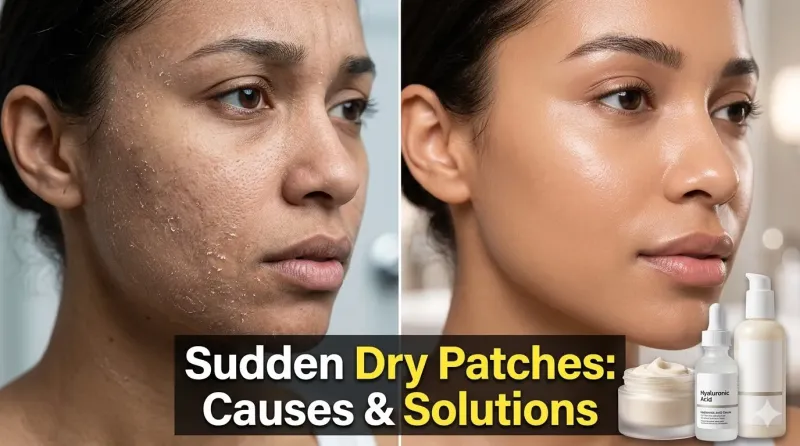
One morning you wake up, glance in the mirror, and notice it: a rough, flaky patch on your cheek, forehead, or around your nose that wasn't there yesterday. It might feel tight, look slightly red, or catch your foundation in an unflattering way. For many women, sudden dry patches are a frustrating, confusing, and surprisingly common skin concern that can appear seemingly out of nowhere—regardless of age, skin type, or skincare routine.
While occasional dryness is normal, sudden or persistent dry patches often signal that something specific is disrupting your skin's delicate balance. Unlike general dryness that affects the whole face, isolated dry patches typically point to localized barrier impairment, hormonal fluctuations, environmental triggers, or product reactions that require targeted understanding and care.
This comprehensive guide explores the science behind sudden dry patches in women, identifies the most common causes ranging from hormonal shifts to skincare missteps, explains how to differentiate between simple dryness and conditions requiring medical attention, and provides evidence-based solutions to restore smooth, hydrated, healthy-looking skin. Whether you're dealing with occasional flakiness or recurring patches that won't resolve, you'll find practical, science-backed strategies to address the root cause and prevent future occurrences.
Understanding Sudden Dry Patches: What's Actually Happening
Before addressing causes and solutions, it's essential to understand what a "dry patch" represents at a biological level.
The Skin Barrier and Localized Dryness
Your skin's outermost layer, the stratum corneum, functions as a protective barrier composed of:
- Corneocytes: Flattened, dead skin cells that form a "brick-like" structure
- Lipid matrix: Ceramides, cholesterol, and fatty acids acting as "mortar" between cells
- Natural Moisturizing Factor (NMF): Amino acids, urea, and other compounds that bind water within skin cells
When this barrier is intact and functioning properly, skin retains moisture effectively, appears smooth, and resists irritation. However, when the barrier becomes compromised in a specific area—due to friction, product irritation, environmental exposure, or internal factors—that localized region can develop:
- Increased transepidermal water loss (TEWL), leading to dehydration
- Disrupted cell shedding, causing visible flakiness or rough texture
- Heightened sensitivity to products or environmental factors
- Visible redness or irritation from underlying inflammation
Unlike general dryness that affects the whole face, sudden dry patches represent localized barrier impairment, which is why they often respond better to targeted treatment than whole-face approaches.
Why Women May Experience Sudden Dry Patches More Frequently
Several biological and lifestyle factors make women particularly susceptible to sudden dry patches:
Hormonal Fluctuations:
- Estrogen supports skin barrier integrity, collagen production, and hydration
- Hormonal shifts (menstrual cycle, pregnancy, postpartum, perimenopause) can temporarily compromise barrier function
- These fluctuations may cause dry patches to appear suddenly in specific areas
Skincare Product Use:
- Women typically use more skincare products, increasing exposure to potential irritants
- Layering multiple actives (retinoids, acids, vitamin C) can overwhelm localized barrier function
- Physical exfoliation or aggressive cleansing may cause micro-damage in specific areas
Makeup and Application Habits:
- Frequent makeup application and removal can stress the barrier in high-friction areas (cheeks, around nose)
- Makeup brushes or sponges may cause micro-abrasions that compromise barrier locally
- Long-wear or matte formulations may be more drying in specific zones
Environmental Exposure Patterns:
- Women may have more variable exposure (outdoor activities, commuting, indoor heating) that creates localized dryness
- Hair products, fragrances, or accessories may contact specific facial areas, triggering reactions
Common Causes of Sudden Dry Patches in Women
Sudden dry patches rarely have a single cause. More often, they result from a combination of factors. Understanding the most common triggers helps you identify and address what's affecting your skin.
1. Hormonal Fluctuations
How it happens: Estrogen supports skin barrier function by promoting ceramide production and maintaining hydration. When estrogen levels fluctuate or decline, barrier integrity can temporarily weaken in specific areas.
When it occurs:
- Menstrual cycle: Dry patches may appear in the luteal phase (post-ovulation) when estrogen drops
- Postpartum: Dramatic hormonal shifts after childbirth commonly trigger sudden dryness
- Perimenopause/menopause: Declining estrogen reduces barrier resilience, making dry patches more frequent
- Birth control changes: Starting, stopping, or switching hormonal contraceptives can trigger temporary barrier changes
Typical presentation: Dry patches often appear on cheeks, around mouth, or forehead; may coincide with other hormonal symptoms (mood changes, cycle irregularities).
2. Skincare Product Reactions or Overuse
How it happens: Active ingredients (retinoids, AHAs/BHAs, vitamin C) or potential irritants (fragrance, essential oils, certain preservatives) can compromise barrier function in areas where they're applied most heavily or where skin is thinner.
Common scenarios:
- Retinoid introduction: Starting a new retinol or prescription retinoid can cause localized dryness, especially around delicate areas
- Over-exfoliation: Using physical scrubs or chemical exfoliants too frequently can strip barrier lipids in specific zones
- Product layering: Combining multiple actives (vitamin C + retinoid + acid) can overwhelm barrier capacity
- Spot treatments: Acne treatments applied to specific areas may cause localized dryness or irritation
Typical presentation: Dry patches appear where products are applied most heavily; may feel tight, sting with product application, or show mild redness.
3. Environmental Triggers
How it happens: Sudden changes in temperature, humidity, or exposure to irritants can compromise barrier function in exposed areas.
Common triggers:
- Seasonal transitions: Moving from humid summer to dry winter air can trigger sudden dry patches
- Indoor heating/cooling: Low humidity from HVAC systems dehydrates skin, especially in high-exposure areas
- Wind exposure: Wind can strip moisture and cause micro-damage to exposed facial areas
- Hard water: Mineral deposits from hard water can disrupt skin pH and barrier function
- Pollution: Particulate matter can generate free radicals that damage barrier lipids
Typical presentation: Dry patches appear on most exposed areas (cheeks, forehead); may worsen with weather changes or after outdoor exposure.
4. Friction and Physical Irritation
How it happens: Repeated friction or pressure can physically disrupt the stratum corneum, leading to localized barrier impairment.
Common sources:
- Makeup application/removal: Aggressive rubbing with cotton pads, brushes, or wipes
- Phone use: Holding phone against cheek repeatedly
- Pillowcase friction: Sleeping position causing repeated friction on one side of face
- Masks or accessories: Face masks, glasses, or headbands causing localized pressure
- Towel drying: Rubbing face vigorously with towel
Typical presentation: Dry patches appear in areas of repeated contact; may feel rough or show slight redness.
5. Underlying Skin Conditions
How it happens: Certain dermatological conditions present with dry, flaky patches that may appear suddenly.
Conditions to consider:
- Eczema (atopic dermatitis): Can flare suddenly with dry, itchy, inflamed patches
- Seborrheic dermatitis: Causes flaky patches, often around nose, eyebrows, or hairline
- Contact dermatitis: Allergic or irritant reaction causing localized dryness and inflammation
- Psoriasis: Thick, silvery scales on red patches (less common on face)
- Perioral dermatitis: Small bumps and dry patches around mouth
Typical presentation: Dry patches may be itchy, red, or have distinct borders; may not respond to typical moisturizers.
6. Nutritional or Hydration Factors
How it happens: Systemic factors like dehydration or nutrient deficiencies can manifest as localized skin changes.
Contributing factors:
- Dehydration: Inadequate water intake reduces skin's ability to maintain hydration
- Essential fatty acid deficiency: Omega-3s support barrier lipids; deficiency can cause dryness
- Vitamin deficiencies: Vitamins A, C, E, and B complex support skin health
- Stress: Chronic stress elevates cortisol, which can impair barrier function
Typical presentation: Dry patches may appear alongside other signs of systemic imbalance (fatigue, brittle nails, hair changes).
Identifying Your Dry Patch: A Self-Assessment Guide
Not all dry patches are created equal. Use this guide to help identify what type you're dealing with.
Questions to Ask Yourself
1. When did it appear?
- Suddenly (24-48 hours): Likely environmental trigger, product reaction, or friction
- Gradually (days to weeks): May indicate hormonal shift, cumulative product irritation, or underlying condition
- Cyclical (same time each month): Likely hormonal
2. Where is it located?
- Cheeks: Common for hormonal dryness, wind exposure, or phone friction
- Around nose/mouth: Often seborrheic dermatitis, perioral dermatitis, or product irritation
- Forehead: May indicate product buildup, hair product transfer, or environmental exposure
- Eyelids: Often eczema, contact dermatitis, or harsh product use
3. What does it feel like?
- Tight but not painful: Likely simple barrier impairment
- Itchy: May indicate eczema, contact dermatitis, or allergic reaction
- Stinging with products: Suggests compromised barrier or active irritation
- Painful or burning: May indicate more significant inflammation; consider professional evaluation
4. What does it look like?
- Fine, powdery flakes: Typical of simple dryness or mild barrier impairment
- Thick, white scales: May indicate eczema, psoriasis, or seborrheic dermatitis
- Red, inflamed borders: Suggests active inflammation or dermatitis
- Small bumps with dryness: May indicate perioral dermatitis or fungal acne
5. What have you changed recently?
- New skincare products, makeup, or hair products?
- Changes in diet, stress levels, or sleep?
- Environmental changes (travel, season, indoor climate)?
- Hormonal changes (cycle, birth control, life stage)?
Red Flags: When to Seek Professional Help
Consult a dermatologist if your dry patch:
- Is painful, oozing, or crusted
- Spreads rapidly or doesn't improve with basic care after 2 weeks
- Is accompanied by significant itching, burning, or swelling
- Has distinct borders, silvery scales, or unusual coloration
- Appears alongside other systemic symptoms (fever, fatigue, joint pain)
- Recurs frequently despite consistent care
Evidence-Based Solutions: Treating Sudden Dry Patches
Once you've identified likely causes, targeted strategies can help restore your skin's barrier and resolve dry patches.
Immediate Care: The First 48-72 Hours
1. Simplify Your Routine
- Pause actives: Temporarily stop retinoids, acids, vitamin C, or other potent actives
- Use gentle cleanser: Switch to a low-pH, non-foaming, fragrance-free cleanser
- Focus on hydration: Apply hydrating toner or essence to damp skin
- Seal with barrier moisturizer: Use a simple moisturizer with ceramides, glycerin, or squalane
Why this works: Reducing potential irritants allows the barrier to begin repairing without additional stress.
2. Avoid Further Irritation
- Skip exfoliation: Avoid physical scrubs or chemical exfoliants until patch resolves
- Be gentle: Pat skin dry; don't rub. Apply products with gentle pressing motions
- Avoid heat: Use lukewarm water, not hot, for cleansing
- Limit makeup: If possible, skip makeup on affected area or use minimal, non-comedogenic products
Why this works: Preventing additional physical or chemical stress supports natural barrier recovery.
3. Targeted Hydration
- Apply to damp skin: Humectants like hyaluronic acid and glycerin work best when skin is slightly damp
- Layer strategically: Apply hydrating serum, then moisturizer, then (if needed) a light occlusive
- Focus on the patch: Apply an extra layer of moisturizer specifically to the dry area
- Consider a healing ointment: For very dry patches, a tiny amount of lanolin or petrolatum-based product overnight can accelerate healing
Why this works: Strategic hydration addresses the water loss driving the dry patch while supporting barrier repair.
Medium-Term Strategies: Days 3-14
1. Identify and Address the Trigger
Based on your self-assessment, take targeted action:
- If hormonal: Track your cycle; consider barrier-supporting ingredients (niacinamide, ceramides) during vulnerable phases
- If product-related: Reintroduce products one at a time after patch resolves; patch test new products
- If environmental: Use a humidifier; apply protective moisturizer before outdoor exposure
- If friction-related: Modify habits (gentler makeup removal, silk pillowcase, phone hygiene)
- If nutritional: Increase water intake; ensure adequate omega-3s, vitamins A/C/E
2. Incorporate Barrier-Repair Ingredients
These ingredients have clinical evidence supporting barrier repair:
- Ceramides: Primary structural lipids; look for NP, AP, or EOP types. Apply in moisturizer or serum.
- Niacinamide (4-5%): Supports barrier function, reduces inflammation, improves hydration. Apply once or twice daily.
- Panthenol (Vitamin B5): Humectant and anti-inflammatory; supports barrier recovery. Found in many soothing serums.
- Centella Asiatica: Soothes irritation and supports wound healing. Look for madecassoside or asiaticoside in ingredient list.
- Squalane: Lightweight emollient that mimics skin's natural sebum; helps seal in hydration.
3. Gentle, Infrequent Exfoliation (If Needed)
Once the acute dryness improves, gentle exfoliation can help remove residual flakiness:
- Choose PHAs or low-concentration AHAs: Gluconolactone or lactic acid (5% or less) provide gentle exfoliation with hydration benefits
- Limit frequency: Once weekly maximum during recovery
- Apply only to affected area: Avoid over-exfoliating surrounding healthy skin
- Follow with intensive hydration: Always follow exfoliation with barrier-supporting moisturizer
Long-Term Prevention: Weeks 3+
1. Build a Resilient Barrier Routine
Create a sustainable routine that supports barrier health:
- AM: Gentle cleanse (or water rinse) → hydrating toner → antioxidant serum → barrier moisturizer → sunscreen
- PM: Gentle cleanse → hydrating toner → treatment serum (if using) → barrier moisturizer → targeted treatment for dry areas
- Weekly: Gentle exfoliation (1x max) + hydrating mask if needed
2. Strategic Product Introduction
When adding new products:
- Patch test: Apply to small area (behind ear or inner arm) for 3-5 days before full-face use
- Introduce one at a time: Wait 1-2 weeks between new products to identify potential triggers
- Start low, go slow: Begin with lower concentrations of actives; increase frequency gradually
- Buffer potent actives: Apply moisturizer before retinoids or acids to reduce irritation
3. Environmental Protection
Minimize environmental triggers:
- Humidify indoor air: Maintain 40-60% humidity, especially in bedroom
- Protect from elements: Apply moisturizer before outdoor exposure; wear scarf in wind
- Filter water: Consider a shower filter if you have hard water
- Manage indoor climate: Keep thermostat moderate; avoid direct airflow on face
4. Lifestyle Support
Support skin health from within:
- Hydration: Aim for 2-3 liters of water daily
- Nutrition: Prioritize omega-3s, antioxidants, and barrier-supporting nutrients
- Sleep: Aim for 7-9 hours; skin repairs during sleep
- Stress management: Chronic stress impairs barrier function; practice stress-reduction techniques
Product Recommendations by Concern
These products feature ingredients with evidence supporting barrier repair and dry patch resolution.
For Immediate Soothing and Hydration
- La Roche-Posay Toleriane Sensitive Fluide: Minimalist formula with prebiotic thermal water; ideal for compromised skin
- Avène Cicalfate+ Restorative Protective Cream: Copper-zinc complex and postbiotic for barrier repair
- First Aid Beauty Ultra Repair Cream: Colloidal oatmeal, ceramides, and shea butter for intense hydration
- Vanicream Moisturizing Cream: Fragrance-free, minimal ingredients; ideal for sensitive or reactive skin
- CeraVe Healing Ointment: Petrolatum, ceramides, and hyaluronic acid for overnight barrier repair
For Barrier Repair and Prevention
- Stratia Liquid Gold: Ceramides, cholesterol, and fatty acids in ideal ratio for barrier support
- Paula's Choice Omega+ Complex Moisturizer: Ceramides, fatty acids, and cholesterol for barrier repair
- Illiyoon Ceramide Ato Soothing Gel: High ceramide content in lightweight gel-cream texture
- Dr. Jart+ Ceramidin Cream: Five-ceramide complex for intensive barrier support
- Krave Beauty Great Barrier Relief: Niacinamide, ceramides, and plant oils for barrier recovery
For Gentle Hydration and Layering
- The Ordinary Hyaluronic Acid 2% + B5: Multi-weight HA with panthenol; affordable and effective
- Klairs Supple Preparation Unscented Toner: Hyaluronic acid, beta-glucan, and centella for soothing hydration
- Hada Labo Gokujyun Premium Lotion: Multiple HA types and glycerin for deep hydration
- Beauty of Joseon Glow Serum: Propolis and niacinamide for hydration and barrier support
- Vichy Mineral 89: Hyaluronic acid and mineralizing thermal water in lightweight gel
For Hormonal or Cyclical Dryness
- Paula's Choice 10% Niacinamide Booster: Supports barrier function and reduces inflammation during hormonal shifts
- The Inkey List Omega Water Cream: Lightweight hydration with omega fatty acids for hormonal skin
- Biossance Squalane + Phyto-Retinol Serum: Gentle retinol alternative with squalane for barrier support
- Youth to the People Superfood Air-Whip Moisture Cream: Adaptogens and peptides for hormonal skin balance
Special Considerations by Life Stage
Teens and Young Adults (Teens-20s)
Common triggers: Acne treatments, harsh exfoliation, hormonal fluctuations from menstrual cycle onset.
Adaptations:
- Introduce acne treatments gradually; buffer with moisturizer
- Limit exfoliation to 1x weekly maximum
- Use non-comedogenic, fragrance-free products
- Track cycle to anticipate hormonal dryness
Reproductive Years (20s-40s)
Common triggers: Pregnancy/postpartum hormonal shifts, birth control changes, stress, product experimentation.
Adaptations:
- During pregnancy/postpartum: prioritize gentle, pregnancy-safe ingredients (avoid retinoids, high-dose salicylic acid)
- When changing birth control: allow 2-3 months for skin to adjust; focus on barrier support during transition
- Manage stress with mindfulness, exercise, or therapy to support skin resilience
- Be cautious when introducing new products; patch test thoroughly
Perimenopause and Menopause (40s+)
Common triggers: Declining estrogen reduces barrier function, collagen, and natural hydration.
Adaptations:
- Prioritize barrier-repair ingredients: ceramides, cholesterol, fatty acids
- Include phytoestrogens (soy, red clover) in skincare if tolerated
- Consider peptide serums to support collagen production
- Be consistent with hydration—mature skin has reduced repair capacity
- Consult healthcare provider about hormone-informed skincare options
Common Mistakes to Avoid
1. Over-Treating the Dry Patch
The Mistake: Applying multiple strong actives or aggressive exfoliation to "fix" the dry patch quickly.
Why It's a Problem: Compromised skin is more vulnerable to irritation; aggressive treatment can worsen barrier impairment and prolong healing.
The Fix: Simplify, don't intensify. Focus on gentle hydration and barrier support first; reintroduce actives only after the patch resolves.
2. Ignoring the Underlying Trigger
The Mistake: Treating the symptom (dry patch) without identifying what caused it.
Why It's a Problem: If the trigger persists (hormonal shift, product irritation, environmental factor), dry patches will likely recur.
The Fix: Use the self-assessment guide to identify likely causes; address the root cause alongside topical treatment.
3. Using Heavy Occlusives on Inflamed Skin
The Mistake: Applying thick petrolatum-based products to red, irritated dry patches.
Why It's a Problem: Heavy occlusives can trap heat and irritants against inflamed skin, potentially worsening inflammation.
The Fix: Start with soothing, anti-inflammatory ingredients (centella, panthenol, niacinamide); add light occlusives only if needed for very dry (not inflamed) patches.
4. Skipping Sunscreen on Dry Patches
The Mistake: Avoiding sunscreen on dry patches because it feels irritating or looks uneven.
Why It's a Problem: Compromised barrier is more vulnerable to UV damage; skipping sunscreen can worsen dryness and increase long-term damage risk.
The Fix: Choose a gentle, mineral-based sunscreen (zinc oxide/titanium dioxide) that's less likely to irritate compromised skin; apply moisturizer first to create a buffer.
5. Expecting Overnight Results
The Mistake: Expecting dry patches to resolve in 24-48 hours with intensive treatment.
Why It's a Problem: Barrier repair takes time (typically 2-4 weeks for full recovery); impatience can lead to product-hopping or aggressive treatment that worsens the issue.
The Fix: Set realistic expectations: initial improvement in 3-7 days, significant resolution in 2-3 weeks with consistent care.
Frequently Asked Questions
Can dry patches be a sign of something serious?
Most sudden dry patches are benign and resolve with proper care. However, consult a dermatologist if patches: are painful, oozing, or crusted; spread rapidly; have distinct borders or unusual coloration; don't improve after 2 weeks of consistent care; or appear alongside systemic symptoms (fever, fatigue). These could indicate eczema, contact dermatitis, or other conditions requiring medical treatment.
Should I exfoliate dry patches to remove flakes?
Not during the acute phase. Aggressive exfoliation can further compromise an already-impaired barrier. Wait until the patch is no longer red or sensitive, then use a gentle chemical exfoliant (PHA or low-concentration lactic acid) once weekly maximum. Always follow with intensive hydration and barrier support.
Can I wear makeup over a dry patch?
If possible, avoid makeup on the affected area until it heals. If you must wear makeup: prep the area with a hydrating primer; use creamy, hydrating formulas (avoid matte or long-wear); apply with gentle patting motions, not rubbing; and remove makeup gently with a creamy cleanser or micellar water.
How do I know if it's dryness or eczema?
Key differences:
- Simple dryness: Fine flakes, tight feeling, improves with moisturizer, no significant redness or itching
- Eczema: Intense itching, red/inflamed borders, may ooze or crust, often recurs in same locations, may not respond to typical moisturizers
If you suspect eczema, consult a dermatologist for proper diagnosis and treatment.
Will dry patches leave dark spots or scars?
Simple dry patches typically resolve without lasting marks. However, if the area becomes inflamed or if you pick at flakes, post-inflammatory hyperpigmentation (dark spots) can occur, especially in darker skin tones. To minimize risk: avoid picking or scratching; protect the area with sunscreen; and use gentle, non-irritating treatments. Dark spots from inflammation typically fade over weeks to months with consistent sun protection and gentle care.
Can stress cause sudden dry patches?
Yes. Chronic stress elevates cortisol, which can: impair barrier function by reducing ceramide production; increase inflammation that manifests as dry, irritated patches; and disrupt sleep, which impairs skin repair. If stress is a factor, incorporate stress-reduction techniques (meditation, exercise, adequate sleep) alongside topical care for best results.
Conclusion: Restoring Balance, One Patch at a Time
Sudden dry patches in women are more than a cosmetic concern—they're a signal from your skin that something in your internal or external environment needs attention. By understanding the science behind barrier function, identifying likely triggers, and implementing targeted, evidence-based solutions, you can resolve current dry patches and build resilience against future occurrences.
Remember that skin is dynamic and responsive. A dry patch isn't a permanent flaw; it's a temporary imbalance that, with the right care, can restore itself. Be patient with the process, compassionate with your skin, and proactive about identifying and addressing underlying triggers.
Key Takeaways:
- Dry patches signal localized barrier impairment: Understanding the biology helps you choose effective treatments.
- Causes are often multifactorial: Hormones, products, environment, and habits often combine to trigger dry patches.
- Simplify first, then target: Reduce potential irritants before adding treatments; gentle care accelerates healing.
- Barrier-supporting ingredients work: Ceramides, niacinamide, panthenol, and centella have clinical evidence for barrier repair.
- Prevention is sustainable: Identify your triggers and build habits that support long-term barrier health.
- Know when to seek help: Persistent, painful, or unusual patches warrant professional evaluation.
Start today. Choose one strategy from this guide: simplify your routine for 48 hours, apply moisturizer to damp skin, or identify one potential trigger to address. Small, consistent actions create meaningful change.
Your skin has an incredible capacity to heal and renew itself. With knowledge, intention, and compassionate care, you can restore balance and confidence—one patch at a time.
📖 আরও পড়ুন: Skin Care
- 🔗 Compounding Glow: Daily Habits That Transform Skin Quality
- 🔗 ব্ল্যাকহেডস ও হোয়াইটহেডস: কারণ, বৈজ্ঞানিক চিকিৎসা ও ঘরোয়া সমাধান
- 🔗 How Women Maintain Radiance Without Trendy Products
- 🔗 ৩০+ বয়সে অ্যান্টি-এজিং স্কিনকেয়ার: চিরযৌবনের সম্পূর্ণ গাইড
- 🔗 Persistent Redness Without Acne: Women's Causes & Solutions