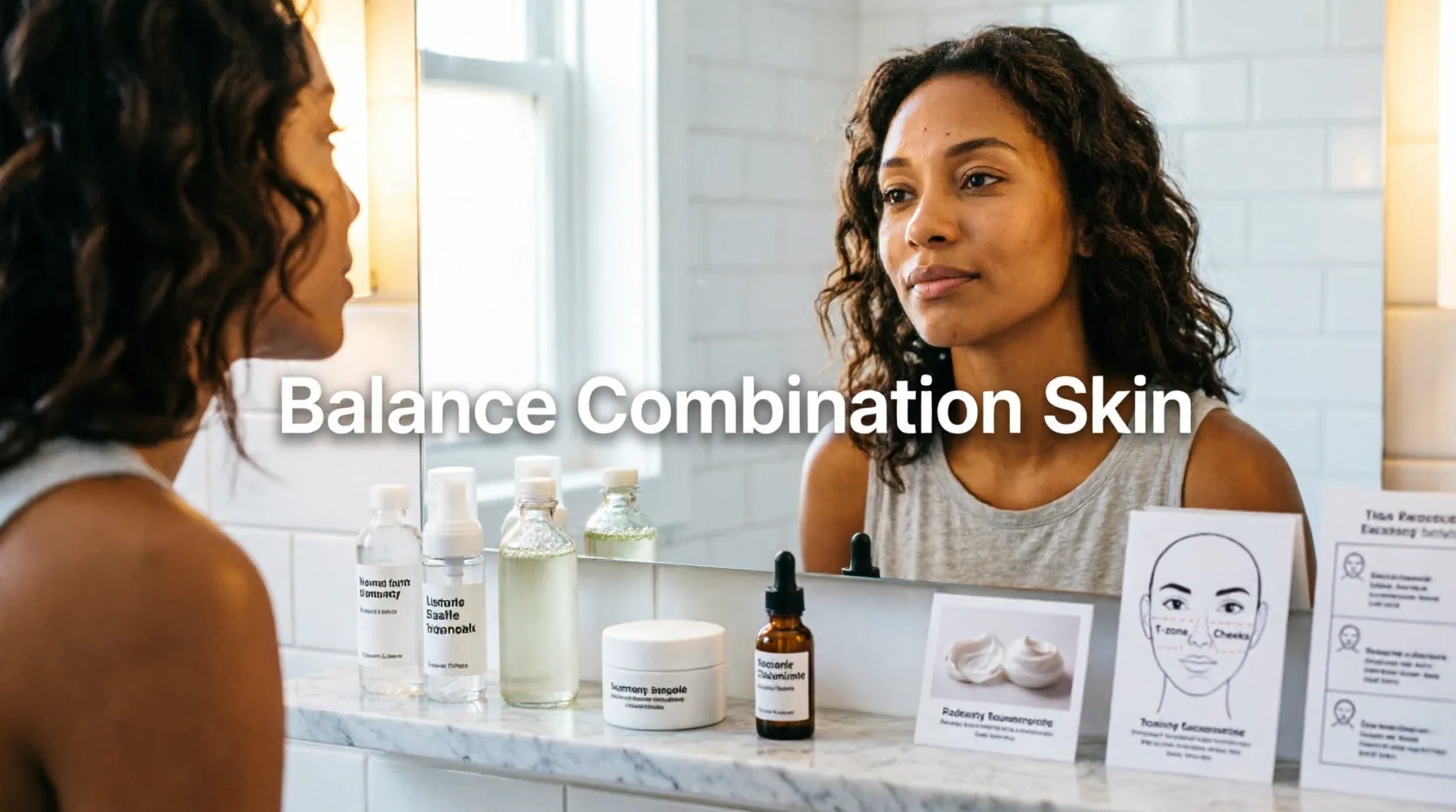
That frustrating combination of an oily T-zone and dry, tight cheeks isn't a skincare mystery—it's a common skin type that requires a strategic, balanced approach. Combination skin affects up to 60% of people, yet most routines fail because they treat the entire face the same way, either over-drying already-dry areas or under-treating oily zones. The secret to radiant, balanced skin lies in understanding your skin's unique map and applying targeted care where it's needed most.
Combination skin isn't a flaw—it's a normal variation where different facial zones have different needs. Your T-zone (forehead, nose, chin) typically has more sebaceous glands, producing excess oil, while your cheeks, jawline, and eye area have fewer oil glands, leading to dryness or sensitivity. Trying to treat your entire face with one product often means compromising one area to help another, leaving you with persistent imbalance.
In this comprehensive, dermatologist-informed guide, we'll decode the science behind combination skin, reveal the exact routine experts recommend for balancing oily and dry zones, share targeted product recommendations for each facial area, and provide expert strategies for maintaining harmony long-term. Whether you're dealing with midday shine on your nose while your cheeks flake, or struggling to find products that work for your entire face, you'll learn how to build a personalized routine that delivers balanced, healthy, radiant skin.
Understanding Combination Skin: Why Your Face Has Two Personalities
Short answer: Combination skin features an oily T-zone (forehead, nose, chin) with enlarged pores and shine, alongside dry or normal cheeks and jawline, caused by uneven distribution of sebaceous glands, hormonal factors, and environmental influences.
Before building a routine, understanding your skin's unique biology is essential:
The Anatomy of Combination Skin
Sebaceous Gland Distribution:
- T-zone contains 2-3x more oil glands than cheeks
- Higher gland density = more sebum production = shine and enlarged pores
- Cheeks have fewer glands, making them prone to dryness and sensitivity
- This uneven distribution is largely genetic and hormonal
Hormonal Influences:
- Androgens stimulate oil production, particularly in T-zone
- Hormonal fluctuations (menstrual cycle, stress) can worsen imbalance
- Combination skin often emerges in late teens/early 20s as hormones stabilize
Environmental Factors:
- Humidity increases T-zone oiliness while drying out cheeks
- Harsh weather (wind, cold) exacerbates cheek dryness
- Pollution and UV exposure affect zones differently based on oil content
Signs You Have Combination Skin
Classic Indicators:
- T-zone: Shiny by midday, visible pores, occasional blackheads or breakouts
- Cheeks/Jawline: Tightness after cleansing, flakiness, sensitivity to products
- Product response: Rich moisturizers clog T-zone; lightweight formulas don't hydrate cheeks
- Seasonal shifts: Worse imbalance in extreme weather (winter dryness, summer oiliness)
The "Blotting Test":
- Cleanse face gently and wait 1 hour without applying products
- Press blotting paper on forehead, nose, chin, then cheeks
- Result: Oil on T-zone paper, little to none on cheek paper = combination skin
The Core Principles of Balancing Combination Skin
Short answer: Balance combination skin by using zone-specific products, gentle pH-balanced cleansing, lightweight hydration for entire face with targeted rich care for dry areas, and consistent sun protection—avoiding one-size-fits-all approaches.
Effective combination skin care rests on four foundational principles:
Principle #1: Zone-Specific Treatment
Why It Matters:
- One product rarely addresses both oily and dry needs effectively
- Applying rich creams to oily zones causes clogged pores and breakouts
- Using lightweight formulas on dry areas leaves skin under-hydrated
- Targeted application maximizes efficacy while minimizing irritation
Practical Application:
- Use gel-based products on T-zone, cream-based on cheeks
- Apply exfoliants only to oily/congested areas
- Layer richer moisturizer only on dry zones after lightweight base
Principle #2: Gentle, pH-Balanced Cleansing
Why It Matters:
- Harsh foaming cleansers strip dry areas while triggering rebound oil in T-zone
- Alkaline cleansers (pH 8-10) disrupt acid mantle, worsening imbalance
- Gentle cleansing maintains barrier function in dry zones while effectively removing excess oil
Practical Application:
- Choose pH 4.5-6.0 cleansers labeled "gentle" or "hydrating"
- Avoid sulfates (SLS/SLES) and high-alcohol formulas
- Use lukewarm water, not hot, to prevent further dryness
Principle #3: Layered Hydration Strategy
Why It Matters:
- Combination skin needs hydration everywhere but oil control in T-zone
- Lightweight humectants (hyaluronic acid, glycerin) hydrate without heaviness
- Targeted occlusives seal moisture in dry areas without clogging oily zones
Practical Application:
- Apply hydrating toner or essence to entire face
- Use lightweight gel moisturizer all over
- Add richer cream only to cheeks, jawline, or dry patches
Principle #4: Consistent, Non-Comedogenic Sun Protection
Why It Matters:
- UV exposure worsens both oiliness (via inflammation) and dryness (via barrier damage)
- Heavy sunscreens clog T-zone; lightweight formulas may not protect dry areas adequately
- Non-comedogenic mineral formulas provide broad protection without imbalance
Practical Application:
- Choose mineral SPF 30+ with zinc oxide or titanium dioxide
- Look for "oil-free," "non-comedogenic," or "matte finish" labels
- Reapply every 2 hours with sun exposure, focusing on T-zone
The Dermatologist-Approved Combination Skin Routine
Short answer: Follow a zone-specific routine: gentle pH-balanced cleanser, hydrating toner, targeted serums (niacinamide for T-zone, hyaluronic acid for cheeks), lightweight gel moisturizer all over with richer cream on dry zones, and non-comedogenic SPF—adjusted for morning and evening needs.
This evidence-based protocol balances oily and dry zones effectively:
Morning Routine: Balance and Protect
Step 1: Gentle Cleansing
- Use pH-balanced gel or milky cleanser (pH 4.5-6.0)
- Massage gently for 30-60 seconds, focusing on T-zone
- Rinse with lukewarm water; pat dry—never rub
- Recommended: CeraVe Foaming Facial Cleanser, La Roche-Posay Toleriane Purifying Foaming Cleanser, Krave Beauty Matcha Hemp Hydrating Cleanser
Step 2: Hydrating Toner or Essence
- Apply alcohol-free toner with hyaluronic acid, glycerin, or centella
- Pat gently into entire face while skin is damp
- Provides initial hydration layer without heaviness
- Recommended: Paula's Choice Enriched Calming Toner, Hada Labo Gokujyun Lotion, COSRX Hyaluronic Acid Intensive Cream
Step 3: Targeted Serums (Zone-Specific Application)
- T-zone: Niacinamide 4-5% serum to regulate oil, minimize pores, reduce inflammation
- Cheeks/Dry areas: Hyaluronic acid or panthenol serum for intense hydration
- Apply with fingertips, using gentle pressing motions
- Wait 1-2 minutes before next step
- Recommended: The Ordinary Niacinamide 10% + Zinc 1% (dilute for sensitive skin), Paula's Choice 10% Niacinamide Booster, The Ordinary Hyaluronic Acid 2% + B5
Step 4: Lightweight Moisturizer (All Over) + Rich Cream (Dry Zones)
- Apply gel or gel-cream moisturizer to entire face
- Look for non-comedogenic, oil-free formulas with ceramides or peptides
- Then, apply richer cream only to cheeks, jawline, or dry patches
- This layered approach hydrates everywhere without clogging T-zone
- Recommended: Versed Dew Point Moisturizing Gel-Cream (all over), CeraVe PM Facial Moisturizing Lotion (all over), La Roche-Posay Toleriane Double Repair Face Moisturizer (dry zones)
Step 5: Non-Comedogenic Sunscreen SPF 30+ (Non-Negotiable)
- Apply mineral or hybrid sunscreen with matte or natural finish
- Focus on T-zone where oiliness can break down sunscreen faster
- Reapply every 2 hours with sun exposure
- Recommended: EltaMD UV Clear Broad-Spectrum SPF 46, La Roche-Posay Anthelios Clear Skin Oil Free Sunscreen SPF 60, Supergoop Unseen Sunscreen SPF 40
Evening Routine: Repair and Rebalance
Step 1: Double Cleanse (If Wearing Makeup or Heavy SPF)
- First cleanse: Oil-based or micellar water to dissolve makeup and sunscreen
- Second cleanse: Gentle pH-balanced cleanser as in morning routine
- This ensures thorough cleansing without over-stripping dry areas
Step 2: Targeted Treatment Serums (Alternate Nights)
- Night 1, 3, 5: Gentle exfoliant on T-zone only (salicylic acid 0.5-2% or mandelic acid 5-10%)
- Night 2, 4, 6: Hydrating or barrier-repair serum on cheeks (ceramides, panthenol, centella)
- Night 7: Rest night—hydration only
- Apply to clean, dry skin; wait 10-15 minutes before moisturizing
- Recommended: Paula's Choice 2% BHA Liquid Exfoliant (T-zone only), The Ordinary Lactic Acid 5% + HA (gentle option), Skin1004 Madagascar Centella Ampoule (cheeks)
Step 3: Moisturizer Strategy
- Apply lightweight gel moisturizer to entire face
- Add richer cream to cheeks, jawline, or dry patches
- For very dry areas: thin layer of facial oil (squalane, rosehip) over moisturizer
- Avoid applying heavy products to T-zone to prevent clogging
Step 4: Optional Weekly Treatments
- Clay mask (1x/week): Apply only to T-zone for 10 minutes to absorb excess oil
- Hydrating mask (1x/week): Apply to cheeks for 10-15 minutes to boost hydration
- Gentle chemical peel (1x/week): Use low-concentration AHA/BHA on T-zone only
Best Ingredients for Combination Skin: Evidence-Based Guide
Short answer: The most effective combination skin ingredients include niacinamide (oil regulation), hyaluronic acid (lightweight hydration), salicylic acid (T-zone exfoliation), ceramides (barrier support), and non-comedogenic sunscreens—each targeting specific zone needs without disrupting balance.
Niacinamide (4-5%)
- Mechanism: Regulates sebum production in T-zone; strengthens barrier in dry areas; reduces inflammation and pore appearance
- Speed: Visible oil regulation in 2-4 weeks; barrier improvement in 4-8 weeks
- Best for: Entire face—benefits both oily and dry zones
- Protocol: Apply morning and/or evening; pairs well with most actives
- Evidence: Studies show 4-5% niacinamide reduces sebum production by 20-30% while improving barrier function
Hyaluronic Acid (Multi-Molecular Weight)
- Mechanism: Binds up to 1000x its weight in water; plumps skin without adding oil
- Speed: Immediate hydration boost; sustained improvement with daily use
- Best for: Entire face, especially dry cheeks and jawline
- Protocol: Apply to damp skin; seal with moisturizer to prevent evaporation
- Tip: Look for formulas with multiple molecular weights for surface and deep hydration
Salicylic Acid (BHA, 0.5-2%)
- Mechanism: Oil-soluble exfoliant penetrates pores to dissolve sebum and dead cells; anti-inflammatory
- Speed: Visible pore refinement in 2-4 weeks; reduced breakouts in 4-8 weeks
- Best for: T-zone only—avoid on dry cheeks to prevent over-drying
- Protocol: Use 2-3x/week on T-zone only; follow with moisturizer
- Caution: Start with lower concentration (0.5-1%) if new to chemical exfoliants
Ceramides and Barrier Lipids
- Mechanism: Replenish the "mortar" between skin cells; prevent water loss in dry areas; support overall barrier health
- Speed: Immediate hydration; barrier repair in 2-4 weeks
- Best for: Entire face, with focus on dry zones
- Protocol: Use in moisturizer or serum; look for ceramide NP, AP, EOP
- Best paired with: Hyaluronic acid for enhanced hydration and barrier support
Mandelic Acid or PHA (Gentle Exfoliants)
- Mechanism: Larger molecule exfoliants that work gently on surface; less irritating than glycolic acid
- Speed: Smoother texture in 2-4 weeks; improved radiance in 4-6 weeks
- Best for: Sensitive combination skin or dry areas needing gentle exfoliation
- Protocol: Use 1-2x/week on cheeks or entire face if tolerated
- Advantage: Less likely to cause irritation or over-dryness
Non-Comedogenic Sunscreens
- Mechanism: Mineral filters (zinc oxide, titanium dioxide) provide broad-spectrum protection without clogging pores
- Speed: Immediate protection; long-term prevention of UV-induced imbalance
- Best for: Entire face—critical for preventing both oiliness and dryness from UV damage
- Protocol: Apply every morning; reapply every 2 hours with sun exposure
- Tip: Choose formulas labeled "matte," "oil-free," or "for combination skin"
Product Selection Guide: What to Look For
Short answer: Choose pH-balanced gentle cleansers, alcohol-free hydrating toners, non-comedogenic moisturizers with ceramides, targeted serums for specific zones, and mineral sunscreens with matte finish—avoiding heavy oils, high-alcohol formulas, and one-size-fits-all products.
Cleansers for Combination Skin
- Look for: pH 4.5-6.0, gel or milky texture, sulfate-free, with hydrating ingredients (glycerin, hyaluronic acid)
- Avoid: High-foaming formulas, sulfates (SLS/SLES), high-alcohol content
- Recommended: CeraVe Foaming Facial Cleanser (pH 5.5), La Roche-Posay Toleriane Purifying Foaming Cleanser (pH 5.5), Krave Beauty Matcha Hemp Hydrating Cleanser (pH 5.5)
Toners and Essences
- Look for: Alcohol-free, with hyaluronic acid, glycerin, centella, or niacinamide
- Avoid: High-alcohol content, astringents, strong fragrances
- Recommended: Paula's Choice Enriched Calming Toner, Hada Labo Gokujyun Lotion, COSRX Hyaluronic Acid Intensive Cream
Serums and Treatments
- For T-zone: Niacinamide 4-5%, salicylic acid 0.5-2%, zinc PCA
- For cheeks/dry areas: Hyaluronic acid, panthenol, ceramides, centella
- For entire face: Multi-benefit serums with niacinamide + hyaluronic acid
- Recommended: The Ordinary Niacinamide 10% + Zinc 1% (dilute if sensitive), Paula's Choice 10% Niacinamide Booster, Skin1004 Madagascar Centella Ampoule
Moisturizers
- For entire face: Gel or gel-cream, non-comedogenic, with ceramides or peptides
- For dry zones: Richer cream with ceramides, squalane, or shea butter
- Avoid: Heavy oils on T-zone, mineral oil if acne-prone
- Recommended: Versed Dew Point Moisturizing Gel-Cream (all over), CeraVe PM Facial Moisturizing Lotion (all over), La Roche-Posay Toleriane Double Repair Face Moisturizer (dry zones)
Sunscreens
- Look for: Mineral or hybrid, SPF 30+, "oil-free," "non-comedogenic," matte or natural finish
- Avoid: Heavy, greasy formulas, chemical filters if sensitive
- Recommended: EltaMD UV Clear Broad-Spectrum SPF 46, La Roche-Posay Anthelios Clear Skin Oil Free Sunscreen SPF 60, Supergoop Unseen Sunscreen SPF 40
Common Mistakes That Worsen Combination Skin
Avoid these errors that can sabotage your balancing efforts:
Mistake #1: Using One Product for Entire Face
Why it hurts: Rich creams clog T-zone pores; lightweight formulas under-hydrate cheeks. One-size-fits-all approaches guarantee imbalance.
Fix: Embrace zone-specific application. Use lightweight products all over, then add richer care only to dry areas.
Mistake #2: Over-Exfoliating the Entire Face
Why it hurts: Exfoliating dry cheeks worsens dryness and sensitivity; over-exfoliating T-zone triggers rebound oil production.
Fix: Exfoliate T-zone only 2-3x/week with salicylic acid; use gentle PHA or mandelic acid on cheeks 1x/week max.
Mistake #3: Skipping Moisturizer on Oily Areas
Why it hurts: Skipping moisturizer on T-zone triggers rebound oil production as skin tries to compensate for perceived dryness.
Fix: Use lightweight, non-comedogenic moisturizer on entire face. Oil-free doesn't mean moisture-free.
Mistake #4: Using Harsh, High-pH Cleansers
Why it hurts: Alkaline cleansers strip dry areas while triggering inflammation and rebound oil in T-zone.
Fix: Choose pH-balanced (4.5-6.0) gentle cleansers. Avoid sulfates and high-alcohol formulas.
Mistake #5: Applying Heavy Sunscreen to T-Zone
Why it hurts: Heavy sunscreens clog pores in oily zones, causing breakouts while providing inadequate protection for dry areas.
Fix: Choose mineral, non-comedogenic sunscreens with matte finish. Apply evenly, focusing on reapplication in T-zone.
Mistake #6: Expecting Overnight Results
Why it hurts: Balancing combination skin takes 4-8 weeks of consistent care. Impatience leads to product-hopping and over-treating.
Fix: Commit to a routine for at least 6 weeks before evaluating results. Take weekly photos to track subtle progress.
Expert Tips for Long-Term Balance
Tip #1: Map Your Face
Identify your specific oily and dry zones. T-zone is typically oily, but some people have oily cheeks or dry forehead. Customize your routine to your unique map.
Tip #2: Layer Strategically
Apply thinnest to thickest: toner → serum → lightweight moisturizer → richer cream on dry zones. Wait 1-2 minutes between layers for absorption.
Tip #3: Blot, Don't Re-Cleanse
When T-zone gets shiny midday, use blotting papers instead of re-washing. Re-cleansing strips dry areas and triggers more oil production.
Tip #4: Adjust for Seasons
Winter: Add richer cream to cheeks; reduce exfoliation frequency. Summer: Focus on oil control in T-zone; use lighter moisturizer all over.
Tip #5: Track Your Triggers
Keep a simple journal noting products, diet, stress, and skin response. Patterns help you identify personal triggers and adjust accordingly.
Tip #6: Be Patient with Actives
When introducing niacinamide or exfoliants, start with low frequency (2x/week) and build slowly. Monitor both T-zone and cheek response.
Frequently Asked Questions About Combination Skin
Can combination skin become normal skin?
Short answer: While your genetic predisposition remains, consistent care can significantly reduce imbalance. Many people achieve "functionally normal" skin where differences between zones are minimal with proper routine.
Key strategies:
- Zone-specific product application
- Consistent gentle cleansing and hydration
- Regular but targeted exfoliation
- Non-comedogenic sun protection
Should I use different cleansers for different zones?
Short answer: Not necessary for most people. One gentle, pH-balanced cleanser used with focused attention on T-zone during massage is sufficient. Save zone-specific products for treatments and moisturizers.
Exception: If T-zone is very oily and cheeks very dry, consider:
- Gentle gel cleanser for entire face
- Follow with targeted treatments post-cleanse
How often should I exfoliate combination skin?
Short answer: T-zone: 2-3x/week with salicylic acid or gentle BHA. Cheeks: 1x/week max with gentle AHA or PHA. Never exfoliate both zones with strong actives on same day.
Signs you're over-exfoliating:
- Increased dryness or flakiness on cheeks
- Rebound oiliness or breakouts in T-zone
- Stinging with moisturizer application
- Redness or irritation
Can diet affect combination skin?
Short answer: Indirectly. High-glycemic foods may increase T-zone oiliness; dehydration worsens cheek dryness. However, topical care has more immediate impact; diet supports long-term balance.
Supportive nutrition:
- Omega-3 fatty acids: fatty fish, flaxseed (reduce inflammation)
- Zinc: pumpkin seeds, chickpeas (regulate oil production)
- Water: 8-10 glasses daily (support hydration)
- Limit: sugar, processed carbs, excessive dairy if they trigger breakouts
When should I see a dermatologist for combination skin?
Short answer: Consult a dermatologist if: imbalance persists after 8-12 weeks of consistent care, you experience severe breakouts or sensitivity, or you want prescription-strength treatments for specific concerns.
A dermatologist can:
- Rule out underlying conditions (rosacea, seborrheic dermatitis)
- Prescribe targeted treatments (topical retinoids, azelaic acid)
- Recommend professional procedures (chemical peels, laser)
- Provide personalized protocol based on skin analysis
The Bottom Line: Balance Is Achievable
Combination skin isn't a curse—it's a call for intelligent, targeted care. By understanding your skin's unique map and applying the right products to the right zones, you can achieve balanced, healthy, radiant skin that feels comfortable and looks luminous.
Remember:
- Zone-specific care: Treat oily and dry areas differently for best results
- Gentle cleansing: pH-balanced formulas maintain balance without stripping
- Layered hydration: Lightweight all over, richer on dry zones
- Consistent sun protection: Non-comedogenic SPF prevents UV-induced imbalance
- Patience and consistency: Balance takes 4-8 weeks of dedicated care
- Listen to your skin: Adjust routine based on seasonal changes and skin response
Your skin has an incredible capacity to find harmony when given the right support. Start tonight: gentle cleanse, apply targeted serums to appropriate zones, layer moisturizers strategically, and commit to consistent care. Take progress photos. Celebrate small improvements. And trust that with knowledge, consistency, and the right protocol, balanced, radiant skin is within reach.
You deserve to feel confident in your skin—every zone of it. With science-backed care, self-compassion, and realistic expectations, you can master the balancing act and achieve the healthy, radiant complexion you deserve.
📖 আরও পড়ুন: Skin Care
- 🔗 How Product Fatigue Affects Female Skin: Science and Solutions
- 🔗 Patchy Skin Midlife Causes and Solutions Guide
- 🔗 Jet-Set Skin Care: Dermatologist Guide to Healthy Travel Skin
- 🔗 The Ultimate 2026 Anti-Aging Guide: Revamping Your Skincare Routine for Your 30s
- 🔗 Minimal Skincare for Mature Women: Why Less Works