Introduction: Why Counting Calories Isn't the Only Path to Weight Loss
If you've ever tried to lose weight, you've probably spent time tracking every bite, weighing food, or logging meals into an app. While calorie counting can work for some people, it's often tedious, unsustainable, and can even foster an unhealthy relationship with food. What if there was a simpler, more intuitive way to manage your portions and achieve effortless weight loss—without obsessing over numbers?
The secret lies in mastering portion control through visual cues, mindful eating, and simple, science-backed strategies that work with your body's natural signals. This approach doesn't require apps, scales, or mathematical calculations. Instead, it empowers you to trust your instincts while making choices that naturally support a healthy weight.
Research shows that people who focus on portion awareness and mindful eating often achieve more sustainable weight loss than those who rigidly count calories. Why? Because this method addresses the root behaviors that drive overeating—like distracted eating, emotional triggers, and oversized portions—while preserving the joy and satisfaction of meals.
In this comprehensive guide, you'll discover the science behind portion control, learn simple visual and hand-based techniques to size your meals perfectly, and master practical strategies to make portion awareness effortless in any situation. Whether you're eating at home, dining out, or navigating social gatherings, you'll have the tools to support your weight loss goals without the stress of counting.
Understanding Portion Control: The Foundation of Effortless Weight Loss
Before diving into techniques, it's essential to understand what portion control really means and why it matters for weight management.
Portion Size vs. Serving Size: What's the Difference?
Many people confuse these terms, but understanding the distinction is key:
- Serving size: A standardized measurement used on nutrition labels (e.g., 1 cup of cereal, 3 oz of chicken)
- Portion size: The amount of food you actually choose to eat at one time
The problem? Modern portion sizes have ballooned far beyond standard servings. A restaurant pasta dish might contain 3-4 standard servings, and a bagel today is often twice the size it was 20 years ago. This "portion distortion" makes it easy to consume excess calories without realizing it.
Why Portion Control Works for Weight Loss
Weight loss fundamentally requires a calorie deficit—consuming fewer calories than you burn. Portion control creates this deficit naturally by:
- Reducing overall intake: Smaller portions mean fewer calories without feeling deprived
- Improving hunger awareness: Helps you recognize true hunger vs. habitual eating
- Supporting mindful choices: Encourages you to savor food and stop when satisfied
- Creating sustainable habits: No apps or tracking required—just simple visual cues
The Science of Satiety: How Your Body Signals Fullness
Your body has sophisticated mechanisms to regulate food intake, but modern eating patterns can override them:
- Stomach stretch receptors: Signal fullness when your stomach expands
- Hormonal signals: Leptin (fullness hormone) and ghrelin (hunger hormone) communicate with your brain
- Brain processing time: It takes about 20 minutes for your brain to register fullness after you start eating
When you eat quickly, distracted, or from oversized portions, you can easily consume more than your body needs before these signals kick in. Portion control techniques help you align your eating with your body's natural rhythms.
Featured Snippet: Portion control means managing the amount of food you eat using visual cues and mindful habits, not counting calories. It works by naturally reducing calorie intake, improving hunger awareness, and supporting sustainable weight loss. Understanding the difference between portion size (what you eat) and serving size (standard measurement) helps combat modern portion distortion.
The Hand Portion Guide: Your No-Measure Tool for Perfect Portions
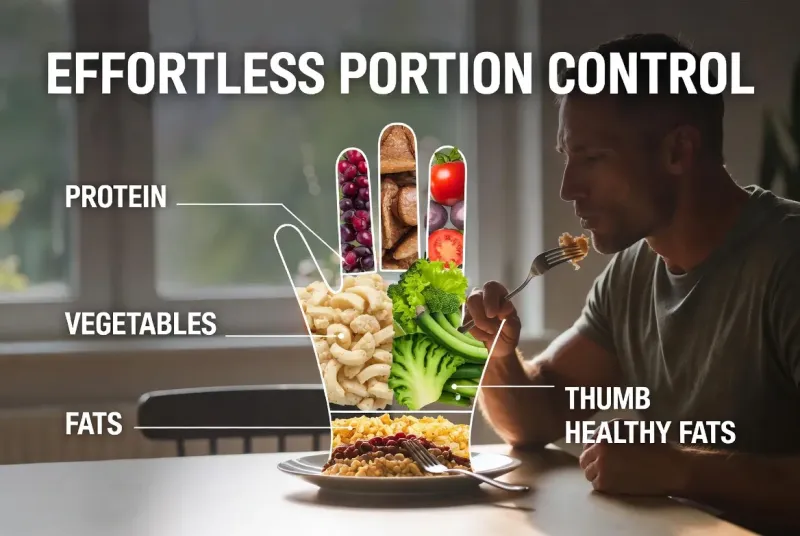
One of the simplest, most effective portion control methods uses your own hand as a guide. Your hand is always with you, scales to your body size, and provides consistent, personalized measurements.
How to Use the Hand Portion System
Each part of your hand corresponds to a different food group and portion size:
Protein: Palm-Sized Portions
What it looks like: A portion of protein (chicken, fish, beef, tofu, eggs) should be about the size and thickness of your palm (excluding fingers).
Why it works: Protein is highly satiating and supports muscle preservation during weight loss. A palm-sized portion typically provides 20-30 grams of protein—enough to promote fullness and metabolic health.
Examples:
- Chicken breast: One palm-sized piece
- Fish fillet: One palm-sized portion
- Tofu: A block the size of your palm
- Eggs: 2-3 eggs (roughly palm-sized when combined)
Vegetables: Fist-Sized Portions
What it looks like: Non-starchy vegetables (broccoli, spinach, peppers, zucchini) should fill at least one fist, ideally two.
Why it works: Vegetables are low in calories but high in fiber, water, and nutrients. They add volume to meals, promoting fullness without excess calories.
Examples:
- Salad greens: Two fist-sized handfuls
- Steamed broccoli: One to two fists
- Roasted vegetables: One to two fists
Carbohydrates: Cupped-Hand Portions
What it looks like: Starchy carbs (rice, pasta, potatoes, oats) should fit in your cupped hand.
Why it works: This portion provides energy without overloading on calories. Adjust based on activity level: more active days may warrant an extra cupped-hand portion.
Examples:
- Cooked rice or quinoa: One cupped hand
- Pasta: One cupped hand (dry measure before cooking)
- Sweet potato: One fist-sized piece
- Oats: One cupped hand (dry)
Fats: Thumb-Sized Portions
What it looks like: Healthy fats (oils, nut butters, avocado, cheese) should be about the size of your thumb (from tip to base).
Why it works: Fats are calorie-dense (9 calories per gram vs. 4 for protein/carbs), so small portions provide flavor and satiety without excess calories.
Examples:
- Olive oil: One thumb-sized pour (about 1 tsp)
- Nut butter: One thumb-sized scoop
- Avocado: One thumb-sized slice or 1/4 fruit
- Cheese: One thumb-sized cube
Putting It All Together: The Balanced Plate
Use your hands to build a balanced, portion-controlled meal:
- Start with vegetables (1-2 fists)
- Add protein (1 palm)
- Include carbs if desired (1 cupped hand)
- Finish with healthy fats (1 thumb)
This framework ensures nutrient balance, promotes satiety, and naturally controls portions without counting.
Featured Snippet: Use your hand as a portion guide: palm-sized protein, fist-sized vegetables, cupped-hand carbs, thumb-sized fats. This personalized, no-measure system scales to your body size and ensures balanced, satisfying meals. Build plates with 1-2 fists veggies, 1 palm protein, 1 cupped-hand carbs, 1 thumb fat for effortless portion control.
Visual Cues and Plate Strategies for Instant Portion Awareness
Beyond hand portions, simple visual tricks and plate strategies can make portion control automatic.
The Plate Method: A Visual Blueprint for Balanced Meals
Divide your plate to guide portions without measuring:
- Half the plate: Non-starchy vegetables (salad, roasted veggies, steamed greens)
- Quarter of the plate: Lean protein (chicken, fish, beans, tofu)
- Quarter of the plate: Starchy carbs or whole grains (rice, potatoes, pasta)
- Add a thumb-sized portion: Healthy fats (olive oil, avocado, nuts)
This method ensures nutrient balance, promotes fullness through fiber-rich vegetables, and naturally limits higher-calorie components.
Use Smaller Plates and Bowls
Why it works: Research shows people serve and eat more when using larger plates—a phenomenon called the "Delboeuf illusion." A portion looks smaller on a large plate, prompting you to add more.
How to apply:
- Swap 12-inch dinner plates for 9-10 inch plates
- Use smaller bowls for cereals, soups, and snacks
- Choose taller, narrower glasses for beverages (you'll pour less)
This simple environmental change can reduce calorie intake by 20-30% without feeling deprived.
Pre-Portion Snacks and Treats
The problem: Eating directly from a bag or container makes it easy to lose track of portions.
The solution:
- Divide bulk snacks into single-serving containers when you get home
- Use small bowls for snacks instead of eating from the package
- Keep treats out of sight and pre-portioned to reduce impulse eating
This strategy removes decision fatigue and prevents mindless overeating.
Serve Food in the Kitchen, Not Family-Style at the Table
Why it matters: When food is served at the table, you're more likely to go back for seconds without truly assessing hunger.
How to apply:
- Plate meals in the kitchen before sitting down
- Leave serving dishes on the counter or stove, not on the table
- If you want seconds, wait 10-15 minutes to check if you're still hungry
This creates a natural pause that helps you honor fullness cues.
Featured Snippet: Master visual portion control with the plate method (half veggies, quarter protein, quarter carbs), smaller plates to reduce servings, pre-portioned snacks to prevent mindless eating, and serving meals in the kitchen to avoid automatic seconds. These strategies make portion awareness effortless and automatic.
Mindful Eating: The Mental Shift That Makes Portion Control Natural
Portion control isn't just about physical techniques—it's about cultivating awareness and intention around eating.
Slow Down: The 20-Minute Rule
Why it works: It takes about 20 minutes for your brain to register fullness signals from your stomach. Eating quickly bypasses this system, leading to overeating.
How to practice:
- Put your fork down between bites
- Chew thoroughly (aim for 20-30 chews per bite)
- Take sips of water throughout the meal
- Engage in conversation to naturally pace your eating
Slowing down helps you recognize satisfaction before you've overeaten.
Eliminate Distractions During Meals
The problem: Eating while watching TV, scrolling on your phone, or working distracts you from hunger and fullness cues.
Research shows: Distracted eating can increase calorie intake by 10-15% and reduce meal satisfaction.
How to apply:
- Eat at a table, not on the couch or at your desk
- Turn off screens during meals
- Focus on the taste, texture, and aroma of your food
- Check in with yourself halfway through: "Am I still hungry, or am I eating out of habit?"
Check In With Hunger and Fullness Scales
Use a simple 1-10 scale to tune into your body's signals:
- 1-3: Very hungry (stomach growling, low energy)
- 4-6: Comfortably hungry to satisfied (ideal range to start and stop eating)
- 7-8: Full to very full (uncomfortable, sluggish)
- 9-10: Stuffed, painful
Goal: Start eating at a 3-4, stop at a 6-7. This prevents both undereating (which triggers cravings) and overeating.
Practice the "Pause" Before Seconds
How it works: When you finish your first portion, pause for 5-10 minutes before deciding on seconds.
- Drink a glass of water
- Ask: "Am I still physically hungry, or am I eating because it tastes good/is available?"
- If still hungry, have a small, intentional second portion
This brief pause helps you distinguish between true hunger and habitual eating.
Featured Snippet: Mindful eating makes portion control natural: slow down to honor fullness signals (20-minute rule), eliminate distractions during meals, use hunger/fullness scales (start at 3-4, stop at 6-7), and pause before seconds. These mental shifts help you eat intuitively while naturally managing portions.
Portion Control in Real Life: Strategies for Dining Out, Social Events, and Travel
Mastering portion control at home is one thing—but what about restaurants, parties, and vacations? These practical strategies keep you on track anywhere.
Dining Out: Navigate Menus Without Overeating
Before you go:
- Check the menu online and decide what you'll order
- Eat a small, protein-rich snack beforehand to avoid arriving starving
At the restaurant:
- Start with water: Drink a full glass before ordering to promote fullness
- Order an appetizer as your main: Many appetizer portions are ideal main-meal sizes
- Ask for sauces/dressings on the side: Control how much you use
- Box half your meal immediately: When food arrives, set aside half to take home before you start eating
- Share a dish: Split an entrée with a friend and add a side salad
Mindset tip: Remember that restaurant portions are often 2-3x standard servings. You don't need to finish everything on your plate.
Social Gatherings: Enjoy Without Overindulging
Before the event:
- Eat a small, balanced snack so you're not ravenous
- Set an intention: "I'll enjoy my favorites mindfully"
At the gathering:
- Survey all options first: Walk the buffet before filling your plate to choose intentionally
- Use a smaller plate: If available, choose a salad plate over a dinner plate
- Fill half with veggies: Start with salads or vegetable dishes
- Savor, don't rush: Eat slowly and engage in conversation to pace yourself
- Focus on enjoyment: Choose foods you truly love, skip the rest without guilt
Alcohol strategy: Alternate alcoholic drinks with water or sparkling water to reduce calorie intake and stay mindful.
Travel and Vacations: Stay Balanced Without Stress
Pack smart:
- Bring portable, portion-controlled snacks (nuts, protein bars, fruit)
- Carry a reusable water bottle to stay hydrated
At hotels or rentals:
- Use the hand portion guide for breakfast buffets
- Choose one indulgent meal per day; keep others balanced
- Stay active with walking tours or hotel workouts
Mindset: Vacations are for enjoyment. Focus on experiences, not perfection. One indulgent meal won't derail progress; consistency over weeks and months matters most.
Featured Snippet: Master portion control anywhere: at restaurants, box half your meal immediately or order appetizers as mains; at gatherings, survey options first and fill half your plate with veggies; while traveling, pack healthy snacks and choose one indulgent meal daily. Flexibility and intention matter more than perfection.
Common Portion Control Mistakes (and How to Avoid Them)
Even with good intentions, certain habits can sabotage portion awareness. Here's how to spot and fix them.
Mistake 1: Underestimating High-Calorie Foods
The problem: Foods like oils, nut butters, cheese, and dressings are healthy but calorie-dense. A "small" pour can add 100-200 calories quickly.
The fix:
- Use measuring spoons initially to calibrate your thumb-sized portion
- Pre-portion fats into small containers
- Use spray oils or diluted dressings to stretch portions
Mistake 2: Overdoing "Healthy" Foods
The problem: Just because a food is nutritious doesn't mean unlimited portions support weight loss. Avocado, nuts, and whole grains are healthy but still contain calories.
The fix:
- Apply hand portions to all foods, even healthy ones
- Remember: balance matters more than any single food
- Enjoy nutrient-dense foods in satisfying but reasonable amounts
Mistake 3: Skipping Meals to "Save" Calories
The problem: Skipping meals often leads to extreme hunger later, making portion control harder and triggering overeating.
The fix:
- Eat regular, balanced meals to maintain steady hunger cues
- Include protein and fiber at each meal for lasting fullness
- If you're not hungry for a meal, have a small, balanced snack instead
Mistake 4: Ignoring Liquid Calories
The problem: Sugary drinks, fancy coffees, and alcohol add significant calories without promoting fullness.
The fix:
- Prioritize water, herbal tea, and black coffee
- Enjoy treats mindfully: savor a small latte instead of a large one
- Limit alcohol to 1-2 drinks on occasion, with water in between
Mistake 5: Being Too Rigid or Too Relaxed
The problem: All-or-nothing thinking ("I messed up, so I'll give up") or no boundaries ("I'll just eat whatever") both undermine progress.
The fix:
- Adopt an 80/20 approach: aim for portion awareness 80% of the time, allow flexibility 20%
- Reset, don't quit: One oversized meal doesn't ruin progress; return to your habits at the next meal
- Focus on patterns, not perfection: Consistency over weeks matters more than any single day
Featured Snippet: Avoid portion control pitfalls: measure calorie-dense foods initially, apply hand portions to all foods (even healthy ones), eat regular meals to prevent extreme hunger, limit liquid calories, and embrace flexibility (80/20 approach). Progress over perfection; reset after slip-ups instead of quitting.
Building Sustainable Habits: Making Portion Control Effortless Long-Term
The goal isn't to white-knuckle portion control forever—it's to build habits that become second nature.
Start Small: One Change at a Time
Why it works: Trying to overhaul everything at once leads to burnout. Small, consistent changes compound into lasting results.
Week-by-week approach:
- Week 1: Use the hand portion guide for one meal daily
- Week 2: Add the plate method to another meal
- Week 3: Practice slowing down and eliminating distractions at one meal
- Week 4: Apply one restaurant strategy on your next dining-out occasion
Master each step before adding the next. This builds confidence and sustainability.
Design Your Environment for Success
Your surroundings influence choices more than willpower:
- Kitchen: Keep healthy snacks visible; store treats in opaque containers
- Tableware: Use smaller plates, bowls, and glasses
- Prep ahead: Pre-portion snacks and meals when you have time
- Visual reminders: Post a hand portion guide on your fridge as a quick reference
Track Non-Scale Victories
Weight loss isn't the only measure of success. Celebrate these wins:
- Feeling satisfied after meals without overeating
- Noticing improved energy and digestion
- Clothes fitting better
- Feeling more in control around food
- Enjoying meals without guilt or stress
These indicators often appear before scale changes and reinforce motivation.
Practice Self-Compassion
Why it matters: Shame and guilt trigger stress eating and undermine progress. Self-compassion supports resilience.
How to apply:
- Talk to yourself like you would a friend: "It's okay; I'll try again at the next meal"
- View slip-ups as learning opportunities, not failures
- Remember: one meal doesn't define your journey
Featured Snippet: Make portion control sustainable by starting with one small change weekly, designing your environment for success (smaller plates, visible healthy snacks), tracking non-scale victories (energy, satisfaction, confidence), and practicing self-compassion. Habits become effortless when built gradually with kindness.
Frequently Asked Questions (FAQs)
Can I lose weight with portion control alone, without exercise?
Yes, portion control can create the calorie deficit needed for weight loss. However, adding movement supports metabolic health, preserves muscle, and enhances overall well-being. Start with portion awareness, then gradually incorporate activity you enjoy.
How do I know if my portions are right for my goals?
Use the hand portion guide as a starting point, then adjust based on results. If you're losing weight too quickly or feeling deprived, slightly increase portions. If progress stalls, review portions mindfully. Listen to hunger/fullness cues and adjust accordingly.
What if I'm still hungry after a portion-controlled meal?
First, pause for 10-15 minutes to assess if you're still physically hungry. If yes, add more low-calorie, high-volume foods like vegetables or broth-based soup. Ensure your meal includes adequate protein and fiber, which promote lasting fullness.
Does portion control work for everyone?
Portion control is a flexible framework that can be adapted to most people. However, individual needs vary based on age, activity level, health conditions, and goals. Consult a registered dietitian for personalized guidance if you have specific health concerns.
How long does it take to see results from portion control?
Many people notice improved energy and reduced bloating within 1-2 weeks. Visible weight changes typically appear in 4-8 weeks with consistent portion awareness. Sustainable results come from long-term habit changes, not quick fixes.
Can I use portion control if I have a history of disordered eating?
Portion control can be helpful, but it's important to approach it with self-compassion and flexibility. If you have a history of disordered eating, work with a registered dietitian or therapist who specializes in intuitive eating and can help you develop a healthy relationship with food.
Conclusion: Effortless Weight Loss Starts With Awareness, Not Restriction
Mastering portion control without counting calories isn't about deprivation or rigid rules. It's about cultivating awareness, trusting your body's signals, and making simple, sustainable choices that support your health and happiness.
The strategies in this guide—hand portions, visual plate methods, mindful eating practices, and real-world adaptations—work because they align with how your body naturally regulates food intake. They're flexible enough for any lifestyle yet powerful enough to create meaningful, lasting change.
Remember: progress isn't about perfection. Some meals will be perfectly portioned; others won't. What matters is returning to awareness, one meal at a time. Celebrate small wins, practice self-compassion, and trust the process.
You don't need apps, scales, or complex calculations to achieve effortless weight loss. You need knowledge, intention, and consistent practice. Start where you are. Use what you have. Do what you can.
Your journey to a healthier, more confident you begins not with restriction, but with respect—for your body, your hunger, and your life. Take that first mindful bite today.