In the quest for flawless, youthful skin, many people fall into a common trap: believing that more cleansing equals cleaner, healthier skin. The logic seems sound—if dirt, oil, and makeup cause breakouts and dullness, then washing more frequently should lead to clearer, younger-looking skin, right? Unfortunately, the reality is quite the opposite. Over-cleansing is one of the most underrecognized contributors to premature skin aging, and it's a mistake that countless skincare enthusiasts make daily without realizing the long-term consequences.
When you cleanse your skin too frequently, use harsh products, or employ aggressive techniques, you're not just removing impurities—you're stripping away the very components that keep your skin looking youthful, plump, and radiant. The result? Skin that looks older, duller, and more lined than it should, despite your best intentions and efforts.
This comprehensive guide explores the science behind how over-cleansing accelerates skin aging, helps you identify the warning signs that you may be over-cleansing, and provides evidence-based solutions to restore your skin's youthful appearance. Whether you're washing your face multiple times a day, using multiple cleansers in one routine, or reaching for the strongest formula you can find, you'll discover why less is often more when it comes to cleansing—and how to adjust your routine for a healthier, more youthful complexion.
Understanding Skin Aging: What Keeps Skin Looking Young
Before examining how over-cleansing accelerates aging, it's essential to understand what maintains youthful skin in the first place.
The Skin Barrier: Your Youth Preservation System
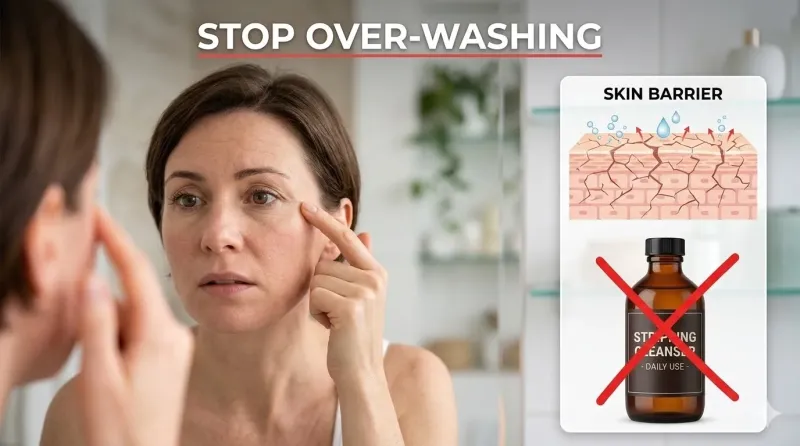
The stratum corneum, or skin barrier, is the outermost layer of your epidermis. Think of it as your skin's protective shield, composed of:
- Corneocytes: Flattened, dead skin cells that form a brick-like structure
- Lipid matrix: Ceramides, cholesterol, and fatty acids that act as "mortar" between cells
- Natural Moisturizing Factor (NMF): Amino acids, urea, and other compounds that bind water to skin
When this barrier is intact and functioning properly, your skin:
- Retains moisture effectively, appearing plump and hydrated
- Reflects light evenly, creating a natural glow
- Resists penetration of irritants and pollutants
- Maintains optimal pH for enzyme function and cell turnover
- Appears smooth, with minimized fine lines and wrinkles
Key Factors in Youthful Skin Appearance
1. Hydration: Well-hydrated skin appears fuller, with fine lines less visible. Dehydrated skin looks dull, rough, and emphasizes wrinkles.
2. Lipid Content: Adequate ceramides and fatty acids keep skin supple and resilient. Depleted lipids lead to dryness, sensitivity, and accelerated aging.
3. pH Balance: Healthy skin maintains a slightly acidic pH (4.5-5.5). This supports enzyme activity, microbial balance, and barrier function.
4. Cell Turnover: Regular shedding of dead cells and generation of new ones keeps skin smooth and radiant. Disrupted turnover leads to dullness and texture issues.
5. Collagen and Elastin: These structural proteins provide firmness and elasticity. While cleansing doesn't directly affect them, barrier damage can trigger inflammation that accelerates their breakdown.
The Science: How Over-Cleansing Accelerates Skin Aging
Over-cleansing disrupts multiple aspects of skin biology, creating a cascade of effects that collectively accelerate visible aging. Understanding these mechanisms explains why your well-intentioned cleansing habits may be working against your anti-aging goals.
1. Barrier Disruption and Transepidermal Water Loss
The Mechanism: Every time you cleanse, you remove not just dirt and oil, but also some of the lipids and natural moisturizing factors that comprise your skin barrier. When cleansing is too frequent, too harsh, or both, this removal outpaces your skin's ability to replenish these components.
The Aging Effect:
- Increased water loss: A compromised barrier allows moisture to escape more readily (transepidermal water loss, or TEWL), leading to chronic dehydration
- Visible dehydration: Dehydrated skin appears dull, rough, and emphasizes fine lines—making you look older than you are
- Compromised function: A damaged barrier is less effective at protecting against environmental aggressors that accelerate aging
Research Support: Studies show that frequent washing with surfactant-based cleansers significantly increases TEWL and reduces skin hydration, with effects persisting hours after cleansing.
2. pH Disruption and Enzyme Dysfunction
The Mechanism: Most traditional cleansers, especially foaming formulas, are alkaline (pH 8-10). Healthy skin is slightly acidic (pH 4.5-5.5). Each cleansing event temporarily raises skin pH; with over-cleansing, skin struggles to return to its optimal acidic state.
The Aging Effect:
- Impaired enzyme activity: Key enzymes responsible for healthy cell turnover and lipid synthesis function optimally at acidic pH. Alkaline conditions impair their activity
- Slower cell turnover: When enzymes don't function properly, dead cells accumulate, creating a dull, rough appearance
- Microbial imbalance: Alkaline pH favors growth of potentially harmful bacteria while suppressing beneficial microbes, potentially triggering inflammation
- Barrier repair delay: Lipid synthesis enzymes work best at acidic pH; alkaline conditions slow barrier recovery
Research Support: Research demonstrates that alkaline cleansing disrupts skin pH for hours, impairing barrier recovery and increasing susceptibility to irritation.
3. Lipid Depletion and Structural Weakening
The Mechanism: Surfactants in cleansers work by binding to oil and water, allowing them to rinse away. Unfortunately, they don't distinguish between "bad" oil (sebum, pollutants) and "good" oil (ceramides, cholesterol, fatty acids essential for barrier function).
The Aging Effect:
- Loss of structural lipids: Repeated cleansing depletes ceramides and other barrier lipids faster than skin can replenish them
- Weakened barrier: With less "mortar" between skin cells, the barrier becomes leaky and fragile
- Increased sensitivity: A weakened barrier allows irritants to penetrate more easily, triggering inflammation that accelerates aging
- Visible dryness: Lipid depletion leads to rough texture, flakiness, and emphasized fine lines
Research Support: Studies using tape-stripping and biochemical analysis confirm that surfactant cleansing reduces stratum corneum lipid content, with effects cumulative over repeated use.
4. Inflammation and Oxidative Stress
The Mechanism: A compromised barrier allows environmental irritants, pollutants, and microbes to penetrate more easily. This triggers an immune response, releasing inflammatory cytokines and generating reactive oxygen species (free radicals).
The Aging Effect:
- Chronic low-grade inflammation: Repeated barrier disruption creates a state of "inflammaging"—chronic inflammation that accelerates collagen breakdown and impairs repair
- Oxidative damage: Free radicals damage cellular components, including collagen, elastin, and DNA
- Matrix metalloproteinase activation: Inflammation triggers enzymes that break down collagen and elastin, leading to wrinkles and sagging
- Impaired repair: Inflammatory environments hinder the skin's ability to repair damage effectively
Research Support: Dermatological research links barrier disruption to increased inflammatory markers and oxidative stress, both established drivers of skin aging.
5. Disrupted Cell Turnover and Dullness
The Mechanism: Healthy skin sheds dead cells and generates new ones in a continuous cycle. This process depends on proper pH, adequate hydration, and intact barrier function—all compromised by over-cleansing.
The Aging Effect:
- Accumulation of dead cells: When turnover slows, dead cells build up on the surface, creating a dull, rough appearance
- Uneven texture: Irregular shedding leads to patchy texture and uneven light reflection
- Poor product absorption: A layer of dead cells blocks penetration of beneficial anti-aging ingredients
- Emphasized imperfections: Dull, rough skin makes fine lines, pores, and discoloration more noticeable
Recognizing the Signs: Is Over-Cleansing Aging Your Skin?
Identifying over-cleansing is the first step toward correction. These signs suggest your cleansing routine may be accelerating rather than preventing aging.
Immediate Post-Cleansing Signs
1. Tightness or "Squeaky Clean" Feeling
- What it means: Your natural oils have been stripped away
- Why it matters: This indicates significant barrier disruption and lipid depletion
- Long-term impact: Chronic tightness leads to chronic dehydration and accelerated aging
2. Immediate Dryness or Flakiness
- What it means: Your barrier can't retain moisture effectively
- Why it matters: Dehydrated skin emphasizes fine lines and appears older
- Long-term impact: Repeated dehydration accelerates wrinkle formation
3. Redness or Irritation After Cleansing
- What it means: Your skin is reacting to harsh ingredients or excessive friction
- Why it matters: Inflammation triggers processes that break down collagen
- Long-term impact: Chronic inflammation accelerates visible aging
Ongoing Signs of Over-Cleansing
4. Persistent Dullness Despite Skincare
- What it means: Dead cell accumulation and poor light reflection
- Why it matters: Dull skin looks older and less vibrant
- Long-term impact: Chronic dullness can become entrenched if barrier isn't repaired
5. Increased Sensitivity to Products
- What it means: Your barrier is compromised, allowing greater penetration of ingredients
- Why it matters: Sensitivity limits your ability to use effective anti-aging actives
- Long-term impact: Inability to use retinoids, acids, or other actives limits anti-aging progress
6. Paradoxical Oiliness or Breakouts
- What it means: Your skin is overcompensating for stripped oils by producing more sebum
- Why it matters: This creates a cycle of over-cleansing and over-production
- Long-term impact: Chronic inflammation from breakouts accelerates aging
7. Emphasized Fine Lines and Wrinkles
- What it means: Dehydration is making lines more visible
- Why it matters: Chronically dehydrated skin develops more permanent wrinkles
- Long-term impact: What starts as dehydration lines can become structural wrinkles
8. Rough or Uneven Texture
- What it means: Disrupted cell turnover and barrier function
- Why it matters: Rough texture reflects light poorly, making skin look older
- Long-term impact: Chronic texture issues become harder to correct with age
Self-Assessment: Are You Over-Cleansing?
Answer these questions honestly:
- Do you wash your face more than twice daily?
- Does your skin feel tight or dry immediately after cleansing?
- Do you use foaming or "deep cleansing" formulas?
- Do you cleanse with hot water?
- Do you use physical exfoliants (scrubs, brushes) daily?
- Does your skin feel better a few hours after cleansing than immediately after?
- Do you double cleanse even when not wearing heavy makeup?
- Does your skin feel sensitive to products that didn't bother you before?
If you answered "yes" to three or more questions, over-cleansing may be contributing to premature aging.
The Over-Cleansing Spectrum: Common Mistakes
Over-cleansing isn't just about frequency. Multiple factors contribute to barrier damage and accelerated aging.
1. Frequency Errors
Washing More Than Twice Daily:
- Many people wash morning, after workouts, after work, and before bed
- Each cleansing event removes barrier components
- Skin needs time between cleansings to replenish lipids and NMF
Unnecessary Mid-Day Cleansing:
- Washing after lunch or mid-afternoon is rarely necessary
- Blotting papers or water rinses are gentler alternatives
2. Product Choice Errors
Using Harsh Surfactants:
- Sodium lauryl sulfate (SLS) and similar sulfates are highly stripping
- High-foaming formulas often indicate harsh surfactants
- "Deep cleansing" or "oil-control" formulas are often overly aggressive
Wrong pH for Skin:
- Alkaline cleansers (pH 8+) disrupt skin's acid mantle
- Even "gentle" cleansers can be problematic if pH is too high
Over-Reliance on Exfoliating Cleansers:
- Daily use of cleansers with AHAs, BHAs, or physical exfoliants
- Exfoliation should be separate from cleansing for most people
3. Technique Errors
Using Water That's Too Hot:
- Hot water strips lipids more effectively than lukewarm water
- Heat can also trigger inflammation and capillary damage
Aggressive Physical Manipulation:
- Scrubbing vigorously with hands, cloths, or devices
- Friction damages the barrier and triggers inflammation
Insufficient Rinsing:
- Residual cleanser can continue disrupting barrier after washing
- Especially problematic with foaming formulas
Rough Drying:
- Rubbing with towel causes micro-tears in compromised barrier
- Patting gently is far less damaging
4. Context Errors
Double Cleansing When Unnecessary:
- Double cleansing (oil cleanser followed by water-based) is useful for heavy makeup or sunscreen
- Using two cleansers when one would suffice doubles barrier disruption
Cleansing After Minimal Exposure:
- Washing after staying indoors with minimal product use is often unnecessary
- Water rinse or gentle micellar water may suffice
Solutions: Restoring Youthful Skin After Over-Cleansing
The good news is that skin has remarkable resilience. With the right adjustments, you can repair barrier damage and restore a more youthful appearance.
Step 1: Immediate Damage Control
Reduce Cleansing Frequency:
- Morning: If you don't wear heavy nighttime products, a water rinse may suffice
- Evening: One thorough cleanse is usually sufficient
- After sweating: Rinse with water or use a gentle micellar water instead of full cleanse
- Goal: Maximum twice daily, often once is enough
Switch to Gentle, pH-Balanced Cleansers:
- Look for: pH 4.5-5.5, non-foaming or low-foaming, sulfate-free
- Preferred formulations: Cream, milk, lotion, or gel textures
- Beneficial ingredients: Ceramides, glycerin, hyaluronic acid, niacinamide
- Avoid: SLS/SLES, high alcohol content, strong fragrances
Adjust Water Temperature:
- Use lukewarm water, never hot
- Finish with a cool rinse to help seal the barrier
Modify Your Technique:
- Use fingertips, not washcloths or devices
- Massage gently in circular motions for 30-60 seconds maximum
- Rinse thoroughly to remove all residue
- Pat dry with a clean, soft towel—never rub
Step 2: Barrier Repair Protocol
Immediate Post-Cleansing Care:
- Apply products to damp skin: This helps lock in moisture
- Layer hydrating ingredients first: Hyaluronic acid, glycerin, panthenol
- Follow with barrier-repair ingredients: Ceramides, cholesterol, fatty acids
- Seal with an occlusive if needed: Light oils or squalane for very dry skin
Key Barrier-Repair Ingredients:
Ceramides:
- Role: Primary structural lipids in skin barrier
- Benefit: Replenish depleted lipids, restore barrier function
- Usage: Look for products with multiple ceramide types (NP, AP, EOP)
Cholesterol and Fatty Acids:
- Role: Work synergistically with ceramides in barrier structure
- Benefit: Support barrier repair and lipid matrix formation
- Usage: Often included in ceramide-containing products
Niacinamide (Vitamin B3):
- Role: Supports barrier function, reduces inflammation, improves hydration
- Benefit: Multiple mechanisms support barrier repair and anti-aging
- Usage: 2-5% concentration, well-tolerated by most skin types
Panthenol (Vitamin B5):
- Role: Humectant and anti-inflammatory
- Benefit: Soothes irritation, supports barrier recovery
- Usage: Found in many gentle moisturizers and serums
Centella Asiatica (Cica):
- Role: Anti-inflammatory, supports wound healing
- Benefit: Calms irritation, supports barrier repair
- Usage: Look for madecassoside or asiaticoside in ingredient list
Step 3: Strategic Product Integration
Pause Potentially Irritating Actives:
- Temporarily discontinue retinoids, strong acids, and vitamin C if skin is compromised
- Reintroduce gradually once barrier is repaired (typically 2-4 weeks)
- Start with lower concentrations and less frequent application
Optimize Your Moisturizer:
- Choose a moisturizer that complements your cleanser's gentleness
- Look for barrier-supporting ingredients listed above
- Apply while skin is still slightly damp for maximum benefit
Don't Skip Sunscreen:
- A compromised barrier is more vulnerable to UV damage
- Use a gentle, mineral-based sunscreen if chemical filters irritate
- Apply generously and reapply as directed
Step 4: Long-Term Maintenance
Establish a Sustainable Cleansing Routine:
- Morning: Water rinse or gentle cleanser, followed by antioxidant serum and sunscreen
- Evening: Gentle cleanser to remove sunscreen and daily accumulation, followed by treatment products and moisturizer
- As needed: Double cleanse only when wearing heavy makeup or water-resistant sunscreen
Monitor and Adjust:
- Pay attention to how your skin feels immediately after cleansing
- If tightness or dryness returns, further reduce frequency or switch products
- Seasonal adjustments may be necessary (gentler in winter, slightly more frequent in summer)
Support Barrier Health Holistically:
- Nutrition: Adequate protein, essential fatty acids, and antioxidants support barrier function
- Hydration: Drink adequate water for overall skin hydration
- Sleep: Barrier repair is most active during sleep
- Stress management: Chronic stress impairs barrier function
Product Recommendations by Skin Concern
For Barrier Repair After Over-Cleansing
Gentle Cleansers:
- CeraVe Hydrating Facial Cleanser (ceramides, hyaluronic acid, pH-balanced)
- La Roche-Posay Toleriane Hydrating Gentle Cleanser (niacinamide, ceramides)
- Vanicream Gentle Facial Cleanser (minimalist, fragrance-free, pH-balanced)
- Krave Beauty Matcha Hemp Hydrating Cleanser (antioxidants, gentle surfactants)
- Avène Extremely Gentle Cleanser Lotion (thermal spring water, minimal ingredients)
Barrier-Repair Moisturizers:
- CeraVe Moisturizing Cream (ceramides, hyaluronic acid, MVE technology)
- Illiyoon Ceramide Ato Concentrate Cream (high ceramide content, affordable)
- Dr. Jart+ Ceramidin Cream (five-ceramide complex, rich texture)
- Paula's Choice Omega+ Complex Moisturizer (ceramides, fatty acids, cholesterol)
- First Aid Beauty Ultra Repair Cream (colloidal oatmeal, ceramides, shea butter)
Barrier-Supporting Serums:
- The Ordinary Niacinamide 10% + Zinc 1% (barrier support, oil regulation)
- Paula's Choice 10% Niacinamide Booster (barrier repair, brightening)
- Beauty of Joseon Glow Serum (propolis, niacinamide, barrier support)
- Stratia Liquid Gold (ceramides, cholesterol, fatty acids in ideal ratio)
For Preventing Future Over-Cleansing Damage
Micellar Waters for Light Cleansing:
- Bioderma Sensibio H2O (gentle, effective for light makeup/sunscreen)
- Simple Micellar Cleansing Water (fragrance-free, gentle)
- Garnier SkinActive Micellar Water (affordable, multiple formulations)
Low-pH Cleansers:
- COSRX Low pH Good Morning Gel Cleanser (pH 5.0-6.0, gentle BHA)
- By Wishtrend Low pH Good Morning Gel Cleanser (tea tree, gentle cleansing)
- Etude House SoonJung pH 5.5 Relief Cleanser (panthenol, madecassoside)
Hydrating Toners/Essences:
- Hada Labo Gokujyun Premium Lotion (multiple hyaluronic acids, deeply hydrating)
- Paula's Choice Advanced Replenishing Toner (ceramides, antioxidants)
- Klairs Supple Preparation Unscented Toner (hydrating, soothing, fragrance-free)
Special Considerations by Skin Type
Dry or Mature Skin
Heightened Vulnerability: Naturally lower lipid content and slower cell turnover make dry/mature skin more susceptible to over-cleansing damage.
Recommended Approach:
- Cleanse once daily (evening) with water rinse in morning
- Use cream or milk cleansers exclusively
- Prioritize ceramide-rich moisturizers
- Consider oil cleansing as primary evening cleanse
- Be extra gentle—mature skin has reduced repair capacity
Oily or Acne-Prone Skin
Common Pitfall: The urge to "strip" oil leads to over-cleansing, which paradoxically increases oil production and inflammation.
Recommended Approach:
- Use gentle, non-stripping cleansers even for oily skin
- Limit cleansing to twice daily maximum
- Address oil production with niacinamide, not harsh cleansing
- Don't skip moisturizer—dehydration worsens oiliness
- Treat acne with targeted actives, not aggressive cleansing
Sensitive or Reactive Skin
Heightened Vulnerability: Compromised barrier function makes sensitive skin especially prone to over-cleansing damage.
Recommended Approach:
- Minimalist routine: gentle cleanser, barrier moisturizer, sunscreen
- Avoid fragrance, essential oils, and potential irritants
- Patch test all new products
- Consider water-only mornings
- Work with a dermatologist if sensitivity is severe
Combination Skin
Challenge: Different areas have different needs, tempting people to over-cleanse oily zones.
Recommended Approach:
- Use one gentle cleanser for entire face
- Apply richer moisturizer to dry areas, lighter to oily zones
- Spot-treat oily areas with niacinamide or clay masks rather than over-cleansing
- Focus on balance, not elimination of oil
Timeline for Recovery: What to Expect
Understanding realistic timelines helps maintain motivation during barrier repair.
Week 1: Damage Control
- Switch to gentle cleanser and reduce frequency
- Focus on hydration and barrier-supporting ingredients
- May still experience some tightness or sensitivity
- Goal: Stop further damage
Weeks 2-4: Early Repair
- Tightness after cleansing should decrease
- Skin may feel more comfortable and less reactive
- Dullness may begin to improve
- Goal: Support barrier recovery
Weeks 4-8: Visible Improvement
- Improved hydration and plumpness
- Fine lines may appear less prominent
- Texture becomes smoother
- Goal: Restore youthful appearance
Weeks 8-12: Significant Recovery
- Barrier function largely restored
- Healthy glow returns
- Reduced sensitivity to products
- Goal: Maintain improvements
3+ Months: Long-Term Maintenance
- Continue gentle cleansing habits
- Monitor for signs of over-cleansing
- Adjust routine seasonally or as skin changes
- Goal: Prevent recurrence
Frequently Asked Questions
How do I know if my cleanser is too harsh?
Signs your cleanser may be too harsh:
- Skin feels tight, dry, or "squeaky" immediately after rinsing
- You need to apply moisturizer immediately to relieve discomfort
- Product creates abundant foam (often indicates harsh surfactants)
- Ingredients list includes SLS, SLES, or other sulfates high on the list
- pH is above 6 (test strips are available)
- Skin becomes red, itchy, or irritated after use
If you notice these signs, switch to a gentler, pH-balanced, sulfate-free formula.
Can I ever use foaming cleansers again?
Yes, but choose carefully:
- Look for "low-foaming" or "creamy foam" formulas
- Ensure pH is 4.5-5.5
- Check that surfactants are gentle (cocamidopropyl betaine, decyl glucoside)
- Use only in the evening if you prefer foaming formulas
- Follow immediately with hydrating and barrier-repair products
Many people find non-foaming formulas more comfortable long-term, but gentle foaming options exist.
Should I stop using actives like retinoids and acids?
Temporarily, yes—if your skin shows signs of over-cleansing damage:
- Pause retinoids, AHAs, BHAs, and vitamin C for 2-4 weeks
- Focus on barrier repair during this period
- Reintroduce actives gradually: start with once weekly, low concentration
- Apply actives over moisturizer ("buffering") to reduce irritation
- Never use actives on the same night as exfoliating cleansers
Once your barrier is healthy, you can use actives effectively without accelerating aging.
Is double cleansing bad for aging skin?
Not inherently, but it can contribute to over-cleansing if used inappropriately:
- When it's appropriate: Wearing heavy makeup, water-resistant sunscreen, or in very polluted environments
- When to skip it: Light makeup, mineral sunscreen, or minimal product use
- How to do it gently: Use a gentle oil or balm first, followed by a gentle water-based cleanser
- Alternative: Use a gentle cleanser that effectively removes sunscreen without double cleansing
The goal is effective cleansing with minimal barrier disruption.
Can over-cleansing cause permanent damage?
Typically, no—the skin barrier is remarkably resilient and can repair itself with proper care. However:
- Chronic, severe over-cleansing over years may contribute to cumulative barrier impairment
- Repeated inflammation from barrier disruption can accelerate collagen breakdown
- Long-term dehydration can make fine lines more permanent
The key is addressing over-cleansing early. Even if you've been over-cleansing for years, your skin can recover with consistent, gentle care.
How often should I really cleanse my face?
For most people and situations:
- Evening: One thorough cleanse to remove sunscreen, makeup, and daily accumulation
- Morning: Water rinse or very gentle cleanser if you used heavy nighttime products
- After sweating: Water rinse or micellar water; full cleanse only if heavily soiled
- Maximum: Twice daily with gentle products
Listen to your skin—if it feels tight or dry after cleansing, you're likely cleansing too much or using products that are too harsh.
Conclusion: Less Is More for Youthful Skin
The pursuit of clean skin is understandable, but when cleansing becomes excessive, it works against your anti-aging goals. Over-cleansing disrupts the delicate barrier that keeps your skin hydrated, protected, and youthful-looking. The resulting dehydration, inflammation, and impaired function accelerate visible aging—creating the opposite of the effect you intended.
Key Takeaways:
- Over-cleansing ages skin: By disrupting the barrier, depleting lipids, and triggering inflammation, excessive cleansing accelerates visible aging.
- Recognize the signs: Tightness, dryness, dullness, sensitivity, and emphasized fine lines may indicate over-cleansing.
- Gentle is effective: You don't need harsh products or frequent washing to maintain clean, healthy skin.
- Repair is possible: With gentle cleansing, barrier-supporting ingredients, and patience, you can restore your skin's youthful appearance.
- Prevention matters: Sustainable cleansing habits protect your skin long-term.
Transforming your cleansing routine doesn't require a complete overhaul—just thoughtful adjustments. Start by switching to a gentle, pH-balanced cleanser and reducing frequency. Add barrier-supporting ingredients to your routine. Be patient as your skin repairs itself. Over weeks and months, you'll likely notice your skin looking more hydrated, radiant, and youthful.
Remember: clean skin and youthful skin aren't achieved through aggression. They result from respect for your skin's biology, consistency in gentle care, and understanding that sometimes, less truly is more.
Your skin has an incredible capacity to heal and renew itself. By giving it the gentle, supportive care it deserves, you're not just preventing further aging—you're actively restoring the healthy, radiant complexion that reflects your inner vitality. Start today, and let your skin show you what it can do when treated with kindness.
📖 আরও পড়ুন: Skin Care
- 🔗 Brightening Face Masks: DIY vs Store-Bought Ultimate Comparison
- 🔗 Ingrown Hairs Guide: Dermatologist Strategies from Causes to Chemical Exfoliation
- 🔗 সানবার্ন থেকে মুক্তি: ত্বক শান্ত ও সুস্থ করার পূর্ণাঙ্গ গাইড
- 🔗 Face Itching? Fix Compromised Moisture Barrier Fast
- 🔗 গলার কালো দাগ: ডার্মাটোলজিস্ট গাইড ও প্রমাণিত চিকিৎসা - কারণ থেকে সমাধান পর্যন্ত সম্পূর্ণ গাইড