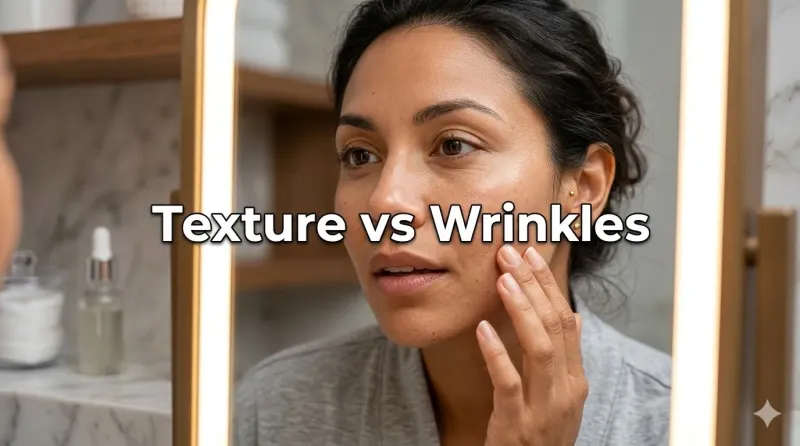
When women begin to notice signs of aging in their skin, it's rarely a deep wrinkle that catches their eye first. More often, it's a subtle shift in texture: skin that feels rougher in the morning, pores that appear more prominent, a loss of that smooth, refined surface they once took for granted. This pattern—texture changes preceding visible wrinkles—is so consistent across women of different ages, backgrounds, and skincare routines that it raises an important question: Why do texture changes serve as the earliest warning sign of skin aging, and what can we do about it?
Understanding this phenomenon isn't just academically interesting—it's practically essential. Texture changes represent a critical window of opportunity. They signal that aging processes have begun but haven't yet progressed to more visible, harder-to-reverse signs like deep wrinkles or significant volume loss. By recognizing and addressing texture changes early, women can intervene when interventions are most effective, potentially slowing or minimizing more pronounced aging signs down the line.
This comprehensive, science-backed guide explores why texture changes appear before wrinkles in women's skin, examines the biological mechanisms behind this pattern, identifies the specific texture changes to watch for, and provides evidence-based strategies for early intervention. Whether you're in your late 20s noticing subtle roughness, your 30s concerned about pore appearance, or your 40s addressing uneven tone, you'll find practical, research-supported insights to help you maintain smooth, refined skin at every age.
The Science: Why Texture Changes Appear Before Wrinkles
To understand why texture shifts serve as aging's first signal, we must examine how skin structure changes over time—and why surface alterations become visible before deeper structural changes.
Skin Structure: Layers and Aging Timeline
Skin is composed of three primary layers, each aging at different rates:
Epidermis (Outer Layer):
- Function: Barrier protection, cell turnover, surface texture
- Aging timeline: Changes begin in late 20s; cell turnover slows from ~28 days to 40-60+ days by 40s
- Visible signs: Roughness, dullness, uneven tone, enlarged pores
- Why it shows first: Surface changes are immediately visible to the eye and detectable to touch
Dermis (Middle Layer):
- Function: Collagen/elastin production, structural support, hydration
- Aging timeline: Collagen declines ~1% per year after 30; elastin fragmentation accelerates in 40s-50s
- Visible signs: Fine lines, loss of firmness, deeper wrinkles
- Why it shows later: Structural changes require cumulative damage before becoming visibly apparent
Hypodermis (Deepest Layer):
- Function: Fat storage, insulation, volume support
- Aging timeline: Fat redistribution begins in 40s-50s; volume loss accelerates in 50s+
- Visible signs: Hollowing, sagging, deep folds
- Why it shows last: Volume changes require significant tissue loss before becoming obvious
Key Insight: Texture changes originate in the epidermis—the most superficial layer—making them the first visible sign of aging. Wrinkles require deeper dermal changes that take longer to manifest visibly.
Biological Mechanisms Behind Early Texture Changes
Several interconnected processes drive texture changes before wrinkles appear:
1. Slowed Cell Turnover
- Mechanism: As we age, the rate at which skin cells renew and shed slows significantly
- Impact on texture: Dead cells accumulate on the surface, creating roughness and dullness
- Timeline: Noticeable changes can begin in late 20s; pronounced by mid-30s
- Why before wrinkles: Surface cell accumulation is immediately visible; collagen loss takes years to create visible lines
2. Barrier Function Decline
- Mechanism: Production of ceramides, cholesterol, and fatty acids (barrier lipids) decreases with age
- Impact on texture: Compromised barrier leads to dehydration, roughness, and uneven surface
- Timeline: Subtle changes in 30s; more pronounced in 40s
- Why before wrinkles: Barrier impairment affects surface texture immediately; structural collagen loss requires cumulative damage
3. Pore Appearance Changes
- Mechanism: Loss of skin elasticity and collagen support around pores causes them to appear larger and more irregular
- Impact on texture: Pores look more prominent; skin surface appears less refined
- Timeline: Changes often noticeable in mid-30s
- Why before wrinkles: Pore appearance is influenced by superficial elasticity; deep wrinkles require significant collagen loss
4. Uneven Pigmentation and Tone
- Mechanism: Cumulative sun exposure and hormonal changes cause irregular melanin distribution
- Impact on texture: Skin appears uneven, blotchy, or dull rather than smooth and radiant
- Timeline: Early signs in 30s; more pronounced in 40s
- Why before wrinkles: Pigment changes affect light reflection immediately; wrinkles require structural breakdown
The Role of Perception: Why Women Notice Texture First
Beyond biology, perceptual factors explain why texture changes register before wrinkles:
Tactile Sensitivity:
- Women often notice texture changes through touch before seeing them in the mirror
- Roughness, dryness, or unevenness is detectable during cleansing or moisturizing
- Tactile feedback provides early warning before visual changes become obvious
Lighting and Magnification:
- Modern life exposes women to varied lighting: harsh bathroom lights, phone cameras, video calls
- These conditions highlight texture issues (pores, roughness) before deeper wrinkles are visible
- High-resolution cameras and mirrors make subtle texture changes impossible to ignore
Skincare Routine Awareness:
- Women who maintain consistent skincare routines develop heightened awareness of their skin's baseline
- Subtle texture shifts stand out against a familiar routine
- Product application becomes a daily texture assessment
Early Texture Changes: What to Watch For
Recognizing the specific texture changes that signal early aging empowers timely intervention.
Primary Texture Changes in Early Aging
1. Roughness or Graininess
- What it feels like: Skin no longer feels smooth to the touch; slight sandpaper-like texture
- Where it appears: Often first on cheeks, forehead, or around the nose
- Why it happens: Accumulated dead cells, slowed turnover, early barrier compromise
- When to act: Address at first notice; early intervention prevents progression
2. Dullness or Loss of Radiance
- What it looks like: Skin appears tired, "gray," or lackluster despite adequate sleep
- Where it appears: Often across the entire face or in T-zone
- Why it happens: Dead cell buildup scatters light; dehydration reduces light reflection
- When to act: Dullness is reversible with consistent exfoliation and hydration
3. Enlarged or More Visible Pores
- What it looks like: Pores appear larger, more irregular, or more noticeable
- Where it appears: Typically nose, cheeks, and forehead (areas with more sebaceous glands)
- Why it happens: Loss of collagen support around pores; accumulated debris; decreased elasticity
- When to act: Early attention can minimize appearance; advanced changes are harder to reverse
4. Uneven Tone or Blotchiness
- What it looks like: Skin tone appears patchy, with areas of discoloration or uneven pigmentation
- Where it appears: Often cheeks, forehead, or areas of sun exposure
- Why it happens: Cumulative UV damage, hormonal fluctuations, inflammation
- When to act: Early intervention prevents pigmentation from becoming entrenched
5. Subtle Dryness or Tightness
- What it feels like: Skin feels tight after cleansing or appears slightly flaky
- Where it appears: Often cheeks, around eyes, or jawline
- Why it happens: Barrier lipid decline, reduced natural moisturizing factor, hormonal shifts
- When to act: Addressing dryness early prevents barrier damage and texture worsening
Secondary Signs That Accompany Texture Changes
These subtle signs often appear alongside primary texture changes:
- Makeup application issues: Foundation appears patchy, settles into pores, or doesn't blend smoothly
- Increased product absorption time: Moisturizers or serums take longer to absorb or feel "sticky"
- Heightened sensitivity: Products that previously felt comfortable now cause mild stinging or redness
- Slower recovery from irritation: Minor breakouts or redness take longer to resolve
Hormonal Influences: Why Women Experience Texture Changes Differently
Women's skin texture is uniquely influenced by hormonal fluctuations across life stages, making texture changes both more noticeable and more variable than in men.
Estrogen and Skin Texture
Estrogen's Role in Skin Health:
- Supports collagen production and skin thickness
- Promotes hydration by increasing hyaluronic acid production
- Enhances barrier function and wound healing
- Regulates sebum production and pore appearance
Hormonal Transitions and Texture:
- Menstrual cycle: Estrogen fluctuations can cause temporary texture changes (premenstrual roughness, post-ovulation dullness)
- Pregnancy/postpartum: Dramatic hormonal shifts can trigger texture changes (melasma, dryness, or oiliness)
- Perimenopause: Declining estrogen accelerates barrier decline, cell turnover slowdown, and texture irregularities
- Menopause: Significant estrogen drop leads to pronounced dryness, roughness, and loss of radiance
Why This Matters for Early Detection:
- Hormonally-driven texture changes may fluctuate, making them easy to dismiss as "temporary"
- However, repeated hormonal stress can accelerate cumulative texture aging
- Understanding hormonal patterns helps distinguish temporary shifts from progressive aging signs
Androgens and Pore Appearance
Androgen Effects:
- Stimulate sebum production, which can make pores appear larger
- Influence skin thickness and texture
- Fluctuate across menstrual cycle and life stages
Practical Implications:
- Women with higher androgen sensitivity may notice pore changes earlier
- Hormonal acne can leave textural aftermath (enlarged pores, uneven surface) that accelerates perceived aging
- Addressing hormonal balance can support texture improvements alongside topical care
Evidence-Based Strategies for Addressing Early Texture Changes
Early intervention is powerful. These science-backed strategies target the root causes of texture changes before they progress to wrinkles.
Topical Skincare: Ingredients That Target Texture
1. Gentle Chemical Exfoliants (AHAs/BHAs/PHAs)
- Mechanism: Dissolve bonds between dead cells, promoting shedding and revealing smoother surface
- Best options:
- Lactic acid (gentle, hydrating; ideal for early texture concerns)
- Glycolic acid (effective but potentially irritating; start low concentration)
- Mandelic acid (gentle, good for sensitive or pigmented skin)
- PHAs (gluconolactone; gentle, hydrating, ideal for sensitive skin)
- Usage guidelines:
- Start with 1-2x weekly; increase to 3-4x if tolerated
- Apply to clean, dry skin; follow with moisturizer and sunscreen
- Avoid combining with retinoids initially to prevent irritation
- Evidence: Studies show regular AHA use improves skin smoothness, radiance, and pore appearance within 4-8 weeks
2. Retinoids (Retinol, Retinal, Prescription Retinoids)
- Mechanism: Increase cell turnover, stimulate collagen, normalize keratinization
- Best options for texture:
- Retinol (0.25-0.5% for beginners; effective for texture and early aging)
- Retinaldehyde (faster conversion to active form; effective at lower concentrations)
- Adapalene (prescription; effective for texture and acne-related concerns)
- Usage guidelines:
- Start 1-2x weekly; buffer with moisturizer if sensitive
- Apply to dry skin at night; always use sunscreen during day
- Expect 8-12 weeks for visible texture improvements
- Evidence: Extensive research confirms retinoids improve skin texture, pore appearance, and early signs of aging
3. Niacinamide (Vitamin B3)
- Mechanism: Regulates sebum, strengthens barrier, reduces inflammation, improves tone
- Best for texture concerns:
- 4-5% concentration optimal for texture and pore appearance
- Well-tolerated by most skin types, including sensitive
- Works well with other actives (retinoids, exfoliants)
- Usage guidelines:
- Apply once or twice daily after cleansing
- Can be layered with most other products
- Visible improvements in texture and tone within 4-8 weeks
- Evidence: Clinical studies show niacinamide improves skin smoothness, pore appearance, and barrier function
4. Barrier-Supporting Ingredients
- Ceramides: Replenish barrier lipids; look for NP, AP, EOP types
- Cholesterol and fatty acids: Work synergistically with ceramides for barrier repair
- Panthenol (Vitamin B5): Humectant and anti-inflammatory; supports barrier recovery
- Usage guidelines:
- Apply to damp skin to enhance absorption
- Use in moisturizer or serum form
- Consistent use improves texture by supporting barrier health
- Evidence: Research confirms barrier-supporting ingredients improve skin smoothness, hydration, and resilience
5. Antioxidants for Texture Support
- Vitamin C: Brightens tone, supports collagen, protects against environmental damage
- Ferulic acid: Stabilizes vitamin C; enhances antioxidant protection
- Green tea extract: Anti-inflammatory; supports even tone and texture
- Usage guidelines:
- Apply in morning before sunscreen for antioxidant protection
- Start with lower concentrations if sensitive
- Visible brightening and texture improvements in 4-8 weeks
Lifestyle and Environmental Strategies
1. Sun Protection: The Foundation
- Why it matters: UV exposure accelerates cell turnover slowdown, barrier decline, and pigmentation irregularities
- Best practices:
- Apply broad-spectrum SPF 30+ daily, regardless of weather
- Reapply every 2 hours with sun exposure
- Use mineral sunscreens if sensitive to chemical filters
- Impact on texture: Consistent sun protection prevents texture changes from worsening and supports repair of early damage
2. Hydration from Within and Without
- Internal hydration: Aim for 2-3 liters of water daily; include hydrating foods (cucumber, watermelon, leafy greens)
- Topical hydration: Layer humectants (hyaluronic acid, glycerin) under moisturizer to bind water to skin
- Environmental support: Use a humidifier in dry climates or heated indoor spaces
- Impact on texture: Well-hydrated skin appears smoother, more radiant, and more resilient
3. Gentle Handling and Protection
- Avoid over-exfoliation: Limit physical scrubs and strong chemical exfoliants to prevent barrier damage
- Be gentle with cleansing: Use lukewarm water and gentle, non-stripping cleansers
- Protect from environmental stressors: Wear hats, seek shade, and use antioxidant skincare to combat pollution
- Impact on texture: Gentle care preserves barrier function and prevents texture-worsening irritation
Professional Treatments for Early Texture Concerns
For women seeking accelerated results or addressing more pronounced texture changes, professional treatments can complement home care.
1. Professional Chemical Peels
- How they help: Controlled exfoliation removes accumulated dead cells, stimulates renewal, and improves texture
- Best for early texture: Superficial peels (glycolic, lactic, mandelic) with minimal downtime
- Frequency: Every 4-6 weeks for maintenance; series of 3-6 for initial improvement
- Evidence: Clinical studies show professional peels improve skin smoothness, radiance, and pore appearance
2. Microneedling
- How it helps: Creates micro-injuries that stimulate collagen production and cell renewal
- Best for early texture: Superficial microneedling (0.25-0.5mm) for texture refinement with minimal downtime
- Frequency: Every 4-6 weeks; series of 3-4 for optimal results
- Evidence: Research confirms microneedling improves skin texture, pore appearance, and early signs of aging
3. LED Light Therapy
- How it helps: Specific wavelengths stimulate cellular activity, reduce inflammation, and support barrier health
- Best for early texture: Red light for collagen support; blue light for pore-related concerns
- Frequency: 2-3x weekly for home devices; professional treatments as recommended
- Evidence: Studies show LED therapy improves skin texture, tone, and overall appearance with consistent use
Building Your Early Intervention Routine: A Practical Framework
Addressing texture changes early requires a strategic, consistent approach. Here's how to build an effective routine.
Phase 1: Assessment and Foundation (Weeks 1-2)
Step 1: Identify Your Primary Texture Concerns
- Examine skin in good lighting; note specific concerns (roughness, dullness, pores, uneven tone)
- Consider how skin feels to the touch, not just how it looks
- Document with photos for future comparison
Step 2: Establish a Gentle Baseline Routine
- AM: Gentle cleanser → antioxidant serum (vitamin C) → moisturizer with barrier support → sunscreen
- PM: Gentle cleanser → treatment serum (niacinamide or gentle retinol) → barrier moisturizer
- Key principle: Start simple; add actives gradually to avoid overwhelming skin
Step 3: Introduce One Targeted Active
- Choose based on primary concern:
- Roughness/dullness: Gentle AHA (lactic or mandelic acid) 1-2x weekly
- Pores/uneven tone: Niacinamide 4-5% daily
- Early fine texture changes: Low-concentration retinol (0.25%) 1-2x weekly
- Apply to clean, dry skin; follow with moisturizer
- Monitor for irritation; reduce frequency if needed
Phase 2: Optimization and Consistency (Weeks 3-8)
Step 4: Refine Based on Response
- Assess after 4 weeks: Is texture improving? Any irritation?
- Adjust frequency or concentration based on tolerance and results
- Add a second targeted active only if first is well-tolerated and showing results
Step 5: Incorporate Supporting Practices
- Weekly: Gentle exfoliation (if not using daily actives); hydrating mask if dryness persists
- Monthly: Professional facial or peel if seeking accelerated results
- Ongoing: Consistent sun protection, hydration, and gentle handling
Phase 3: Maintenance and Prevention (Week 9+)
Step 6: Establish Long-Term Habits
- Maintain consistent routine with proven ingredients
- Adjust seasonally: richer moisturizers in winter; lighter textures in summer
- Reassess every 3-6 months; adjust as skin needs evolve
Step 7: Monitor Progress Objectively
- Take monthly photos in consistent lighting
- Note changes in texture, radiance, and pore appearance
- Celebrate subtle improvements; they compound over time
Product Recommendations for Early Texture Concerns
These products target texture changes with evidence-backed ingredients and formulations suitable for early intervention.
For Gentle Exfoliation and Smoothness
- The Ordinary Lactic Acid 5% + HA: Gentle AHA with hydration; ideal for beginners addressing texture
- Paula's Choice RESIST Weekly Resurfacing Treatment with 10% AHA: Effective yet gentle; good for established routines
- Drunk Elephant T.L.C. Framboos Glycolic Night Serum: Blend of AHAs/BHA for texture refinement; use 2-3x weekly
- Neostrata Enlighten Pigment Controller: Combines gentle exfoliation with brightening for uneven tone
For Pore Appearance and Even Tone
- The Ordinary Niacinamide 10% + Zinc 1%: Affordable, effective for pores and tone; start with every other day
- Paula's Choice 10% Niacinamide Booster: Versatile formula that can be mixed with moisturizer or used alone
- Glossier Super Pure: Niacinamide and zinc in lightweight serum; good for sensitive skin
- La Roche-Posay Effaclar Serum: Combines niacinamide with salicylic acid for pores and texture
For Barrier Support and Hydration
- CeraVe Moisturizing Cream: Ceramides, hyaluronic acid, and cholesterol; affordable barrier support
- Stratia Liquid Gold: Ceramides, cholesterol, and fatty acids in ideal ratio for barrier repair
- Illiyoon Ceramide Ato Soothing Gel: High ceramide content in lightweight, soothing gel
- Kiehl's Ultra Facial Cream: Squalane and glacial glycoprotein for intense hydration without heaviness
For Early Anti-Aging and Texture Refinement
- Paula's Choice Clinical 0.3% Retinol + 2% Bakuchiol Treatment: Gentle retinol alternative with antioxidant support
- Medik8 Crystal Retinal 3: Retinaldehyde for faster results with less irritation; start 1-2x weekly
- SkinCeuticals Retinol 0.3%: Pharmaceutical-grade retinol; effective for texture and early aging
- The Inkey List Retinol Serum 1%: Affordable entry point; use cautiously and buffer with moisturizer
Common Mistakes to Avoid When Addressing Texture Changes
Mistake 1: Over-Exfoliating in Response to Roughness
The Problem: Seeing rough texture, many women reach for stronger exfoliants or increase frequency, which can damage the barrier and worsen texture.
Why It Backfires: Over-exfoliation compromises barrier function, leading to increased dryness, sensitivity, and rebound roughness.
The Fix: Start with gentle exfoliation (1-2x weekly); prioritize barrier support alongside exfoliation; listen to your skin's response.
Mistake 2: Ignoring Sun Protection
The Problem: Focusing on texture-fixing products while skipping daily sunscreen.
Why It Backfires: UV exposure accelerates all texture-aging processes; no topical treatment can fully counteract unprotected sun exposure.
The Fix: Make sunscreen non-negotiable; apply generously and reapply with sun exposure.
Mistake 3: Expecting Overnight Results
The Problem: Switching products frequently when texture doesn't improve immediately.
Why It Backfires: Skin needs 4-8 weeks to show measurable texture improvements; product-hopping prevents any product from working effectively.
The Fix: Commit to a consistent routine for at least 8 weeks before evaluating results; track progress with photos.
Mistake 4: Using Harsh Physical Scrubs
The Problem: Reaching for grainy scrubs to "smooth" rough texture.
Why It Backfires: Physical scrubs can cause micro-tears in already-compromised skin, worsening texture and triggering inflammation.
The Fix: Choose gentle chemical exfoliants over physical scrubs; if using physical exfoliation, opt for very fine, rounded particles and use sparingly.
Mistake 5: Neglecting Internal Factors
The Problem: Focusing only on topical products while ignoring hydration, nutrition, sleep, and stress.
Why It Backfires: Skin texture reflects overall health; internal imbalances can undermine even the best topical routine.
The Fix: Support skin from within: stay hydrated, prioritize sleep, manage stress, and eat a nutrient-rich diet.
When to Consult a Professional
While many texture changes can be addressed with consistent home care, certain situations warrant professional evaluation.
See a Dermatologist If:
- Texture changes are accompanied by persistent redness, itching, or pain
- You suspect an underlying condition (rosacea, eczema, hormonal acne)
- Texture changes are severe, rapidly worsening, or not responding to 8-12 weeks of consistent care
- You're interested in prescription-strength treatments (tretinoin, hydroquinone, etc.)
- You have concerns about pigmentation changes or potential precancerous lesions
Consider a Licensed Esthetician If:
- You want personalized product recommendations for your skin type and concerns
- You're interested in professional facials or peels to accelerate texture improvements
- You need guidance on layering products or adjusting your routine
Frequently Asked Questions
How long does it take to see improvements in skin texture?
Timeline varies based on the concern and approach:
- Gentle exfoliation: Initial smoothness in 1-2 weeks; cumulative improvements in 4-8 weeks
- Niacinamide: Pore appearance and tone improvements in 4-8 weeks
- Retinoids: Texture refinements in 8-12 weeks; continued improvement with consistent use
- Barrier repair: Hydration and comfort improvements in 1-2 weeks; structural improvements in 4-8 weeks
Consistency matters more than intensity—small, daily actions compound to create meaningful change.
Can texture changes be reversed, or only prevented from worsening?
Many early texture changes are reversible with consistent care:
- Roughness/dullness: Highly reversible with exfoliation and hydration
- Enlarged pores: Appearance can be minimized; true pore size is genetic but appearance improves with collagen support and debris management
- Uneven tone: Often reversible with consistent brightening ingredients and sun protection
- Barrier-related dryness: Highly reversible with barrier-supporting ingredients and gentle care
The key is early intervention—addressing texture changes when they first appear yields the best results.
Should I use different products for morning and evening to address texture?
Yes, strategic timing can enhance results:
- Morning: Focus on protection—antioxidants (vitamin C), hydration, and sunscreen
- Evening: Focus on repair—exfoliants, retinoids, barrier-supporting ingredients
- Rationale: Skin's repair processes peak at night; daytime requires protection from environmental stressors
However, keep the routine simple—overcomplicating can lead to inconsistency or irritation.
Can hormonal changes cause temporary texture changes that aren't true aging?
Absolutely. Hormonal fluctuations can cause temporary texture shifts that mimic aging:
- Premenstrual: Increased oiliness or roughness due to progesterone rise
- Postpartum: Dryness or uneven tone from hormonal shifts
- Perimenopausal: Fluctuating estrogen can cause intermittent dryness or sensitivity
How to distinguish: Temporary hormonal changes often resolve within a cycle or two; progressive aging signs persist or worsen. Track patterns alongside your cycle to identify hormonal influences.
Is it too late to address texture changes if I'm already seeing early wrinkles?
Never too late. While early intervention is ideal, texture improvements are possible at any age:
- Address texture and wrinkles simultaneously with a comprehensive routine
- Focus on ingredients that benefit both (retinoids, niacinamide, antioxidants)
- Be patient—mature skin may take longer to show improvements
- Consider professional treatments to accelerate results
The goal isn't perfection; it's progress. Every improvement in texture contributes to overall skin health and appearance.
Conclusion: Embracing Early Awareness as Empowerment
Noticing texture changes before wrinkles isn't a cause for alarm—it's an opportunity. These subtle shifts are your skin's way of signaling that aging processes have begun, giving you a valuable window to intervene when strategies are most effective.
Understanding why texture changes appear first empowers you to respond with knowledge rather than anxiety. You now know that roughness, dullness, enlarged pores, and uneven tone aren't random annoyances—they're measurable signs of specific biological processes that can be addressed with targeted, evidence-based care.
Key Takeaways:
- Texture changes are early warnings: They signal aging processes before deeper structural changes create wrinkles.
- Biology explains the pattern: Epidermal changes (cell turnover, barrier function) manifest before dermal changes (collagen loss).
- Early intervention is powerful: Addressing texture changes when they first appear yields better results than waiting for wrinkles.
- Consistency beats intensity: Small, daily actions with proven ingredients create meaningful texture improvements over time.
- Hormones matter: Women's texture changes are influenced by hormonal fluctuations; understanding patterns helps distinguish temporary shifts from progressive aging.
- Holistic care works best: Topical products, sun protection, hydration, and lifestyle support work together for optimal texture health.
Start where you are. Choose one strategy from this guide: introduce a gentle exfoliant, add niacinamide to your routine, prioritize daily sunscreen, or simply observe your skin with curiosity rather than criticism. Small, consistent actions compound to create meaningful change.
Your skin is resilient and responsive. By addressing texture changes early with knowledge, patience, and compassionate care, you're not just preserving smoothness—you're supporting your skin's health, resilience, and radiance for years to come.
Notice the signs. Respond with intention. Trust the process. Your skin—and your future self—will thank you.
📖 আরও পড়ুন: Skin Care
- 🔗 Skin Elasticity After 30: Natural Support Methods That Work
- 🔗 Antioxidants in Skincare: Your Essential Second Step
- 🔗 Over-Cleansing and Premature Aging: Science & Solutions
- 🔗 ত্বক কি ভেতর থেকে শুকিয়ে যাচ্ছে? রুক্ষ আবহাওয়ায় ডিহাইড্রেটেড স্কিন বাঁচাতে এক্সপার্ট টিপস ও হ্যাকস
- 🔗 অয়েলি স্কিনের গ্রীষ্মকালীন যত্ন: অয়েল কন্ট্রোল রুটিন