Introduction: The Counterintuitive Truth About Skincare Success
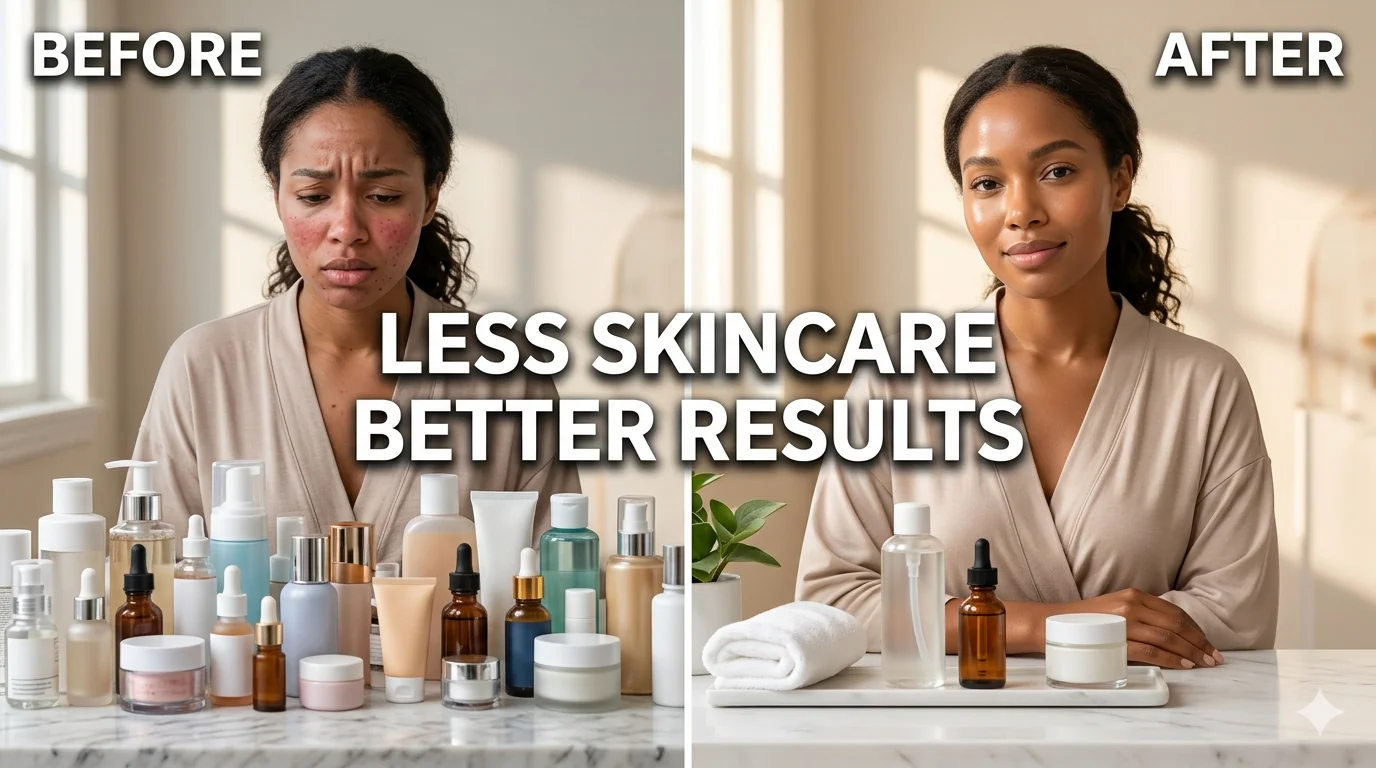
In a world where beauty counters overflow with serums, masks, essences, and treatments, the prevailing message is clear: more is better. Layer that vitamin C under your retinol. Add that peptide serum for extra firming. Don't forget the eye cream, the neck cream, the lip treatment. Your routine should be a multi-step ritual of transformation.
But what if the secret to better skin isn't adding more—it's doing less?
For many people, the pursuit of perfect skin through increasingly complex routines has led to the opposite result: irritation, sensitivity, breakouts, dullness, and a compromised skin barrier that struggles to function. The irony is palpable: the more we try to "fix" our skin, the more problems we create.
This phenomenon has a name: the skincare paradox. And its solution is often surprisingly simple. When you strip away the excess, honor your skin's natural rhythms, and focus on foundational care rather than constant intervention, something remarkable happens. Your skin begins to heal, balance, and glow—not because you did more, but because you finally gave it space to do what it does best: repair itself.
This comprehensive guide explores the science behind why less skincare often yields better results, identifies the signs that your routine may be working against you, and provides evidence-based strategies for simplifying your approach while maximizing your skin's health. Because sometimes, the most powerful thing you can do for your skin is to step back and let it breathe.
Understanding the Skin Barrier: Why Less Is Often More
To understand why simplifying skincare can improve results, we must first understand the skin barrier—the foundation of healthy, resilient skin.
What Is the Skin Barrier?
The skin barrier, scientifically known as the stratum corneum, is the outermost layer of your epidermis. Think of it as a brick wall: skin cells (corneocytes) are the bricks, and lipids (ceramides, cholesterol, and fatty acids) are the mortar that holds them together. This structure serves several critical functions:
- Moisture retention: Prevents transepidermal water loss (TEWL), keeping skin hydrated and plump
- Environmental protection: Shields against pollutants, UV radiation, bacteria, and allergens
- pH balance: Maintains the skin's slightly acidic pH (4.5-5.5), which supports healthy microbiome function
- Inflammation control: A strong barrier prevents irritants from penetrating and triggering inflammatory responses
How Over-Care Damages the Barrier
When you use too many products, too many actives, or too aggressive techniques, you can inadvertently compromise this delicate structure:
- Over-exfoliation: Strips protective lipids, leaving the barrier vulnerable to moisture loss and irritation
- Product incompatibility: Layering actives with conflicting pH levels or mechanisms can neutralize benefits or cause irritation
- Harsh cleansers: Sulfates and high-pH formulas strip natural oils, disrupting the acid mantle
- Constant active exposure: Retinoids, acids, and vitamin C used simultaneously overwhelm the skin's repair capacity
Result: A compromised barrier that can't retain moisture, blocks irritants poorly, and triggers inflammation—manifesting as redness, sensitivity, breakouts, or dullness.
The Repair Cycle: Why Skin Needs Rest
Your skin is constantly repairing itself. Cell turnover, collagen synthesis, lipid replenishment, and antioxidant defense all happen continuously. But these processes require:
- Time: Repair doesn't happen instantly; it unfolds over hours and days
- Resources: Your skin needs lipids, proteins, and hydration to rebuild
- Minimal interference: Constant product application can disrupt natural repair rhythms
When you simplify your routine, you give your skin the space, resources, and time it needs to heal itself—often more effectively than any product could.
Featured Snippet: The skin barrier (stratum corneum) retains moisture, blocks irritants, maintains pH, and controls inflammation. Over-care—over-exfoliation, product incompatibility, harsh cleansers, constant actives—compromises this barrier, causing redness, sensitivity, and dullness. Simplifying gives skin time and resources to repair itself naturally.
Signs Your Skincare Routine May Be Working Against You
How do you know if less might be more for your skin? These signs suggest your routine may be contributing to, rather than resolving, your concerns.
Physical Indicators
- Persistent redness or flushing: Especially after product application or cleansing
- Increased sensitivity: Products that never caused issues now sting, burn, or trigger reactions
- Dullness despite "brightening" products: Skin looks flat or ashy even with vitamin C, exfoliants, or radiance serums
- Breakouts in new patterns: Small bumps, congestion, or inflammatory acne appearing despite consistent routine
- Tightness or dryness after moisturizing: Skin feels uncomfortable even with hydrating products
- Flakiness or peeling: Visible scaling, especially around nose, cheeks, or forehead
Behavioral and Routine Clues
- Product overload: Using 10+ products daily with multiple actives layered together
- Constant routine changes: Switching products every few weeks hoping for better results
- Chasing trends: Adding viral products without assessing if they address your actual needs
- Fear of skipping steps: Feeling anxious if you miss a serum or treatment
- Focus on "fixing" rather than maintaining: Viewing skincare as problem-solving rather than supportive care
The Irritation-Dullness Cycle
Many people get trapped in a self-perpetuating loop:
- Multiple actives cause subclinical irritation
- Inflammation disrupts barrier function and cell turnover
- Compromised barrier increases water loss and sensitivity
- Skin appears dull, reactive, or uneven
- User adds more products to "fix" dullness, worsening the cycle
Breaking this cycle often requires stepping back, not pushing forward.
Featured Snippet: Signs your routine may be counterproductive: persistent redness, increased sensitivity, dullness despite brightening products, new breakouts, tightness after moisturizing, flakiness. Behavioral clues include product overload, constant changes, trend-chasing, and fear of skipping steps. The irritation-dullness cycle perpetuates itself—breaking it often requires simplification.
The Science of Simplification: Why Less Works
Simplifying skincare isn't about deprivation—it's about strategic focus. Here's the science behind why doing less often yields better results.
Reduced Irritation and Inflammation
Every product you apply carries some risk of irritation, even if minimal. When you use fewer products:
- Fewer potential irritants: Less exposure to fragrances, preservatives, or active ingredients that may trigger reactions
- Lower cumulative load: Your skin processes fewer ingredients, reducing the chance of overwhelming its detoxification capacity
- Clearer cause-and-effect: If a reaction occurs, it's easier to identify the culprit when your routine is simple
Reduced inflammation means less redness, fewer breakouts, and a calmer, more even complexion.
Improved Barrier Function
When you stop stripping, over-exfoliating, or constantly applying actives, your barrier has space to rebuild:
- Lipid replenishment: Ceramides, cholesterol, and fatty acids can restore the "mortar" between skin cells
- pH normalization: Without harsh cleansers or conflicting products, skin can maintain its optimal acidic pH
- Microbiome balance: A stable routine supports beneficial bacteria that protect against pathogens and inflammation
A stronger barrier means better hydration, less sensitivity, and improved resilience to environmental stressors.
Enhanced Product Efficacy
Paradoxically, using fewer products can make the ones you do use work better:
- Better absorption: Without layers of competing ingredients, actives can penetrate more effectively
- Reduced incompatibility: Fewer products mean fewer pH conflicts or ingredient interactions that neutralize benefits
- Consistent application: A simple routine is easier to follow consistently, which is crucial for long-term results
Quality over quantity isn't just a mantra—it's a biological reality.
Psychological Benefits That Support Skin Health
Stress affects skin through the brain-skin axis. A simplified routine can:
- Reduce decision fatigue: Fewer choices mean less mental load and lower cortisol
- Increase self-compassion: Letting go of perfectionism reduces shame and anxiety about skin
- Save time and money: Less stress about routine adherence and product costs
Lower stress means lower cortisol, which means less inflammation and better skin.
Featured Snippet: Simplification works scientifically by: reducing irritation and inflammation (fewer potential triggers), improving barrier function (lipid replenishment, pH normalization, microbiome balance), enhancing product efficacy (better absorption, fewer incompatibilities), and providing psychological benefits (lower stress, less decision fatigue). Less isn't deprivation—it's strategic focus.
The Minimalist Skincare Framework: What to Keep, What to Release
Simplifying doesn't mean abandoning skincare. It means focusing on what truly matters. This framework helps you identify essentials versus excess.
The Non-Negotiables: Foundational Care
These four steps form the bedrock of healthy skin. Keep these, regardless of how much you simplify:
1. Gentle Cleansing
- Purpose: Remove sweat, oil, pollution, and product residue without stripping
- What to look for: pH-balanced (5.5), sulfate-free, creamy or gel formula
- Frequency: Twice daily maximum; once daily if skin is very dry or sensitive
- Technique: Lukewarm water, 30-60 seconds of gentle massage, pat dry
2. Moisturizing
- Purpose: Seal in hydration, support barrier function, and protect against environmental stress
- What to look for: Ingredients like ceramides, glycerin, hyaluronic acid, or squalane
- Frequency: Twice daily, applied to damp skin for maximum absorption
- Technique: Use enough to feel comfortable; extend to neck and décolletage
3. Sun Protection
- Purpose: Prevent UV damage, the #1 cause of premature aging, pigmentation, and texture changes
- What to look for: Broad-spectrum SPF 30+, lightweight formula you'll actually wear daily
- Frequency: Every morning, even indoors or on cloudy days; reapply every 2 hours with exposure
- Technique: 1/4 teaspoon for face and neck; apply as final step before makeup
4. Strategic Active Use (Optional but Targeted)
- Purpose: Address specific concerns like texture, tone, or aging without overwhelming skin
- What to look for: One well-tolerated active that addresses your primary concern
- Frequency: Start 1-2x weekly; increase only if tolerated
- Technique: Apply to clean, dry skin; buffer with moisturizer if sensitive
What to Release: Common Excesses
These steps or products often add complexity without proportional benefit. Consider pausing or eliminating:
Multiple Serums Layered Together
- Why release: Layering vitamin C, niacinamide, peptides, and acids simultaneously can cause incompatibility or irritation
- Alternative: Choose one active that addresses your top concern; rotate others seasonally
Daily Exfoliation
- Why release: Over-exfoliation strips lipids, disrupts barrier function, and triggers inflammation
- Alternative: Limit chemical exfoliants to 1-3x weekly; avoid physical scrubs entirely
Toners and Essences Without Clear Purpose
- Why release: Many toners are redundant if you're using a good cleanser and moisturizer
- Alternative: Keep only if it serves a specific function (pH balancing, hydration boost) that your other products don't
Multiple Moisturizers or Facial Oils
- Why release: Layering multiple emollients can create buildup, block absorption, or feel heavy
- Alternative: Choose one moisturizer appropriate for your skin type; add oil only if needed for extra dryness
Trend-Driven Products Without Evidence
- Why release: Viral products often lack clinical backing or address concerns you don't have
- Alternative: Research ingredients and mechanisms; choose products with proven efficacy for your needs
Featured Snippet: Minimalist framework: Keep non-negotiables—gentle cleanser, moisturizer, SPF 30+, one strategic active. Release excesses—multiple layered serums, daily exfoliation, redundant toners, multiple moisturizers, trend-driven products without evidence. Focus on quality, purpose, and consistency over quantity and novelty.
The Simplification Protocol: A Step-by-Step Reset
Ready to simplify? This evidence-based protocol helps you reset your routine and restore skin balance.
Phase 1: The Pause (Weeks 1-2)
Goal: Eliminate potential irritants and allow barrier recovery.
- Pause all actives: Stop retinoids, AHAs, BHAs, vitamin C, and strong antioxidants temporarily
- Simplify to essentials: Gentle cleanser, hydrating serum (optional), barrier-supportive moisturizer, mineral sunscreen
- Focus on hydration: Apply hyaluronic acid or glycerin to damp skin, seal with moisturizer
- Avoid new products: No experimenting during this phase
- Track symptoms: Note changes in redness, sensitivity, or comfort daily
Expected outcome: Reduced redness, improved comfort, and gradual return of baseline radiance as barrier repairs.
Phase 2: Strategic Reintroduction (Weeks 3-6)
Goal: Reintroduce one active at a time to identify what supports your skin without causing irritation.
- Week 3: Reintroduce one gentle active (e.g., 4-5% niacinamide for barrier support)
- Week 4: Assess tolerance; if no irritation, continue; if irritation occurs, pause and extend Phase 1
- Week 5: If tolerated, add a second active (e.g., low-concentration vitamin C in AM) OR increase frequency of first active
- Week 6: Evaluate overall skin response; adjust frequency or products based on tolerance
Key principle: Add slowly, observe carefully, and prioritize what your skin tolerates over what marketing promises.
Phase 3: Maintenance and Optimization (Ongoing)
Goal: Maintain results with a sustainable, personalized routine.
- Keep what works: Retain products that consistently support skin health without irritation
- Rotate seasonally: Adjust texture and hydration based on climate (lighter in summer, richer in winter)
- Monitor internal factors: Continue supporting sleep, stress management, and nutrition
- Reassess quarterly: Skin changes over time; be willing to adapt your routine
The Minimal Routine Template
Morning:
- Gentle cleanser or water rinse
- Antioxidant serum (optional: vitamin C or niacinamide)
- Lightweight moisturizer with barrier-supportive ingredients
- Broad-spectrum SPF 30+ (non-negotiable)
Evening:
- Gentle cleanser (double cleanse if wearing sunscreen/makeup)
- Hydrating serum (optional: hyaluronic acid on damp skin)
- One targeted active (retinoid 1-3x weekly OR gentle exfoliant 1x weekly)
- Barrier-repair moisturizer with ceramides or squalane
Weekly: One hydrating mask or gentle enzyme exfoliation if tolerated
Featured Snippet: Simplification protocol: Phase 1 (Weeks 1-2) pause actives, use gentle cleanser + moisturizer + SPF. Phase 2 (Weeks 3-6) reintroduce one active at a time, assess tolerance. Phase 3 maintain with minimal routine: AM—cleanser, optional antioxidant, moisturizer, SPF; PM—cleanse, optional hydrator, one active, barrier moisturizer. Consistency over complexity.
When Simplification Isn't Enough: Knowing When to Seek Help
While simplifying helps many people, professional guidance is essential if:
- Redness, sensitivity, or breakouts persist after 8-12 weeks of consistent, simplified care
- Skin shows signs of significant barrier damage (persistent stinging, flaking, or pain)
- You suspect underlying conditions (rosacea, eczema, contact dermatitis, hormonal imbalances)
- Skin concerns significantly impact your quality of life or self-esteem
- You want personalized guidance on ingredient compatibility or professional treatments
Who to Consult
- Dermatologist: For medical evaluation, prescription treatments, or procedures that can enhance results
- Esthetician: For personalized product recommendations and professional facials that support barrier health
- Functional medicine provider: If internal factors (hormones, gut health, nutrient status) may be contributing
- Mental health professional: If skincare anxiety or body image concerns are affecting your well-being
Seeking help isn't a failure—it's an act of self-respect and proactive care.
Frequently Asked Questions (FAQs)
Will simplifying my routine make my skin worse before it gets better?
Some adjustment is normal. When you pause actives, your skin may initially feel "boring" or less "active." However, significant worsening (increased redness, breakouts, or discomfort) suggests you may need to extend the reset phase or consult a professional. Mild temporary changes are typical; severe reactions are not.
Can I still use retinol or vitamin C with a minimalist routine?
Yes—but strategically. Choose one active that addresses your primary concern. Use it 1-3x weekly initially, buffer with moisturizer if sensitive, and always follow with SPF during the day. Consistency with one well-tolerated active beats sporadic use of many.
How do I know if a product is essential or excess?
Ask: Does this product serve a specific, evidence-backed purpose for my skin? Does it address a concern my other products don't? Would my skin suffer if I paused it for 2 weeks? If the answer is no, it may be excess.
Is "skin fasting" (no products) ever recommended?
Complete product abstinence isn't necessary or advisable for most people. However, short-term "fasts" from actives (1-2 weeks) can help reset irritated skin. Always maintain gentle cleansing, moisturizing, and sun protection—even during simplification.
Will simplifying save me money?
Often, yes. Fewer products mean lower costs. More importantly, you'll likely waste less money on products that don't work for your skin. Investing in a few high-quality, well-chosen products typically yields better results than accumulating many mediocre ones.
How long before I see results from simplifying?
Initial improvements in comfort and reduced redness may appear in 1-2 weeks. Visible radiance and texture improvements typically take 4-6 weeks. Full barrier restoration may take 8-12 weeks. Patience and consistency are essential.
Conclusion: The Power of Strategic Restraint
The pursuit of perfect skin through endless products and steps is a modern myth. True skin health isn't achieved by accumulation—it's cultivated through intention, consistency, and respect for your skin's natural wisdom.
When you simplify your routine, you're not giving up. You're making space for your skin to do what it does best: repair, renew, and radiate. You're replacing anxiety with awareness, complexity with clarity, and frustration with faith in your skin's resilience.
Start where you are. Pause one product this week. Observe how your skin responds. Adjust with curiosity, not criticism. Over time, these small acts of restraint compound into profound transformation.
Your skin doesn't need more. It needs what matters: gentle cleansing, consistent hydration, unwavering sun protection, and the space to heal. Give it that. Trust the process. And watch as less becomes so much more.