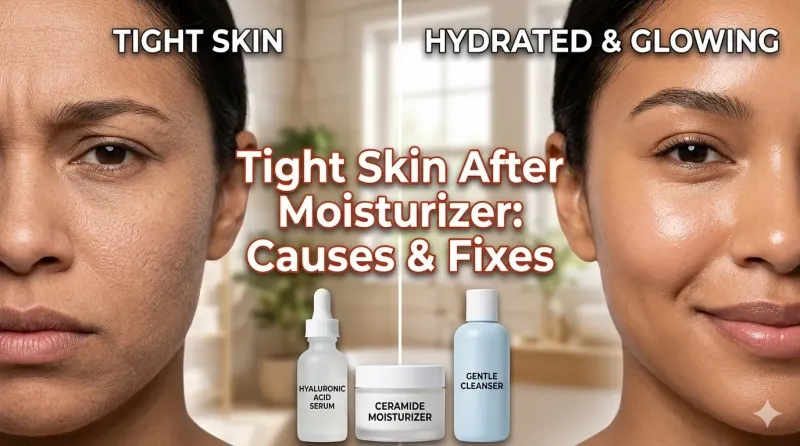
There's a moment many of us know all too well: you've just finished your skincare routine, applied your favorite moisturizer, and instead of that coveted feeling of soft, supple hydration, your skin feels tight, uncomfortable, and almost... pulled. It's confusing, frustrating, and counterintuitive—shouldn't moisturizer make your skin feel better, not worse?
If you've experienced this paradoxical tightness after moisturizing, you're not alone. This surprisingly common issue affects people of all skin types and can stem from multiple factors ranging from product formulation and application technique to underlying skin barrier health and environmental conditions. Understanding why your skin feels tight after moisturizer isn't just about comfort—it's about identifying potential issues with your skincare routine that could be compromising your skin's barrier function, hydration levels, and overall health.
This comprehensive, science-backed guide explores the various reasons why moisturizer might leave your skin feeling tight, explains the biological mechanisms behind this sensation, helps you identify which cause applies to your situation, and provides evidence-based solutions to restore that comfortable, hydrated feeling you're seeking. Whether you're dealing with occasional tightness or persistent discomfort after every application, you'll find practical, research-supported strategies to fix the problem and optimize your moisturizing routine.
Understanding the Sensation: What "Tight Skin" Actually Means
Before diving into causes and solutions, it's important to understand what the sensation of "tightness" represents at a physiological level.
The Biology of Skin Tightness
When skin feels tight, it's typically signaling one or more of the following:
1. Dehydration at the Cellular Level:
- Water loss from corneocytes (skin cells in the stratum corneum) causes them to shrink slightly
- This micro-shrinking creates a physical sensation of tension across the skin surface
- Dehydrated skin has reduced elasticity, making it feel less pliable and more "pulled"
2. Barrier Compromise:
- When the skin barrier is impaired, transepidermal water loss (TEWL) increases
- Even with moisturizer applied, water continues to escape faster than it can be replenished
- The sensation of tightness is your skin's way of signaling that its protective function is compromised
3. Product Film Formation:
- Some moisturizers form a film on the skin surface as they dry
- If this film is too rigid or doesn't flex with skin movement, it can create a physical sensation of tightness
- This is often related to specific ingredients or formulation issues rather than skin health
4. Neurological Response:
- Certain ingredients can trigger sensory nerves in the skin, creating a tight or tingling sensation
- This may occur even without actual barrier damage or dehydration
- Often temporary and resolves as skin acclimates to the product
Why Moisturizer Shouldn't Cause Tightness (When Used Correctly)
A well-formulated moisturizer, applied to appropriately prepared skin, should:
- Immediately improve skin comfort and reduce feelings of dryness
- Support barrier function and reduce water loss over time
- Leave skin feeling soft, supple, and flexible—not tight or restricted
- Enhance skin's natural ability to maintain hydration
If your moisturizer consistently causes tightness, something in the equation isn't working as it should. The good news is that with proper diagnosis and adjustment, this issue is almost always fixable.
Common Causes of Tightness After Moisturizer
Tightness after moisturizing rarely has a single cause. More often, it results from a combination of factors. Understanding the most common triggers helps you identify and address what's affecting your skin.
1. Applying Moisturizer to Dry Skin
How it happens: Humectants—the ingredients in moisturizers that draw water to the skin (like hyaluronic acid, glycerin, and urea)—work by pulling moisture from their surroundings. If your skin is completely dry when you apply a humectant-rich moisturizer, these ingredients may pull water from deeper layers of your skin rather than from the environment.
Scientific mechanism: Humectants create an osmotic gradient that draws water toward areas of higher solute concentration. When applied to dry skin in low-humidity environments, this can temporarily increase water loss from the stratum corneum.
Signs this is your issue:
- Tightness begins within minutes of application
- Skin feels better if you apply moisturizer to damp skin
- Tightness is worse in dry climates or heated indoor environments
- Products with high humectant content seem to cause more tightness
Who's most susceptible: People living in dry climates, those using heating/AC frequently, individuals with naturally dry or dehydrated skin.
2. Wrong Moisturizer for Your Skin Type
How it happens: Using a moisturizer formulated for a different skin type can create imbalance. For example, heavy occlusive creams on oily skin may feel suffocating and tight, while lightweight gels on very dry skin may not provide enough emollience to prevent water loss.
Scientific mechanism: Skin types have different needs for the three key moisturizing components: humectants (draw water in), emollients (smooth and soften), and occlusives (seal moisture in). Mismatched formulations disrupt the skin's natural balance.
Signs this is your issue:
- Tightness is accompanied by other signs of mismatch (breakouts on oily skin, flakiness on dry skin)
- Switching to a different formula type (gel vs. cream) improves the sensation
- Tightness occurs with multiple products of the same formulation type
Common mismatches:
- Oily skin using heavy creams: Occlusives may feel suffocating and trap heat
- Dry skin using lightweight gels: Insufficient emollients/occlusives allow continued water loss
- Sensitive skin using fragranced products: Irritants trigger inflammation that feels like tightness
- Mature skin using non-barrier-supporting formulas: Thinning skin needs more lipid support
3. Problematic Ingredients or Formulations
How it happens: Certain ingredients, even in well-intentioned products, can cause tightness through various mechanisms.
Common culprits:
- High concentrations of alcohol (denatured alcohol, SD alcohol): Can be drying and stripping, especially in leave-on products
- Certain polymers and film-formers: Create rigid films that don't flex with skin movement
- High concentrations of humectants without occlusives: Draw water in but don't seal it, potentially increasing TEWL in dry conditions
- Fragrances and essential oils: Can trigger sensory nerves or mild irritation that feels like tightness
- Active ingredients (retinoids, acids): Can temporarily compromise barrier function, making skin more sensitive to other products
Scientific mechanism: These ingredients may disrupt the lipid matrix of the stratum corneum, trigger inflammatory responses, or create physical films that restrict skin movement.
Signs this is your issue:
- Tightness begins shortly after trying a new product
- Reading ingredient lists reveals common culprits listed above
- Tightness resolves when you switch to simpler, fragrance-free formulations
4. Compromised Skin Barrier
How it happens: If your skin barrier is already impaired (from over-exfoliation, harsh cleansing, environmental damage, or underlying conditions), even a good moisturizer may not be enough to immediately restore comfort.
Scientific mechanism: A compromised barrier has increased transepidermal water loss (TEWL). Moisturizers can help, but if the barrier damage is significant, water loss may outpace the moisturizer's ability to replenish and seal hydration.
Signs this is your issue:
- Tightness is accompanied by redness, stinging, or sensitivity
- Skin feels tight even without moisturizer
- You've recently used retinoids, acids, or other barrier-disrupting actives
- Tightness improves with barrier-repair ingredients (ceramides, cholesterol, fatty acids)
5. Environmental Factors
How it happens: External conditions can influence how your skin responds to moisturizer, even if the product itself is well-formulated.
Common environmental triggers:
- Low humidity: Dry air increases evaporation rate, potentially overwhelming moisturizer's hydrating capacity
- Temperature extremes: Cold or hot conditions can affect skin barrier function and product performance
- Hard water: Mineral deposits can interact with skincare products and affect skin feel
- Pollution: Particulate matter can generate free radicals that impair barrier function
Scientific mechanism: Environmental stressors can increase TEWL, generate oxidative stress, or deposit residues that interfere with product absorption and performance.
Signs this is your issue:
- Tightness varies with weather, season, or location
- Skin feels better in more humid environments
- Tightness improves with environmental modifications (humidifier, water filter)
6. Application Technique Issues
How it happens: How you apply moisturizer can significantly impact how it feels and performs.
Common technique mistakes:
- Applying to completely dry skin: Humectants work best on damp skin
- Using too little product: Insufficient coverage leaves areas unprotected
- Rubbing too vigorously: Can cause micro-irritation and increase TEWL
- Not allowing proper absorption time: Layering products too quickly can cause pilling or uneven distribution
Scientific mechanism: Application technique affects product distribution, absorption, and interaction with the skin barrier.
Signs this is your issue:
- Tightness improves when you change how you apply product
- Applying to damp skin or using more product resolves the issue
- Gentler application techniques reduce tightness
Identifying Your Specific Cause: A Self-Assessment Guide
Not all tightness after moisturizer has the same cause. Use this guide to help identify what's driving your experience.
Questions to Ask Yourself
1. When does the tightness start?
- Immediately (within minutes): Likely humectant issue, film-forming ingredients, or application to dry skin
- After 30-60 minutes: May indicate barrier compromise or environmental factors
- Only in certain conditions: Likely environmental trigger (low humidity, temperature)
2. What does the tightness feel like?
- Tight but comfortable: May be normal film formation from certain formulations
- Tight and uncomfortable: Likely dehydration or barrier issue
- Tight with stinging or burning: Suggests irritation or sensitivity to ingredients
- Tight with visible dryness or flaking: Indicates insufficient hydration or barrier support
3. What's your skincare routine?
- Do you use actives? Retinoids, acids, or vitamin C can temporarily compromise barrier
- How do you cleanse? Harsh cleansers can strip barrier lipids
- Do you exfoliate? Over-exfoliation impairs barrier function
- What's your moisturizer? Check ingredients for potential culprits
4. What's your environment like?
- Climate: Dry, cold, or hot conditions affect skin differently
- Indoor climate: Heating/AC reduces humidity
- Water quality: Hard water can affect product performance
Quick Diagnostic Test
Try this simple test to narrow down the cause:
- Apply moisturizer to damp skin: If tightness improves, the issue is likely humectant-related or application technique
- Try a different moisturizer type: If switching from gel to cream (or vice versa) helps, it's likely a formulation mismatch
- Apply in a more humid environment: If tightness improves, environmental factors are likely contributing
- Simplify your routine for 3 days: If tightness resolves, an active ingredient or product interaction may be the cause
Evidence-Based Solutions: Fixing Tightness After Moisturizer
Once you've identified likely causes, targeted strategies can help restore comfortable, hydrated skin.
Immediate Fixes: The First 24-48 Hours
1. Adjust Your Application Technique
- Apply to damp skin: After cleansing, pat skin lightly but leave slightly damp before applying moisturizer. This gives humectants water to draw from rather than pulling from deeper skin layers.
- Use adequate product: A pea-sized amount for face is often insufficient; use enough to create a thin, even layer across all areas.
- Press, don't rub: Gently press moisturizer into skin rather than rubbing vigorously, which can cause micro-irritation.
- Allow absorption time: Wait 1-2 minutes between skincare steps to allow proper absorption and prevent pilling.
Why this works: Proper application maximizes product efficacy and minimizes potential irritation or water loss.
2. Layer Strategically
- Hydrating toner first: Apply a hydrating toner or essence to damp skin before moisturizer to boost hydration
- Serum before moisturizer: If using a hydrating serum, apply it before your moisturizer to enhance hydration
- Seal with moisturizer: Apply moisturizer as the final step to seal in hydration from previous layers
- Optional occlusive: For very dry skin, add a tiny amount of facial oil or balm as a final seal
Why this works: Strategic layering addresses multiple aspects of hydration: drawing water in, binding it to skin, and sealing it in.
3. Simplify Temporarily
- Pause actives: Temporarily stop retinoids, acids, or other potent actives that may be compromising your barrier
- Use gentle products only: Stick to gentle cleanser, hydrating toner, and simple moisturizer for 3-5 days
- Avoid fragrance: Choose fragrance-free products to minimize potential irritation
Why this works: Reducing potential irritants allows your barrier to begin repairing without additional stress.
Medium-Term Strategies: Days 3-14
1. Choose the Right Moisturizer for Your Skin
Match your moisturizer to your skin type and concerns:
- For oily or combination skin: Lightweight gel-creams with niacinamide, hyaluronic acid, and light occlusives (dimethicone, squalane)
- For dry or dehydrated skin: Richer creams with ceramides, cholesterol, fatty acids, and humectants
- For sensitive skin: Fragrance-free, minimal-ingredient formulas with soothing agents (centella, panthenol, allantoin)
- For mature skin: Barrier-supporting formulas with peptides, ceramides, and antioxidants
Key ingredients to look for:
- Ceramides: Primary structural lipids that repair and maintain barrier function
- Niacinamide (4-5%): Regulates sebum, strengthens barrier, reduces inflammation
- Glycerin: Effective humectant that works well in various humidity conditions
- Squalane: Lightweight emollient that mimics skin's natural sebum
- Panthenol (Vitamin B5): Humectant and anti-inflammatory that supports barrier repair
Ingredients to approach with caution:
- High concentrations of denatured alcohol in leave-on products
- Fragrance and essential oils if you have sensitive skin
- Very high concentrations of humectants without balancing occlusives
- Heavy film-formers if you experience tightness from product films
2. Support Barrier Repair
If barrier compromise is contributing to tightness, focus on ingredients that support repair:
- Ceramides: Look for products with multiple ceramide types (NP, AP, EOP) for comprehensive barrier support
- Cholesterol and fatty acids: Work synergistically with ceramides to restore barrier structure
- Niacinamide: Supports barrier function while reducing inflammation
- Centella asiatica: Soothes irritation and supports wound healing
Application tip: Apply barrier-repair products to damp skin and follow with a light occlusive to seal in benefits.
3. Address Environmental Factors
- Use a humidifier: Maintain 40-60% humidity in your bedroom and main living areas
- Filter your water: Consider a shower filter if you have hard water
- Protect from extremes: Apply moisturizer before outdoor exposure in harsh weather
- Manage indoor climate: Keep thermostat moderate; avoid direct airflow on face
Why this works: Optimizing your environment reduces external stressors that can overwhelm your moisturizer's hydrating capacity.
Long-Term Prevention: Week 3+
1. Build a Resilient Barrier Routine
Create a sustainable routine that supports barrier health:
- AM: Gentle cleanse (or water rinse) → hydrating toner → antioxidant serum → barrier moisturizer → sunscreen
- PM: Gentle cleanse → hydrating toner → treatment serum (if using) → barrier moisturizer → targeted treatment for dry areas
- Weekly: Gentle exfoliation (1x max) + hydrating mask if needed
2. Strategic Product Introduction
When adding new products:
- Patch test: Apply to small area for 3-5 days before full-face use
- Introduce one at a time: Wait 1-2 weeks between new products to identify potential triggers
- Start low, go slow: Begin with lower concentrations of actives; increase frequency gradually
- Buffer potent actives: Apply moisturizer before retinoids or acids to reduce irritation
3. Lifestyle Support for Skin Health
Support skin from within:
- Hydration: Aim for 2-3 liters of water daily
- Nutrition: Prioritize omega-3s, antioxidants, and barrier-supporting nutrients
- Sleep: Aim for 7-9 hours; skin repairs during sleep
- Stress management: Chronic stress impairs barrier function; practice stress-reduction techniques
Product Recommendations by Concern
These products feature ingredients with evidence supporting barrier repair and hydration without tightness.
For Immediate Comfort and Hydration
- La Roche-Posay Toleriane Sensitive Fluide: Minimalist formula with prebiotic thermal water; ideal for compromised skin
- Avène Cicalfate+ Restorative Protective Cream: Copper-zinc complex and postbiotic for barrier repair
- First Aid Beauty Ultra Repair Cream: Colloidal oatmeal, ceramides, and shea butter for intense hydration
- Vanicream Moisturizing Cream: Fragrance-free, minimal ingredients; ideal for sensitive or reactive skin
- CeraVe Healing Ointment: Petrolatum, ceramides, and hyaluronic acid for overnight barrier repair
For Barrier Repair and Prevention
- Stratia Liquid Gold: Ceramides, cholesterol, and fatty acids in ideal ratio for barrier support
- Paula's Choice Omega+ Complex Moisturizer: Ceramides, fatty acids, and cholesterol for barrier repair
- Illiyoon Ceramide Ato Soothing Gel: High ceramide content in lightweight gel-cream texture
- Dr. Jart+ Ceramidin Cream: Five-ceramide complex for intensive barrier support
- Krave Beauty Great Barrier Relief: Niacinamide, ceramides, and plant oils for barrier recovery
For Gentle Hydration Without Tightness
- The Ordinary Hyaluronic Acid 2% + B5: Multi-weight HA with panthenol; affordable and effective
- Klairs Supple Preparation Unscented Toner: Hyaluronic acid, beta-glucan, and centella for soothing hydration
- Hada Labo Gokujyun Premium Lotion: Multiple HA types and glycerin for deep hydration
- Beauty of Joseon Glow Serum: Propolis and niacinamide for hydration and barrier support
- Vichy Mineral 89: Hyaluronic acid and mineralizing thermal water in lightweight gel
For Specific Skin Types
Oily or Combination Skin:
- Neutrogena Hydro Boost Water Gel: Hyaluronic acid in oil-free, fast-absorbing formula
- Belif The True Cream Aqua Bomb: Refreshing gel-cream with comfrey and lady's mantle
- Paula's Choice CLEAR Oil-Free Moisturizer: Lightweight, non-comedogenic with antioxidants
Dry or Mature Skin:
- CeraVe Moisturizing Cream: Ceramides and hyaluronic acid in rich, non-greasy formula
- Kiehl's Ultra Facial Cream: Squalane and glacial glycoprotein for intense hydration
- Tatcha The Water Cream: Japanese botanicals in lightweight, hydrating formula
Sensitive or Reactive Skin:
- Vanicream Moisturizing Skin Cream: Minimalist, fragrance-free, ideal for sensitive skin
- La Roche-Posay Toleriane Double Repair Face Moisturizer: Ceramides, niacinamide, prebiotic thermal water
- Aveeno Calm + Restore Oat Gel Moisturizer: Oat extract and feverfew for soothing hydration
Common Mistakes to Avoid
1. Over-Cleansing Before Moisturizing
The Mistake: Using harsh cleansers or cleansing multiple times before moisturizing.
Why It's a Problem: Over-cleansing strips barrier lipids, making skin more vulnerable to dehydration and tightness even after moisturizing.
The Fix: Use a gentle, low-pH cleanser once daily (PM); rinse with water only in AM if skin isn't oily.
2. Using Too Many Active Ingredients
The Mistake: Layering multiple potent actives (retinoids, acids, vitamin C) without adequate barrier support.
Why It's a Problem: Actives can temporarily compromise barrier function, making skin more sensitive to other products and environmental factors.
The Fix: Introduce actives gradually; buffer with moisturizer; focus on one active at a time.
3. Skipping Sunscreen Because of Tightness
The Mistake: Avoiding sunscreen because it feels tight or layers poorly over moisturizer.
Why It's a Problem: UV exposure further compromises barrier function and increases water loss, worsening tightness long-term.
The Fix: Choose a gentle, lightweight sunscreen; apply moisturizer first to create a buffer; allow absorption time between layers.
4. Expecting Immediate Results from Barrier Repair
The Mistake: Expecting tightness to resolve overnight with a new moisturizer.
Why It's a Problem: Barrier repair takes time (typically 2-4 weeks for significant improvement); impatience can lead to product-hopping that worsens the issue.
The Fix: Set realistic expectations: initial improvement in 3-7 days, significant resolution in 2-4 weeks with consistent care.
5. Ignoring Environmental Factors
The Mistake: Focusing only on topical skincare while ignoring environmental contributors to tightness.
Why It's a Problem: No amount of topical product can fully compensate for extremely low humidity or other environmental stressors.
The Fix: Use a humidifier, manage indoor climate, and protect skin from environmental extremes alongside topical care.
When to Seek Professional Help
While most cases of tightness after moisturizer can be managed with self-care, certain signs warrant professional evaluation.
Consult a Dermatologist If:
- Tightness is accompanied by severe redness, itching, pain, or oozing
- Skin shows signs of infection (pus, warmth, spreading redness)
- Tightness persists despite 4-6 weeks of consistent, appropriate care
- You suspect an underlying condition (eczema, rosacea, contact dermatitis)
- Tightness is significantly impacting your quality of life or daily activities
Consider a Skincare Professional or Esthetician If:
- You're unsure which products are right for your skin type
- You want personalized routine recommendations
- You're interested in professional treatments to support barrier health
Frequently Asked Questions
Is it normal for skin to feel slightly tight after moisturizer?
Mild, temporary tightness can be normal with certain formulations, especially those with film-forming ingredients or high humectant content in dry conditions. However, persistent or uncomfortable tightness suggests an issue with product choice, application technique, or skin health that should be addressed.
Can tightness after moisturizer damage my skin?
Occasional tightness is unlikely to cause lasting damage. However, chronic tightness may indicate ongoing barrier impairment, which can lead to increased sensitivity, inflammation, and accelerated aging if not addressed. Addressing the underlying cause is important for long-term skin health.
Should I stop using moisturizer if it makes my skin feel tight?
Not necessarily. Instead of stopping moisturizer altogether, try: adjusting your application technique (apply to damp skin), switching to a different formulation better suited to your skin type, simplifying your routine temporarily, or adding a hydrating layer before moisturizer. If tightness persists despite these adjustments, consult a dermatologist.
Can tightness after moisturizer be a sign of an allergic reaction?
Yes, tightness accompanied by redness, itching, swelling, or rash could indicate an allergic reaction or contact dermatitis. If you suspect an allergy, discontinue the product immediately and consult a dermatologist for proper diagnosis and treatment.
How long does it take for tightness to resolve after fixing the cause?
Timeline varies based on the cause and your skin's baseline health:
- Application technique issues: Immediate to 24 hours with proper technique
- Product mismatch: 1-3 days after switching to appropriate formulation
- Mild barrier compromise: 3-7 days with consistent barrier support
- Significant barrier damage: 2-4 weeks with dedicated barrier repair
Consistency is key—small, daily actions compound to create meaningful improvement.
Conclusion: Restoring Comfort, One Step at a Time
Experiencing tightness after moisturizer is more than just a minor inconvenience—it's your skin's way of communicating that something in your routine or environment needs adjustment. By understanding the science behind this sensation and implementing targeted, evidence-based strategies, you can restore that comfortable, hydrated feeling you deserve.
Remember that skin is dynamic and responsive. Tightness isn't a permanent flaw; it's a temporary signal that, with the right care, can guide you toward better skin health. Be patient with the process, compassionate with your skin, and proactive about identifying and addressing underlying triggers.
Key Takeaways:
- Tightness signals imbalance: Understanding the biology helps you choose effective solutions.
- Causes are often multifactorial: Application technique, product choice, barrier health, and environment often combine to create tightness.
- Simple fixes often work: Applying to damp skin, adjusting product type, or adding a hydrating layer can resolve many cases.
- Barrier support is foundational: Ceramides, niacinamide, and gentle care strengthen skin's resilience.
- Prevention is sustainable: Identify your triggers and build habits that support long-term comfort.
- Know when to seek help: Persistent or severe tightness warrants professional evaluation.
Start today. Choose one strategy from this guide: apply your next moisturizer to damp skin, try a different formulation, or add a hydrating toner before moisturizer. Small, consistent actions create meaningful change.
Your skin has an incredible capacity to heal and renew itself. With knowledge, intention, and compassionate care, you can restore comfort and confidence—one application at a time.
📖 আরও পড়ুন: Skin Care
- 🔗 মুখের ওপেন পোরস: কারণ ও ছোট করার উপায়
- 🔗 ঋতুভেদে ত্বকের যত্ন: বাংলাদেশে শীত, গ্রীষ্ম ও বর্ষার সম্পূর্ণ স্কিনকেয়ার গাইড
- 🔗 অ্যান্টি-পলিউশন স্কিনকেয়ার: দূষণ থেকে ত্বক রক্ষার পূর্ণাঙ্গ গাইড
- 🔗 Uneven Skin Tone After 35: Science, Solutions and Expectations
- 🔗 মুখের তেলতেলে ভাব: গরমে ফ্রেশ ত্বকের ডেইলি রুটিন