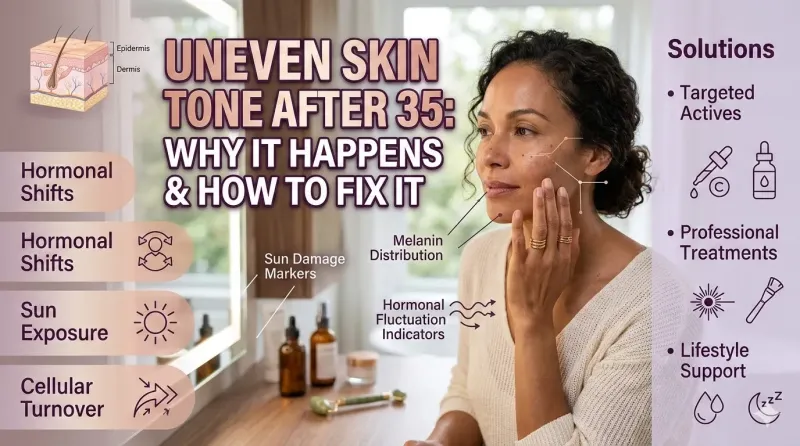
Reaching your mid-30s often brings an unwelcome surprise: uneven skin tone that wasn't there before. Dark spots, patches of discoloration, melasma, and an overall lack of radiance can appear seemingly overnight, frustrating even the most diligent skincare enthusiasts. If you've found yourself wondering why your once-even complexion has become patchy, dull, or marked with stubborn dark spots, you're not alone. This is one of the most common skin concerns women face after 35, and understanding the science behind it is the first step toward realistic solutions.
Uneven skin tone after 35 isn't simply a cosmetic issue—it's the result of complex biological processes involving hormonal fluctuations, cumulative sun damage, cellular changes, and environmental factors that converge during this decade of life. While the skincare industry promises quick fixes and miracle cures, the reality is more nuanced. Effective treatment requires understanding the root causes, implementing evidence-based solutions, and maintaining realistic expectations about what's achievable.
This comprehensive guide explores the science behind why uneven skin tone develops after 35, examines the various contributing factors from hormonal changes to lifestyle influences, reviews proven treatment options from topical ingredients to professional procedures, and helps you set realistic expectations for your skin transformation journey. Whether you're dealing with melasma, post-inflammatory hyperpigmentation, sun spots, or general dullness, you'll find science-backed strategies and honest guidance to help you achieve a more even, radiant complexion.
Understanding Uneven Skin Tone: What's Actually Happening
Before diving into causes and solutions, it's essential to understand what uneven skin tone actually is at a biological level.
The Melanin Production Process
Your skin color is determined by melanin, a pigment produced by specialized cells called melanocytes. These cells are distributed throughout the basal layer of your epidermis (the outermost layer of skin). Under normal circumstances, melanocytes produce melanin at a relatively consistent rate, giving you an even skin tone.
However, various factors can disrupt this balance, causing melanocytes to:
- Overproduce melanin: Leading to dark spots, patches, or overall hyperpigmentation
- Produce melanin unevenly: Creating patchy discoloration
- Cluster in certain areas: Forming concentrated dark spots
- Respond abnormally to triggers: Becoming hypersensitive to UV radiation, hormones, or inflammation
Types of Hyperpigmentation Common After 35
Melasma: Large, symmetrical patches of brown or gray-brown discoloration, typically appearing on the cheeks, forehead, bridge of the nose, and upper lip. Often called "the mask of pregnancy," melasma frequently appears or worsens in your 30s and 40s due to hormonal changes.
Sun Spots (Solar Lentigines): Flat, brown spots that appear on sun-exposed areas like the face, hands, shoulders, and arms. These represent cumulative sun damage that finally becomes visible in your mid-30s and beyond.
Post-Inflammatory Hyperpigmentation (PIH): Dark marks left behind after acne, eczema, insect bites, or other skin injuries heal. After 35, PIH tends to be more stubborn and take longer to fade.
General Dullness and Uneven Texture: An overall lack of radiance with patches of discoloration, often accompanied by rough texture and enlarged pores.
The Science: Why Uneven Skin Tone Develops After 35
Multiple biological and environmental factors converge in your mid-30s to create the perfect storm for uneven skin tone. Understanding these mechanisms helps explain why this happens and what you can realistically do about it.
Hormonal Changes and Melanocyte Activity
Hormonal fluctuations are perhaps the most significant trigger for uneven skin tone after 35, particularly in women.
Estrogen and Progesterone Fluctuations:
During your 30s, hormone levels begin to fluctuate more dramatically, even before perimenopause officially begins. These hormonal shifts directly affect melanocyte activity:
- Estrogen receptors on melanocytes: Melanocytes have estrogen receptors, meaning they respond directly to estrogen levels. When estrogen fluctuates, it can trigger increased melanin production.
- Progesterone's role: Progesterone can also stimulate melanocytes, particularly when levels are elevated or fluctuating.
- Melasma connection: The combination of estrogen and progesterone stimulation is why melasma is so common in women in their 30s and 40s, even those not pregnant or on birth control.
Perimenopause Transition:
Many women begin experiencing perimenopausal symptoms in their mid-to-late 30s. During this transition:
- Hormone levels become increasingly erratic
- Estrogen dominance (relative to progesterone) can occur
- These fluctuations trigger melanocyte hyperactivity
- Skin becomes more sensitive to other pigmentation triggers
Thyroid Function:
Thyroid disorders become more common after 35, particularly in women. Both hyperthyroidism and hypothyroidism can affect skin pigmentation, causing either hyperpigmentation or hypopigmentation (light patches).
Cumulative Sun Damage Finally Becomes Visible
While sun damage accumulates throughout your life, it typically doesn't become visibly apparent until your mid-30s. Here's why:
The Lag Effect:
- UV radiation damages melanocytes and skin cells immediately
- However, visible signs (sun spots, uneven tone) take 10-20 years to appear
- Damage from your teens and 20s finally surfaces in your 30s
- This is why sun protection in your youth is so critical
Melanocyte Dysfunction:
Chronic UV exposure causes melanocytes to become:
- Hyperactive: Producing excess melanin even without current sun exposure
- Irregular: Distributing melanin unevenly across the skin
- Sensitized: More reactive to future UV exposure, hormones, and inflammation
DNA Damage:
UV radiation causes DNA damage in skin cells, including melanocytes. Over time, this damage accumulates, leading to:
- Mutation of melanocyte DNA
- Abnormal melanin production
- Development of actinic keratoses (precancerous lesions)
- Increased risk of skin cancer
Slower Cell Turnover and Skin Renewal
After 35, your skin's natural renewal process slows significantly:
Cell Turnover Rate:
- In your 20s: Skin cells turnover every 28-30 days
- After 35: Turnover slows to 40-60 days or longer
- Result: Pigmented cells remain on the surface longer, making dark spots more visible and persistent
Reduced Exfoliation:
Slower cell turnover means:
- Dead, pigmented skin cells accumulate on the surface
- Fresh, evenly-pigmented cells take longer to reach the surface
- Overall complexion appears duller and more uneven
- Topical treatments take longer to show results
Increased Inflammation and Oxidative Stress
Chronic, low-grade inflammation increases after 35, contributing to uneven skin tone:
Inflammaging:
This term describes the chronic, low-grade inflammation that increases with age. After 35:
- Systemic inflammation markers increase
- Skin becomes more prone to inflammatory responses
- Inflammation triggers melanocyte activity (post-inflammatory hyperpigmentation)
- Healing takes longer, making PIH more persistent
Oxidative Stress:
Oxidative stress occurs when free radicals overwhelm your body's antioxidant defenses:
- Free radicals damage melanocytes and skin cells
- This triggers increased melanin production as a protective response
- Oxidative stress increases with age, pollution exposure, and lifestyle factors
- Antioxidant defenses naturally decline after 35
Lifestyle and Environmental Factors
By your mid-30s, years of lifestyle choices and environmental exposures catch up with your skin:
Chronic Stress:
- Elevated cortisol increases inflammation
- Stress hormones can directly stimulate melanocytes
- Poor sleep (common in your 30s with career/family demands) impairs skin repair
- Stress-related skin picking or neglect worsens pigmentation
Diet and Nutrition:
- Years of nutritional deficiencies accumulate
- Lack of antioxidants increases oxidative stress
- High sugar intake causes glycation, damaging skin structure
- Dehydration makes pigmentation more visible
Environmental Exposures:
- Years of pollution exposure damage skin barrier
- Blue light from screens may contribute to pigmentation (emerging research)
- Repeated exposure to irritants causes chronic inflammation
Contributing Factors Specific to Women Over 35
Several factors uniquely affect women in this age group:
Pregnancy and Postpartum Effects
Many women have children in their 30s, and pregnancy has lasting effects on skin pigmentation:
- Melasma: Often triggered during pregnancy and may persist for years postpartum
- Linea nigra: Dark line on abdomen that may not fully fade
- Stretch marks: Can cause post-inflammatory hyperpigmentation
- Hormonal shifts: Postpartum hormonal fluctuations can trigger or worsen pigmentation
Birth Control and Hormonal Contraceptives
Long-term use of hormonal birth control affects skin pigmentation:
- Synthetic estrogen and progesterone stimulate melanocytes
- Melasma is a well-documented side effect
- Pigmentation may persist even after discontinuing birth control
- Effects are cumulative with years of use
Polycystic Ovary Syndrome (PCOS)
PCOS becomes more commonly diagnosed in the 30s and causes:
- Hormonal imbalances (elevated androgens)
- Acanthosis nigricans (dark, velvety patches, usually on neck, armpits)
- Increased inflammation
- Insulin resistance, which can worsen pigmentation
Medical Conditions and Medications
After 35, women are more likely to:
- Develop conditions affecting pigmentation (thyroid disorders, diabetes)
- Take medications that cause photosensitivity or pigmentation changes
- Experience medication interactions affecting skin health
Evidence-Based Solutions: What Actually Works
Now that we understand the causes, let's explore proven solutions. It's important to note that treating uneven skin tone after 35 requires patience, consistency, and often a combination of approaches.
Topical Treatments: The Foundation
1. Sunscreen (Non-Negotiable)
Why it works: Prevents further UV damage and prevents existing pigmentation from worsening.
Evidence: Daily sunscreen use can prevent new sun spots and prevent existing pigmentation from darkening.
Recommendations:
- Broad-spectrum SPF 30-50 minimum
- Apply daily, even indoors and on cloudy days
- Reapply every 2 hours with sun exposure
- Use mineral (zinc oxide, titanium dioxide) or chemical sunscreen based on skin type
- Don't forget neck, chest, and hands
2. Vitamin C (L-Ascorbic Acid)
Why it works: Powerful antioxidant that inhibits tyrosinase (enzyme needed for melanin production), brightens existing pigmentation, and protects against oxidative stress.
Evidence: Multiple studies show 10-20% L-ascorbic acid significantly improves hyperpigmentation after 8-12 weeks of consistent use.
Recommendations:
- Use 10-20% L-ascorbic acid serum
- Apply in the morning before sunscreen
- Store in dark, cool place (vitamin C is unstable)
- Expect results in 8-12 weeks
- May cause initial tingling (normal)
3. Retinoids (Retinol, Tretinoin, Adapalene)
Why it works: Increases cell turnover, fades pigmented cells faster, inhibits melanin transfer, and stimulates collagen production.
Evidence: Tretinoin (prescription-strength) is one of the most studied and effective treatments for hyperpigmentation. Over-the-counter retinol also shows significant improvement with consistent use.
Recommendations:
- Start with over-the-counter retinol (0.25-0.5%)
- Gradually increase strength as tolerated
- Prescription tretinoin (0.025-0.1%) for more stubborn pigmentation
- Apply at night, 2-3 times weekly initially
- Always use sunscreen (retinoids increase sun sensitivity)
- Expect 3-6 months for significant results
- May cause initial purging and irritation
4. Hydroquinone
Why it works: Gold-standard skin-lightening agent that inhibits tyrosinase and reduces melanin production.
Evidence: Extensive research shows 2-4% hydroquinone significantly improves melasma and hyperpigmentation.
Recommendations:
- 2% available over-the-counter; 4% requires prescription
- Use for 3-4 months maximum, then take a break
- Apply to affected areas only
- Always use with sunscreen
- Can be combined with retinoids and vitamin C for enhanced effect
- Not recommended during pregnancy or breastfeeding
- Rare risk of ochronosis (paradoxical darkening) with prolonged use
5. Niacinamide (Vitamin B3)
Why it works: Inhibits melanin transfer from melanocytes to skin cells, reduces inflammation, and strengthens skin barrier.
Evidence: Studies show 4-5% niacinamide significantly improves hyperpigmentation and overall skin tone after 8-12 weeks.
Recommendations:
- Use 4-10% niacinamide serum
- Can be used morning and/or night
- Gentle enough for sensitive skin
- Works well with other actives
- Expect results in 8-12 weeks
6. Alpha Arbutin
Why it works: Natural skin-lightening agent that inhibits tyrosinase without the side effects of hydroquinone.
Evidence: Studies show 2-3% alpha arbutin effectively reduces hyperpigmentation with minimal irritation.
Recommendations:
- Use 2-3% concentration
- Gentle alternative to hydroquinone
- Safe for long-term use
- Can be combined with other brightening agents
- Suitable for sensitive skin
7. Azelaic Acid
Why it works: Reduces inflammation, inhibits tyrosinase, and is particularly effective for post-inflammatory hyperpigmentation and melasma.
Evidence: Prescription-strength (15-20%) azelaic acid is FDA-approved for melasma and shows significant improvement.
Recommendations:
- 10% available over-the-counter; 15-20% requires prescription
- Especially effective for acne-related pigmentation
- Safe during pregnancy
- May cause initial tingling
- Use once or twice daily
8. Chemical Exfoliants (AHAs and BHAs)
Why they work: Remove pigmented surface cells, increase cell turnover, and enhance penetration of other treatments.
Best Options:
- Glycolic acid: Most effective for pigmentation (smallest molecule, deepest penetration)
- Lactic acid: Gentler, also hydrating
- Mandelic acid: Gentle, good for sensitive skin and darker skin tones
- Salicylic acid (BHA): Good for acne-related pigmentation
Recommendations:
- Start with 5-10% concentration, 1-2 times weekly
- Gradually increase frequency as tolerated
- Always use sunscreen (increases sun sensitivity)
- Don't combine with retinoids on same night initially
- Expect results in 6-12 weeks
Professional Treatments: Enhanced Results
For more stubborn pigmentation or faster results, professional treatments can be highly effective when combined with topical treatments.
1. Chemical Peels
How they work: Professional-strength acids remove damaged surface layers, revealing fresher, more even-toned skin underneath.
Types:
- Superficial peels: Glycolic, lactic, or salicylic acid (20-70%). Minimal downtime, requires multiple sessions.
- Medium peels: TCA (trichloroacetic acid) 20-35%. More dramatic results, 7-14 days downtime.
- Deep peels: Phenol peels. Most dramatic results but significant downtime and risks.
Evidence: Multiple studies show chemical peels significantly improve melasma and hyperpigmentation, especially when combined with topical treatments.
Recommendations:
- Start with superficial peels (every 2-4 weeks, 4-6 sessions)
- Progress to medium peels if needed
- Avoid sun exposure before and after
- Continue topical treatments between peels
- Cost: $150-600 per session
2. Laser Treatments
How they work: Targeted light energy breaks down melanin deposits, which are then naturally eliminated by the body.
Best Options for Pigmentation:
- Q-switched Nd:YAG laser: Gold standard for melasma and deeper pigmentation. Safe for darker skin tones.
- PicoSure laser: Picosecond technology breaks down pigment more efficiently with less heat damage.
- IPL (Intense Pulsed Light): Good for sun spots and superficial pigmentation. Not suitable for melasma or darker skin tones.
- Fractional lasers: Create micro-injuries to stimulate renewal. Good for overall tone and texture.
Evidence: Laser treatments show significant improvement in 60-80% of patients, though multiple sessions are typically needed.
Recommendations:
- Consultation with board-certified dermatologist essential
- 3-6 sessions typically needed, spaced 4-6 weeks apart
- Avoid sun exposure before and after treatment
- Continue topical treatments between sessions
- Cost: $300-1,500 per session depending on laser type
- Risk of post-inflammatory hyperpigmentation, especially in darker skin tones
3. Microneedling
How it works: Tiny needles create controlled micro-injuries, stimulating collagen production and enhancing penetration of topical treatments.
Evidence: Studies show microneedling, especially when combined with topical vitamin C or tranexamic acid, significantly improves melasma and hyperpigmentation.
Recommendations:
- Professional treatment preferred over at-home devices
- 4-6 sessions, spaced 4-6 weeks apart
- Can be combined with PRP (platelet-rich plasma) for enhanced results
- Minimal downtime (1-3 days of redness)
- Cost: $200-700 per session
4. Tranexamic Acid Treatments
How it works: Originally a medication to reduce bleeding, tranexamic acid has been found to significantly improve melasma by inhibiting melanocyte activity and reducing inflammation.
Delivery Methods:
- Topical: 2-5% serums (available over-the-counter)
- Oral: Prescription medication (250mg twice daily)
- Microneedling: Tranexamic acid applied during microneedling procedure
Evidence: Multiple studies show tranexamic acid (especially oral) significantly improves melasma, with results seen in 8-12 weeks.
Recommendations:
- Oral tranexamic acid requires prescription and medical supervision
- Not suitable for those with blood clotting disorders
- Topical formulations are safer but may be less effective
- Can be combined with other treatments
Lifestyle Modifications: Supporting Your Skin from Within
Topical and professional treatments work best when supported by healthy lifestyle habits.
1. Nutrition for Even Skin Tone
Antioxidant-Rich Foods:
- Vitamin C: Citrus fruits, bell peppers, strawberries, broccoli
- Vitamin E: Nuts, seeds, avocados, spinach
- Beta-carotene: Carrots, sweet potatoes, kale
- Polyphenols: Green tea, dark chocolate, berries
Anti-Inflammatory Foods:
- Omega-3 fatty acids: Fatty fish, flaxseeds, walnuts
- Turmeric (curcumin)
- Ginger
- Leafy greens
Foods to Limit:
- High-glycemic foods (sugar, white bread, processed foods) - cause inflammation and glycation
- Excessive dairy (can trigger inflammation in some individuals)
- Alcohol (dehydrates skin, increases inflammation)
2. Stress Management
Chronic stress worsens pigmentation through inflammation and hormonal disruption:
- Practice stress-reduction techniques (meditation, yoga, deep breathing)
- Prioritize 7-9 hours of quality sleep
- Regular exercise (reduces inflammation, improves circulation)
- Consider adaptogenic herbs (ashwagandha, rhodiola) for stress support
3. Sleep Quality
Poor sleep impairs skin repair and increases inflammation:
- Aim for 7-9 hours nightly
- Maintain consistent sleep schedule
- Create relaxing bedtime routine
- Silk pillowcase reduces friction and skin irritation
4. Hydration
- Drink 8-10 glasses of water daily
- Use hydrating skincare products (hyaluronic acid, glycerin)
- Limit dehydrating beverages (alcohol, excessive caffeine)
Realistic Expectations: What's Actually Achievable
One of the biggest sources of frustration in treating uneven skin tone is unrealistic expectations. Here's what you can realistically expect:
Timeline for Results
Topical Treatments:
- 4-6 weeks: Initial improvements in skin texture and brightness
- 8-12 weeks: Visible lightening of superficial pigmentation
- 3-6 months: Significant improvement in moderate hyperpigmentation
- 6-12 months: Maximum improvement for stubborn pigmentation like melasma
Professional Treatments:
- Chemical peels: Noticeable improvement after 2-3 sessions; optimal results after 4-6 sessions
- Laser treatments: Improvement after 1-2 sessions; optimal results after 3-6 sessions
- Microneedling: Gradual improvement over 3-6 sessions
What's Realistic vs. Unrealistic
Realistic Expectations:
- 50-80% improvement in hyperpigmentation with consistent treatment
- Significant lightening of dark spots
- More even overall skin tone
- Improved skin texture and radiance
- Prevention of new pigmentation
- Results require ongoing maintenance
Unrealistic Expectations:
- 100% complete elimination of all pigmentation
- Permanent results without maintenance
- Quick fixes (overnight or even within a few weeks)
- Same results as filtered Instagram photos
- One treatment will solve everything
Maintenance is Essential
Even after achieving significant improvement, ongoing maintenance is crucial:
- Daily sunscreen: Non-negotiable, lifelong commitment
- Continued topical treatments: Maintenance routine with vitamin C, retinoids, or brightening agents
- Periodic professional treatments: Maintenance peels or laser sessions every 3-6 months
- Healthy lifestyle: Ongoing commitment to nutrition, sleep, and stress management
Why Maintenance Matters:
- Melanocytes remain sensitive to triggers
- Hormonal fluctuations continue
- UV exposure is cumulative
- Without maintenance, pigmentation will return (often within 3-6 months)
Factors That Affect Results
Individual results vary based on:
- Type of pigmentation: Sun spots respond faster than melasma
- Depth of pigmentation: Superficial pigmentation responds better than dermal (deeper) pigmentation
- Skin tone: Darker skin tones require more cautious treatment to avoid post-inflammatory hyperpigmentation
- Consistency: Those who follow treatment protocols consistently see better results
- Sun protection: Those who rigorously protect from sun see better, longer-lasting results
- Underlying conditions: Hormonal imbalances, thyroid issues, or PCOS may make pigmentation more stubborn
- Age: Younger skin (35-45) typically responds faster than mature skin (50+)
Special Considerations for Different Skin Tones
Treatment approaches must be tailored to your skin tone to avoid complications.
Fair to Light Skin (Fitzpatrick I-II)
- More treatment options available
- Lower risk of post-inflammatory hyperpigmentation
- Can tolerate stronger concentrations of active ingredients
- IPL and certain lasers are safe options
- May experience more redness and irritation initially
Medium to Olive Skin (Fitzpatrick III-IV)
- Moderate risk of post-inflammatory hyperpigmentation
- Need to introduce actives gradually
- Sun protection is absolutely critical
- Certain lasers require caution (test spots recommended)
- Melasma more common and more stubborn
Dark to Deep Skin (Fitzpatrick V-VI)
- Higher risk of post-inflammatory hyperpigmentation
- Must use gentler approach with slower introduction of actives
- Avoid aggressive peels and certain lasers
- Q-switched Nd:YAG laser is safest laser option
- Prioritize prevention and gentle brightening agents
- Consult dermatologist experienced in treating darker skin tones
Common Mistakes to Avoid
Avoid these common pitfalls that can worsen pigmentation or delay results:
1. Skipping Sunscreen
This is the #1 mistake. Without daily sunscreen, no treatment will work effectively, and existing pigmentation will worsen.
2. Using Too Many Actives at Once
Overloading your skin with multiple strong actives causes irritation, which triggers more pigmentation. Introduce one active at a time and build slowly.
3. Picking or Scrubbing
Physical trauma to the skin causes post-inflammatory hyperpigmentation. Avoid picking at spots, aggressive scrubbing, or harsh physical exfoliants.
4. Expecting Overnight Results
Pigmentation took months or years to develop; it will take months to fade. Impatience leads to product-hopping and skin irritation.
5. Not Treating the Underlying Cause
If hormonal imbalances, thyroid issues, or other medical conditions are contributing, topical treatments alone won't be fully effective. Address underlying causes.
6. Using Unproven "Natural" Remedies
Lemon juice, baking soda, and other DIY remedies can damage your skin barrier and worsen pigmentation. Stick to evidence-based treatments.
7. Inconsistent Treatment
Using treatments sporadically won't yield results. Consistency is key—use your treatments as directed, every day.
When to See a Dermatologist
While many cases of uneven skin tone can be improved with over-the-counter treatments and lifestyle changes, certain situations warrant professional evaluation:
See a Dermatologist If:
- Pigmentation appeared suddenly or is rapidly worsening
- You have irregular, asymmetrical, or changing dark spots (rule out skin cancer)
- Over-the-counter treatments haven't improved pigmentation after 6 months of consistent use
- You have melasma that's not responding to treatment
- You're considering prescription treatments or professional procedures
- You have underlying medical conditions (thyroid issues, PCOS, diabetes)
- You're pregnant or breastfeeding and need safe treatment options
- You have darker skin tone and need specialized treatment approach
Creating Your Personalized Treatment Plan
Here's a framework for building an effective, realistic treatment plan:
Phase 1: Foundation (Weeks 1-4)
- Morning: Gentle cleanser, vitamin C serum, moisturizer, SPF 30-50
- Evening: Gentle cleanser, niacinamide or alpha arbutin, moisturizer
- 2-3x weekly: Gentle chemical exfoliant (AHA or BHA)
- Lifestyle: Prioritize sun protection, hydration, and sleep
Phase 2: Active Treatment (Weeks 5-12)
- Morning: Continue Phase 1 routine
- Evening: Add retinol (start 2-3x weekly, gradually increase)
- Consider adding: Hydroquinone (2-4%) or azelaic acid for stubborn spots
- Continue: Chemical exfoliation 1-2x weekly (not on retinol nights)
- Lifestyle: Add antioxidant-rich foods, stress management
Phase 3: Professional Enhancement (Months 3-6)
- Continue: Phases 1-2 routine
- Consider adding: Professional treatments (chemical peels, microneedling, or laser)
- Consult dermatologist: For prescription options if OTC not sufficient
- Evaluate progress: Adjust treatment based on results
Phase 4: Maintenance (Ongoing)
- Continue: Daily sunscreen (non-negotiable)
- Maintenance routine: Vitamin C, retinoid, brightening agent
- Periodic treatments: Professional treatments every 3-6 months as needed
- Lifestyle: Ongoing commitment to healthy habits
Frequently Asked Questions
Can uneven skin tone be completely reversed?
Complete reversal is rare, but significant improvement (50-80%) is achievable for most people with consistent treatment. The goal should be improvement and maintenance, not perfection. Some pigmentation, particularly deep melasma, may never completely disappear but can be significantly lightened and managed.
How long does it take to see results?
With consistent treatment:
- Initial improvements: 4-8 weeks
- Visible lightening: 8-12 weeks
- Significant improvement: 3-6 months
- Maximum results: 6-12 months
Professional treatments may show faster results (2-3 months) but still require multiple sessions and ongoing maintenance.
Are natural remedies effective for uneven skin tone?
Some natural ingredients have evidence supporting their effectiveness:
- Licorice root extract: Contains glabridin, which inhibits tyrosinase
- Kojic acid: Derived from fungi, inhibits melanin production
- Mulberry extract: Natural tyrosinase inhibitor
- Vitamin C (from fruits): Antioxidant and brightening
However, avoid harsh DIY remedies like lemon juice, baking soda, or undiluted essential oils, which can damage your skin barrier and worsen pigmentation.
Can I treat uneven skin tone while pregnant or breastfeeding?
Yes, but options are limited. Safe options include:
- Vitamin C
- Azelaic acid
- Niacinamide
- Glycolic acid (low concentration)
- Daily sunscreen (mineral preferred)
Avoid during pregnancy/breastfeeding:
- Hydroquinone
- Retinoids (retinol, tretinoin)
- High-concentration chemical peels
- Oral tranexamic acid
Always consult your OB-GYN before starting any treatment during pregnancy or breastfeeding.
Why is my melasma so stubborn?
Melasma is notoriously difficult to treat because:
- It's hormonally driven (hormones continue to fluctuate)
- Often involves deeper (dermal) pigmentation
- Highly sensitive to UV exposure and heat
- Tends to recur even after successful treatment
- Requires lifelong maintenance
Best approach: Combination therapy (topicals + professional treatments), strict sun protection, and realistic expectations. Maintenance is lifelong.
Will my skin tone ever be perfectly even?
Perfectly even skin tone is unrealistic. Even with treatment, most people will have some degree of variation in skin tone. The goal should be significant improvement and confidence in your skin, not perfection. Remember that even models and celebrities have some degree of uneven skin tone—it's normal and human.
Can stress cause uneven skin tone?
Yes. Chronic stress increases cortisol, which:
- Increases inflammation
- Can directly stimulate melanocytes
- Impairs skin barrier function
- Disrupts sleep (further impairing skin repair)
Stress management is an important component of treating uneven skin tone.
Is uneven skin tone permanent?
Not necessarily. While some pigmentation can be permanent (particularly deep dermal pigmentation), most uneven skin tone can be significantly improved with consistent treatment. However, without ongoing maintenance, pigmentation will likely return.
Conclusion: Embracing Realistic Beauty
Uneven skin tone after 35 is incredibly common and completely normal. It's the result of complex biological processes—hormonal changes, cumulative sun damage, slower cell turnover, and increased inflammation—that affect nearly every woman as she moves through her 30s and beyond.
While the skincare industry promises quick fixes and flawless skin, the reality is more nuanced. Effective treatment requires:
- Understanding the underlying causes
- Implementing evidence-based treatments consistently
- Patience (results take months, not weeks)
- Lifelong maintenance (especially sun protection)
- Realistic expectations (improvement, not perfection)
The good news is that significant improvement is absolutely achievable. With daily sunscreen, proven topical ingredients (vitamin C, retinoids, brightening agents), healthy lifestyle habits, and professional treatments when needed, most women can achieve a more even, radiant complexion that makes them feel confident and beautiful.
But perhaps most importantly, remember that uneven skin tone doesn't diminish your worth or beauty. It's a natural part of aging, and while treating it can boost confidence, true beauty comes from health, vitality, and self-acceptance. Embrace your skin at every stage, treat it with kindness and science-backed care, and remember that your value extends far beyond the evenness of your complexion.
Your journey to more even skin tone is a marathon, not a sprint. Be patient with yourself, celebrate small victories, and remember that healthy, cared-for skin is beautiful skin—regardless of whether it's perfectly even.
📖 আরও পড়ুন: Skin Care
- 🔗 The Ultimate 2026 Anti-Aging Guide: Revamping Your Skincare Routine for Your 30s
- 🔗 চোখের নিচে কালো দাগ ও ফোলা ভাব: ঘরোয়া সমাধান ও লাইফস্টাইল হ্যাকস
- 🔗 মুখে চুলকানি ও জ্বালাপোড়া: আসল কারণ ও কার্যকরী ঘরোয়া সমাধান
- 🔗 অয়েলি স্কিনের গ্রীষ্মকালীন যত্ন: অয়েল কন্ট্রোল রুটিন
- 🔗 Eczema Flare-Ups: Complete Management Protocol